
CBD e-commerce in the US is on track to hit $6 billion by 2026. And Shopify is the most popular platform to sell it on.
But selling CBD isn't like selling t-shirts or phone cases. Payment processing is a headache. Most ad platforms won't let you run campaigns. Compliance requirements change by state. And your customers will have more questions than almost any other product category.
This guide walks you through everything. Legal requirements, store setup, payment processors that actually work, marketing strategies that don't rely on paid ads, and the customer service angle that most CBD store guides completely ignore.
Hear what AI support calls sound like for your store. Just paste your Shopify URL and get sample calls in under 20 seconds, no email required. Listen to demo calls for my store.
Why CBD is worth selling on Shopify (even with the restrictions)
Here's the short version: the market is massive and growing fast.
According to Grand View Research, the global CBD market was valued at $10.68 billion in 2025 and is projected to reach $30.96 billion by 2033. That's a 13.7% compound annual growth rate.
E-commerce makes up about 40% of all CBD sales, making it the single largest sales channel for the category. And that share is growing.
Why Shopify specifically? A few reasons:
- Official CBD support: Shopify has a formal attestation program for hemp and hemp-derived products. You're not sneaking around the platform's terms of service.
- Subscription-friendly: CBD is a repeat-purchase product. Customers reorder oils, gummies, and topicals monthly. Shopify's app ecosystem supports subscription billing natively.
- High margins: CBD products typically carry 60-80% gross margins, especially if you're working with a white-label supplier or doing custom formulation.
- Growing consumer acceptance: As health and wellness e-commerce trends continue to accelerate, CBD is moving from niche to mainstream.
The restrictions are real. But so is the opportunity.
Legal requirements you need to know first
Before you build anything, you need to understand the legal landscape. Getting this wrong can get your store shut down.
Federal law (the 2018 Farm Bill)
Hemp-derived CBD containing less than 0.3% THC is federally legal in the United States. That's the baseline. But "federally legal" doesn't mean "legal everywhere."
State-level variations
Some states have stricter rules than others. Idaho, Nebraska, and South Dakota have historically been more restrictive on CBD sales. Before you launch, verify that your products are legal to sell (and ship to) in every state you plan to serve.
Shopify's hemp attestation
Shopify requires all CBD sellers to complete the "Attestation for the Sale of Hemp and Hemp-Derived Products" form. It's a simple web form inside your Shopify admin. You'll confirm that:
- You're the account or business owner
- Your products contain no more than 0.3% THC
- You won't make unapproved FDA health claims
- You comply with all applicable federal, state, and local laws
This takes about five minutes. But you can't sell CBD on Shopify without it.
FDA rules
The FDA prohibits marketing CBD as a dietary supplement or adding it to food and beverages. More importantly, you cannot make therapeutic or medical claims. Saying your CBD oil "cures anxiety" or "treats chronic pain" violates FDA regulations. The FDA has sent warning letters to companies that cross this line.
Stick to describing your products in terms of ingredients, sourcing, and third-party lab results. Let the COAs (Certificates of Analysis) speak for themselves.
Age verification
Most states require CBD buyers to be at least 18 years old. You'll want an age verification popup on your store. More on the specific apps in the tools section below.
Business licensing
Register your business as a legal entity in your state. Some states require a reseller license for wholesale CBD. Check with your Secretary of State's office and a business attorney if you're unsure.
How to set up your CBD Shopify store step by step
Pick your CBD niche and products
Not all CBD products are equal in terms of margin, compliance complexity, or market demand. Here's a quick breakdown:
| Product Type | Margin | Compliance | Demand |
|---|---|---|---|
| CBD oils/tinctures | High | Moderate | Very high |
| Topicals/creams | High | Lower | High |
| Gummies/edibles | High | Higher (FDA scrutiny) | Very high |
| Capsules | High | Higher | Moderate |
| Pet CBD | High | Moderate | Growing fast |
You have three sourcing models: white-label (someone else makes it, your brand), custom formulation (you design the product), or dropshipping (no inventory). Each has trade-offs in margin, control, and startup cost.
Whatever you choose, vet your suppliers carefully. Every product should come with a current Certificate of Analysis from a third-party lab. If a supplier can't provide COAs, walk away.
Create your Shopify account and submit the attestation
Sign up for a Shopify plan. The Basic plan ($39/month) works for most new CBD stores. After your account is active:
- Go to Settings in your Shopify admin
- Complete the Hemp Attestation form
- Wait for Shopify to review (usually within a few business days)
You can start building your store while you wait, but you won't be able to process CBD sales until the attestation is approved.
Design your store for trust
Trust is everything for CBD. Your customers are buying a health-related product online, often for the first time. Your store needs to look professional and transparent.
- Use a clean, modern theme: Avoid anything cluttered or gimmicky
- Display lab results prominently: Link to COAs on every product page
- Add educational content: Dosage guides, FAQ pages, ingredient explanations
- Include a visible age verification popup: This signals compliance
- Show your contact information: Phone number, email, physical address. Don't hide behind a contact form.
If you're looking for Shopify SEO best practices to get your store ranking in search, start with your product pages and category descriptions.
Add your products with compliant descriptions
Write product descriptions that inform without making claims. Focus on:
- Ingredients and concentration: "500mg full-spectrum hemp extract per bottle"
- Sourcing: "Grown in Colorado, USA. Organic hemp."
- Third-party testing: "Every batch tested by [Lab Name]. View COA."
- Usage instructions: How to use the product (without dosage promises)
Never say "treats," "cures," "heals," or "prevents" anything. The FDA is watching.
Good e-commerce SEO starts with product descriptions that answer real questions buyers have.
How to handle payment processing for CBD
This is the section that trips up most new CBD store owners. And it's the most important thing to get right.
Why Shopify Payments doesn't work
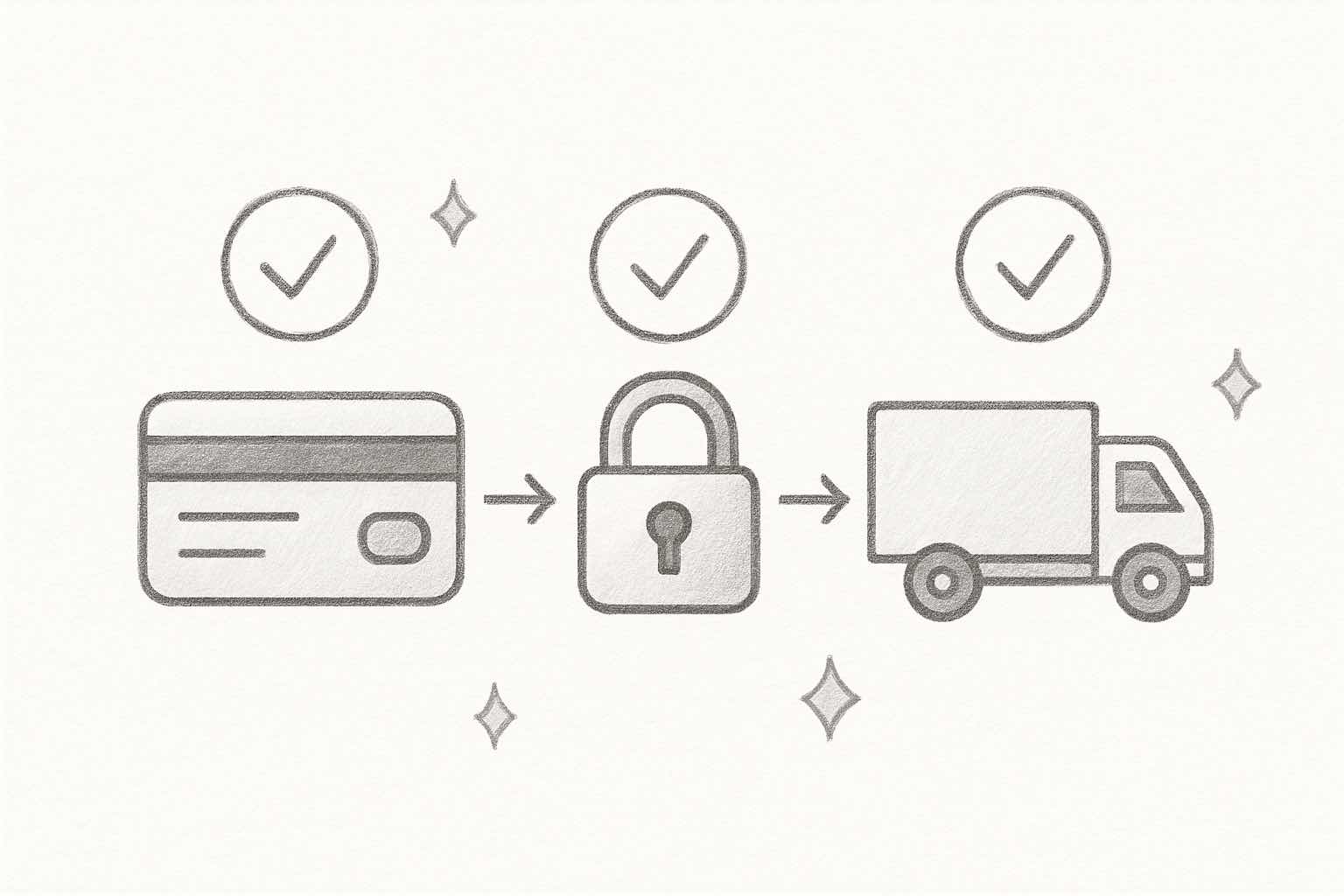
Shopify Payments (powered by Stripe) does not support CBD transactions. Period. If you try to process CBD sales through Shopify Payments, your account will be flagged and potentially shut down.
The "high-risk" problem
Banks and payment processors classify CBD as a high-risk industry. That means higher processing fees, stricter application requirements, and the ever-present risk of account freezes.
Standard e-commerce processing fees run about 2.9% + $0.30 per transaction. For CBD, expect 3.5% to 5% (sometimes higher), plus Shopify's additional 0.5-2% fee for using an external payment gateway.
Payment processors that work with CBD Shopify stores
| Processor | Standout Feature | Typical Fee Range |
|---|---|---|
| PaymentCloud | High-risk specialist, fast approval | 3.5-5% |
| Bankful | Bitcoin accepted, multi-platform | 3.5-5% |
| NMI | CRM features, unified commerce | Custom pricing |
| PayKings | 24+ banking partnerships | 3.5-5% |
| DigiPay | Digital wallets, fast setup | Custom pricing |
| Square | Online + in-store, well-known brand | 3.5%+ |
What to look for in a processor:
- Shopify integration: Not all high-risk processors integrate cleanly. Confirm before signing.
- Chargeback protection: CBD has higher-than-average chargeback rates. You need tools like alerts and prevention services.
- Transparent fees: Watch for hidden monthly minimums, setup fees, and rolling reserves.
- No long-term contracts: Month-to-month is ideal. Avoid processors that lock you in for 2-3 years with early termination fees.
The backup processor rule
Never rely on a single payment processor. Account freezes happen without warning in the CBD space. Have a second processor set up and tested so you can switch within hours, not days. Some processors have even been known to shut down CBD accounts with 45 days notice (Elavon did this to its CBD merchants), leaving stores scrambling.
Marketing your CBD store when you can't run ads
Here's the reality: most traditional ad platforms either ban or severely restrict CBD advertising. So you need a different playbook.
SEO and content marketing
This is your biggest growth lever. Since paid ads are mostly off the table, organic search becomes your primary acquisition channel.
Build a blog on your Shopify store. Write about:
- CBD dosage guides for different products
- How CBD is made (extraction methods, sourcing)
- CBD for specific use cases (sleep, recovery, pets)
- Product comparisons and buying guides
Target long-tail keywords that your potential customers are actually searching for. Good e-commerce marketing starts with content that answers the questions your customers already have.
Email marketing
If SEO is your biggest growth channel, email is your best retention channel. And for CBD, it might be even more important than usual.
Here's why: since you can't run retargeting ads on Facebook or Google, every visitor who leaves your store without subscribing to your email list is probably gone forever. There's no pixel to follow them around the internet.
That makes your email capture strategy critical:
- Welcome sequences: Introduce your brand and educate new subscribers about CBD
- Educational drips: Share dosage tips, usage ideas, and product guides
- Reorder reminders: CBD is a consumable. Remind customers when it's time to restock.
- Abandoned cart emails: Still work, even without retargeting ads
Building strong e-commerce customer retention through email is a proven strategy for CBD brands specifically. Pair that with a solid DTC retention strategy, and you've got a flywheel.
Social media (organic only)
You can post organic content on Instagram, TikTok, and Facebook. Just don't directly promote products or make health claims.
What works:
- Behind-the-scenes content (how your products are made)
- Customer testimonials (without medical claims)
- Educational posts about the endocannabinoid system
- Lifestyle content around wellness routines
Influencer partnerships can also be effective. Since influencer posts aren't technically paid advertisements on the platform, they often fly under the radar.
Facebook and Google ads (limited)
Google started allowing some CBD ads in 2023, but only for topical CBD products and only in California, Colorado, and Puerto Rico. That's not enough to build a business on.
Meta (Facebook/Instagram) requires LegitScript certification before you can run CBD ads. The process takes weeks, and even then, you can only run in the US with no targeting under 18 and no health claims. It's possible, but not reliable as a primary channel.
For most CBD stores, paid ads should be a bonus, not the foundation.
Want to learn how other Shopify marketing apps can help fill the gap? There are plenty of tools beyond paid ads.
Customer service for CBD stores (and why it matters more than you think)
This is the section that every other CBD Shopify guide skips. And it might be the most important one.
CBD customers ask more questions
When someone buys a phone case, they don't call to ask about dosage. When someone buys CBD oil for the first time, they have questions:
- "How many drops should I take?"
- "Will this show up on a drug test?"
- "Is this legal in my state?"
- "Can I take this with my medication?"
- "What's the difference between full-spectrum and isolate?"
If you don't answer these questions, people don't buy. Or worse, they buy and then file a chargeback because the product "wasn't what they expected."
Phone support builds trust
For health and wellness products, phone support isn't a nice bonus. It's a trust signal. An email auto-reply saying "we'll get back to you in 24 hours" doesn't build confidence when someone has questions about a product they're putting in their body.
The problem? Most CBD store owners are small teams. They can't staff a phone line 24/7. And CBD purchases don't follow business hours. People research wellness products at night and on weekends.
How AI phone support solves this
This is where AI phone agents come in. Ringly.io provides an AI phone agent called Seth that handles inbound calls for Shopify stores around the clock. It looks up orders, processes returns, answers product questions, and escalates to a human when needed.
For CBD stores, that means:
- 24/7 availability: Customers calling at 10pm on a Sunday get a real answer, not voicemail
- Order tracking: "Where's my order?" calls handled automatically
- Product questions: Trained on your store's knowledge base and product details
- 73% resolution rate: Most calls resolved without human involvement
- 40 languages: Useful if you ship internationally
Setup takes about three minutes. No code required. Try it free for 14 days and see how it handles your CBD store customer service calls.
The brands that invest in customer service for natural products see lower chargeback rates, fewer returns, and higher repeat purchase rates.
Essential Shopify apps for CBD stores
You'll need some specialized tools. Here are the must-haves:
| App | Purpose | Starting Price |
|---|---|---|
| GA Age Verification 18+ | Age gate popup | Free |
| Judge.me | Product reviews | Free plan |
| Klaviyo | Email marketing (CBD-friendly) | Free up to 250 contacts |
| Recharge | Subscription billing | $99/mo |
| Ringly.io | AI phone support | $349/mo |
| Loox | Photo reviews | $9.99/mo |
Age verification is non-negotiable. The free GA Age Verification app handles basic popup verification. If you need stricter ID-based checks (some states require it), look at AgeChecker.Net or BlueCheck.
Reviews are critical for trust. CBD buyers rely heavily on other customers' experiences. Judge.me's free plan covers the basics.
Email marketing through Klaviyo is the go-to for CBD brands. They explicitly support CBD stores, which not all email platforms do.
Subscriptions are a revenue multiplier. If you're selling consumables (and you are), Recharge turns one-time buyers into recurring customers. It typically costs $99/month but pays for itself quickly.
AI phone support through Ringly.io handles customer calls automatically. When you can't afford a full-time support team but need to provide excellent customer service, AI is the answer. Check out more Shopify customer service apps and the best tools for Shopify to find what works for your store.
For a deeper look at support options, see our roundup of the best Shopify customer service apps.
Shipping and fulfillment for CBD products
Shipping CBD isn't as straightforward as shipping regular products. Carrier policies differ, and getting it wrong can mean seized packages or account bans.
USPS: Your best option for most CBD shipments. USPS allows hemp-derived CBD with less than 0.3% THC, but you must include proper labeling and a Certificate of Analysis. No international shipments of CBD through USPS.
UPS: Allows hemp CBD but requires Adult Signature Required service as of 2025. No international hemp shipments. No vape or liquid vape products.
FedEx: Avoid FedEx for CBD. They maintain a broad prohibition on cannabis and hemp-derived ingestible products.
Best practices for CBD shipping:
- Include COAs in every shipment: Protects you if a package is questioned
- Use USPS or UPS for domestic: Most reliable carriers for CBD
- Clearly label products: "Hemp-derived CBD, <0.3% THC"
- Check state restrictions: Some states restrict CBD delivery even if your state allows sales
- Consider a 3PL: Fulfillment providers like ShipBob handle CBD-compliant shipping at scale
For more on e-commerce shipping trends and stats, we have a full data breakdown.
Scaling your CBD Shopify store
Once your store is running and making sales, here's how to grow.
Build a subscription model
CBD is a consumable. Monthly subscriptions are natural for oils, gummies, and topicals. Offering a 10-15% discount for subscribers creates predictable recurring revenue and boosts customer lifetime value.
Expand your product line
Start with one category (say, oils) and expand into adjacent products. Pet CBD is one of the fastest-growing segments. Topicals have lower compliance friction than ingestibles. Bundles increase average order value.
Automate customer support
As your order volume grows, so do your support tickets. Automating customer service with AI phone agents and chatbots keeps your costs flat while your revenue scales. That's the difference between a store that grows profitably and one that hires a new support rep every quarter.
Focus on retention over acquisition
Since paid acquisition is limited for CBD, every customer matters more. Use your email list, subscription program, and loyalty programs to keep existing customers buying. If you can reduce churn on Shopify, your growth compounds without increasing ad spend. Also explore Shopify customer retention apps that can help automate this.
Ready to see what AI phone support looks like for your CBD store? Start your free trial. Setup takes three minutes.
Frequently asked questions
Can you sell CBD on Shopify in 2026?
Yes. Shopify officially supports the sale of hemp-derived CBD products that contain less than 0.3% THC. You'll need to complete the Hemp Attestation form in your Shopify admin before you can list CBD products.
Does Shopify Payments work for CBD?
No. Shopify Payments (powered by Stripe) does not support CBD transactions. You'll need a third-party payment processor like PaymentCloud, Bankful, or NMI that specializes in high-risk industries.
Do you need a license to sell CBD online?
You need a standard business license to operate any e-commerce business. Some states require additional reseller licenses for CBD. Check with your Secretary of State's office and a business attorney for your specific location.
What payment processor is best for CBD Shopify stores?
There's no single "best." PaymentCloud and Bankful are popular choices with fast approval. The key is finding one that integrates with Shopify, offers transparent pricing (3.5-5%), and doesn't lock you into long-term contracts. Always have a backup processor ready.
Can you advertise CBD on Facebook or Google?
Google allows limited CBD ads for topical products in a few states. Facebook requires LegitScript certification. Neither platform is reliable as a primary marketing channel. Focus on SEO, email, and organic social instead.
How do you handle customer service for a CBD store?
CBD customers need more support than average. They ask about dosage, legality, and product differences. Phone support is a strong trust signal for health products. AI phone agents like Ringly.io handle calls 24/7 and resolve about 73% of inquiries without human involvement.
Is CBD dropshipping profitable on Shopify?
It can be, but margins are thinner than white-label or custom products. The advantage is low startup cost and no inventory risk. The downside is less control over quality and branding. Make sure your dropshipping supplier provides current COAs for every product.
Your move
Starting a CBD store on Shopify is harder than most e-commerce businesses. The payment processing is more expensive, the advertising options are limited, and the compliance requirements are real.
But the market is growing fast, margins are strong, and the barriers to entry keep competition lower than open categories. The store owners who win are the ones who get the fundamentals right: legal compliance, a reliable payment processor (or two), content-driven marketing, and customer service that actually answers the phone.
If you're running a Shopify store selling CBD, Ringly.io can handle your customer calls starting today. Try it free for 14 days and see the difference 24/7 AI phone support makes for a health and wellness brand.