

Customer service can make or break an online store.
Research from Salesforce shows that 71% of customers make purchase decisions based on service quality.
Another 88% say good service makes them more likely to buy again.
The challenge? Online shoppers expect instant answers, seamless support across channels, and personalized help without ever meeting you face-to-face.
Get it right and you build loyalty that drives repeat revenue. Get it wrong and customers abandon their carts for competitors just one click away.
This guide covers everything you need to build an effective ecommerce customer service operation.
We'll explore the channels that matter, proven strategies for managing support at scale, how AI fits into the picture, and the metrics that actually indicate success.
Editor’s note: Want to hear some sample AI support calls made for your Shopify store?
- Just paste your store URL
- Get sample calls in under 20 seconds (no email required)
- Listen to demo calls for my store
What is ecommerce customer service?
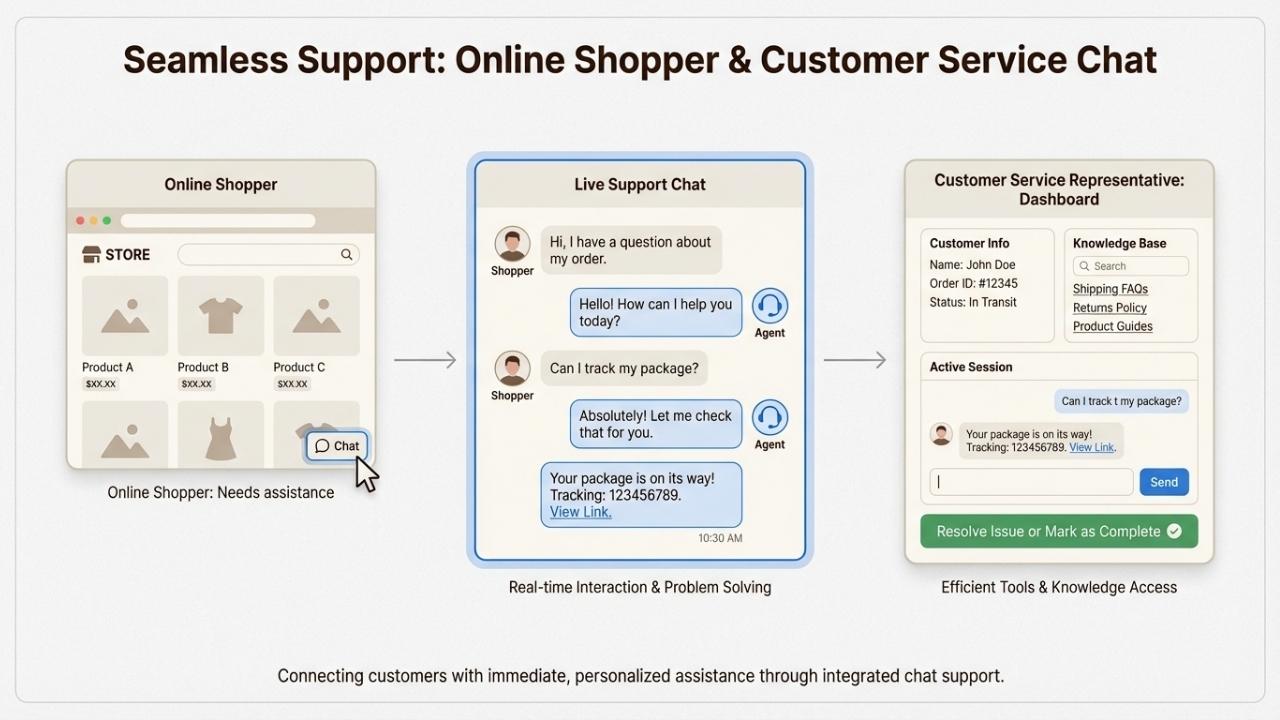
Ecommerce customer service is the support you provide to shoppers before, during, and after they make a purchase.
It spans the entire journey from answering pre-sale questions about sizing or compatibility to resolving delivery issues and processing returns.
Unlike traditional retail, you never meet your customers face-to-face.
Every interaction happens through screens, which raises the stakes for responsiveness and clarity. A confused shopper cannot flag down a sales associate.
They either find answers quickly or leave.
The scope includes:
- Pre-sale support: Product questions, sizing help, compatibility checks, policy clarifications
- Purchase support: Payment issues, order modifications, checkout troubleshooting
- Post-sale support: Order tracking, delivery problems, returns, exchanges, warranty claims
Zendesk research shows that 65% of consumers will spend more with brands that let them start conversations on one channel and continue on another.
This omnichannel expectation defines modern ecommerce support.

Essential customer service channels for ecommerce
Customers expect to reach you on their terms. Here are the channels that matter most for online stores.
Live chat and chatbots
Live chat has become the default expectation for ecommerce.
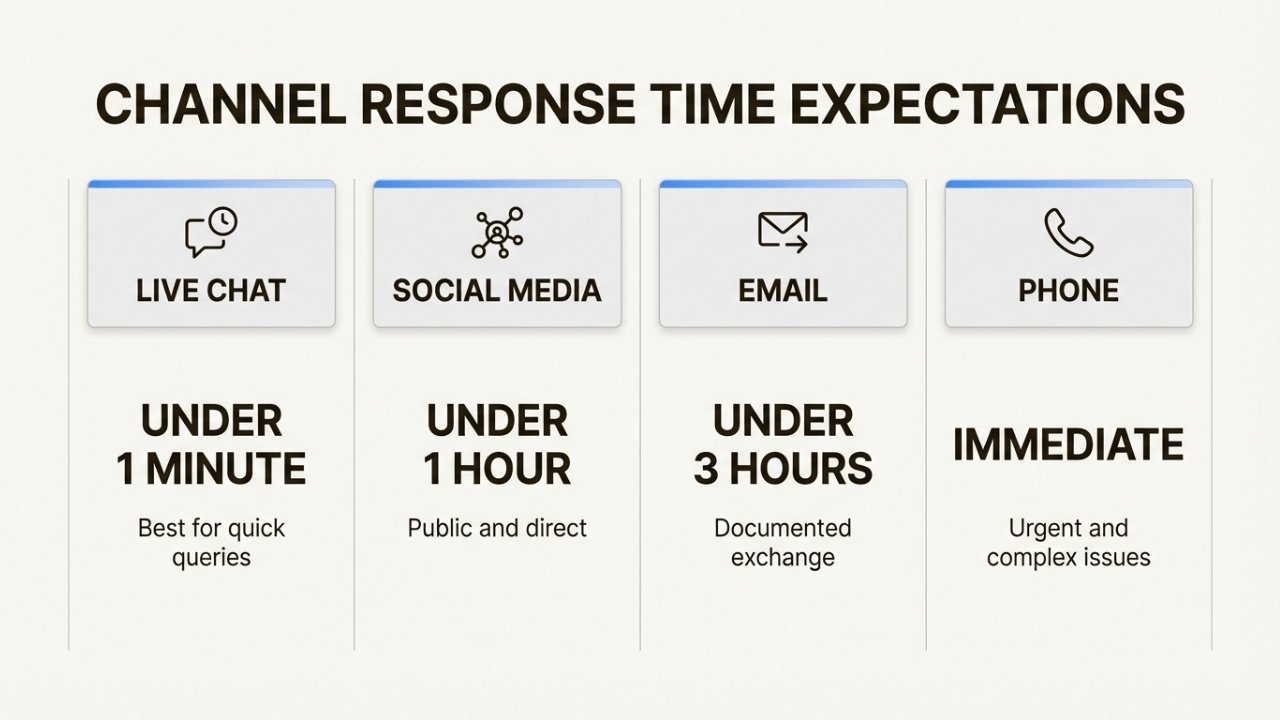
Gladly reports that consumers expect responses via in-app live chat in under one minute.
The bar is high because the competition is one click away.
AI chatbots now handle routine queries effectively.
SupportYourApp data suggests AI can automate up to 80% of common requests like order tracking and return initiations.
The key is knowing when to escalate to humans. Complex complaints, emotional situations, and unique requests still need a personal touch.
Email support
Email remains essential for detailed troubleshooting and documentation. Response time expectations have shifted dramatically.
Gladly notes that email resolution expectations have dropped from over 12 hours to under 3 hours.
Email works best for issues requiring investigation, written confirmation, or step-by-step guidance.
It is less urgent than chat but more formal than social media.
Phone support
Despite the rise of digital channels, Gladly found that 57% of customers still want phone support available.
Voice calls build trust for high-value purchases and complex issues where tone matters.
The challenge is cost and availability. Staffing phones 24/7 is expensive, which is why many growing stores look to AI phone agents for after-hours coverage.
Social media and messaging apps
Salesforce data shows 18% of consumers prefer social media for support.
The public nature of social responses makes speed critical. A frustrated customer tweet that sits unanswered for hours damages your brand.
Messaging apps like WhatsApp and Facebook Messenger are increasingly popular for support.
They blend the immediacy of chat with the familiarity of personal messaging.
Self-service (knowledge base, FAQs)
Salesforce research indicates 61% of customers prefer to help themselves before contacting support.
A well-organized help center reduces ticket volume significantly.
Essential knowledge base topics for ecommerce include:
- Shipping timelines and regions
- Return and exchange policies
- Sizing guides and product specifications
- Order cancellation and modification procedures
- Payment troubleshooting
Building your ecommerce customer service strategy
Good service does not happen by accident. It requires documented standards, the right tools, and clear processes.
Document your standards
Start by defining how your team communicates. What tone should agents use? Friendly and casual, or professional and formal? Document examples of approved language and phrases to avoid.
Set response time commitments by channel. For example:
| Channel | Target Response | Maximum Response |
|---|---|---|
| Live chat | Under 1 minute | 2 minutes |
| Phone | Immediate | 20 seconds |
| Social media | Under 1 hour | 2 hours |
| Under 3 hours | 24 hours |
Create escalation procedures so agents know when to involve supervisors or specialized teams.
Set up the right tools
A help desk software centralizes all customer conversations in one place.
Look for platforms that integrate with your ecommerce system so agents can see order history without switching tabs.
Key integrations to prioritize:
- Shopify or your ecommerce platform: Instant access to orders, tracking, and customer data
- Shipping providers: Real-time tracking updates
- Inventory systems: Stock availability checks
- CRM: Complete customer history across all touchpoints
Create your knowledge base
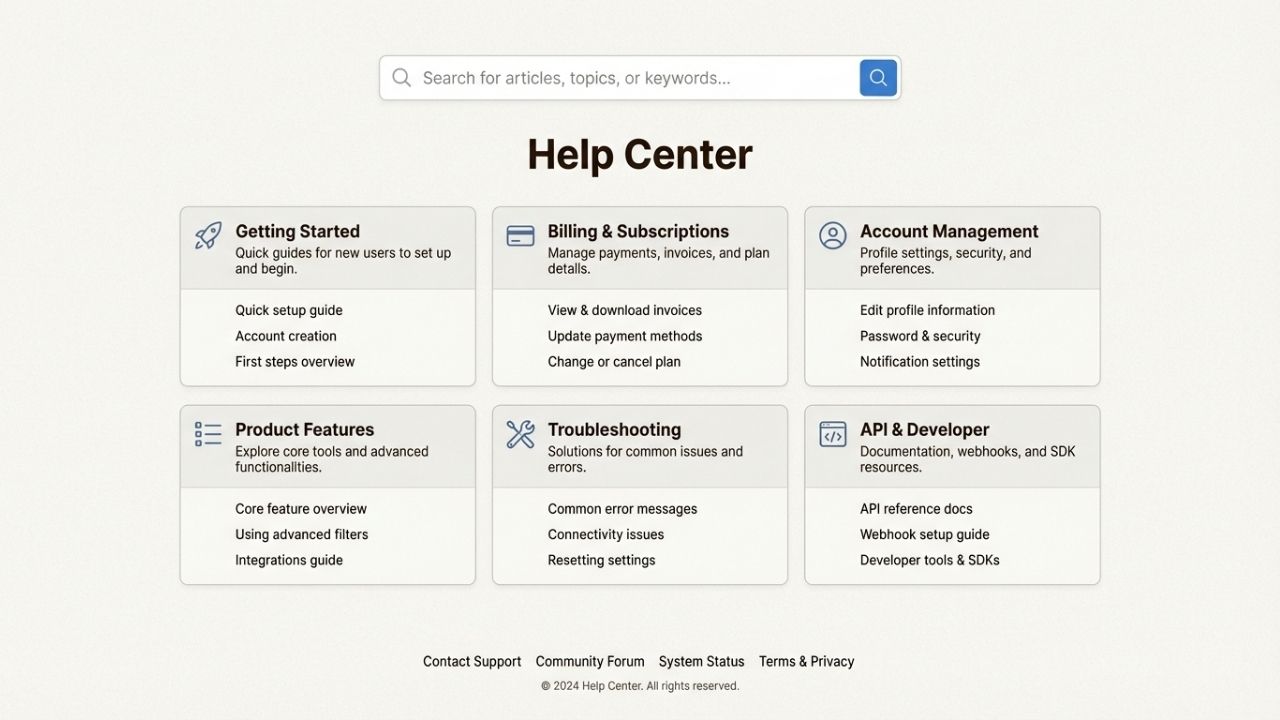
Start with the ten most common questions your support team receives.
Write clear, concise answers for each. Include screenshots or videos where visual explanation helps.
Structure your help center logically. Group articles by topic (Shipping, Returns, Products, Account).
Use clear titles that match the words customers actually use when searching.
Review and update articles monthly based on new tickets. If customers keep asking something not covered, add it.
Plan for peak seasons
Ecommerce support volume spikes predictably around Black Friday, Cyber Monday, and Christmas. Help Scout notes that holiday prep starts months in advance.
Scaling strategies include:
- Seasonal hiring: Bringing on temporary staff for peak periods
- AI automation: Deploying chatbots and voice agents to handle routine queries
- Expectation setting: Communicating extended response times transparently
- Overtime staffing: Paying existing team members for additional hours
AI and automation in ecommerce customer service
Artificial intelligence has moved from novelty to necessity in ecommerce support.
Salesforce found that 53% of customers believe AI helps companies serve them better.
What AI handles well
Modern AI agents excel at routine, data-driven tasks:
- Order status lookups
- Return and exchange initiations
- FAQ responses
- Order modifications (address changes, cancellations)
- Product recommendations based on purchase history
These tasks follow predictable patterns and access structured data, making them ideal for automation.
What still needs humans
Some situations require empathy, judgment, and creativity that AI lacks:
- Complex complaints involving multiple issues
- Emotional customers who need reassurance
- Unique requests outside standard procedures
- Escalations involving fraud or security concerns
Transparency matters
Salesforce research shows 81% of consumers prefer knowing whether they are talking to an AI or a human.
Being upfront builds trust. Program your AI to say something like "I'll connect you with a human agent who can help with that" when escalating.
Ringly.io: AI phone support for Shopify stores
Ringly.io offers an AI phone agent designed specifically for ecommerce.
The AI handles inbound calls 24/7, answers questions using your knowledge base, looks up orders in Shopify, and processes returns automatically.
The platform integrates natively with Shopify, pulling real-time order data to answer "where is my order" calls instantly.
The AI resolves approximately 73% of calls without human intervention, escalating only complex or emotional situations to your team.
Most stores go live within an hour, not weeks. You can try the AI free for 14 days.

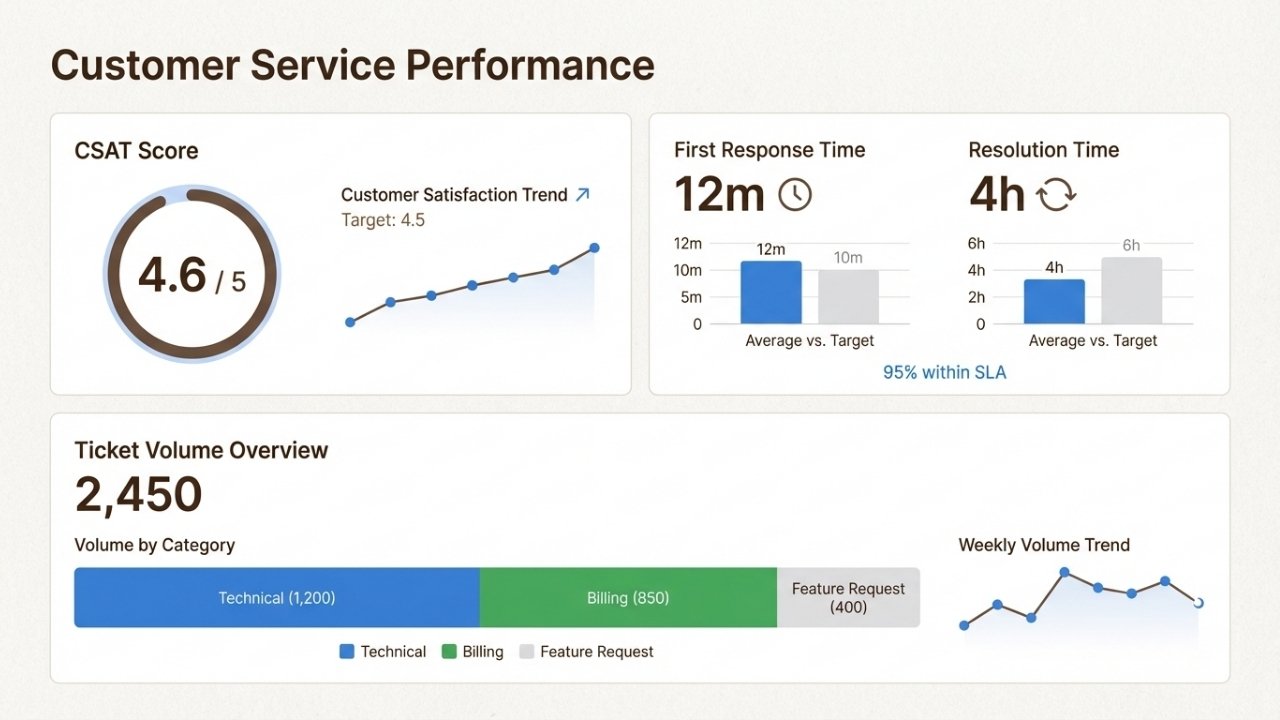
Key metrics to measure ecommerce customer service success
You cannot improve what you do not measure. Here are the metrics that matter most.
Speed metrics
- First response time: How quickly customers get their first reply
- Average resolution time: Total time from ticket creation to resolution
- First contact resolution rate: Percentage of issues solved in one interaction
Industry benchmarks vary by channel. Phone calls should resolve in minutes. Email might take hours.
Track each channel separately for accurate assessment.
Quality metrics
- CSAT (Customer Satisfaction Score): Post-interaction survey asking customers to rate their experience
- NPS (Net Promoter Score): Measures likelihood to recommend your brand
- Customer Effort Score: Asks how easy it was to get help
Quality metrics matter more than speed in the long run. A fast but unhelpful response still frustrates customers.
Efficiency metrics
- Tickets per order: Support volume relative to sales volume
- Agent utilization: Percentage of time agents spend on productive work
- Cost per ticket: Total support cost divided by ticket volume
Using data to improve
Tag every ticket with a topic or issue type. Review tags monthly to identify patterns.
Are return requests spiking after a specific product launch? Is a particular shipping carrier generating complaints?
Share insights with other teams. Support data reveals product issues, website confusion, and marketing misalignments that affect the whole business.
Common ecommerce customer service mistakes
Even well-intentioned support operations fall into these traps:
Slow response times: The most common complaint across all channels. Set clear internal targets and monitor them daily.
Inconsistent information: When different agents give different answers, trust erodes. Maintain a single source of truth in your knowledge base.
Making customers repeat themselves: Nothing frustrates shoppers more than explaining their issue multiple times. Use CRM systems that preserve conversation history across channels.
Missing self-service options: Forcing every customer to contact you wastes their time and yours. Build a help center that actually answers common questions.
Ignoring feedback patterns: One complaint about a packaging issue is anecdotal. Ten complaints about the same issue is data. Track trends and act on them.
Understaffing during peaks: Running lean saves money in slow months but creates disasters during holidays. Plan capacity for your busiest days, not your average ones.
Scaling your ecommerce customer service as you grow
Your support needs evolve as your store grows. Here is how to scale effectively at each stage.
Stage 1: Founder handling (0-10 orders per day)You answer every email and chat personally.
This builds deep customer understanding but is not sustainable. Document common responses as templates for future hires.
Stage 2: First hire plus help desk (10-50 orders per day)Bring on a dedicated support person. Implement help desk software to track tickets and maintain response standards. Build out your knowledge base based on actual customer questions.
Stage 3: Team plus AI automation (50-200 orders per day)Add specialized roles like returns processing or technical support.
Deploy AI chatbots for routine queries. Implement quality assurance processes to review agent responses.
Stage 4: Specialized roles plus outsourcing (200+ orders per day)Build a structured team with supervisors, senior agents, and specialists.
Consider outsourcing after-hours coverage or overflow volume. Invest in advanced analytics and workforce management tools.
When phone volume exceeds 20 calls daily, or when you need after-hours coverage, AI phone support becomes cost-effective. Ringly.io offers a 14-day free trial to test whether AI phone support fits your store's needs.
Omnichannel support is now a customer expectation. Our omnichannel retail statistics for 2026 show how brands are responding.
Hiring for your support team? Use our ecommerce customer service job description guide as a starting point for writing the perfect listing.
Frequently Asked Questions
What is ecommerce customer service?
Ecommerce customer service is the support provided to online shoppers throughout their buying journey. It includes answering pre-sale questions, resolving purchase issues, handling returns, and providing post-purchase assistance through channels like chat, email, phone, and self-service resources.
Why is ecommerce customer service important for online stores?
Research shows 71% of customers make purchase decisions based on service quality, and 88% are more likely to repurchase after positive experiences. Good service builds trust, reduces returns, and turns one-time buyers into loyal customers who recommend your store.
What channels should my ecommerce customer service include?
Essential channels include live chat for immediate help, email for detailed issues, phone for complex situations, social media for public inquiries, and a self-service knowledge base. The right mix depends on your customer demographics and product complexity.
How fast should my ecommerce customer service respond?
Response expectations vary by channel: live chat under 1 minute, phone immediately, social media within 1-2 hours, and email within 3-24 hours. Meeting these benchmarks significantly impacts customer satisfaction and conversion rates.
Can AI really handle ecommerce customer service effectively?
AI excels at routine tasks like order tracking, returns, and FAQs, handling 70-80% of common queries autonomously. However, complex issues, emotional situations, and unique requests still require human agents. The best approach combines AI efficiency with human empathy.
What metrics should I track for ecommerce customer service?
Track speed metrics (response and resolution times), quality metrics (CSAT, NPS), and efficiency metrics (tickets per order, cost per ticket). Quality matters more than speed, but both impact customer loyalty and repeat purchase rates.
How do I scale ecommerce customer service as my store grows?
Scale through stages: founder handling initially, then first hire with help desk software, followed by team expansion with AI automation, and finally specialized roles with potential outsourcing. Add AI phone support when volume exceeds 20 calls daily or you need 24/7 coverage.
Industry-specific customer service guides
Different industries face unique customer service challenges. We have put together detailed guides for specific verticals: customer service for CBD and hemp brands, customer service for supplement brands, phone support for skincare brands, DTC wellness brand customer service, and subscription box phone support.