
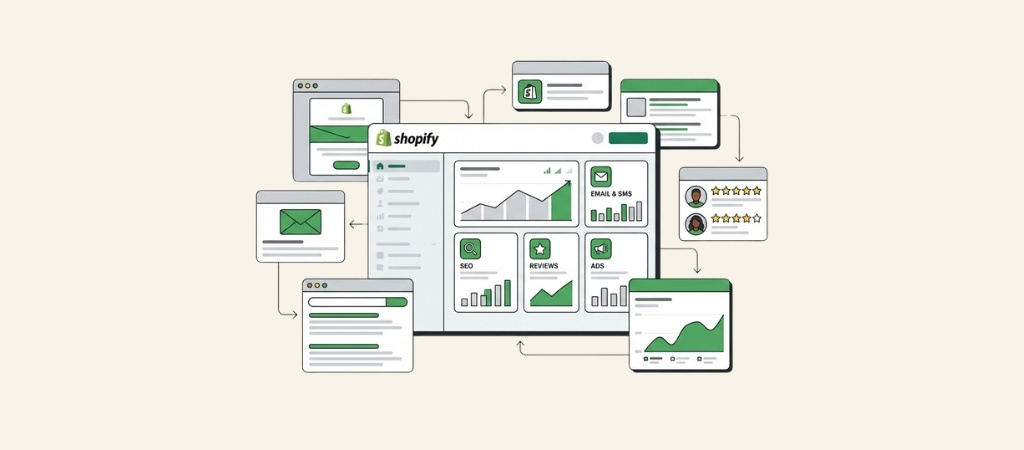
With over 16,000 apps in the Shopify App Store, finding the right marketing tools feels overwhelming.
You need apps that actually move the needle, not just add another monthly subscription to your stack.
The right marketing apps can automate your customer acquisition, turn browsers into buyers, and keep existing customers coming back.
But choose wrong, and you end up with bloated software that slows down your store and drains your budget.
This guide cuts through the noise. We have rounded up seven essential Shopify marketing apps across the categories that matter most: email and SMS, SEO, social proof, and advertising.
Each one has been tested by thousands of merchants and delivers measurable results.
Editor’s note: Want to hear some sample AI support calls made for your Shopify store?
- Just paste your store URL
- Hear sample calls for your store (no email required)
- Listen to demo calls for my store
What are Shopify marketing apps?
Shopify marketing apps are tools that integrate directly with your store to help you attract, convert, and retain customers. Think of them as specialized team members that work 24/7 to grow your business.
These apps typically fall into five core categories:
- Email and SMS marketing Tools like Klaviyo and Omnisend that automate customer communication through personalized campaigns and abandoned cart recovery
- SEO optimization Apps like Plug in SEO that help your store rank higher in Google search results
- Social proof and reviews Platforms like Judge.me and Loox that collect and display customer reviews to build trust
- Push notifications Tools like PushOwl that re-engage visitors with browser notifications
- Advertising and retargeting Solutions like AdRoll that manage paid campaigns across multiple channels
The best apps connect seamlessly with your Shopify data. They pull product information, customer behavior, and order history to create personalized experiences without manual work on your end.
Quick comparison of the best Shopify marketing apps
| App | Category | Starting Price | Best For |
|---|---|---|---|
| Klaviyo | Email/SMS | Free (250 contacts) | Advanced automation |
| Judge.me | Reviews | Free / $15/mo | Building social proof |
| Plug in SEO | SEO | Free plan available | Search visibility |
| Omnisend | Email/SMS | Free (250 contacts) | Easy automation |
| PushOwl | Push notifications | Free (500 emails) | Cart recovery |
| Loox | Visual reviews | $12.99/mo | Photo/video reviews |
| AdRoll | Advertising | Pay-as-you-go | Paid acquisition |
The 7 best Shopify marketing apps
1. Klaviyo
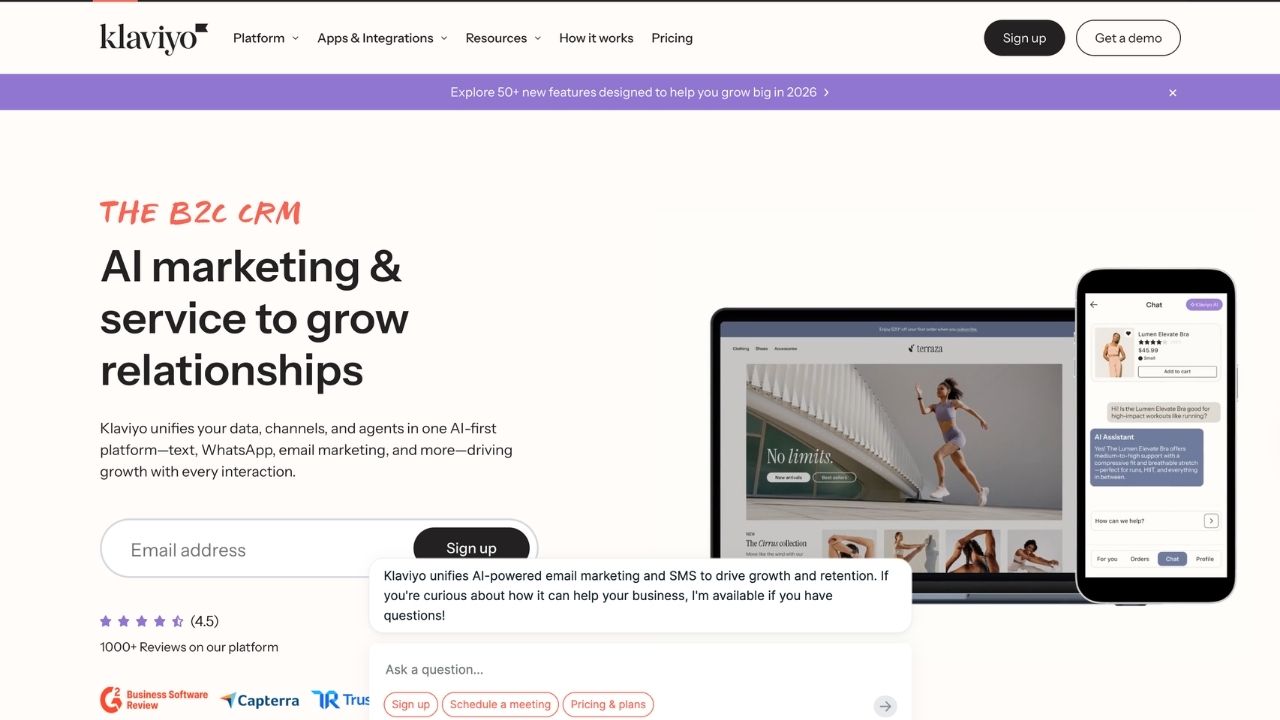
Klaviyo has become the standard for ecommerce email marketing, and for good reason. The platform powers over 193,000 brands and offers a depth of automation that grows with your business.
The standout feature is the flow builder. You can create sophisticated automated sequences based on customer behavior: abandoned cart emails, browse abandonment, post-purchase follow-ups, and win-back campaigns. The visual editor makes it easy to map out complex journeys without writing code.
Segmentation is where Klaviyo shines. You can target customers based on purchase history, browsing behavior, predicted lifetime value, and dozens of other data points. The AI-powered segment suggestions help you find high-value audiences you might have missed.
Key features:
- Advanced segmentation with 350+ data points
- Pre-built automation flows for common scenarios
- AI-powered content generation and product recommendations
- Native SMS marketing in the same platform
- Deep Shopify integration with real-time sync
Pricing: Free up to 250 contacts and 500 emails monthly. Paid plans start at $20/month and scale based on contact count.
Pros:
- Industry-leading segmentation capabilities
- Excellent deliverability rates
- Comprehensive reporting and attribution
Cons:
- Can get expensive as your list grows
- Steeper learning curve than simpler tools
2. Judge.me
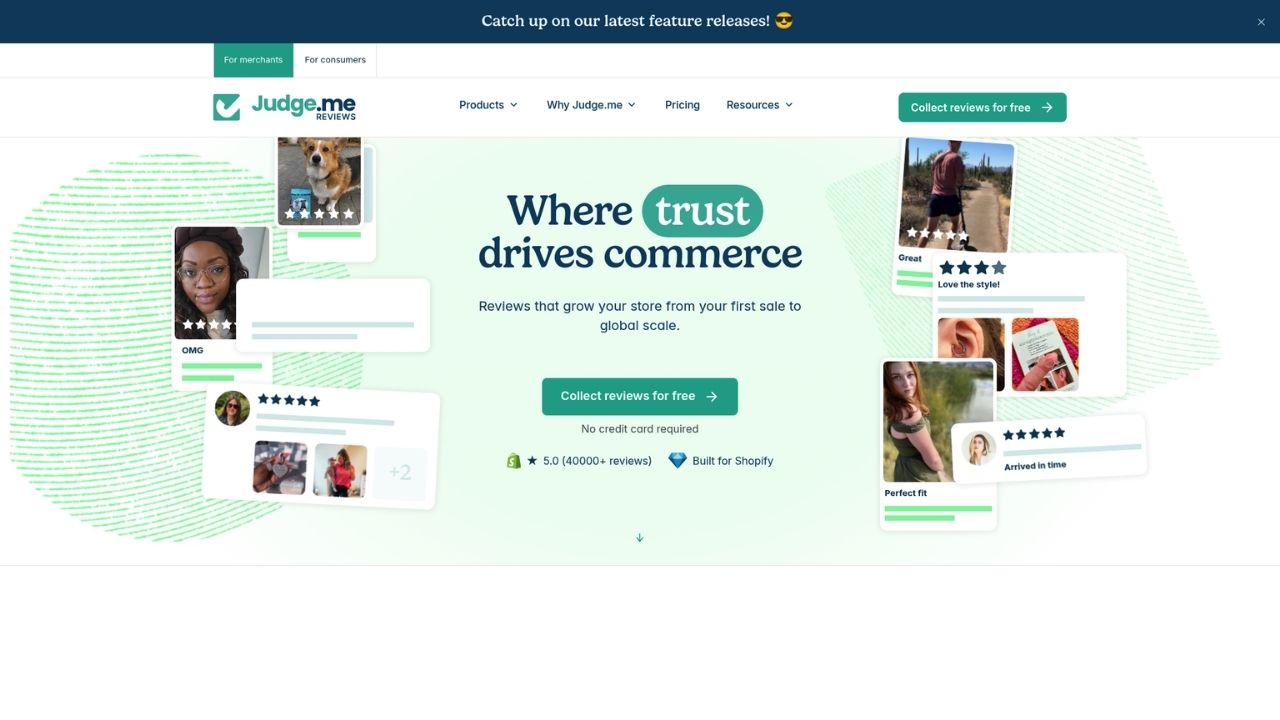
Judge.me is the most popular review app on Shopify for a reason. With over 500,000 stores using the platform and 35 million verified reviews collected, it delivers social proof that actually converts.
The forever free plan is genuinely generous. You get unlimited review requests, unlimited photo and video reviews, and all the core display widgets. Most stores can run successfully on the free tier indefinitely.
What sets Judge.me apart is the focus on conversion. The widgets are designed to look native to your theme, and the SEO features help your products stand out in Google search with rich snippets showing star ratings.
Key features:
- Unlimited review requests and visual reviews
- 38 languages supported
- AI-powered review summaries and replies
- Google Shopping and social media syndication
- Referral and coupon integration
Pricing: Forever free plan available. Awesome plan at $15/month adds AI features, 130+ integrations, and advanced widgets.
Pros:
- Truly unlimited free plan
- Flat pricing that does not scale with store size
- 24/7 support with 40-second average response time
Cons:
- Some advanced features require the paid plan
- Widget customization can feel limited without CSS knowledge
3. Plug in SEO
SEO does not have to mean hiring an expensive agency. Plug in SEO gives you the tools to optimize your store yourself, with step-by-step guidance that makes technical SEO approachable.
The app runs automated audits of your entire store, checking for broken links, missing meta descriptions, slow-loading pages, and other issues that hurt your search rankings. Each finding comes with a clear explanation and instructions on how to fix it.
For stores publishing content, the SEO content optimizer helps you write product descriptions and blog posts that actually rank. It analyzes your content against top-ranking pages and suggests improvements.
Key features:
- Automated SEO audits with fix recommendations
- Broken link detection and repair
- Content optimization for product pages
- Speed optimization tools
- 24/7 live support
Pricing: Free plan available with core features. Paid plans unlock advanced audits and automation.
Pros:
- No SEO expertise required
- Actionable recommendations, not just data
- Proven 50% improvement in organic traffic for active users
Cons:
- Some advanced features require paid plans
- Results take time (SEO is a long game)
4. Omnisend
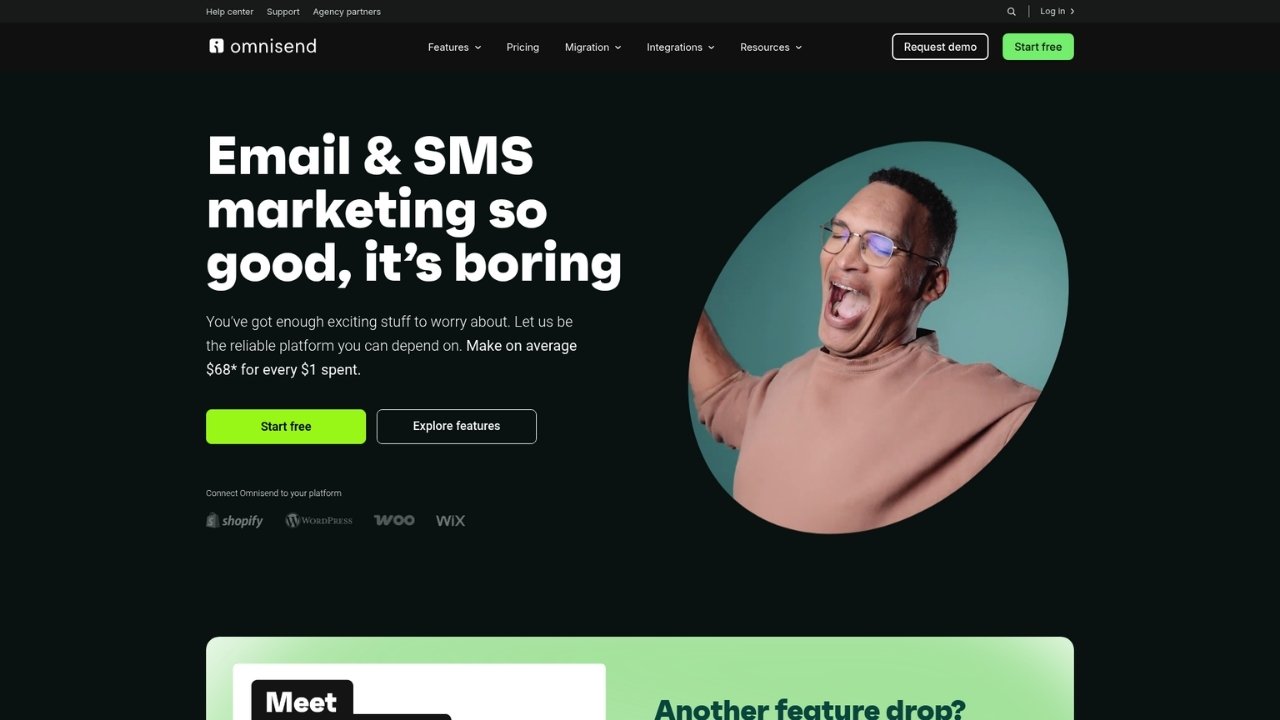
If Klaviyo feels like overkill for your current stage, Omnisend offers a more approachable entry point into email and SMS marketing. The platform serves 150,000+ brands and emphasizes ease of use without sacrificing capability.
The pre-built automation templates are a major time-saver. You can launch abandoned cart sequences, welcome series, and post-purchase flows in minutes rather than hours. The drag-and-drop editor is intuitive, and the product picker makes it easy to showcase items from your catalog.
Omnisend also includes web push notifications in the same platform, giving you three channels (email, SMS, push) without managing multiple apps.
Key features:
- Pre-built automation workflows
- Drag-and-drop email builder with product blocks
- SMS marketing with global reach
- Web push notifications included
- AI-powered segmentation and content generation
Pricing: Free up to 250 contacts, 500 emails, and 60 SMS credits. Standard plan starts at $16/month.
Pros:
- Easier learning curve than competitors
- All-in-one email, SMS, and push
- Excellent free plan for small stores
Cons:
- Less advanced segmentation than Klaviyo
- SMS pricing can add up at scale
5. PushOwl
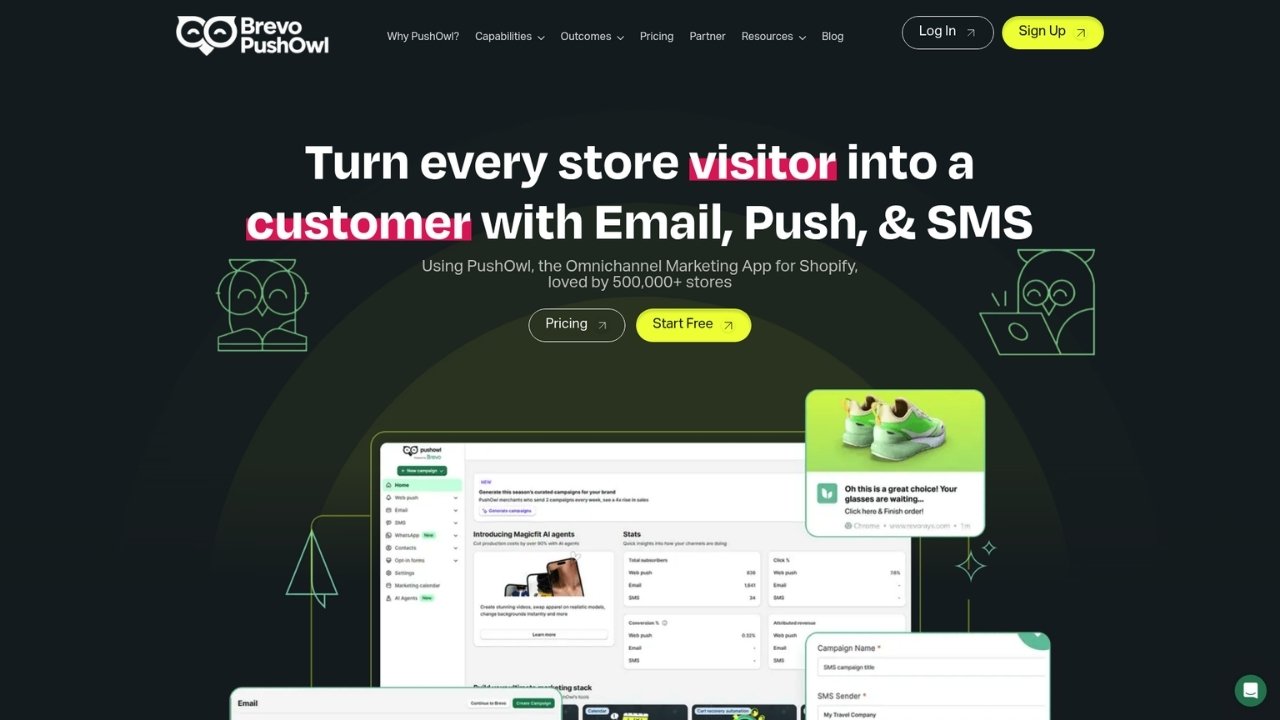
Email inboxes are crowded. Push notifications cut through the noise by appearing directly in your customers' browsers, even when they are not on your site.
PushOwl is the leading push notification app for Shopify, used by over 35,000 stores. The Most stores go live within an hour, and the impact on revenue can be immediate. One merchant reported generating $200,000 in revenue from push notifications within a year of consistent use.
The abandoned cart recovery flows are particularly effective. When someone adds items to their cart but does not check out, PushOwl automatically sends a notification reminder. These typically see higher click-through rates than email recovery sequences.
Key features:
- Abandoned cart recovery notifications
- Price drop and back-in-stock alerts
- Browser-based push notifications
- Email marketing integration
- Campaign scheduling with rich media
Pricing: Free up to 500 emails and 500 web push impressions monthly. Plus plan at $19/month includes 10,000 emails and unlimited push.
Pros:
- Higher engagement rates than email
- No contact limits on push notifications
- Quick setup with no coding required
Cons:
- Requires users to opt-in (lower reach than email)
- Limited to browser-based notifications
6. Loox

While Judge.me excels at text reviews, Loox specializes in visual social proof. If you sell products where appearance matters (fashion, beauty, home goods), photo and video reviews from real customers can dramatically boost conversion rates.
The platform optimizes every step of review collection to maximize visual submissions. Smart timing, proven incentives, and mobile-friendly request flows encourage customers to share photos and videos of their purchases.
The display widgets are designed to showcase visual content beautifully. From homepage galleries to product page carousels, Loox makes customer photos a core part of your store's design.
Key features:
- Photo and video review collection
- Beautiful visual widgets and galleries
- Built-in referral program
- Integration with Klaviyo, Omnisend, and Smile
- SEO-rich snippets for search visibility
Pricing: Plans start at $12.99/month for 500 monthly review requests. Scale plan at $39.99/month adds referrals and upsells.
Pros:
- Best-in-class visual review display
- Strong focus on photo/video collection
- Referral program included
Cons:
- No free plan (14-day trial only)
- More expensive than Judge.me for basic review needs
7. AdRoll
Organic marketing only gets you so far. When you are ready to scale with paid advertising, AdRoll helps you manage campaigns across multiple channels from one dashboard.
The platform specializes in retargeting: showing ads to people who visited your store but did not buy. This is typically the highest-ROI form of paid advertising for ecommerce because you are reaching people who already expressed interest.
AdRoll connects with Facebook, Instagram, TikTok, Pinterest, and display networks, letting you coordinate campaigns across channels. The cross-channel attribution shows you which touchpoints actually drive conversions, so you can allocate budget wisely.
Key features:
- Multi-channel retargeting campaigns
- Cross-channel attribution reporting
- Dynamic product ads
- Email marketing integration
- AI-powered bid optimization
Pricing: Pay-as-you-go based on ad spend. Minimum $5 daily spend to launch campaigns. Managed services available for qualifying budgets.
Pros:
- Unified dashboard for multiple ad channels
- Strong retargeting capabilities
- No monthly software fees (pay for ads only)
Cons:
- Requires ad budget to see results
- Can be complex for beginners
How to choose the right marketing apps for your store
With seven solid options, how do you decide which ones to install first? Here is a practical framework for making the right choice.
Start with your biggest bottleneck. If you are getting traffic but no sales, focus on social proof with Judge.me or Loox. If you have customers but no repeat purchases, prioritize email marketing with Klaviyo or Omnisend. Match the app to your current problem.
Consider your technical comfort level. Some apps, like PushOwl and Judge.me, work great out of the box with minimal configuration. Others, like Klaviyo and AdRoll, reward the time you invest in learning their advanced features. Be honest about how much setup time you can commit.
Watch out for app overload. Every app you install adds weight to your store and complexity to your workflow. Start with two to three essential apps, master them, and add more only when you have a specific need. A store running five apps well beats one struggling with fifteen.
Test before you commit. Most of these apps offer generous free plans or trials. Use them. Set up the core features, run them for a few weeks, and measure the impact before upgrading to paid plans.
Start growing your Shopify store today
The apps on this list have collectively helped hundreds of thousands of Shopify merchants grow their businesses. They are proven, reliable, and designed specifically for ecommerce.
You do not need all seven. Pick the two or three that address your current priorities, get them running, and measure the results. Marketing success comes from consistent execution, not from having every possible tool installed.
As your store grows, your marketing needs will evolve. The foundation you build today with email automation, social proof, and smart SEO will support every stage of your journey.
And remember: marketing brings customers to your store, but customer experience keeps them coming back. If you are looking to provide exceptional phone support without hiring a full team, Ringly offers an AI phone agent that handles calls 24/7, answers order questions, and processes returns automatically. It integrates seamlessly with Shopify and can resolve up to 73% of calls without human intervention.
Frequently Asked Questions
What are the best free Shopify marketing apps available?
Judge.me offers the most generous free plan with unlimited reviews and photos. Klaviyo and Omnisend both offer free tiers up to 250 contacts. PushOwl gives you 500 free emails and push impressions monthly.
How do I choose between Klaviyo and Omnisend for email marketing?
Choose Klaviyo if you need advanced segmentation and have the time to learn a more complex platform. Choose Omnisend if you want easier setup and prefer pre-built templates that work out of the box.
Do I need both Judge.me and Loox for product reviews?
No, choose one based on your needs. Judge.me is better for text reviews and affordability. Loox is worth the extra cost if visual content (photos and videos) is crucial for your products.
When should I start using paid advertising apps like AdRoll?
Start with AdRoll once you have consistent organic traffic and proven conversion rates. Retargeting works best when you have at least 1,000 monthly visitors to retarget.
How many Shopify marketing apps should I install at once?
Start with two to three apps maximum. Focus on mastering them before adding more. Too many apps can slow your store and create integration headaches.
Can these marketing apps work together?
Yes, most of these apps integrate with each other. For example, Judge.me connects with Klaviyo for review request emails, and Loox integrates with Omnisend for automated flows.
Want to see the latest data? Read our 50 Shopify store statistics and trends for 2026.