

Wellness customers aren't buying a product. They're buying trust.
When someone orders a collagen powder or a new skincare serum from your Shopify store, they're putting something on (or in) their body based on your word. That's a different kind of transaction than selling phone cases or throw pillows.
And here's the problem most wellness brands run into: they spend heavily on acquisition but barely think about the experience after checkout. That's exactly where loyalty is won or lost. According to McKinsey, 84% of U.S. consumers now say wellness is a top priority in their lives, and they purchase wellness products monthly at a 74% rate (Klaviyo). The wellness brand ecommerce customer experience you deliver will determine whether those customers stick around or shop somewhere else next month.
This guide covers nine specific strategies that wellness brands use to build real loyalty and hit the 30-45% retention rates that separate the winners from the rest.
Hear what AI support calls sound like for your store. Just paste your Shopify URL and get sample calls in under 20 seconds, no email required. Listen to demo calls for my store.
Why wellness brand ecommerce customer experience is different
Let's get this out of the way first: wellness CX isn't like selling socks.
The stakes are personal. A customer calling about a supplement interaction or a skin reaction isn't just annoyed. They're worried. Maybe even scared. That emotional dimension makes every touchpoint matter more in wellness than in most other ecommerce verticals.
Three things make wellness CX uniquely challenging:
- Product education is non-negotiable: Customers need to understand ingredients, dosing, sourcing, and third-party testing before they'll trust you enough to buy. A one-line product description won't cut it.
- Subscription models dominate: Most wellness products are consumables. That means subscriptions are the business model, and subscription management IS your customer experience.
- Questions are complex: "Can I take this with my blood pressure medication?" is a fundamentally different support question than "Where's my package?" Your support team (or your AI) needs deeper product knowledge than almost any other ecommerce vertical.
Here's a stat that should make you pay attention: according to Emplifi, 4 out of 5 consumers abandon a brand after just three poor experiences. For wellness brands, where trust is everything, that threshold might be even lower.
If you're selling health and wellness products and your ecommerce customer service feels generic, you're leaking customers.
Compare that to a brand like Bulletproof, which invested early in omnichannel support to handle the specific types of questions their customers ask about nootropics and supplements. They focused on reducing inbound request volumes through education while improving first contact resolution for the calls that do come through. That combination of prevention plus quality support is the playbook for wellness CX.
The natural products ecommerce support challenge is real: your agents need to know the difference between MCT oil and coconut oil, between ashwagandha and rhodiola, between third-party tested and self-certified. Generic scripts playing checkers while your customers are playing chess.
Build a pre-purchase education engine
Most wellness purchases start with research, not a click on an ad.
Your customers are googling ingredient lists, reading Reddit threads about bioavailability, and comparing third-party test results before they ever add something to their cart. If your product pages don't answer those questions, someone else's will.
Here's what works:
- Ingredient transparency on every product page: Full ingredient breakdowns, sourcing information, and links to third-party test certificates. Not buried in a PDF. Right on the page.
- Quiz-based product recommendations: These do double duty. They help customers find the right product and they collect zero-party data you can use for personalization later. The Collagen Co. ran a quiz through Okendo and hit a 20x ROI with a 9.7% conversion rate in a single month.
- Educational content that builds trust over time: Blog posts, usage guides, ingredient deep-dives. Not salesy content. Genuinely useful information that positions your brand as a credible source.
According to the Medallia 2024 State of CX Personalization Report, 82% of customers say personalization drives their brand choice. Quizzes are one of the fastest ways to deliver that personalized experience before a customer even makes their first purchase.
And 58% of consumers are specifically interested in personalized supplement products (McKinsey), with that number jumping to 71% among Gen Z and millennials.
One more thing: don't sleep on educational email sequences. A "Welcome to Wellness" series that teaches new subscribers about your ingredients, sourcing, and how to get the best results builds confidence before the product even arrives. Brands like HappyV used un-gated educational pop-ups and saw 26.4% desktop engagement and 16.5% mobile engagement. That's not a marketing gimmick. That's customers hungry for information.
Make your checkout feel safe, not salesy
Trust at checkout is fragile. One wrong signal and your conversion rate suffers.
For wellness brands, the checkout page carries extra weight because customers are already making a decision that involves their health. Here's what separates a checkout that converts from one that leaks:
- Trust badges that actually matter: GMP certification, NSF testing, USDA Organic, third-party lab verification. These aren't decoration. They're the reason a first-time buyer clicks "Place Order" instead of bouncing.
- Subscription transparency upfront: Show the per-unit cost, the billing frequency, and your cancellation policy before they enter payment info. Don't hide the auto-enroll. Customers who feel tricked cancel fast and leave brutal reviews.
- Simple, predictable pricing: No surprise shipping charges at the last step. No confusing tiered discounts that make people feel like they're getting a worse deal.
True brand loyalty fell to just 29% in 2025, a 5-point drop from 2024 according to Circana. That means your checkout experience needs to earn trust, because customers aren't giving it away for free anymore.
The median health and beauty ecommerce conversion rate is 3.4% (Digital Commerce 360). If your checkout is adding friction instead of removing it, that number only goes down.
Honestly, the wellness brands I see losing the most customers at checkout are the ones with confusing subscription opt-ins. A customer thinks they're buying one bottle. They get charged again 30 days later. Now you've got a chargeback, a bad review, and a lost customer. Transparency isn't just nice. It's protection against all three.
Offer real phone support (not just chat and email)
Here's something most wellness brands overlook: your customers want to talk to someone.
76% of consumers prefer phone when they need support. And phone satisfaction sits at 91%, compared to 85% for live chat. When someone's worried about an ingredient interaction or confused about dosing their new supplement, they don't want to type out a long email and wait 24 hours for a response.
But here's the objection I hear from every small wellness brand: "We can't afford phone support."
That used to be true. In-house support agents cost $55,000-$85,000 per year. Even outsourced offshore agents run $1,280-$2,400 monthly. For a brand doing $20K-$50K/month in revenue, that's a hard sell.
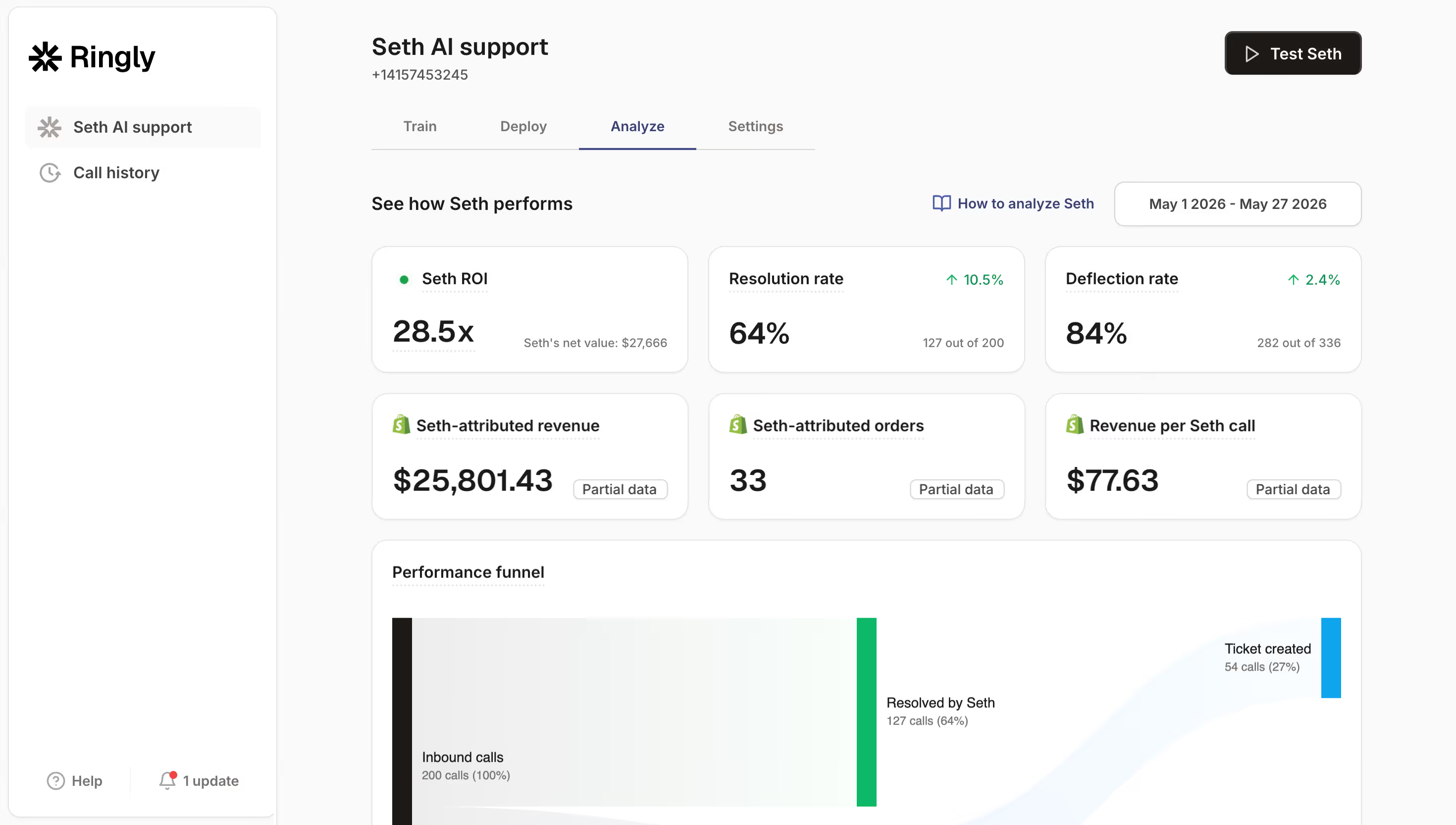
That's where AI phone agents change the math. Ringly.io puts an AI phone agent (named Seth) on your ecommerce phone support line that can look up orders, answer product questions, process returns, and handle subscription management calls. It resolves about 73% of calls without needing a human, works in 40 languages, and setup takes about three minutes.
At $349/month for 1,000 minutes, it's a fraction of what even one part-time agent would cost. And it's available 24/7, which brings us to the next point.
For wellness brands specifically, the AI phone agent works because it can be trained on your product catalog, ingredient lists, and support policies. So when a customer calls asking whether your magnesium supplement interacts with their calcium supplement, Seth can answer based on your knowledge base, not a generic script. That's the kind of product-specific support that small team customer service has struggled with until now.
See what AI phone support looks like for your wellness store. Setup takes three minutes.
Solve the after-hours problem
Wellness customers don't shop 9-to-5.
They're browsing supplements at 10pm after reading an article about magnesium. They're reordering skincare products on a Sunday morning. They have questions about their subscription while their kids are asleep.
And when they call or message your store at those hours, what happens? For most small wellness brands: nothing. A voicemail box. Maybe a chatbot that can't handle anything beyond "where's my order?"
That's a missed sale. Or worse, a missed chance to save a customer who's about to cancel their subscription.
After-hours customer service is one of the highest-impact, lowest-effort improvements a wellness brand can make. Over 60% of healthcare-related ecommerce traffic comes from mobile (OpenSend), and a big chunk of that happens outside business hours.
AI voice agents handle this without adding headcount. Calls that come in at midnight get the same quality of service as calls at noon: order lookups, return processing, subscription modifications, and product questions answered in real time.
Think about the math for a moment. If 20% of your support inquiries come in outside business hours (and for most wellness brands it's higher than that), and you're not handling them, you're leaving revenue on the table every single night. A customer who wants to reorder at 11pm and can't get an answer is a customer who might not come back tomorrow.
Try Ringly.io free for 14 days and get Seth answering calls around the clock.
Make subscription management painless
Subscription-based wellness brands live or die by their cancellation experience.
This sounds counterintuitive, but the brands with the best retention rates are the ones that make it easy to pause, skip, or modify a subscription. When you force customers through hoops to cancel, they don't stay. They get angry, leave a one-star review, and tell Reddit about it.
What works instead:
- Self-service portals: Let customers skip a shipment, swap products, or change frequency without contacting support. This alone can reduce support tickets by 30-40%.
- Proactive communication: Send a reminder 3-5 days before the next shipment with an easy "modify or skip" button. Don't let the charge surprise them.
- Phone as a retention tool: When a customer calls to cancel, a well-trained agent (or AI) can understand why and offer a relevant alternative. Maybe they need a different product. Maybe they just want to pause for a month.
According to Bain & Company, improving retention by just 5% can increase profits by 25-95%. That math is even more dramatic in wellness, where customer retention benchmarks sit at 30-45% for good brands.
Look at BUBS Naturals. They were losing 70% of customers after the first purchase. After implementing predictive reorder tools and subscription conversion flows, they increased repeat revenue by 40% and doubled new subscriber signups. They now have over 5,000 monthly returning customers.
The lesson: don't fight cancellations. Fix the experience that causes them.
Here's another number from Recharge: 19% of Health & Wellness subscribers skipped at least one order. That's not churn. That's a customer telling you they want flexibility. Give it to them, and they'll stay. Force them into an all-or-nothing choice, and they'll choose nothing.
Use reviews and social proof strategically
In wellness, reviews aren't nice-to-have. They're the primary trust signal.
84% of customers trust online reviews, and for products people put on or in their bodies, that number is effectively 100%. Nobody buys a new supplement without checking what other people experienced first.
Here's how to use reviews as a CX tool, not just a marketing asset:
- Respond to every review: Positive and negative. When you respond to a negative review thoughtfully, potential customers see how you handle problems. That response often matters more than the complaint itself.
- Encourage specific reviews: "How did this product make you feel after 30 days?" gets better content than "Rate your experience." Specific reviews help future customers make decisions.
- Feature user-generated content: 55% of customers trust UGC over other forms of marketing. Real photos, real results, real language.
And here's something most brands miss: your review responses are a customer experience channel. A customer who leaves a 3-star review about slow shipping and gets a genuine, helpful response might become a repeat buyer. A customer who gets ignored won't.
If you're collecting reviews but not responding to them, you're leaving customer loyalty on the table.
For supplement brands specifically, encourage customers to mention specific outcomes: energy levels, sleep quality, skin changes. These outcome-specific reviews are more persuasive than generic five-star ratings because they answer the exact questions prospective buyers have. "I've been taking this for 45 days and my joint pain is noticeably better" sells more product than "Great quality, fast shipping" ever will.
Personalize the post-purchase experience
The sale isn't the finish line. It's the starting line.
Most wellness products need explanation after purchase. A supplement brand should be emailing dosing instructions and timing tips within hours of delivery. A skincare brand should send a routine guide showing where the new product fits in. A hair care brand should explain how their products work with specific hair types and textures.
Here's what smart post-purchase personalization looks like:
- Usage guides sent at delivery: Not a generic "thanks for your order" email. Actual instructions tailored to what they bought.
- Follow-up sequences timed to the product lifecycle: Check in at 2 weeks (how's it going?), then drop a reorder reminder at 25 days for a 30-day supply. Timing matters more than frequency.
- Segmented recommendations: Suggest products based on what they actually bought, not random cross-sells. A customer who bought a probiotic doesn't need to see ads for protein powder.
The data backs this up. According to Medallia, consumers who rate their experiences as "highly personalized" give satisfaction scores of 9.4 out of 10, compared to just 6.5 for those without strong ecommerce personalization.
And AI-powered personalization isn't just a nice idea. McKinsey found that companies using AI personalization earn 40% more revenue than those without it. AI also increases customer retention rates by 10-15%.
Here's where most wellness brands go wrong with post-purchase: they blast the same email to everyone. The customer who just bought their fifth bottle of vitamin D gets the same "introduction to our brand" email as the first-time buyer. That's not personalization. That's laziness.
The fix is straightforward. Segment your post-purchase flows by purchase count, product type, and subscription status. A first-time buyer needs onboarding. A repeat buyer needs recognition. A subscriber who just skipped a shipment needs a check-in, not another upsell. The ecommerce analytics to support this segmentation already exist in most Shopify apps. You just need to actually use them.
Build community, not just a customer list
Wellness is inherently social. People want to share results, compare routines, ask questions, and feel like they belong to something.
The brands that build communities around their products see lower churn, higher lifetime value, and a constant stream of user-generated content they didn't have to pay for.
This doesn't have to be complicated:
- A Facebook group or Discord server: Create a space where customers help each other. When someone asks about combining your products, other customers answer before your team needs to.
- Challenges and programs: 30-day wellness challenges, habit trackers, progress-sharing threads. These keep your brand top of mind between purchases.
- Referral programs tied to community: Referred customers have a 16% higher lifetime value according to Okendo. When your community members bring friends, everyone benefits.
77% of customers are more likely to remain loyal to brands with loyalty programs (Okendo). But the best loyalty programs for wellness brands aren't just points-for-discounts. They're programs that reward engagement, reviews, and community participation.
Gen Z and millennials drive 41% of wellness spending (McKinsey) despite being 36% of the adult population. They especially value community and shared experiences over transactional relationships.
And communities create a flywheel for your support team. When experienced customers answer questions about your products in a group, that's free, credible support. It reduces your ticket volume and builds trust at the same time. Obvi, a fast-growing wellness brand, used AI to triage over 10,000 support tickets per month and reduced first response time by 65%. But the community around their brand handles questions that never even become tickets.
Track the right CX metrics for wellness ecommerce
You can't improve what you don't measure. But most wellness brands track the wrong things.
Here are the metrics that actually matter for customer service KPIs in ecommerce:
| Metric | What it measures | Wellness benchmark |
|---|---|---|
| Customer retention rate | % of customers who buy again | 30-45% (good) |
| First contact resolution | % of issues solved in one interaction | 70-75% |
| Subscription churn rate | Monthly subscriber loss rate | Under 5% |
| Customer effort score | How easy it is to get help | Target: "very easy" |
| Phone resolution rate | % of calls resolved without escalation | 70-73% with AI |
A few numbers worth knowing:
Search converts at 21.9% for personal care products, the highest of any channel (MikMak Shopping Index). That means customers who find you through search are highly motivated. Don't lose them with a bad post-purchase experience.
And 71% of consumers expect personalized interactions (Accenture). When 76% get frustrated without personalization, generic customer experience isn't just suboptimal. It's actively pushing people away.
If you're using AI phone support through Ringly.io, you get built-in call analytics that track resolution rates, call reasons, and customer satisfaction automatically.
One thing worth noting: most wellness brands over-index on acquisition metrics (cost per click, ROAS, new customer count) and under-index on experience metrics. But the global wellness economy hit $6.7 trillion in 2024 (Global Wellness Institute), and the brands capturing a growing share of that market are the ones that retain customers, not just acquire them. Your customer service response time and resolution rate matter more than your ad spend.
Frequently asked questions
What makes wellness brand customer experience different from other ecommerce?
Wellness products involve personal health decisions, which raises the emotional stakes of every interaction. Customers ask complex questions about ingredients, dosing, and interactions that generic support scripts can't answer. The subscription-heavy business model also means your CX directly impacts retention and lifetime value.
How can a small wellness brand afford phone support?
AI phone agents make phone support accessible at any revenue level. Ringly.io starts at $349/month for 1,000 minutes and resolves about 73% of calls without human involvement. Compare that to $55,000-$85,000/year for an in-house agent.
What CX metrics should wellness brands track?
Focus on customer retention rate (benchmark: 30-45%), first contact resolution rate, subscription churn rate (target: under 5% monthly), and customer effort score. These four metrics give you the clearest picture of how your CX impacts revenue.
How do I reduce subscription churn for my wellness brand?
Make it easy to pause, skip, or modify subscriptions through self-service. Send proactive shipment reminders 3-5 days before billing. And when customers do call to cancel, use the conversation (whether human or AI) to understand why and offer alternatives like a product swap or a pause.
Should wellness brands use AI for customer support?
Yes, especially for phone support and after-hours coverage. AI handles routine calls (order tracking, subscription changes, product FAQs) so your team can focus on complex issues that need a human touch. AI also increases retention rates by 10-15%.
What's the best way to handle ingredient and safety questions?
Build a comprehensive knowledge base that covers every ingredient, potential interaction, and safety concern. Feed this into your support tools (whether human scripts or AI training data) so every agent can answer confidently. Never guess on health-related questions. If it's outside your scope, direct customers to a healthcare provider.
The bottom line
Wellness CX isn't about flashy loyalty programs or clever marketing funnels. It's about trust at every touchpoint.
The brands winning in this space are the ones that educate before the sale, make the purchase feel safe, and actually show up when customers need help after checkout. Phone support, subscription management, and personalized follow-ups aren't nice extras. They're the foundation.
Start with the two highest-impact areas: phone support and subscription management. These are where the biggest gaps exist for most wellness brands, and where the fastest wins are.
If you only do two things after reading this, make them these: add phone support (even AI-powered) so customers can get answers about your products in real time, and audit your subscription flow to make sure pausing and modifying is as easy as signing up. Everything else builds on that foundation.
Ready to add phone support to your wellness store? Start your free trial with Ringly.io. Seth can be answering your calls in three minutes.