

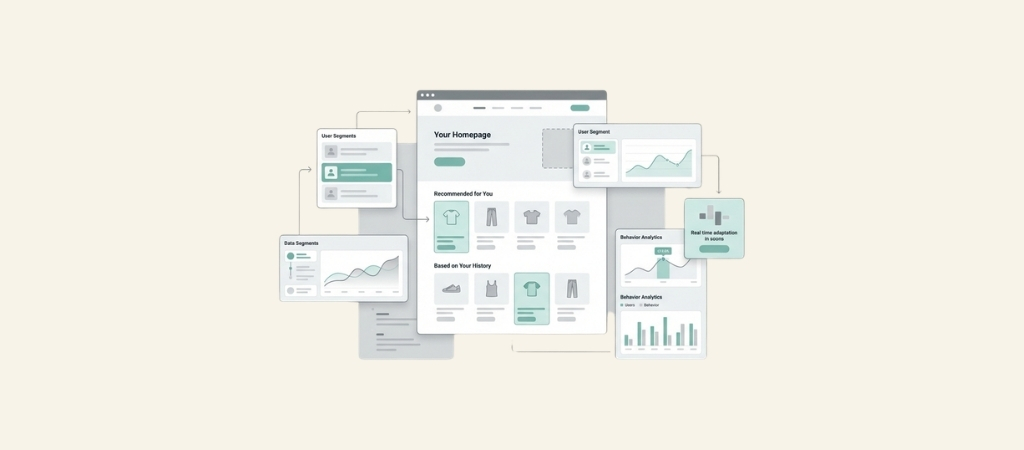
More than 80% of shoppers say they're more likely to buy from companies that offer personalized experiences.
That's not a marginal preference, it's a fundamental shift in how customers expect to be treated online.
Ecommerce personalization has evolved from a nice-to-have feature into a business necessity.
The good news is that the tools and strategies that once required enterprise budgets are now accessible to stores of all sizes.
Whether you're running a Shopify store with a hundred orders a month or managing a multi-million dollar operation, personalization can drive measurable improvements in conversion rates, average order value, and customer loyalty.
This guide covers what ecommerce personalization actually means, why it matters for your bottom line, proven strategies you can implement, and how to get started without overwhelming your team or budget.
Editor’s note: Want to hear some sample AI support calls made for your Shopify store?
- Just paste your store URL
- Get sample calls in under 20 seconds (no email required)
- Listen to demo calls for my store

What is ecommerce personalization?
Ecommerce personalization is the practice of tailoring online shopping experiences to individual customers based on their data and behavior. Instead of showing every visitor the same homepage, product recommendations, and offers, personalized experiences adapt in real-time to match what each shopper actually cares about.
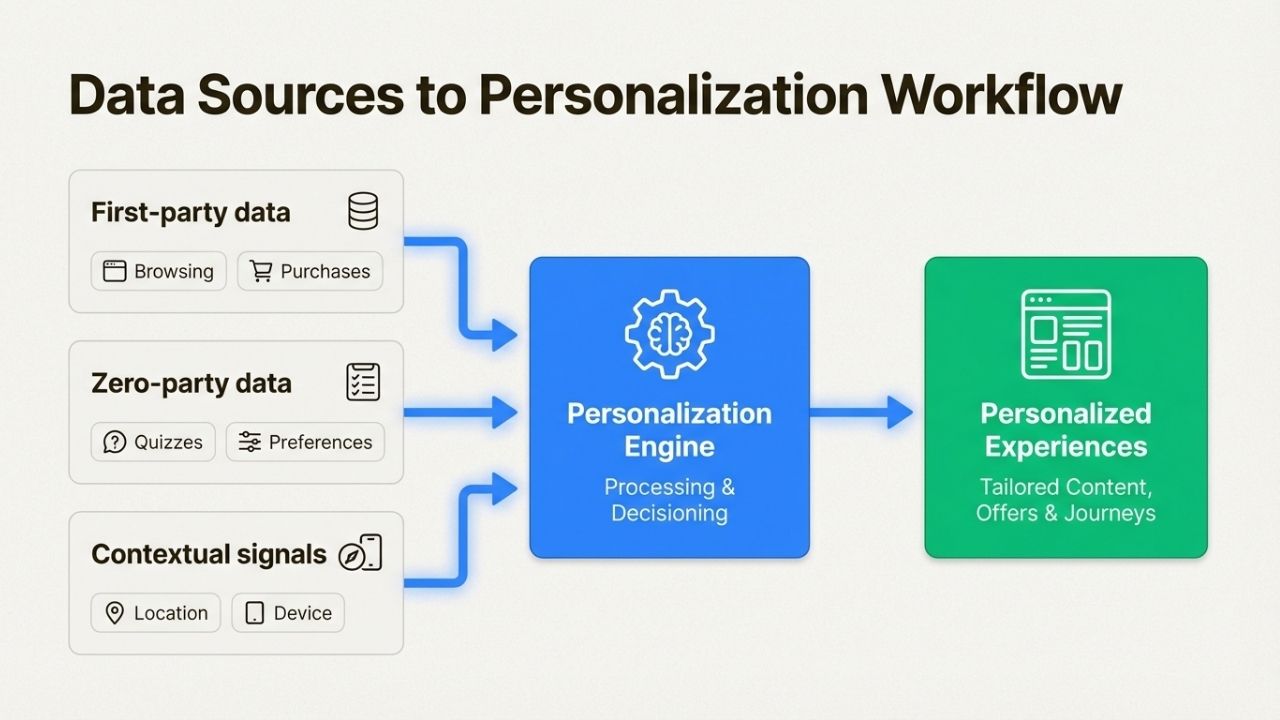
The data that powers personalization comes from several sources:
- Browsing behavior: Pages viewed, time on site, products added to cart
- Purchase history: Past orders, frequency of purchases, average spend
- Demographics: Location, device type, referral source
- Explicit preferences: Quiz responses, account settings, wishlists
- Contextual signals: Time of day, season, weather, local events
Before personalization became mainstream, online shopping was a one-size-fits-all experience.
Every visitor saw the same homepage hero image, the same "bestsellers" list, and the same promotional banners.
It was like walking into a department store where the displays never changed, regardless of who you were or what you were looking for.
Today's personalization uses AI and machine learning to create experiences that feel more like a local shopkeeper who recognizes you, remembers your preferences, and can point you toward exactly what you need.
The technology has matured significantly, and customers have come to expect this level of relevance as standard.
The business case for ecommerce personalization
The statistics around personalization make a compelling argument for investment.
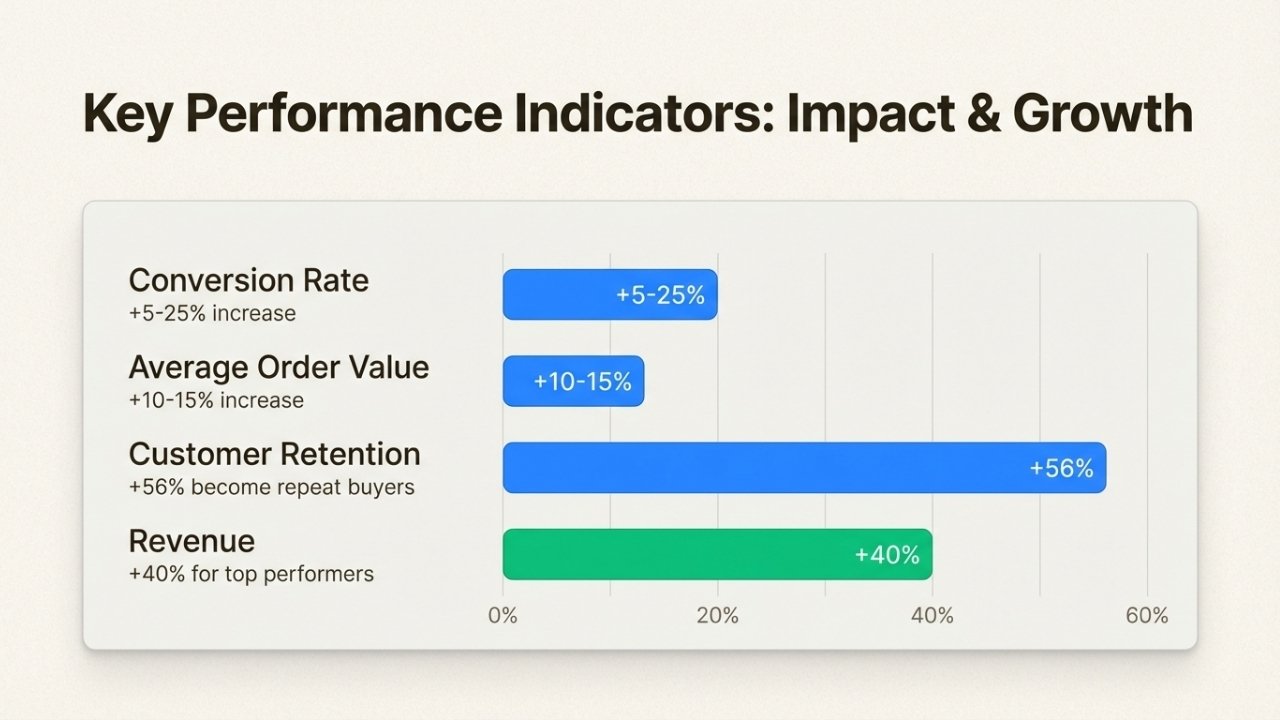
According to McKinsey research, companies that excel at personalization generate 40% more revenue than average performers. Not 5% or 10%, but 40%.
Here are the key numbers that matter:
- 80% of shoppers are more likely to buy from companies offering personalized experiences (Epsilon)
- 56% of consumers say they would become repeat buyers after a personalized experience (Segment)
- 20% average increase in sales when using personalized experiences (Monetate)
- Up to 50% reduction in customer acquisition costs through effective personalization (McKinsey)
- 10-15% improvement in average order value from AI-powered recommendations
The industry itself is growing rapidly. Experts estimate the personalization market will reach $11.6 billion globally by 2026.
Beyond the numbers, personalization addresses a fundamental challenge in ecommerce: the paradox of choice.
When customers face hundreds or thousands of products, they often choose nothing at all. Personalization cuts through the noise by showing relevant options, making decision-making easier and shopping more enjoyable.
Proven ecommerce personalization strategies
Not all personalization tactics deliver equal results.
Based on research across major ecommerce platforms and case studies from brands like Amazon, Shopify merchants, and Salesforce customers, here are the strategies that consistently drive results.
Dynamic product recommendations
Product recommendations remain the most widely implemented and effective form of personalization.
They work because they reduce friction, customers don't have to search for complementary items or alternatives.
Effective recommendation types include:
- "You might also like" suggestions based on current product views
- "Others also purchased" social proof recommendations at checkout
- "Recently viewed" carousels for returning visitors
- Cross-sell suggestions in the shopping cart
- Complete the look bundles for fashion and home goods
Implementation typically yields 5-25% increases in conversion rates and 10-15% improvements in average order value.
The key is placing recommendations contextually: suggest accessories on product pages, complementary items at checkout, and restock reminders post-purchase.
Behavioral email marketing
Email personalization goes far beyond adding a first name to the subject line.
Behavioral triggers based on customer actions drive significantly higher engagement than broadcast campaigns.
High-impact email triggers include:
- Cart abandonment sequences: Recover 10-20% of abandoned carts with timely reminders
- Browse abandonment follow-ups: Re-engage visitors who viewed products but didn't purchase
- Post-purchase cross-sells: Recommend complementary products after order confirmation
- Win-back campaigns: Re-engage inactive customers with personalized incentives
- Lifecycle messaging: Welcome series for new customers, loyalty rewards for repeat buyers
Klaviyo reports that personalized emails achieve much higher open and click rates than static blasts.
The key is timing: a cart abandonment email sent within an hour performs significantly better than one sent 24 hours later.
Intelligent search personalization
Site search is often overlooked, but it's where high-intent customers go when they know what they want.
Personalized search can increase conversion rates by 1.8x compared to generic search experiences.
Advanced search features to implement:
- Semantic understanding: Interpreting natural language queries beyond exact keyword matches
- Personalized ranking: Prioritizing results based on the user's past behavior and preferences
- Visual search: Allowing customers to upload images to find similar products
- Auto-complete suggestions: Based on individual search history and popular queries
For stores with large catalogs, intelligent search is often the highest-ROI personalization investment because it captures customers who already have purchase intent.
Location-based personalization
Geographic personalization goes beyond simply showing the correct currency and shipping options.
It enables culturally relevant experiences that resonate with local preferences.
Location-based tactics include:
- Region-specific product catalogs: Showing winter coats to Chicago visitors and swimwear to Miami visitors
- Local inventory and store information: Connecting online browsing to in-store availability
- Cultural and seasonal relevance: Aligning promotions with local holidays and events
- Weather-based recommendations: Suggesting umbrellas during rain forecasts or sunscreen during heat waves
This approach is particularly effective for fashion, outdoor gear, and seasonal products where local conditions significantly impact purchase decisions.
Customer lifecycle messaging
Not all customers are at the same stage with your brand. Lifecycle personalization recognizes these differences and tailors communication accordingly.
Key lifecycle stages to address:
- New visitors: First-time buyer discounts, educational content, brand story introduction
- First-time buyers: Onboarding sequences, product education, encouragement for second purchase
- Repeat customers: Loyalty program invitations, exclusive early access, personalized restock reminders
- VIP customers: White-glove service, dedicated support channels, surprise rewards
- At-risk customers: Win-back campaigns, feedback requests, special incentives
The goal is making each customer feel recognized for their relationship with your brand, not treated as just another transaction.
Real-world examples that work
Theory is useful, but seeing personalization in action helps clarify what's possible. Here are examples from businesses of different sizes implementing effective personalization.
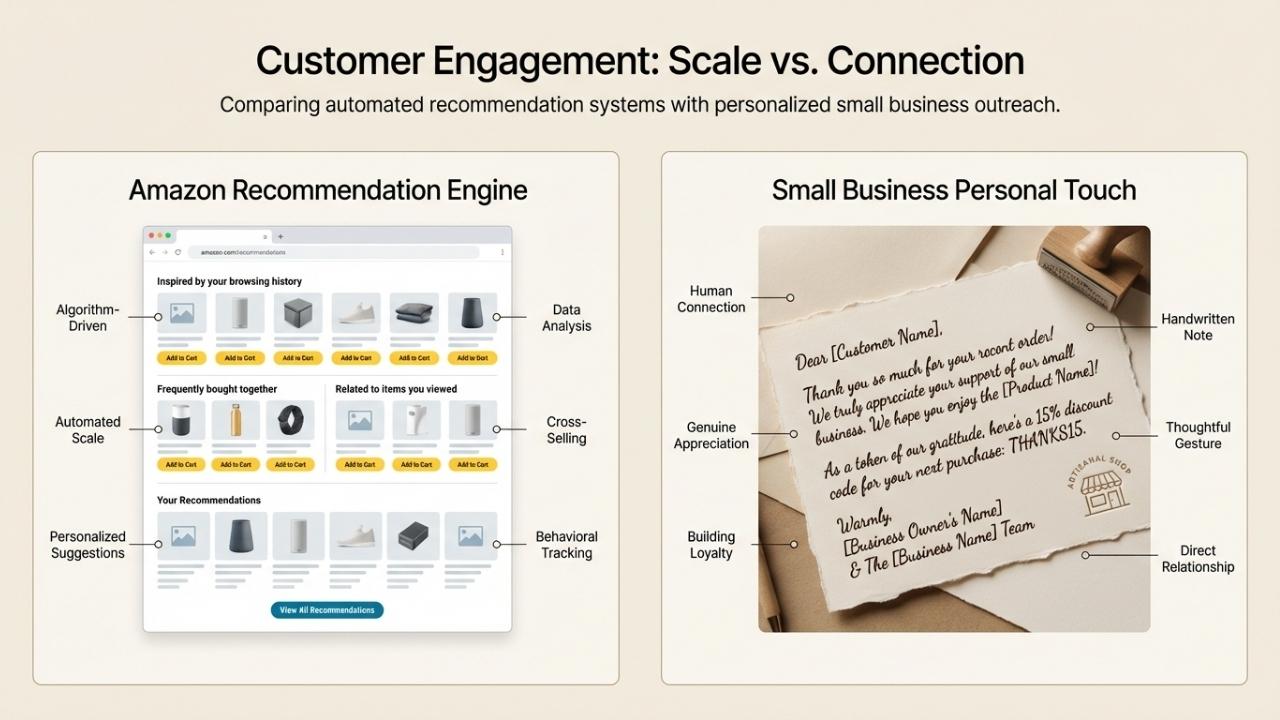
Amazon remains the gold standard for product recommendations. Their "Recommended for You" and "Frequently Bought Together" sections drive an estimated 35% of total sales.
The sophistication of their algorithms is unmatched, but the principle is simple: use purchase and browsing data to predict what customers want next.
Pura Vida Bracelets, a Shopify merchant, uses Nosto for intelligent product recommendations on their product detail pages.
They create two recommendation categories: "You Might Also Like" for similar styles and "Complete the Look" for complementary items. This approach helped them scale personalization without a massive tech investment.
Campus Protein implemented personalized bestseller lists segmented by location and time period.
Instead of showing generic bestsellers, they highlight what's popular among similar customers right now. This simple change doubled their year-over-year conversions.
SeaVees integrates user-generated content across their entire funnel.
Their homepage features Instagram posts from real customers wearing their products, creating social proof and helping shoppers visualize themselves with the items.
This approach is particularly effective because it combines personalization with authenticity.
For smaller businesses, personalization can be simpler but equally effective.
A handmade jewelry maker might include handwritten thank-you notes with each order, referencing the specific piece purchased.
A specialty food retailer could include recipe cards tailored to the products in each shipment. These touches create memorable experiences that drive word-of-mouth and repeat purchases.
Getting started: A phased approach
The biggest mistake businesses make with personalization is trying to do everything at once. A phased approach reduces risk, allows for learning, and builds organizational capability gradually.
Phase 1: Email personalization (Weeks 1-4)
Start with behavioral email triggers. They're relatively easy to implement, deliver immediate ROI, and build the data foundation for more advanced personalization. Focus on cart abandonment and welcome sequences first.
Tools to consider: Klaviyo, Omnisend, or your ecommerce platform's built-in email capabilities.
Phase 2: Product recommendations (Weeks 5-8)
Add recommendation widgets to your product detail pages. Most modern ecommerce platforms offer basic recommendation engines, or you can integrate specialized tools like Nosto or Dynamic Yield.
Start with "related products" and "customers also bought" suggestions. These require minimal setup but deliver consistent results.
Phase 3: Behavioral triggers and dynamic content (Weeks 9-16)
Implement on-site behavioral triggers like exit-intent popups with personalized offers. Add dynamic content blocks that change based on visitor type (new vs. returning, location, referral source).
This phase requires more technical implementation but delivers significant conversion improvements.
Phase 4: Advanced AI-powered personalization (Ongoing)
Once you've mastered the basics, explore AI-powered personalization that adapts in real-time based on multiple data signals. This might include personalized search, predictive recommendations, or dynamic pricing.
At each phase, track these key metrics:
- Conversion rate changes
- Average order value
- Email open and click rates
- Return visitor rate
- Customer lifetime value
Set baseline measurements before implementing changes so you can attribute improvements accurately.
Privacy-first personalization in 2026
The personalization landscape is shifting. Third-party cookies are disappearing, privacy regulations are tightening, and customers are more aware of how their data is used.
Successful personalization in 2026 requires a privacy-first approach.
First-party data is now essential. This is data you collect directly from your customers through their interactions with your store: browsing behavior, purchase history, account preferences, and customer service interactions.
Unlike third-party data purchased from brokers, first-party data is more accurate, more relevant, and fully under your control.
Zero-party data takes this further. It's information customers intentionally share with you: quiz responses, preference centers, survey answers, and account settings.
This data is incredibly valuable because customers are explicitly telling you what they want.
Strategies for privacy-compliant personalization:
- Be transparent: Clearly explain what data you collect and how you use it
- Offer value in exchange: Give customers a reason to share information (personalized recommendations, exclusive offers, faster checkout)
- Respect preferences: Honor opt-outs immediately and make privacy settings easy to find
- Focus on implicit signals: Use browsing behavior and purchase patterns rather than invasive demographic targeting
- Comply with regulations: Ensure your practices meet GDPR, CCPA, and other applicable requirements
The brands that thrive will be those that earn customer trust through transparent practices while still delivering relevant experiences.
Measuring personalization success
Personalization investments need to show returns. Here's how to measure whether your efforts are working.
Primary metrics:
- Conversion rate improvement: Compare conversion rates before and after personalization implementation
- Average order value changes: Track whether personalized recommendations increase cart sizes
- Revenue per visitor: A holistic metric that captures both conversion and AOV improvements
Secondary metrics:
- Email engagement: Open rates, click rates, and revenue per email for personalized campaigns
- Return visitor rate: Personalized experiences should increase loyalty and repeat visits
- Customer lifetime value: Long-term metric showing whether personalization builds lasting relationships
- Time to purchase: Effective personalization should help customers find what they want faster
Testing framework:
A/B testing is essential for optimization. Test one variable at a time: personalized vs. generic recommendations, different email timing, various recommendation algorithms.
Run tests until you reach statistical significance, typically at least 100 conversions per variation.
The key is establishing baselines before making changes.
Without knowing where you started, you can't accurately measure improvement.
Start personalizing your ecommerce experience today
Ecommerce personalization has moved from competitive advantage to baseline expectation.
Customers expect relevant experiences, and businesses that deliver them see measurable improvements in conversion rates, average order value, and customer loyalty.
The good news is that personalization is now accessible to stores of all sizes. You don't need Amazon's engineering team or enterprise budgets to get started.
Begin with email personalization, add product recommendations, and gradually expand your capabilities as you learn what works for your specific customers.
Remember that personalization extends beyond your website. Every customer touchpoint is an opportunity to deliver relevance, from email campaigns to customer service interactions.
Ringly.io helps stores extend personalization to voice channels, with AI phone agents that access customer order history and preferences to deliver personalized support experiences.
The stores that thrive in 2026 will be those that treat personalization as an ongoing practice, not a one-time project.
Start small, measure results, and continuously optimize. Your customers are already expecting it.
Ready to improve your customer experience? Start your free trial with Ringly.io and see how AI-powered phone support can extend your personalization strategy to every customer interaction.
For hard numbers on how personalization impacts revenue and engagement, see our ecommerce personalization statistics for 2026.
Monetate is a well-known personalization platform, but there are strong competitors worth considering. See our Monetate alternative guide for what is available.
Frequently Asked Questions
What is ecommerce personalization and why does it matter?
Ecommerce personalization is the practice of tailoring online shopping experiences to individual customers based on their data and behavior. It matters because 80% of shoppers prefer personalized experiences, and companies that excel at personalization generate 40% more revenue than average performers.
How does ecommerce personalization increase conversion rates?
Personalization increases conversion rates by reducing the paradox of choice, showing customers relevant products instead of overwhelming them with options. Personalized product recommendations typically increase conversion rates by 5-25%, while personalized search can improve conversions by 1.8x compared to generic experiences.
What data is used for ecommerce personalization?
Ecommerce personalization uses first-party data including browsing behavior, purchase history, and account preferences; zero-party data like quiz responses and explicit preferences; and contextual signals such as location, device type, and time of day. With third-party cookies disappearing, first-party and zero-party data are becoming essential.
What are the most effective ecommerce personalization strategies for small businesses?
Small businesses should start with behavioral email marketing (cart abandonment, welcome sequences) and basic product recommendations. These deliver high ROI with manageable implementation complexity. As you grow, add personalized search, location-based content, and lifecycle messaging.
How do I measure the success of my ecommerce personalization efforts?
Track primary metrics including conversion rate improvement, average order value changes, and revenue per visitor. Secondary metrics include email engagement rates, return visitor rate, and customer lifetime value. Always establish baselines before implementing changes and use A/B testing to optimize continuously.
Is ecommerce personalization compliant with privacy regulations like GDPR?
Yes, when implemented correctly. Focus on first-party data you collect directly from customers, be transparent about data usage, offer clear value in exchange for information, and respect customer preferences. Privacy-compliant personalization often performs better because it's based on actual behavior rather than inferred demographic assumptions.
How much does ecommerce personalization cost to implement?
Costs vary widely based on your platform and needs. Many ecommerce platforms include basic personalization features at no extra cost. Specialized tools like Klaviyo for email personalization start around $20/month, while advanced AI-powered personalization platforms can cost hundreds or thousands monthly. Start with free or low-cost options and scale investment as you prove ROI.