

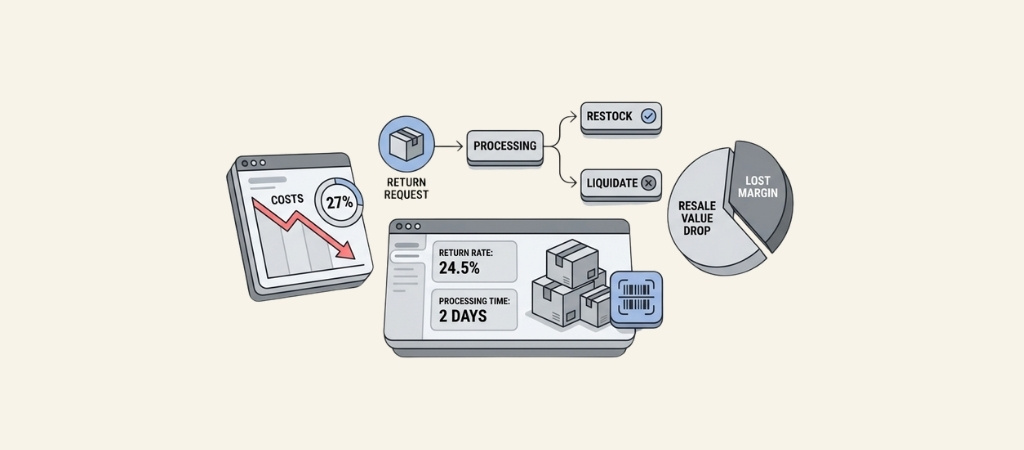
Returns are eating into ecommerce margins faster than most retailers realize.
According to the National Retail Federation, consumers returned $890 billion worth of retail goods in 2024, with nearly a quarter of all online purchases coming back.
That's not just a logistics problem. It's a strategic challenge that touches every part of your business.
But here's the thing: returns don't have to be a pure cost center. The brands winning in 2026 treat returns as a competitive advantage.
They use smart policies, streamlined workflows, and the right technology to reduce costs while keeping customers happy.
This guide covers everything you need to build a returns management system that protects your margins and builds loyalty.
Editor’s note: Want to hear some sample AI support calls made for your Shopify store?
- Just paste your store URL
- Get sample calls in under 20 seconds (no email required)
- Listen to demo calls for my store
Building a returns policy that converts and protects margin
Your returns policy sits at the intersection of customer experience and financial protection.
Make it too strict and you lose sales. Make it too generous and you invite abuse. The key is understanding the levers you can pull and when to pull them.
Free returns: the conversion booster with hidden costs
Free returns have become table stakes for ecommerce. 76% of consumers say free returns are a key factor in deciding where to shop.
Remove them and your conversion rate drops. But offering them unconditionally opens the door to bracketing and abuse.
The solution isn't to eliminate free returns. It's to pair them with tactics that reduce preventable returns in the first place.
Better product pages, fit guidance, and exchange incentives can maintain conversion while cutting the volume of returns you actually process.
Return windows: finding your sweet spot
Most retailers default to 30 days because it feels standard. But you have options:
- Shorter windows (14-21 days): Lower abuse risk, less time for customers to wear or damage items, better recovery value for electronics
- Standard window (30 days): Balanced experience for most product categories
- Extended windows (60-90 days): Works for high-ticket items with lower return frequency, signals confidence in product quality
Here's something most retailers miss: reducing your window from 60 days to 30 days improves recovery value significantly.
Electronics resold quickly after return can retain 80-90% of value. After 60+ days, that drops sharply as newer models release and demand shifts.
Restocking fees: when they make sense
Restocking fees help offset labor and packaging loss for bulky or costly items.
They're ideal for furniture, appliances, and large home goods where return shipping and inspection costs are substantial.
For example, if a $200 chair costs you $35 to ship out, $35 to ship back, and $10 to inspect and repackage, a 10-20% restocking fee recovers part of that loss. J
ust don't apply them to apparel. Customers expect free returns on clothing, and fees there often frustrate shoppers and increase churn.
Returnless refunds: the counterintuitive cost saver
Sometimes the cheapest option is letting customers keep the item.
A returnless refund means you refund the customer without requiring them to ship anything back.
This sounds expensive, but for low-value items, it's often the smartest financial move.
Use returnless refunds when:
- Return shipping plus labor costs exceed the product's value
- The product can't be resold (personalized items, opened hygiene products)
- You want to reward a high-value customer who reported a legitimate issue
- The item costs less than your inbound shipping rate (typically $6-12)
If you sell a $12 phone case and your return shipping label costs $8, issuing a returnless refund saves you the shipping fee, labor time, and risk of receiving a damaged item you can't resell.
Seasonal policy adjustments
Holiday shopping creates a returns surge in January that can overwhelm warehouses. Smart retailers adjust their policies ahead of time:
- Extend return windows to cover gift-related returns (purchased in November, returnable through January)
- Promote exchanges instead of refunds to protect revenue during high-volume periods
- Use returnless refunds for low-cost accessories to avoid warehouse bottlenecks
- Prepare customer service scripts for gifting queries ("I didn't buy this myself," "I don't have the order number")

The 7-step ecommerce returns workflow
A solid returns program isn't just a policy on your website. It's a repeatable workflow that every team follows.
Here's the standard operating procedure that covers the full journey from customer request to final resolution.
Step 1: Customer initiates the return
The shopper starts a return through your portal, chat, or help form.
Your system creates a Return Merchandise Authorization (RMA) record, which is the internal ID you use to track everything.
Automated checks verify policy rules like order date, product eligibility, and basic fraud signals.
This first step matters more than most retailers realize. 76% of consumers said free and easy returns are a key factor in deciding where to shop.
Any friction here, whether it's a confusing form or slow response times, can send customers to a competitor next time.
Step 2: Approve, deny, or offer an alternative
This is your fraud protection gate. Apply automated checks here to flag suspicious patterns. You can choose to:
- Approve instantly when the order, product, and timing meet policy rules
- Deny when the request is clearly outside your window or category rules
- Offer alternatives like store credit or replacement if the stated reason suggests a genuine defect
Set up exception rules for VIP customers and high-value orders so support doesn't have to debate each case.
For example, auto-approve returns for customers with five or more past orders, or send orders over $500 to manual review. Consistency matters, but so does speed.
Step 3: Create shipping label and packaging instructions
Approved RMAs trigger a prepaid label and clear packing instructions.
Include simple visuals or bullet checklists for fragile or complex items so they're repacked correctly.
This is also where your system can decide whether to use a returnless refund for low-value items.
A large share of total return cost comes from shipping and handling.
Tightening this step reduces damage in transit and keeps more items in a resale-ready state.
Step 4: Item received at warehouse
The returned item arrives at your warehouse or return center.
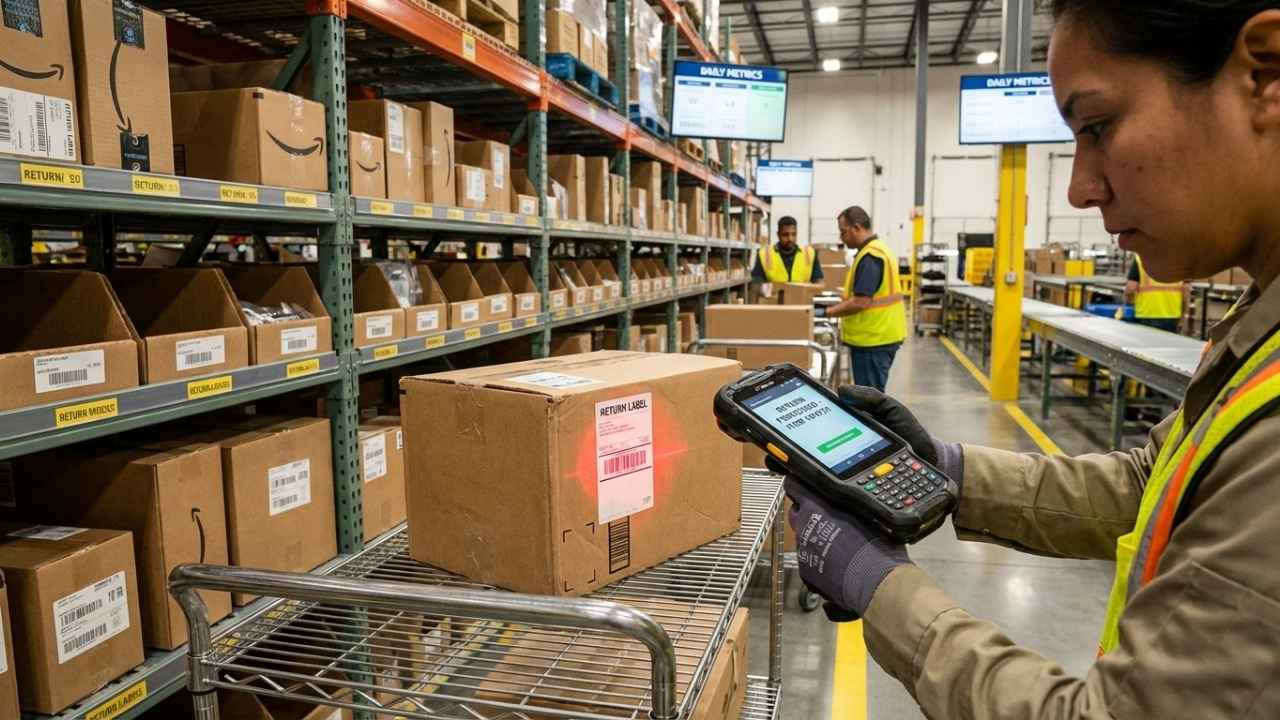
Your team scans the RMA as soon as the package arrives to confirm it's the expected SKU and quantity.
The item then gets routed to the appropriate inspection lane based on category (apparel vs electronics, for example).
Keeping this scan step mandatory prevents "mystery boxes" from floating around the warehouse.
It also gives customer service real-time visibility for "where is my refund" questions.
Step 5: Inspection and grading
Create a simple grading framework so every associate makes the same call:
- Grade A: Resale-ready. Looks new, works properly, packaging in good condition.
- Grade B: Refurbish or repackage. Minor cosmetic issues or packaging damage, but product fully functional.
- Grade C: Secondary channel. Functional but not fit for full-price sale; suitable for outlets or liquidation.
- Grade D: Disposal or recycling. Cannot be safely resold or repaired at reasonable cost.
Once grading is consistent, you can track how many units move through each bucket and where you're losing recovery value.
Step 6: Restock or route decision
Based on the grading framework:
- Grade A items go back into saleable inventory and your WMS updates stock in real time
- Grade B and C items follow predefined refurbishment or liquidation workflows
- Grade D items are logged and moved into appropriate waste or recycling processes
Have reasons for return summarized by SKU and shared with merchandising.
If you see a spike in "color not as expected" or "fit is too small," that's usually a product page issue, not a warehouse problem.
Step 7: Refund, exchange, or credit
Refunds get issued automatically when inspection is complete and the item is graded.
Exchanges are created for size, color, or replacement requests so revenue is preserved rather than fully refunded.
Store credit can be offered as a faster option, especially for loyal customers.
If your warehouse team gets overwhelmed and bottlenecks form, split inbound replenishment and returns into separate receiving lines.
That simple change keeps new inventory flowing without forcing returns to wait days for inspection.
Reducing returns before they happen
The best return is the one that never happens. Most retailers focus on processing returns faster, but the real opportunity is preventing them in the first place.
Here's how to fix the root causes.
Product page improvements that prevent returns
A significant portion of returns come from expectation mismatches. The product wasn't what the customer pictured.
The fit was wrong. The color looked different in person. These are all fixable with better product pages.
Start with these high-impact improvements:
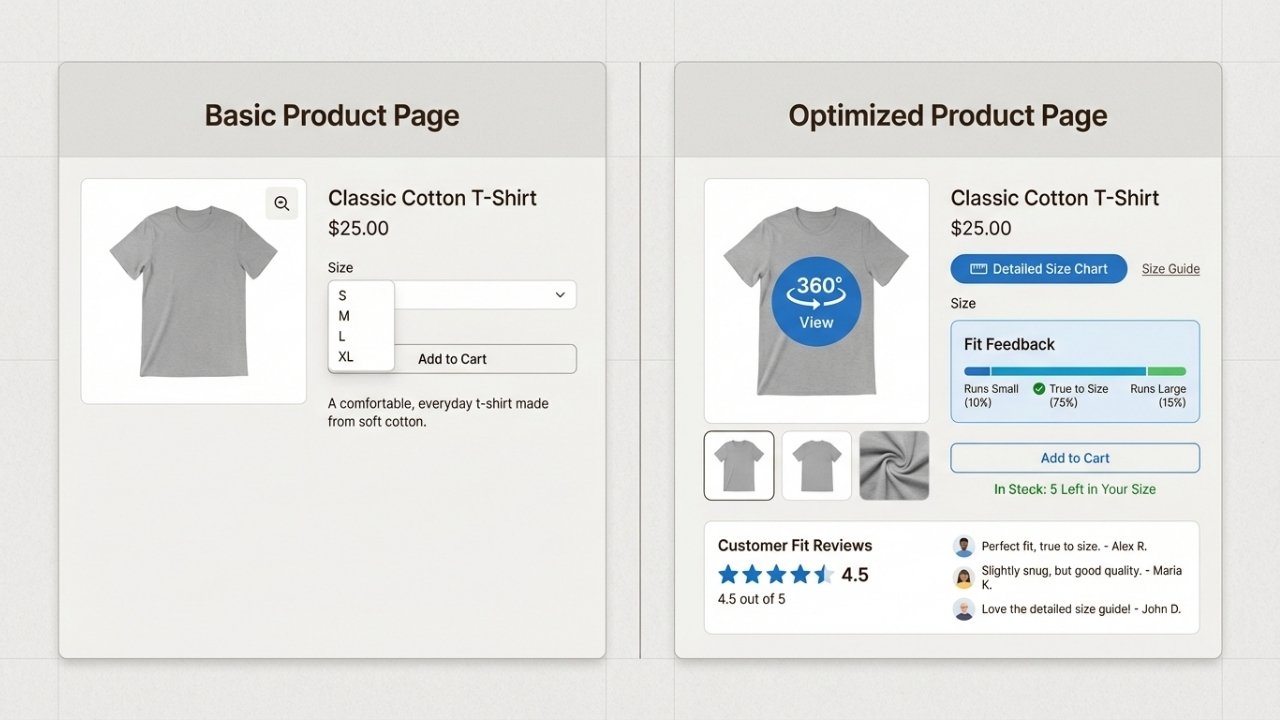
- Detailed size charts with model measurements and fit notes ("runs small," "oversized silhouette")
- "What's included" sections that clearly list accessories, cables, or assembly parts
- Natural light photography instead of heavily edited studio shots that create expectation gaps
- 360-degree views and product videos showing the item from all angles
- Customer reviews with fit attributes like "true to size" or "runs large"
Any SKU with a return rate above 15-20% deserves a PDP audit.
High return rates often drop quickly once the page includes accurate sizing, real-life photos, or clearer product expectations.
Mapping return reasons to fixes
Here's a practical mapping you can use to upgrade product pages based on common return drivers:
| Return Reason | Product Page Fix | Why It Works |
|---|---|---|
| Wrong size or poor fit | Add detailed size charts, model measurements, fit notes, customer review attributes | Helps shoppers self-select the right size, reducing bracketing |
| Color or material mismatch | Upload daylight photos, close-ups, fabric descriptions | Lowers expectation gaps from inaccurate or staged imagery |
| Missing features or accessories | Add "What's included" and "What's not included" sections | Eliminates returns where customers expected something different |
| Quality concerns | Add transparency about materials, testing, tolerances | Helps buyers understand durability and build expectations |
The bracketing problem
Bracketing, ordering multiple sizes or colors with the intention of returning most, is common in apparel and footwear.
You won't eliminate it completely, but you can reduce it with better guidance.
Effective tactics include fit finder tools, customer reviews tagged with fit attributes, model specs with lifestyle photography ("model is 5'10" wearing a medium"), and explaining intended use cases ("designed for high-impact workouts" or "best for indoor usage only").
These additions help buyers choose the right item the first time, which reduces both returns and exchange volume.
Handling returns fraud without harming good customers
Returns fraud is a growing problem that can devastate margins if left unchecked.
But heavy-handed fraud prevention can alienate legitimate customers who just want a hassle-free experience.
The key is being smart about detection without making honest customers jump through hoops.
Understanding the fraud landscape
The numbers are sobering. 93% of retailers say returns fraud is a significant issue for their business. 44% of brands cite fraud as their biggest returns pain point, according to Radial's research with Two Boxes.
Common fraud types include:
- Wardrobing: Purchasing items, using them temporarily, and returning them
- Serial returners: Customers with extremely high return rates across multiple purchases
- Switch fraud: Returning different items than originally purchased
- Empty box returns: Sending back packages with nothing inside or wrong items
Behavior-based policies vs blanket restrictions
The solution isn't to make returns harder for everyone. It's to apply different rules based on customer behavior. Customer-level return policies let you:
- Identify and flag high-risk customers based on return patterns
- Adjust return windows and conditions for serial returners
- Maintain generous policies for loyal, low-risk customers
- Reduce fraud without harming the overall customer experience
As Rick Watson, CEO of RMW Commerce, noted in a recent webinar: "That kind of customer-level returns policy, or at least narrowing in on the worst actors and how to predict and identify them, seems like the only path forward."
Detection tactics that work
Start with these practical fraud detection methods:
- Monitor return rates by customer and flag accounts exceeding thresholds
- Require photographic evidence for defect claims on high-value items
- Track patterns like frequent returns just outside policy windows
- Watch for customers who consistently return different SKUs than purchased
The goal is catching bad actors while keeping the experience smooth for everyone else.
Technology and automation for returns management
Manual returns processing works fine when you're small. But once you hit 150-200 returns per month, spreadsheets and email threads start breaking down.
That's when automation becomes essential.
When to add automation
Early-stage brands often overspend on automation before they need it. The threshold to watch is volume.
When manual reviews start slowing down refunds and tying up support staff, it's time to invest in tools.
Here's what to introduce at different stages:
Early stage (under 150 returns/month):
- Simple return form or lightweight portal
- Manual label creation through USPS, UPS, or FedEx
- Shared spreadsheet tracking return reasons and SKU trends
- One dedicated owner for returns
Scaling (150-500 returns/month):
- Dedicated returns portal like Loop, ReturnLogic, or Happy Returns
- Automated shipping label generation tied to return rules
- Integration between returns tool and WMS for real-time inventory updates
- Workflows encouraging exchanges instead of refunds
Enterprise (500+ returns/month):
- Distributed return centers to reduce carrier distance
- Negotiated carrier contracts with discounted return rates
- Grade-based routing inside the warehouse
- Collaboration with 3PL partners to standardize inspection
Returns management software options
Several platforms specialize in ecommerce returns. Here's how they differ:
| Platform | Best For | Key Strength |
|---|---|---|
| Loop Returns | Shopify brands focused on exchanges | Exchange-first workflow, strong Shopify integration |
| Happy Returns | Brands wanting box-free dropoffs | UPS partnership, no-box returns at local dropoff points |
| ReturnLogic | Mid-size retailers | Automation rules, analytics, fraud detection |
| Narvar | Enterprise post-purchase experience | Full post-purchase platform, not just returns |
| ShipStation | Brands wanting shipping + returns combined | Unified platform, carrier rate shopping |
Measuring returns success: KPIs that matter
You can't improve what you don't measure. Most retailers track a few return numbers, but few create a unified dashboard showing where they're actually losing margin. Here's what to track and why.
Essential metrics
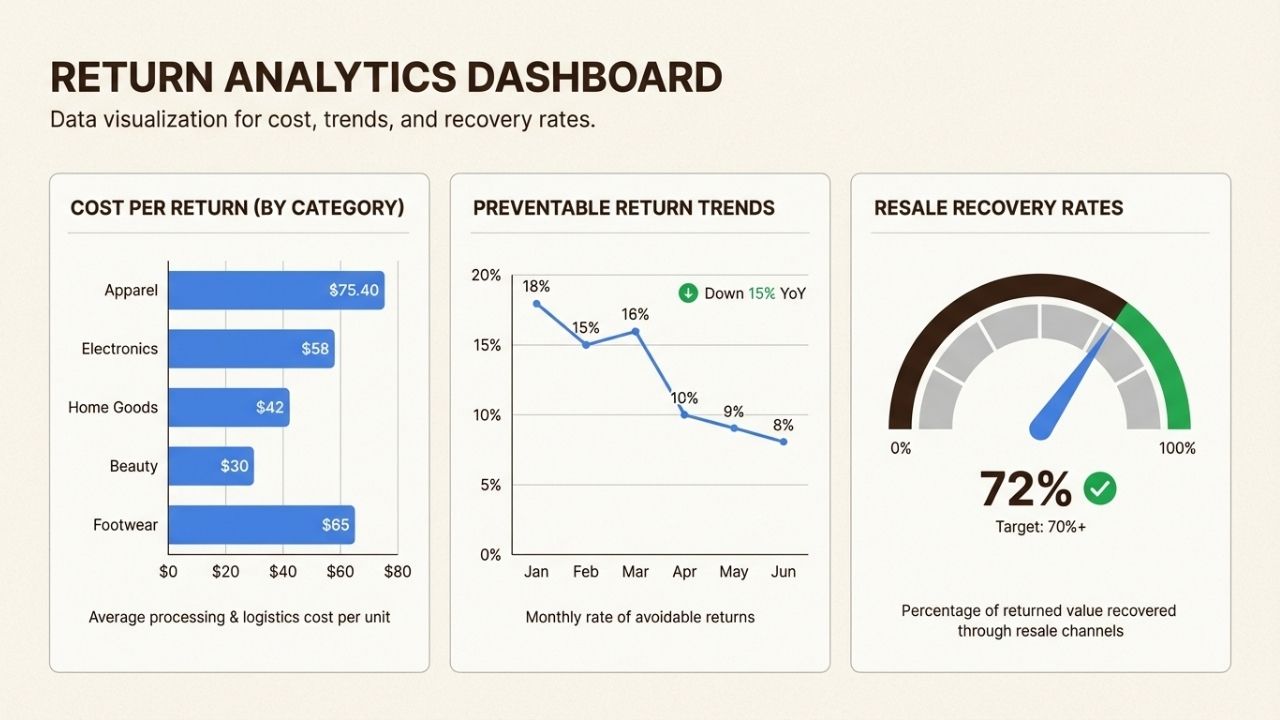
Return rate by category: Apparel typically ranges from 20-40%, while electronics and home goods trend lower at 5-15%.
Track this by SKU to spot problematic products.
Preventable return rate: Returns tied to issues you can fix, sizing, inaccurate product pages, poor packaging, incorrect shipments.
This KPI tells merchandising and operations exactly where to adjust.
Cost per return: Your full cost to process a return, including inbound shipping, labor, materials, and resale value loss.
Many brands underestimate this by 20-40% because they track carrier fees but not processing costs.
Resale value recovery: How much value you retain when items are restocked, refurbished, or sold through secondary channels.
Grade-based routing helps maintain higher recovery rates.
Time from arrival to resolution: How long between the warehouse receiving a return and the customer getting their refund or exchange.
Long delays hurt satisfaction and increase support tickets.
Alert thresholds
Set clear thresholds that tell your team when something needs attention:
- Return rate jumps more than 20% week-over-week: Possible product defect or pick/pack accuracy issue
- Preventable returns exceed 10%: PDP accuracy or packaging needs improvement
- Processing time over 48 hours: Your inspection line is backed up
- Resale recovery below 60%: Items are sitting too long before restock or refurbishment
These alerts help CX, ops, and merchandising prioritize the right changes instead of relying on hunches.
Using returns data for product improvement
Returns aren't just a cost center. They're a goldmine of product feedback. SKU-level return reason analysis can reveal:
- Defects causing frequent returns
- Mismatched expectations in product descriptions
- Sizing or fit issues for apparel
- Quality problems before they escalate
Feed these insights back to your merchandising team and suppliers.
If "color not as pictured" or "fit is off" suddenly spikes on a product, update images, descriptions, or size guidance the same day.
Streamlining returns with AI phone support
Most returns management advice focuses on portals and workflows. But there's a gap that many retailers miss: phone support.
A significant portion of customers still prefer calling for returns, especially for complex issues or high-value orders.
When those calls go unanswered or sit in long queues, customer satisfaction drops.
The phone support challenge
Human agents spend significant time on repetitive return requests: looking up orders, verifying policy eligibility, generating labels, checking status.
These are tasks that don't require human judgment, just access to the right systems.
Meanwhile, after-hours calls go unanswered entirely, frustrating customers who want resolution now.
How AI phone agents handle returns
AI phone support can handle the entire returns process automatically:
- 24/7 availability for return initiation and status checks
- Instant order lookup by phone number or order ID
- Policy verification against your specific rules
- Automated exchange suggestions to retain revenue
- Seamless escalation for edge cases requiring human judgment
The customer calls, speaks naturally, and gets their return processed in minutes without waiting for an agent.
Ringly.io for returns management
Ringly.io offers the AI, an AI phone support rep designed specifically for ecommerce.
the AI integrates directly with Shopify to pull real-time order and inventory data, handles returns and exchanges through natural conversation, and escalates to your team only when necessary.
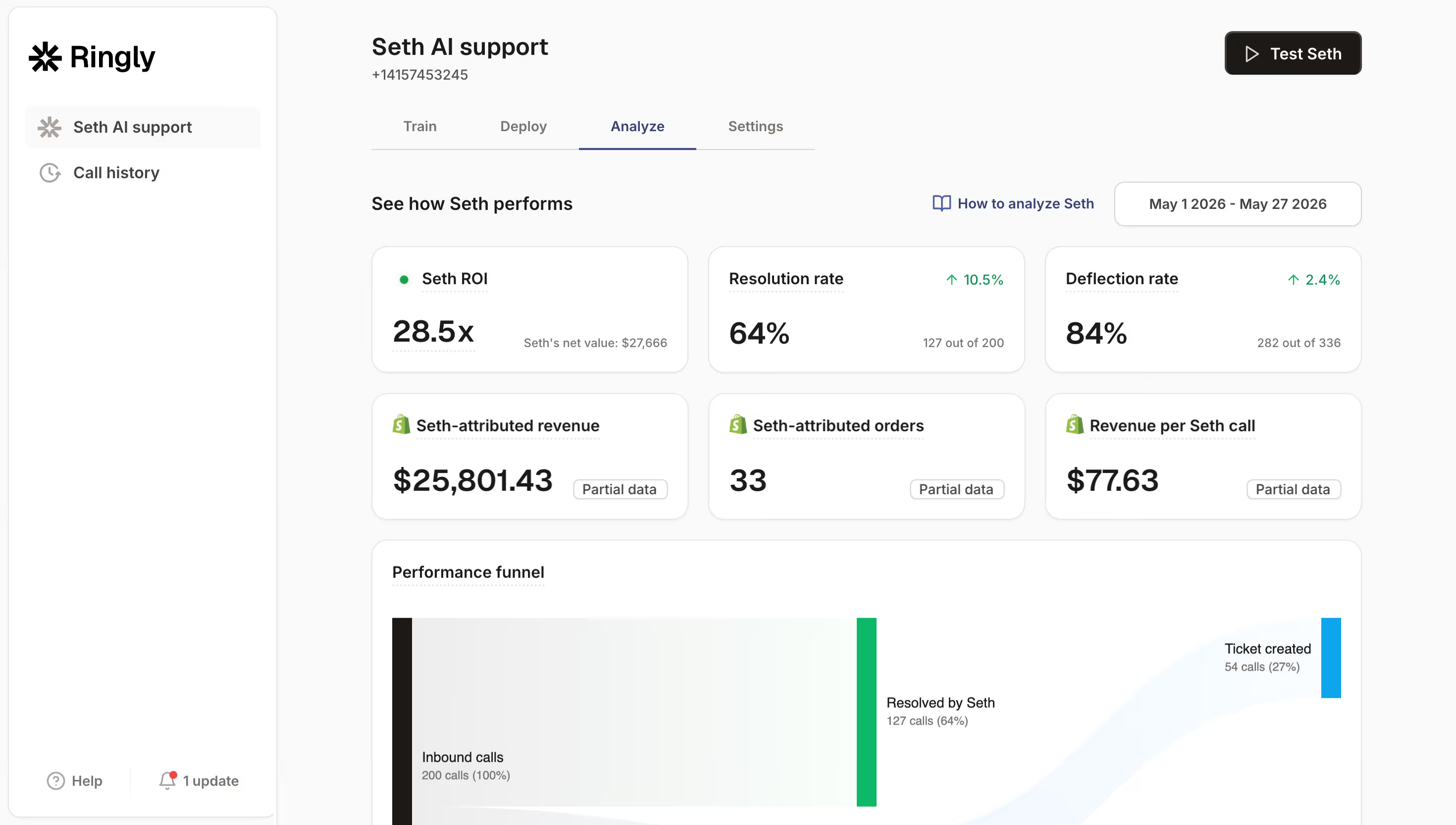
In real deployments across over Shopify stores, The AI resolves approximately 73% of returns calls without human intervention.
That means your team handles only the complex exceptions while routine returns get processed instantly, even at 2 AM.
The platform supports 30 languages, so global stores can offer consistent returns support without hiring multilingual agents.
And because the AI learns from your knowledge base and policies, the experience stays on-brand even when fully automated.
For stores drowning in returns volume, this kind of automation can be the difference between a backed-up queue and a smooth customer experience.

Getting started with better ecommerce returns management
You don't need to overhaul everything at once. Here's how to prioritize based on your current state:
Quick wins (this week):
- Audit your top 10 returned SKUs and identify PDP improvements
- Calculate your true cost per return (include labor and depreciation)
- Document your current grading criteria and tighten definitions
Medium-term (this quarter):
- Implement a self-service returns portal if you don't have one
- Set up automated workflows for common return scenarios
- Create a returns data dashboard with the KPIs outlined above
Long-term (this year):
- Integrate returns data with merchandising and product development
- Optimize for sustainability with refurbishment and recycling programs
- Consider AI automation for returns phone support
Returns will never be a zero-cost operation. But with the right approach, they can become a competitive advantage that builds loyalty instead of draining margins.
Ready to automate your returns phone support? Start your free trial and see how AI can handle the routine while your team focuses on the exceptions.
Shipping costs and return shipping go hand in hand. Check our ecommerce shipping statistics for 2026 for the latest data.
Return fraud is a growing concern for online stores. Learn how to protect yourself with our ecommerce fraud prevention guide.
Frequently Asked Questions
What is ecommerce returns management and why does it matter?
Ecommerce returns management is the end-to-end process for handling products customers send back, from the initial return request through inspection, refund, restock, or disposal. It matters because returns cost retailers an average of 27% of the original order value, and a smooth returns experience directly impacts customer loyalty and repeat purchases.
How can I reduce my ecommerce return rate?
Start with product page improvements: detailed size charts, natural light photography, 'what's included' sections, and customer reviews with fit attributes. Fix root causes like inaccurate descriptions or poor packaging. Track return reasons by SKU and prioritize fixes for products with rates above 15-20%.
What should an ecommerce return policy include?
Your policy should clearly state the return window, eligible conditions, refund or exchange options, restocking fees (if any), and how to start a return. Make it easy to find and write in plain language. Consider seasonal adjustments for holiday shopping and different rules for different product categories.
When should I offer returnless refunds?
Offer returnless refunds when the return shipping plus labor costs exceed the product's value, when the product can't be resold (personalized or opened hygiene items), or as a loyalty perk for high-value customers. They're common for items under $15-20 where processing costs more than the product is worth.
How do I prevent returns fraud without hurting good customers?
Use behavior-based policies instead of blanket restrictions. Monitor return rates by customer, require photo evidence for defect claims on high-value items, and flag patterns like frequent returns just outside policy windows. Maintain generous policies for loyal, low-risk customers while tightening rules for suspected abusers.
What KPIs should I track for ecommerce returns management?
Track return rate by category, preventable return rate (sizing, PDP issues, packaging), cost per return (including hidden costs), resale value recovery rate, and time from arrival to resolution. Set alert thresholds so your team knows when something needs attention.
How can AI help with ecommerce returns management?
AI can automate routine returns tasks like order lookup, policy verification, and label generation. AI phone agents like the AI agent from Ringly.io can handle returns calls 24/7, resolving the majority without human intervention. AI analytics can also identify patterns in return reasons to help fix product issues before they escalate.