

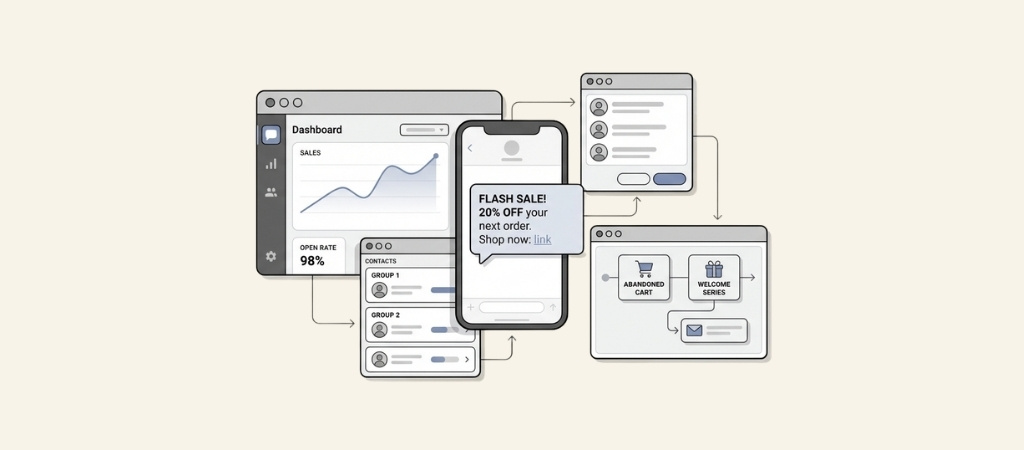
Most marketing emails never get opened. They sit in crowded inboxes, buried under newsletters and promotions, while your carefully crafted message goes unseen.
But there's a channel that cuts through the noise with near-perfect visibility.
SMS marketing delivers a 98% open rate. Not 20% like email. Not 2% like social media ads.
Ninety-eight percent of text messages get read, most within three minutes of delivery. For ecommerce stores, this isn't just a nice-to-have channel.
It's a revenue engine that works while you sleep.
This guide covers everything you need to launch and optimize ecommerce SMS marketing for your store.
We'll walk through list building, automation workflows, compliance requirements, and integration with your existing channels.
Whether you're just starting out or looking to improve an existing program, you'll find actionable strategies you can implement this week.
Editor’s note: Want to hear some sample AI support calls made for your Shopify store?
- Just paste your store URL
- Get sample calls in under 20 seconds (no email required)
- Listen to demo calls for my store
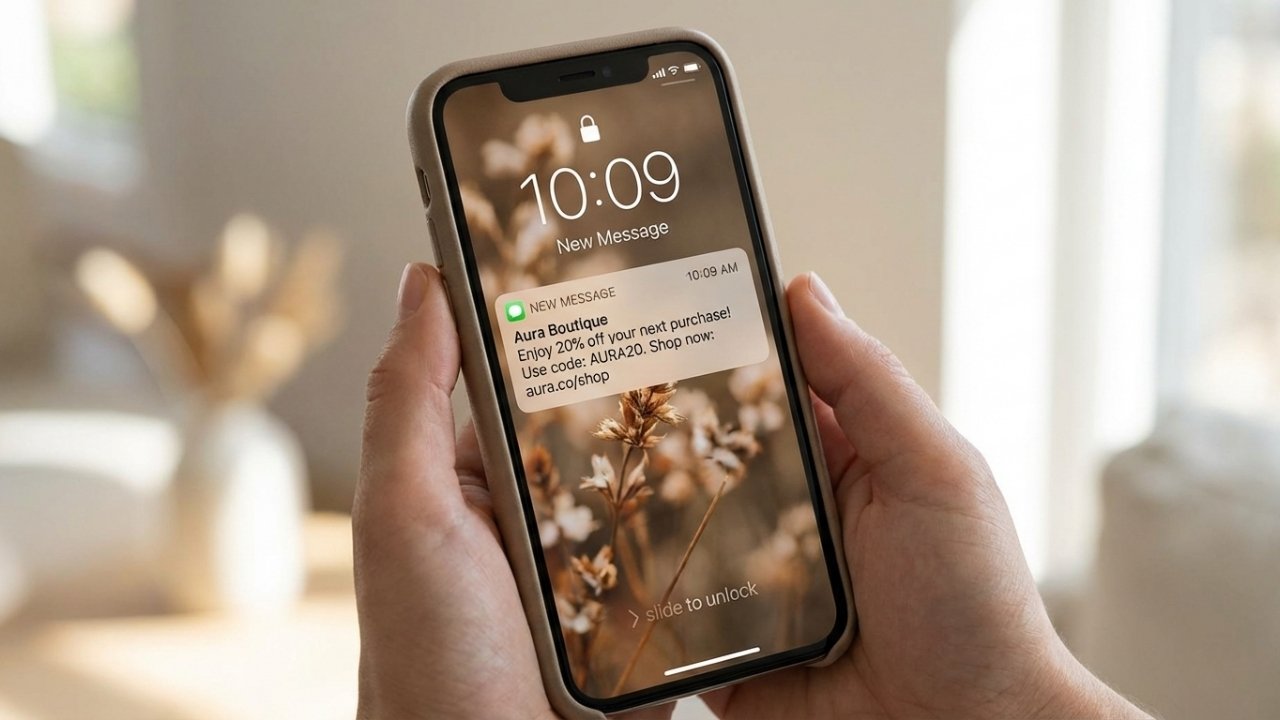
Why ecommerce SMS marketing works so well
The effectiveness of SMS comes down to three factors: reach, speed, and personal connection. Let's break down what the numbers actually tell us.
The mobile advantage
People check their phones constantly. The average person picks up their phone 96 times per day. When a text arrives, it demands attention in a way email simply cannot match.
Here is how SMS compares to email:
| Metric | SMS | |
|---|---|---|
| Open rate | 98% | ~20% |
| Read within 3 minutes | 90% | ~22% |
| Response rate | 45% | 6% |
| Click-through rate | 10-15% | 2-3% |
These aren't marginal improvements. SMS engagement is 6-8 times higher than email across every meaningful metric.
When you send a flash sale announcement via SMS, you can be confident your customers will see it before the sale ends.
Customer preference data
Your customers actually want to hear from you via text. Research from Klaviyo shows that 72% of consumers are willing to receive weekly texts from brands they trust.
Even more telling: 63% have made a purchase directly from an SMS message.
For abandoned cart recovery specifically, 18% of shoppers prefer SMS reminders over email.
This matters because cart abandonment rates hover around 70% for most ecommerce stores.
Adding SMS to your recovery strategy captures a segment of customers who ignore email entirely.
Revenue impact
The business case for SMS is compelling. Automated SMS flows typically deliver 8-12x ROI, outperforming most paid advertising channels.
Abandoned cart SMS alone recovers 23% of otherwise lost sales on average.
Real stores are seeing dramatic results:
- Dagne Dover achieved 12,000% ROI in their first year, growing to over 100,000 SMS subscribers. Email plus SMS now drives 25% of their quarterly revenue.
- 310 Nutrition generates $100,000 in additional weekly revenue from SMS, with a 59x ROI and $2.65 earned per text sent.
- Cloudy (a sleep supplement brand) built 133,000 SMS subscribers in just 7 months, achieving 12x ROI.
These aren't outliers. They're representative of what happens when stores treat SMS as a core channel rather than an afterthought.
Getting started: Building your SMS subscriber list
Your SMS program is only as strong as your subscriber list. The good news: building a quality list is straightforward if you follow the right approach.
Website opt-in methods
The most effective list growth happens on your website. Here are the tactics that work:
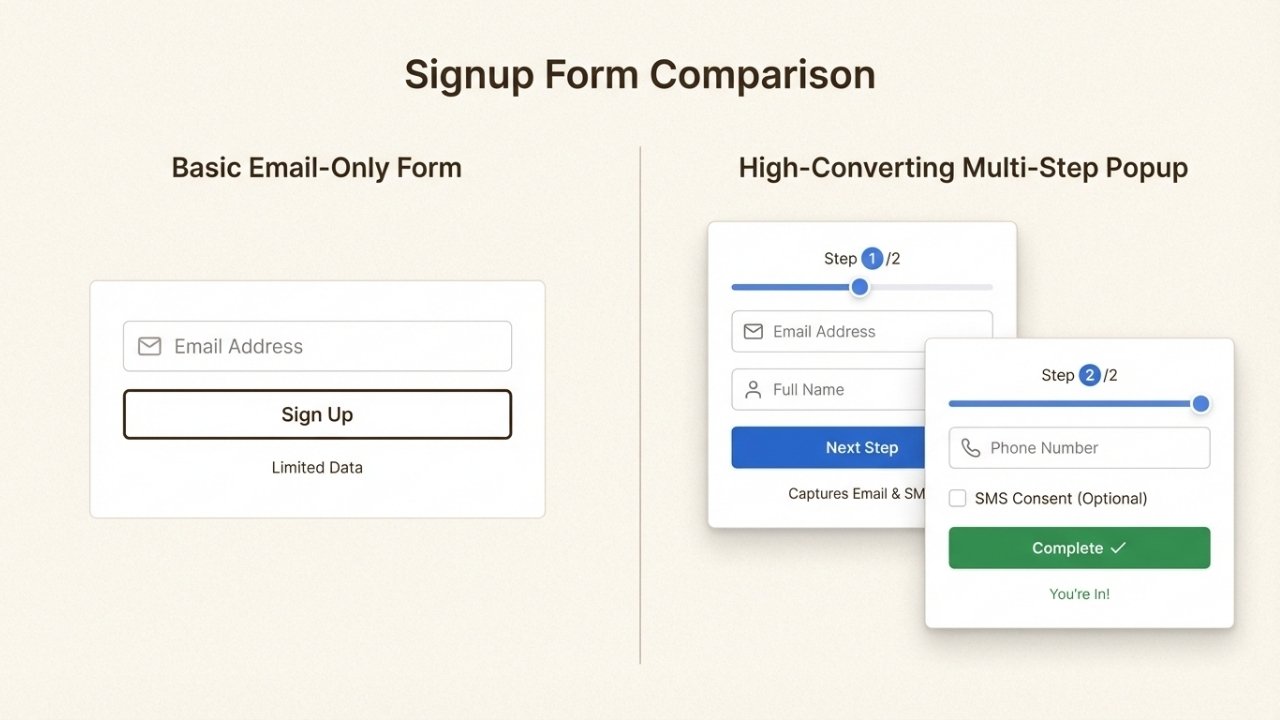
Popups with incentives. Offering a discount in exchange for a phone number is the fastest way to grow your list.
A 10% or 15% discount typically converts 5-10% of visitors. The key is making the value exchange clear: they give you their number, you give them immediate savings.
Multi-step forms. Capture email first, then ask for the phone number on a second screen.
This approach feels less invasive and can actually increase overall conversion rates. Postscript data shows that multi-step forms often outperform single-step versions.
Checkout opt-in. Add a checkbox during checkout asking customers to receive order updates via text.
This is the highest-intent subscriber you can acquire. They've already decided to buy from you, so they're primed for ongoing communication.
Footer and sidebar forms. These capture subscribers who are browsing but not ready to buy.
They're lower volume but still valuable for building your list over time.
Non-website growth tactics
Expand beyond your website with these additional channels:
SMS keywords on packaging and social media. Print "Text JOIN to [number] for exclusive deals" on your product packaging, receipts, and social media posts.
Keywords make signing up frictionless.
QR codes. Place QR codes in physical locations, on packaging, or in email signatures that open a pre-populated text message.
One scan and they're subscribed.
Email-to-SMS migration. If you have an established email list, send a campaign inviting subscribers to also join your SMS list.
Offer an exclusive incentive for the second channel.
Post-purchase invitations. After a customer receives their order, follow up with an invitation to join your SMS list for shipping updates on future orders.
Compliance essentials
Before you send a single message, you need explicit consent.
The Telephone Consumer Protection Act (TCPA) requires "express written consent" before sending promotional texts. Here's what that means in practice:
- Use clear opt-in language that states exactly what subscribers will receive
- Include compliance language like "By subscribing, you agree to receive marketing texts"
- Implement a double opt-in where subscribers confirm by replying to a welcome message
- Keep records of when and how each subscriber opted in
The 5 SMS automations every store needs
Automation is where SMS marketing delivers its highest ROI. These five flows should be running in your store 24/7.
1. Welcome series
First impressions matter. Your welcome series sets expectations and delivers whatever incentive you promised during signup.
A simple three-message welcome flow might look like this:
- Message 1 (immediate): "Welcome to [Brand]! Here's your 10% off code: WELCOME10. Shop now: [link]"
- Message 2 (2 days later): "Hi [Name]! Just wanted to introduce ourselves. We're [Brand], and we specialize in [value prop]. Questions? Just reply."
- Message 3 (5 days later): "New arrivals just dropped. As a welcome gift, get early access before anyone else: [link]"
The welcome series builds the foundation of your relationship.
Get it right, and subscribers stay engaged. Get it wrong, and they unsubscribe before you send a single promotional message.
2. Abandoned cart recovery
This is the highest-ROI automation you can set up. When someone adds items to their cart but doesn't complete checkout, SMS reminds them to finish what they started.
Best practices for abandoned cart SMS:
- Send the first message within 1-3 hours while intent is still high
- Include a direct link back to their cart
- Keep it to one message initially, with an optional second message 24 hours later
- Consider adding a small discount in the second message if the first doesn't convert
A typical abandoned cart message: "Still thinking about your [item]? Your cart is waiting: [link]"
With a 23% recovery rate, this single automation can generate significant revenue with zero ongoing effort.
3. Order and shipping updates
Transactional messages build trust. They keep customers informed and reduce support tickets.
Your order update flow should include:
- Order confirmation immediately after purchase
- Shipping notification with tracking link
- "Out for delivery" alert
- Delivery confirmation
These messages have the highest engagement rates of any SMS type because customers actively want this information. OneSignal research shows that shipping updates reduce "where is my order" tickets by 30-40%.
4. Back-in-stock notifications
When a popular item sells out, let customers sign up to be notified when it's available again. These subscribers have extremely high purchase intent.
The message is simple: "Good news! The [product] you wanted is back in stock. Grab yours before it sells out again: [link]"
Back-in-stock flows often convert at 2-3x the rate of general promotional messages because the audience is pre-qualified.
5. Post-purchase follow-up
The sale isn't the end of the relationship. Post-purchase SMS keeps customers engaged and drives repeat purchases.
Consider these post-purchase messages:
- Review request (7 days after delivery): "How do you like your [product]? Leave a quick review and get 10% off your next order: [link]"
- Cross-sell recommendation (14 days): "Loving your [product]? Complete the look with [related item]: [link]"
- Replenishment reminder (for consumables): "Running low on [product]? Reorder now and save 15%: [link]"
Writing SMS messages that convert
SMS is a constrained medium. You have 160 characters for a single message. Every word must earn its place.
Character count and formatting
Stick to the 160-character limit when possible. Messages longer than 160 characters count as multiple messages on the sending side, increasing your costs and potentially triggering carrier spam filters.
Best practices for formatting:
- Put your brand name at the start of every message
- Use one call-to-action per message
- Shorten links with a branded URL shortener
- Avoid excessive punctuation (!!!) and ALL CAPS
Tone and voice
Text messages should feel personal. Write like you're texting a friend, not broadcasting to a list.
Compare these two approaches:
- Corporate: "ABC Company is pleased to announce a limited-time promotional offer of 20% off all merchandise."
- Conversational: "Hey! 20% off everything for 24 hours only. Shop now: [link]"
The second version gets more clicks because it matches how people actually communicate via text.
Use urgency sparingly but effectively. "Ends tonight" or "Only 3 left" can drive action, but use these tactics honestly. Fake urgency destroys trust.
Message templates that work
Here are proven templates you can adapt:
Welcome: "Welcome to [Brand]! Here's 10% off your first order: WELCOME10. Shop now: [link]"
Abandoned cart: "You left something behind. Your [item] is waiting: [link]"
Flash sale: "24-hour flash sale starts now! 30% off everything: [link]"
Shipping update: "Your order is on its way! Track it here: [link]"
Review request: "How's your [product]? Leave a review and get 15% off your next order: [link]"
Compliance and legal requirements
SMS compliance isn't optional. Violations can result in fines of $500-$1,500 per message.
For a campaign sent to 10,000 subscribers, that's potentially $15 million in liability.
TCPA basics
The Telephone Consumer Protection Act governs commercial text messaging in the United States. Key requirements:
- Express written consent required. Implied consent (like having a customer's phone number from an order) is not enough for promotional messages.
- Quiet hours. Don't send messages before 8am or after 9pm in the recipient's local time zone.
- Opt-out honored immediately. When someone replies STOP, you must cease messaging immediately.
- Consent records. Keep proof of when and how each subscriber opted in.
10DLC and number types
Not all phone numbers are created equal for SMS marketing:
10DLC (10-digit long codes) are standard phone numbers formatted like (555) 123-4567.
They're ideal for conversational SMS and two-way messaging. All major carriers now require 10DLC registration for business messaging.
Short codes are 5-6 digit numbers (like 12345) designed for high-volume broadcasts.
They're more expensive and take longer to set up, but offer higher throughput for large campaigns.
Toll-free numbers fall somewhere in between. They can handle moderate volume and support two-way messaging.
For most ecommerce stores, 10DLC is the right choice. It supports the conversational, two-way messaging that drives the best results.
International considerations
If you sell internationally, additional regulations apply:
- GDPR (European Union): Requires explicit consent with clear opt-in language
- CASL (Canada): Requires consent and includes strict identification requirements
- Local quiet hours: Many countries have different restrictions on when you can send messages
When in doubt, consult with a compliance expert or choose an SMS platform with built-in compliance tools.
Integrating SMS with your existing support channels
SMS doesn't exist in a vacuum. It works best when coordinated with your other customer communication channels.
SMS + email coordination
Think of SMS and email as complementary tools. Use SMS for urgency and immediacy. Use email for detail and storytelling.
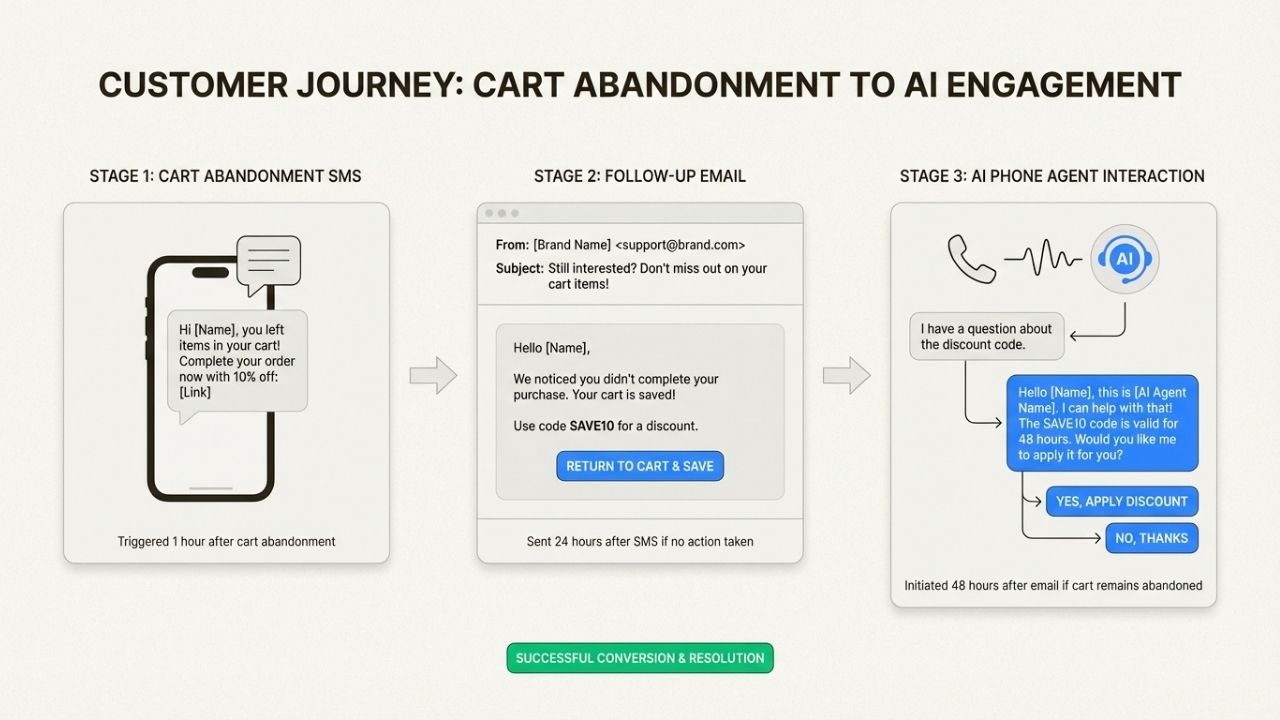
A coordinated abandoned cart strategy might look like this:
- Cart abandoned
- SMS sent within 1 hour (immediate, high visibility)
- Email sent 4 hours later (more detail, product images)
- Second SMS 24 hours later if no purchase (final reminder)
This approach maximizes reach without being annoying. The channels reinforce each other rather than duplicating effort.
SMS + phone support
SMS excels at quick updates and notifications. Phone calls handle complex issues that require conversation.
Here's where each channel fits:
| Use case | Best channel |
|---|---|
| Order confirmation | SMS |
| Shipping update | SMS |
| Simple question | SMS or chat |
| Complex complaint | Phone |
| Return/exchange | Phone or chat |
| Product recommendation | Email or phone |
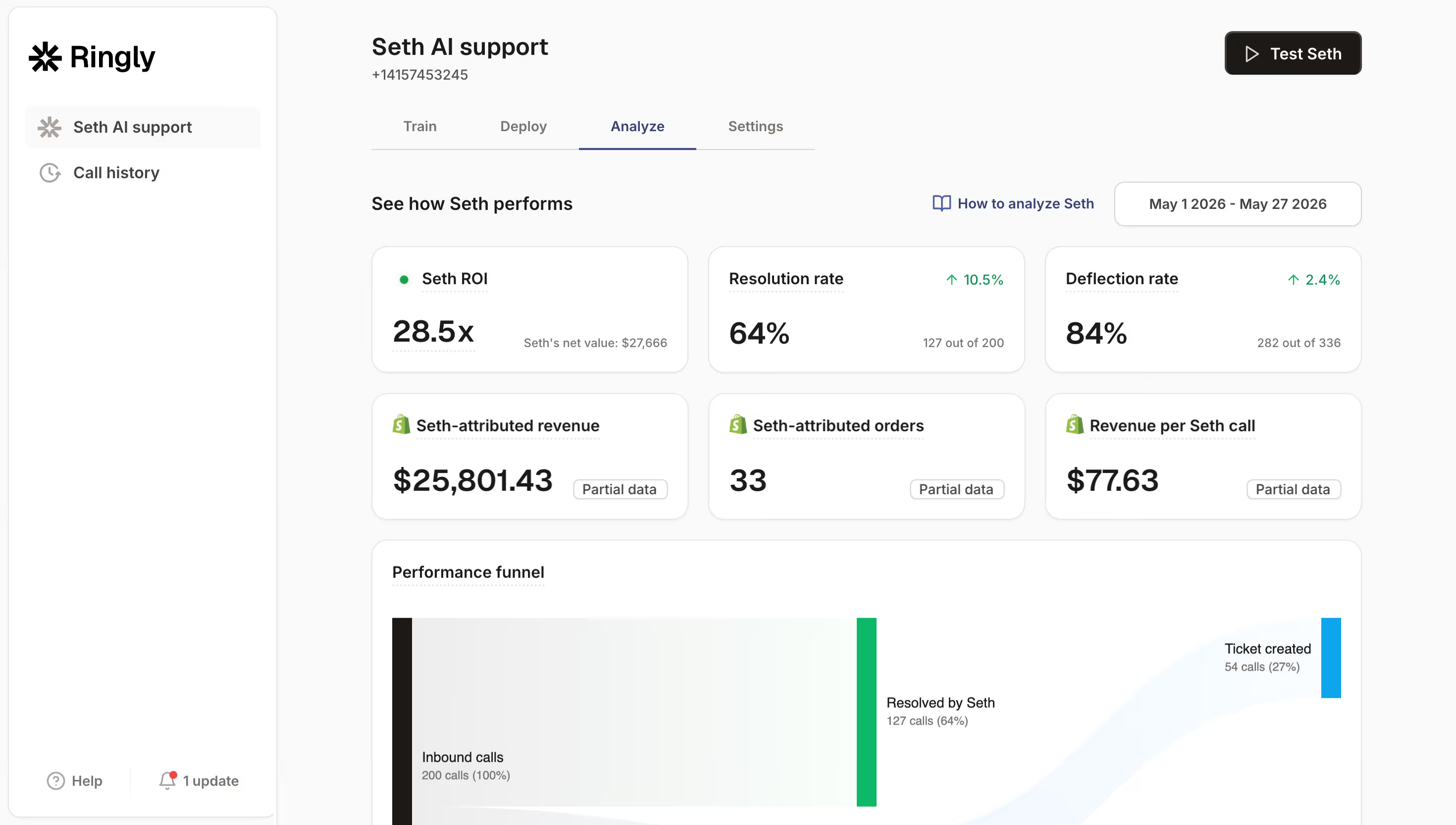
For stores that receive significant call volume, Ringly.io offers an AI phone agent named an AI agent that handles inbound calls 24/7. While SMS manages your outbound notifications and updates, the AI answers customer questions, looks up orders, and processes returns automatically.
The combination creates a complete communication system: proactive updates via SMS, responsive support via AI phone agent.
Creating a unified customer experience
Your brand voice should be consistent across every channel. A customer who receives a casual, friendly SMS shouldn't encounter a stiff, corporate tone when they call support.
Share customer data across channels. If someone texts you about an order issue, your phone support team should see that interaction history. The goal is seamless handoffs, not siloed conversations.
Measuring SMS marketing success
You can't improve what you don't measure. Track these metrics to optimize your SMS program.
Key metrics to track
Delivery rate: The percentage of messages successfully delivered. Aim for 95%+. Lower rates indicate data quality issues or carrier filtering.
Click-through rate (CTR): The percentage of recipients who click your link. Industry averages range from 10-20% depending on your vertical.
Conversion rate: The percentage of recipients who complete a purchase. This is your bottom-line metric.
Revenue per message: Total SMS-attributed revenue divided by number of messages sent. This helps you understand the true ROI of your program.
Unsubscribe rate: The percentage of subscribers who opt out. Keep this under 0.5% per campaign. Higher rates indicate messaging frequency or relevance issues.
Benchmarks by industry
SMS performance varies by industry. Here are typical benchmarks:
| Industry | Click-through rate | Order rate |
|---|---|---|
| Health & beauty | 11% | 0.77% |
| Apparel | 16% | 0.59% |
| Toys & hobbies | 18% | 0.73% |
| Home & garden | 14% | 0.68% |
| Electronics | 12% | 0.55% |
Use these as reference points, not targets. Your specific results will depend on your audience, products, and messaging strategy.
Testing and optimization
Continuous improvement comes from systematic testing. Try these experiments:
- Send time: Test morning vs. afternoon vs. evening sends
- Incentive types: Percentage off vs. dollar amount vs. free shipping
- Message length: Short and punchy vs. slightly more descriptive
- CTA phrasing: "Shop now" vs. "Claim offer" vs. "Get it now"
Test one variable at a time so you can isolate what drives results.
Choosing the right SMS platform for your store
The platform you choose determines what you can accomplish with SMS. Here's what to look for.
Must-have features
Ecommerce platform integration. Your SMS platform should connect seamlessly with your store.
Native integrations with Shopify, WooCommerce, or BigCommerce are essential.
Pre-built automation templates. You shouldn't have to build abandoned cart flows from scratch. Look for platforms with proven templates you can customize.
Compliance tools built-in. The platform should handle opt-in management, quiet hour enforcement, and unsubscribe processing automatically.
Two-way messaging. Customers should be able to reply to your texts. This enables customer service use cases and creates more engaging conversations.
Robust analytics. You need visibility into delivery rates, click-through rates, and revenue attribution.
Popular platforms compared
| Platform | Best for | Starting price | Key strength |
|---|---|---|---|
| Postscript | Shopify stores | $25/month | Deep Shopify integration |
| Klaviyo | Email + SMS together | $45/month | Unified customer data |
| Attentive | Enterprise brands | Custom | Advanced segmentation |
| SMSBump | Budget-conscious | $19/month | Affordable entry point |
| Emotive | Two-way conversations | Custom | Conversational AI |
Decision framework
When evaluating platforms, consider:
Budget. Factor in both base cost and per-message fees. A platform with a low monthly fee but high per-message costs may be more expensive at scale.
Technical requirements. Do you need custom integrations? API access? Some platforms are more developer-friendly than others.
Support needs. If you're new to SMS, prioritize platforms with strong customer success teams and educational resources.
Growth scalability. Choose a platform that can grow with you. Switching SMS providers means rebuilding your subscriber list from scratch.
Start driving revenue with SMS marketing today
You now have everything you need to launch or improve your SMS marketing program. Here's how to get started this week.
Quick-start checklist
- Choose your SMS platform. Pick one that integrates with your ecommerce platform and fits your budget.
- Add compliant opt-in to your website. Start with a popup offering a discount in exchange for phone numbers.
- Build your initial subscriber list. Launch your opt-in and let it run for a week to accumulate subscribers.
- Launch your welcome series. Create a simple two-message welcome flow that delivers your promised incentive.
- Set up abandoned cart flow. This single automation will likely generate the highest ROI.
- Monitor and optimize. Watch your metrics and test improvements weekly.
Common mistakes to avoid
Buying lists. Never purchase phone numbers. It's illegal under TCPA and destroys deliverability. Build your list organically.
Over-messaging. Start with 2-4 promotional messages per month plus transactional updates. You can always increase frequency; you can't undo unsubscribes.
Ignoring compliance. The legal requirements aren't suggestions. Get consent, honor opt-outs, and keep records.
Treating SMS like email. SMS is more intimate and immediate. Write shorter, more conversational messages. Respect the channel.
How Ringly.io complements your SMS strategy
SMS handles your outbound communication beautifully. But what about when customers call you?
That's where Ringly.io fits in. While your SMS platform sends order updates and promotions, Ringly.io's AI phone agent the AI answers inbound calls 24/7.
The AI handles order lookups, processes returns, answers FAQs, and escalates complex issues to your team.
The combination is powerful: SMS for proactive outreach, AI phone support for reactive customer service.
Together, they create a complete communication system that serves customers on their preferred channel, at any time of day.
Start with SMS to drive revenue. Add Ringly.io to handle the calls that follow. Your customers get seamless support, and you scale without hiring.
Frequently Asked Questions
What is ecommerce SMS marketing?
Ecommerce SMS marketing is the practice of sending text messages to customers for promotional and transactional purposes. It includes abandoned cart reminders, shipping updates, flash sale announcements, and two-way customer service conversations. With 98% open rates, it's one of the most effective channels for driving ecommerce revenue.
Is ecommerce SMS marketing legal?
Yes, but you must follow regulations like the TCPA in the United States. This requires obtaining explicit written consent before sending promotional messages, honoring opt-out requests immediately, and only messaging during allowed hours (typically 8am-9pm local time). Most SMS platforms include compliance tools to help you stay within legal boundaries.
How much does ecommerce SMS marketing cost?
Costs vary by platform and volume. Most SMS marketing platforms charge a monthly fee ($25-$500+) plus per-message costs ($0.01-$0.05 per SMS). At scale, expect to pay $0.01-0.03 per message. Given typical ROI of 8-12x, the channel usually pays for itself quickly.
How often should I send SMS messages to customers?
Start conservatively with 2-4 promotional messages per month plus transactional messages (order confirmations, shipping updates). Monitor your unsubscribe rate. If it stays below 0.5%, you can test increasing frequency. Quality and relevance matter more than volume.
What's the difference between SMS and MMS marketing?
SMS (Short Message Service) is text-only with a 160-character limit. MMS (Multimedia Messaging Service) supports images, GIFs, and longer text (up to 1,600 characters) but costs 3-5x more to send. For most ecommerce use cases, SMS is sufficient and more cost-effective.
Can I use ecommerce SMS marketing if I only have an email list?
You can invite your email subscribers to join your SMS list, but you cannot text them without explicit opt-in. Send an email campaign offering an exclusive incentive for joining your SMS list. This is one of the fastest ways to build your initial subscriber base.
How do I measure the success of my ecommerce SMS marketing?
Track these key metrics: delivery rate (aim for 95%+), click-through rate (10-20% is typical), conversion rate, revenue per message, and unsubscribe rate (keep under 0.5%). Most SMS platforms provide dashboards with these metrics built in.