

Most ecommerce stores don't struggle with traffic. They struggle to turn that traffic into buyers.
If you're spending money on ads or investing in SEO but your conversion rate stays flat, you're likely dealing with friction points you can't see yet.
That's where ecommerce conversion rate optimization (CRO) comes in.
Here's the short version: a 1% increase in conversion rate on a $10 million site adds $100,000 in revenue instantly.
Without spending an extra dollar on acquisition. CRO helps you get more value from the visitors you already have.
This guide covers 15 proven strategies ranked by impact and effort. Start with the quick wins, then build toward advanced tactics that compound your results.
Editor’s note: Want to hear some sample AI support calls made for your Shopify store?
- Just paste your store URL
- Get sample calls in under 20 seconds (no email required)
- Listen to demo calls for my store
What is ecommerce conversion rate optimization?
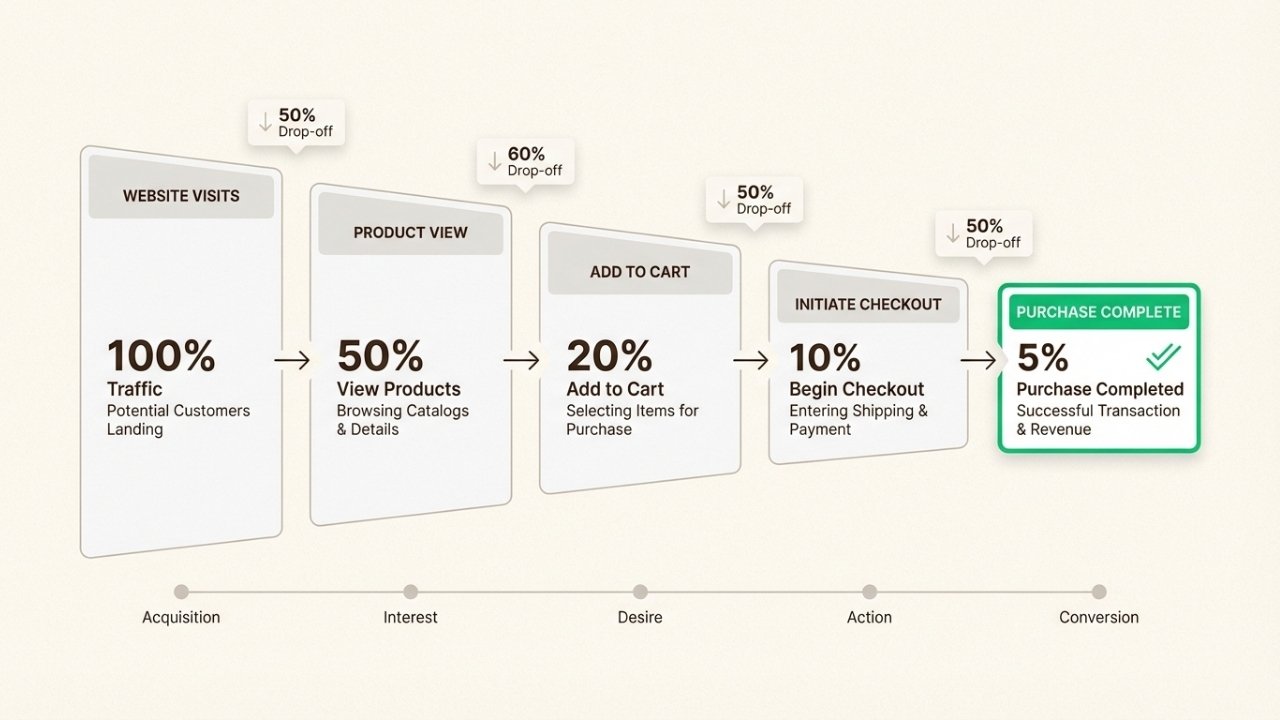
Ecommerce conversion rate optimization is the systematic process of increasing the percentage of website visitors who complete a desired action, typically making a purchase.
It involves analyzing user behavior, identifying friction points, and testing changes to improve the customer journey.
The formula is straightforward: (Conversions ÷ Visitors) × 100 = Conversion Rate.
For example, if your store had 50 purchases from 1,000 visitors last month, your conversion rate is 5%.
You can also track micro-conversions like add-to-cart rates or checkout initiation to identify where prospects drop off.
Benchmarks vary by industry. The average ecommerce conversion rate hovers around 2-3.3%, according to data from Adobe and Salesforce.
But context matters. Gift shops often see rates near 5%, while consumer electronics typically convert below 1.5%. High-consideration purchases naturally have lower conversion rates than impulse buys.
The key insight? Improving conversion is usually cheaper than acquiring more traffic. You've already paid to get visitors to your site.
Converting more of them delivers immediate ROI.
Quick wins: high-impact, low-effort optimizations
Some CRO tactics require months of testing and development. Others you can implement this week and see results within days. Start here.
Simplify your checkout process
Baymard Institute research shows that 18% of users abandon orders due to checkout UX issues.
The experience is either too long or too complicated.
Three changes make an outsized difference:
- Offer guest checkout. Forcing account creation drives away 25% of potential buyers who just want to complete their purchase.
- Minimize form fields. The average checkout displays 11.8 fields when most transactions only need eight.
- Show progress indicators. Let customers see exactly how many steps remain.
Also consider your payment options. Digital wallets like Apple Pay and Google Pay reduce friction significantly.
Buy-now-pay-later services like Klarna can increase conversions for higher-priced items by breaking payments into installments.
Add trust signals strategically
Online shoppers can't physically inspect products or interact with staff. They need reassurance that you're legitimate and their data is secure.
Place security badges near payment fields, not buried in your footer. Display your return policy prominently on product pages.
According to Baymard, 11% of buyers abandon orders because they weren't happy with the return policy.
Contact information matters too. A visible phone number, even if few people call, signals that real humans stand behind the business.
Live chat can help, but implement it carefully. Baymard's testing shows that non-user-initiated chat pop-ups often annoy visitors rather than helping them.
Optimize for mobile speed
Mobile traffic accounts for roughly half of web visits, yet mobile conversion rates lag desktop significantly (2.49% versus 3.64%, according to Yotpo's research).
Google data cited by Yotpo indicates that over half of mobile users leave a site if it takes more than three seconds to load.
Every second of delay can decrease conversion rates by roughly 20%.
Quick fixes include compressing images, enabling browser caching, and minimizing unnecessary scripts.
Test your mobile experience regularly on actual devices, not just browser emulators. Thumb-friendly buttons and streamlined navigation matter more than you might expect.
Product page optimizations that drive conversions
Your product pages do the heavy lifting of convincing visitors to buy. Small improvements here compound across your entire catalog.
Leverage social proof effectively
The statistics are striking. According to Salesforce, 70% of online shoppers read between one and six customer reviews before making a purchase decision.
Baymard's usability testing found that up to 95% of subjects relied on reviews to evaluate products.
But it's not just about having reviews. It's about presenting them strategically:
- Display both the average rating and the number of ratings. A 5-star average based on three reviews means less than a 4.5-star average from 500 reviews.
- Highlight reviews that address specific objections. If shoppers worry about sizing, feature reviews mentioning "true to size" or "runs small."
- Consider user-generated content. Yotpo data shows UGC can increase conversion rates by as much as 200%.
Improve product imagery
Baymard's research reveals that 56% of users immediately begin exploring product images after arriving on an ecommerce page.
Yet their benchmark data shows only 25% of sites provide sufficient images for users to properly evaluate products.
High-quality photography isn't optional. Include multiple angles, zoom functionality, and context shots showing the product in use. Video demonstrations can further increase confidence, particularly for complex or high-consideration purchases.
One caveat: optimize those images for web. Heavy files slow page load times, undermining your conversion efforts.
Write clear, scannable descriptions
Product descriptions should answer the questions running through a buyer's mind. What are the dimensions? What materials is it made from? Will it work with my existing setup?
Structure matters. Use bullet points for key features. Include expandable sections for detailed specifications. Place sizing guides and compatibility information where shoppers can find them without hunting.
The goal is reducing uncertainty. Every unanswered question is a potential reason to abandon the purchase.
Advanced strategies for scaling conversions
Once you've handled the fundamentals, these tactics can drive step-change improvements in your conversion rates.
Implement personalization
Dynamic Yield's research demonstrates the compounding power of personalization.
A 10% increase in conversion rate combined with a 10% boost in average order value produces a 40% revenue increase.
Personalization takes many forms:
- Product recommendations based on browsing history
- Dynamic content that changes based on traffic source
- Location-specific messaging and offers
- Behavioral triggers (returning visitors see different content than first-time visitors)
The key is relevance. When your site adapts to individual visitor needs, conversion rates follow.
Deploy abandoned cart recovery
Cart abandonment is endemic in ecommerce. The average rate hovers around 70%, though this varies significantly by industry and device.
Effective recovery strategies include:
- Email sequences that remind shoppers of items left behind
- SMS reminders for high-value carts (particularly effective for younger demographics)
- Exit-intent offers that trigger when visitors move to leave your site
- Retargeting ads that follow cart abandoners across the web
Timing matters. The first recovery email should typically send within an hour of abandonment, while the visitor still remembers your store.
Subsequent emails can introduce urgency or incentives if the first doesn't convert.
A/B test continuously
CRO isn't a one-time project. It's an ongoing process of hypothesis, testing, and iteration.
Focus your testing on high-traffic pages where small improvements yield significant returns.
Product pages, checkout flows, and landing pages typically offer the best testing opportunities.
Test one element at a time: headlines, call-to-action buttons, imagery, or page layout.
Use heatmaps and session recordings to understand how visitors interact with your site before forming hypotheses. And ensure statistical significance before declaring winners.
A test that runs too short can lead you to implement changes that actually hurt conversions.
Optimize for search intent alignment
Message mismatch kills conversions. When your landing page doesn't match the promise of your ad or search result, visitors bounce immediately.
If someone clicks an ad promising "20% Off Winter Coats," your landing page should lead with that exact offer.
The imagery, copy, and call-to-action should all reinforce the same message.
Use UTM parameters to track which campaigns drive traffic, then customize landing page content accordingly.
This alignment between expectation and reality can dramatically improve conversion rates from paid traffic.
Measuring and improving your CRO efforts
You can't optimize what you don't measure.
A disciplined approach to tracking and analysis separates successful CRO programs from failed experiments.
Key metrics to track
Beyond your overall conversion rate, monitor these indicators:
- Cart abandonment rate: The percentage of visitors who add items but don't complete purchase
- Add-to-cart rate: The percentage of product page visitors who add something to their cart
- Checkout completion rate: The percentage of visitors who start checkout and finish
- Average order value: Total revenue divided by number of orders
- Return rate: Percentage of orders that get returned (indicates potential product page issues)
Segment these metrics by traffic source, device type, and product category. Aggregate numbers hide important variations.
Tools for CRO analysis
Several categories of tools support conversion optimization:
- Analytics platforms: Google Analytics for funnel visualization and traffic analysis
- Behavioral analytics: Hotjar or UXCam for heatmaps and session recordings
- Testing platforms: Optimizely or VWO for A/B and multivariate testing
- Feedback tools: On-page surveys and post-purchase questionnaires to understand the "why" behind your metrics
The combination of quantitative data (what's happening) and qualitative insights (why it's happening) enables effective optimization.
Building a CRO culture
Sustainable conversion optimization requires organizational commitment, not just tactical execution.
Establish a regular testing cadence. Weekly or bi-weekly tests maintain momentum and compound learnings over time.
Document results from both successful and failed experiments. Often, the learnings from what didn't work prove more valuable than the wins.
Involve cross-functional teams. Designers, developers, marketers, and customer service representatives all bring unique perspectives on what might be causing friction.
The best CRO programs break down silos between these functions.
When to consider AI-powered support automation
Conversion optimization doesn't end when someone clicks "buy." The post-purchase experience, including customer support, influences repeat purchases and lifetime value.
Some customers prefer phone support, particularly for complex orders or urgent issues.
Yet staffing phone lines 24/7 is expensive, and long hold times create frustration that damages brand perception.
This is where AI phone support can extend your CRO efforts. Ringly.io offers an AI phone agent called an AI agent that handles inbound customer calls around the clock.
It answers questions, looks up orders, processes returns, and escalates to human agents only when necessary.
For ecommerce stores, the AI integrates directly with Shopify to pull real-time order information.
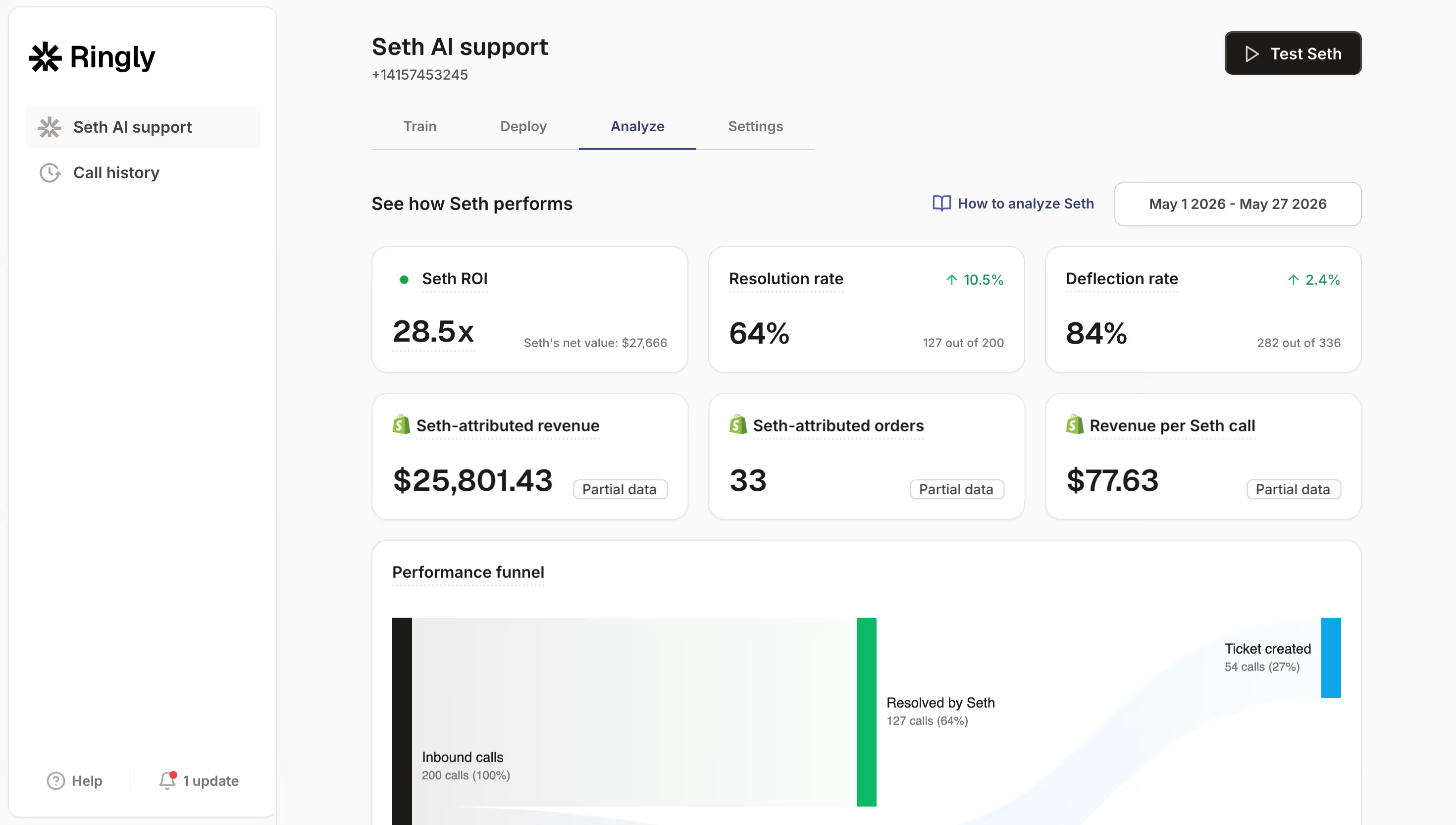
It resolves approximately 73% of calls without human intervention, according to the company's data from over 2,100 store deployments.
The system supports 30 languages, making it viable for international expansion.
The connection to conversion optimization? When customers know they can reach help immediately if something goes wrong, they're more likely to complete purchases in the first place.
Support availability becomes a trust signal that reduces purchase hesitation.

If phone support is part of your customer experience, you can try Ringly's 14-day free trial to see how AI handling affects your resolution rates and customer satisfaction.
Creating your ecommerce conversion rate optimization action plan
With 15 strategies to choose from, where should you start?
Begin with an honest audit of your current performance. How does your conversion rate compare to industry benchmarks?
Where do visitors drop off in your funnel? Tools like Google Analytics can reveal high-exit pages that deserve immediate attention.
Prioritize fixes using an effort versus impact matrix. Quick wins like adding guest checkout or compressing images deliver fast returns with minimal investment.
Larger projects like personalization engines or checkout redesigns require more resources but can produce step-change improvements.
Set realistic goals based on your starting point. Moving from 1% to 2% conversion is doubling your revenue from existing traffic.
That's significant, even if it doesn't match the 5% rates some industries achieve.
Remember that CRO is continuous, not one-time. Customer expectations evolve. Competitors raise the bar.
What works today may need adjustment next quarter.
The stores that treat optimization as an ongoing discipline are the ones that sustain high conversion rates over time.
Start with one strategy from this guide. Test it, measure results, and build from there.
Small improvements compound into significant competitive advantages.
Wondering how your rates compare? Our ecommerce conversion rate statistics for 2026 compile benchmarks across industries and channels.
Personalization tools like Monetate can lift conversions significantly. If you are evaluating options, our Monetate alternative guide breaks down the choices.
Frequently Asked Questions
What is a good ecommerce conversion rate?
A good ecommerce conversion rate typically falls between 2% and 3%, though this varies significantly by industry. Gift and apparel stores often achieve 4-5%, while electronics and high-consideration purchases may convert below 2%. Focus on improving your own baseline rather than chasing industry averages.
How do I calculate my ecommerce conversion rate?
Divide your number of conversions (purchases) by your total number of visitors, then multiply by 100. For example, 50 purchases from 1,000 visitors equals a 5% conversion rate. Track this over time and segment by traffic source, device, and product category for deeper insights.
What are the most common causes of cart abandonment in ecommerce?
According to Baymard Institute research, the top reasons include extra costs like shipping and taxes (48%), forced account creation (25%), complicated checkout processes, and slow delivery estimates. Addressing these friction points can recover significant lost revenue.
How important is mobile optimization for ecommerce conversion rate optimization?
Mobile optimization is critical. Mobile traffic represents roughly half of web visits, yet mobile conversion rates lag desktop by approximately 1 percentage point. Over half of mobile users abandon sites that take more than three seconds to load, making speed optimization essential.
What tools do I need for ecommerce conversion rate optimization?
Essential tools include Google Analytics for traffic and funnel analysis, heatmap tools like Hotjar or UXCam for understanding user behavior, and A/B testing platforms like Optimizely or VWO for experimentation. Customer feedback tools help uncover the 'why' behind your quantitative data.
How long does it take to see results from ecommerce conversion rate optimization?
Quick wins like checkout simplification or trust signal additions can show results within days or weeks. More complex initiatives like personalization or major redesigns may take months to implement and validate. CRO is an ongoing discipline, not a one-time project.
Should I focus on conversion rate or average order value?
Both matter, and they often work together. A 10% increase in conversion combined with a 10% increase in average order value produces a 40% revenue boost. Start with conversion optimization to maximize the value of your existing traffic, then layer in tactics that increase order size.