

Synthflow's pricing page looks clean. Three components, a few add-ons, done. But when you actually try to calculate your monthly bill, it gets confusing fast.
The platform switched from flat monthly plans to a pay-as-you-go model where you pick your own voice engine, LLM, and telephony provider. Each piece has its own per-minute rate. Stack them up, add optional performance routing and extra concurrency, and your "simple" $0.09/minute quickly becomes $0.20+.
We broke down every Synthflow pricing component, ran the numbers at different call volumes, and compared the total cost against alternatives. Whether you're evaluating Synthflow for a call center, an agency, or an e-commerce store, here's what you'll actually pay in 2026.
Hear what AI support calls sound like for your store. Just paste your Shopify URL and get sample calls in under 20 seconds, no email required. Listen to demo calls for my store.
What is Synthflow?
Synthflow is a no-code voice AI platform that lets you build phone agents without writing a line of code. You drag and drop conversation flows, connect your CRM, and deploy agents that handle inbound and outbound calls.
The platform targets agencies, enterprises, and businesses that need custom voice workflows. It integrates with HubSpot, GoHighLevel, Salesforce, and Zapier. White-label support makes it popular with agencies reselling AI voice services to their own clients.
Here's a quick look at what Synthflow offers:
- No-code flow builder: Drag-and-drop interface for designing conversation paths
- Inbound and outbound calling: Handle both support calls and sales outreach
- Voice cloning: Custom voices through ElevenLabs integration
- 30+ languages: Deploy agents that speak your customers' language
- CRM integrations: HubSpot, GoHighLevel, Salesforce, Zapier
- White-label and sub-accounts: Let agencies resell under their own brand
- GDPR, SOC2, ISO 27001 compliance: Enterprise-grade security standards
On G2, Synthflow holds a 4.9/5 rating across 999 reviews, with users praising the visual builder and voice quality. Trustpilot reviewers give it 4.4/5. 81% of G2 users rate its natural language understanding highly.
But the reviews also flag a common frustration: pricing that's harder to predict than it looks. Some users have described the experience as a "bait and switch" after seeing their first real bill. And that's where most buyers get stuck.
The platform competes in a crowded voice AI market alongside Retell AI, Vapi, Bland AI, and specialized tools like Ringly.io for e-commerce. Understanding its pricing is the first step to figuring out if it's the right fit.
How Synthflow pricing works in 2026
If you search for Synthflow pricing, you'll find articles quoting wildly different numbers. Some say $29/month, others say $450/month. Here's why.
Synthflow used to offer tiered monthly plans. The old structure looked like this:
| Legacy Plan | Monthly Price | Minutes Included | Per-Minute Rate |
|---|---|---|---|
| Starter | $29 | 50 | $0.58 |
| Pro | $375-450 | 2,000 | $0.19-0.23 |
| Growth | $750-900 | 4,000 | $0.19-0.23 |
| Agency | $1,250-1,400 | 6,000 | $0.21-0.23 |
Those plans are no longer available to new users. Existing customers can stay on them, but if you sign up today, you're on the new pay-as-you-go model.
The current model splits your cost into three components you choose yourself.
Voice engine
Every call uses Synthflow's voice engine at a flat $0.09 per minute. This covers the text-to-speech and speech-to-text processing that makes the conversation happen. You don't get to pick a cheaper option here. It's a fixed cost.
LLM (the AI brain)
The LLM is what understands the caller and generates responses. You pick which model runs your agent:
| Model | Cost per Minute |
|---|---|
| GPT-4.1 mini | $0.02 |
| GPT-5 / 5.1 / 5.2 | $0.04 |
| GPT-4.1 | $0.05 |
| Bring Your Own LLM | $0.00 |
The "Bring Your Own" option means you pay OpenAI or Anthropic directly for API access. Whether that's cheaper depends on your volume and the model you pick.
Telephony
This is how calls actually reach your agent (phone numbers and call routing):
| Option | Cost per Minute |
|---|---|
| Synthflow-managed Twilio | $0.02 |
| Bring Your Own Twilio | $0.00 |
| Synthflow Native Telephony | Enterprise only |
Phone numbers cost $1.50/month each, regardless of which telephony option you choose.
What your all-in cost looks like
Here's the math for three common configurations:
| Configuration | Voice | LLM | Telephony | Total/Min |
|---|---|---|---|---|
| Budget (GPT-4.1 mini + BYO Twilio) | $0.09 | $0.02 | $0.00 | $0.11 |
| Standard (GPT-5 + Managed Twilio) | $0.09 | $0.04 | $0.02 | $0.15 |
| Premium (GPT-4.1 + Managed Twilio) | $0.09 | $0.05 | $0.02 | $0.16 |
Most users land between $0.13 and $0.24 per minute all-in. That range depends on your LLM choice and whether you bring your own telephony.
So what does that mean in practice? A typical 2-minute customer service call costs $0.22-0.48 depending on your setup. For context, a human agent handling that same call costs roughly $3-5 when you factor in salary, benefits, and overhead (according to call center cost benchmarks). The savings are real, but only if you know what you're signing up for.
Synthflow add-ons and extra costs
The per-minute components are just the starting point. Synthflow also offers add-ons that can push your costs higher.
Performance Routing adds $0.04/minute. It optimizes call routing for faster response times. If latency matters for your use case (and it usually does for customer service calls), you'll probably want this.
Global Low Latency Edge is another $0.04/minute. This one routes calls through regional servers to reduce delay for international callers. If your customers call from multiple countries, this add-on becomes hard to skip.
Stack both on a standard config and your per-minute cost jumps from $0.15 to $0.23. That's a 53% increase from two checkboxes.
Concurrency limits catch people off guard. The PAYG plan includes 5 concurrent calls. If you need more, each additional slot costs $20/month (up to 50 units). For a business handling moderate call volume, adding 10 concurrent slots means an extra $200/month before you've made a single call.
White Label & Reseller access costs $2,000/month. This is aimed at agencies building AI voice products under their own brand.
Enterprise pricing kicks in at 10,000+ minutes per month. You get unlimited concurrent calls, a 99.99% SLA, a dedicated solution architect, and HIPAA compliance. The rate drops below standard PAYG, but Synthflow doesn't publish exact enterprise numbers. You'll need to talk to their sales team.
What Synthflow actually costs per month
Enough with per-minute math. Here's what real monthly bills look like at different call volumes, assuming a standard configuration ($0.15/min) and an average call length of 2 minutes.
| Volume | Minutes | Monthly Cost (Standard) | Monthly Cost (Budget) | Monthly Cost (Premium + Add-ons) |
|---|---|---|---|---|
| 50 calls/mo | 100 | $15 | $11 | $23 |
| 250 calls/mo | 500 | $75 | $55 | $115 |
| 500 calls/mo | 1,000 | $150 | $110 | $230 |
| 1,000 calls/mo | 2,000 | $300 | $220 | $460 |
| 2,500 calls/mo | 5,000 | $750 | $550 | $1,150 |
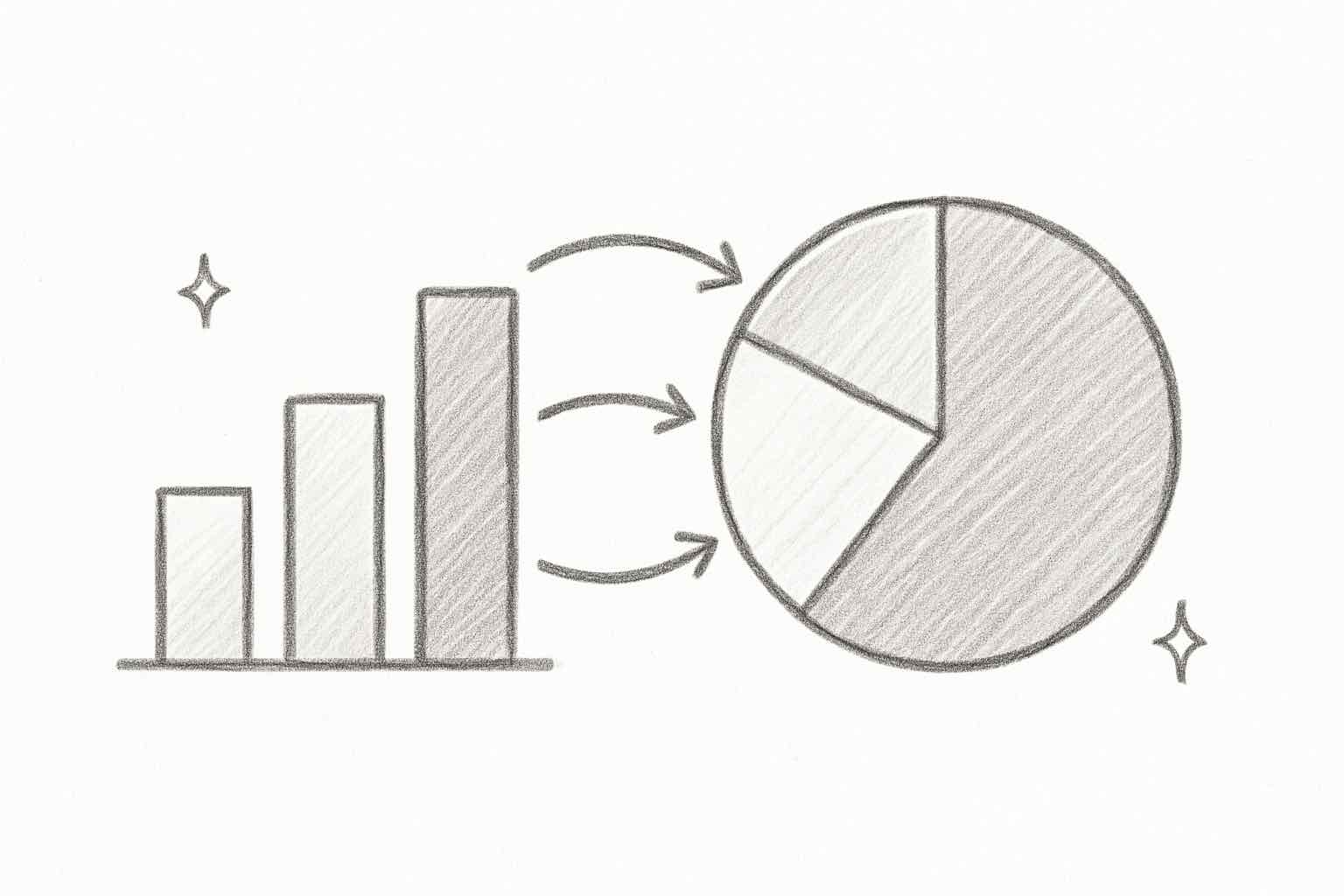
A few things stand out.
At low volume (under 250 calls), Synthflow is genuinely affordable. You're paying $15-75/month with no commitments. That's great for testing or handling a small trickle of calls.
At medium volume (500-1,000 calls), the cost is reasonable but starts to add up, especially with add-ons. And you might need to buy extra concurrent call slots if calls overlap.
At high volume (2,500+ calls), you're spending $750-1,150/month. At this point, the enterprise plan likely offers better value, but you're locked into a sales conversation to find out. According to Gartner's 2026 forecast, conversational AI will reduce contact center labor costs by $80 billion this year, so the ROI can still work. But you need to know what you're actually spending.
The key insight: Synthflow's PAYG pricing scales linearly. There are no volume discounts until you hit enterprise territory. Every additional call costs the same as the first.
Here's what that means practically. If you're handling 500 calls this month and 2,000 next month (say, during a product launch or holiday season), your bill jumps 4x with no way to lock in a better rate. Compare that to flat-rate plans where you pay the same regardless of spikes. For e-commerce businesses with seasonal peaks, this unpredictability can be a real problem.
Also worth noting: the table above doesn't include concurrency add-ons. If 10 customers call at the same time and you only have 5 concurrent slots, 5 of those calls fail. Bumping to 15 concurrent slots costs an extra $200/month on top of your per-minute charges.
The BYOK factor: hidden costs to watch
One thing that trips up new Synthflow users is the Bring Your Own Key (BYOK) model. On the surface, BYO Twilio and BYO LLM show "$0.00/min" on the pricing page. But that's just what Synthflow charges you. You're still paying those providers directly.
Here's what BYO actually costs through the providers themselves:
- OpenAI GPT-4.1 mini API: Roughly $0.01-0.03 per minute of conversation (varies by token usage)
- Twilio voice: $0.0085/min for inbound, $0.014/min for outbound, plus $1/month per phone number
- ElevenLabs (if using custom voices): $0.18-0.30 per 1,000 characters
So "BYO for $0.00" doesn't mean free. It means the cost moves off Synthflow's invoice and onto your OpenAI/Twilio bill. For some teams, this is fine. You get more control and potentially lower rates at high volume. For others, it's just extra complexity.
The total cost with BYOK typically adds $0.02-0.06/minute to whatever Synthflow charges, depending on your provider choices. Independent reviews estimate real costs are often 2-3x higher than the base rate suggests.
If you'd rather not manage multiple vendor relationships for a single phone agent, all-inclusive platforms with flat pricing eliminate this headache entirely.
Synthflow pricing: what works and what doesn't
Now that you have the full picture, here's an honest assessment.
What works:
- No upfront commitment: Start for free, pay only when you deploy. Failed calls aren't charged.
- Per-second billing: You pay for actual talk time, not rounded-up minutes. This saves money on short calls.
- BYO flexibility: Bringing your own Twilio and LLM gives experienced teams more control over their stack.
- Free agent building: You can build and test agents before spending anything. Great for evaluation.
- Flexible scaling: No plan to upgrade or downgrade. Usage adjusts automatically with no minimum commitments.
- Strong compliance: GDPR, SOC2, and ISO 27001 certifications come standard on every account.
What doesn't:
- Unpredictable monthly bills: Component pricing makes it hard to budget. Your cost depends on configuration, call length, and volume, all of which fluctuate month to month.
- Add-ons stack fast: Performance routing plus low latency edge adds $0.08/minute. On 1,000 minutes, that's an extra $80/month you weren't expecting.
- Concurrency costs: Five concurrent calls is tight for any real business. Expanding to 20 costs $300/month in add-on fees alone.
- No volume discounts on PAYG: Whether you use 100 minutes or 5,000, the per-minute rate stays the same until you reach enterprise levels.
- Support quality varies: Multiple review sources note that support response times are slower for lower-spend accounts. If you're spending $50/month, don't expect enterprise-level help.
- Enterprise pricing is opaque: You can't budget for growth without talking to sales first.
- BYOK complexity: Managing separate accounts with OpenAI, Twilio, and potentially ElevenLabs adds operational overhead that many teams underestimate.
How Synthflow compares to alternatives
Every "synthflow pricing" article on the internet is written by a competitor trying to sell you their own product. So we tried to be more balanced here.
That said, comparing prices at the same volume is the only honest way to evaluate. Here's how Synthflow's pricing stacks up against other voice AI platforms at 1,000 minutes per month:
| Platform | Pricing Model | Cost at 1,000 min | Best For | Setup |
|---|---|---|---|---|
| Synthflow | PAYG (components) | $110-230 | Agencies, custom workflows | No-code |
| Retell AI | PAYG (components) | $110-150 | Developers | API/code |
| Vapi | PAYG (components) | $130-250 | Technical teams | API/code |
| Bland AI | Tiered + per-min | $120-140 + plan fee | Enterprise outbound | API/code |
| Ringly.io | Flat monthly | $349 (1,000 min included) | E-commerce, Shopify | No-code (3 min) |
Here's a closer look at each alternative:
Retell AI is the developer's pick. The all-in cost runs $0.11-0.15/minute in production, which is cheaper than Synthflow's typical $0.15-0.24 range. But you need coding skills. There's no visual builder. G2 reviewers rate it 4.8/5, and the platform gives you $10 in free credits to start. Enterprise deals can drop the rate to $0.05/minute. If you have a dev team and want maximum API control over your voice agents, Retell is worth evaluating.
Vapi is even more technical. The $0.05/minute platform fee looks cheap until you add STT ($0.01), TTS ($0.04), LLM ($0.02-0.20), and telephony (~$0.01). Real all-in costs hit $0.13-0.25/minute, similar to Synthflow. Healthcare teams should also budget $1,000/month for the HIPAA BAA add-on. Vapi is built for teams that want to orchestrate every piece of the voice stack themselves.
Bland AI restructured its pricing in December 2025. The free tier jumped from $0.09/minute to $0.14/minute. Paid plans start at $299/month (Build tier, $0.12/min) and $499/month (Scale tier, $0.11/min). Every failed outbound call also incurs a $0.015 minimum charge. Bland is strongest for high-volume outbound calling at enterprise scale. For a full breakdown of their plans and hidden fees, see our Bland AI pricing guide.
Ringly.io takes a completely different approach. Instead of component pricing, you pay a flat $349/month for 1,000 minutes. That includes everything: the AI voice agent, native Shopify integration, order lookups, return processing, call recordings, and analytics. No BYOK, no add-ons, no surprises.
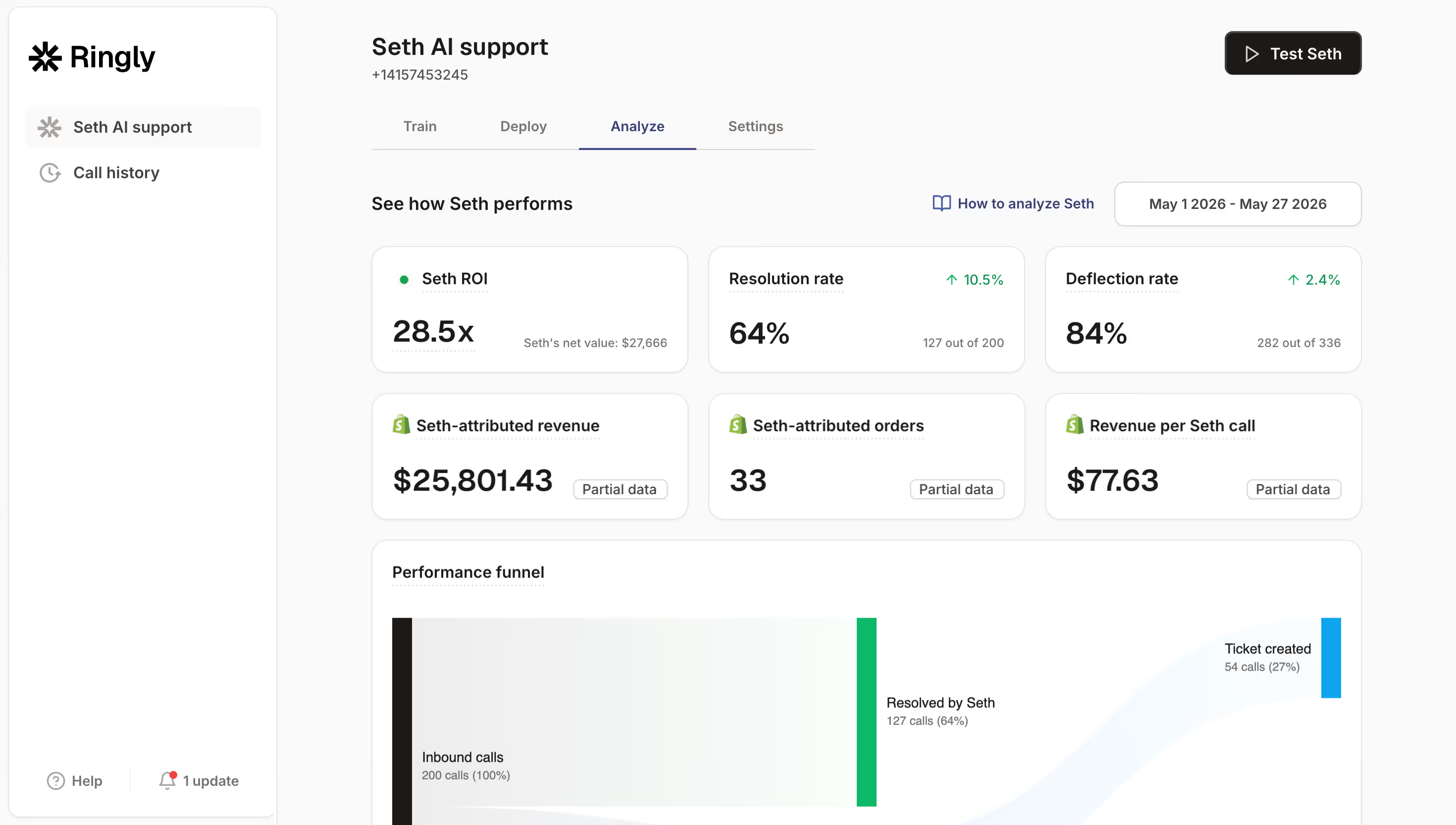
It's purpose-built for e-commerce phone support, not a general-purpose voice AI platform. Your AI agent (named Seth) connects to your Shopify store in about three minutes. It can check order status, process returns, answer product questions, and transfer to a human when needed. Over 2,100 Shopify stores use it, with a 73% resolution rate across 40 languages.
The pricing difference matters most at medium volume. At 1,000 minutes/month, Synthflow on a standard config costs $150 (without add-ons). Ringly.io costs $349 but includes everything, no configuration needed. If you're spending time managing Twilio accounts, OpenAI API keys, and Synthflow workflows, the total cost of ownership might favor the all-inclusive approach. Especially when you factor in how much time setup takes for a custom voice stack versus three minutes with a plug-and-play solution.
If you run a Shopify store and want AI handling your support calls, Ringly.io is simpler and more predictable than assembling a Synthflow stack. Try it free for 14 days.
Who should (and shouldn't) use Synthflow
Not every AI call center platform fits every business. Here's an honest breakdown of where Synthflow shines and where it falls short.
Synthflow makes sense if:
- You're an agency building white-label voice AI for clients. The $2,000/month reseller program and sub-account system is specifically designed for this. You can create separate workspaces per client with their own branding.
- You need custom voice workflows that go beyond simple Q&A. Synthflow's visual flow builder lets you map complex conversation trees without code. Think multi-step qualification funnels, appointment booking sequences, or survey collection.
- Your call volume is low (under 200 minutes/month). At $15-30/month with zero commitment, it's one of the cheapest ways to automate a handful of calls.
- You need outbound calling. Synthflow handles both inbound and outbound, which not all platforms do. For sales outreach or appointment setting, this flexibility matters.
Look elsewhere if:
- You're an e-commerce store that just needs phone support. Synthflow doesn't have native Shopify integration, order lookup, or return processing. You'd need to build custom workflows and connect APIs manually. Ringly.io does all of that out of the box, with setup in three minutes. If you also need a helpdesk for text-based support, see how Gorgias integrates with Shopify and pairs with AI phone tools.
- You need predictable monthly billing. Component pricing makes budgeting difficult, especially with seasonal call volume spikes. A flat-rate plan (like Ringly.io's $349/month) gives you a number you can plan around.
- You're a developer who wants full API control. Retell AI and Vapi are built for this and often cheaper per minute.
- You're budget-sensitive at 1,000+ calls/month. The linear PAYG pricing with no volume breaks makes Synthflow expensive at scale compared to tiered or flat-rate alternatives. At 2,000 minutes/month on the standard config, you're paying $300 with no way to negotiate a lower rate (unless you qualify for enterprise).
The voice AI market crossed $22 billion in 2026, and there's no shortage of platforms to choose from. The right one depends on your specific use case, not just the per-minute rate.
Ready to see what AI customer service looks like for your store? Start your free trial. Setup takes three minutes.
Frequently asked questions
Is there a Synthflow free trial?
Yes. Synthflow lets you build and test agents for free. You only pay when you deploy an agent to production. There's no time-limited trial, but you'll need to add a payment method before going live.
How much does Synthflow cost per minute?
The base voice engine costs $0.09/minute. Add your LLM ($0.02-0.05/min) and telephony ($0.00-0.02/min), and the all-in cost lands between $0.11 and $0.24 per minute. Optional add-ons like performance routing can push it higher.
What happened to Synthflow's starter plan?
Synthflow removed its legacy tiered plans (Starter at $29/mo, Pro, Growth, Agency) for new users. The platform now uses a pay-as-you-go model only. Existing customers on legacy plans can keep them, but new signups get component-based pricing.
Does Synthflow charge for failed calls?
No. You're only billed for successful calls. If a call fails to connect or drops before the agent responds, you won't be charged. Billing is also per-second, not rounded to the nearest minute.
Is Synthflow good for e-commerce stores?
Synthflow can handle e-commerce calls, but it doesn't have native integrations for order lookups, return processing, or product catalog syncing. You'd need to build those workflows manually. For Shopify stores specifically, a platform like Ringly.io is purpose-built for this and connects to your store in minutes.
What's the cheapest Synthflow configuration?
The minimum cost is $0.11/minute: voice engine ($0.09) plus GPT-4.1 mini ($0.02) plus bring-your-own Twilio ($0.00). At 500 minutes/month, that's about $55. Keep in mind you'll need your own Twilio account and OpenAI API access to hit this number.
How does Synthflow compare to Retell AI on price?
At 1,000 minutes, Synthflow costs $110-230/month depending on configuration. Retell AI runs $110-150/month for the same volume. Retell is usually cheaper, but requires coding. Synthflow's advantage is the no-code builder. Check our full Synthflow alternatives comparison for more details.
Can I use Synthflow for a Shopify store?
Technically yes, but it doesn't have native Shopify integration. You'd need to build custom workflows to handle order lookups, returns, and product questions. For Shopify-specific phone support, Ringly.io connects directly to your store and handles these automatically.
The bottom line on Synthflow pricing
Synthflow's pay-as-you-go model works well for two groups: agencies that need white-label voice AI, and businesses testing automation at low volume. The no-code builder is genuinely good, the voice quality is natural, and the per-second billing is fair.
But the component pricing creates real budgeting headaches once you scale. Add performance routing, extra concurrency, and a decent LLM, and costs climb faster than the $0.09 headline rate suggests. At 1,000 minutes per month on a standard config with add-ons, you're looking at $230+. At 2,500 minutes, over $1,100.
The conversational AI market is projected to grow from $17.97 billion to $82.46 billion by 2034, according to Fortune Business Insights. There are more voice AI platforms launching every month, which means more pricing options and more competition working in your favor. Don't lock yourself into a pricing model that doesn't match how your business actually uses the phone.
For agencies and custom workflow builders, Synthflow is a solid choice. The visual builder and white-label features justify the pricing for that use case.
For e-commerce and Shopify stores, there's a simpler path. Ringly.io gives you a fully configured AI phone agent with native Shopify integration, order tracking, and return handling for a flat $349/month. No components to assemble. No surprise add-ons. No BYOK overhead.
For developers who want API-level control, Retell AI and Vapi deliver lower per-minute costs with more flexibility. And if you're evaluating chatbot builders alongside voice platforms, our Voiceflow pricing breakdown covers their credit system and real team costs.
The best platform isn't the cheapest per minute. It's the one that matches your use case and gives you a bill you can predict.
Try Ringly.io free for 14 days and get Seth answering calls in under three minutes.