

You're spending more on customer service every quarter. New hires, overtime, after-hours coverage, training costs that reset every time someone quits. And now everyone's telling you AI is the answer.
But here's the question nobody seems to answer clearly: what's the actual return? Not the marketing hype. Not the "up to 80% savings" headline. The real, measurable ROI of AI customer service for a business like yours.
This guide breaks down exactly how to calculate your AI customer service ROI, what numbers to expect, and where most companies get the math wrong. Whether you're running a Shopify store with two support reps or managing a growing e-commerce operation, you'll walk away with a formula you can actually use.
Hear what AI support calls sound like for your store. Just paste your Shopify URL and get sample calls in under 20 seconds, no email required. Listen to demo calls for my store.
What is AI customer service ROI?
AI customer service ROI measures the financial return you get from automating support interactions with artificial intelligence. But if you only look at cost savings, you're missing most of the picture.
The real ROI sits on three pillars:
- Cost reduction: Fewer agent hours spent on repetitive questions like order status checks, shipping updates, and return requests
- Revenue protection: Customers who get instant answers at 2 AM don't abandon their carts or switch to a competitor. 24/7 availability directly protects revenue you'd otherwise lose.
- Efficiency gains: Your human agents handle fewer routine calls and more complex, high-value conversations that actually need a human touch
According to IBM, companies see an average return of $3.50 for every $1 invested in AI customer service. Leading organizations report returns up to 8x their investment. And the ROI compounds over time: 41% in year one, 87% by year two, and over 124% by year three as the AI improves.
So when someone asks "is AI customer service worth it?", the math usually answers itself. The harder question is how to measure it properly for your specific business.
The real cost of human vs AI customer service
Before you can calculate ROI, you need to understand what you're actually spending right now. Most e-commerce businesses underestimate their true support costs by 30-40%.
Here's what a typical support team actually costs:
| Cost Category | Human Agent (Annual) | AI Solution (Annual) |
|---|---|---|
| Base salary | $39,000-$41,000 | $0 |
| Benefits (25-30%) | $10,000-$12,000 | $0 |
| Training & onboarding | $3,000-$5,000 | $0 |
| Management overhead | $5,000-$8,000 | $0 |
| Tools & software | $2,000-$4,000 | Included |
| Platform cost | $0 | $4,200-$13,200 |
| Total per agent/unit | $59,000-$70,000 | $4,200-$13,200 |
That's per agent. Most growing Shopify stores need at least two support reps for reasonable coverage, pushing annual costs to $120,000-$140,000.
On a per-interaction basis, the gap is even wider. A human-handled phone call costs $15-$25. An AI phone agent handles the same call for $0.35-$0.70. For chat, human interactions run $8-$15 each versus $0.50-$0.70 for AI.
Gartner predicts AI will reduce customer service labor costs by $80 billion by 2026. That's not a projection. It's happening now.
What most cost comparisons miss
The table above tells part of the story. But there are hidden costs on both sides that change the math.
Hidden human costs that add up fast:
- Turnover: Call center agents turn over at 30-45% annually, with some teams hitting 60%. Every replacement costs $10,000-$20,000 in recruiting, hiring, and training. Average agent tenure is just 13-15 months.
- After-hours coverage: Night shifts, weekend premiums, and holiday pay can add 25-40% to your labor costs if you want true 24/7 phone support.
- Scaling gaps: When order volume spikes during peak season, you either pay overtime or miss calls. Both cost money.
Hidden AI costs to factor in:
- Knowledge base setup: Building your AI's training data takes time upfront (though some platforms, like those with Shopify integrations, pull this automatically)
- Ongoing tuning: Plan for a few hours per month reviewing conversations and refining responses
- Overage charges: If your call volume exceeds your plan, per-minute fees apply (typically $0.15-$0.25/minute)
The honest take: AI isn't free. But it scales without adding headcount, and the cost per interaction drops as volume grows. Human teams do the opposite.
How to calculate your AI customer service ROI
Here's the formula:
ROI = [(Total Savings + Revenue Gains - AI Costs) / AI Costs] x 100
That gives you a percentage. An ROI of 500% means you're getting $5 back for every $1 spent. Here's how to fill in each variable.
Step 1: Calculate your current support costs
Add up everything: agent salaries, benefits, training, tools, management time, and overhead. Include the cost of missed calls if you're not offering 24/7 coverage. For most e-commerce teams, this number is higher than expected.
Step 2: Estimate your AI deflection rate
This is the percentage of interactions your AI handles without needing a human. Start conservative. First-month deflection rates typically land at 20-40%, climbing to 60-80% as your knowledge base matures over 3-6 months.
Step 3: Calculate cost savings per deflected interaction
Multiply your deflection rate by your monthly interaction volume, then by the cost difference between human and AI handling. If you handle 500 calls per month at $20 each, and AI deflects 60% of them, that's 300 calls x $19.30 savings = $5,790/month saved.
Step 4: Add revenue impact
This is where most ROI calculators fall short. Factor in:
- Retained customers who got instant help instead of waiting or hanging up
- Reduced churn from better customer satisfaction scores
- Cart recovery from AI handling pre-purchase questions 24/7
Companies that treat customer service as a revenue center (not just a cost center) see 3.5x more revenue growth, according to an Accenture study.
Step 5: Subtract your total AI investment
Include the platform subscription, any setup costs, and time spent on configuration and monitoring.
A real example with real numbers
Here's what the math looks like for a mid-size Shopify store:
| Variable | Value |
|---|---|
| Monthly support calls | 500 |
| Current agents | 2 |
| Annual agent cost (loaded) | $130,000 total |
| Cost per human call | $20 |
| AI platform cost (Ringly.io Grow) | $349/month |
| AI resolution rate | 73% |
| AI cost per call | ~$0.50 |
Monthly savings calculation:
- Calls handled by AI: 365 (73% of 500)
- Savings per AI call: $19.50 ($20 - $0.50)
- Monthly cost savings: $7,117
- Monthly AI cost: $349
- Net monthly savings: $6,768
- Annual savings: $81,216
- ROI: 1,840%
Even at a more conservative 50% resolution rate, the annual savings would be $55,800, which is still a 1,234% ROI.
See what AI phone support looks like for your Shopify store. Setup takes three minutes.
Key metrics that prove AI customer service ROI
Tracking the right customer service KPIs is what separates teams that can prove AI ROI from those that just hope it's working. Here are the six metrics that matter most.
| Metric | Before AI | After AI | Why It Matters |
|---|---|---|---|
| Cost per contact | $15-$25 | $0.50-$2.00 | Most direct ROI indicator |
| First response time | 6+ hours | Under 4 minutes | Reduces abandonment |
| Resolution rate (no human) | 0% | 60-80% | Drives cost savings |
| CSAT score | 75-85% | 88-99% | Protects revenue |
| Ticket deflection rate | 0% | 40-70% | Measures automation success |
| Agent handle time | 8-12 min | 3-5 min (AI-assisted) | Improves capacity |
- Cost per contact: The most direct measure of AI ROI. Track this monthly to see the trend.
- First response time: According to Freshworks, AI cut first response times from over 6 hours to under 4 minutes. That's not a marginal improvement. It's a category shift.
- Resolution rate: The percentage of interactions fully resolved without human help. Top AI phone agents hit 70-73%. If your AI is below 40%, your knowledge base needs work.
- CSAT score: Freshworks benchmark data shows AI-powered support pushed satisfaction from 89% to 99%. Bot-only chats actually score 2% higher than conversations involving a human agent.
- Ticket deflection: Measures how many inquiries AI handles entirely. Start tracking on day one because the growth curve tells you how fast your ROI improves.
- Revenue per customer: The hardest to measure, but the most impactful. Customer retention improvements from faster, always-available support directly increase lifetime value.
AI customer service ROI timeline: what to expect at 30, 60, and 90 days
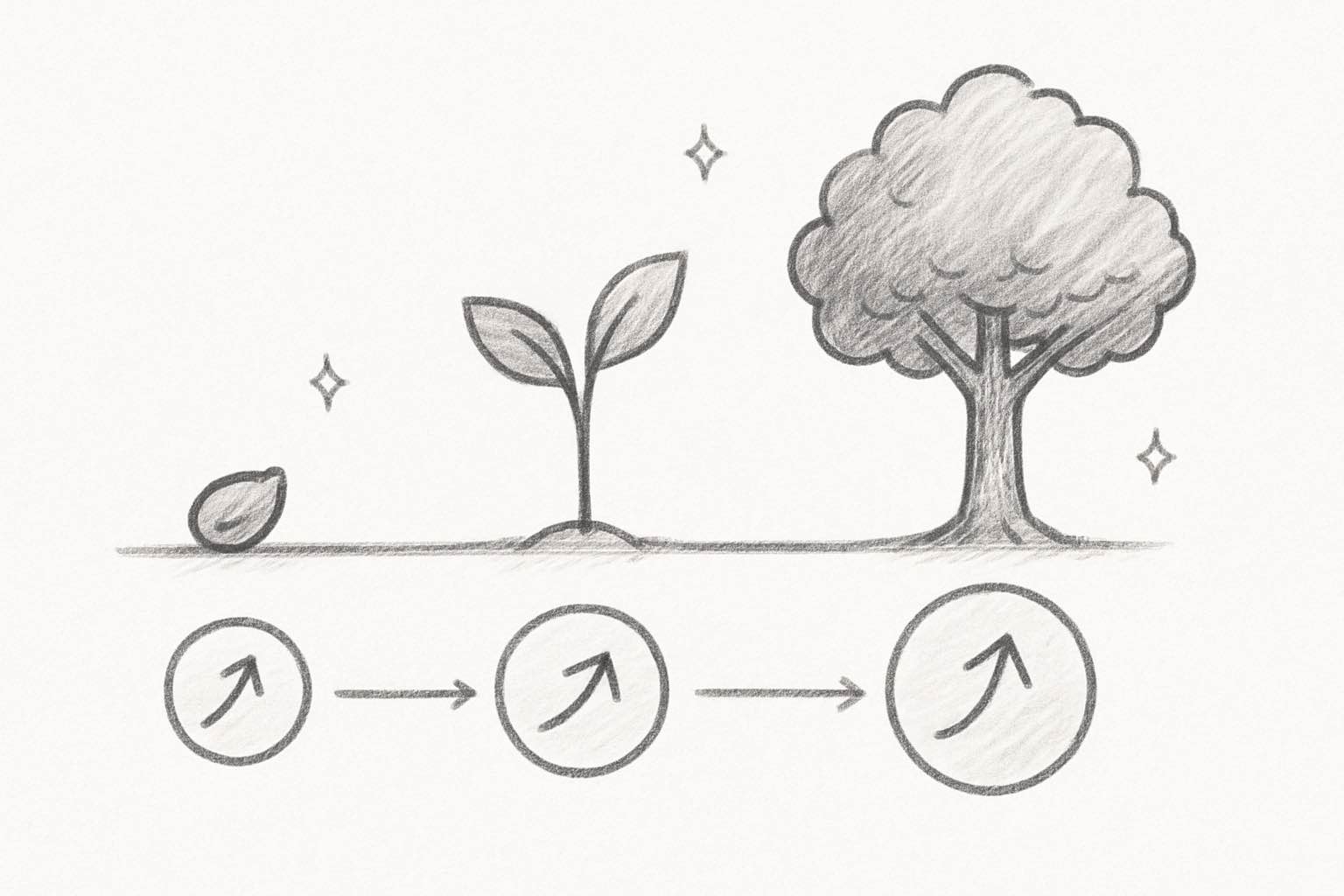
One of the biggest mistakes is expecting full ROI from day one. AI customer service gets smarter over time. Here's what a realistic timeline looks like.
Days 1-30: Setup and calibration
Your AI is learning. Deflection rates typically sit at 20-40%. You'll see immediate savings on the calls it does handle, but this month is about building your knowledge base and fine-tuning responses. Expect to break even or see modest positive ROI.
For platforms that connect directly to your Shopify data (like AI phone agents built for e-commerce), this phase moves faster because the AI already has your product catalog, order data, and return policies.
Days 31-60: Acceleration
Deflection rates climb to 50-60% as the AI learns from real conversations. Measurable cost savings become obvious. Your human agents start handling more complex issues because routine questions aren't hitting their queue anymore.
Days 61-90: Mature performance
This is where the ROI picture gets compelling. Deflection rates reach 60-80%. Your cost per contact has dropped significantly. And you have enough data to calculate true ROI including revenue impact.
Industry data confirms this pattern. Well-deployed AI customer service shows positive ROI within 3-6 months, with the average reaching 41% ROI in year one and climbing from there.
Try Ringly.io free for 14 days and see results in your first month. Most stores see the AI handling calls within minutes of setup.
Why phone support delivers the highest AI customer service ROI
Most articles about AI customer service ROI focus on chatbots and text-based support. But the biggest ROI opportunity is actually in voice AI for customer service.
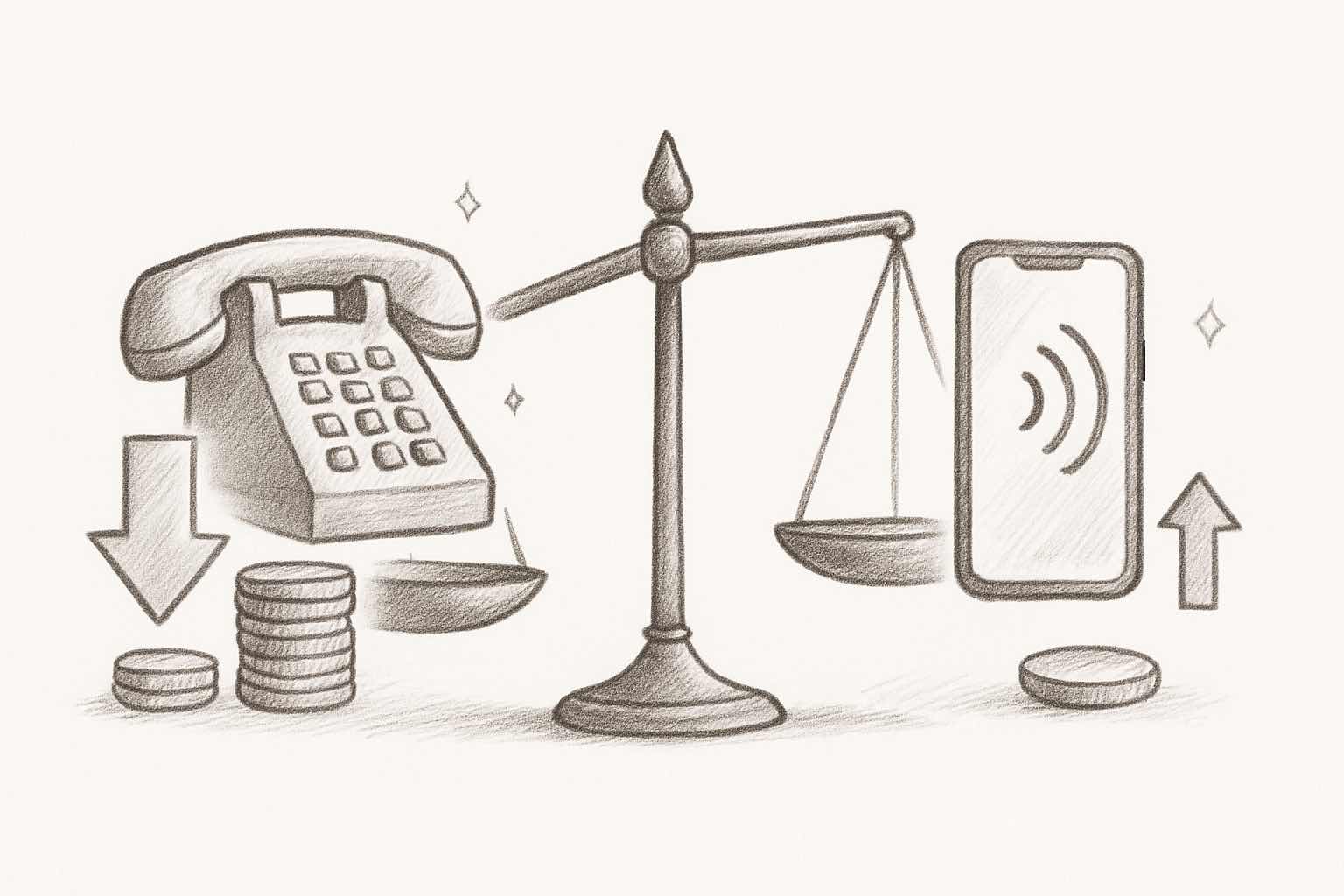
Here's why: phone calls cost 3-5x more than chat or email interactions when handled by humans. A chat agent costs you $8-$15 per conversation. A phone agent costs $15-$25. So when AI takes over phone calls, the savings per interaction are dramatically higher.
And phone support has unique challenges that make AI especially valuable:
- After-hours coverage requires night shifts, which means premium pay or outsourcing costs
- Missed calls are lost revenue. Customers who can't reach you by phone are more likely to request a refund or leave a negative review.
- Peak volume spikes during holidays and promotions are expensive to staff for. AI handles high call volume without overtime.
The best AI phone agents resolve about 73% of inbound calls without human intervention. They handle order tracking, return requests, product questions, and shipping updates, which are the exact call types that eat up most of your agents' time.
For e-commerce specifically, WISMO calls (where is my order?) make up 30-50% of all support volume. An AI agent handles those in 30-45 seconds. A human agent takes 3-5 minutes.
Common mistakes that kill your AI customer service ROI
Not every AI implementation delivers strong ROI. About 80% of companies report limited material impact from AI, and it's usually not the technology's fault. It's the implementation.
Here are the five mistakes we see most often:
- Skipping knowledge base setup: Your AI is only as good as the information it has. If you don't feed it your product details, return policies, and common questions, expect bad answers and frustrated customers. Garbage in, garbage out.
- No escalation path: Customers need a way to reach a human when the AI can't help. Without smart call transfer, AI becomes a wall between your customers and your team. That tanks satisfaction scores.
- Measuring only cost savings: If you only track how much you saved on agent salaries, you'll miss the revenue impact. Track customer retention, satisfaction scores, and lifetime value too.
- Expecting perfection on day one: AI needs data to improve. Give it 60-90 days before judging results. The companies that see the best ROI are the ones that actively tune their AI during the first three months.
- Choosing generic over specialized: A general-purpose AI tool won't know how to look up Shopify orders or process a return. Tools built for e-commerce outperform generic alternatives because they understand your workflows.
How to maximize your AI customer service ROI
Getting positive ROI is one thing. Maximizing it is another. Here's what the highest-performing teams do.
- Start with high-volume, low-complexity queries: Order status, shipping updates, return policies. These are the calls AI handles best, and they make up 60-80% of your total volume. Get these right first.
- Build a comprehensive knowledge base before launch: Feed your AI everything. Product descriptions, FAQ answers, return windows, shipping timelines, size guides. The more context it has, the higher your resolution rate.
- Monitor weekly for the first 90 days: Review AI conversations, identify gaps, and update your knowledge base. This is the single highest-ROI activity during early implementation.
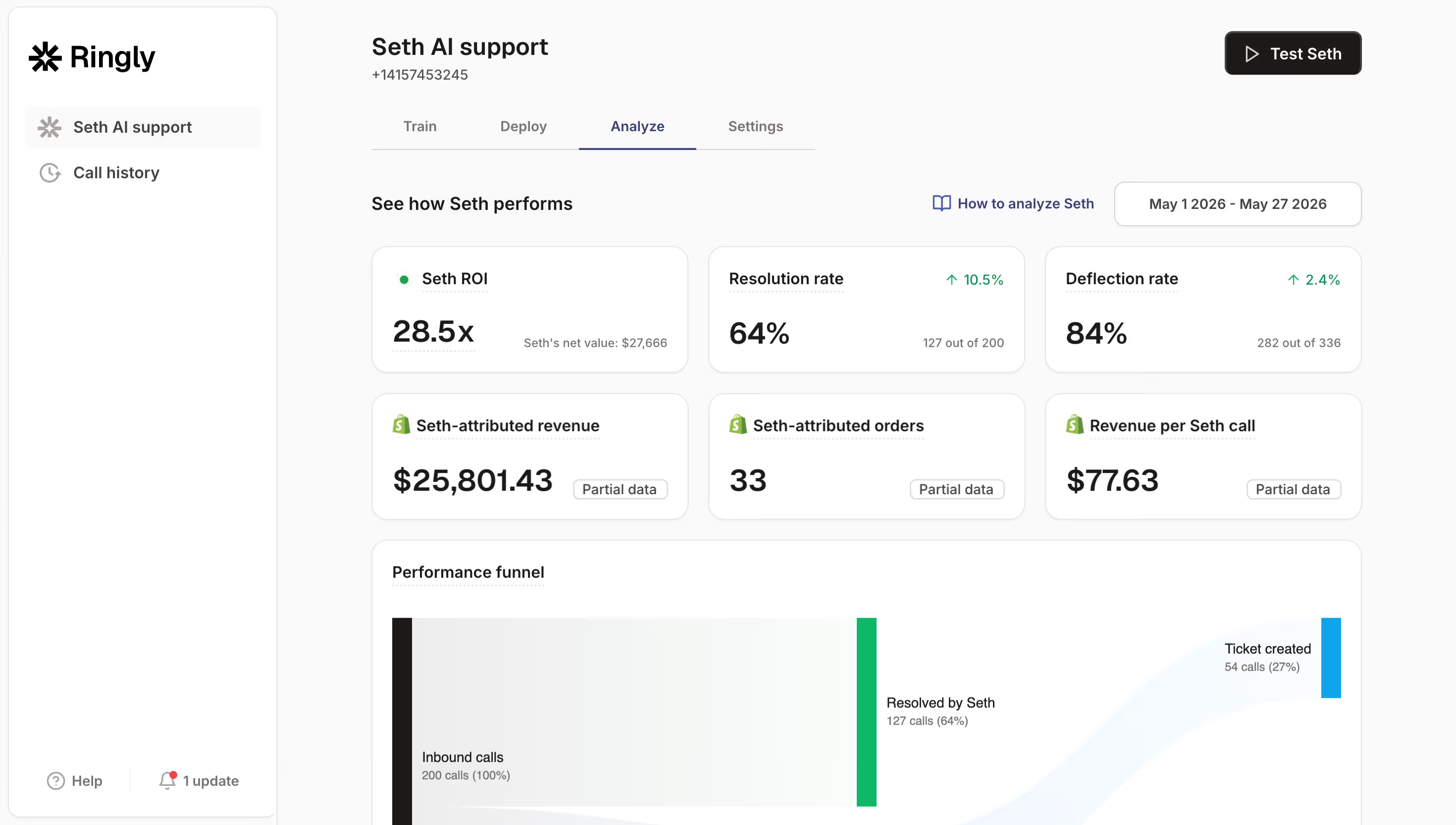
- Use AI call analytics to find patterns: What questions come up most? Where does the AI struggle? Analytics show you exactly where to invest your tuning time.
- Route complex issues immediately: Don't make customers fight the AI. Set up rules so warranty claims, billing disputes, and angry customers go straight to a human. Protecting CSAT on tough calls is worth more than the savings from automating them.
- Track revenue metrics alongside cost metrics: Measure customer retention rates, repeat purchase frequency, and lifetime value before and after AI implementation. The revenue story is usually bigger than the cost story.
Frequently asked questions
What's a good ROI for AI customer service?
The average return is $3.50 for every $1 invested, according to IBM data. Top-performing companies hit 8x returns. For e-commerce specifically, phone AI tends to deliver higher ROI because human phone agents cost significantly more than chat agents.
How long does it take to see ROI from AI customer service?
Most businesses see initial cost savings within 30 days. The full ROI picture takes 3-6 months as deflection rates climb from 20-40% to 60-80%. Year-one average ROI sits around 41%, growing to 87% by year two.
Does AI customer service hurt customer satisfaction?
No. Data from Freshworks shows CSAT scores improved from 89% to 99% after AI implementation. Bot-only chat interactions actually score 2% higher in satisfaction than chats involving a human agent.
How much does AI customer service cost per month?
It varies widely. Basic chatbots start around $50/month. Full AI phone agent platforms like Ringly.io start at $349/month for 1,000 minutes (roughly 500 calls). The cost per interaction ranges from $0.35 to $2.00 depending on the platform and channel.
Can AI handle phone calls, not just chat?
Yes. Modern AI phone agents handle voice calls in real time, in 40+ languages. They can look up orders, process returns, answer product questions, and transfer to humans when needed. Resolution rates for the best phone AI tools hit 70-73%.
What's the ROI difference between AI chat and AI phone support?
Phone support typically delivers higher ROI because human phone agents cost 3-5x more than chat agents ($15-$25 vs $8-$15 per interaction). When AI replaces phone interactions, the savings per call are dramatically higher, making the ROI math more compelling.
The bottom line
The math on AI customer service ROI isn't ambiguous. At $3.50 back for every $1 invested on average (and up to 8x for top performers), it's one of the clearest business cases in e-commerce right now.
But the biggest risk isn't adopting AI too early. It's waiting while your customer service costs climb with every new hire and every missed call.
Start with your highest-volume call type. For most e-commerce stores, that's order status and shipping questions. Get AI handling those, measure the results, and expand from there.
Try Ringly.io free for 14 days and get AI answering your support calls in under three minutes. No code. No lengthy setup. Just results.