
You're spending money on ads, driving traffic, getting sales. But most of those customers buy once and disappear. Sound familiar?
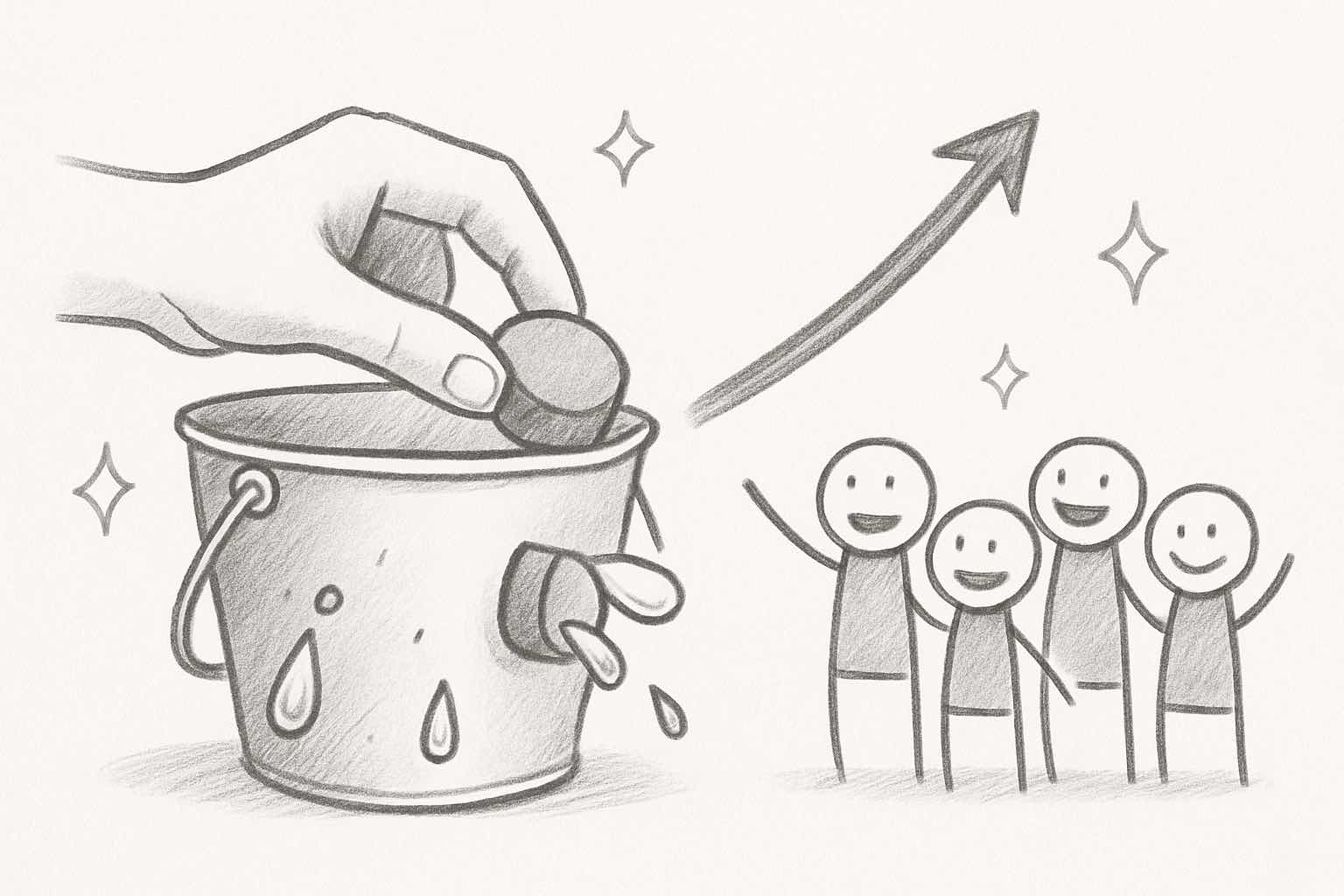
The average ecommerce store loses 70-75% of its customers every year. That means for every four people who buy from your Shopify store, three of them will never come back. You're filling a bucket with a giant hole in the bottom, and no amount of ad spend fixes that.
The good news: churn isn't some mystery you can't solve. Most of it comes down to a handful of fixable problems. In this post, I'll walk you through 10 specific strategies to reduce customer churn on your Shopify store, from quick wins you can implement today to longer-term systems that compound over time.
Hear what AI support calls sound like for your store. Just paste your Shopify URL and get sample calls in under 20 seconds, no email required. Listen to demo calls for my store.
What customer churn actually means for your Shopify store
Customer churn is the percentage of customers who stop buying from you over a given period. Simple concept, massive impact.
There are two types. Voluntary churn is when customers actively decide to leave (they found a competitor, they're unhappy, they don't need your product anymore). Involuntary churn is when they leave because of technical problems like failed payments or expired credit cards.
Here's why churn deserves your attention: according to research from Gorgias, repeat customers make up just 21% of the typical customer base but generate 44% of total revenue and 46% of all orders. Your returning buyers are worth far more than new ones.
And the math gets even better for retention-focused strategies. A widely cited Bain & Company study found that a 5% increase in customer retention can boost profits by 25% or more. Meanwhile, acquiring a new customer costs anywhere from 5 to 25 times more than keeping an existing one.
The formula itself is straightforward:
Customer churn rate = (Customers lost during period / Customers at start of period) x 100
If you started the quarter with 1,000 customers and 200 didn't come back, your quarterly churn rate is 20%. For non-subscription stores, you'll need to define what "lost" means for your business (typically no purchase within a set timeframe like 90 or 180 days).
Why Shopify customers stop buying
Before you can fix churn, you need to understand what's driving it. These are the most common reasons Shopify customers don't come back.
- Radio silence after checkout: You take their money, ship the product, and then nothing. No follow-up email, no check-in, no reason to remember your store. A poor post-purchase experience is one of the top reasons customers fail to return.
- Customer service gaps: This is a big one. Studies show that 67% of customer churn could be prevented if the problem was resolved during the first interaction. If customers can't reach you quickly (or at all), they'll find someone else.
- Product or expectation mismatch: When what arrives doesn't match what was promised on the product page, trust breaks instantly. One bad experience and most customers are done.
- Shipping and delivery frustrations: Late deliveries, no tracking information, and expensive returns push customers away. People expect Amazon-level logistics, even from small stores.
- No reason to come back: If you don't have a loyalty program, personalized recommendations, or any kind of ongoing engagement, customers have zero incentive to choose you over the next store that shows up in their feed.
- The discount trap: Here's something most articles won't tell you. If you acquired customers through heavy discounting (flash sales, 40% off first order), many of them are discount-dependent. When the deals stop, they leave. The channel you acquire from matters as much as your retention tactics.
How to reduce customer churn on your Shopify store
These 10 strategies are ordered roughly by impact and ease of implementation. Start with the first few and build from there.
1. Fix your post-purchase experience first
This is the lowest-hanging fruit. Most Shopify stores invest heavily in the experience before checkout and completely neglect what happens after.
Here's what a solid post-purchase flow looks like:
- Instant order confirmation with expected delivery timeline
- A "what to expect" email within 24 hours (product tips, care instructions, brand story)
- Proactive shipping updates at every stage (shipped, in transit, out for delivery)
- Delivery confirmation with a thank-you and invitation to reach out if anything's wrong
- Follow-up 7-14 days later asking about their experience
Around 23% of customer churn ties back to inadequate onboarding and post-purchase communication. You can set up most of this using Shopify Flow or Klaviyo in an afternoon.
The goal isn't to bombard people with emails. It's to make them feel like they bought from a real business that cares, not a faceless storefront. That's what turns a one-time buyer into someone who considers your store their go-to for order tracking and future purchases.
2. Make customer service ridiculously easy to reach
Most Shopify stores bury their contact information. Some only offer a contact form that takes 48 hours to get a reply. That's a recipe for churn.
If a customer has a problem and can't reach you quickly, they won't wait around. They'll dispute the charge, leave a bad review, and never come back.
Here's what to prioritize:
- Live chat during business hours (at minimum)
- Email support with a clear response time promise (and actually meeting it)
- Phone support for complex or high-value issues
- Self-service options like FAQ pages and order status lookup
Your first-call resolution rate is one of the most important customer service KPIs to track. When you resolve issues on the first contact, you prevent the frustration spiral that leads to churn. Track your response time benchmarks too. Speed matters more than perfection.
3. Add phone support (even if your team is small)
Phone is the highest-trust support channel, especially for products where customers need reassurance (supplements, skincare, electronics, anything over $100). But most Shopify stores skip it because they assume they need a full call center.
You don't.
AI phone agents can handle the bulk of routine calls: order status checks, return requests, product questions, shipping inquiries. Ringly.io, for example, provides an AI agent called Seth that answers calls 24/7 in 40 languages, resolves about 73% of calls without human intervention, and sets up in about three minutes.
The calls that need a human get transferred automatically. So your team handles the complex stuff while the AI takes care of "where's my order?" at 2 AM.
For Shopify stores, having phone support as a channel signals legitimacy. Customers trust businesses they can actually call. And the benefits of phone support go beyond churn reduction. It also drives higher average order values, because customers who call often buy more.
Try Ringly.io free for 14 days and see what AI phone support looks like for your store. Setup takes about three minutes.
4. Build a loyalty program that actually works
Not every loyalty program is created equal. A points system that rewards $1 off for every 500 points isn't going to motivate anyone.
Here's what works by store type:
- Consumable products (supplements, coffee, skincare): Points-per-purchase programs work well because the repeat purchase cycle is natural. Tie rewards to reorder milestones.
- Higher-AOV stores (fashion, electronics): Tiered VIP programs that unlock perks like free shipping, early access, or exclusive products.
- Any store: Referral bonuses where both the referrer and the new customer get something. This tackles acquisition and retention at the same time.
The data backs this up. According to industry research, loyalty program members generate 12-18% more revenue than non-members, and 83% of companies report positive ROI from their programs. Shopify apps like Smile.io, LoyaltyLion, and Yotpo make setup straightforward.
The key rule: if a customer needs to read a FAQ to understand how your loyalty program works, it's too complex. Keep it dead simple.
5. Personalize your email marketing
Generic blast emails get ignored. Personalized ones drive action. The difference between "Hey, check out our new arrivals" and "Hey Sarah, your moisturizer from February is probably running low, here's 10% off your reorder" is massive.
Here's what to set up:
- Replenishment reminders: For consumable products, time emails to when the product is likely running out
- Browse abandonment: Remind people about products they viewed but didn't buy
- Win-back campaigns: Target customers who haven't purchased in 60-90 days with a compelling reason to return
- Predictive churn targeting: Klaviyo (used by 65,000+ Shopify businesses) can flag customers likely to churn so you can reach them before they go quiet
- Post-purchase cross-sells: Recommend complementary products based on what they already bought
Personalization is one of the highest-ROI retention strategies available. According to recent data, AI-powered personalization increases retention rates by 10-15%. You don't need to be sophisticated. Even basic segmentation by purchase history makes a real difference.
6. Recover failed payments before you lose the customer
This one's easy money. Involuntary churn (failed credit cards, expired payment methods, insufficient funds) accounts for a significant chunk of subscription churn. And the fix is mostly automated.
What to implement:
- Smart retry logic: Automatically retry failed payments at optimal intervals (not just immediately)
- Pre-dunning emails: Warn customers before their card expires so they can update it
- Easy card update flow: One-click link to update payment info (no logging in, no navigating settings)
- SMS fallback: If email doesn't work, send a text
Payment industry research shows that proper dunning management can reduce involuntary churn by 20-30%. Tools like Recharge and Loop Subscriptions have this built in for subscription-based Shopify stores.
7. Make returns painless (not punishing)
A strict return policy might feel like it protects your margins. In reality, it just ensures the customer never comes back.
Here's the paradox: stores with generous return policies often see higher customer lifetime value because the safety net builds trust. When people know they can return something easily, they're more likely to buy in the first place and more likely to buy again.
What to consider:
- At least 30-day returns (60-90 days for higher-end products)
- Free return shipping if your margins support it
- Exchanges over refunds: Make it easy to swap sizes or colors rather than getting money back. This keeps the revenue and the customer.
- Clear, visible return policy on product pages (not buried in the footer)
Your returns process can be a competitive advantage. Shopify apps like Loop Returns and Returnly can automate most of this. For more on this, see our guide on how to reduce your refund rate without making customers jump through hoops.
8. Use subscription flexibility to prevent cancellations
If you sell subscriptions on Shopify, rigid subscription terms are a churn accelerator. When a customer's only option is "keep paying or cancel," many will cancel.
Give them alternatives:
- Skip a shipment: Let subscribers pause without canceling
- Change frequency: Monthly might be too often, but every 6 weeks could be perfect
- Swap products: Let them try different items within their subscription
- Downgrade instead of cancel: Offer a smaller, cheaper option
Research from multiple subscription platforms suggests that flexible subscription options save 15-22% of customers who would otherwise cancel. That's a huge number.
Also important: when someone does try to cancel, show them a "before you cancel" survey with alternatives. Many people cancel because of a fixable problem (too much product, wrong flavor, delivery timing) rather than genuine dissatisfaction. Give them a way to fix it. Check our guide on subscription management for supplement brands for more on this approach.
9. Track churn by acquisition source
Here's something most Shopify stores overlook: not all customers are equal when it comes to retention.
Customers acquired through TikTok ads might churn at 90% within 30 days. Customers who found you through organic search might have a 25% churn rate. If your overall churn is high, the problem might not be your retention strategy. It might be who you're acquiring.
How to track this:
- UTM parameters on all ad campaigns and marketing links
- Shopify analytics customer reports segmented by first-touch source
- Cohort analysis comparing retention rates across acquisition channels
Once you see the data, the strategy becomes clear. Double down on channels that bring high-retention customers. Cut or restructure campaigns that bring one-and-done buyers. Your ecommerce analytics setup should make this easy to track.
10. Ask customers why they left (and actually use the answers)
Feedback loops turn reactive churn-fighting into proactive prevention. Most stores never ask churned customers why they left.
Set up these automated touchpoints:
- Post-cancellation surveys (for subscription stores): 3-5 quick questions, multiple choice plus open text
- Check-in emails at 60/90/120 days since last purchase: "We noticed you haven't been back. Everything okay?"
- NPS surveys 7-14 days after delivery: One question, quick to answer
- Review requests that also ask about their experience
The patterns you find will tell you more about your churn problem than any analytics dashboard. If 40% of your churned customers mention slow shipping, that's your priority. If they mention price, that's a different problem.
Use this feedback to improve your customer complaint handling process. Close the loop by emailing churned customers when you've fixed the issue they mentioned. Some will come back.
Want to catch customer issues before they lead to churn? See how Ringly.io's AI call analysis identifies trends across all your support calls automatically.
Shopify churn benchmarks by industry
It helps to know what "normal" looks like for your specific vertical. Here are approximate annual churn rates for different ecommerce categories:
| Industry | Typical annual churn | Good benchmark |
|---|---|---|
| Health & supplements | ~55% | Below 40% |
| Beauty & skincare | ~62% | Below 50% |
| Pets | ~60% | Below 45% |
| Apparel & fashion | ~71% | Below 60% |
| General ecommerce | 70-75% | Below 60% |
| Consumer electronics | ~82% | Below 70% |
Sources: Gorgias, First Page Sage, Propel Analytics
A few things to note. Stores that sell consumable products (supplements, coffee, skincare) naturally have lower churn because the repurchase cycle is built in. Electronics stores have the highest churn because people buy a laptop once every few years.
If your churn is significantly above the "typical" number for your vertical, there's likely a specific problem to fix. If you're at or below the "good" benchmark, you're ahead of most competitors. For more data, check our customer retention statistics for 2026 and DTC ecommerce statistics.
Tools that help reduce Shopify customer churn
You don't need a dozen apps. But the right tools make these strategies much easier to execute.
| Tool | What it does | Starting price |
|---|---|---|
| Ringly.io | AI phone support, 24/7 in 40 languages, 73% auto-resolution | $349/mo |
| Klaviyo | Email/SMS automation with churn prediction | Free (up to 250 contacts) |
| Smile.io | Loyalty programs (points, referrals, VIP tiers) | $49/mo |
| Recharge | Subscription management with dunning | $99/mo |
| Gorgias | Helpdesk with deep Shopify integration | $10/mo |
| Shopify Flow | Automated retention workflows | Included with Advanced/Plus |
A few notes on choosing tools. If you sell subscriptions, Recharge or Loop Subscriptions should be near the top of your list for the dunning management alone. For email, Klaviyo is the standard for Shopify stores, though there are alternatives worth considering.
For customer support, combining a helpdesk app with AI phone support gives you the best coverage. Gorgias or a similar customer service app handles chat and email, while Ringly.io covers phone. That way you're reachable on every channel without hiring a full support team. Check out our roundup of the best AI tools for Shopify for more options.
Ready to add phone support to your churn-reduction stack? Start your free Ringly.io trial. Setup takes three minutes, and you'll hear your AI agent handle a real call before you commit.
Frequently asked questions
What is a good customer churn rate for a Shopify store?
It depends on your vertical. General ecommerce averages 70-75% annual churn, but stores focused on consumable products (like supplements or skincare) can target below 40-50%. If you're a subscription business, aim for under 5-7% monthly churn.
How do I calculate my ecommerce churn rate if I don't sell subscriptions?
Use cohort analysis. Pick a time period (say 90 days), count how many customers from a specific cohort didn't repurchase within that window, and divide by the cohort size. Shopify's built-in reports and tools like Klaviyo can automate this.
What's the fastest way to reduce churn on a small budget?
Fix your post-purchase email sequence. It's free (or near-free) and addresses one of the biggest churn drivers: customers feeling forgotten after they buy. A simple 4-5 email sequence can meaningfully improve repeat purchase rates.
Can AI help reduce customer churn?
Yes. AI-powered tools help with churn prediction (Klaviyo), personalized recommendations, and customer support automation. AI phone agents like Ringly.io handle routine calls 24/7, which means customers always get help, even outside business hours. Early AI adopters show 10-15% better retention metrics.
How much does reducing churn by 5% impact my revenue?
The classic Bain & Company research suggests a 5% improvement in retention can increase profits by 25% or more. The exact number depends on your average order value and purchase frequency, but even small retention improvements compound significantly over time.
Should I focus on reducing churn or acquiring new customers?
Both matter, but most Shopify stores over-invest in acquisition and under-invest in retention. Since acquiring a new customer costs 5-25x more than keeping an existing one, improving retention often has a better ROI. Start by fixing your worst churn leaks, then reinvest the savings into smarter acquisition.
The bottom line
Most Shopify stores are playing the wrong game. They pour money into getting new customers while ignoring the 70-75% who buy once and vanish.
The strategies above aren't complicated. Start with your post-purchase experience and customer service channels. Add phone support (it's easier than you think with AI). Build from there with loyalty programs, personalized outreach, and subscription flexibility.
The stores that win on retention don't just keep customers. They turn them into repeat buyers who spend more, refer others, and cost almost nothing to retain. That's how you build a business that doesn't depend on constantly feeding the ad machine.
Try Ringly.io free for 14 days and give your Shopify store 24/7 phone support that actually resolves customer issues. Setup takes three minutes.