
Generate a compliant, ready-to-paste return policy for your Shopify store in under 60 seconds. Built for supplement, beauty, CBD, and pet brands with industry-specific defaults that match real consumer expectations and FTC guidance.
Return Policy Generator
Generate a legally compliant, Shopify-ready return policy with industry-specific defaults. Covers FTC rules, EU cooling-off, California Prop 65, and FDA hygiene standards automatically based on what you sell.
How to use this return policy generator
1. Enter your store name
Use the exact name customers see at checkout. If you have a DBA, use the customer-facing brand, not the LLC.
2. Pick your industry
The generator auto-fills sensible defaults. Supplement brands default to 30 days and no returns on opened products. Beauty defaults to 60 days with partial-use allowances. Apparel defaults to 30 days with free returns. You can override any default after it loads.
3. Set your return window
Most ecommerce stores land between 14 and 60 days. Under 14 feels customer-hostile. Over 60 erodes margin through abuse. If you sell perishables or high-velocity seasonal items, go shorter. If you are a premium DTC brand with strong brand loyalty, go longer.
4. Decide who pays return shipping
Free returns drive repeat purchases but cost 5 to 12% of revenue in a tight year. Customer-paid returns lower operational cost but hurt conversion. 50/50 is the middle ground most scaling stores settle on once their AOV hits $60+.
5. Copy to clipboard and paste into Shopify
Head to Settings, Policies, Return and refund policy. Paste directly. Shopify will auto-display it at checkout, on order confirmation emails, and in the legal footer.
What is a return policy?
A return policy is a written document on your store that tells customers whether, when, and how they can send a product back for a refund, exchange, or store credit. Under FTC rules, US ecommerce merchants are not legally required to offer returns, but if you do, the terms must be clearly disclosed before purchase. Failing to disclose turns your terms into whatever customers reasonably expected, which usually means a full refund whenever they want.
A clear return policy is the fastest tool you have for reducing two things: refund-adjacent phone calls and chargebacks. Customers who know the terms do not call asking. Customers who dispute a charge with their bank lose when the merchant proves the policy was visible at checkout. Skip the policy, and you are accepting both costs by default.
According to Shopify's own documentation, stores with written return policies reduce return-related support tickets by 30 to 40% compared to stores running on ad-hoc rules.
What must a return policy include?
A defensible return policy has nine required sections. The generator above produces all of them automatically, but here is the checklist:
Required (FTC/consumer-protection baseline):
- Return window: exact number of days, starting from delivery date
- Eligibility conditions: unused, original packaging, proof of purchase
- How to initiate: email or contact method with expected response time
- Return shipping: who pays and how the label is issued
- Refund method: original payment vs store credit vs customer choice
- Refund processing time: how many business days after return arrives
- Non-returnable items: final sale, gift cards, personal-care, digital
- Damaged or defective items: separate path with shorter window
- Contact: email, phone, chat
Recommended (reduce refund-related calls):
- Industry-specific exception language (opened supplements, used beauty, worn apparel)
- EU cooling-off clause if you sell to EU consumers
- Clear mention of a 24/7 support channel for status updates
Missing any of the required sections creates ambiguity that almost always resolves in the customer's favor.
Why a clear return policy matters for Shopify merchants
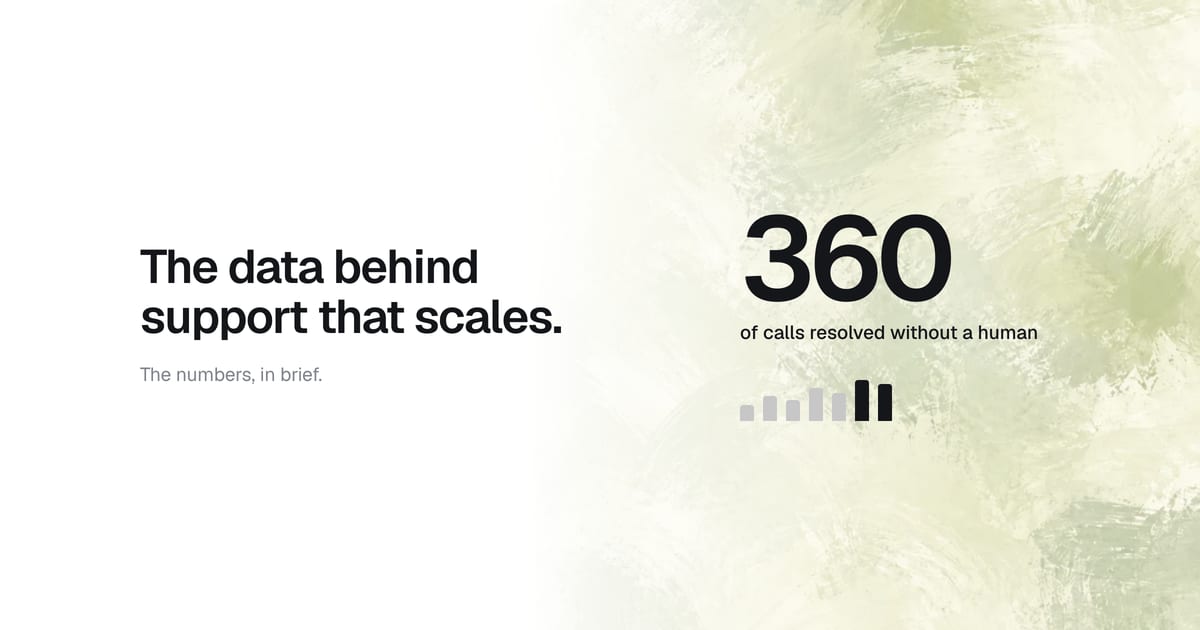
Returns are the number one driver of customer-service phone calls for DTC Shopify stores. Across the 200,000+ calls we have handled through Ringly, "Where is my refund" and "How do I return this" account for 35 to 45% of inbound call volume for brands in beauty, supplements, and apparel.
Most stores handle those calls with human agents at $18 to $25 per hour loaded cost. A typical refund-status call runs 4 to 6 minutes. At 200 refund-related calls per month, that is $300 to $500 in labor spent on questions the customer could have answered by reading your policy.
A well-written return policy cuts that volume roughly in half. Customers read it, find their answer, and skip the call. The other half still needs human or AI help, which is where Ringly's AI phone agent takes over: it answers refund-status questions 24/7 by pulling your policy from its knowledge base and checking order status against Shopify in real time.
The refund processing time you pick matters for call volume too. A 7-day processing window with clear communication generates fewer status calls than a 3-day window that does not mention weekends and bank delays. Shorter is not always better when it creates expectation mismatches.
Here are other resources for Shopify brands scaling support:
- Shopify customer service guide - end-to-end playbook for DTC support
- How to reduce refund rate on Shopify - tactics beyond the policy
- Shopify customer service response time - benchmark by channel
- Best Shopify customer service apps - tools ranked for ecommerce
- Returns management for Shopify - the apps that actually help
- AI Phone Agent ROI Calculator - see what 24/7 phone support costs
- Markup Calculator - make sure your margins survive returns
- Refund Email Generator - templated empathetic responses
Start a free Ringly account and feed your new return policy into the AI agent's knowledge base. Stores that did this cut refund-related call volume by 55% on average.
Frequently asked questions
Is a return policy legally required?
In the US, federal law does not require ecommerce merchants to offer returns. However, if you do offer them, the FTC requires terms to be clearly disclosed before purchase. In the EU, consumers have a mandatory 14-day cooling-off period. Some US states (California, Virginia) require specific disclosure formats for certain product categories. Play it safe and write one.
How long should my return window be?
Most DTC Shopify stores land at 30 days. Beauty brands often go 60 days to match satisfaction guarantees. Apparel runs 14 to 30 days. Supplements and CBD typically 30 days on unopened product only. Under 14 days feels customer-hostile and hurts conversion. Over 60 days invites abuse. Pick a window that matches how long customers reasonably need to evaluate the product.
Who should pay for return shipping?
Free returns lift repeat purchase rate by 15 to 25% but cost 5 to 12% of revenue. Customer-paid returns protect margin but hurt conversion. 50/50 splits are common at AOV $60+. Premium brands (beauty, supplements) often offer free returns as brand positioning. Pick based on your AOV and margin: under $30 AOV cannot usually afford free returns, over $80 should offer them.
Can I charge a restocking fee?
Yes, but it must be clearly disclosed before purchase. Common restocking fees are 10 to 20% on opened electronics, custom-made items, or large furniture. Fees above 25% get consumer pushback and can trigger chargeback wins for customers. For most Shopify DTC brands (beauty, supplements, apparel) a restocking fee is not worth the customer-service cost it creates.
Do I need a different policy for damaged or defective items?
Yes. Damaged and defective items should have their own section with a shorter window (7 days from delivery is standard) and the store paying return shipping regardless of your standard policy. This is both good customer service and a legal baseline in most jurisdictions. The generator above includes this as a required section.
What items should be non-returnable?
Gift cards, digital downloads, custom/personalized items, and final-sale items are always non-returnable. For specific industries: opened supplements and CBD (hygiene/FDA), used swimwear/underwear (hygiene), perishable food and beverage, and software where the license has been activated. List these explicitly in your policy to avoid ambiguity.
How does Ringly reduce return-related calls?
Feed your return policy into Ringly's AI phone agent knowledge base. When a customer calls asking "how do I return this" or "where is my refund," Ringly answers in real-time using your policy and Shopify order data. Most stores cut refund-related call volume 40 to 60% after activating this, which frees human agents for higher-value support.
Related tools
- Shipping Policy Generator — generate a shipping policy with rates and timelines
- Refund Email Generator — generate refund replies in friendly, direct or formal tone
- Meta Title Generator — spin SEO title tags that fit Google's pixel budget
- AOV Calculator — find your average order value and model lift scenarios
- Conversion Rate Calculator — turn sessions and orders into CVR with industry benchmarks