


Your customer's dog is out of food. It's 9 PM. They're refreshing their tracking page every five minutes, and nobody is picking up the phone.
That's the reality of pet food ecommerce. You're not selling shoes or phone cases. You're selling something a living creature depends on every single day. And when the experience breaks down, pet parents don't just leave a bad review. They leave for good.
According to industry research, 65% of pet owners have switched brands because of poor customer service. Not price. Not product quality. Service.
This guide covers 10 practical strategies to build a pet food ecommerce customer experience that keeps pet parents loyal for years, not months.
Hear what AI support calls sound like for your store. Just paste your Shopify URL and get sample calls in under 20 seconds, no email required. Listen to demo calls for my store.
Why pet food ecommerce customer experience is different from other verticals
Pet food isn't a typical ecommerce category. The emotional stakes are higher, the purchase cycle is more predictable, and one bad experience hits harder than in almost any other vertical.
Here's what makes it unique:
- Emotional urgency: Running out of pet food isn't an inconvenience. It's a crisis. Pet parents treat their animals like family members, and 86% of them are willing to pay more for a better customer experience.
- Complex purchase decisions: Dogs and cats have allergies, dietary restrictions, and life-stage-specific nutrition needs. A customer buying grain-free salmon kibble for a 12-year-old Lab with a sensitive stomach isn't browsing casually. They need confidence in what they're buying.
- Long customer lifespans: The average dog lives 12-15 years. That's over a decade of repeat purchases from one customer. Pet supply stores regularly see repeat purchase rates above 40%, compared to the 25-30% ecommerce average.
- Growing market: The global pet food ecommerce market was valued at $19.18 billion in 2024 and is projected to reach $37.56 billion by 2033, growing at a 7.8% CAGR (Grand View Research).
And consider this: 73% of millennials own pets, making them the largest pet-owning generation. This audience grew up with Amazon Prime and expects fast shipping, easy returns, and instant support. Meeting those expectations in a niche as complex as pet food isn't optional. It's survival.
So the stakes are real. But the opportunity is massive. Get the experience right, and you're building a customer relationship that lasts the lifetime of their pet.
10 strategies to improve your pet food ecommerce customer experience
1. Build product pages that answer allergy and ingredient questions before anyone has to ask
Pet parents research ingredients obsessively. If your product pages don't include full ingredient lists, allergen warnings, and feeding guidelines, you're forcing customers to contact support for information that should be available upfront.
Here's what your product pages need:
- Complete ingredient lists: Not just "chicken meal." Include the full breakdown, including preservatives and supplements.
- Allergen callouts: Bold, visible labels for common allergens (grain, soy, dairy, chicken).
- Feeding guides by weight: A 10-pound Chihuahua and a 90-pound Retriever need very different portion sizes.
- Life-stage filters: Puppy, adult, senior. Make these filterable across your entire catalog.
Stores that invest in ecommerce personalization at the product page level see higher conversion rates and fewer pre-purchase support tickets. According to Justuno's benchmarks, pet care brands that use targeted product recommendations see conversion rates jump from 1.4% to over 18% after engagement.
2. Make order tracking proactive, not reactive
"Where is my order?" calls account for 20-40% of all ecommerce support tickets during normal periods. During peak seasons, that number can surge to 50-80%.
For pet food, this is even more urgent. If a bag of kibble shows up two days late, the pet parent has already made an emergency trip to the store. That's a terrible experience, and it's completely avoidable.
What proactive order tracking looks like:
- Automatic SMS/email updates at every stage: order confirmed, packed, shipped, out for delivery, delivered
- Delivery window estimates for perishable and frozen items
- Delay alerts sent before the customer has to ask (not after they've already called twice)
- Self-service tracking pages that actually work on mobile
Proactive tracking solutions can cut WISMO calls by up to 70%. That's a massive reduction in support volume and a much better experience for your customers.
One practical tip: if you sell frozen or raw pet food, add a specific delivery instructions field at checkout. Pet parents need to know whether to leave a cooler out, and you need to know if they'll be home. That small touch prevents a lot of angry calls about thawed raw food sitting on a doorstep.
3. Set up subscription management that pet parents actually control
Subscriptions are the backbone of pet food ecommerce. Chewy generates roughly 78% of its revenue through auto-ship, and about 90% of its total revenue comes from existing customers.
But subscriptions only work when customers feel in control. The average annual churn rate for online pet retailers is 18%, and 30% of that churn comes from poor post-purchase support.
Your subscription management should let customers:
- Swap products without canceling (dog stopped liking that flavor? Easy switch.)
- Pause shipments when they're overstocked or traveling
- Change delivery frequency with one click
- Get pre-shipment reminders 3-5 days before each order processes
The goal is simple: make it easier to stay subscribed than to cancel. When a customer has to call you to make a basic change, you've already lost. Self-service is the expectation, and any friction in the subscription flow pushes people toward cancellation.
4. Offer phone support, even if you're a one-person team
Here's a stat that might surprise you: 92% of pet owners consider fast response times "very important" when choosing where to buy pet food online. And 81% prefer brands that offer multiple support channels.
Phone support builds trust in ways that email and chat can't match. When a pet parent is worried about an allergic reaction to a new food, they don't want to wait 24 hours for an email response. They want to talk to someone.
The problem? Most Shopify pet food stores are small teams. One or two people handling everything from sourcing to packing orders. Staffing a phone line 24/7 feels impossible.
That's where AI phone agents come in. Tools like Ringly.io let you set up an AI agent that answers calls 24/7, looks up orders in your Shopify store, handles returns and exchanges, and answers product questions. Setup takes about three minutes, and the AI resolves roughly 73% of calls without needing a human.
See how AI phone support works for pet food stores. Setup takes three minutes, and you can try it free for 14 days.
5. Handle food transitions and dietary advice with care
Switching a pet's food isn't as simple as opening a new bag. Veterinarians recommend a gradual 7-10 day transition: starting with 25% new food on day one, moving to 50/50 by day three, 75% new by day five, and 100% by day seven.
Your customers need to know this. And your support team needs to be ready to guide them through it.
What this looks like in practice:
- Include transition guides with every first-time order of a new food
- Add a FAQ section on product pages covering common transition questions
- Train your support team (or your AI knowledge base) on basic pet nutrition facts
- Follow up via email 7-10 days after a customer tries a new food for the first time
This is the kind of care that turns a first-time buyer into a long-term customer. It's also what separates a pet food store from a generic ecommerce shop.
Think about it from the pet parent's perspective. They're switching their dog's food because a vet recommended it, or because their cat developed a sensitivity. They're already anxious. A store that proactively helps them through the transition builds a level of trust that's hard to break.
6. Create a returns and exchange policy that reduces anxiety
Pet food returns are uniquely tricky. You can't resell an opened bag of kibble. Perishable items can't be shipped back. And a customer whose cat refused to eat a $60 bag of food is frustrated enough without having to fight for a refund.
Here's how to handle this well:
- Offer sample sizes or trial packs for new customers (reduce the risk of a full-bag rejection)
- Provide easy exchanges: if the pet doesn't like it, let them swap for another formula without starting a return process
- Consider a "keep the food" policy for opened bags, and suggest the customer donate it to a local shelter. Chewy does this, and pet parents love it.
- Make your return policy visible on product pages, not buried in a footer link
Clear return policies reduce pre-purchase anxiety and increase conversion rates, especially for premium pet food where the price point is higher.
7. Personalize the experience using pet profiles
60% of pet owners prefer brands that offer personalized recommendations. And in pet food, personalization isn't just a nice marketing tactic. It's genuinely useful.
Collect this information at signup or first purchase:
- Pet name, breed, and age
- Weight (for portion/feeding recommendations)
- Known allergies or dietary restrictions
- Current food brand (helpful for transition advice)
Then use it. Send restock reminders based on their purchase frequency. Recommend products based on their pet's breed and age. Wish their dog a happy birthday.
The data behind ecommerce personalization is compelling. One brand saw a 44% increase in dog food replenishment purchases and a 35% increase in cat food replenishment after implementing ML-based personalization on their ecommerce platform.
Personalization also reduces support volume. When your site recommends the right food based on a customer's pet profile, they don't need to call and ask "which formula is best for my senior cat with kidney issues?" The answer is already on screen.
8. Use after-hours support to cover the "midnight emergency"
Pet emergencies don't follow business hours. A dog eating something it shouldn't at 11 PM, a customer realizing they forgot to update their subscription before it ships, a delivery that went to the wrong address on a Sunday.
Most small pet food stores close their support at 5 or 6 PM. That leaves a huge gap where customers can't get help. And those after-hours experiences shape how they feel about your brand.
After-hours support doesn't require hiring a night shift. AI phone agents like Ringly.io handle calls around the clock in over 40 languages. They can check order status, process subscription changes, and answer common product questions, all without waking you up.
For Shopify pet stores that can't staff after-hours coverage, this is the most practical solution available right now.
9. Build a community around your brand
Pet parents love talking about their pets. Use that.
- Encourage user-generated content: Ask customers to share photos of their pets enjoying your products. Feature them on your site and social channels.
- Create a loyalty program that rewards engagement, not just purchases. Points for reviews, social shares, referrals.
- Build a DTC brand community: Facebook groups, forums, or even a simple hashtag campaign.
Jollyes, a UK pet retailer, links 85% of its transactions to its loyalty program and maintains annual churn below 10%. Community and loyalty work together to create stickiness that discounts alone can't match.
Chewy takes this further by sending over 1,000 hand-painted pet portraits per week to surprise customers (Fortune). You don't need to paint portraits. But a birthday email for a customer's dog, or a featured photo on Instagram, creates the same emotional connection at a fraction of the effort.
10. Measure what matters: CX metrics for pet food stores
You can't improve what you don't measure. Here are the customer service KPIs that matter most for pet food ecommerce:
| Metric | Target | Why it matters |
|---|---|---|
| First response time | Under 1 hour | Stores with sub-1-hour response achieve 71% retention |
| Repeat purchase rate | 40%+ | Pet supply average is 40%+, well above ecommerce norm |
| Subscription retention | 85%+ | Measures how well your auto-ship experience works |
| CSAT score | 4.5+/5 | Direct measure of customer happiness |
| NPS | 50+ | Indicates brand advocacy (pet parents refer a lot) |
The most important insight here: customers who receive excellent service show 87% retention versus just 41% for those with poor experiences. In a category where one customer could buy from you for a decade, that gap is enormous.
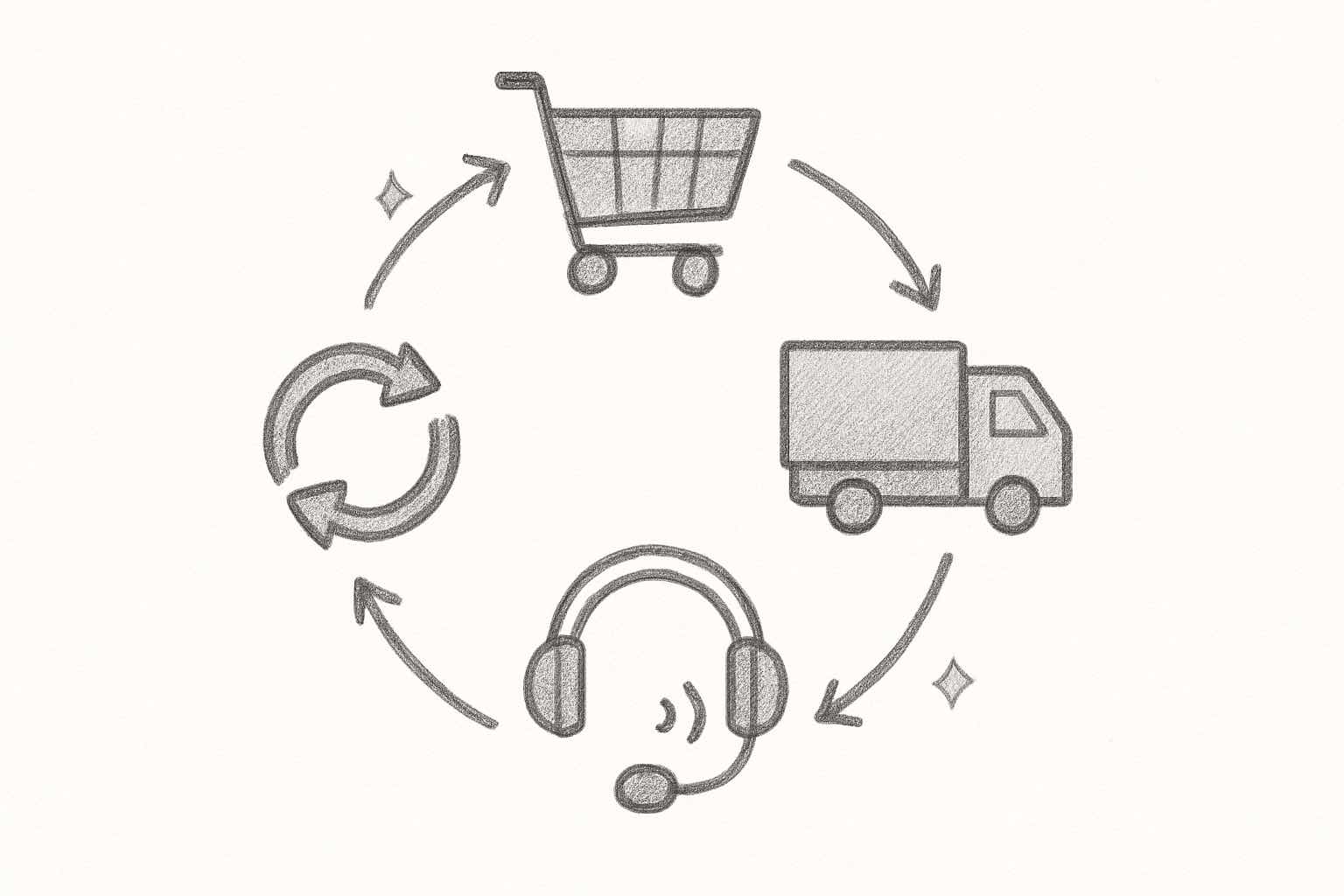
How AI is changing pet food ecommerce customer experience
AI isn't a future trend for pet food ecommerce. It's already here, and it's solving some of the hardest problems small stores face.
Here's what AI voice agents can handle for a pet food store:
- Order tracking and WISMO: The #1 support volume driver, handled automatically
- Product questions: "Is this food safe for a dog with chicken allergies?" answered using your product data
- Subscription changes: Pause, swap, or cancel without waiting for a human
- Returns and exchanges: Process them on the spot, following your store's policies
- After-hours coverage: 24/7 support in 40+ languages
Ringly.io is built specifically for Shopify stores. The AI agent, Seth, connects directly to your Shopify data for real-time order lookups and resolves about 73% of calls without human intervention. Over 2,100 stores use it today.
The result? You get ecommerce voice AI that covers phone support at a fraction of the cost of hiring, without sacrificing quality.
Try Ringly.io free for 14 days and hear how AI handles calls for your pet food store. No credit card required.
Frequently asked questions
What makes pet food ecommerce customer experience different from other online retail?
Pet food purchases are emotionally charged and time-sensitive. If an order is late, the pet goes hungry. Customers also need detailed ingredient and allergy information that you don't see in other product categories. These factors make customer service more complex and more critical to retention.
How can small pet food stores compete with Chewy's customer service?
You don't need to send hand-painted pet portraits to compete. Focus on fast response times, clear product information, and proactive order tracking. AI phone agents can give you 24/7 support coverage that matches or beats what bigger competitors offer, at a fraction of the cost.
What's the most important CX metric for pet food stores?
Repeat purchase rate. Pet supply stores should target 40% or higher. Since pet food is a consumable with a predictable purchase cycle, this metric tells you whether your entire experience is working, from product quality to delivery reliability to post-purchase support.
Should pet food stores offer phone support?
Yes. 92% of pet owners rate fast response times as "very important," and phone is the fastest channel for resolving complex issues like allergy concerns or urgent order problems. If staffing is a concern, AI phone support makes it affordable even for one-person stores.
How do you handle pet food returns when the bag is already opened?
Offer an exchange for a different formula instead of a traditional return. Many stores use a "keep and donate" policy for opened bags, asking customers to give the food to a local shelter while shipping a replacement. This builds goodwill and avoids the logistics of shipping perishable items back.
What role does AI play in pet food customer service?
AI handles the high-volume, repetitive tasks that eat up your day: order tracking, subscription changes, product questions, and after-hours calls. AI customer service agents resolve 70-73% of calls without human intervention, freeing you up to focus on the interactions that actually need a personal touch.
How do subscriptions improve the pet food customer experience?
Subscriptions eliminate the risk of running out of food, which is the biggest anxiety for pet parents buying online. They also give you predictable revenue and lower churn. The key is giving customers full control: easy swaps, pauses, and frequency changes so they never feel trapped.
The bottom line
Pet food ecommerce customer experience comes down to one thing: trust. Pet parents need to trust that you understand their pet's needs, that their order will arrive on time, and that someone will be there to help when things go wrong.
You don't need Chewy's budget to deliver that. You need the right systems: detailed product pages, proactive tracking, flexible subscriptions, and support coverage that doesn't disappear at 5 PM.
If you're running a Shopify pet food store, Ringly.io handles the phone support piece in about three minutes of setup. Start your free 14-day trial and see what it looks like.