
Self-service is the cheapest support channel and the one buyers say they prefer. The catch: most start in self-service, fewer than one in five actually finish there, and the ones who fail get angrier than if they'd called a human first.
These 45+ self-service customer support statistics cover what shoppers want, what knowledge bases and chatbots actually deliver, where deflection saves money, and where it quietly costs customers. For Shopify stores, the escalation gap is where Ringly.io comes in.
Hear what AI support calls sound like for your store. Just paste your Shopify URL and get sample calls in under 20 seconds, no email required. Listen to demo calls for my store.
Key highlights
- 81% of customers try to solve a problem on their own before contacting a rep (Desk365)
- 67% of customers prefer self-service over speaking to a company representative (Zendesk)
- Only 14% of customer service issues are fully resolved in self-service (Gartner)
- $8.01 vs $0.10 is the cost gap per contact between live channels and self-service (Zendesk / Gartner)
- 53% of US online shoppers will abandon a purchase if they can't find a quick answer (Convertcart)
- By 2029, agentic AI will autonomously resolve 80% of common customer service issues (Gartner)
If those numbers describe your store, Ringly.io is built for the gap between "tried self-service" and "needs a human." Try it free for 14 days.
What customers actually want from self-service
Self-service is no longer a "nice extra." It's the default first step for most buyers, and they expect it to work the first time.
81% of customers attempt to resolve issues themselves before reaching out to a live representative. This is the new baseline behavior, especially for digital-native shoppers. (Desk365)
67% of customers prefer self-service over speaking to a company representative. Phone and email are now fallbacks, not first contact for most issues. (Zendesk)
73% of consumers want the ability to solve product or service issues on their own. Independence beats hand-holding for routine questions. (Microsoft)
90% of worldwide customers expect companies to offer a self-service portal. The bar for "we don't have one" is now actively damaging. (Microsoft)
75% of consumers have used a search engine to try to find an answer to a service question. If your help docs aren't indexed and clear, they're solving it on a competitor's blog. (Microsoft)
61% of customers would rather use self-service for simple issues than contact a live agent. This is the volume that should never reach your inbox. (Desk365)
The takeaway is consistent. Customers want to self-serve. The trick is what happens when self-service fails. More in our guide to ecommerce customer service.
Knowledge base, FAQ, and portal usage
Buyers will use a knowledge base if you build one. They just won't dig for it.
92% of consumers say they would use an online knowledge base if it were available. Almost universal demand. (Desk365)
70% of customers expect a company website to include some form of self-service portal or FAQ. Stores without a clear help section feel broken. (Desk365)
72% of customers have already used a self-service portal. Familiarity is high, so onboarding effort is low. (Desk365)
55% of customers have used a chatbot. Adoption is solid, but not universal, which is why coverage on phone and email still matters. (Desk365)
53% of US online shoppers will abandon a purchase if they can't find an answer to a quick question. This is the FAQ-as-conversion-tool stat. (Convertcart)
73% of customers start their service journey in self-service. Whether they finish there is the harder question. (InMoment)
If you sell on Shopify, your help center, WISMO calls, and product pages do more support work than your inbox. Tighten the contact page and proactive customer service before hiring another rep.
Deflection rates and what's actually possible
Deflection is where self-service either earns its budget or quietly underperforms. The numbers vary wildly by maturity.
Average chatbot deflection runs 20 to 40% without agent involvement. That's the median for teams that bolted on a bot and walked away. (Alhena.ai)
Best-in-class deflection rates hit 80 to 90%. This is what teams that actively iterate on intents and retrieval get. (Alhena.ai)
The average case deflection rate in the technology industry is 23%. A useful floor for benchmarking. (Alhena.ai)
A healthy B2B SaaS deflection rate sits between 15% and 30%. Best-in-class crosses 40%. (Alhena.ai)
Up to 60% of support tickets could be resolved with self-service options, but only 36% currently are. That gap is your biggest cost-saving lever. (Desk365)
AI chatbots resolve up to 86% of customer questions without human intervention in mature deployments. Most ecommerce stores land in the 50 to 70% range. (Hyperleap)
For deeper context, see our chatbot statistics 2026, chatbot vs phone support, and call deflection strategies.
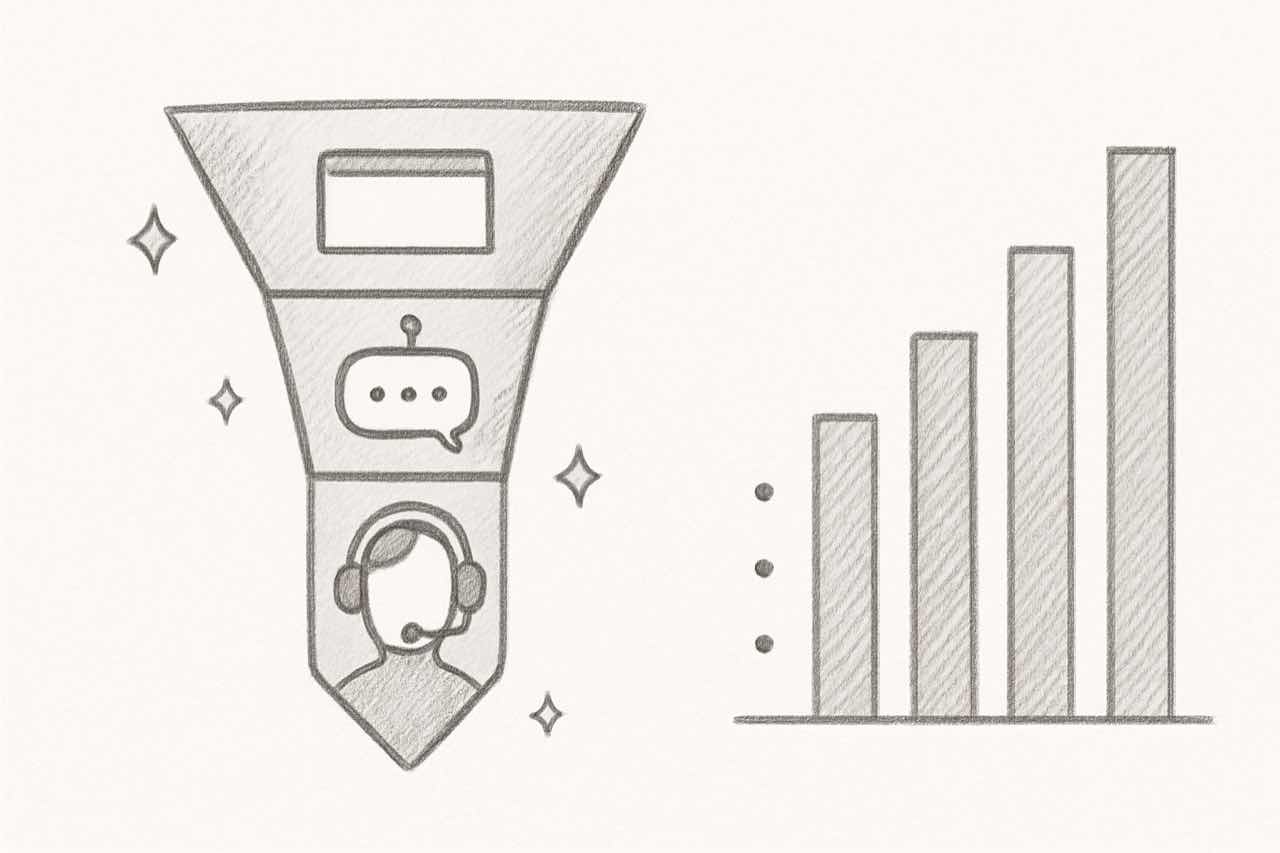
Cost savings: self-service vs live agents
The economics are the easy part of the story. Self-service is roughly two orders of magnitude cheaper per contact.
Live channels cost $8.01 per contact on average. Self-service costs $0.10. An 80x gap. (Zendesk / Gartner)
Self-service is up to 8x more cost-effective than live chat or phone support. Holds even for less mature builds. (Zappix)
Companies adopting conversational AI see 25 to 45% fewer tickets reaching agents. ROI lands between 2x and 5x in year one. (LiveChatAI)
Self-service portals can cut support costs by 25%. Automation on top can deliver 300% ROI. (Document360)
Global average cost per support ticket: $6-7. SaaS: $18-35. B2B: $30-60. (LiveChatAI)
North American companies average $15.56 per ticket. A useful planning number. (LiveChatAI)
Conversational AI will cut agent labor costs by $80 billion by 2026. (Dante AI)
No self-service results in 30% more tickets. A solid knowledge base can drop volume by 25%. Two sides of the same coin. (Document360)
For Shopify cost math, see cost per call, Shopify customer service cost, and AI customer service ROI.
Generative AI is rewriting the self-service stack
The big shift since 2023 is that "self-service" no longer just means "FAQ page and a search box." It means an LLM that can read your docs and act.
The AI customer service market hit $15.12 billion in 2026, projected to reach $47.82 billion by 2030. That's a 25.8% CAGR. (Dante AI)
80% of routine customer interactions will be fully handled by AI in 2026. Order tracking, returns status, basic troubleshooting. (Dante AI)
89% of service professionals say conversational AI increases self-service resolution rates. And 88% say it accelerates resolution times. (Salesforce)
By 2027, 50% of service cases will be resolved by AI, up from 30% in 2025. Salesforce data. (Salesforce)
91% of customer service leaders are under pressure to implement AI in 2026. Almost no team is opting out. (Gartner)
9 in 10 contact centers now use AI in some capacity, but only 25% have fully integrated it. Most are still in pilot mode. (Gartner)
By 2029, agentic AI will autonomously resolve 80% of common customer service issues. Gartner sees a 30% reduction in operational costs from this shift. (Gartner)
75% of CX leaders expect 80% of interactions to be resolved without humans in the next few years. (Zendesk CX Trends)
By 2028, 30% of Fortune 500 companies will offer service through a single, AI-enabled channel. (Gartner)
More on the wider shift in AI customer service statistics 2026, voice AI statistics 2026, AI automation statistics, voice AI for customer service, and AI phone agents for Shopify.
Where self-service breaks: failure and escalation
This is the part most data sheets skip. Self-service has a quiet failure problem, and the customers it fails are angrier than the ones who never tried.
Only 14% of customer service issues are fully resolved in self-service. The single most important number on this page. (Gartner)
Only 9% of customers report solving their issue completely via self-service. Even more pessimistic when you ask the buyer. (Gartner)
58% of customers are unable to resolve their issues through self-service. Roughly six in ten try and fail. (InMoment)
59% are frustrated when they have to reach out to a service rep after self-service fails. Failed self-service makes the human conversation harder, not easier. (InMoment)
63% of customers will abandon a company after a single poor chatbot experience. One bad bot conversation can end the relationship. (Hyperleap)
The average chatbot escalation rate is 32%. Roughly one in three conversations needs a human. (Hyperleap)
Only 15% of AI-to-human handoffs are smooth. 85% lose context. Customers repeat themselves, which is the second-most-cited frustration after hold time. (Alhena)
60% of customer service agents fail to promote self-service. Even inside the company, the funnel is leaky. (Gartner)
38% of Gen Z and millennial customers say they're likely to give up resolving an issue if it can't be done in self-service. Younger buyers don't escalate, they leave. (Zendesk)
64% of customers would prefer companies didn't use AI at all. The top stated concern is difficulty reaching a human. (Dante AI)
This is the gap Ringly.io is built for. Self-service handles the easy 60% of contacts. The remaining 40% need a human-quality voice that picks up immediately, knows the order history, and can transfer to your team if needed. Setup takes about three minutes. Try Ringly.io free for 14 days.
Channel preference and demographics
Different generations want different things, and the channel mix matters more than the total spend.
75% of Gen Z prefer online customer service channels over the phone. Chat, social, and search are their default. (Zendesk)
62% of Millennials prefer online channels over phone. Slightly more phone-tolerant than Gen Z, still digital-first. (Zendesk)
67% of Gen Z and 70% of Millennials still turn to phone for urgent or sensitive issues. Voice doesn't die, it specializes. (Zendesk)
75% of Gen Z prefer texting to direct phone calls. SMS sits between self-service and a call. (Zendesk)
43% of people prefer using voice to reach customer service. Even with chat dominating, the phone keeps a strong minority. (Justcall)
55% of customers would choose a live agent over an automated system. When given the choice for non-routine issues. (NobelBiz)
74% of customers prefer chatbots for simple questions. The split is intent-based, not channel-based. (Dante AI)
74% of consumers expect customer service to be available 24/7. Self-service is the only realistic way to deliver this at small-team budgets. (Zendesk CX Trends)
See customer experience statistics 2026, 24/7 customer support for ecommerce, and phone tree vs AI phone agent.
Voice self-service: IVR is the cautionary tale
Voice self-service has been around the longest, and the data on legacy IVR shows what happens when self-service is built badly.
61% of consumers feel that IVRs negatively affect the customer experience. Almost two-thirds. (NobelBiz)
51% of consumers have abandoned a business due to poor IVR interactions. Half. (NobelBiz)
66% of customers prefer natural language IVR systems. Press-1 menus are a known frustration source. (NobelBiz)
IVR can reduce customer service costs by up to 30%, per Aberdeen Group. When the system actually contains calls. (Justcall)
McKinsey: improving IVR-containment by 5 to 20% can cut total call-center costs by 10 to 30% within three to six months. A clear lever, if you can pull it. (Justcall)
Voice self-service works, but only if it sounds like a person, understands context, and routes intelligently when it can't help. See auto attendant and voicebot.
What this means for ecommerce brands
Three things are true at once. Customers want self-service. Self-service rarely closes the issue. The customers it fails get angrier than the ones it never touched.
For a Shopify store, this is a planning problem. Build the FAQ. Add a chatbot for pre-purchase questions. Use a helpdesk for non-urgent post-purchase work. But the moment a customer needs to talk, the math changes. A missed call costs more than the entire savings stack from the deflection layer above it. See missed calls in ecommerce.
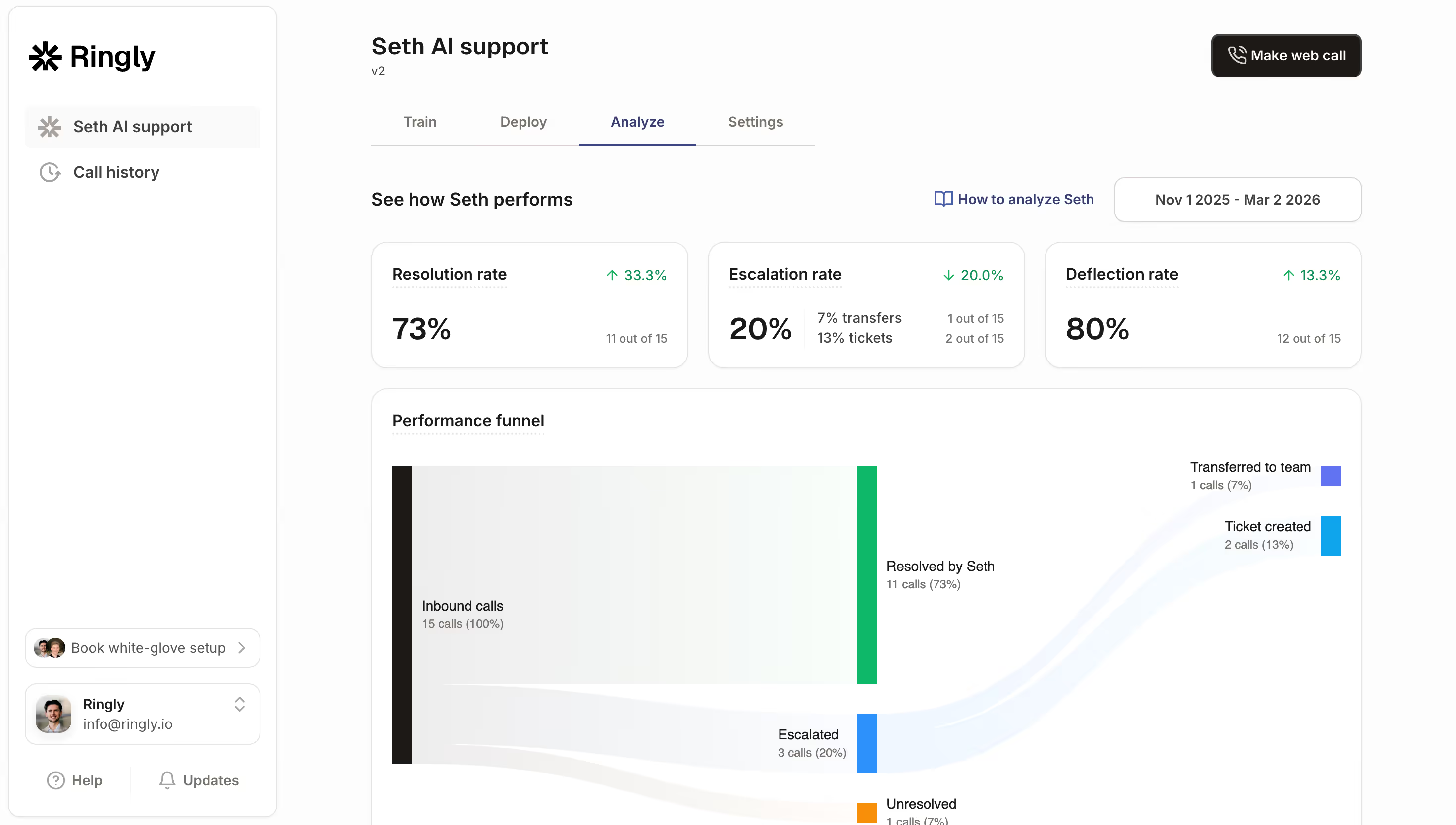
That's the wedge for Ringly.io. Seth, our AI phone agent, picks up every call 24/7, looks up the order in real time, handles 73% of contacts without a human, and escalates the rest with context. Runs in 40 languages and sets up in three minutes. See pricing, how to scale customer service without hiring, and Shopify customer service for small teams.
Try Ringly.io free for 14 days and get Seth answering calls in under three minutes.
Frequently asked questions
What is self-service customer support?
Self-service customer support is any channel where customers solve their own issues without speaking to a human. The most common forms are FAQ pages, knowledge bases, in-app help, chatbots, and voice IVR. Search engines also count, since 75% of buyers Google their questions before contacting a brand.
What percentage of customers prefer self-service?
Around 67 to 81% of customers say they prefer self-service for routine issues, depending on the survey. The strongest signal: 81% try self-service first before contacting a live rep, per Desk365. The lower number reflects stated preference, the higher number reflects actual behavior.
What is a good self-service deflection rate?
A healthy deflection rate sits between 20% and 40% for most teams. Best-in-class implementations hit 80 to 90%. The technology industry averages 23%. If you're below 15%, your knowledge base or chatbot has a discoverability problem more than a content problem.
How much money does self-service save?
Self-service costs roughly $0.10 per contact versus $8.01 for live channels, an 80x gap per Gartner. Real-world savings depend on volume. Most teams adopting conversational AI report 25 to 45% fewer tickets reaching agents and ROI between 2x and 5x in year one.
Why does self-service often fail?
Only 14% of customer issues are fully resolved in self-service, per Gartner. The reasons are usually: poor search and discoverability, content that doesn't match how customers actually phrase questions, missing or weak escalation paths, and chatbots that lose context on handoff (85% of handoffs do).
Should ecommerce stores still offer phone support?
Yes. Even with strong self-service, 43% of buyers prefer voice for some issues, and 55% would choose a live agent over an automated system for non-routine work. The smarter play is an AI voice agent that handles routine calls 24/7 and escalates the rest. That's what Ringly.io does for Shopify stores.
What's the difference between self-service and a chatbot?
A chatbot is one form of self-service. Other forms include FAQ pages, knowledge bases, community forums, and IVR. Chatbots are best for conversational intent, while knowledge bases are better for searchable, evergreen content. Most mature stacks use both.
How do I improve my self-service rate?
Focus on three things. First, fix discoverability so customers find help without searching twice. Second, write content around actual customer questions, not internal product structure. Third, build a clean escalation path so the 30 to 40% of customers who can't self-serve get to a human fast and with context preserved.