
A voicebot is an AI-powered virtual assistant that handles phone conversations with customers. Unlike traditional phone menus that make you press buttons, voicebots let people speak naturally and get instant responses.
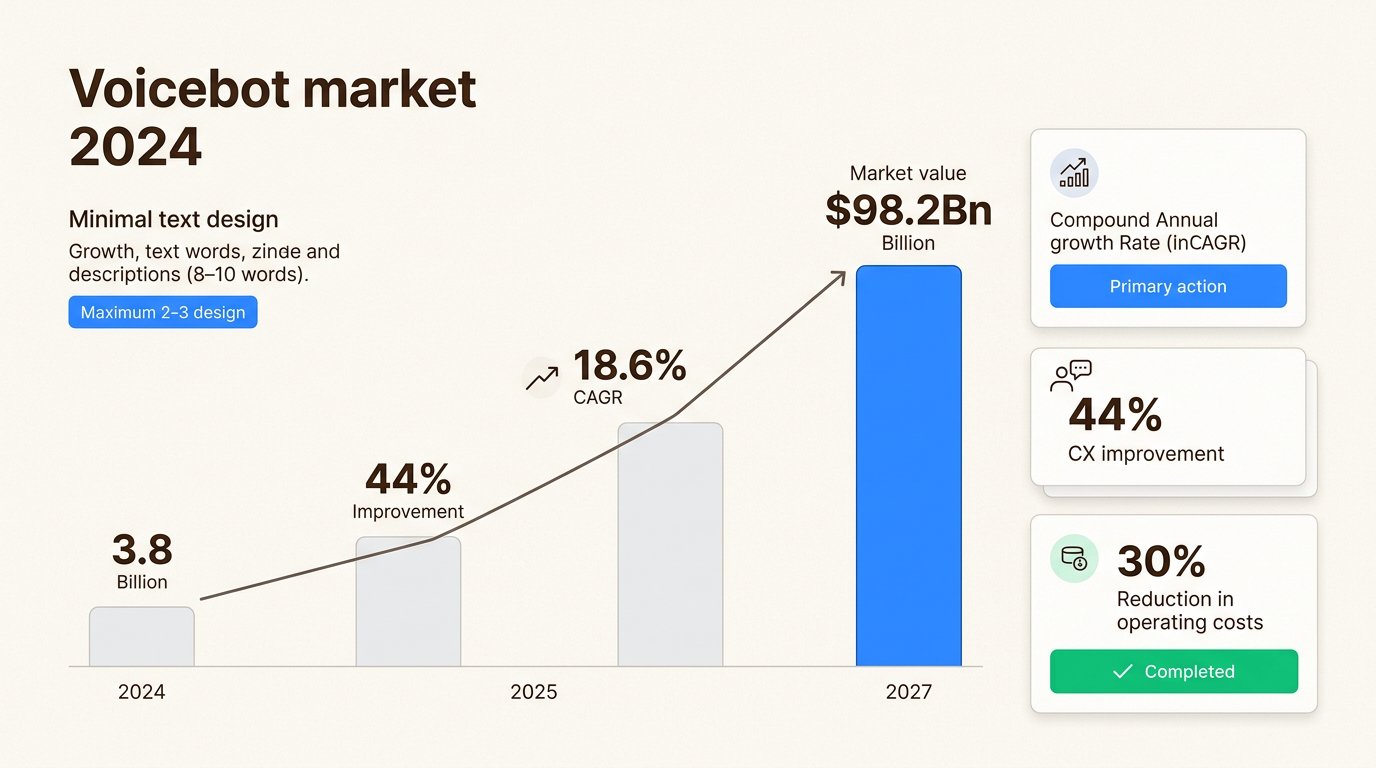
The market for this technology is growing fast. Industry forecasts predict the voicebot market will reach $98.2 billion by 2027, growing at 18.6% annually. Businesses are adopting voicebots because they cut costs, scale effortlessly, and keep customers happy.
This guide covers what voicebots are, how they work, and whether your business should consider one.
Editor's note: Want to hear some sample AI support calls made for your Shopify store?
- Just paste your store URL
- Hear sample calls for your store (no email required)
- Listen to demo calls for my store
What is a voicebot?
At its core, a voicebot is software that understands spoken language and responds with spoken answers. It picks up your phone calls, listens to what customers need, and either helps them directly or routes them to the right person.
Voicebots differ from chatbots (which use text) and traditional IVR systems (those "press 1 for sales" menus). Chatbots live on websites and messaging apps. IVR systems force callers through rigid button-press sequences. Voicebots let people speak naturally, like they're talking to a human. Genesys explains how voicebot technology combines speech recognition with AI to create more fluid interactions than traditional phone systems.
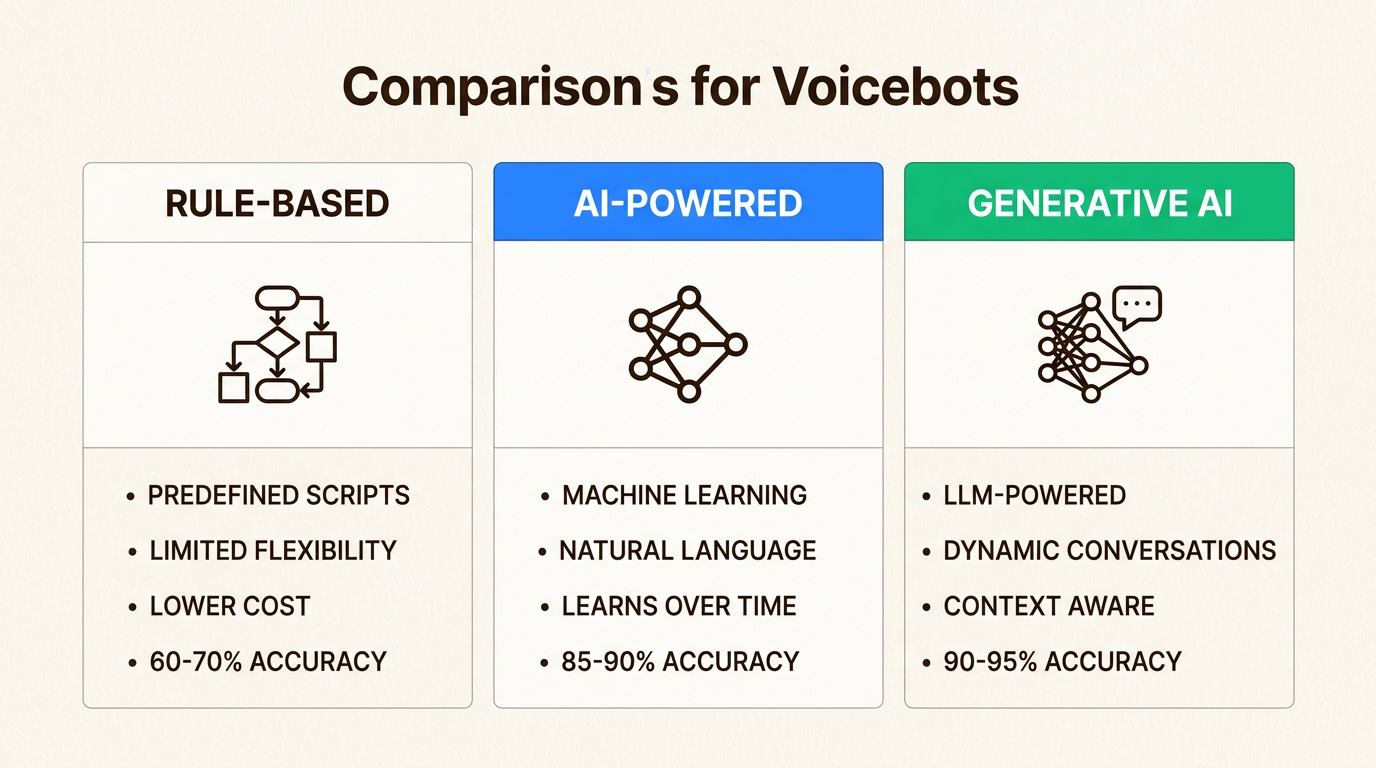
The technology's evolved through three generations:
- Rule-based voicebots followed strict decision trees. They worked fine for simple requests but fell apart when customers said something unexpected.
- AI-powered voicebots use machine learning to understand natural language. They learn from conversations and handle variations better than rule-based systems.
- Generative AI voicebots (the newest wave) run on large language models like GPT. They handle dynamic conversations without predefined scripts and sound remarkably human.
For e-commerce businesses, voicebots like Seth from Ringly.io specialize in handling order tracking, returns, and product questions. These tools integrate directly with Shopify to pull real-time order data and resolve customer issues without human help.
How voicebots work
Voicebots combine several technologies to handle conversations. Here's the stack:

Automatic Speech Recognition (ASR) converts spoken words into text. Modern ASR handles different accents, background noise, and speaking speeds. It transcribes what the caller says so the system can process it.
Natural Language Processing (NLP) and Natural Language Understanding (NLU) interpret the meaning behind the words. They identify intent (what the customer wants) and extract key information like order numbers or dates. AudioCodes provides a detailed voicebot definition covering how NLU fits into the overall architecture.
Text-to-Speech (TTS) converts the bot's text responses back into natural-sounding voice. Advanced TTS offers multiple voice options so businesses can match their brand personality. Platforms like Voximplant offer over 250 speech synthesis types across 40 languages.
Integration layers connect voicebots to your existing systems. CRMs, databases, payment processors, and help desk software all feed information to the voicebot so it can access real-time data.
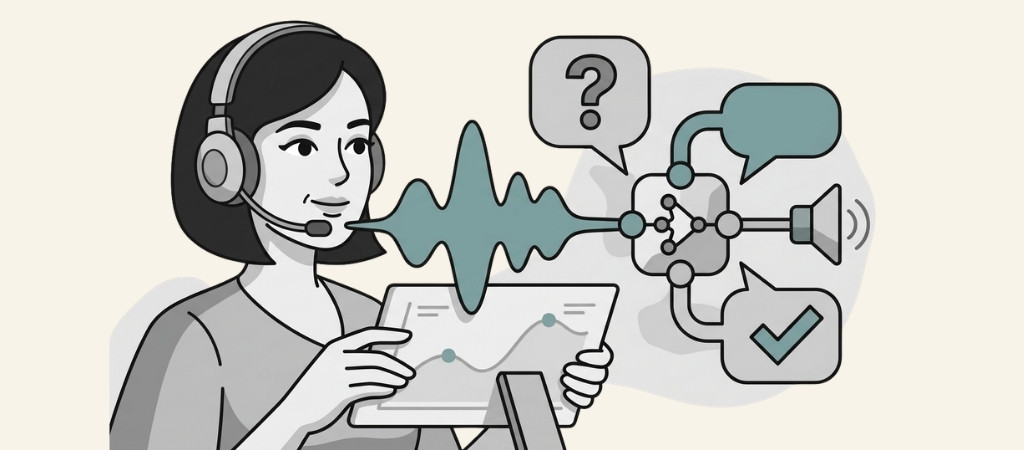
The conversation flow works like this: a customer calls and speaks. ASR transcribes their words. NLP identifies what they need. The system queries relevant databases (checking order status, for example). It formulates a response. TTS speaks that response back to the caller.
Latency used to be a problem. Early voicebots had awkward pauses between speech and response. Modern platforms have solved this with optimized architectures and edge computing. The best voicebots now respond in under a second, so conversations feel natural.
Generative AI is changing the game. Instead of following rigid scripts, LLM-powered voicebots understand context, handle interruptions, and adapt their responses dynamically. They'll switch topics, remember earlier parts of the conversation, and sound less robotic.
Types of voicebots
Not all voicebots are built the same. Understanding the differences helps you choose the right approach for your business.
Rule-based voicebots
These follow decision trees. The bot asks a question, the customer responds, and the bot follows a predetermined path based on that response. They're predictable but limited.
Pros: They're predictable, relatively simple to build, and cost less to implement.
Cons: They're frustrating when customers go off-script. Say something the bot doesn't expect and you'll hit a wall. "I'm sorry, I didn't understand that" gets old fast.
AI-powered voicebots
These use machine learning to understand natural language. They're trained on conversation data and improve over time.
They recognize synonyms and variations. A customer asking "Where's my package?" and "Has my order shipped?" triggers the same helpful response. They learn new vocabulary from conversations and expand their understanding without manual updates. You don't need to program every possible phrase.
The result is higher accuracy and better customer experience. Leading platforms achieve around 96% intent recognition accuracy according to Sentione's voicebot research.
Generative AI voicebots
The newest generation runs on large language models. They don't rely on predefined scripts at all.
These voicebots handle complex, multi-turn conversations naturally. Customers can interrupt, change topics, or ask follow-up questions. The bot maintains context throughout and responds appropriately.
They require less training data because LLMs already understand language patterns. You don't need to anticipate every possible customer query. The tradeoff is higher compute costs and you'll need careful guardrails to prevent inappropriate responses.
Business use cases for voicebots
Voicebots handle a wide range of business tasks. Here are the main categories where they deliver value.
Customer support automation
This is the most common use case. Voicebots answer calls 24/7, handle routine inquiries, and escalate complex issues to humans.
They excel at:
- FAQ responses (store hours, return policies, shipping information)
- Order status lookups
- Account balance inquiries
- Password resets and authentication
- Appointment scheduling
Research from Sentione shows 90% of customers expect an immediate response when contacting a business. Voicebots deliver that instant response, even at 3 AM.
Sales and marketing
Voicebots aren't just for support. They actively drive revenue:
- Qualifying leads before passing them to sales teams
- Running outbound campaigns for renewals or promotions
- Scheduling product demos
- Collecting customer feedback through surveys
- Upselling and cross-selling to existing customers
A voicebot can call hundreds of prospects simultaneously, identify interested leads, and transfer only qualified opportunities to human sales reps. This dramatically improves sales efficiency.
Industry-specific applications
Different industries apply voicebots in unique ways:
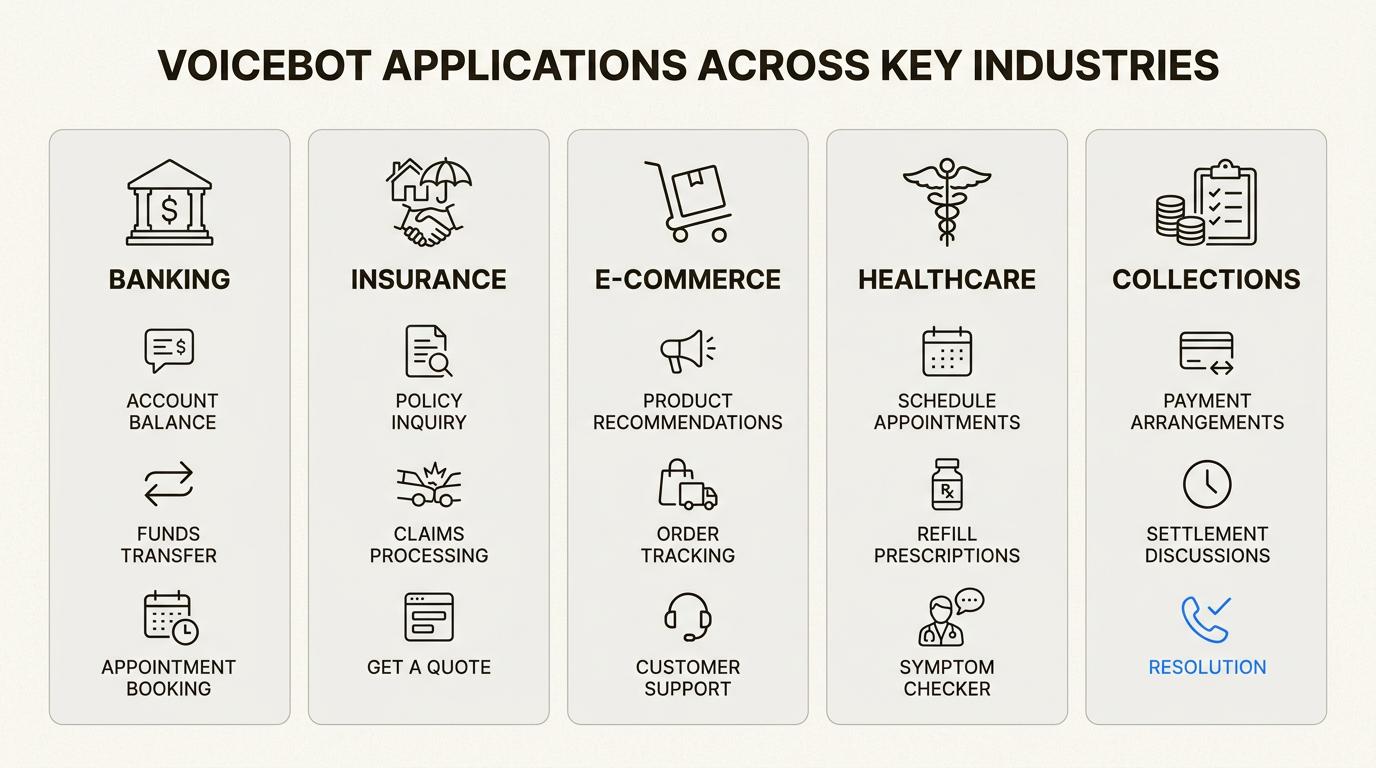
Banking: Balance checks, transaction history, card blocking for stolen cards, loan application status, credit score updates. Voicebots handle sensitive financial data securely and can authenticate callers using voice biometrics.
Insurance: First Notice of Loss (FNOL) for claims, policy information, coverage questions, claims status tracking. One leading U.S. healthcare collections agency added $3 million annually using voice AI agents, collecting $250,000 in a single month while handling 1,300 calls daily according to Floatbot's voicebot guide.
E-commerce: Order tracking, processing returns and exchanges, product recommendations, stock availability checks. Voicebots integrate with Shopify, WooCommerce, and other platforms to pull real-time order data.
Healthcare: Appointment booking, prescription refill requests, test result delivery, patient reminders. They reduce no-shows and free medical staff from routine scheduling calls.
Collections: Payment reminders, debt collection negotiations, payment plan setup. Voicebots handle sensitive financial conversations consistently and compliantly.
Benefits of voicebots for businesses
The business case for voicebots is compelling across multiple dimensions.
Operational benefits
Cost reduction: Businesses see up to 30% reduced customer service costs after implementing voicebots according to Voximplant's voicebot platform data. One bot handles the workload of multiple human agents at a fraction of the cost.
Scalability: Voicebots handle thousands of concurrent calls without breaking a sweat. During peak periods like Black Friday, tax season, or product launches, they scale instantly. There's no hiring rush, no training, and no overtime costs.
Consistency: Every caller gets the same accurate information delivered the same way. There are no bad days, no variation in service quality, and no forgotten training.
Customer experience benefits
No hold times: Customers get instant answers instead of listening to hold music. This alone dramatically improves satisfaction scores.
Natural conversation: Speaking is easier than navigating phone menus. Customers describe what they need in their own words rather than trying to map their problem to numbered options.
Multilingual support: Leading voicebot platforms support 40+ languages according to Floatbot's industry research. You can serve global customers without hiring multilingual agents.
Accessibility: Voicebots help users with disabilities who find phone menus difficult to navigate. They're also easier for elderly customers who struggle with technology.
The results show in the metrics. Companies report up to 44% improvement in customer experience after deploying voicebots according to Voximplant's research.
Agent experience benefits
Freedom from repetitive tasks: Human agents stop answering "What's my order status?" for the hundredth time. They'll focus on complex, interesting problems that require empathy and judgment instead.
Better context: When calls do escalate to humans, voicebots pass along conversation summaries, customer history, and identified intent. Agents start informed instead of asking customers to repeat themselves.
Happier teams: Agents report up to 33% higher satisfaction when voicebots handle routine work according to Voximplant's platform insights. They do more meaningful work and less drudgery.
Implementing a voicebot: best practices
Getting voicebots right requires planning. Here's what to focus on.
What to look for in a voicebot platform
NLP and ML capabilities: The platform should understand natural language, not just keywords. Look for sentiment analysis (detecting frustrated callers), intent recognition, and entity extraction (pulling out order numbers, dates, etc.).
Integration options: Your voicebot needs to connect to CRMs, help desks, payment systems, and your e-commerce platform. Check for pre-built integrations with tools you already use.
Scalability and reliability: Ask about uptime guarantees, concurrent call capacity, and how the platform handles traffic spikes. Downtime means missed calls and lost revenue.
Security and compliance: If you handle sensitive data, you need PII redaction, encryption, and compliance certifications (GDPR, HIPAA, SOC 2). Voice biometrics add security for financial or healthcare applications.
Common mistakes to avoid
Skipping thorough testing: Test your voicebot with real customers before full deployment. Try edge cases, accents, background noise, and unexpected questions. Fix issues before they frustrate real callers. You don't want customers discovering bugs for you.
Trying to replace humans entirely: Voicebots should handle routine tasks and escalate complex or emotional situations to humans. A customer reporting fraud or dealing with a death in the family needs a person, not a bot.
Misaligned brand voice: Your voicebot represents your brand. If you're a casual, friendly company, your bot shouldn't sound like a bank from the 1990s. Match the tone, vocabulary, and personality to your brand.
Limited training data: Voicebots learn from examples. The more conversation data you feed them, the better they perform. Start with common queries and expand coverage over time.
Getting started
Start small. Pick one specific use case like order status checks, implement it well, then expand. Monitor performance metrics, listen to call recordings, and iterate based on what you learn.
Keep humans in the loop. Design clear escalation paths for situations the bot can't handle. Review failed conversations to identify gaps in your voicebot's knowledge and fix them.
The future of voicebots
Voicebot technology is evolving rapidly. Here's what to expect.
Generative AI is making voicebots more human-like. They understand context better, handle interruptions gracefully, and generate more natural responses. The gap between human and AI phone agents keeps getting smaller.
Better personalization is coming. Voicebots will access more customer data to deliver tailored experiences. Imagine a bot that greets returning customers by name, knows their purchase history, and anticipates their needs.
Omnichannel integration will expand. Conversations will flow seamlessly between voice, chat, email, and messaging. Start a conversation on WhatsApp, continue by phone, finish in email, all with full context preserved.
Voice biometrics will replace passwords. Your voice becomes your authentication. You won't need to answer security questions or remember PINs. Just speak and the system will know who you are.
Voicebots will expand beyond customer service into internal tools, IoT devices, and healthcare applications. The technology is becoming ubiquitous.
Is a voicebot right for your business?
Voicebots work best for businesses with high call volumes (hundreds or thousands of calls monthly), repetitive predictable queries like order status and FAQs, a need for 24/7 availability, and a desire to scale without proportional hiring.
They might not be the right fit if every call is unique and complex, your customers need extensive emotional support, you have very low call volume (under 50 calls monthly), or your audience strongly prefers human interaction.
For e-commerce businesses specifically, voicebots like Seth from Ringly.io offer specialized solutions. Seth integrates with Shopify, handles order lookups and returns automatically, and resolves up to 90% of calls without human help. Setup takes under 1 hour, and you can try Ringly.io for free to test it with your store.
The bottom line? If phone support matters to your business but you want to reduce costs and improve availability, a voicebot deserves serious consideration. It's worth exploring what's possible with today's AI technology.
Frequently Asked Questions
What exactly is a voicebot and how does it differ from a chatbot?
A voicebot is an AI-powered system that handles spoken conversations over the phone. A chatbot uses text-based messaging. Voicebots let customers speak naturally while chatbots require typing. Both use similar AI technology underneath, but voicebots add speech recognition and text-to-speech capabilities.
How accurate are voicebots at understanding what customers say?
Leading voicebot platforms achieve around 96% intent recognition accuracy. Modern ASR (Automatic Speech Recognition) handles different accents, background noise, and speaking styles. Generative AI voicebots are even better at understanding context and handling variations in how people phrase requests.
Can a voicebot really replace my human customer service team?
Not entirely, and it shouldn't. Voicebots excel at routine, repetitive tasks like order status checks and FAQ responses. They typically resolve 70-73% of calls without human help. But complex issues, emotional situations, and escalations still need human agents. The best approach uses voicebots to augment your team, not replace it.
How long does it take to implement a voicebot for my business?
Simple implementations can go live in days. More complex setups with custom integrations might take weeks. Many modern platforms offer no-code or low-code builders that let you deploy basic voicebots quickly. Start with one use case, then expand gradually.
What industries benefit most from voicebot technology?
E-commerce, banking, insurance, healthcare, and collections see the strongest results. Any business with high call volumes and repetitive queries benefits. The key factors are predictable request types and a need for 24/7 availability.
How much does a voicebot cost?
Pricing varies by platform and usage. Some charge per minute of conversation (starting around $0.03/minute). Others offer monthly subscriptions based on call volume. Enterprise platforms often require custom quotes. Factor in setup costs, integration work, and ongoing optimization when budgeting.
Are voicebots secure for handling sensitive customer data?
Enterprise voicebot platforms offer robust security features including encryption, PII redaction, access controls, and compliance certifications (GDPR, HIPAA, SOC 2). Voice biometrics add an extra authentication layer. Always verify security credentials before choosing a platform for sensitive applications.
Looking for data to back up your strategy? Check out our latest research: 47 voice AI statistics for 2026 and 50+ chatbot statistics for 2026.