
The average ecommerce subscription loses 6-8% of its subscribers every month. Run those numbers over a year and you're looking at roughly 75% annual churn. That means for every four subscribers you sign up, three will be gone within twelve months.
Most store owners pour money into acquiring new subscribers while the existing ones quietly slip away. But here's the thing: according to research from Bain & Company, a 5% improvement in retention can increase profits by 25-95%. And acquiring a new customer costs 5-25x more than keeping one you already have.
This guide breaks down a complete framework for ecommerce subscription cancellation management. You'll get specific strategies for preventing cancellations before they happen, building cancellation flows that save subscribers, recovering failed payments, and winning back customers who've already left.
Hear what AI support calls sound like for your store. Just paste your Shopify URL and get sample calls in under 20 seconds, no email required. Listen to demo calls for my store.
Why ecommerce subscribers cancel (and what the data says)
Before you can fix cancellations, you need to understand what drives them. And the first distinction that matters is the one between voluntary and involuntary churn.
Voluntary churn is when a subscriber actively decides to cancel. They click the button. They're done. Involuntary churn is when a subscription ends because of a failed payment, an expired card, or a billing error. Here's the part most store owners miss: failed payments account for nearly half of all subscriber churn, according to Churn Buster's analysis.
That means close to half your "cancellations" aren't even intentional.
For voluntary cancellations, the reasons are predictable. McKinsey found that nearly 40% of ecommerce subscribers have cancelled a subscription. The most common reasons break down like this:
| Cancellation reason | What's really going on |
|---|---|
| Too expensive | Price doesn't match perceived value |
| Too much product | Stock is piling up faster than they use it |
| Didn't see value | Onboarding failed or product didn't click |
| Found an alternative | Competitor offered something better or cheaper |
| Forgot about it | Low engagement, no reason to stay |
The churn rates also vary wildly by subscription type. Subscription boxes average 10-12% monthly churn. Replenishment subscriptions (think supplements, skincare refills) sit below 4%. If you're running a supplement subscription, you're in a much better position than a curated box brand.
Understanding which type of churn is hitting your store hardest determines where to focus your energy. If it's involuntary churn, your dunning system needs work. If it's voluntary, your customer retention strategy needs a rethink.
The cancellation management framework: prevention, intervention, recovery
Most stores only focus on one piece of the puzzle: the cancellation flow. That's the intervention phase. But effective ecommerce subscription cancellation management works across three stages.
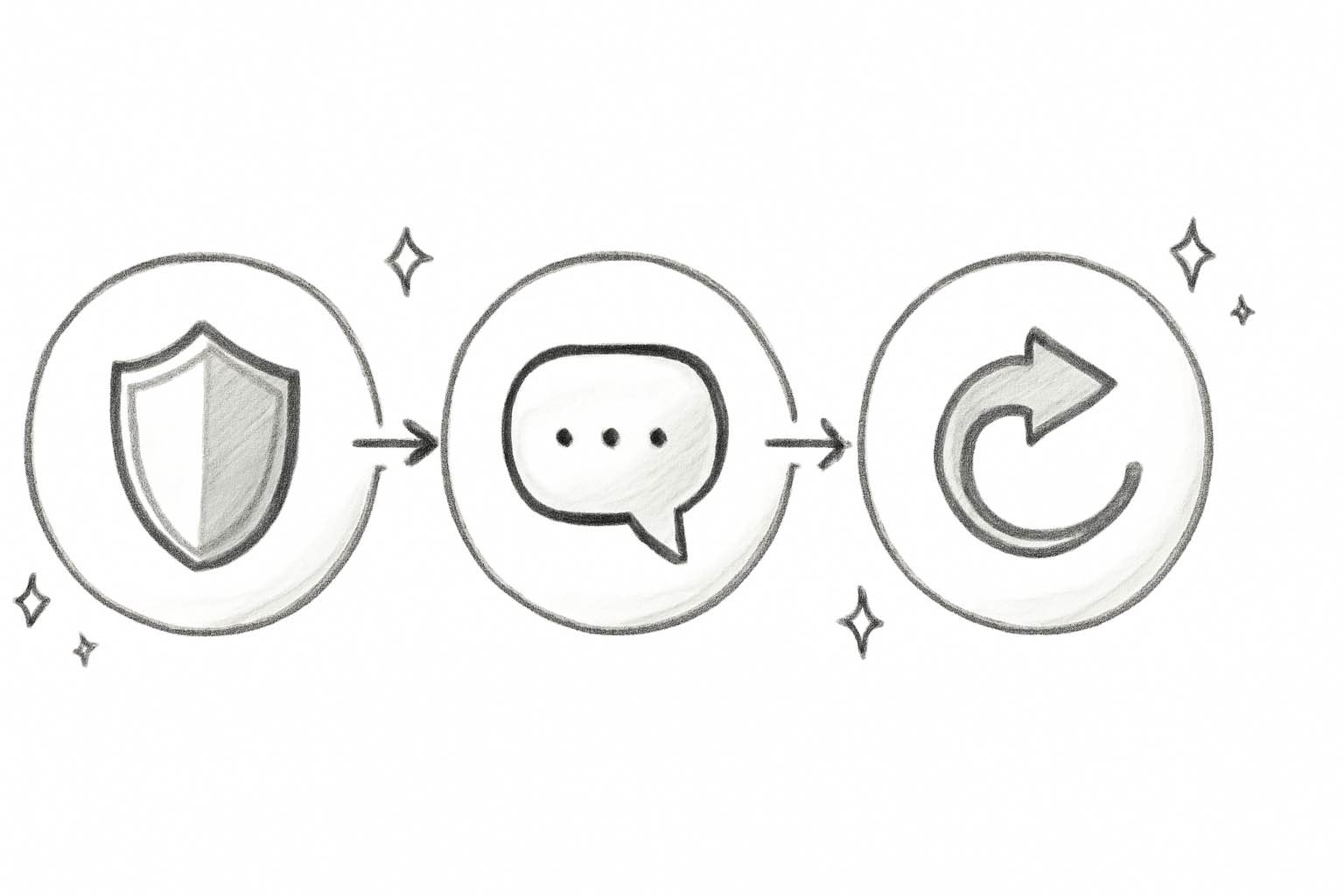
Prevention is everything you do to stop subscribers from ever wanting to cancel. Product quality, communication, flexibility, and engagement all fall here.
Intervention is what happens when someone clicks "cancel." Your cancellation flow, exit surveys, and retention offers live in this phase.
Recovery covers what happens after. Dunning for failed payments, win-back campaigns, and reactivation sequences. Most stores barely touch this.
The stores with the lowest churn rates don't just have great cancellation flows. They make cancellation unnecessary in the first place, and they bring back the ones who do leave.
Prevention: stop cancellations before they start
The cheapest cancellation to handle is the one that never happens. These strategies reduce the number of subscribers who even think about leaving.
Give subscribers control with self-service portals
When subscribers can't easily adjust their subscription, they cancel instead. It's that simple.
Your subscriber portal should let customers skip a delivery, pause for 30/60/90 days, swap products, change frequency, and update payment info. All without contacting support. When that control is missing, your customer service costs go up and churn increases at the same time.
The data backs this up. Offering pause and skip options alone reduces churn by 11-20%. Top Shopify merchants who added a "pause before cancel" option saw a 337% increase in pause adoption, preventing over 400,000 cancellations.
If you're on Shopify, apps like Recharge, Loop, and Appstle all offer subscriber portals with these features. The investment pays for itself within the first month for most stores.
Personalize the subscription experience
Generic subscriptions feel disposable. Personalized ones feel curated.
Let subscribers choose flavors, scents, sizes, or product variations. Use their purchase history to recommend swaps before they get bored. Ecommerce personalization isn't just for marketing emails. It's the difference between a subscription that feels like a recurring charge and one that feels like a service.
Consider adding surprise-and-delight moments at key milestones. A small freebie at the 6-month mark or a handwritten note at order #10 costs almost nothing but dramatically increases perceived value. Loyalty programs that reward subscription tenure work the same way.
Proactive outreach at risk moments
Don't wait for the cancel click. Reach out before it happens.
Set up engagement scoring that flags subscribers who haven't opened your last three emails, who skipped their last delivery, or whose order frequency dropped. These are your at-risk subscribers, and a personal email or phone call at this point can save the relationship.
Phone support is an underused retention channel here. Most stores handle everything through email and chat, but a quick call from someone who actually understands the customer's account can save subscribers that digital channels miss. If you're running a Shopify store, Ringly.io's AI phone agent can handle these proactive retention conversations 24/7 in 40 languages. Try it free for 14 days.
Intervention: build a cancellation flow that saves subscribers
When someone does click "cancel," you have one shot to change their mind. A well-built cancellation flow is your most valuable retention tool.
Collect the cancellation reason first
Always ask why before offering anything. If you lead with a discount and the real issue is product overload, you've wasted the offer and learned nothing.
Present 4-6 clear cancellation reasons in a multiple-choice format. Then match your retention offer to their specific answer:
| Reason given | Best save offer |
|---|---|
| Too expensive | Percentage discount or reduced-price plan |
| Too much product | Skip next shipment or reduce frequency |
| Not using it | Pause for 30-60 days |
| Want to try something else | Product swap or customization |
| Just need a break | Pause with automatic resume |
This reason-matched approach can save up to 40% of cancellation attempts, according to retention platform data. The key is that each offer addresses the actual problem, not a generic "please stay" discount.
Capture these reasons in your customer service KPIs. Three months of cancellation reason data tells you more about your product-market fit than any survey or focus group.
Offer alternatives to full cancellation
The goal is to keep the subscriber in your ecosystem, even if that means a reduced commitment.
Your cancellation flow should present these options before the final cancel button:
- Pause subscription: 30, 60, or 90 days with automatic resume. This is your strongest save tool.
- Skip next delivery: Solves the "too much product" problem instantly.
- Downgrade plan: Smaller box, fewer items, lower price point.
- Swap products: Different items in the same subscription.
- Change frequency: From monthly to every 6 or 8 weeks.
Brands that added pause options saw adoption rise to 39.7% of cancellation attempts. That's nearly four out of ten people who would have cancelled choosing to pause instead.
Don't be afraid of the pause option. Yes, some subscribers won't come back. But most do, and a paused subscriber is infinitely more valuable than a cancelled one.
Design the flow for compliance and trust
The FTC finalized its "click-to-cancel" rule in October 2024, requiring that cancellation be as easy as sign-up. Although a federal appeals court vacated the rule in July 2025, the same standards are still enforced under existing consumer protection laws (ROSCA, state auto-renewal statutes, and Visa/Mastercard subscription standards).
So don't use dark patterns. Don't hide the cancel button. Don't force phone calls for online subscriptions. These tactics might save a few subscribers short-term, but they generate chargebacks, negative reviews, and potential legal action.
Transparent cancellation flows actually build trust. When subscribers know they can leave easily, they're more likely to pause or downgrade instead of filing a dispute. Better to lose a subscriber gracefully than to lose them through a chargeback that also costs you a fee. Reducing refund rates starts with making legitimate cancellation painless.
Recovery: fix involuntary churn and win back lost subscribers
Prevention and intervention handle voluntary churn. But remember: nearly half of all subscriber losses come from failed payments. Recovery is where you recapture that revenue.
Tackle involuntary churn with dunning management
Dunning is the process of retrying failed payments and notifying subscribers when their billing information needs updating. Done right, it recovers 20-30% of otherwise-lost subscribers.
Here's what a strong dunning system looks like:
- Smart retry logic: Different decline codes need different retry timing. A "do not honor" response should be retried at different intervals than an "insufficient funds" decline.
- Pre-dunning notifications: Email subscribers 7-10 days before their card expires. This prevents the failure from happening at all.
- Subscriber-facing update pages: Make it dead simple to update payment info. One click from the email, no login required if possible.
- Escalation sequence: Email first, then SMS, then a final notice. Each with clear urgency but without panic.
Tools like Churn Buster specialize in this. If you're on Stripe or Shopify, their decline-code-specific retry logic typically recovers far more than the generic retry that comes built into your payment processor.
Your target: recover at least 50% of failed payments through your retry system.
Win-back campaigns for voluntarily cancelled subscribers
A cancelled subscriber isn't a dead lead. They already know your product, they've already paid you at least once, and they're far cheaper to reactivate than a cold prospect.
The timing matters. Wait 7-14 days after cancellation for the first win-back attempt (they need space). Then follow up at 30 days, 60 days, and 90 days with decreasing frequency.
Segment your win-back offers based on the original cancellation reason. Someone who left because of price gets a different offer than someone who had too much product. A "we've changed what you didn't like" message works better than a generic "we miss you" email.
Use multiple channels. Email is standard, but SMS and even phone outreach can dramatically increase reactivation rates. Ringly.io can handle automated win-back calls that feel personal, checking in on why the subscriber left and presenting relevant offers. It works in 40 languages and runs 24/7, so you're reaching international subscribers at times that work for them.
Build a re-onboarding flow for returning subscribers. Don't just reactivate them on the same plan that didn't work. Show them what's new, offer a trial of a different configuration, and set better expectations for the first 90 days (the highest-risk cancellation window).
For more on this, check out our full guide to ecommerce customer win-back strategy.
How AI changes ecommerce subscription cancellation management
AI is reshaping how stores handle subscription cancellations at every stage of the framework.
Predictive churn modeling uses subscriber behavior data (engagement, purchase frequency, support tickets, email opens) to flag at-risk subscribers before they hit cancel. Instead of reacting to cancellations, you're preventing them. Some platforms can identify churn risk 30-60 days in advance with 70%+ accuracy.
Dynamic cancellation flows adapt in real-time based on subscriber value, tenure, and behavior. A subscriber who's been with you for 18 months and spent $2,000 gets a different retention experience than someone on their second month. AI handles this personalization automatically, matching offers to the individual rather than showing everyone the same generic flow.
AI phone agents are the newest addition to the cancellation management toolkit. When a subscriber calls to cancel, an AI voice agent can handle the conversation with retention training baked in. It understands the subscriber's history, pulls up their account in real-time, and offers relevant alternatives based on their specific situation.
Ringly.io does exactly this for Shopify stores. Seth, the AI phone agent, handles subscription inquiries, processes pause and skip requests, and runs retention conversations without a human agent. It resolves about 73% of calls without escalation and works across 40 languages. For stores seeing subscription cancellation calls during off-hours or weekends, this means those after-hours calls get handled instead of going to voicemail.
According to the latest AI customer service statistics, AI-powered support is now handling a growing share of subscription management tasks. The stores adopting it earliest are seeing measurable drops in churn, especially for involuntary cancellations where an AI agent can guide the subscriber through a payment update in real time.
Want to see how this works for your store? Start a free 14-day trial of Ringly.io and have Seth answering subscription calls within three minutes.
Tools for ecommerce subscription cancellation management
You don't need every tool on this list. Pick the ones that address your biggest churn type.
| Tool | Best for | Key feature | Starting price |
|---|---|---|---|
| Recharge | Full subscription management (Shopify) | Subscriber portal, skip/pause/swap | $99/mo + transaction fees |
| Loop Subscriptions | DTC retention with gamification | Reward workflows, product swaps | $99/mo |
| Appstle | Budget-friendly subscription management | Wide feature set at low cost | Free tier available |
| Churn Buster | Involuntary churn (failed payments) | Decline-code-specific retry logic | Custom pricing |
| Churnkey | Active churn with smart cancel flows | Dynamic offer walls, A/B testing | Custom pricing |
| Ringly.io | Phone-based subscription support | AI handles cancel/pause/skip calls | $349/mo |
Recharge is the market leader for Shopify subscriptions. Solid subscriber portal, strong analytics, and the most integrations. You'll pay $99/mo plus 1.25% and $0.19 per transaction on the Standard plan.
Loop Subscriptions is gaining ground with DTC brands that want gamified retention. Their cancellation flows include product swap suggestions and milestone rewards.
Appstle is the budget option. A functional free tier makes it accessible for smaller stores testing subscriptions for the first time.
Churn Buster focuses entirely on involuntary churn. If failed payments are your biggest problem, their decline-code-specific retry logic recovers more than generic payment retries.
Churnkey handles active churn through personalized cancellation flows with A/B testing and dynamic offers.
Ringly.io adds the phone channel. When subscribers call to cancel, pause, or ask questions about their subscription, Seth handles it in real time with full Shopify integration.
Metrics to track your cancellation management performance
You can't improve what you don't measure. Here are the customer service KPIs that matter for subscription cancellation management.
| Metric | What it tells you | Good | Average | Needs work |
|---|---|---|---|---|
| Monthly churn rate | Overall subscriber loss | Below 4% | 6-8% | Above 10% |
| Voluntary churn rate | Subscribers choosing to leave | Below 3% | 4-6% | Above 7% |
| Involuntary churn rate | Failed payment losses | Below 1.5% | 2-3% | Above 4% |
| Save rate | % of cancel attempts retained | Above 30% | 15-25% | Below 10% |
| Payment recovery rate | Failed payments recovered | Above 50% | 30-45% | Below 25% |
| Reactivation rate | Cancelled subscribers who return | Above 15% | 8-12% | Below 5% |
| Time-to-cancel | Average subscriber lifespan | 8+ months | 4-7 months | Under 3 months |
Track voluntary and involuntary churn separately. A store with 2% voluntary and 4% involuntary churn needs a completely different fix than one with 5% voluntary and 1% involuntary.
Also track your customer service response time. Slow responses to subscription questions push people toward cancellation. If a subscriber asks about pausing and doesn't hear back for 24 hours, they'll just cancel instead.
Shopify merchants with active subscription programs report 18% higher customer lifetime values and 23% lower customer acquisition costs than those without, according to Shopify's 2025 Commerce Trends report. If your subscription metrics are below the benchmarks above, there's significant upside in optimizing your customer experience.
Frequently asked questions
What is a good subscription churn rate for ecommerce?
For ecommerce subscriptions, a monthly churn rate below 4% is considered good. The average sits around 6-8%. Subscription boxes tend to run higher (10-12% monthly) while replenishment models like supplements typically stay below 4%.
How do I calculate my subscription cancellation rate?
Divide the number of subscribers who cancelled during a period by the total subscribers at the start of that period. Multiply by 100 for a percentage. Track voluntary and involuntary cancellations separately for a clearer picture.
Should I make it hard to cancel a subscription?
No. Making cancellation difficult increases chargebacks, damages your brand reputation, and may violate consumer protection laws. Instead, build a cancellation flow that offers genuine alternatives (pause, skip, swap) before the final cancel button. Transparent flows actually improve retention.
What's the difference between voluntary and involuntary churn?
Voluntary churn is when subscribers actively choose to cancel. Involuntary churn happens when a subscription ends due to failed payments, expired cards, or billing errors. Failed payments account for nearly half of all subscriber churn, making dunning management one of the highest-ROI investments you can make.
Can AI help reduce subscription cancellations?
Yes. AI can predict which subscribers are at risk of cancelling, personalize retention offers in real-time, and handle subscription management calls. AI voice agents can process pause, skip, and cancellation requests by phone while running trained retention conversations.
What does the FTC click-to-cancel rule mean for my store?
The FTC's click-to-cancel rule (finalized October 2024, later vacated by an appeals court) required cancellation to be as easy as sign-up. While the specific rule was struck down, the same principles are enforced under ROSCA and state auto-renewal laws. Make cancellation easy. It's both the ethical and legal path.
How soon after cancellation should I send a win-back offer?
Wait 7-14 days for the first attempt. Follow up at 30, 60, and 90 days with decreasing frequency. Segment your offers based on the original cancellation reason. Check out our win-back strategy guide for the full playbook.
Making cancellation management a revenue driver
Subscription cancellation management isn't about trapping people or making it hard to leave. The stores with the best retention rates make it easy to cancel but give subscribers so many reasons to stay that most don't.
Focus on the full framework: prevent cancellations through flexibility and personalization, intervene with reason-matched offers when someone does try to leave, and recover the subscribers lost to failed payments and disengagement.
The phone channel is still the most underused tool in this playbook. When a subscriber calls to cancel and gets a conversation (not a hold queue), save rates jump. If you want to add phone-based retention without hiring agents, Ringly.io handles it with AI. Setup takes three minutes and you get 14 days free to test it.