
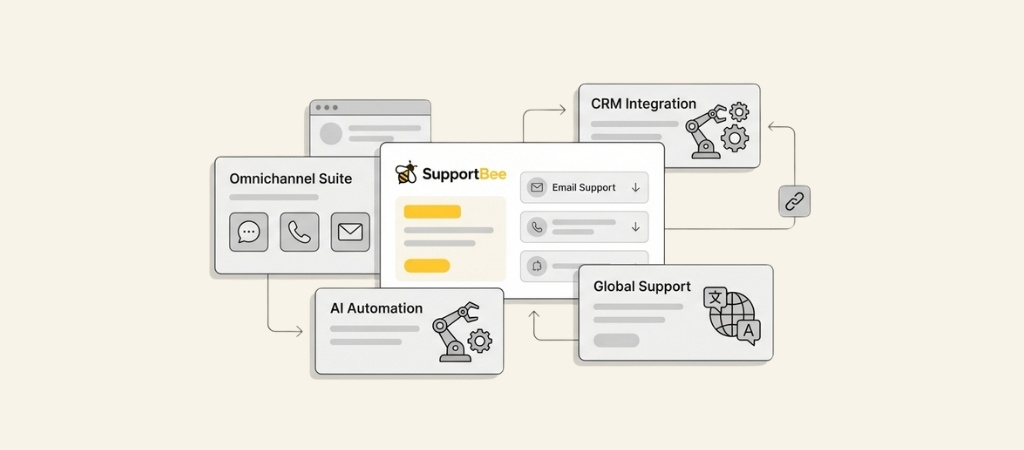
SupportBee has long been a go-to for teams wanting simple, email-based customer support.
But as customer expectations evolve, many businesses find themselves needing more than what SupportBee offers: omnichannel capabilities, AI-powered automation, and deeper integrations.
The good news? The help desk software market has exploded with options.
Whether you're a small team on a tight budget or an enterprise needing advanced customization, there's a SupportBee alternative that fits. Let's break down the 10 best options for 2026.
Editor’s note: Want to hear some sample AI support calls made for your Shopify store?
- Just paste your store URL
- Hear sample calls for your store (no email required)
- Listen to demo calls for my store
Top 10 SupportBee alternatives
1. Ringly.io

If your e-commerce store gets phone calls, Ringly.io is worth serious consideration. Unlike traditional help desks that focus on email and chat, Ringly.io specializes in AI-powered phone support.
Their AI agent "the AI" handles inbound calls 24/7: answering questions, looking up orders, processing returns, and escalating to humans only when necessary. Setup takes under 1 hour, and The AI resolves up to 90% of calls without human intervention.
Key features:
- AI phone agent with 40+ language support
- Deep Shopify integration for order lookups
- Call recordings and analytics
- Automatic returns and exchange handling
| Plan | Monthly Price | Included | Best For |
|---|---|---|---|
| Pay per call | $99 a month | 50 conversations, then $1.99 each | Shopify brands taking support calls |
Pros: High resolution rate, multilingual support, no technical setup required
Cons: Phone-focused (not a full help desk), requires Shopify for full features
Best for: E-commerce stores wanting to automate phone support without hiring agents
2. Zendesk
Zendesk remains the market leader for good reason. It's a comprehensive platform that handles ticketing, live chat, phone, social media, and self-service portals in one place.

The platform shines at scale. With 1,000+ integrations, advanced analytics, and AI-powered routing, it can handle complex support operations. The trade-off? Complexity and cost.
Key features:
- Omnichannel support (email, chat, phone, social)
- AI-powered ticket routing and suggested responses
- Customizable help centers (up to 300 on Enterprise)
- Advanced reporting and SLA management
| Plan | Annual Price | Monthly Price | Key Features |
|---|---|---|---|
| Support Team | $19/agent/mo | $25/agent/mo | Email/ticketing, 1,000+ integrations |
| Suite Team | $55/agent/mo | $69/agent/mo | AI agents, messaging, live chat, phone |
| Suite Professional | $115/agent/mo | $149/agent/mo | Copilot, 5 help centers, skills-based routing |
| Suite Enterprise | $169/agent/mo | $219/agent/mo | 300 help centers, sandbox, custom roles |
Pros: Scalable, extensive ecosystem, powerful automation
Cons: Complex setup, expensive at scale, steep learning curve
Best for: Mid-market to enterprise teams needing robust customization
3. Freshdesk
Freshdesk strikes a balance between features and affordability. It offers a generous free tier (up to 10 agents for 6 months) and paid plans that undercut Zendesk while still delivering solid functionality.

The platform covers all the basics: omnichannel ticketing, knowledge base, automation rules, and reporting. Their AI assistant "Freddy" helps with ticket assignment and suggested responses.
Key features:
- Omnichannel inbox (email, chat, phone, social)
- AI-powered ticket assignment
- Field service management
- 150+ integrations
| Plan | Annual Price | Key Features |
|---|---|---|
| Free | $0 | Up to 2 agents, basic ticketing, knowledge base |
| Growth | $19/agent/mo | Ticketing, customer portal, basic automation |
| Pro | $55/agent/mo | Custom portals, advanced routing, 500 AI sessions |
| Enterprise | $89/agent/mo | Audit logs, approval workflows, skills-based assignment |
Pros: Great free plan, intuitive interface, affordable paid tiers
Cons: Limited advanced reporting on lower tiers, fewer integrations than Zendesk
Best for: Small to mid-size teams wanting value and ease of use
4. Zoho Desk
Zoho Desk is the budget champion of this list. Starting at just $7 per user per month, it delivers surprising depth for the price. The free tier supports 3 users indefinitely, making it ideal for tiny teams.

The platform integrates deeply with the broader Zoho ecosystem (CRM, SalesIQ, Analytics). If you're already using Zoho products, this is a no-brainer. Their AI assistant "Zia" provides sentiment analysis and auto-tagging.
Key features:
- Context-aware ticketing
- Zia AI assistant with sentiment analysis
- Multi-brand help center (40+ languages)
- Blueprint automation builder
| Plan | Annual Price | Key Features |
|---|---|---|
| Free | $0 | 3 users, email ticketing, basic workflows |
| Express | $7/user/mo | Email, social media, web forms |
| Standard | $14/user/mo | Live chat, WhatsApp, knowledge base, AI sentiment |
| Professional | $23/user/mo | Telephony, blueprints, multi-department |
| Enterprise | $40/user/mo | AI agents, Zia assistant, skill-based routing |
Pros: Most affordable option, great Zoho integration, powerful AI features
Cons: Interface can feel cluttered, best value requires Zoho ecosystem commitment
Best for: Teams already using Zoho products, budget-conscious businesses
5. LiveAgent
LiveAgent is the budget-friendly option that doesn't skimp on phone support. Unlike most competitors that charge extra for call center features, LiveAgent includes built-in calling and IVR on mid-tier plans.
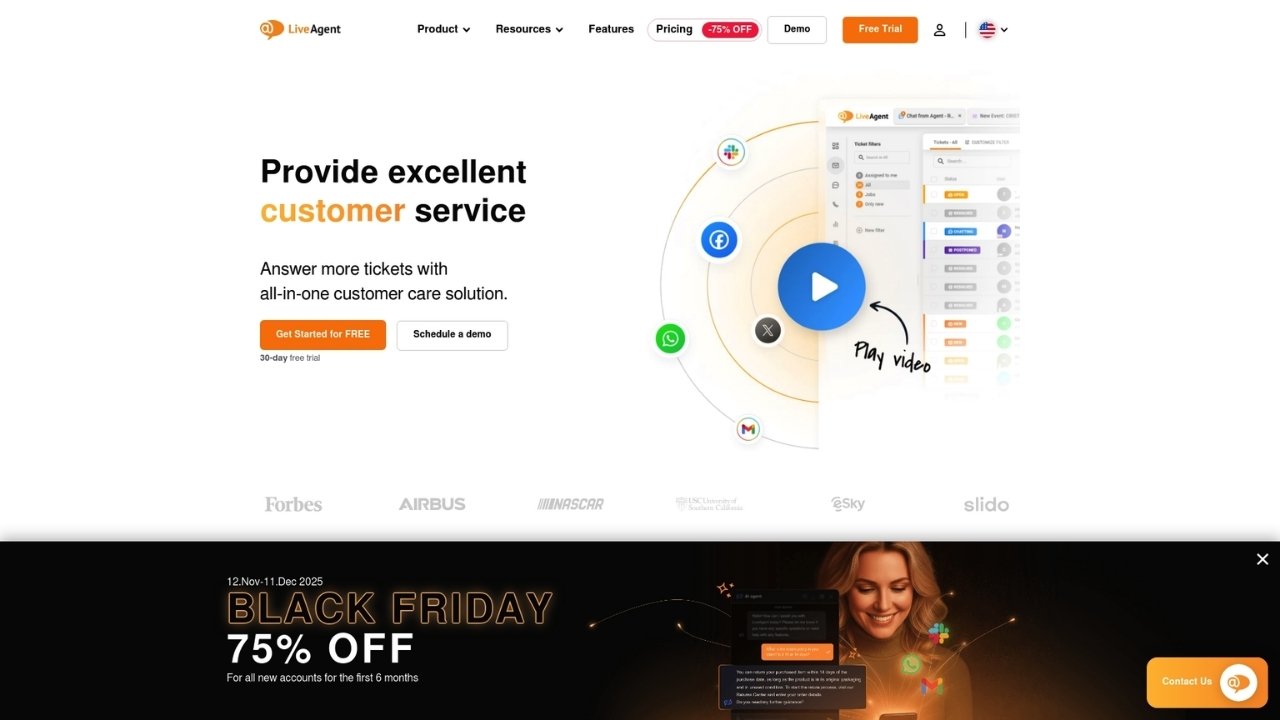
The universal inbox consolidates all channels (email, chat, phone, social) into one queue. Gamification features add a competitive element for support teams.
Key features:
- Universal inbox for all channels
- Built-in call center and IVR
- Real-time live chat
- Gamification features
| Plan | Annual Price | Monthly Price | Key Features |
|---|---|---|---|
| Small Business | $15/agent/mo | $19/agent/mo | Ticketing, live chat, knowledge base |
| Medium Business | $29/agent/mo | $35/agent/mo | + Call center, SLA, proactive chat |
| Large Business | $49/agent/mo | $59/agent/mo | + Social media, SSO |
| Enterprise | $69/agent/mo | $85/agent/mo | + Dedicated account manager |
Pros: Affordable, includes phone support, gamification features
Cons: Dated interface, limited advanced automation
Best for: Small teams needing phone + ticketing on a budget
6. Help Scout
Help Scout takes a different approach: it feels like a shared email inbox rather than a traditional ticketing system. There are no ticket numbers or robotic auto-responses. Just clean, email-like conversations.

This simplicity appeals to teams that find traditional help desks overwhelming. The Beacon widget lets customers access help from anywhere on your site.
Key features:
- Shared inbox (email-like experience)
- Knowledge base/Docs sites
- Live chat (Beacon widget)
- Customer profiles and history
| Plan | Annual Price | Key Features |
|---|---|---|
| Free | $0 | 5 users, 1 inbox, 1 docs site, 100 contacts/mo |
| Standard | $25/user/mo | Multiple inboxes, knowledge bases, AI inbox assistant |
| Plus | $45/user/mo | Advanced workflows, unlimited AI drafts, round-robin routing |
| Pro | $75/user/mo | SSO/SAML, HIPAA compliance, up to 50 light users |
Pros: Clean interface, feels like email, great for small teams
Cons: Limited channels (no native phone), fewer enterprise features
Best for: Small teams prioritizing email support and simplicity
7. Intercom
Intercom pioneered the modern messaging approach to customer support. Their Fin AI Agent is among the best in the industry, capable of handling complex queries that stump other bots.
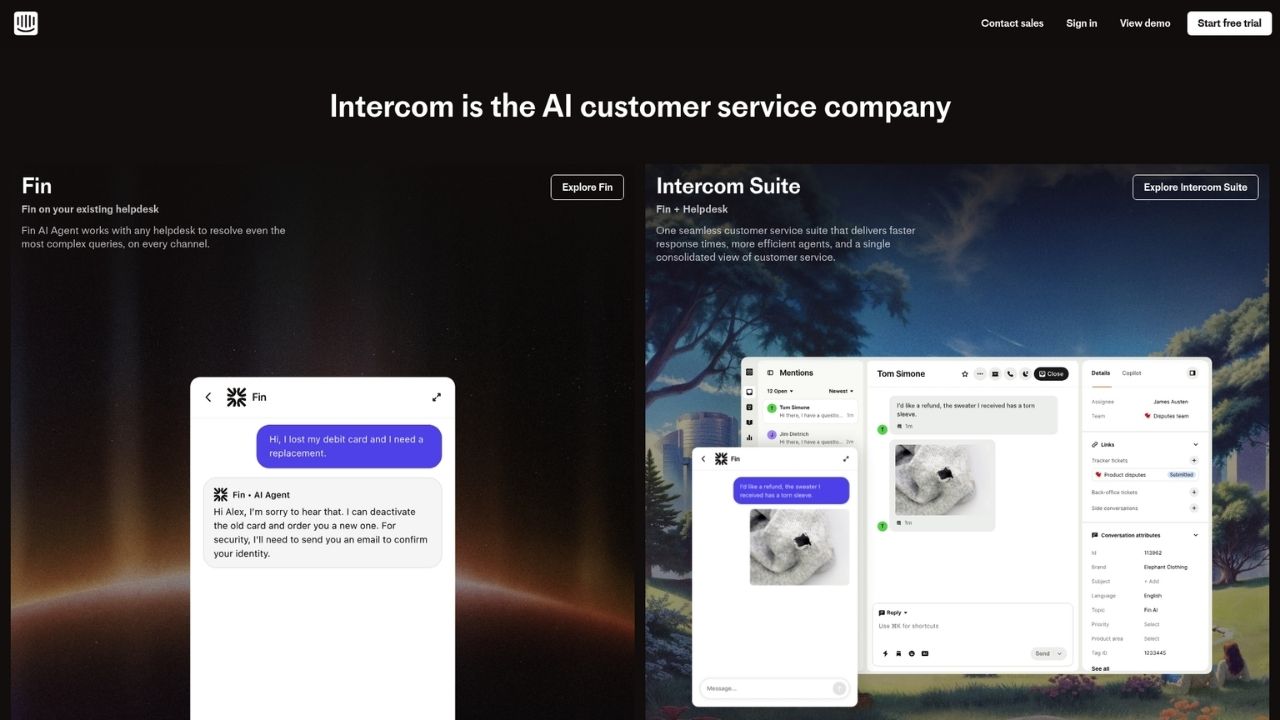
The platform is built for automation-first support. Fin can resolve tickets, draft responses for agents, and even take actions in external systems. It's not cheap, but the AI capabilities justify the price for many teams.
Key features:
- Fin AI Agent for automated resolutions
- AI-powered inbox (Copilot)
- Omnichannel messaging (email, chat, SMS, WhatsApp)
- Proactive messaging and product tours
| Plan | Annual Price | Key Features |
|---|---|---|
| Essential | $29/seat/mo | Fin AI Agent ($0.99/resolution), messenger, shared inbox |
| Advanced | $85/seat/mo | Multiple inboxes, workflow automation, 20 lite seats |
| Expert | $132/seat/mo | SSO, HIPAA, SLAs, multibrand messenger, 50 lite seats |
Pros: Cutting-edge AI, modern interface, strong automation
Cons: Expensive, AI features cost extra, overkill for simple needs
Best for: Tech-forward companies wanting AI-powered support automation
8. HubSpot Service Hub
HubSpot Service Hub makes the most sense if you're already in the HubSpot ecosystem. It connects seamlessly with Marketing Hub and Sales Hub, giving you a complete view of every customer.
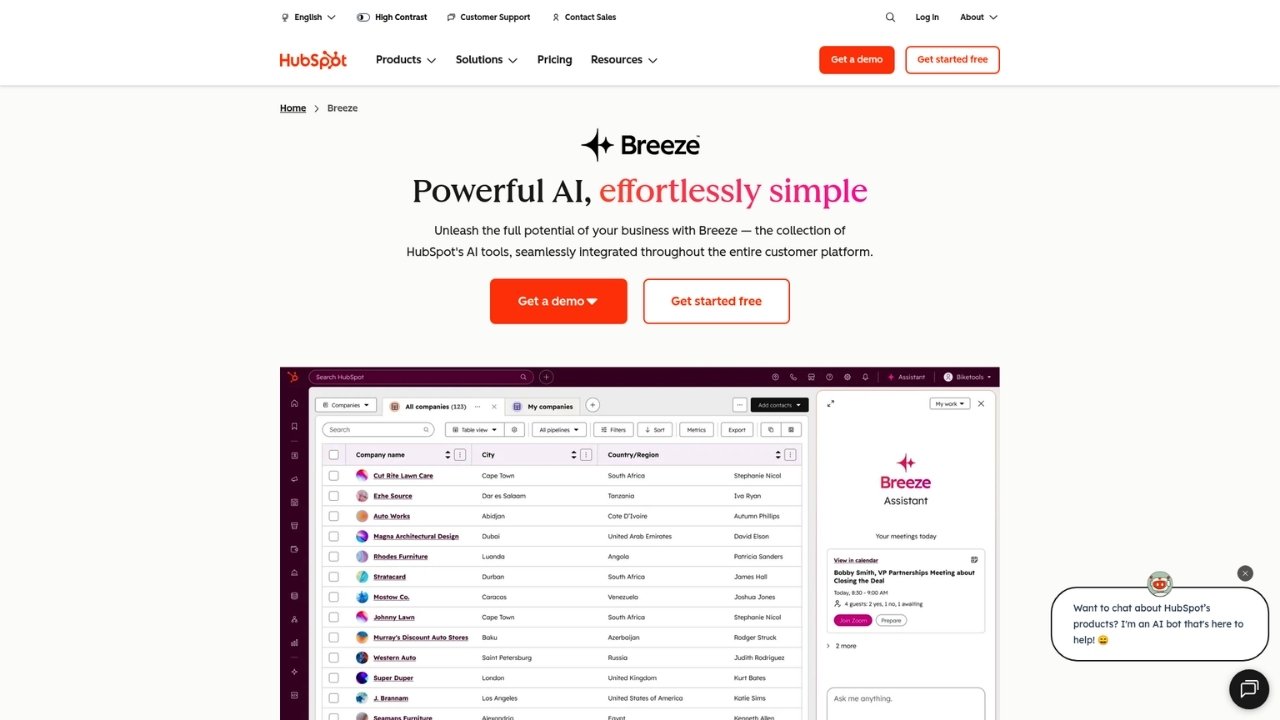
The free tier is genuinely useful (up to 2 users), and the paid tiers add sophisticated features like customer feedback surveys, knowledge bases, and SLA management.
Key features:
- Help desk workspace
- Knowledge base and customer portal
- Customer feedback surveys (NPS, CSAT, CES)
- Deep CRM integration
| Plan | Annual Price | Monthly Price | Key Features |
|---|---|---|---|
| Free | $0 | $0 | Up to 2 users, ticketing, live chat, shared inbox |
| Starter | $15/seat/mo | $20/seat/mo | Ticket pipelines, routing, calling (500 mins), SDK, AI Assistant |
| Professional | $90/seat/mo | $100/seat/mo | Knowledge base, customer portal, calling (3,000 mins), SLAs, Service analytics |
| Enterprise | $150/seat/mo | - | Breeze AI Customer Agent, custom objects, calling (12,000 mins), playbooks |
Skill-based routing, conditional SLAs, 12,000 minutes
Pros: Free tier, CRM integration, comprehensive reporting
Cons: Expensive at higher tiers, requires HubSpot commitment for full value
Best for: Teams using HubSpot CRM wanting unified customer data
9. Salesforce Service Cloud
Salesforce Service Cloud is the enterprise standard. If you need maximum customization, advanced AI through Agentforce, and the ability to handle millions of cases, this is your tool.
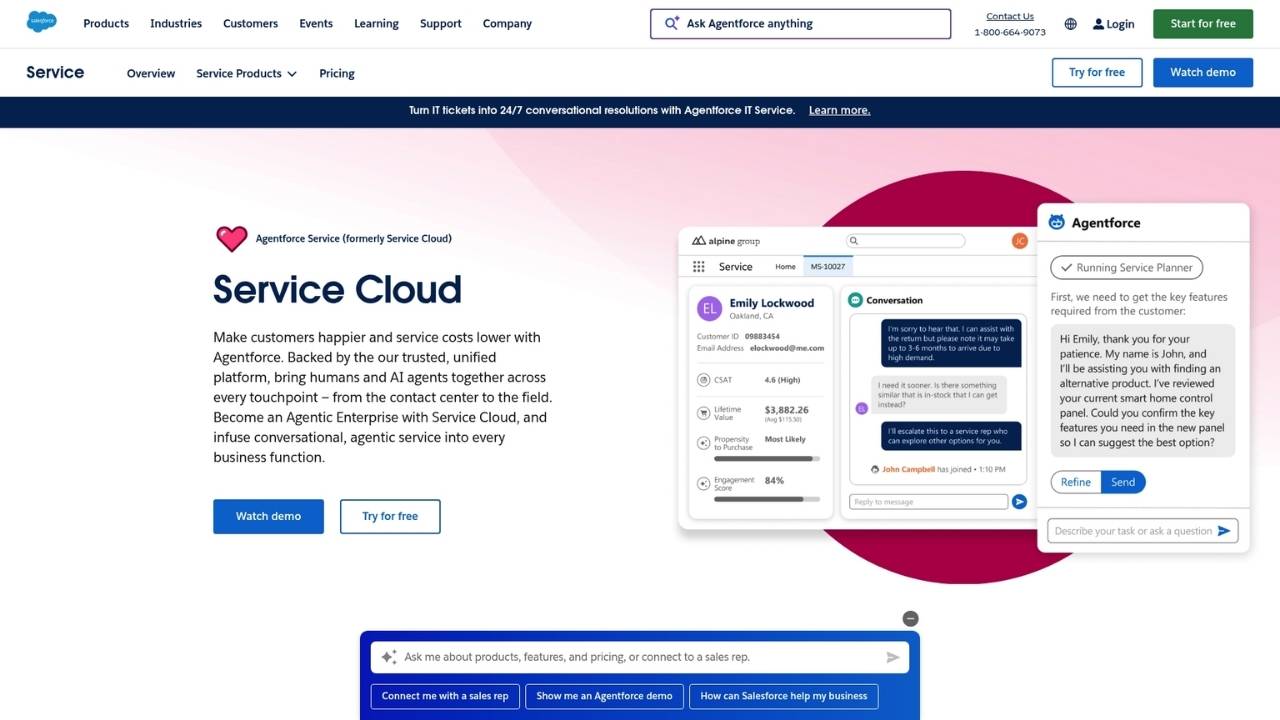
The platform offers deep case management, omnichannel routing, self-service portals, and field service management. It's powerful but complex, typically requiring dedicated administrators.
Key features:
- Case management and omnichannel routing
- Agentforce AI suite
- Self-service portals and communities
- Field service management
| Plan | Annual Price | Key Features |
|---|---|---|
| Free Suite | $0 | 2 users, basic CRM, email marketing |
| Starter Suite | $25/user/mo | Lead management, basic chat |
| Pro Suite | $100/user/mo | Enhanced chat, customization, forecasting |
| Enterprise | $175/user/mo | AI for service, self-service help center |
| Unlimited | $350/user/mo | Chat & bots, Salesforce Knowledge, premier support |
| Agentforce 1 Service | $550/user/mo | Full AI suite, unmetered Agentforce, 1M Flex Credits |
Pros: Highly customizable, powerful AI, enterprise scalability
Cons: Complex implementation, expensive, requires admin expertise
Best for: Enterprise teams needing maximum customization and scale
10. Tidio
Tidio focuses on live chat first, with help desk features as a secondary offering. Their Lyro AI chatbot claims up to 67% resolution rates for common questions.

The platform is particularly popular with e-commerce stores thanks to strong Shopify integration and visual chatbot builders that don't require coding.
Key features:
- Lyro AI Agent (up to 67% resolution rate)
- Live chat and ticketing
- Flows (conversion automation)
- Multichannel (Messenger, Instagram, WhatsApp, email)
| Plan | Annual Price | Key Features |
|---|---|---|
| Free | $0 | 50 billable conversations, 50 Lyro conversations |
| Starter | $24.17/mo | 100 billable conversations, live chat & ticketing |
| Growth | $49.17/mo | 250+ billable conversations, advanced analytics |
| Plus | $749/mo | Custom limits, departments, OpenAPI |
Pros: Affordable, easy setup, AI chatbot included
Cons: Limited ticketing features, best for chat-first support
Best for: Small businesses wanting live chat with light ticketing
How to choose the right SupportBee alternative
With 10 solid options, how do you pick? Here's a decision framework:
Team size and budget
- Solo or tiny team: Start with Zoho Desk (free tier) or Freshdesk (free tier)
- Small business ($15-30/agent): LiveAgent, Freshdesk Growth, or Help Scout
- Mid-market ($30-100/agent): Zendesk Suite Team, Intercom, or HubSpot Professional
- Enterprise ($100+/agent): Salesforce Service Cloud, Zendesk Enterprise
Channel requirements
- Email-only: Help Scout (simplest) or Zoho Desk (cheapest)
- Phone-heavy: Ringly.io (AI-powered) or LiveAgent (built-in calling)
- Omnichannel: Zendesk or Freshdesk
- Chat-first: Tidio or Intercom
Integration needs
- Shopify store: Ringly.io (phone) or Tidio (chat)
- HubSpot CRM: HubSpot Service Hub
- Zoho ecosystem: Zoho Desk
- Salesforce CRM: Salesforce Service Cloud
AI and automation priorities
- Best AI resolution rates: Intercom (Fin) or Ringly.io (the AI)
- AI-assisted human agents: Zendesk (Copilot) or Freshdesk (Freddy)
- Budget AI: Zoho Desk (Zia)
Start automating your customer support today
The right SupportBee alternative depends on your specific needs. If you're an e-commerce store drowning in phone calls, Ringly.io can resolve most of them automatically. If you need a full-featured help desk, Zendesk or Freshdesk are proven choices. On a tight budget? Zoho Desk delivers surprising value.
Whichever direction you choose, the goal is the same: happier customers and a more efficient support operation.
Ready to see what AI phone support can do for your store? Try Ringly.io for free and let the AI handle your calls 24/7.
Frequently Asked Questions
What are the best free SupportBee alternatives?
Zoho Desk offers the most generous free tier with 3 users and full ticketing capabilities. Freshdesk's free tier supports up to 2 agents for 6 months. Help Scout allows 5 users on their free plan but limits contacts to 100 per month.
Which SupportBee alternative has the best AI features?
Intercom's Fin AI Agent leads for chat-based automation with high resolution rates. For phone support, Ringly.io's Seth resolves up to 90% of calls without human intervention. Zendesk and Freshdesk offer solid AI-assisted features for human agents.
Is Zendesk worth the price compared to cheaper SupportBee alternatives?
Zendesk justifies its premium pricing if you need extensive customization, 1,000+ integrations, and enterprise-grade features. For smaller teams with simpler needs, Freshdesk or Zoho Desk deliver 80% of the functionality at half the cost.
What's the most affordable SupportBee alternative with phone support?
LiveAgent includes built-in call center features starting at $29/agent/month (annual). For AI-powered phone support specifically, Ringly.io starts at $99 a month for the first 50 conversations, which can be more cost-effective than hiring human agents.
Can I switch from SupportBee without losing my ticket history?
Most alternatives offer migration tools or services. Zendesk, Freshdesk, and HubSpot all provide data import capabilities. For large migrations, consider using a third-party migration service or the new platform's professional services team.