


Yes, you can ship internationally with Shopify.
The opinion up front: treat duties and tracking as part of the shipping setup, not as problems to fix after the first complaint.
Hear what AI support calls sound like for your store. Just paste your Shopify URL and get sample calls in under 20 seconds, no email required. Listen to demo calls for my store.
Can you ship internationally with Shopify?
Yes, with a condition on which Shopify tools you can use. Shopify's help center says that if your business is in the United States, Canada, or Australia, you can use shipping labels to help ship internationally. The same page says labels help create labels using your customer's order information, and help you complete any customs forms that might be required.
Fulfillment is narrower. If your business is in the United States or Canada, you might be able to use Shopify Fulfillment Network, depending on your eligibility. That is the short answer to "what is Shopify Fulfillment Network": a fulfillment option open to some businesses in those two countries.
Do you need Shopify Markets to sell to another country? The rule on the shipping zones page is that if you want to sell to customers in a particular country, the country must be in an active market. So yes, a country has to be in an active market before it can buy from you.
One estimate puts the cross-border eCommerce consumer market at $1.21 trillion in 2025. That is the prize, and the rest of this page is about collecting it without a mess afterwards.
Set up shipping zones and international rates
Do the setup in this order:
- Add the country to an active market. Without it, the country can't buy from you.
- Create or edit a shipping zone. Put the destination in a zone that matches how you plan to ship there.
- Add a rate to the zone. You can create flat rates in local currencies for customers from different markets.
- Test a checkout. Use an address in that country and read exactly what the buyer sees.
A shipping zone is a group of countries or regions, such as Europe or North America. The grouping is yours to choose. Group countries by how you will ship to them, not by where they sit on a map.
A flat rate in local currency means the buyer sees a price in their own currency. That is simple to explain on a product page and simple to forecast in your own books.
If a flat rate doesn't fit a zone, look at the best Shopify shipping apps for other ways to price it.
Some practical rules for rate setup:
- **Keep zones few.
- **Name zones plainly.
- Check each rate against a real parcel. Weigh a typical order, price it with the carrier, and compare it to what the zone charges.
Duties and import taxes: who pays and when
Shopify's help center states it directly: if you ship internationally, your customers might be charged duties and import taxes when their shipment arrives. A buyer who assumed the checkout total was the full price will meet that charge at the door.
So who pays? Left alone, the buyer might. But you can collect an estimate of those amounts at checkout instead, which helps your customers avoid unexpected charges on delivery. That answers "can I collect duties and import taxes at checkout": yes, as an estimate.
You don't set the amount yourself. Customs authorities set the amount from the product's classification, its origin, and the destination's rules.
Shopify's international shipping post reports that 46% cited longer delivery times, and 43% cited customs charges as reasons they avoid cross-border purchases. The same post says 61% considered clear delivery charges essential, and 35% struggle to calculate duties and taxes.
Pick one approach and state it where the buyer will see it:
- Collect an estimate at checkout: the buyer sees the cost before paying, which helps avoid unexpected charges on delivery.
- Leave it to delivery: the buyer might be charged duties and import taxes when the shipment arrives.
Our view: collecting the estimate at checkout is the better default, because the cost is on screen while the buyer can still decide. Whichever you choose, write it into your shipping policy and product pages in one plain sentence.
International shipping options compared
Which route fits depends on where your business is based and how you want to handle fulfillment.
| Option | Who can use it | What Shopify says it does | Your next step |
|---|---|---|---|
| Shipping labels | Businesses in the United States, Canada, or Australia | Help create labels from order information and help complete required customs forms | Confirm your business location qualifies |
| Shopify Fulfillment Network | Businesses in the United States or Canada, depending on eligibility | Fulfillment | Check your eligibility |
Our rundown of ecommerce shipping software covers the wider tool field.
Don't commit to a fulfillment network or a 3PL before you have shipped a few international orders yourself. Hands-on orders show you which countries and carriers are worth outsourcing.
Carriers and rate choices for each region
Which carriers does Shopify support for international shipping? A PluginHive guide says Shopify supports major carriers like DHL Express, UPS, USPS, and Canada Post. Those are the names to line up when you build your rate table.
How much does international shipping cost on Shopify? No single number applies to every store. ShipperHQ notes that Shopify currently promotes savings of up to 88% with leading carriers. Treat that as a ceiling to test, and price a real order with each carrier before you trust it.
Choose by region, not by loyalty to one carrier:
- Nearby countries: pick the carrier and service whose delivery window you can state with confidence.
- Far destinations: favor a service that includes tracking, even if it costs more.
- Low-value orders: check that the shipping cost doesn't eat the margin before you open the country.
- Countries where customs charges apply: pair the carrier choice with a clear duties policy.
Insurance deserves a line. Most carriers, including DHL, UPS, and USPS, automatically insure shipments for up to $100. If your average order sits above that, price extra cover.
Delivery time is the other lever. Our piece on why ecommerce shipping delays happen and the ecommerce shipping statistics for 2026 help you set delivery promises you can keep.
What customers ask after an international order ships
Setup guides end at the label. Your support team's work continues from there, so prepare answers before the first order goes out.
- Where is my parcel? Write down what each of your carriers shows at each stage, so your team can read a scan and explain it. Our guide to WISMO and order tracking calls covers handling this question at volume.
- Who pays the customs charge? Customers might be charged duties and import taxes on arrival unless you collect an estimate at checkout. Your shipping policy should say which one applies.
- Why is it taking so long? Longer delivery times were cited by 46% of shoppers as a reason to avoid cross-border purchases. Give the expected window at checkout and repeat it in the shipping confirmation.
- Can I return it? Decide who pays return shipping and say so in advance, using the thinking in our Shopify return policy best practices.
- Can someone help me in my language? Our guide to international customer service for ecommerce goes deeper on that.
How do you reduce customs and delivery complaints? Show the cost before payment, state a delivery window, and give your team a written guide to each carrier's tracking scans.
Checklist before you launch a new country
Run through this for each new country, in order:
- Market: the country is in an active market.
- Zone: it sits in a zone that matches how you'll ship there.
- Rate: the zone has a rate, checked against a real parcel.
- Carrier: you've chosen a service with tracking you trust for that destination.
- Duties: you've decided whether to collect an estimate at checkout, and the policy says so.
- Insurance: you've compared your average order value to the $100 carrier cover.
- Customs forms: if you use Shopify shipping labels, they help you complete any customs forms that might be required.
- Test order: you've checked out from that country and read what the buyer sees.
Open one country at a time, so each launch teaches you something before the next.
How Ringly.io handles international shipping questions on the phone
A caller who asks "where's my parcel?" needs the carrier, the latest scan and the expected date, not a ticket queue. Ringly.io is AI phone support for Shopify brands, and its AI rep Seth matches the caller's number to a Shopify customer and looks up the order. He answers with the carrier, delivery status, latest scan and estimated delivery date, using TrackingMore across 1,633+ carriers. The integrations page lists the carriers connected, including DHL, UPS, USPS and Canada Post.
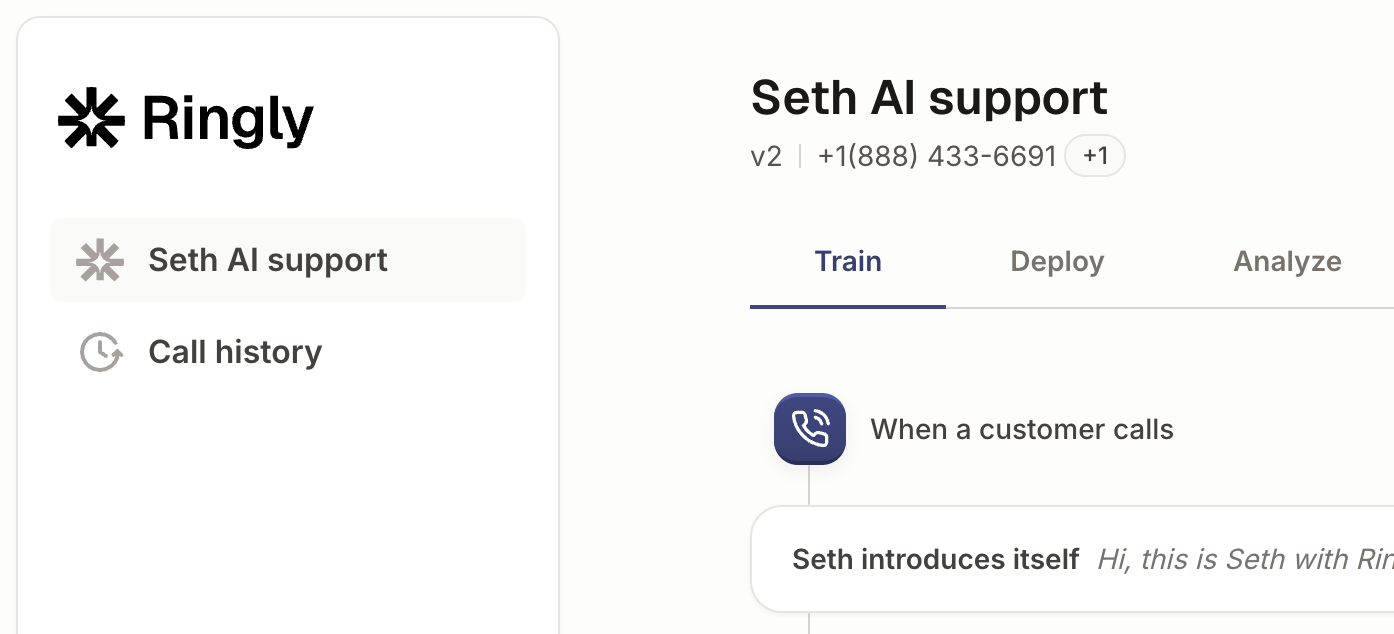
When a call needs a person, escalations arrive in Gorgias or Zendesk as tickets with a summary and the full transcript. Seth speaks 40 languages.
AI Coach reads your settings and real calls, then suggests changes you apply or dismiss. After a launch, ask it which questions callers raised, then teach Seth a skill for the answers. Ringly.io charges per phone conversation, and the pricing page has the details.
Frequently asked questions
Can you ship internationally with Shopify?
Yes. If your business is in the United States, Canada, or Australia, you can use shipping labels to help ship internationally. A country must also be in an active market before you can sell to customers there.
Who pays duties and import taxes on international orders?
Your customers might be charged duties and import taxes when their shipment arrives. You can instead collect an estimate at checkout, which helps customers avoid unexpected charges on delivery.
Can I collect duties and import taxes at checkout?
Yes, as an estimate of those amounts. Customs authorities set the actual amount from the product's classification, its origin, and the destination's rules.
Do I need Shopify Markets to sell to another country?
A country must be in an active market before you can sell to customers there. Set that up for each destination, then add a shipping zone and a rate.
What is Shopify Fulfillment Network?
It is a Shopify fulfillment option. If your business is in the United States or Canada, you might be able to use it, depending on your eligibility.
Which carriers does Shopify support for international shipping?
A PluginHive guide says Shopify supports major carriers like DHL Express, UPS, USPS, and Canada Post. Compare their rates on a real parcel for each destination.