
Mavenoid has carved out a niche for product manufacturers needing visual troubleshooting and warranty support. But it's not for everyone.
The platform focuses heavily on technical product support, and its pricing isn't publicly available, which can be frustrating when you're trying to budget.
If you're looking for alternatives that offer more transparency, different channel support, or better fit your specific use case, this guide breaks down seven solid options.
We'll cover everything from phone-focused AI agents to comprehensive help desk platforms, with real pricing and honest assessments of where each shines.
Editor’s note: Want to hear some sample AI support calls made for your Shopify store?
- Just paste your store URL
- Hear sample calls for your store (no email required)
- Listen to demo calls for my store
What is Mavenoid?
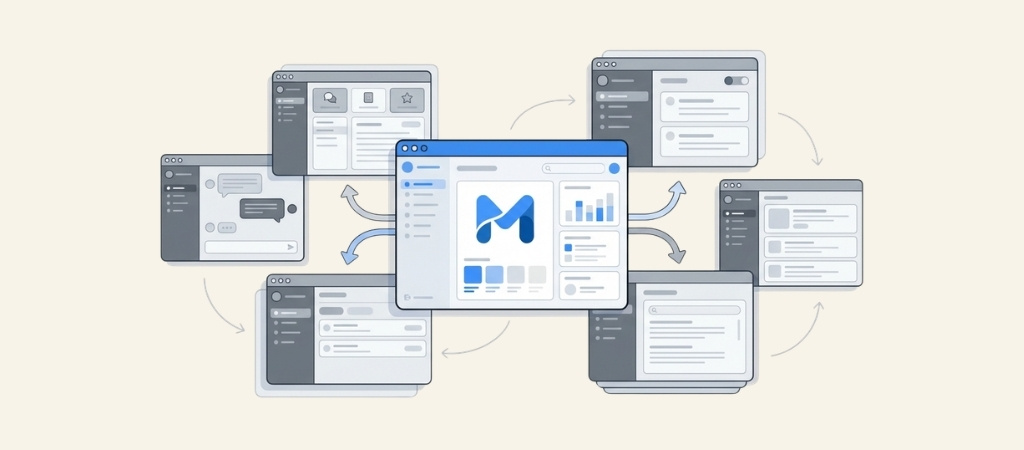
Mavenoid is an AI agent platform built specifically for product support. Unlike general customer service tools, it specializes in helping manufacturers troubleshoot technical issues, handle warranty claims, and reduce field service bookings through visual guidance and multimodal support.
The platform combines voice, text, images, and video to guide customers through complex troubleshooting. It's particularly strong for brands like Husqvarna and DeLonghi that need to help customers fix physical products without sending technicians.
Key features include voice-assisted routing, dynamic help centers that appear in search results, and visual step-by-step instructions. The company reports that clients like ABB automate 80% of support requests, while others see 46% self-service resolution rates.
Why Consider Mavenoid Alternatives?
Mavenoid serves a specific niche well, but there are legitimate reasons to look elsewhere.
First, pricing transparency is an issue. Mavenoid doesn't publish pricing publicly, which means you need to go through sales just to understand if it fits your budget. For small to midsize businesses, this can be a significant barrier.
Second, the platform is heavily focused on product manufacturers. If you're running an e-commerce store, SaaS company, or service business, Mavenoid's feature set might not align with your needs. You don't need visual troubleshooting for software or spare part recommendations for digital products.
Third, the review volume is limited. With minimal public feedback on major review platforms, it's harder to gauge real-world performance and user satisfaction compared to more established alternatives.
Finally, if phone support is a priority for your customers, Mavenoid's chat-first approach may leave gaps in your support strategy.
How We Evaluated These Alternatives
We looked at several key criteria when selecting and ranking these alternatives:
- AI capabilities resolution rates, language support, and automation depth
- Pricing transparency publicly available pricing vs. "contact sales" models
- Ease of setup time to deployment and technical requirements
- Channel coverage email, chat, phone, social, and self-service options
- Customer feedback review volume and ratings on trusted platforms
- Integration ecosystem how well each tool connects with your existing stack
Each alternative on this list offers something distinct, whether that's phone support automation, budget-friendly pricing, or enterprise-grade customization.
Quick Comparison Table
| Tool | Starting Price | Best For | Key Differentiator |
|---|---|---|---|
| Ringly.io | From $99 a month (50 conversations included) | E-commerce phone support | Up to 90% resolution rate, live in under 1 hour |
| Zendesk Suite | $19/agent/month | Enterprises | Market leader, extensive ecosystem |
| Fin by Intercom | $29/agent/month + $0.99/resolution | Intercom users | Resolution-based pricing, 45+ languages |
| LiveAgent | $15/agent/month | Budget-conscious SMBs | Most affordable all-in-one solution |
| Tidio | $0 (free tier) | E-commerce chat | 67% AI resolution rate |
| HubSpot Service Hub | $0 (free tier) | HubSpot CRM users | Marketing-sales-service alignment |
| Salesforce Service Cloud | ~$100+/agent/month | Large enterprises | 360-degree customer view |
1. Ringly.io

Ringly.io takes a different approach from most alternatives on this list. While others focus on chat and ticketing, Ringly specializes in AI-powered phone support for e-commerce businesses.
The platform's core product, the AI, is an AI phone agent that handles inbound calls 24/7. It answers questions, looks up orders, processes returns, and only escalates to humans when necessary. For Shopify stores specifically, this is a compelling option because the AI integrates natively with Shopify to pull order data in real time.
Setup is remarkably fast. Ringly claims you can be live in under 1 hour by adding your store link or installing the Shopify app. The AI trains automatically on your product catalog and policies, so there's no manual configuration of conversation flows.
Performance metrics are strong. Seth resolves up to 90% of support calls without human intervention and has handled 200,000+ calls. The platform supports 30 languages, making it viable for international e-commerce operations.
Pricing: $99 a month for the first 50 conversations, then $1.99 each. Ringly offers a 65% resolution guarantee: if Seth resolves under 65% of your calls in a month, that month comes back as credit (after 90 days on Pay per call).
Best for: E-commerce stores, particularly Shopify merchants, that want to automate phone support without hiring additional staff.
Pros:
- Fastest setup in the category
- Purpose-built for e-commerce phone support
- Transparent, predictable pricing
- Strong Shopify integration
Cons:
- Phone-focused (limited chat/email capabilities)
- Higher starting price than some alternatives
- Best suited for e-commerce (less relevant for B2B or services)
2. Zendesk Suite

Zendesk is the established leader in customer service software, with over 130,000 global brands using the platform. If you're looking for a safe, proven choice with extensive customization options, Zendesk is hard to beat.
The platform offers true omnichannel support, handling email, messaging, phone, social media, and WhatsApp from a unified interface. AI features include automated ticket routing, AI-powered agent suggestions through Copilot, and self-service help centers.
Pricing starts at $19 per agent per month for the Support Team plan, though most businesses will want the Suite Team plan at $59 per agent per month for AI agents and messaging capabilities. The Suite Enterprise plan at $179 per agent per month adds advanced features like sandbox environments and up to 300 help centers.
AI resolution pricing is worth noting. Zendesk includes 5-15 automated resolutions per agent per month, with additional resolutions costing $1.50 on committed plans or $2.00 on pay-as-you-go. Add-ons like Copilot ($50/agent/month), Quality Assurance ($35/agent/month), and Workforce Management ($25/agent/month) can significantly increase costs.
Best for: Enterprises and growing companies that need a comprehensive, scalable support ecosystem with extensive customization options.
Pros:
- Market leader with proven reliability
- Extensive integration ecosystem
- Highly customizable workflows
- Strong enterprise features
Cons:
- Can become expensive with add-ons
- Steeper learning curve than simpler tools
- AI features cost extra beyond basic tiers
3. Fin by Intercom
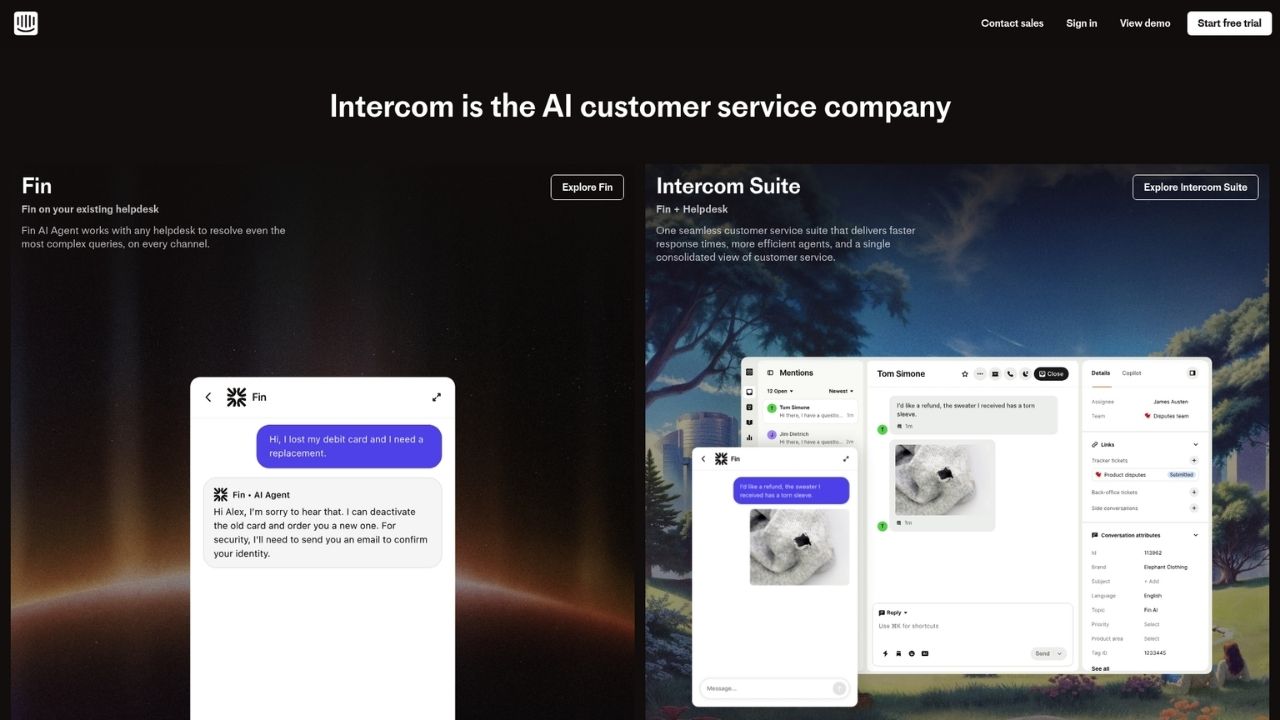
Fin is Intercom's AI agent, built specifically for customer service rather than general-purpose AI. It's designed to resolve inquiries across multiple channels using Intercom's proprietary Fin AI Engine.
The platform supports 45+ languages out of the box, making it one of the strongest options for global businesses. Fin can handle email, live chat, SMS, WhatsApp, social media, and phone interactions. Notably, Fin also works as a standalone product with existing helpdesks like Zendesk, Salesforce, HubSpot, and Freshworks.
Pricing follows a hybrid model. You pay for seats on Intercom's platform (Essential at $29/agent/month, Advanced at $85/agent/month, Expert at $132/agent/month, all billed annually) plus $0.99 per Fin resolution. For businesses already using Zendesk or Salesforce, standalone Fin pricing is simply $0.99 per resolution with a 50-resolution monthly minimum.
Performance data from Intercom's customers is impressive. Synthesia resolved over 6,000 conversations and saved 1,300+ hours within six months. Sharesies achieved a 70% resolution rate, while Dental Intelligence reported a 97% Fin CSAT score.
Best for: Companies already using Intercom, or businesses wanting resolution-based pricing and extensive multilingual support.
Pros:
- Resolution-based pricing (pay only for results)
- 45+ language support
- Works with existing helpdesks
- Strong performance metrics from customers
Cons:
- Requires Intercom platform for full features
- Per-resolution costs can add up at high volumes
- Minimum commitments for standalone use
4. LiveAgent
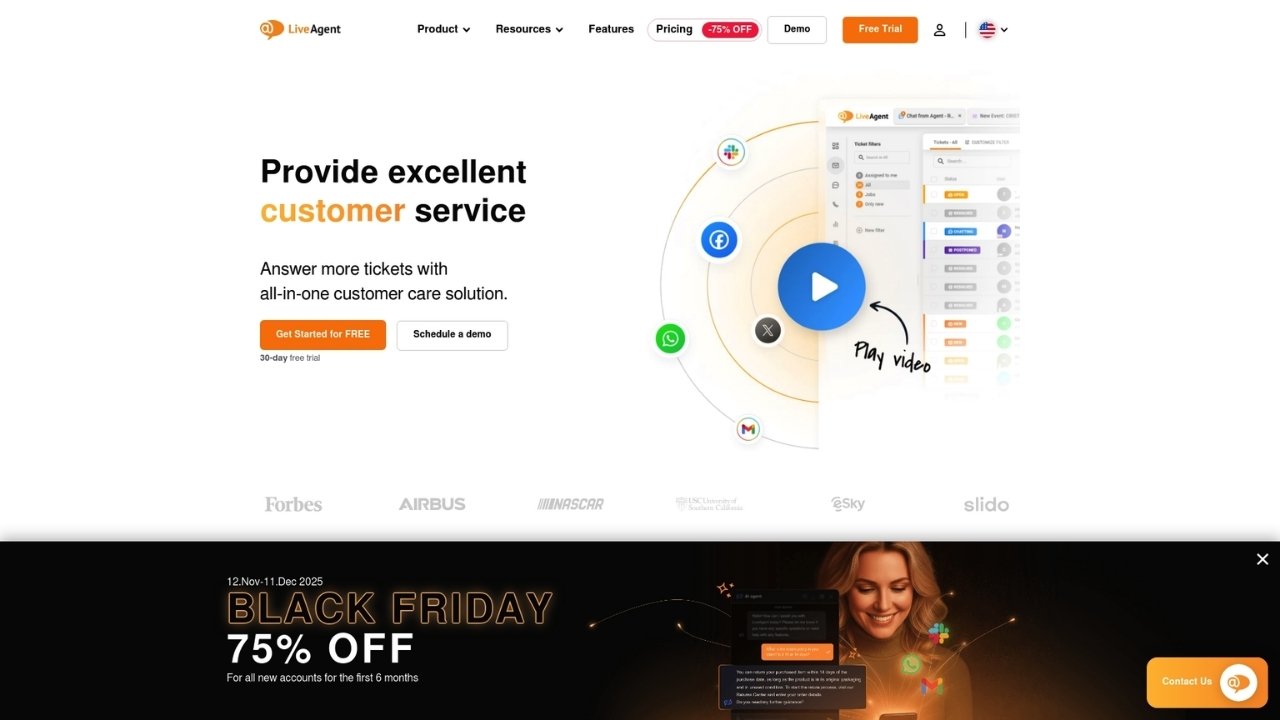
LiveAgent offers the most affordable entry point on this list without sacrificing core functionality. At $15 per agent per month, it's accessible to small businesses that need comprehensive support capabilities.
The platform includes ticketing, live chat, call center with IVR, knowledge base, and social media integration. Unlike competitors that charge extra for social channels, LiveAgent includes Facebook, Instagram, X, WhatsApp, Viber, and Telegram on its Large Business plan ($49/agent/month). On smaller plans, social channels cost $39 per month each.
AI features include an AI Answer Assistant and AI Chatbot, though these are more basic than dedicated AI platforms. Where LiveAgent shines is value for money. You get call center functionality, including IVR and call routing, at a fraction of what competitors charge.
The 30-day free trial requires no credit card, making it easy to test before committing. Plans scale from Small Business ($15/agent/month) through Enterprise ($69/agent/month), with the Medium Business plan at $29/agent/month being the sweet spot for most growing teams.
Best for: Small to midsize businesses that need affordable, all-in-one support software with phone capabilities.
Pros:
- Most affordable option with comprehensive features
- Built-in call center and IVR
- 30-day free trial, no credit card required
- Strong value for money
Cons:
- AI features less advanced than competitors
- Social media channels cost extra on lower tiers
- Interface can feel dated compared to newer tools
5. Tidio

Tidio focuses on e-commerce businesses with a strong emphasis on AI automation. Its Lyro AI Agent claims to solve up to 67% of customer problems automatically, making it a compelling option for online stores looking to reduce support workload.
The platform combines live chat, ticketing, and AI automation in a unified workspace. Lyro learns from your support content and uses natural language processing to understand customer questions, providing human-like responses without pre-defined scripts.
Pricing starts with a genuinely useful free tier: 50 billable conversations and 100 Flows visitors per month. Paid plans start at $24.17 per month for Starter (100 conversations, 50 Lyro conversations) and scale up to Plus at $749 per month for larger teams. The Premium tier offers guaranteed 50% Lyro resolution rates and enterprise features like SSO.
Tidio offers native Shopify actions, allowing the AI to check order status, process returns, and handle common e-commerce queries without human intervention. The platform also includes Copilot, an AI reply assistant for human agents, and Flows for no-code automation.
Best for: E-commerce businesses wanting a balance of AI automation and human support, especially those on Shopify.
Pros:
- Generous free tier
- Strong AI resolution rates
- Native Shopify integration
- Affordable entry point
Cons:
- Costs scale quickly with conversation volume
- Best features require higher-tier plans
- Primarily chat-focused (limited phone support)
6. HubSpot Service Hub
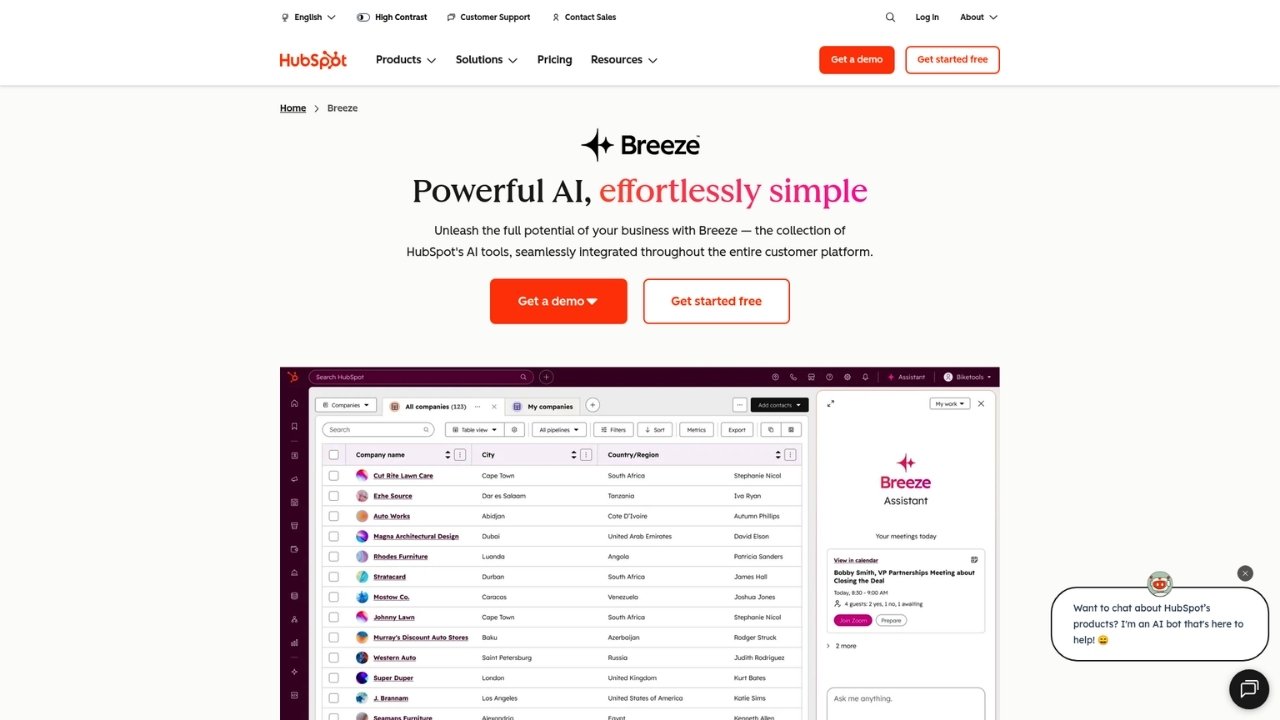
HubSpot Service Hub makes the most sense if you're already invested in the HubSpot ecosystem. As part of the broader CRM platform, it offers seamless integration with marketing and sales data, providing a complete view of the customer journey.
The platform includes ticketing, knowledge base, live chat, and customer feedback tools. AI features help with content generation and insights, though they're not as advanced as dedicated AI support platforms. Where Service Hub excels is connecting support interactions with marketing campaigns and sales pipelines.
Pricing starts free for basic ticketing and live chat, with paid plans beginning at $45 per month for two users on Starter. Professional jumps to $450 per month for five users, adding knowledge base, SLAs, and customer feedback tools. Enterprise at $1,200 per month for ten users includes advanced permissions and playbooks.
The free tier is genuinely usable for small teams, making it a low-risk entry point. However, costs escalate quickly as you add users and move up tiers.
Best for: Companies already using HubSpot CRM that want unified marketing, sales, and support data.
Pros:
- Seamless CRM integration
- Generous free tier
- Unified customer data across teams
- Strong reporting and analytics
Cons:
- Expensive at scale
- AI features less advanced than competitors
- Best value only within HubSpot ecosystem
7. Salesforce Service Cloud
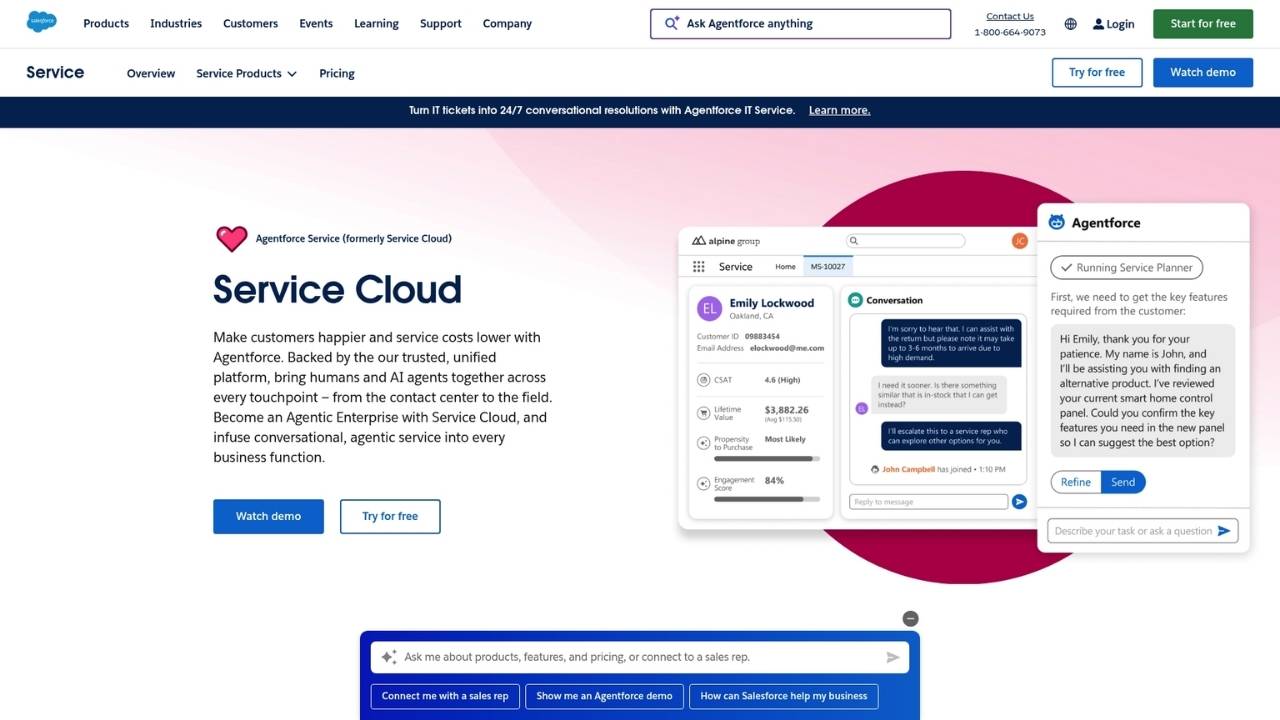
Salesforce Service Cloud is the enterprise heavyweight on this list. Built on the Salesforce platform, it offers deep customization, extensive integrations, and a 360-degree view of customers that few competitors can match.
Einstein AI powers intelligent case classification, routing, and recommendations. The platform handles every channel: email, phone, chat, social, and messaging. Self-service options include knowledge bases and customer community portals. For businesses with field service operations, there's dedicated functionality for managing mobile workforce and dispatch.
Pricing is less transparent than competitors. While Salesforce lists starting prices around $25 per user per month for the limited Essentials plan, most businesses need Professional (~$100/user/month) or higher. Enterprise and Unlimited plans require custom quotes and typically run significantly higher.
The trade-off is capability. If you need complex workflows, extensive customization, or deep integration with Salesforce CRM, Service Cloud delivers. For smaller businesses or those without Salesforce infrastructure, it's likely overkill.
Best for: Large enterprises with complex support needs, especially those already using Salesforce CRM.
Pros:
- Deep customization capabilities
- 360-degree customer view
- Enterprise-grade security and compliance
- Extensive integration ecosystem
Cons:
- Expensive and opaque pricing
- Steep learning curve
- Overkill for smaller businesses
- Requires Salesforce expertise
Choosing the Right Mavenoid Alternative
The best choice depends on your specific situation. Here's a simple framework:
Choose Ringly.io if: Phone support is a priority and you run a Shopify store. The quick setup and 73% resolution rate make it hard to beat for e-commerce phone automation.
Choose Zendesk if: You need a proven, comprehensive platform and have the budget for it. The extensive ecosystem and customization options justify the cost for larger operations.
Choose Fin by Intercom if: You're already using Intercom or want resolution-based pricing. The 45+ language support is also a major advantage for global businesses.
Choose LiveAgent if: Budget is a primary concern but you still need comprehensive features including phone support. It's the best value for money on this list.
Choose Tidio if: You want strong AI automation for chat-based support, especially for e-commerce. The free tier lets you test before committing.
Choose HubSpot Service Hub if: You're already using HubSpot for marketing or sales. The unified data across teams is the main selling point.
Choose Salesforce Service Cloud if: You're a large enterprise with complex needs and existing Salesforce infrastructure. The customization depth is unmatched.
Getting Started with AI-Powered Customer Support
Whatever tool you choose, start with a clear understanding of your support volume and channel mix. Most platforms offer free trials, so take advantage of them to test resolution rates and ease of setup.
Pay attention to integration requirements. If you're on Shopify, tools like Ringly.io and Tidio offer native integrations that significantly reduce setup time. If you're on Salesforce, Service Cloud or Zendesk likely make the most sense.
Finally, consider your growth trajectory. A tool that's perfect today might become expensive or limiting as you scale. Look for platforms that offer clear upgrade paths and transparent pricing as you add volume.
For e-commerce businesses specifically, we recommend trying Ringly.io for free. The phone-focused approach fills a gap that most chat-first alternatives miss, and the 65% resolution guarantee means a month where Seth resolves under 65% of your calls comes back as credit (after 90 days on Pay per call).
Frequently Asked Questions
What should I look for in Mavenoid alternatives before making a decision?
Focus on three things: channel coverage (does it support how your customers actually want to reach you?), pricing transparency (can you predict costs as you scale?), and integration with your existing stack. Also test the AI resolution rate during your trial period. A tool that promises automation but requires constant human intervention won't save you time or money.
Do I need a paid plan to use most Mavenoid alternatives effectively?
It depends on your volume. Tools like Tidio and HubSpot offer genuinely useful free tiers for small operations. However, AI automation features typically require paid plans. If you're handling more than 50-100 support conversations per month, you'll likely need to upgrade to get value from automation features.
How long does it typically take to set up these Mavenoid alternatives?
Setup time varies dramatically. Ringly.io goes live in under 1 hour. Tidio and LiveAgent can be live within an hour. Zendesk and Salesforce typically require days or weeks of configuration for complex workflows. Factor this into your decision if you need immediate support coverage.
Can I use multiple Mavenoid alternatives together?
Yes, many businesses use different tools for different channels. For example, you might use Ringly.io for phone support and Tidio for chat. Just ensure your team has clear processes for handling interactions that span multiple channels, and consider whether the added complexity is worth the specialized capabilities.
What's the most affordable Mavenoid alternative for a small business?
For pure affordability, LiveAgent at $15 per agent per month is hard to beat for a full-featured help desk. If you need AI automation, Tidio's free tier or Starter plan at $24.17 per month offers the best entry point. Both include core features without requiring enterprise budgets.