
IVR in a call center stands for interactive voice response, according to Twilio. It's the automated menu that greets a caller ("press 1 for sales, press 2 for support") and sends the call where it needs to go.
For a Shopify store, the useful question isn't what IVR means. It's whether a menu makes sense when most of your calls are about orders, shipping and returns. The sections below cover how IVR works, what it includes, and when it earns its place.
Hear what AI support calls sound like for your store. Just paste your Shopify URL and get sample calls in under 20 seconds, no email required. Listen to demo calls for my store.
What does IVR mean in a call center?
IVR stands for interactive voice response. The "interactive" part means the caller responds, either by pressing keys on the phone or by speaking, and the system reacts to that input.
In a call center, IVR sits at the front door. It answers the call before any person does, collects a bit of information, and decides what happens next.
That's the whole concept. Everything else in the IVR world, from "contact center IVR" to "IVR number" to "call center IVR systems", is a variation on the same idea: a machine takes the first part of the call.
How an IVR system works, from greeting to agent handoff
An IVR runs as a short sequence. The caller dials, hears a recorded greeting, and gets a menu of options. They pick one, and the system acts on the choice.
Per Twilio, IVR software supports this with automated menus that direct calls to the appropriate departments, live agents, or databases based on the caller's selections. So a call can end at a department, a live agent or a database.
Here's the usual flow:
- Menu choice: the caller presses a key or says a short phrase to pick an option.
- Branching: each choice leads to a deeper menu, a self-service task, or a handoff.
- Handoff: if the caller needs a person, the system routes the call to the right department or agent.
What an IVR system is made of
An IVR isn't one box. It's a few pieces working together.
Zendesk says an IVR system typically includes an application server, which hosts the IVR software, and databases that store necessary interaction information. So the parts it names are:
- Application server: hosts the IVR software.
- Databases: store the information the system needs during an interaction.
A bad menu is hard to notice from the inside, because you already know which option you'd press.
What callers can do in an IVR: routing, payments, callbacks
Routing is the headline use, but it isn't the only one. Zendesk notes that an IVR call center can also give customers access to automated transactions like making payments, checking account balances, or scheduling a call back from a live agent.
That splits IVR tasks into two groups:
- Routing: send the caller to a department, an agent or a database.
- Self-service: let the caller finish a task, such as a payment, a balance check or a callback request, without talking to a person.
For a store, the question is whether callers asking "where is my order?" would have to find the right option first.
IVR vs live agents vs AI phone support
These three options solve the same problem differently. The table compares how each one handles a call. For a closer look at splitting calls between machines and people, see call automation vs human agents and AI voice support vs human.
| Menu-based IVR | Live agent | AI phone support | |
|---|---|---|---|
| How the caller starts | Listens to a menu and picks an option | Talks to a person right away | Says why they're calling |
| What it does with the call | Routes to departments, agents or databases | Listens, decides and acts | Understands the question and answers it |
| Main weakness | Callers must sit through options that may not fit | Needs a person available | Needs setup and training on your store's details |
For more on how automation and people split the work in a store, read ecommerce human vs AI call center. If you want the mechanics of the AI side, how AI works in a call center explains it in plain English.
Why callers get frustrated with IVR menus
Menus get criticized by callers. Aircall reports that around 75% of callers think IVRs force them to listen to irrelevant options.
The same source says 49% of customers say long waiting times are the most frustrating part of calling customer service.
Think about what a caller does in a menu:
- Listens to every option: they can't tell whether theirs comes at the end.
- Guesses a category: "returns" or "orders"? If they guess wrong, they start over.
Here's the part store owners should weigh. Aircall says 63% would start by searching for solutions within a business's digital channels before deciding to call its customer support hotline.
That's stated intent, so it's worth checking your own call notes to see whether your callers already looked at your site.
Do people call? The same page says several studies report that 48% of customers prefer using the phone to resolve their issues. So what matters is how your phone line handles the call when someone does dial.
Does a Shopify store need an IVR, and what to use instead
An IVR makes the most sense when a business has several departments and a lot of routing to do. If your calls are mostly order lookups handled by one team, there's little to route.
There are exceptions. If your brand runs separate wholesale, retail and technical lines with different staff, a menu can route sensibly. And IVR can work well for a retailer. Zendesk describes fabric and quilting retailer Missouri Star Quilt Company, which implemented Zendesk IVR and skills-based routing to handle its growing call volume, then achieved a 95 percent call answer rate and a 97 percent customer satisfaction score.
If you don't have a routing problem yet, you may be buying a solution to something you don't have.
What to use instead depends on your volume:
- Very few calls: a menu has little to route, so check whether the calls justify any phone setup at all.
- Steady order and return calls: AI phone support that answers the question directly, so the caller skips the menu.
- Mixed calls with some that need judgment: automation first, with a clean handoff to a person when the call needs one.
The software side is covered in the best AI call center software platforms, if you want to compare options.
How to decide: a checklist for store owners and support leads
Run through these questions before you pay for any phone setup.
- What do callers ask about? Read a week of call notes. If most are order status, shipping or returns, a menu has little to sort.
- How many departments answer the phone? One team means nothing to route between. Several teams means a menu may help.
- Do callers press 0? If they skip the menu to reach a person, the menu isn't doing its job.
- Could the answer come from your order data? If a system can look up the order and reply, a menu is an extra step.
- Which calls need a person? Refunds with exceptions, upset customers and unusual requests should still reach someone. Check how handoff works in any tool you consider.
- Can you test it before real callers hear it? Call your own line and press every option. If you get lost, a caller will too.
- What happens after hours? Decide whether callers get a ticket, a voicemail or an answer.
If your answers point to one team and mostly lookup-type calls, skip the menu and look at direct answers instead.
How Ringly.io handles IVR-style calls on the phone
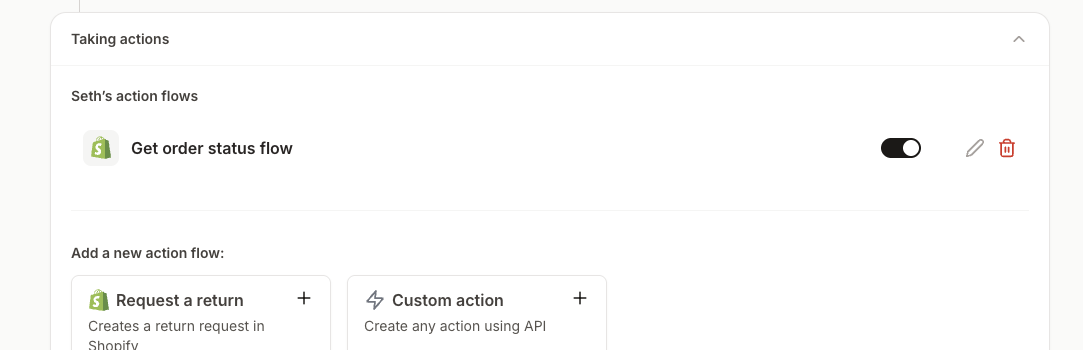
Ringly.io is AI phone support for Shopify brands. Seth answers your calls using the knowledge and Shopify data you connect.
Video from the Ringly.io YouTube channel.
Seth matches the caller's phone number to a Shopify customer and can look up orders. Returns are requested in Shopify as drafts your team approves, and cancellations of unfulfilled orders depend on whether you set Cancel and refund mode or Request only mode. For "where is my order?" calls, it reports carrier, status and estimated delivery, with tracking through TrackingMore. See how order status works in Shopify.
AI Coach is a chat assistant inside the Seth dashboard. It reads your settings and real calls, says what to fix first, and makes most of those changes for you. Every change arrives as a card, and you choose Apply or Dismiss, so nothing changes on its own. Coach is in beta and can be wrong, so read each card. More in how to use Coach.
With Gorgias, every Seth call lands as a ticket with a summary, the full transcript and tags, and escalations arrive there as tickets. Zendesk tickets for calls that need a person carry a summary, the full transcript and a link to the call. You can import a Twilio number so Seth answers on it, and custom skills let Seth call any endpoint your store uses. Ringly.io charges per phone conversation; see pricing.
Frequently asked questions
What does IVR stand for in a call center?
IVR stands for interactive voice response. It's the automated system that answers a call, plays a menu and routes the caller based on what they press or say.
What is the difference between an IVR and a live agent?
An IVR is software that greets callers and routes them to departments, agents or databases. A live agent is a person who listens and handles the issue.
Is an IVR cheaper than handling every call with a live agent?
Cost per call depends on how many calls an IVR actually resolves without a person, so check the price of any setup against your own call volume and how many calls it would resolve before deciding.
Do customers still call support instead of using chat or self-service?
Many do. Aircall says several studies report that 48% of customers prefer using the phone to resolve their issues. It also says 63% would start by searching a business's digital channels before deciding to call its support hotline.
Does a small Shopify store need an IVR call center setup?
It depends on your routing needs. If one small team answers your calls, there may be little to route, and tools like Ringly.io connect to Shopify to answer order questions on the phone.
What does an IVR system include?
Per Zendesk, an IVR system typically includes an application server, which hosts the IVR software, and databases that store necessary interaction information.