.jpg)
Finding the right AI customer support platform is harder than it looks.
Forethought has built a reputation with its Solve, Triage, and Assist agents, but many teams hit a wall when they try to implement it.
The pricing is opaque, implementations stretch to 90 days, and you need 20,000 historical tickets just to train the system.
The good news? The AI support landscape has evolved rapidly.
Today's alternatives offer faster deployment, transparent pricing, and deeper integrations.
Some can even execute complete workflows like processing refunds or modifying subscriptions, not just answer questions.
Editor’s note: Want to hear some sample AI support calls made for your Shopify store?
- Just paste your store URL
- Get sample calls in under 20 seconds (no email required)
- Listen to demo calls for my store
What is Forethought and why look for alternatives?
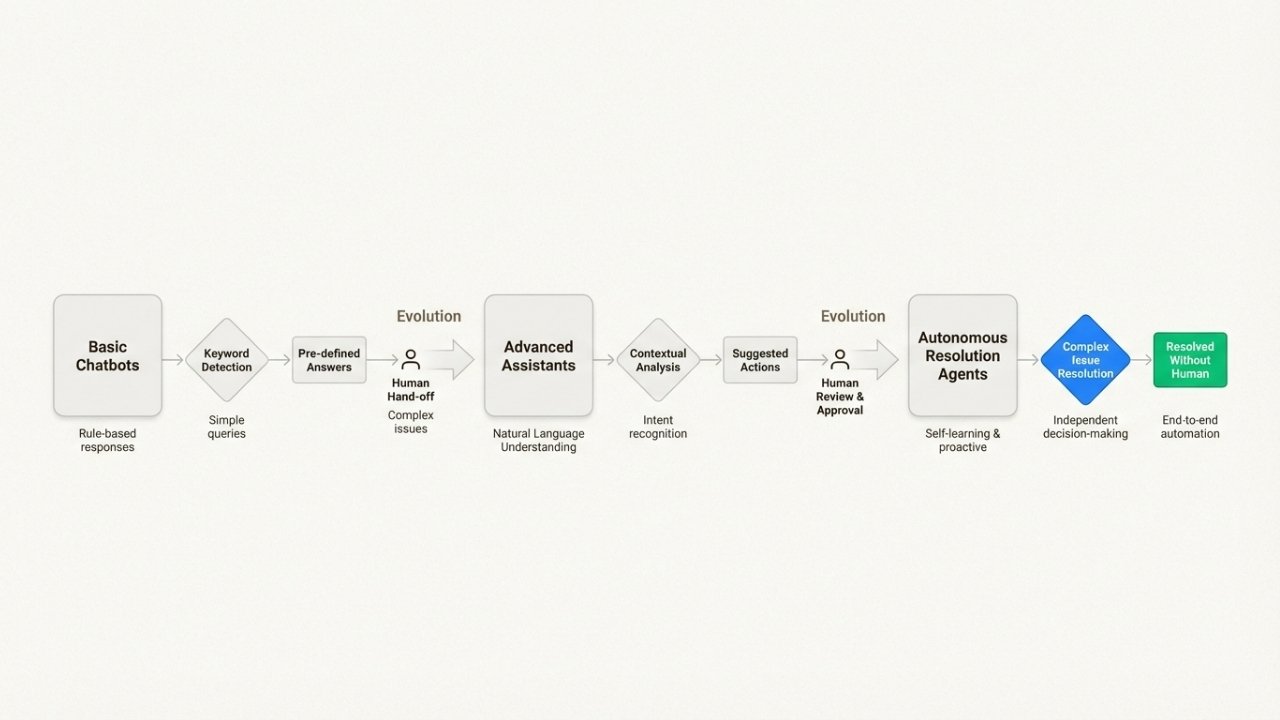
Forethought is an AI customer support platform built around three core agents.
Solve handles autonomous resolution, Triage manages ticket routing, and Assist acts as a copilot for human agents.
The platform promises to deflect tickets and speed up responses using machine learning trained on your historical data.
The platform works best for teams with substantial ticket volumes and the resources to invest in a multi-month implementation.
Forethought claims 56% higher deflection rates than competitors and positions itself as the most advanced AI system for customer experience.
But here's where things get complicated. Forethought requires at least 20,000 historical tickets to train its models effectively.
Implementation typically takes 30 to 90 days and involves professional services.
Pricing is custom-negotiated, with add-ons like AI Copilot, advanced security, and Slack integration costing extra.
Teams start looking for alternatives when they realize they need something faster, more transparent, or better suited to their specific use case.
Ecommerce brands want platforms that can process returns automatically. SaaS companies need tools that integrate with their existing stack without migration.
Smaller teams want clear pricing they can budget for.
For teams handling phone support specifically, Ringly.io offers an interesting complementary approach with AI phone agents that resolve 70%+ of calls without human intervention.
How we evaluated the best Forethought alternatives
We looked at platforms through the lens of what actually matters when you're switching from Forethought. Speed to value topped the list.
Teams want to see results in weeks, not quarters.
Pricing transparency came next. Custom quotes and hidden add-ons frustrate budget planning. We favored platforms with public pricing or at least clear models.
Integration depth mattered too. The best alternatives enhance your existing stack rather than forcing a complete overhaul.
We also looked for autonomous resolution capabilities, not just deflection.
Modern platforms should execute workflows like refunds and subscription changes, not just answer FAQs.
Finally, we considered use case fit. Ecommerce brands have different needs than B2B SaaS companies or enterprise teams.
The 7 best Forethought alternatives compared
Here's a quick reference before we dive into details:
| Platform | Best For | Pricing Model | Key Differentiator |
|---|---|---|---|
| Zendesk AI | Existing Zendesk users | Per-agent + add-ons | Native integration, proven scale |
| KODIF | Ecommerce/DTC brands | Custom quotes | Autonomous resolution for orders |
| Intercom Fin AI | SaaS companies | Per-seat + per-resolution | Conversational messaging |
| Ada | High-volume automation | Custom quotes | 50+ language support |
| eesel | Teams keeping current helpdesk | Per-interaction | Self-serve setup, simulation mode |
| Gorgias | Shopify merchants | Per-ticket | Native Shopify integration |
| Crescendo.ai | Managed service needs | Platform fee + per-resolution | AI + human team included |
1. Zendesk AI

Zendesk AI is the natural upgrade path for teams already invested in the Zendesk ecosystem.
Rather than bolting on a third-party AI layer, you get native intelligence built directly into the platform your team already knows.
The AI features include Answer Bot for automated responses, intent detection for smarter routing, sentiment analysis that predicts CSAT scores, and an agent workspace that surfaces AI-powered suggestions during live interactions.
It also brings the maturity of Zendesk's ticketing system and marketplace with over 1,000 integrations.
The main advantage is reliability. Zendesk handles millions of tickets daily across thousands of organizations.
If you're already using Zendesk Suite, adding AI is a configuration change, not a migration project.
The downside is cost. AI features come as premium add-ons.
The Copilot tool alone adds $50 per agent monthly on top of your existing Zendesk subscription. You're also locked into the Zendesk ecosystem, which gets expensive if you ever want to switch.
| Plan | Base Price | With AI Copilot | Key Features |
|---|---|---|---|
| Suite Team | $55/agent/mo | N/A (AI not available) | Basic ticketing, knowledge base |
| Suite Professional | $115/agent/mo | $165/agent/mo | Answer Bot, intent detection, Copilot |
| Suite Enterprise | Custom | Custom | Advanced AI, custom models |
Zendesk AI makes sense if you're already committed to Zendesk and want enterprise-grade reliability without disrupting your team's workflow.
It's less suited for organizations spread across multiple platforms or those wanting to avoid vendor lock-in.
2. KODIF
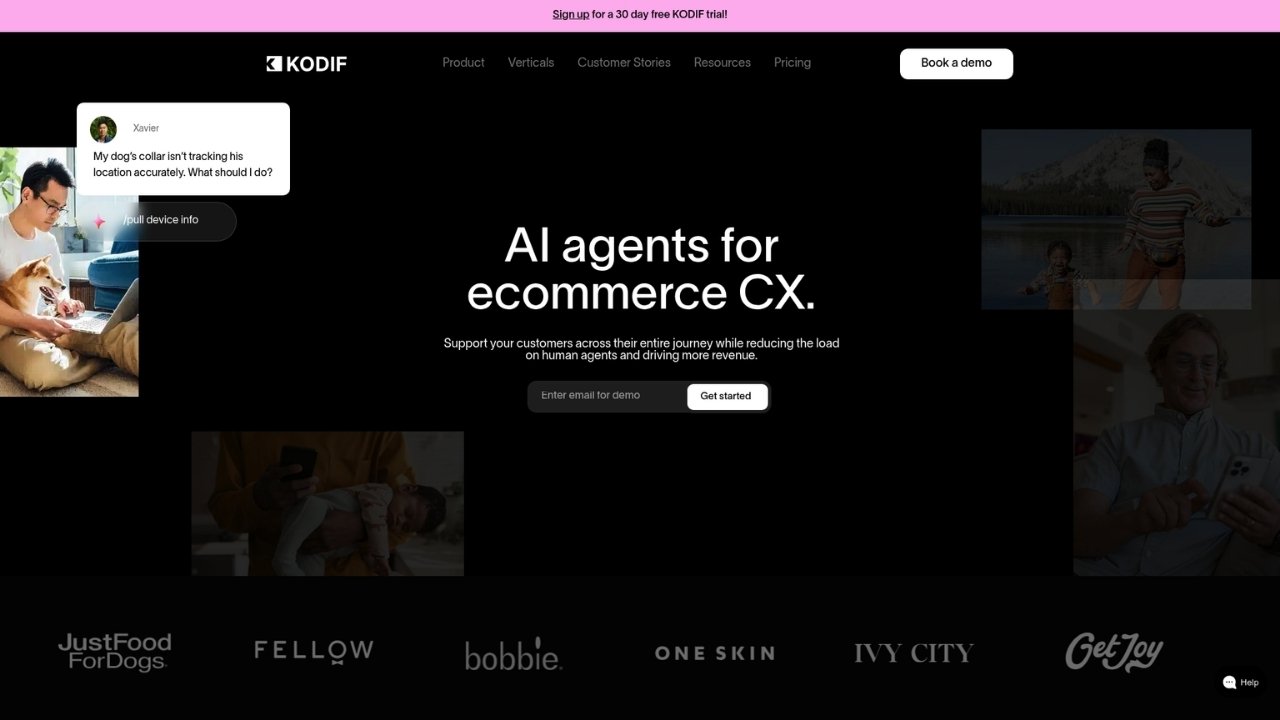
KODIF takes a different approach from generalist AI platforms.
It's built exclusively for ecommerce, with deep integrations that let it actually do things rather than just answer questions.
The platform connects to Shopify, Recharge, Loop Returns, and over 100 other ecommerce tools.
This matters because KODIF can process refunds, generate return labels, modify subscriptions, and update orders without human intervention. The company reports 76-92% autonomous resolution rates across ticket categories.
KODIF deploys multiple specialized AI agents working together.
The AI Agent handles autonomous resolution, the Copilot assists human agents with suggestions and drafts, the Analyst identifies trends and knowledge gaps, and the Manager runs continuous optimization tests.
The trade-off is focus. KODIF is purpose-built for ecommerce.
If you're in B2B SaaS, fintech, or another industry, the platform won't fit as well.
Pricing requires a demo to get a custom quote, though they do offer a 30-day free trial.
Implementation typically takes 1.5 to 4 weeks, significantly faster than Forethought's timeline.
KODIF wins against Forethought for ecommerce brands because it resolves issues rather than deflecting them.
When a customer asks for a refund, KODIF processes it. Forethought typically escalates to a human agent.
3. Intercom Fin AI
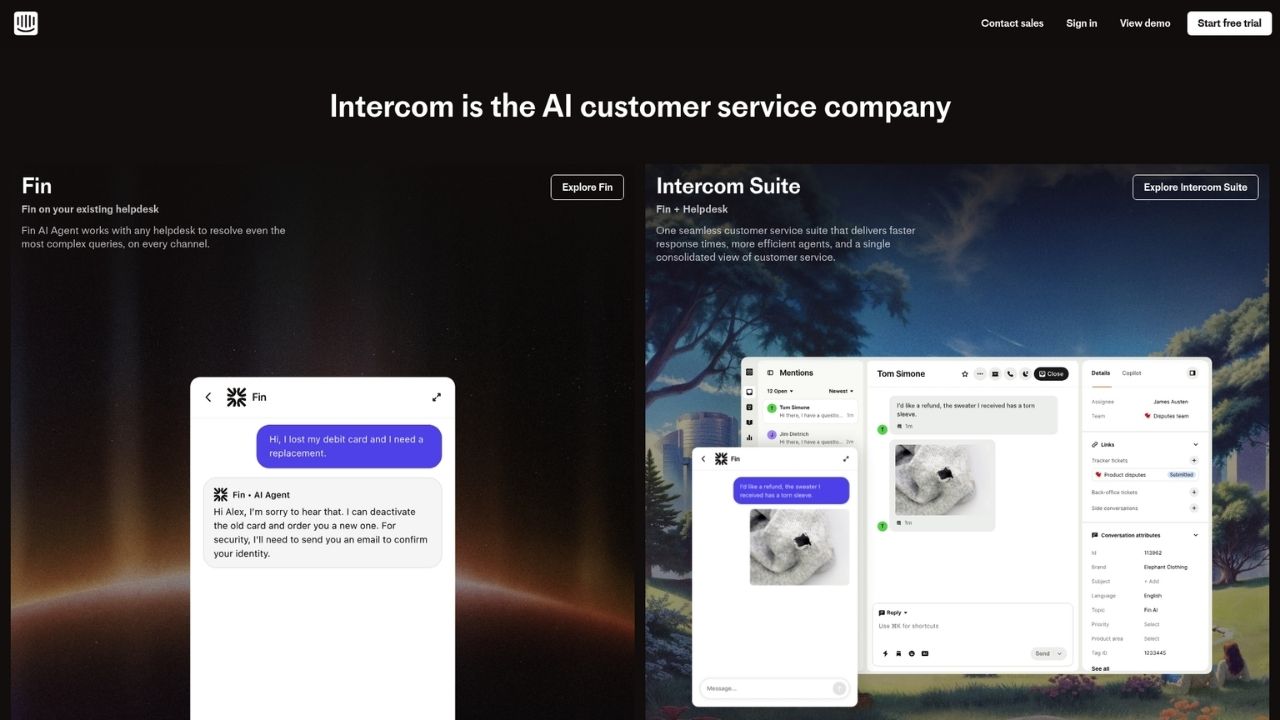
Intercom Fin AI targets SaaS companies that prioritize real-time messaging and conversational support over traditional ticketing.
The platform combines live chat, automated messaging, and AI assistance in one interface.
Fin AI Bot handles automated conversations using your knowledge base and connected CRM data.
The system learns from past interactions and can hand off to human agents with full context when needed.
Product Tours let you send proactive in-app messages based on user behavior.
The strength is the messaging experience. Intercom feels fast and personal, especially when embedded directly in your product.
For SaaS teams focused on customer success and proactive engagement, this approach works better than ticket-based systems.
The weakness is cost structure. You pay per seat plus $0.99 per AI resolution. High-volume teams can see unpredictable bills.
The platform also pulls you deeper into the Intercom ecosystem, making it harder to maintain a best-of-breed stack.
| Plan | Price | Includes | Best For |
|---|---|---|---|
| Essential | $29/seat/mo | Basic chat, email | Small teams starting out |
| Advanced | $85/seat/mo | Fin AI Bot, automation | Growing SaaS companies |
| Expert | Custom | Advanced workflows, SSO | Enterprise SaaS |
Intercom Fin beats Forethought for SaaS companies wanting conversational support and proactive customer engagement.
It's less ideal for ecommerce or teams running primarily email-based support.
4. Ada

Ada focuses specifically on conversational AI with strong natural language processing.
The platform is built for teams that want to automate a high percentage of interactions without sacrificing conversation quality.
The standout feature is Playbooks, a no-code flow builder that lets non-technical teams design complex chat experiences.
You can build personalized flows, support 50+ languages, and customize the bot's voice to match your brand.
Ada's NLP engine understands context better than most competitors, which means higher automation rates with fewer frustrated customers hitting dead ends.
The platform is designed specifically for chatbot use cases rather than trying to handle full ticketing workflows.
The catch is ongoing maintenance. Like any sophisticated AI system, Ada requires continuous testing, tuning, and refinement to perform at its best.
You'll need someone on your team committed to optimizing the bot over time.
Pricing is custom and requires a demo. Ada doesn't publish rates, which makes budgeting difficult for smaller teams.
Ada wins against Forethought for enterprises facing huge volumes of repetitive questions across multiple languages.
It's less suited for teams wanting a full helpdesk replacement or those without resources to maintain a complex chatbot.
5. eesel
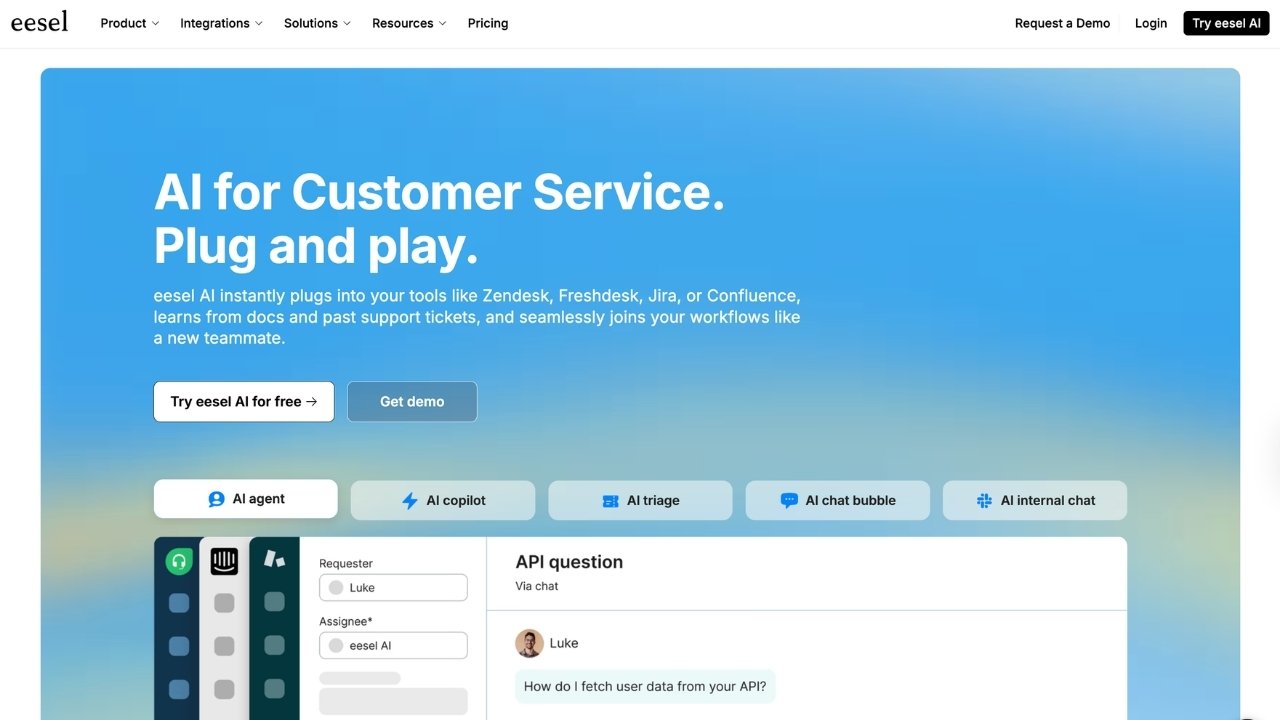
Eesel takes a fundamentally different approach. Instead of replacing your helpdesk, it adds an AI layer on top of whatever you're already using.
This matters if you love your current setup but want AI capabilities.
The platform offers two main components. AI Agent handles frontline support and ticket deflection.
AI Copilot drafts replies and suggests actions for human agents. Both integrate with Zendesk, Freshdesk, Intercom, and other major helpdesks.
The killer feature is simulation mode. Before going live, you can test the AI against your historical tickets to see exactly what your deflection rate and ROI would have been. This removes the risk of buying before knowing if it works with your data.
Setup is genuinely self-serve. Connect your helpdesk in minutes, not weeks.
The pricing is transparent and interaction-based, so you know what you're paying for.
| Plan | Price | Interactions | Best For |
|---|---|---|---|
| Team | $299/mo | 1,000 | Small teams testing AI |
| Business | $799/mo | 3,000 | Growing support teams |
| Enterprise | Custom | Custom | Large organizations |
The limitation is scope. Eesel doesn't try to be an all-in-one platform.
It's a focused AI tool for teams that want to enhance rather than replace their current stack.
Eesel beats Forethought for teams that want fast deployment, clear pricing, and the ability to test before committing.
It's ideal if you're happy with your helpdesk and just want to add intelligence.
6. Gorgias

Gorgias positions itself as the all-in-one solution for Shopify merchants.
It combines helpdesk functionality with AI automation, targeting ecommerce brands that want everything in one place.
The platform's Shopify integration goes deep. You can edit orders, process refunds, and check inventory directly from the helpdesk interface.
The AI Agent automates responses and actions with reported 60-70% automation rates for participating merchants.
Revenue attribution is a nice touch. Gorgias tracks support-driven sales, so you can see how your team impacts the bottom line, not just ticket metrics.
The downside is migration. Gorgias requires replacing your existing helpdesk entirely.
Moving historical data and retraining your team takes time. The AI Agent also works exclusively with Shopify, so multi-platform merchants may find it limiting.
| Plan | Price | Ticket Volume | Key Features |
|---|---|---|---|
| Starter | $10/mo | 50 tickets | Basic helpdesk, email/chat |
| Pro | $750/mo | 5,000 tickets | AI Agent, automation, integrations |
| Enterprise | Custom | Unlimited | Custom setup, dedicated support |
Gorgias beats Forethought for Shopify merchants wanting unified ecommerce support.
It's less ideal for teams on other platforms or those wanting to keep their existing helpdesk.
For phone support specifically, consider complementing your stack with Ringly.io, which handles AI phone agents that integrate with your existing systems.
7. Crescendo.ai

Crescendo.ai offers something different from pure software platforms.
It's a managed service that pairs AI technology with a global team of human CX experts.
The model is human-in-the-loop. AI handles common issues while humans review, refine, and manage complex cases.
Crescendo claims 99.8% resolution accuracy because there's always a person checking the AI's work.
What makes this unique is what's included. The price covers knowledge base management, quality assurance, 24/7 staffing, and compliance support (HIPAA, SOC 2). You're essentially outsourcing your frontline support operation, not just buying software.
The trade-off is control. If you want to own every aspect of your AI configuration and workflows, this managed approach may feel limiting.
You're also committing to an ongoing service relationship, not just a software subscription.
| Plan | Monthly Fee | Per Resolution | Includes |
|---|---|---|---|
| Managed AI | $2,900 | $1.25 | AI + QA, knowledge management |
| Managed AI + Humans | $2,900 | $2.25 | Everything + human team |
Crescendo beats Forethought for teams that want to hand off support operations entirely rather than manage AI in-house.
It's ideal if you lack internal resources or want predictable costs with comprehensive coverage.
Feature comparison: What each platform offers
Let's look at how these platforms stack up on the dimensions that matter most:
| Platform | Implementation | Autonomous Actions | Best For | Pricing Clarity |
|---|---|---|---|---|
| Zendesk AI | Days (existing users) | Limited | Enterprise scale | ❌ Add-ons add up |
| KODIF | 1.5-4 weeks | Yes (refunds, returns) | Ecommerce | ❌ Custom quotes |
| Intercom Fin | Weeks | Limited | SaaS messaging | ⚠️ Per-resolution fees |
| Ada | Weeks | No (chatbot only) | Multilingual | ❌ Custom quotes |
| eesel | Minutes | Yes (with integrations) | Any helpdesk | ✅ Transparent |
| Gorgias | 2-4 weeks | Yes (Shopify actions) | Shopify stores | ✅ Clear tiers |
| Crescendo | Weeks | Yes (with humans) | Managed service | ⚠️ Platform + usage |
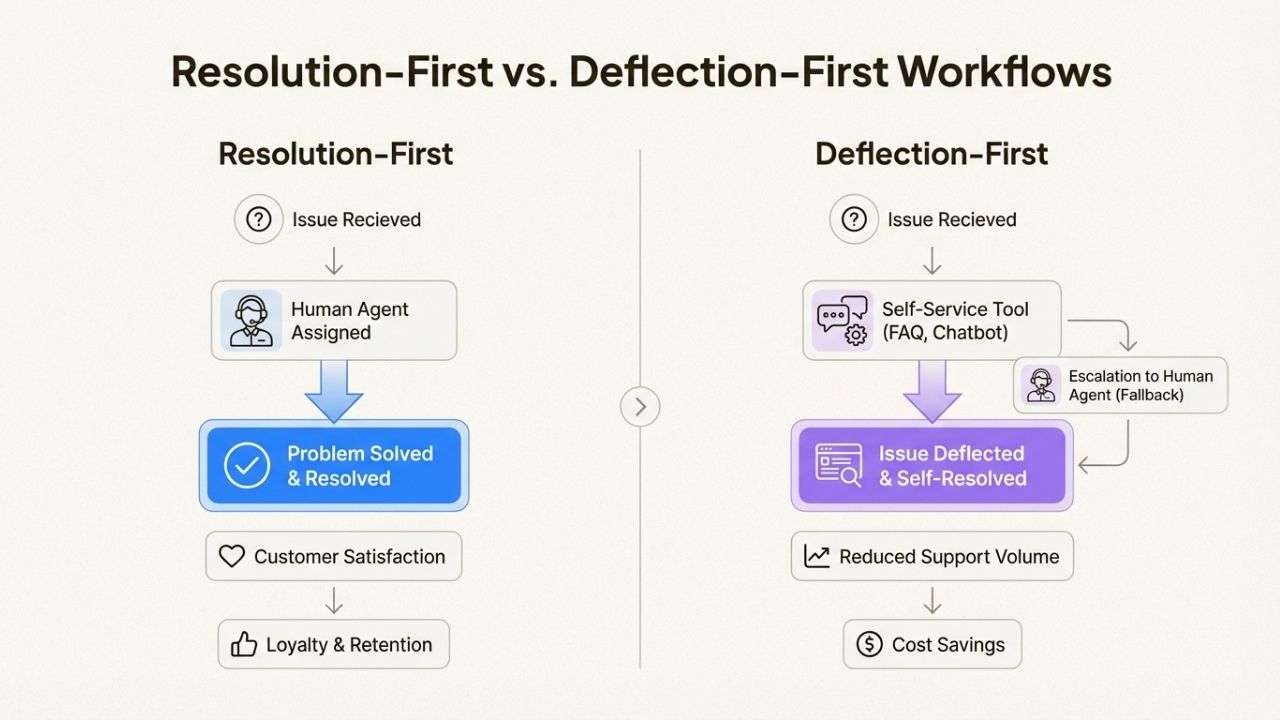
The key distinction is resolution-first versus deflection-first. Resolution-first platforms execute complete workflows.
Deflection-first platforms answer questions then escalate to humans for actions.
How to choose the right Forethought alternative
Start with your current situation. Are you happy with your helpdesk? If yes, look at eesel or Crescendo, which enhance rather than replace.
If no, consider Zendesk AI, Gorgias, or KODIF as complete replacements.
Next, consider your industry. Ecommerce brands should prioritize KODIF or Gorgias for their deep commerce integrations.
SaaS companies often prefer Intercom Fin for its conversational approach. Enterprise teams typically land on Zendesk AI or Crescendo for scale and compliance.
Timeline matters too. Need results this quarter? Eesel and Zendesk AI (for existing users) deploy fastest.
Have time for a proper implementation? KODIF and Gorgias deliver more specialized capabilities.
Finally, think about your team's capabilities. Do you have technical resources to manage and optimize AI?
Platforms like Ada and KODIF reward ongoing attention. Want something that just works? Crescendo's managed model or eesel's simplicity might fit better.
For teams handling significant phone support volume, Ringly.io offers AI phone agents that resolve 70%+ of calls autonomously, complementing whatever digital support platform you choose.
Start automating your customer support today
The best Forethought alternative depends on your specific situation. There's no universal winner.
Zendesk AI makes sense for enterprise teams already in that ecosystem.
KODIF and Gorgias lead for ecommerce. Intercom Fin fits SaaS companies prioritizing conversation.
Eesel works for teams wanting to enhance existing tools. Ada excels at high-volume multilingual automation. Crescendo serves teams wanting a fully managed solution.
What they all share is faster deployment and more transparent pricing than Forethought.
The AI support market has matured. You no longer need months of professional services and massive ticket volumes to get started.
If phone support is part of your mix, consider how Ringly.io can handle those calls with AI while your chosen platform manages digital channels.
The combination covers your full support stack without the complexity of all-in-one solutions.
Frequently Asked Questions
What are the best Forethought alternatives for ecommerce brands?
KODIF and Gorgias lead for ecommerce. KODIF offers deeper autonomous resolution across multiple platforms (Shopify, Recharge, Loop Returns), while Gorgias provides a unified helpdesk specifically built for Shopify merchants.
Which Forethought alternative has the fastest implementation time?
Eesel deploys in minutes with self-serve setup. Zendesk AI takes days for existing Zendesk users. Most other platforms require 2-4 weeks for proper implementation and training.
Are there any Forethought alternatives with transparent pricing?
Eesel and Gorgias publish clear pricing on their websites. Most enterprise-focused platforms like Zendesk AI, KODIF, and Ada require custom quotes, though they typically provide pricing during demos.
What Forethought alternatives can process refunds and returns automatically?
KODIF, Gorgias, and Crescendo can execute actions like refunds and returns autonomously. Zendesk AI and Intercom Fin typically require integrations or human handoff for these workflows.
Which Forethought alternative works best with existing helpdesks?
Eesel is specifically designed as an AI layer on top of existing helpdesks like Zendesk, Freshdesk, and Intercom. It requires no migration and deploys within minutes.
Can any Forethought alternatives handle phone support?
While most platforms focus on digital channels, Ringly.io specializes in AI phone support that resolves 70%+ of calls without human intervention. It integrates with existing helpdesks to complement your digital support platform.
What is the most cost-effective Forethought alternative for small teams?
For small teams, Gorgias Starter at $10/month or eesel Team at $299/month offer the most predictable costs. Avoid platforms with per-resolution fees if you have high ticket volumes.
Also read: