


Bad data and manual support systems are costing brands up to $12.9 million a year in missed revenue.
You are working harder than ever to scale, but your team is spending most of their time on the same stuff.
It feels like every time you grow, you have to throw more expensive human labor at a problem that software should have solved years ago.
And when you scale, it only gets worse.
If you don't centralize your support now, your brand will fall behind the "Efficiency Reset" of 2026.
Instant, context-aware service will be the only way to protect your margins.
This guide will show the best tools to help you reclaim your time and scale without hiring more.
First, we’ll look at the Shopify integrations.
Then, we’ll go over how AI-first phone and chat agents can handle up to 73% of support.
Editor’s note: Want to hear some sample AI support calls made for your Shopify store?
- Just paste your store URL
- Get sample calls in under 20 seconds (no email required)
- Listen to demo AI calls for my store
What are the top ecommerce support solutions 2026?
An ecommerce support solution is basically software designed to help online stores handle all their customer conversations from a single place. You can think of it as a central hub for your entire support team.
These aren't just your average help desks, though. The best ones are built specifically for ecommerce, so they connect directly with platforms like Shopify. This integration is incredibly useful because it pulls live order data, shipping info, and customer history right into the support view.
So, when a customer gets in touch, your agent has all the context they need without having to ask for an order number.
The main idea is to have one unified inbox for everything. Most of these tools are focused on text-based channels like email, live chat, and social media.
They're great for that, but it's something to remember as you think about your overall support setup.

Our criteria for the top ecommerce support solutions 2026
When putting this list together, we skipped the flashy, nice-to-have features and focused on what really matters for a growing ecommerce business. Here’s what we looked for:
- Deep ecommerce integrations: Does the tool play well with platforms like Shopify, WooCommerce, or Amazon? We wanted to see solutions that display order details right beside the customer’s message.
- Automation and AI capabilities: Can the platform use AI to answer common questions like "Where is my order?" automatically? We looked for automation that actually helps agents focus on more difficult problems.
- User-friendliness: How simple is it for a team to set up and start using? A good tool should make your life easier, not more complicated.
- Scalability: Will the platform grow with your business? We checked if these solutions could support a company from its early days to becoming a large-scale operation.
- Real user feedback: What are people who use it every day saying? We dug into reviews and testimonials to see how these tools hold up in real-world situations.
A quick comparison of the top ecommerce support solutions 2026
Before we dive deep, here’s a high-level look at how the top platforms stack up against each other.
| Platform | Best For | Key Strength | Primary Channels | Notable AI Capability |
|---|---|---|---|---|
| eDesk | Multichannel marketplace sellers | Deep integrations with Amazon & eBay | Email, Marketplaces, Chat, Social | Smart Inbox groups similar tickets |
| Gorgias | Shopify-based DTC brands | Native Shopify order management | Email, Chat, Social, SMS, Voice | AI Agent resolves up to 60% of inquiries |
| Zendesk | Large enterprises with complex needs | High-level customization & scalability | Email, Chat, Phone, Social | AI agents can automate 80%+ of interactions |
| Freshdesk | Businesses needing a free or affordable plan | User-friendly interface & free program | Email, Chat, Phone, Social | Freddy AI Agent resolves up to 80% of queries |
| YourGPT.ai | Businesses wanting AI-first automation | No-code AI agent builder | Web, WhatsApp, Messenger, Telegram | AI agents trained on custom business data |
| Intercom | Brands focused on proactive engagement | Real-time chat & automated messaging | Live Chat, Email, In-app Messaging | Fin AI Agent for complex queries |
A detailed look at the top ecommerce support solutions 2026
Now, let's get into the specifics of each platform. We’ve broken down what makes each one unique, who it's best for, and what you can expect to pay.
1. Ringly.io

What it is: Ringly.io offers a specialized AI phone agent called the AI, built specifically to handle customer support calls for Shopify stores. It works around the clock, answering your phone, solving common issues like order lookups and returns, and letting your team focus on more complex problems.
Key Features:
- Automated Call Handling: the AI can look up order details, process returns and exchanges, and answer questions from your knowledge base without any human help.
- Deep Shopify Integration: It connects directly to your store's data. If a customer calls from a number you have on file, the AI already knows their latest order details before they even say hello.
- Intelligent Escalation: If a caller gets frustrated or asks something the AI doesn't know, it smoothly transfers the call to a human agent based on rules you set. This keeps the experience positive and protects your brand.
- Multilingual Support: It can chat with customers in over 40 different languages, which is a big help for stores with an international audience.
Pros: Its main benefit is its focused approach. With a 73% average resolution rate, it can significantly cut down call volume. This saves time and money, bringing the cost per call down to about $0.38 compared to the industry average of $2.35 for a human. The setup takes about 3 minutes to go live without any code. It's also designed to be brand-safe, so it won't "hallucinate" or make things up.
Cons: Ringly.io is a specialist. It’s built for voice support, but it doesn't do email or text chat. You'll need other tools for those channels.
Pricing:
- Grow Plan: Starts at $349/month for 1,000 call minutes. It has a unique performance guarantee: you pay nothing until there's a performance guarantee.
- Enterprise: custom pricing for 5,000+ minutes and comes with custom integrations and a private Slack channel for support.
2. Gorgias
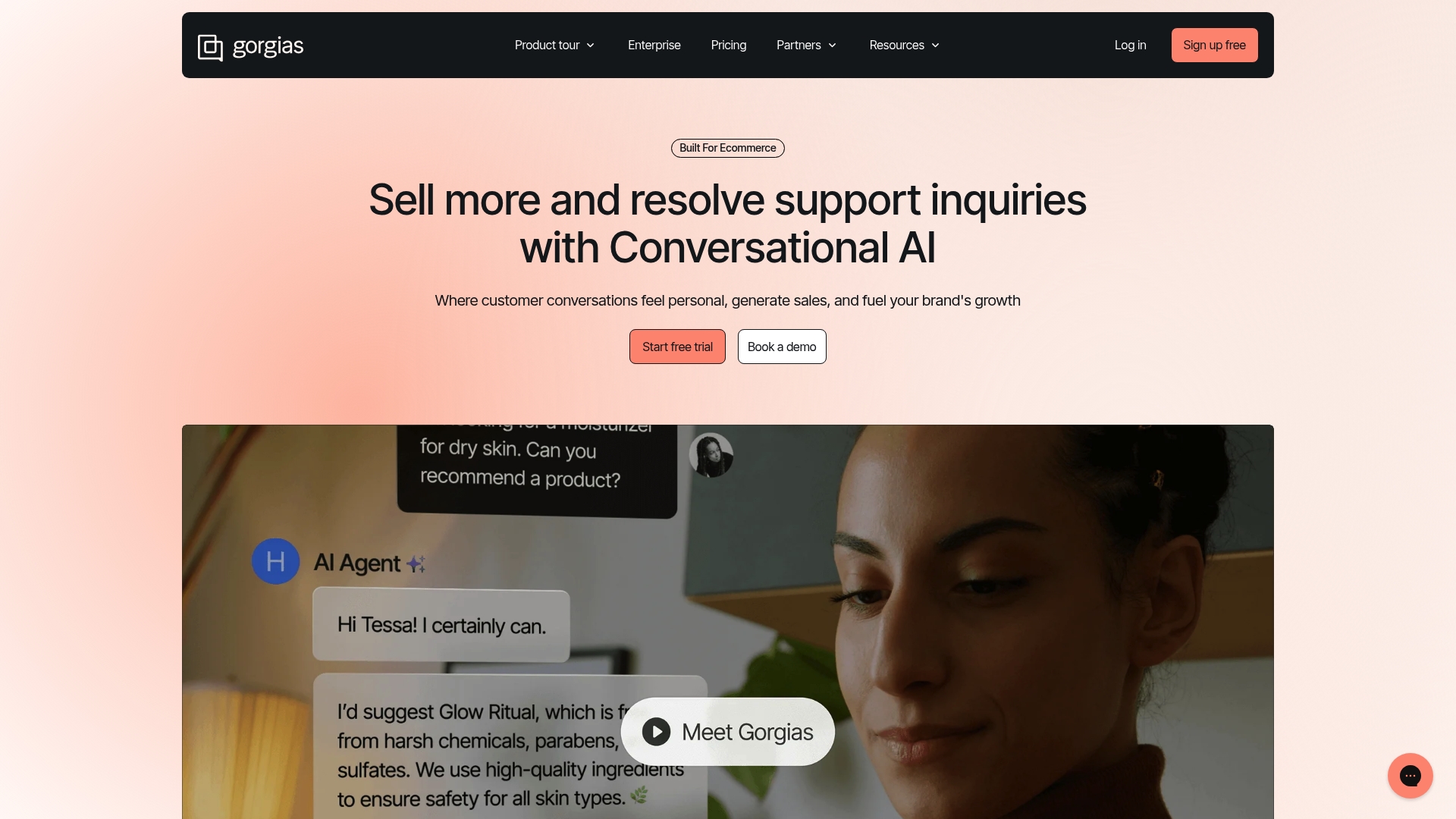
If your brand is all about Shopify, Gorgias is probably the solution for you. Its entire platform is built for the direct-to-consumer (DTC) experience on Shopify.
The standout feature is its deep, native Shopify integration. It's more than just a connection; it's a complete workflow. Agents can edit orders, issue refunds, and see a customer's entire purchase history without ever leaving the Gorgias dashboard.
Its AI Agent is also impressive, capable of resolving support inquiries. Gorgias also offers built-in Voice and SMS channels, making it a true omnichannel platform right out of the box.
- Pros: The Shopify workflow saves agents a massive amount of time and makes providing personalized support incredibly easy.
- Cons: While it offers some marketplace integrations, its focus remains primarily on the direct-to-consumer experience, with less extensive support for platforms like Amazon or eBay compared to specialized multichannel tools.
Pricing:
- Starter: Starts at $10/month for 50 tickets.
- Basic: Starts at $50/month for 300 tickets (billed annually).
3. Zendesk
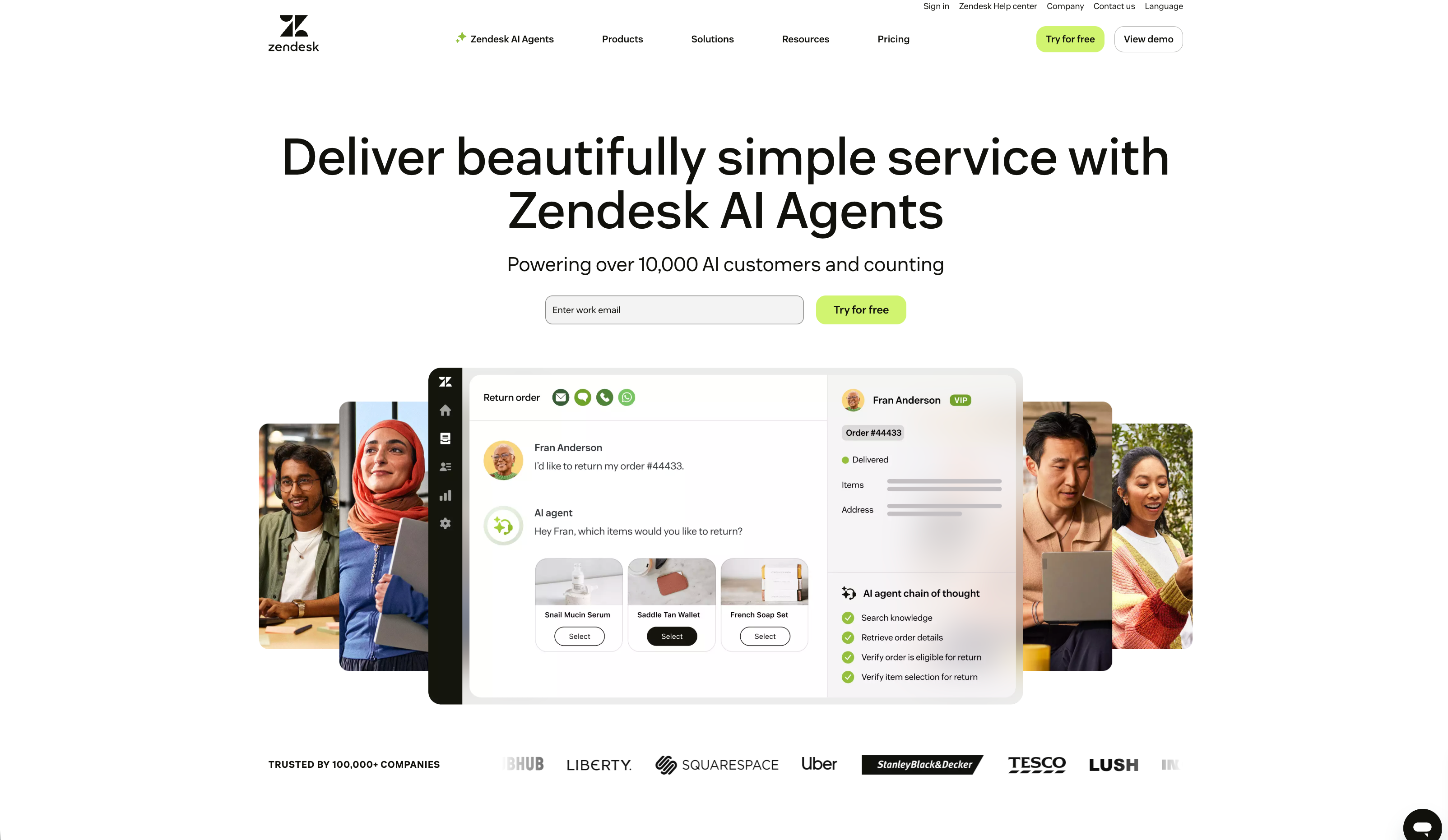
Zendesk is a huge name in customer service software for a reason. It's a powerful platform that can be tailored for almost any industry, ecommerce included. It’s used by over 100,000+ companies and is known for being both powerful and scalable.
The tool has great reporting features, a massive app marketplace, and workflows you can adjust to fit your exact needs. Zendesk has also put a lot of work into its AI, with AI agents that can reportedly automate over 80% of interactions.
For ecommerce stores, they offer a dedicated Zendesk for Shopify integration to pull in the necessary customer and order data.
- Pros: Its scalability and flexibility are top-notch. You can build just about any support workflow you can imagine.
- Cons: It's a general-purpose tool. To get the deep ecommerce functionality of a platform like Gorgias, you often need paid third-party apps (like the Shopify Premium app) and a good amount of setup, which adds complexity and cost.
Pricing:
- Support Team: Starts at $19/agent/month (billed annually).
- Suite Team: Starts at $55/agent/month (billed annually) for omnichannel support.
4. Freshdesk

A screenshot of the Freshdesk landing page, one of the top ecommerce support solutions 2026.
Freshdesk offers a good mix of powerful features and ease of use, which makes it a popular option for small to mid-sized businesses looking for a capable help desk that won't break the bank. It's used by over 75,000+ businesses worldwide.
The platform is known for being easy to navigate and for supporting multiple channels. Its AI tool, the Freddy AI Agent, is powerful and can resolve queries with AI, handling common tasks like order updates or processing refunds through integrations with Shopify and Stripe.
The free program is also a great entry point for small teams just getting started.
- Pros: Affordability and ease of use are the main draws. You can get a capable system up and running quickly.
- Cons: It lacks the deep, native ecommerce integrations you'd find in a specialized tool. While it connects to platforms like Shopify, it functions more like a general help desk, so some workflows may feel less seamless.
Pricing:
- Free Program: Available for 1-2 agents for 6 months.
- Growth: Paid plans start at $19/agent/month (billed annually).
5. YourGPT.ai

YourGPT.ai is an AI-first platform for businesses that want to lean heavily on automation from day one. It’s less of a traditional help desk and more of an AI agent builder.
Its key strength is its powerful, no-code AI agent that you can train on your own data, like product catalogs, policy PDFs, and website pages. This allows it to answer highly specific questions about your business.
It supports deployment across web chat, WhatsApp, Messenger, and more, and integrates with platforms like Shopify, Wix, and Slack.
- Pros: The automation capabilities are strong, and you don't need to be a developer to set it up. It’s great for deflecting a high volume of common questions.
- Cons: It's more of a chatbot and automation platform than a full ticketing system for human agents. It works best when paired with a human help desk for escalations.
Pricing:
- Free Trial: A 7-day free trial is available.
- Essential: Starts at $39/month (billed annually).
6. Intercom
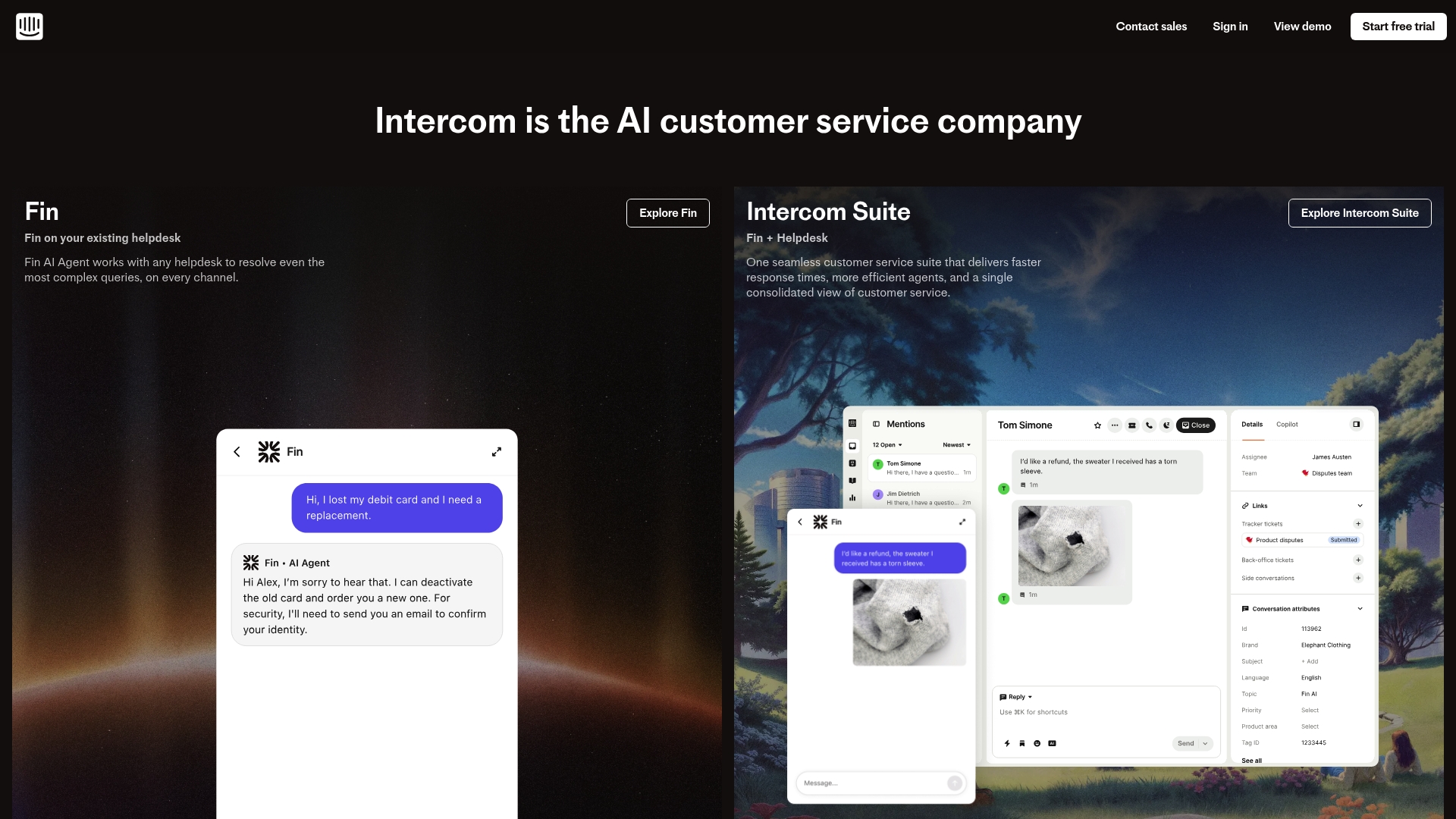
Intercom is the go-to tool for brands that see support as a way to drive revenue, not just as a cost. It’s designed for proactive engagement, helping you connect with customers to drive sales and improve onboarding.
The platform excels at real-time, conversational support. It's best known for its slick live chat widget and its advanced AI agent, Fin, which is designed to handle more complex, multi-step queries.
Fin can also be purchased as an add-on to use with other help desks, like Zendesk.
- Pros: Its ability to boost engagement and conversions through proactive messaging is a powerful advantage for marketing-focused teams.
- Cons: The pricing model can get expensive. The per-seat cost is just the start; you also pay $0.99 per resolution for its AI agent, which can add up quickly for stores with high support volume.
Pricing:
- Essential: Starts at $29/seat/month (billed annually).
- AI Resolutions: Fin AI Agent costs an additional $0.99 per resolution.
How to choose from the top ecommerce support solutions 2026
So, with all these options, how do you actually choose one? It comes down to a few key questions about your business. Answering them will give you a clear path forward, as this visual guide shows.

First, look at your primary channels. Where do most of your customers reach out? A brand getting tons of Instagram DMs has different needs than a marketplace seller dealing with Amazon messages.
Pick a platform that’s strongest where your customers already are.
Next, don't forget about phone calls. The tools on this list are great for handling text-based chats and emails.
But what about when a customer has an urgent problem and picks up the phone? If improving phone support is a priority for your team, a standard help desk won't fix it on its own.
This is where a more specialized tool can fill the gap. For instance, you might use Gorgias for email and chat, but that leaves your phone lines open.
An AI phone agent like Ringly.io's the AI can step in here. It's designed for Shopify stores and can handle up to 73% of inbound calls on its own, 24/7.
It manages common questions about orders and returns, which frees up your team and makes sure every caller gets help right away.
Also, think about your automation needs. Take a look at your support tickets. If you're seeing the same questions pop up over and over, that's a good sign you could benefit from strong AI and automation.
This helps your team stay efficient and focus on issues that really need a human touch.
Consider your team's size and technical skills. A small team without a lot of tech experience will probably be happier with a plug-and-play solution like Gorgias or eDesk.
A larger company with developers might have the resources to customize a more complex platform like Zendesk.
Finally, always ask for demos and free trials. Reading reviews is helpful, but you need to get a feel for the software yourself.
Test out the actual workflows your team will use every day before you make a decision. Most of these platforms offer a free trial, so make sure to use it.
Building your support stack for 2026
The truth is, the "best" ecommerce support solution depends entirely on your store's specific needs: your channels, your customer volume, and your overall goals. There isn't a one-size-fits-all answer.
The current thinking in customer service is to build a "stack" of tools that work well together. A solid help desk for email, chat, and social media is your starting point. But to offer a truly great customer experience, you should also consider specialized tools for any channels your help desk doesn't cover.
Adding a dedicated tool for phone support, for example, makes sure you're available to customers no matter how they contact you.
To see how some of these AI-powered tools work in practice, check out this video that breaks down some of the top options available for ecommerce stores.
This video from Hostinger Academy reviews some of the top ecommerce support solutions 2026, focusing on AI tools.
While the platforms we've covered are great for managing your inbox, Ringly.io manages phone lines. Our AI agent, the AI, offers 24/7 phone support for Shopify stores and can resolve up to 73% of calls without human help. If you're ready to round out your support, try Ringly.io for free.
Frequently Asked Questions
What features should I look for in the top ecommerce support solutions 2026?
Look for deep integrations with your ecommerce platform (like Shopify), strong AI and automation to handle common questions, a user-friendly interface your team can learn quickly, and the ability to scale as your business grows. It's also a good idea to check what channels they support, like email, chat, social media, and phone.
Are the top ecommerce support solutions 2026 difficult to set up?
Not usually. Many modern solutions, especially those built for ecommerce, are designed for easy setup. Platforms like Gorgias and eDesk offer plug-and-play integrations that can be up and running quickly without needing a dedicated IT team. However, more customizable platforms like Zendesk might require more initial configuration.
How much do the top ecommerce support solutions 2026 typically cost?
Pricing varies quite a bit. Some platforms, like Freshdesk, offer free or low-cost starter plans. Others, like Gorgias, price based on ticket volume, starting around $50/month. Enterprise-level solutions like Zendesk or Intercom can have higher per-agent costs and additional fees for AI features, so it really depends on your scale and needs.
Can the top ecommerce support solutions 2026 handle phone calls?
Most of the top solutions focus primarily on text-based channels like email, chat, and social media. While some, like Gorgias, offer built-in voice features, they might not be as robust as a dedicated phone system. For comprehensive phone support, many businesses pair their help desk with a specialized AI phone agent like Ringly.io.
Which of the top ecommerce support solutions 2026 is best for a small Shopify store?
For a small Shopify store, a solution with a deep, native integration is usually the best choice. Gorgias is a very popular option because its entire workflow is optimized for Shopify, allowing you to manage orders and refunds directly from the help desk. Freshdesk's free plan could also be a good starting point if your budget is tight.
Do I need AI capabilities in my choice of top ecommerce support solutions 2026?
While not strictly necessary for every store, AI is becoming a standard feature for a reason. It can automatically handle a large percentage of repetitive questions (like "Where is my order?"), which frees up your human agents to focus on more complex customer issues. It's a huge time-saver, especially as your store grows.