
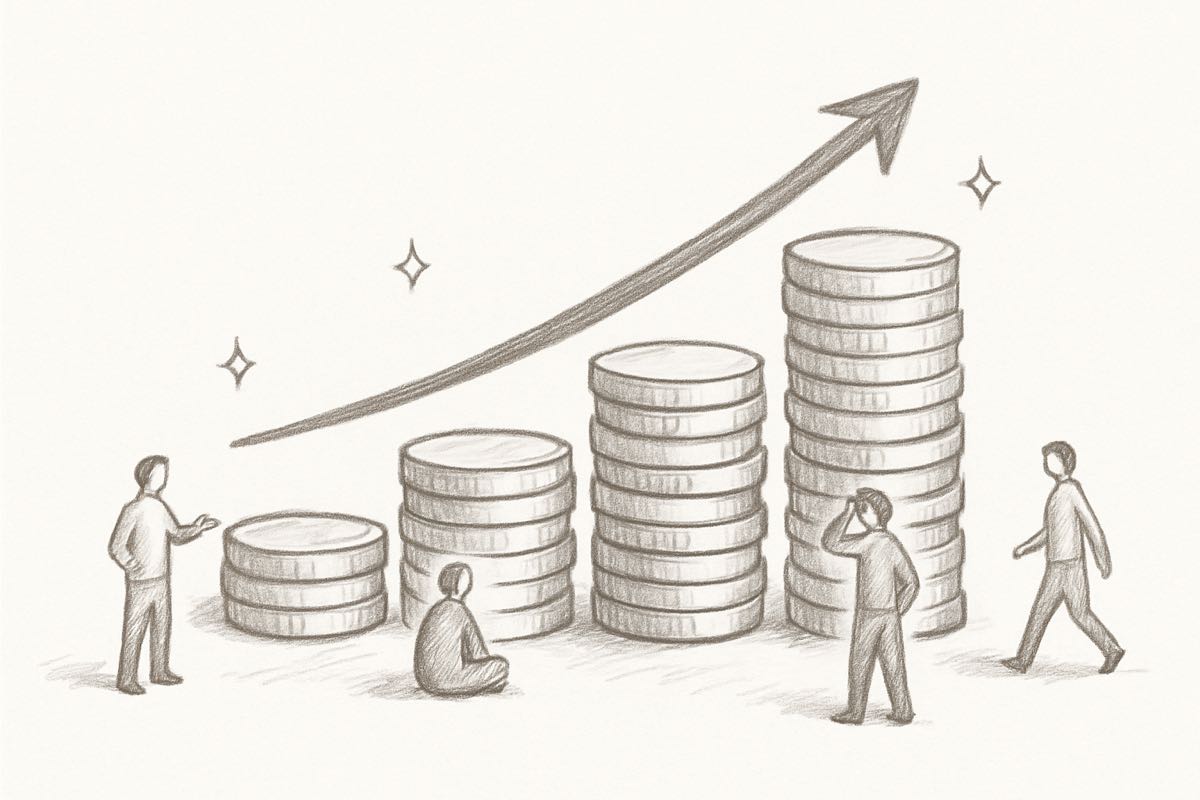
Customer lifetime value is the number that decides whether your store compounds or collapses. Acquisition costs keep climbing, ad platforms are saturated, and the only way out is getting more from every customer you already have. Here are the customer lifetime value statistics that matter in 2026, pulled from Shopify, McKinsey, Bain, Recharge, and other primary sources.
Hear what AI support calls sound like for your store. Just paste your Shopify URL and hear sample calls for your store, no email required. Listen to demo calls for my store.
Key highlights
- Average ecommerce CLV sits between $100 and $300, with luxury reaching $1,500-$2,500 (Dollarpocket)
- A 5% increase in retention can boost profits by 25% to 95% (Bain & Company)
- Existing customers spend 67% more than new ones (Business.com)
- Customer acquisition costs are up 222% in 8 years (Shopify)
- The healthy CLV to CAC benchmark is 3:1 (Admetrics)
- App users generate 2.8x to 5x higher lifetime value than web-only shoppers (Mobiloud)
CLV benchmarks by industry
Average ecommerce CLV falls between $100 and $300. This is the working range for most stores before you account for category or business model. (Rivo)
General retail targets $200 to $400 in CLV, with the vertical average sitting around $168. These are one-time purchase brands without subscriptions or strong loyalty hooks. (Dollarpocket)
Fashion and apparel brands typically see $180-$340 CLV over 24 months. Seasonality and wardrobe refresh cycles keep customers coming back. (Dollarpocket)
Luxury goods reach $1,500 to $2,500 CLV. High transaction values make even low purchase frequency profitable. (Dollarpocket)
Subscription businesses target $400 to $800 CLV. Predictable monthly revenue compounds faster than one-time purchases. (Dollarpocket)
Beauty subscription CLV runs $480 to $720, supplements hit $680 to $920. Consumable categories with high replenishment rates produce the most durable lifetime value. (Dollarpocket)
If your ecommerce AOV is in the $40-$80 range, you need strong repeat behavior to hit these numbers. For most Shopify stores, that's where the work happens.
CLV to CAC ratio benchmarks
A 3:1 CLV to CAC ratio is the healthy benchmark. Every $1 spent on acquisition should return $3 in lifetime value. (Admetrics)
The sweet spot for DTC brands is 2:1 to 4:1. Below 2:1 and unit economics break. Above 5:1 and you're under-investing in growth. (Admetrics)
At a 1:1 ratio, you're effectively losing money. Operations, fulfillment, and overhead eat the margin you think you have. (Admetrics)
Customer acquisition costs have climbed 222% over eight years, reaching $29 by 2022. iOS 14 privacy changes and ad platform saturation broke the cheap paid social era. (Shopify)
CAC is up 60% over the past five years and 40% in just the last two. The trend keeps accelerating. (Yotpo)
The math is simple: if you can't increase CLV, your margins shrink every year. Brands that read ecommerce customer acquisition cost statistics and still lead with acquisition are playing yesterday's game.
Retention impact on CLV
A 5% increase in customer retention boosts profits by 25% to 95%. This is the Bain & Company finding that sparked the entire retention-first movement. (Bain & Company)
Acquiring a new customer costs 5 to 25 times more than retaining one. The exact multiplier depends on your vertical, but the direction is always the same. (Harvard Business Review)
Existing customers spend 67% more than new ones. They trust the brand, know the products, and skip the consideration phase. (Business.com)
65% of business comes from existing customers. If you're not tracking repeat rate, you're ignoring two-thirds of your revenue engine. (Annex Cloud)
80% of future revenue will come from just 20% of existing customers. The Pareto principle shows up clearly in ecommerce data. (Gartner via Zippia)
The probability of selling to an existing customer is 60-70%. To a new prospect: 5-20%. The closing math makes retention the easiest channel most stores ignore. (Markinblog)
Existing customers are 50% more likely to try a new product and spend 31% more per order. This is where category expansion pays off. (Rejoiner)
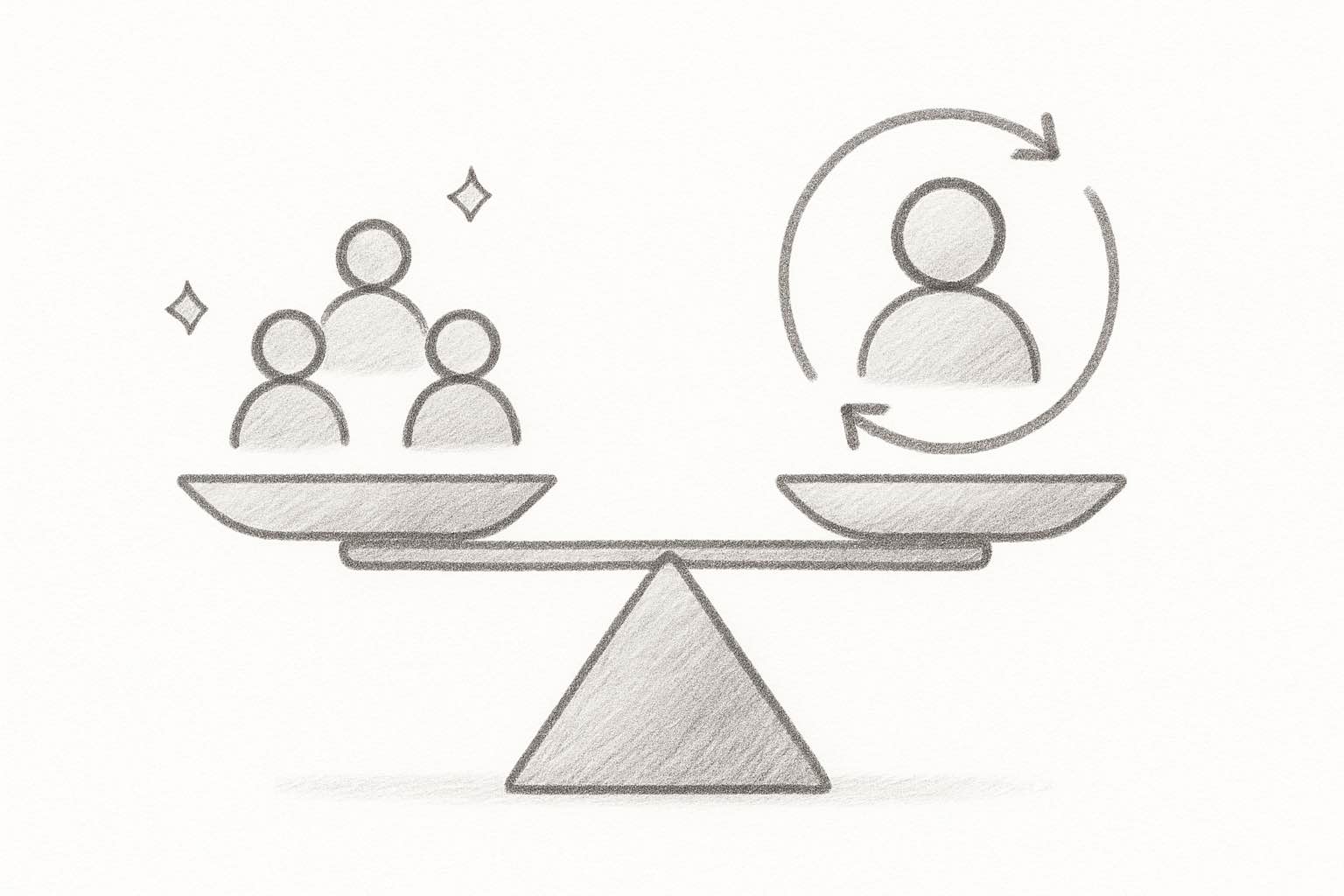
Retention compounds. Acquisition doesn't. For the full picture, check our customer retention statistics breakdown.
Churn rates dragging CLV down
Average annual ecommerce churn sits at 70-75%. Three out of four first-time customers never come back. (Upcounting)
The average ecommerce retention rate is 30%. Top performers hit 62%. That gap is the single biggest lever most Shopify stores can pull. (Rivo)
Subscription ecommerce monthly churn averages 3.4%. This accounts for both voluntary cancellations and involuntary failed-payment churn. (Recurly)
Beauty and fitness brands churn at 62%, food and drinks at 64%, pets at 70%, consumer electronics at 82%. The lower your consumable refresh rate, the higher your churn. (Omniconvert via Upcounting)
Subscription merchants saw 45% retention after 6 months and 33% after 12 months. Even recurring revenue models lose two-thirds of subscribers within a year. (Recharge)
If your churn looks normal, you're losing the race. Our guide on how to reduce customer churn on Shopify walks through the specific interventions that move the needle.
Subscription CLV data
Subscription merchants saw 12% year-over-year LTV growth, 11% AOV growth, and 7% MRR growth. Recurring revenue keeps outpacing one-time commerce on the metrics that matter. (Recharge)
35% of subscribers actively adjust their orders (skips, swaps, frequency changes). Flexibility is the quiet retention feature most brands underinvest in. (Recharge)
Beauty and personal care led all categories in AOV, LTV, and MRR gains in the latest Recharge report. The replenishment use case keeps winning. (Recharge)
Subscription businesses typically achieve 2-3x higher CLV than one-time purchase models. The compounding math of monthly billing is hard to beat. (Opensend)
For supplements specifically, supplement subscription management can mean the difference between $300 and $900 per customer.
Personalization and CLV
Personalization drives a 10-15% revenue lift on average, with top performers hitting 25%. The gap between leaders and laggards keeps widening. (McKinsey)
Top personalizers generate 40% more revenue from personalization activities than the average. Execution beats ambition. (McKinsey)
AI-driven personalization delivers 15-25% CLV improvements. Better product recommendations, smarter timing, and predictive retention work in combination. (Envive)
Personalization increases average order value by 30% and boosts cross-sell and upsell by 20%. Both levers compound into CLV. (Deloitte)
71% of consumers expect personalized interactions. Only 22% of businesses deliver them. That's a gap worth closing. (Open Loyalty)
See our full ecommerce personalization statistics breakdown for the detailed numbers.
Loyalty programs and CLV
A 10% CLV increase drives 25-30% profit growth over time. Even small retention wins compound into big margin gains. (Open Loyalty citing McKinsey)
Top loyalty programs boost revenue from redeeming customers by 15-25% annually. They buy more often, spend more per order, or both. (Open Loyalty)
Loyalty program members are 62% more likely to spend more. Membership itself changes behavior before any reward is redeemed. (Rivo)
Omnichannel shoppers have 30% higher CLV. The more touchpoints, the stickier the customer. (Rivo)
Mobile loyalty programs improve CLV by 48%. Push notifications and app-based rewards keep customers engaged between purchases. (Open Loyalty)
Emotional connections drive 306% higher CLV. Brand feels beat transactional loyalty every time. (Open Loyalty)
Loyal customers spend 43% more at businesses they're loyal to. The premium compounds across every touchpoint. (Paylode)
If you're building a program, our ecommerce customer loyalty program guide covers the mechanics. For the full data picture, see our customer loyalty statistics.
Mobile apps and CLV
App users generate 2.8x to 5x higher lifetime value than web-only shoppers. The single biggest CLV lever most DTC brands haven't pulled. (Mobiloud)
60% of first-time app buyers make at least one additional purchase. The app is a retention machine disguised as a sales channel. (Mobiloud)
App users purchase about 33% more often than non-app users. Frequency is the quiet driver of CLV. (Mobiloud)
Mobile app AOV runs 10-50% above mobile web, roughly $95 per order versus $73. Bigger baskets, fewer taps. (Mobiloud)
Push notifications can increase retention by up to 190%. The right message at the right time keeps customers active. (Mobiloud)
Users spend 7x more time in mobile apps than mobile websites. Time on platform directly correlates with spend. (Mobiloud)
For full mobile context, our mobile commerce statistics breakdown covers the broader data.
Email, service, and CLV drivers
Email marketing delivers $36 for every $1 spent. Still the most cost-effective retention channel by a wide margin. (ActiveCampaign)
Welcome emails have a 91.43% average open rate and generate 320% more revenue per email than regular promos. The first email after signup is often the highest-ROI message of the entire customer lifetime. (ActiveCampaign)
Healthy repeat purchase rate benchmarks run 20-40% depending on vertical. The higher the rate, the higher the CLV. (Drip)
Shopify brands recover 10-15% of lapsing customers through well-executed win-back flows. A cheap, automated way to add CLV back into the funnel. (Ancorrd)
Companies leading in loyalty grow 2.5x faster than their industry. The compounding effect of CLV shows up at the company level too. (Hyperline)
Data-driven marketing delivers 3-5% higher net sales and 10-20% better marketing efficiency. Measure and personalize, or keep paying full price for CAC. (McKinsey)
The best ecommerce email marketing statistics show how much revenue sits in flows most stores don't run. If you handle support well, ecommerce phone support is another lever that drives both retention and AOV. Want to try it? See what Seth sounds like on your store.
What this means for ecommerce brands
The macro story is simple. CAC is up 222% in eight years. Ad platforms are saturated. The retention gap between average and top-quartile stores is more than double, and that gap is where all the profit lives.
If your LTV to CAC is below 3:1, no amount of paid acquisition will fix the business. You have to raise CLV, and the fastest ways to do that are subscription, personalization, loyalty mechanics, and a mobile app if your volume supports one.
Customer experience is the unsexy lever most brands still underinvest in. A single bad WISMO call or missed support ticket can collapse a $900 subscription customer to $120. That's why 24/7 customer support and proactive service show up in every retention playbook. For Shopify stores specifically, phone coverage is usually the last piece to fall into place, and it's the one that breaks CLV most quietly.
If you run a Shopify store, Ringly.io resolves up to 90% of support calls automatically. Seth answers orders, returns, and product questions 24/7 across 40 languages, and escalates to humans when it matters. Setup takes under 1 hour. Try it for free.
Frequently asked questions
What is a good customer lifetime value for ecommerce?
Average CLV ranges from $100 to $300 for most ecommerce stores. Subscription brands target $400-$800, beauty subscriptions hit $480-$720, and supplements reach $680-$920. Luxury goods can hit $1,500-$2,500.
What is a healthy CLV to CAC ratio?
The standard benchmark is 3:1, meaning $3 in lifetime value for every $1 spent on acquisition. The sweet spot sits between 2:1 and 4:1 for DTC brands. Below 2:1 and your margins break. Above 5:1 and you're likely under-spending on growth.
How much can retention actually improve profit?
A 5% increase in customer retention can boost profits by 25% to 95%, based on Bain & Company's foundational research. The exact impact depends on your margin structure and repeat purchase behavior.
Why is CLV more important in 2026 than in previous years?
Customer acquisition costs have risen 222% since 2013 and 40% in just the last two years. With iOS privacy changes and ad platform saturation, the paid arbitrage model that funded DTC growth is structurally broken. CLV is now the primary lever for sustainable profit.
How do I calculate customer lifetime value for my store?
The basic formula is Average Order Value multiplied by Purchase Frequency multiplied by Customer Lifespan. Shopify Reports surface AOV and frequency. Apps like Klaviyo and Rebuy automate this and add predictive CLV per customer. Our customer lifetime value ecommerce guide walks through the math.
What's the difference between subscription and one-time CLV?
Subscription businesses typically achieve 2-3x higher CLV than one-time purchase models thanks to predictable recurring revenue. Subscription merchants saw 12% year-over-year LTV growth versus flat or declining numbers for many one-time categories.
Does phone support actually affect CLV?
Yes. Call centers have a major impact on retention and brand loyalty, and omnichannel support (phone, email, chat) improves customer sentiment and retention. Bad phone experiences accelerate churn in high-AOV categories like supplements, beauty, and pets where trust drives repeat purchases.
How does mobile app ownership change CLV?
App users generate 2.8x to 5x higher lifetime value than web-only shoppers. They purchase 33% more often, spend about 30% more per order ($95 versus $73), and respond to push notifications that can boost retention up to 190%.