

Customers stopped caring about your business hours years ago. They shop at 11pm, browse on weekends, and expect an answer no matter what timezone they live in. The data below shows just how big the gap has become between what customers expect from 24/7 customer service and what most brands actually deliver.
Hear what AI support calls sound like for your store. Just paste your Shopify URL and hear sample calls for your store, no email required. Listen to demo calls for my store.
Key highlights
- 74% of customers now require 24/7 service availability
- 62% of phone calls to small businesses go unanswered
- The average small business loses around $126,000 a year to missed calls
- 80% of routine customer interactions will be handled by AI in 2026
- 57% of customers expect the same response time at night and weekends as during business hours
- AI cuts the cost per interaction from $6 to roughly $0.50 (a 12x advantage)
- Ringly resolves up to 90% of inbound Shopify calls without any human involvement
What customers actually expect from 24/7 support
The expectation gap is the story. Customers want around-the-clock help, and they no longer treat it as a perk.
74% of customers now require 24/7 service availability. This is the headline number from Zendesk's 2026 CX trends report. (Zendesk)
75% of customers expect brands to offer 24/7 customer service. A separate aggregation puts the number even higher, with always-on availability cited as the top expected change in customer service. (Document360)
88% of customers expect faster responses than they did just one year ago. Expectations are rising every year, not flattening. (Zendesk)
57% of customers expect the same response time at night and weekends as they get during normal business hours. This is the part most brands miss. Closing the support desk at 5pm doesn't lower the expectation, it just creates frustration. (Help Scout)
52% of global shoppers expect 24/7 support availability. Across markets, more than half of shoppers treat round-the-clock help as a baseline. (eDesk)
Gen Z (34%) and millennials (35%) are the most vocal about wanting 24/7 access. The cohorts that will drive ecommerce spend for the next 20 years care about this most. (AmplifAI)
The takeaway: 24/7 support is no longer a premium feature. It's an entry requirement. For a deeper benchmark on how fast you actually need to answer, see our customer service response time benchmarks.
How many brands actually offer 24/7 service (and what's holding them back)
Most brands say they want to offer always-on service. The way they're getting there has shifted hard toward AI.
91% of customer service leaders feel pressure to implement AI in 2026. The pressure isn't coming from internal cost teams. It's coming from customer expectations that legacy staffing models can't meet. (CMSWire)
87% of senior leaders plan to invest in AI for customer service in 2026. Not "explore" or "consider", actually invest. (Lorikeet)
91% of businesses with 50+ employees use AI chatbots somewhere in the customer journey. Mid-market and up have already crossed the adoption line. (Nextiva)
53% of customer service leaders identify 24/7 support coverage as a top benefit of using AI. It's the number-one reason CS leaders bring AI in. (HubSpot)
76% of leaders are formalizing a hybrid model where AI handles routing and routine work and humans handle complex, emotional, high-stakes interactions. This is the operating model 24/7 service is settling into. (CMSWire)
If you're trying to figure out how the human + AI split should look at your store, our guide on how to scale customer service without hiring walks through the playbook.
If you run a Shopify store and want a working example of this, Ringly.io has Seth, an AI phone agent that picks up calls 24/7 in 40 languages and resolves up to 90% of them without a human. Try it for free.
After-hours call volume and missed inquiries
This is the section most brand owners underestimate. The data on missed calls is brutal.
62% of phone calls to small businesses go unanswered. A study by 411 Locals tracked 85 small businesses across 58 industries for 30 days. Only 37.8% of calls got answered. (411 Locals)
75% of after-hours calls go to voicemail at small service businesses. And most of those voicemails never get returned. (PCN)
60-80% of after-hours inbound calls go unanswered when businesses rely on voicemail. Voicemail is not an after-hours strategy, it's a leak. (Phone2)
85% of callers won't call back if you don't answer the first time. They move on. Often to a competitor. (Dialzara)
62% of callers contact a competitor after a missed call. This is what makes missed calls so expensive. You're not just losing one transaction, you're handing the customer to the next brand on Google. (411 Locals)
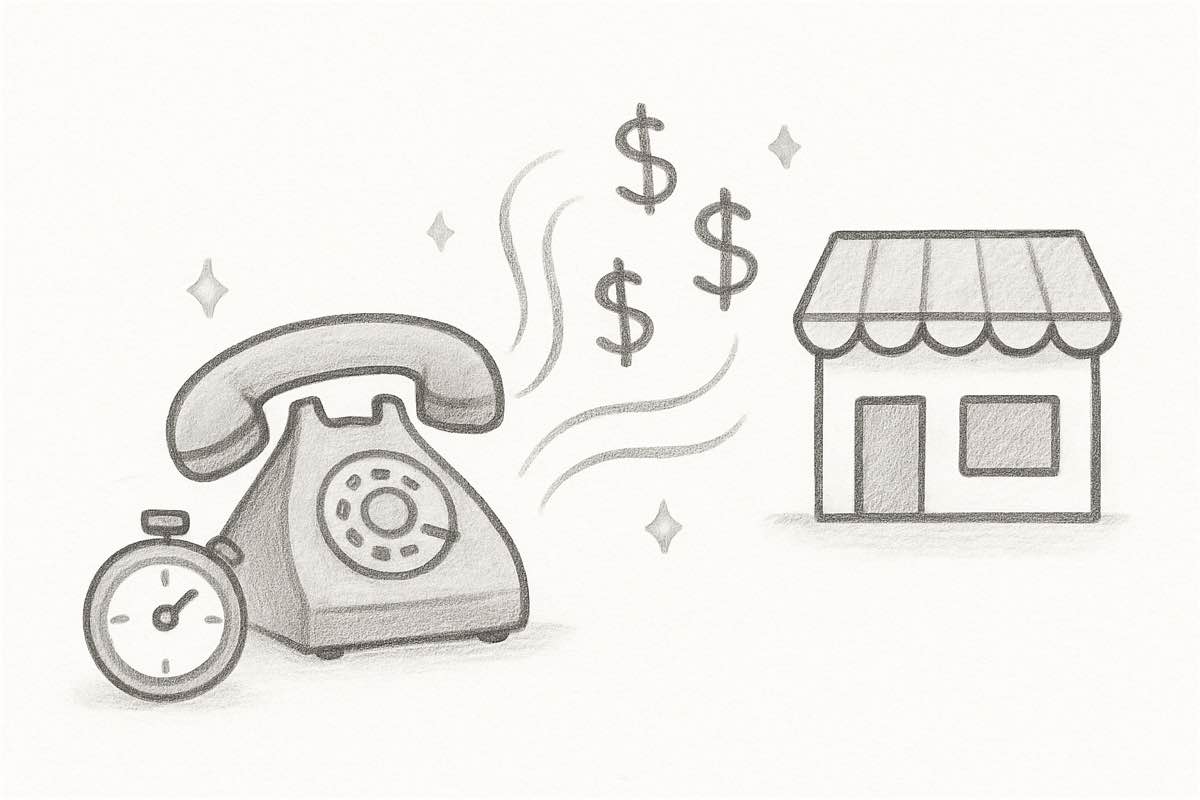
The average small business loses around $126,000 per year to missed calls. Multiply your average order value by the calls you didn't answer last month. The number gets ugly fast. (Phone2)
Each unanswered call is worth between $100 and $1,200 in lost revenue depending on industry. Ecommerce sits in the middle of that range, sometimes higher with AOV over $100. (Dialzara)
Our breakdown of missed calls in ecommerce walks through the math, and after-hours customer service for Shopify covers the setup.
Global, mobile and timezone demand
Customers don't shop on a 9-to-5 schedule. They shop in the evenings, on weekends, and across every timezone you sell into.
Online shopping peaks between 7pm and 10pm. This is the "golden hours" window where conversion rates spike, and where most support desks are already closed. (Hikari CS)
Mobile shopping peaks between 4pm and 10pm. Desktop dominates the workday. Mobile dominates after the workday ends. (Salehoo)
Saturdays and Sundays would account for 29% of inbound inquiries if volume were evenly distributed. Most brands staff weekends with skeleton crews or not at all. (Help Scout)
Only 2.7% of daily orders happen between midnight and 5am combined. Volume is low overnight, but it's not zero. And the people shopping at 2am are often the highest-intent buyers. (ECDB)
75% of non-English speakers prefer customer support in their native language. If you're selling internationally, English-only after-hours support has the same effect as no support at all. (eDesk)
63% of shoppers will abandon a purchase if help isn't available in their language. Multilingual 24/7 coverage is a sales unlock, not just a service feature. (eDesk)
58% of customer support inquiries now originate from mobile devices. Always-on support has to work on a phone first. (eDesk)
If you sell to Europe, Asia, and the Americas from one Shopify store, see our guide on 24/7 customer support for ecommerce for the operational playbook.
How AI is making always-on support actually work
The reason 24/7 has gone from impossible to standard in the span of two years is one thing: AI got good enough.
80% of routine customer interactions will be fully handled by AI in 2026. This is the Gartner number that gets cited everywhere, and the deployments keep validating it. (ChatMaxima)
58% of consumers expect AI to improve customer support specifically by offering round-the-clock availability. Customers know AI is what makes 24/7 economically possible. They've already adjusted their expectations. (Salesmate)
The global AI customer service market is projected to reach $15.12 billion in 2026. Big number, growing fast. (ChatMaxima)
The AI customer support agent market will grow from $2.5B in 2024 to $53.3B by 2034 at a 35.8% CAGR. This is one of the fastest-growing software categories in any market. (Mordor Intelligence)
Conversational AI will save $80 billion in contact center labor costs by 2026. This is the savings figure being banked across the industry. (Lorikeet)
82% of contact center leaders report AI has cut average handle time by roughly one third. It's not just answering the calls, it's resolving them faster. (CMSWire)
87% of consumers prefer a hybrid model that combines human empathy with AI efficiency. Customers don't want pure AI. They want AI that hands off cleanly. (CMSWire)
75% of customers prefer AI for simple questions. For order status, return policy, and shipping questions, AI is the preferred channel. (Dante AI)
For more on this trend, see our piece on how AI is changing call centers and our broader AI customer service statistics collection.
The cost of staffing 24/7 with humans (and why AI changes the math)
Here's the part that decides whether 24/7 support is even viable for your business.
Night shift customer service agents earn an average of $18.17 per hour in the US. That's the base rate. (ZipRecruiter)
Night shift customer service representatives earn an average of $18.80 per hour. Roughly the same band, slightly higher for senior roles. (ZipRecruiter)
The average call center agent in the US makes $42,952 per year, or about $21 per hour. Once you factor in benefits, taxes, and management overhead, fully-loaded cost runs higher. (Salary.com)
Night shift differentials typically add about 10% to base pay. Add this on top of base rates if you want a realistic 24/7 staffing budget. (ZipRecruiter)
A human-handled support interaction costs $6 to $8 on average. This is the per-touch industry benchmark. (Lorikeet)
An AI-handled interaction costs $0.50 to $0.70. That's roughly a 12x cost advantage per resolved ticket. (Lorikeet)
Companies see an average return of $3.50 for every $1 invested in AI customer service. Top deployments hit 8x ROI. (Lorikeet)
Klarna's AI assistant did the work of 700 full-time agents within one month of deployment. This is the case study that woke the industry up. (Lorikeet)
To model the cost for your Shopify store, see our ecommerce phone support ROI breakdown and our AI customer service ROI post on payback periods. Or try Ringly for free and hear sample calls for your store.
What happens when 24/7 support is missing (the cost of "we'll get back to you Monday")
The data on what customers do when they can't reach you is the most underappreciated part of the conversation.
80% of customers have switched brands because of poor customer experience. This is the Qualtrics + ServiceNow joint study, and the number has been climbing. (Qualtrics)
73% of consumers will switch to a competitor after multiple bad experiences. And more than 50% will switch after only one. (DestinationCRM)
67% of customers report a terrible CX as the reason they left. Long wait times and inability to resolve issues are the top two reasons cited. (Yaguara)
US companies risk losing $1.9 trillion in consumer spending every year due to poor customer experiences. This is the macro number. The micro version is your store losing five customers a week to a competitor that picks up the phone after 6pm. (Yaguara)
86% of buyers are willing to pay more for a great customer experience. The willingness-to-pay premium runs around 13% on average and up to 18% for luxury. (Capgemini)
93% of consumers are likely to make repeat purchases with brands that offer excellent customer service. Repeat purchases are where unit economics actually live. See our piece on ecommerce customer retention for context. (Document360)
For the call center side specifically, our call center statistics for 2026 collection has more on the operational benchmarks.
Bonus: hold times, abandonment, and FCR benchmarks
Even when you do staff for 24/7, the quality of the answer matters.
The industry average call abandonment rate sits around 6%. Anything above 5% is considered problematic. Above 10% is a serious operational issue. (LiveAgent)
Customers spend an average of 4.22 minutes on hold waiting for an agent. That's the average. The 26% of callers who hang up after 2-4 minutes are the people you're losing. (Voiso)
The 80/20 rule is the classic call center benchmark: 80% of calls answered within 20 seconds. Average speed of answer (ASA) target is 28 seconds or less. (Trengo)
Ecommerce first contact resolution rates run 75-85%. Better than most other industries because order, return, and shipping questions are well-defined. (Lorikeet)
Only 5% of call centers achieve world-class FCR of 80% or higher. It's harder than it looks. (SQM Group)
WISMO ("where is my order") accounts for 18-50% of ecommerce support tickets. During Black Friday, that number can hit 70-80%. AI handles WISMO well, which is why it's usually the first thing brands automate. (Salesforce)
WISMO calls cost about $5 each to resolve via human agents. That's why automating them is the fastest ROI in customer service. See our WISMO calls guide for more. (Gorgias)
What this means for ecommerce brands
The data lines up around three things.
First, 24/7 customer service is now the default expectation. 74% of customers expect it. 88% expect faster responses than last year. Brands that don't offer it aren't seen as "fine but limited", they're seen as broken.
Second, the cost of not offering 24/7 service is bigger than the cost of offering it. Missed calls cost the average small business $126,000 a year. 85% of callers don't call back, and 62% go to a competitor.
Third, AI is what makes 24/7 economically viable below the enterprise level. Human agents cost $6-$8 per interaction. AI runs $0.50-$0.70. Consumers have already adjusted, with 75% preferring AI for simple questions and 87% preferring a hybrid model.
If you run a Shopify store, this is the moment to set up always-on support. Ringly.io handles inbound calls 24/7 in 40 languages, resolves up to 90% of calls without a human, and is live in under 1 hour. Try it for free.
For more context, see our ecommerce customer support statistics 2026, voice AI statistics 2026, and chatbot statistics 2026.
For more on customer self service, g2.com has a helpful overview.
wakeman.ai also covers this space in more depth.
citelift.app also covers this space in more depth.
Frequently asked questions
What percentage of customers expect 24/7 customer service in 2026?
74% of customers now require 24/7 service availability, according to Zendesk's 2026 CX trends report. A separate aggregation from Document360 puts the number at 75%. Either way, the majority of customers treat round-the-clock support as a baseline expectation, not a perk.
How much do small businesses lose to missed calls?
The average small business loses around $126,000 per year to unanswered calls, with each missed call worth $100 to $1,200 in lost revenue depending on industry. 62% of small business calls go unanswered, and 85% of those callers never try again.
Do customers actually call brands at night?
Yes, but volume is concentrated in the evening (7-10pm) rather than the middle of the night. Only 2.7% of daily orders happen between midnight and 5am combined. The bigger issue is that 75% of after-hours calls go to voicemail and most are never returned.
Is 24/7 staffing with humans economical for small ecommerce brands?
For most stores under $5M in revenue, no. Night shift agents cost $18-$21 per hour plus differentials, benefits, and management overhead. Three shifts of two agents runs roughly $400K+ per year fully loaded. AI phone agents handle the same coverage for a fraction of that, with per-interaction costs of $0.50 vs $6-$8 for humans.
What share of customer service interactions will AI handle in 2026?
Gartner predicts 80% of routine customer interactions will be fully handled by AI in 2026. In mature deployments, AI agents typically handle 60-80% of incoming support tickets autonomously. The remaining 20-40% routes to human agents for complex or emotional cases.
What is the cost difference between AI and human customer service agents?
A human-handled interaction costs $6-$8 on average. An AI-handled interaction costs $0.50-$0.70. That's roughly a 12x cost advantage per resolved ticket, which is why companies see an average return of $3.50 for every $1 invested in AI customer service.
Do customers prefer AI or human agents for 24/7 support?
87% of consumers prefer a hybrid model that combines human empathy with AI efficiency. 75% prefer AI for simple questions like order status or returns. For complex or emotional issues, customers still want a human, which is why the leading 24/7 setups route AI for routine work and escalate cleanly to humans when needed.
How does Ringly handle 24/7 customer service for Shopify stores?
Ringly's AI phone agent, Seth, picks up calls 24/7 in 40 languages, looks up orders directly from Shopify, processes returns and exchanges, and resolves up to 90% of calls without any human involvement. Setup takes under 1 hour with no code required. Try it for free.