


The strongest Microsoft Copilot Studio alternatives in 2026 are Stack AI, Botpress, Zapier Agents, n8n, and Google Vertex AI Agent Builder, each giving you more flexible agent-building than Copilot's Microsoft-locked setup. Ringly.io serves a narrower need: a done-for-you AI phone agent that answers Shopify support calls 24/7, billed by usage minutes.
Microsoft Copilot Studio promises to let anyone build AI agents. The reality? It's more complicated than the marketing suggests.
Users on Reddit describe it as having "inadequate visibility into what happens at each moment of building a chatbot."
The documentation is patchy, integrations require navigating separate Microsoft products like Graph and Power Platform, and the $200 monthly starting price isn't exactly SMB-friendly.
So what are your options if you want to build AI agents without the Microsoft ecosystem lock-in?
We researched and tested the leading alternatives to find tools that actually deliver on the no-code promise (or at least are honest about what they require).
Editor’s note: Want to hear some sample AI support calls made for your Shopify store?
- Just paste your store URL
- Hear sample calls for your store (no email required)
- Listen to demo calls for my store
What are the best Microsoft Copilot Studio alternatives in 2026?
Before we dive into alternatives, let's clarify what we're comparing against. Microsoft Copilot Studio is a low-code platform for building conversational AI agents and chatbots that integrate with Microsoft 365, Dynamics 365, and other Microsoft services.
It's important to distinguish Copilot Studio from Copilot for Microsoft 365. The latter is Microsoft's AI assistant embedded in Word, Excel, and Teams. Copilot Studio is the builder tool for creating custom agents. Think of it like the difference between using ChatGPT and building your own GPT.
The platform lets you create agents that answer questions, trigger workflows, and hand off to human agents when needed. It connects to Microsoft's ecosystem through hundreds of pre-built connectors. But that strength is also its limitation: it works best if you're already all-in on Microsoft.
How we evaluated these Microsoft Copilot Studio alternatives
We looked at each tool through a practical lens:
- True no-code capabilities: Does it actually work without developers, or does "no-code" mean "low-code with extra steps"?
- Pricing transparency: Can you see prices upfront, or is everything "contact sales"?
- Integration ecosystem: What does it connect to beyond its own platform?
- Deployment flexibility: Cloud-only, or can you self-host?
Our focus is on SMBs to mid-market companies (10-500 employees) with varying technical skills. If you're a Fortune 500 with a dedicated Microsoft team, Copilot Studio might still be your best bet.
Microsoft Copilot Studio alternatives at a glance
| Platform | Best for | Starting price | Key strength | Deployment |
|---|---|---|---|---|
| Stack AI | Compliance-focused enterprises | Free / Custom | HIPAA-ready, true no-code | Cloud, on-prem, VPC |
| Botpress | Flexible deployments | Free (self-hosted) | Open-source core, pay-as-you-go | Cloud or self-hosted |
| Zapier Agents | Integration-heavy workflows | Free / $33.33/mo | 8,000+ app connections | Cloud only |
| n8n | Technical teams | Free (self-hosted) / $20 | Fair-code, unlimited users | Cloud or self-hosted |
| Google Vertex AI | Google Cloud users | Pay-per-use | Advanced ML, custom models | Cloud only |
| Kore.ai | Large enterprises | Contact sales | Pre-built industry apps | Cloud, on-prem |
| Rasa | Full control | Free / Custom | Open-source, unlimited customization | Self-hosted |
1. Stack AI
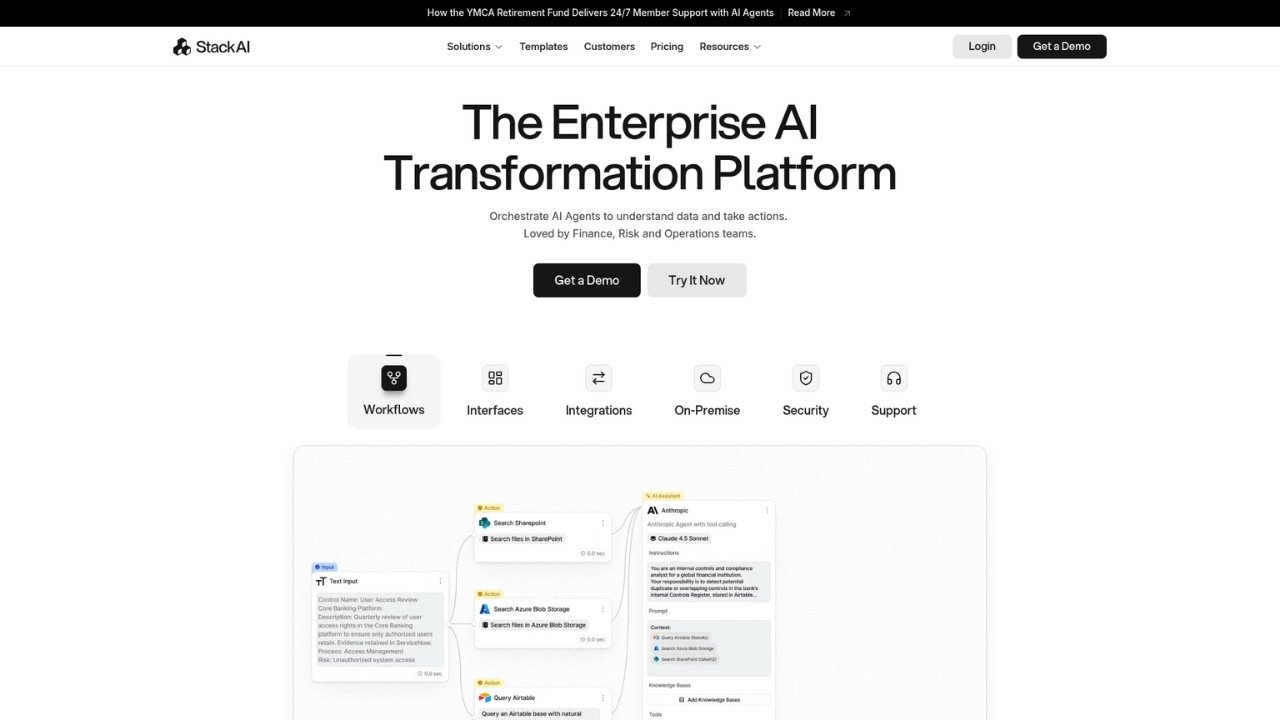
Stack AI is an enterprise-grade generative AI platform founded by PhDs. It focuses on delivering true no-code AI agent development with enterprise security baked in.
Why it stands out
The platform offers a visual drag-and-drop interface that actually works without coding. You can connect knowledge bases from SharePoint, Google Drive, and Notion. Multi-LLM support means you're not locked into a single provider (OpenAI, Anthropic, and Google models are all available).
For regulated industries, Stack AI offers HIPAA compliance, SOC 2 certification, and both on-premises and VPC deployment options. That's rare in the no-code AI space.
Pricing
| Plan | Price | What's included |
|---|---|---|
| Free | $0/month | 500 runs/month, 2 projects, 1 seat, community support |
| Enterprise | Custom | Unlimited projects, dedicated infrastructure, SSO, compliance certifications |
Source: Stack AI pricing
Pros and cons
- Pros: True no-code interface, HIPAA compliance, multi-LLM support, flexible deployment
- Cons: Limited free tier, enterprise pricing can get expensive
Best for
Healthcare, finance, and other regulated industries that need compliance without sacrificing ease of use.
2. Botpress

Botpress started as an open-source project and has evolved into a complete AI agent platform. It offers both cloud-hosted and self-hosted options with a generous free tier.
Why it stands out
The visual flow builder makes conversation design intuitive. Botpress includes a $5 monthly AI credit on all plans, which covers basic usage. You can bring your own LLM or use their provided options. The platform supports human handoff, conversation insights, and proactive chat bubbles for websites.
For developers, the open-source core means you can self-host indefinitely without paying licensing fees.
Pricing
| Plan | Monthly (annual) | AI Spend | Key limits |
|---|---|---|---|
| Pay-as-you-go | $0 | $5/mo credit | 500 messages, 1 bot, 1 seat |
| Plus | $79 ($89) | Additional | 5,000 messages, 2 bots, 2 seats |
| Team | $445 ($495) | Additional | 50,000 messages, 3 bots, 3 seats |
| Managed | $995 ($1,495) | Additional | Custom development included |
Source: Botpress pricing
Pros and cons
- Pros: Generous free tier, open-source option, human handoff, conversation analytics
- Cons: Steeper learning curve than advertised, AI spend can add up
Best for
Teams wanting flexibility between cloud and self-hosted, or those who want to start free and scale gradually.
3. Zapier Agents
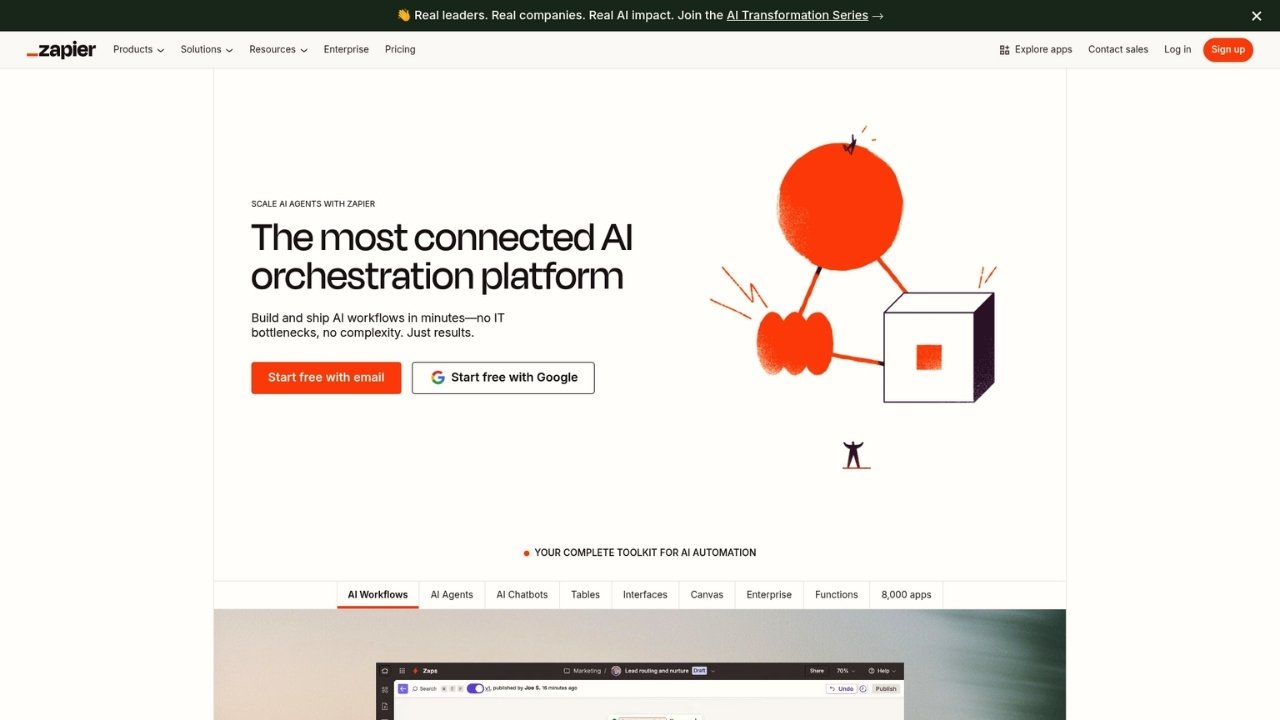
Zapier built its reputation connecting apps through automated workflows. Zapier Agents extends this with AI-powered teammates that can take actions across your integrated applications.
Why it stands out
The integration ecosystem is unmatched: 8,000+ apps. If you can think of a SaaS tool, Zapier probably connects to it. The natural language agent creation means you describe what you want, and Zapier builds the behavior.
The platform now includes Tables (data storage), Forms (custom interfaces), and MCP (Model Context Protocol for AI tool connections) in all plans.
Pricing
Platform (Zaps, Tables, Forms, MCP):
| Plan | Monthly (annual) | Key features |
|---|---|---|
| Free | $0 | 100 tasks/mo, two-step Zaps |
| Professional | $29.99 ($19.99) | Multi-step Zaps, premium apps, webhooks |
| Team | $103 ($69) | 25 users, shared Zaps, SSO |
| Agents (separate): Plan | Monthly (annual) | Activities |
|---|---|---|
| Free | $0 | 400/month |
| Pro | $50 ($33.33) | 1,500/month |
Source: Zapier pricing
Pros and cons
- Pros: Best-in-class integrations, familiar interface, natural language agent building
- Cons: Complex workflows get expensive, separate pricing for platform and agents
Best for
Teams already using Zapier for automation who want to add AI capabilities without learning a new platform.
4. n8n
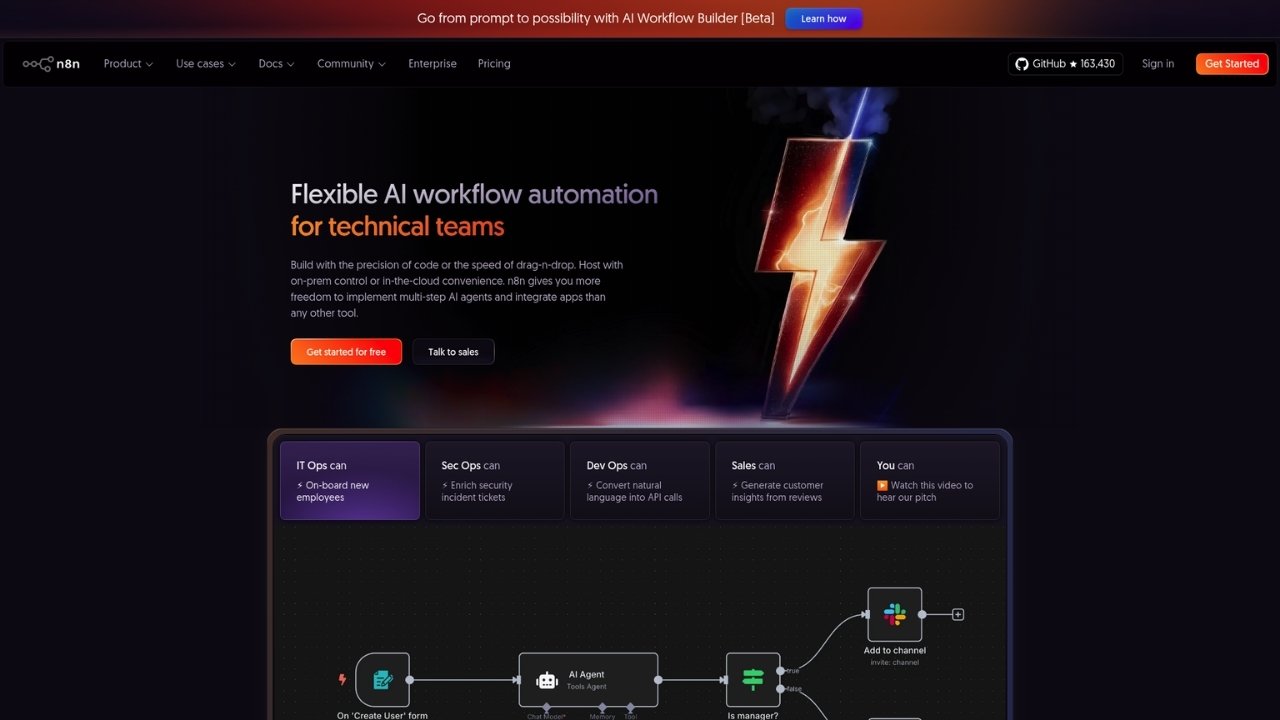
n8n is the world's most popular workflow automation platform for technical teams, with over 176,000 GitHub stars. It uses a fair-code license (free for most uses) and offers both cloud and self-hosted options.
Why it stands out
Unlike most competitors, n8n charges per workflow execution, not per step. This makes costs more predictable for complex automations. You get unlimited users on every plan. The platform supports code steps in JavaScript and Python for when you need custom logic.
The AI Workflow Builder helps you create automations using natural language. Data is stored in the EU (Frankfurt) for cloud plans, which matters for GDPR compliance.
Pricing
| Plan | Monthly (annual) | Executions | Key features |
|---|---|---|---|
| Starter | $24 ($20) | 2,500 | 1 project, 5 concurrent, 50 AI credits |
| Pro | $60 ($50) | 10,000 | 3 projects, 20 concurrent, 150 AI credits |
| Business | $960 ($800) | 40,000 | 6 projects, SSO, Git version control |
| Enterprise | Custom | Custom | Unlimited projects, dedicated support |
Source: n8n pricing
Pros and cons
- Pros: Fair-code license, unlimited users, predictable pricing, EU data residency
- Cons: Requires technical setup for self-hosting, steeper learning curve
Best for
Technical teams who want control over their automation infrastructure and don't mind getting their hands dirty.
5. Google Vertex AI Agent Builder
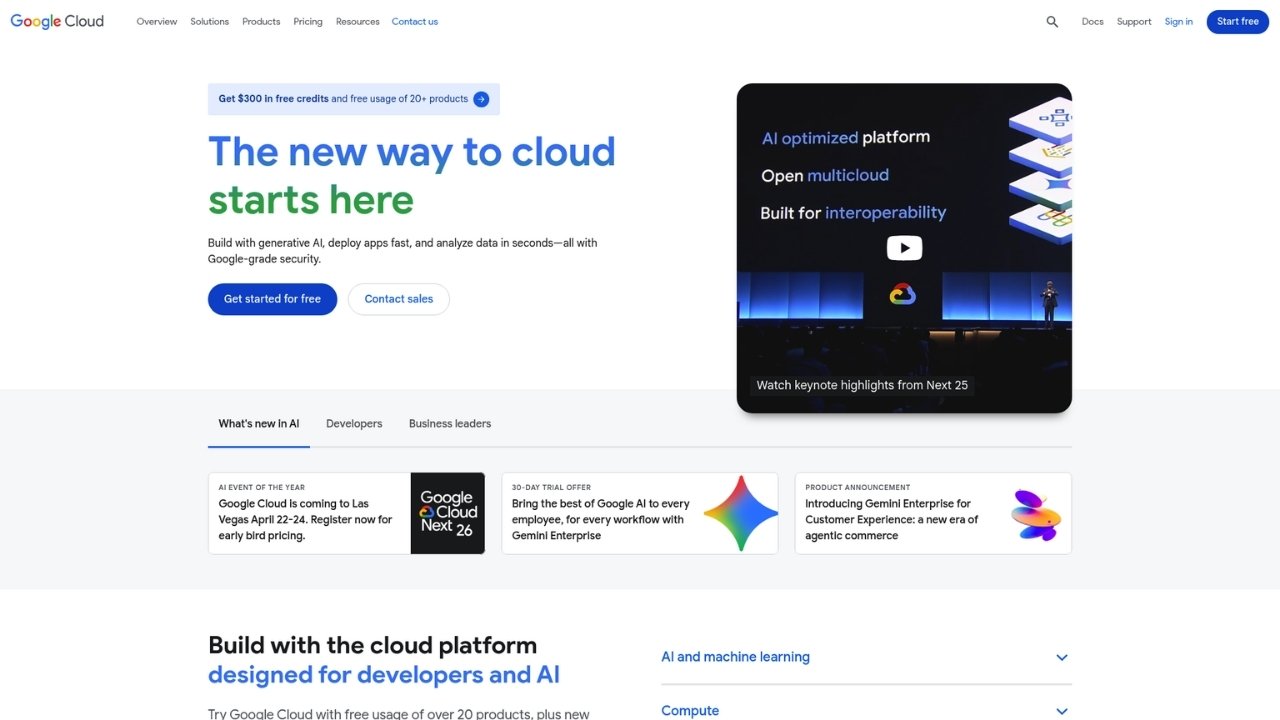
Vertex AI is Google's unified machine learning platform. The Agent Builder component lets you create conversational AI experiences with access to Google's advanced AI models.
Why it stands out
You get access to Google's Gemini models, custom model training, and advanced RAG capabilities. The platform supports multi-modal inputs (text, image, audio, video). If you're already on Google Cloud, the integration is seamless.
The pay-per-use pricing means you only pay for what you consume, which can be cost-effective for low-volume use cases.
Pricing
| Service | Pricing model |
|---|---|
| Agent Builder | Starting at $0.002 per request |
| Gemini API | Per 1,000 tokens (varies by model) |
| Model training | $2.02-$27.68 per node hour |
Source: Vertex AI pricing
Pros and cons
- Pros: Access to cutting-edge Google models, custom training, multi-modal support
- Cons: Steep learning curve, requires GCP knowledge, pay-per-use can spike
Best for
Data science teams and organizations already invested in Google Cloud Platform.
6. Kore.ai
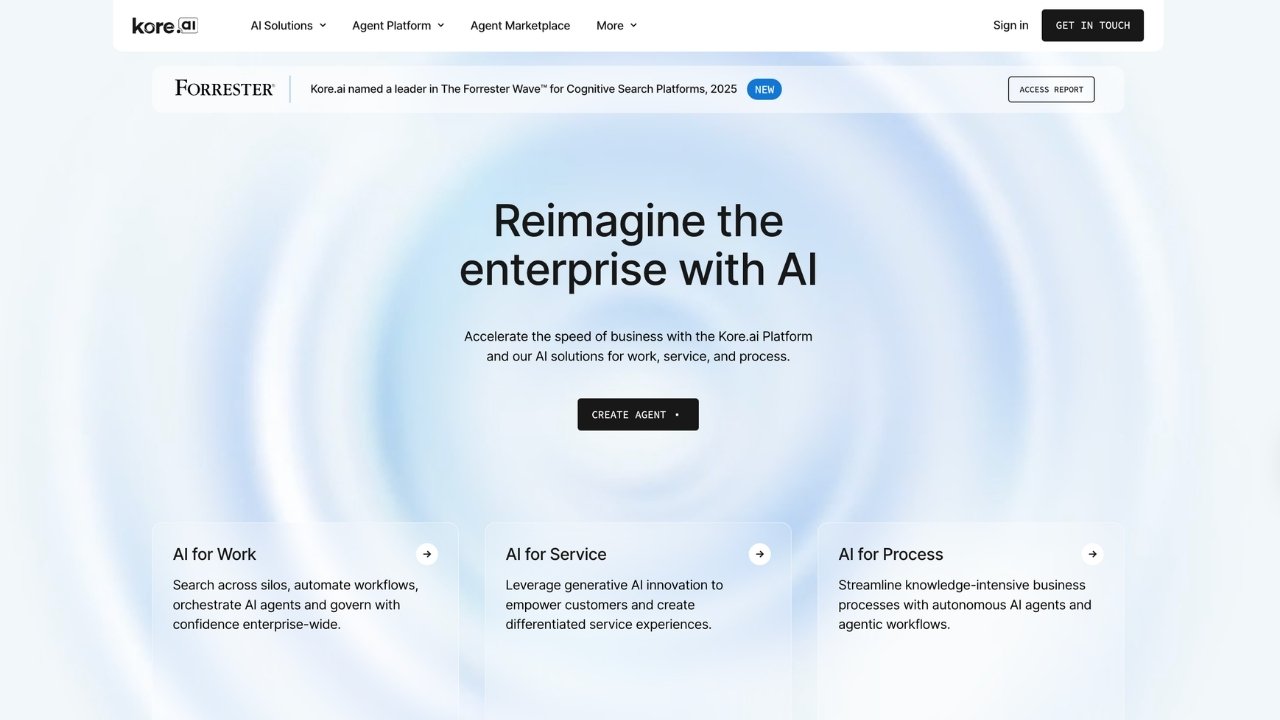
Kore.ai is an enterprise-focused AI platform recognized as a leader in Gartner's Magic Quadrant for Conversational AI Platforms (2025). They offer pre-built applications for specific industries alongside custom development tools.
Why it stands out
The platform includes pre-built AI applications for banking, healthcare, retail, HR, IT, and recruiting. Multi-agent orchestration lets AI agents collaborate and share memory. The no-code and pro-code tools accommodate both business users and developers.
Enterprise security features include guardrails, RBAC, audit logs, and compliance frameworks. Notable customers include Morgan Stanley, Pfizer, and Deutsche Bank.
Pricing
Kore.ai uses custom enterprise pricing. Contact their sales team for quotes.
Pros and cons
- Pros: Pre-built industry solutions, Gartner-recognized, strong enterprise features
- Cons: No public pricing, complex implementation, enterprise-focused
Best for
Large enterprises in regulated industries that need proven, scalable solutions.
7. Rasa
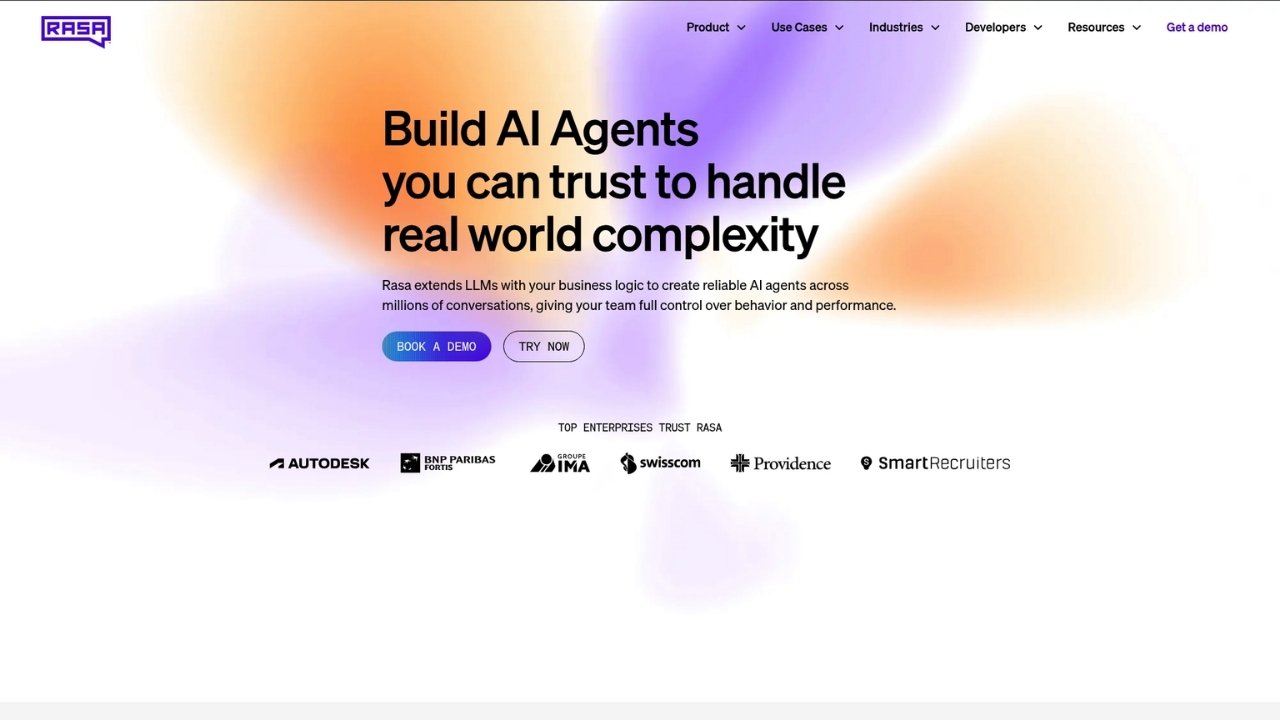
Rasa is an open-source conversational AI platform for building text and voice-based assistants. It offers complete code-level control for developers who want to own their AI infrastructure.
Why it stands out
The open-source core means no usage fees and unlimited customization. Rasa Pro adds enterprise features like CALM (Conversational AI with Language Models), multi-LLM management, and Kubernetes deployment support. Rasa Studio provides a no-code interface for business users.
The platform supports IVR (Interactive Voice Response) through AudioCodes VoiceAI Connect, making it suitable for phone-based AI agents.
Pricing
| Plan | Price | What's included |
|---|---|---|
| Developer Edition | Free | 1 bot, 1,000 external conversations/month, community support |
| Enterprise | Custom | Full platform access, premium support, large-scale deployment |
Source: Rasa pricing
Pros and cons
- Pros: Fully open-source, unlimited customization, no usage fees, voice support
- Cons: Requires Python skills, significant development effort
Best for
Development teams who want complete control over their AI agents and don't mind building from the ground up.
Choosing the right Microsoft Copilot Studio alternative
The best choice depends on your team's technical skills and existing infrastructure:
Non-technical teams: Start with Stack AI or Zapier Agents. Both offer true no-code interfaces with minimal learning curves.
Technical teams with budget: Consider Kore.ai or Google Vertex AI if you need enterprise-grade features and don't mind premium pricing.
Technical teams wanting control: n8n, Botpress, or Rasa give you the most flexibility, with open-source options that keep costs predictable.
Integration priorities: If you live in Google Workspace, Vertex AI makes sense. If you're on Microsoft 365 but want to escape Copilot Studio's limitations, Zapier or n8n offer better cross-platform flexibility.
When to consider Ringly.io for voice AI
If your primary use case is phone support rather than chat, the alternatives above might not be the right fit. Most focus on text-based conversational AI.
Ringly.io offers the AI, an AI phone support agent specifically designed for e-commerce businesses. It handles inbound calls 24/7, looks up orders, processes returns, and escalates to humans when needed. With Shopify integration and support for 30 languages, it's built for a different channel than Copilot Studio but solves a similar problem: automating customer interactions without losing the human touch.
If phone support is your priority, it's worth exploring alongside the chat-focused alternatives above.
Final recommendations
For most teams leaving Copilot Studio, we recommend starting with Stack AI if you need compliance and true no-code, or Botpress if you want flexibility and a generous free tier. Both deliver on the promise Copilot Studio makes but doesn't quite fulfill.
If integrations are your top priority, Zapier Agents connects to virtually everything. For technical teams who want control, n8n offers the best balance of power and price.
The key is matching the tool to your team's capabilities and your organization's constraints. Don't pay for enterprise features you won't use, but don't skimp on compliance if you need it.
Start with free trials, test with real use cases, and migrate gradually. The right alternative is out there. It just isn't made by Microsoft.
Frequently Asked Questions
What is the best Microsoft Copilot Studio alternative for small businesses?
For small businesses, Botpress and n8n offer generous free tiers that let you start without upfront costs. Botpress is easier for non-technical users, while n8n gives technical teams more control.
Are there any free Microsoft Copilot Studio alternatives?
Yes, several alternatives offer free plans. Botpress, n8n, and Rasa all have free self-hosted options. Stack AI and Zapier Agents offer limited free tiers for cloud hosting. The trade-off is usually support and advanced features.
Which Microsoft Copilot Studio alternative works best with non-Microsoft tools?
Zapier Agents connects to 8,000+ apps, making it the most integration-friendly option. n8n also offers 400+ integrations with strong support for open-source and developer tools.
What Microsoft Copilot Studio alternative is best for healthcare compliance?
Stack AI offers HIPAA compliance out of the box, along with SOC 2 and GDPR certifications. Botpress also offers HIPAA compliance on paid plans.
Can I self-host Microsoft Copilot Studio alternatives?
Yes, several alternatives offer self-hosting. Botpress, n8n, and Rasa all have open-source cores you can host yourself. Stack AI and Kore.ai offer on-premises and VPC deployment for enterprise customers.