

AI inventory forecasting for Shopify uses your sales history and other signals to predict how many units of each product you'll sell. The goal is to reorder before a best seller runs out and to stop buying stock that won't move. It's worth paying for only after it has beaten your current process on your own numbers.
Hear what AI support calls sound like for your store. Just paste your Shopify URL and get sample calls in under 20 seconds, no email required. Listen to demo calls for my store.
What AI inventory forecasting is (and what it is not)
Demand forecasting predicts future sales using sales history, market trends and expert input. The AI version does the same job with more data. Shopify's guide says these tools can analyze current sales and stock levels, competitor pricing, market trends, and even weather patterns, and can forecast down to the size and color level.
Three limits to know:
- Not a fix for bad counts: get the basics right first with our guide to Shopify inventory management.
- Not a purchasing decision: a forecast estimates demand, and the buying choices stay with you.
- Not magic on thin data: the forecast is built from your history, so a store with little of it gets a weak forecast.
It adds speed and detail. It doesn't add judgment about your supplier or your next promotion.
What it costs you to get inventory wrong
One guide says the average ecommerce store loses 4-8% of annual revenue to stockouts and 3-5% to overstock-related costs. Those are averages, so your own numbers could sit well outside them. Pull your own stockout dates and your own markdown history before you decide how much a tool is worth.
Shopify's demand forecasting guide puts the stockout side plainly: "Without demand forecasting, it's easy to run out of stock". The overstock side is the mirror image. Shopify says accurate and granular forecasts can help reduce the chance of overstocking and costly markdowns.
So there are two ways to lose money, and they pull against each other. Order more to avoid stockouts and you risk dead stock. Order less to protect cash and you risk empty product pages.
For the shipping side of the same problem, see our guide to shipping delays and stock problems.
What data a forecast needs before it is useful
Forecasts run on your order history, plus a few inputs you supply yourself:
- Eight weeks of consistent weekly orders: Shopify says you can start with as few as eight weeks, using reports like Sales over time and Inventory sold daily by product.
- 12 months for an AI baseline: one guide says AI models need a minimum of 12 months of sales history for baseline forecasting.
- A year or more for seasonality: after a year of sales data, those same reports support forecasting for seasonal peaks and troughs.
- Accurate stock counts: a forecast of demand is useless if on-hand numbers drift from what's on the shelf.
- Your supplier lead times: a forecast says what will sell, but when to reorder also depends on how long your supplier takes, which is a number you bring.
- Your promotion calendar: a planned sale is something you know and a model may not, so treat it as expert input.
Treat eight weeks as the floor for a rough read from your own reports. Treat 12 months as the floor before you pay for an AI tool.
If your history is shorter than that, start with the reports you already have in Shopify and revisit a paid app once you've collected more months of orders.
A product with no sales history is the hard case. Forecasting leans on history, so a brand-new product gives the model nothing of its own to learn from. What's left is market trends and expert input, which means your judgment. Order a small first batch and let real sales replace the guess quickly.
How accurate AI forecasts really are
The headline claim comes from one guide: machine learning models can predict demand at the SKU level with 70-90% accuracy, compared to 50-65% for manual methods. The same guide says stores typically see a 30-50% reduction in stockouts and a 20-35% reduction in overstock.
Read those as claims, not promises. Both ranges are wide, so don't assume you'll land at the good end of either. They come from a single guide, so treat them as a reason to run your own test rather than as a benchmark for your store.
Two questions to put to any vendor:
- How is accuracy measured? The guide gives a single range, so ask which measure the vendor uses and on which products.
- Accurate against what? A forecast that beats a weak manual method is not the same as one that beats a careful buyer.
Your own side-by-side result is the only accuracy number that applies to your store.
Shopify inventory forecasting tools compared
| Option | Price | What is claimed |
|---|---|---|
| Forthcast | $19.99/month (Shopify App Store listing) | Listed on the Shopify App Store |
| Apps priced by order volume | Starts at $99/month, based on order volume (one guide's figure) | Not stated for this price |
A few notes on reading it.
- Price tracks order volume: the $99/month figure is described as based on order volume, so your cost may rise as you grow.
- Match the tool to your data: if you have under a year of history, a cheap app or your own reports is the honest starting point.
So which one is best? On the evidence here, there's no single winner. The best app for your store is whichever one wins your side-by-side test. For a wider view of the software category, see our guide to inventory management software for ecommerce.
How to run a forecast next to your current process
Don't switch over on day one. One guide's rollout starts with this: Month 1-2: Run AI forecasts alongside your existing process, comparing predictions to actual results. Here's a way to do it:
- Pick a test set. Choose your best sellers plus a few slow movers, so the tool is judged on both kinds of problem.
- Write down your own forecast first. Record the units you expect to sell for each product before you open the tool.
- Record the tool's forecast for the same period. Same products, same dates, no peeking at the other number.
- Compare both against actual units sold. Score each product for each method, and note which was closer.
- Set a service level. Decide how often you accept running out of each product, such as tighter for best sellers and looser for slow movers, and judge both methods against that target.
- Decide what a win looks like before you start. For example: fewer stockouts on the test set than your manual list produced.
If the tool hasn't beaten your own numbers by the end of the comparison window, you've learned that cheaply. If it has, let it drive reorders for the test set first and widen from there.
When a stockout turns into customer calls: how Ringly.io handles them
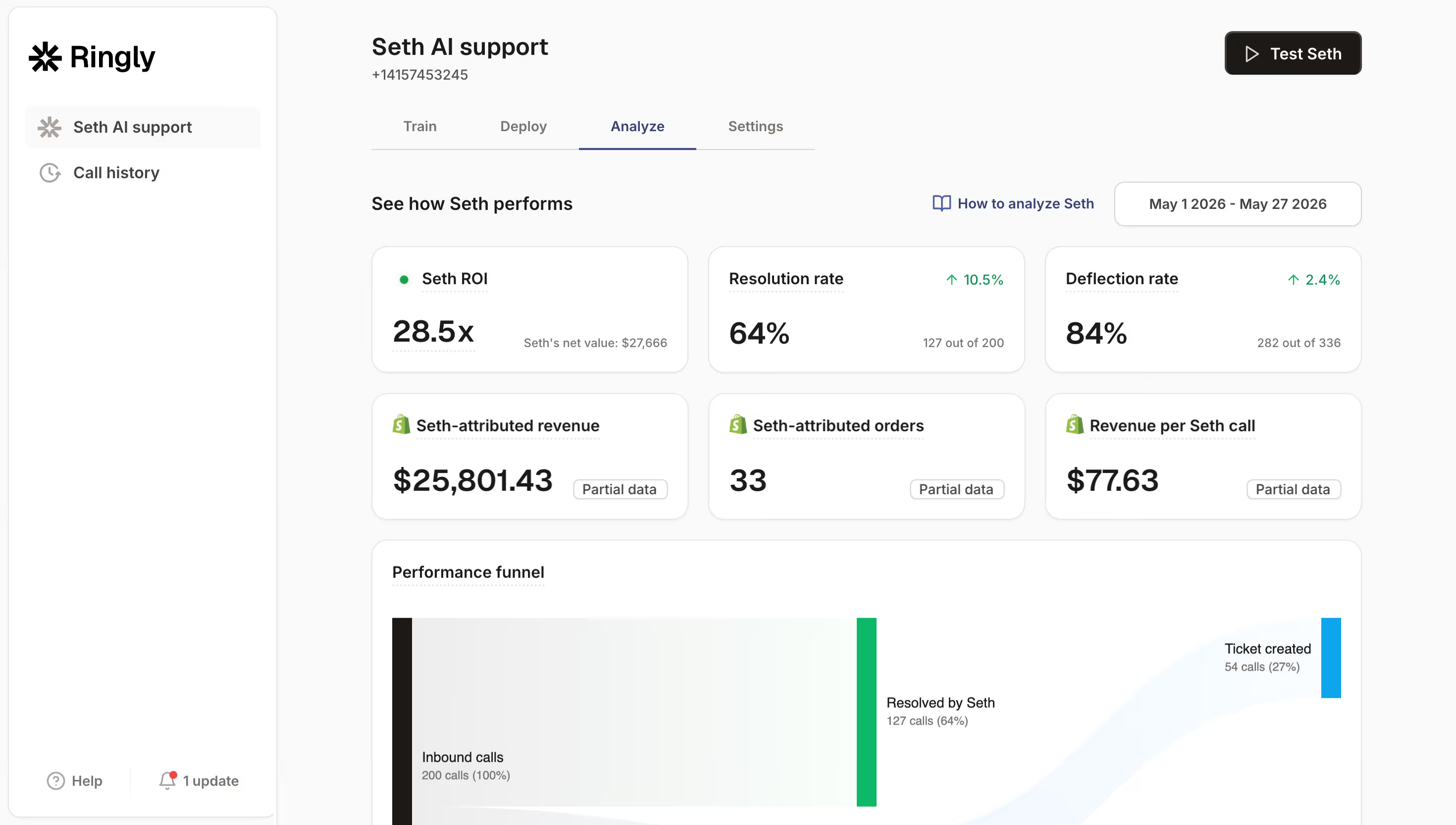
A caller asking whether a sold-out item is coming back needs live inventory and an honest answer. Ringly.io is AI phone support for Shopify brands. Seth, the AI that answers the phone, answers product questions from your website, documents, and a synced Shopify product catalog with live inventory.
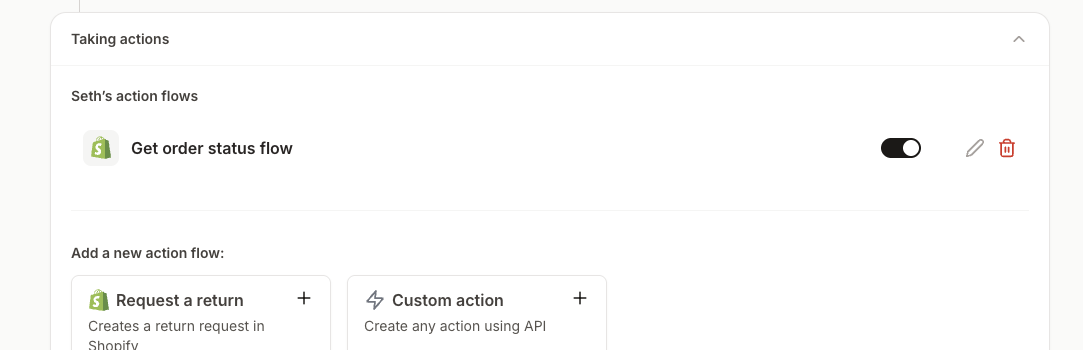
For order calls, Seth uses Shopify and TrackingMore, which covers 1,633+ carriers, as set out in how order status works. Calls that need a person arrive in Gorgias or Zendesk as tickets with a summary and the full transcript. See WISMO calls and what they cost for why that volume matters.
AI Coach is a chat assistant inside the Seth dashboard. It reads your settings and real calls, tells you what to fix first, and shows each change as a card you apply or dismiss. After a stockout, Coach can help add a rule or written knowledge for the affected item. Ringly.io charges per phone conversation, and the pricing page has the details.
Frequently asked questions
What is the best AI inventory forecasting app for Shopify?
The evidence on this page doesn't support naming one winner. Forthcast is one option to look at, and the right choice depends on your history and budget. Run your shortlist through the side-by-side test above and keep the one that beats your manual numbers.
How much does an AI inventory forecasting app cost?
Forthcast is listed at $19.99/month on the Shopify App Store. Check each vendor's current plan page, because prices change. Whatever the listed price, compare it against what your own stockouts and markdowns cost you, since that is the number that decides whether the tool pays for itself.
Can AI forecast demand for new products with no sales history?
Not well. Forecasting relies on sales history, with market trends and expert input filling the gaps, so a new product comes down to your judgment. Order a small first batch and update the forecast as real orders arrive.
Can AI handle seasonal and promotional demand?
Seasonal demand needs a year of sales data before the reports can show peaks and troughs. Promotions are different, since they're planned by you. Add your promotion dates as expert input rather than expecting a model to guess them.
How long does it take to see results?
The rollout in one guide starts with a month 1-2 side-by-side run, comparing predictions to actual results. That comparison is the first result you can judge.
Can I forecast inventory in Shopify without an app?
Yes, for a basic read. Shopify says that with as few as eight weeks of consistent weekly orders, you can use reports like Sales over time and Inventory sold daily by product.
Can a phone line answer stock questions while I test a forecast?
Yes, if the caller's question is about a product that is sold out or low. Ringly.io's Seth answers product and policy questions from your website, documents, and a synced Shopify product catalog with live inventory. Calls that need a person can still be handed off as a support ticket or a transfer, depending on your escalation settings, so a stockout doesn't leave a caller with nowhere to go.