
Every minute you spend answering the same three questions about shipping is a minute you aren’t scaling your brand.
You have worked hard to build a team, but you are watching your top talent get buried under a mountain of "where is my order" calls.
You know that every minute they spend acting like a human FAQ bot is a minute of payroll wasted.
But there is a fix.
This guide will go over the best tools for eCommerce AI phone support automation in 2026.
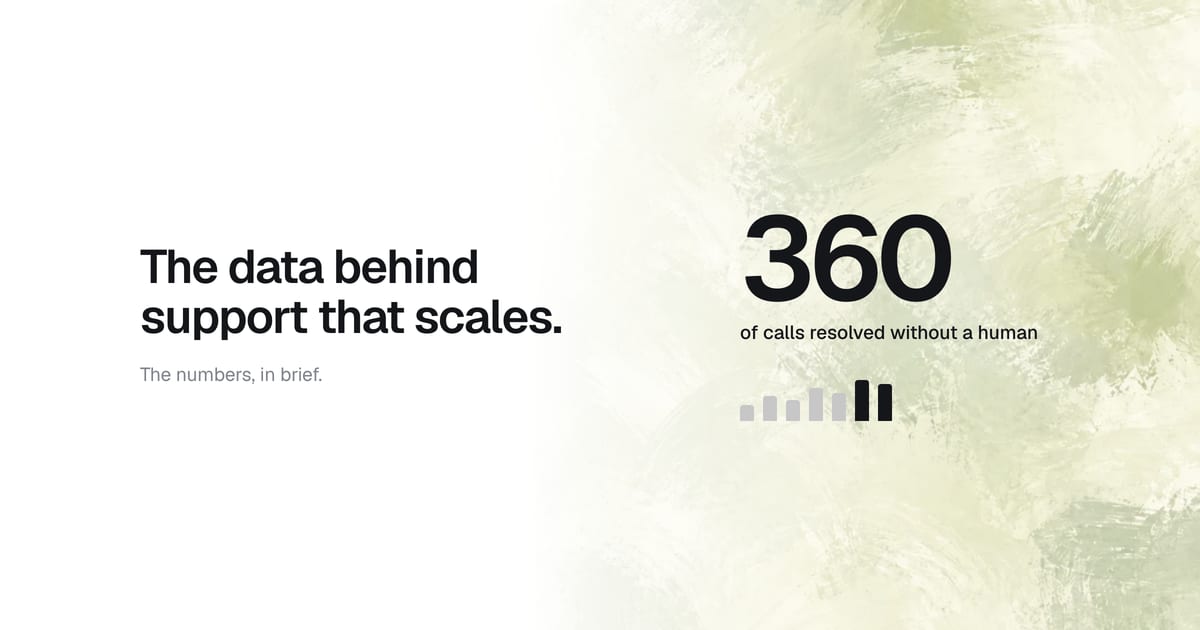
First, we will look at how modern AI agents handle 70% of your call volume without a human.
Then, we will compare the top five platforms that integrate directly with your store to give you 24/7 coverage.
Editor’s note: Want to hear some sample AI support calls made for your Shopify store?
- Just paste your store URL
- Hear sample calls for your store (no email required)
- Listen to demo AI calls for my store
What is AI phone support automation for e-commerce?
AI phone support automation uses artificial intelligence to handle customer calls without human intervention.
This is not the robotic voice menu from the 1990s. Today's AI can understand what people are saying, have a natural conversation, and complete tasks on the spot.
Here is a simple explanation of how it works: The AI listens to the customer, determines what they need, pulls the correct information from your store's backend, and provides a helpful, natural-sounding answer.
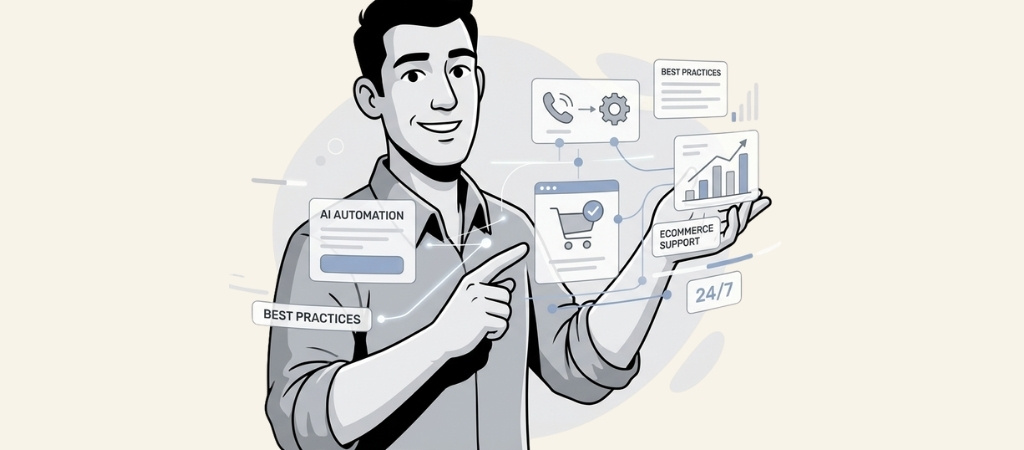
To visualize this process, see the graphic below.

It can check an order status in Shopify, explain your return policy, or even initiate an exchange, all during the call.
The goal is not to replace your support team but to handle the endless, repetitive questions.
For instance, Ringly.io's AI agent, Seth, resolves up to 90% of calls on its own. That frees up your human experts to deal with the complex problems where they are needed most.
How we selected the best tools
To put together a useful list, we looked at these tools from the perspective of a busy store owner. We skipped the flashy, nice-to-have features and focused on what really moves the needle for your business.
Here’s what we prioritized:
1.
Deep e-commerce integration: Does it work well with platforms like Shopify? A good tool needs to pull live order data and handle returns without requiring a custom workaround.
2.
High autonomous resolution rate: The objective is to reduce manual work. We looked for tools that could demonstrate they resolve a large portion of calls without needing to escalate to a human.
3.
Easy setup: You may not have a development team on call. The best tools should get you up and running in minutes or hours, not weeks, with no coding required.
4.
Seamless human handoff: When a call requires a human touch, the transition must be smooth. The AI should provide your agent with the full context so the customer does not have to repeat themselves.
5.
Transparent pricing: No one likes surprise fees. We stuck to tools with clear pricing that scales with your business.
Comparing the top e-commerce AI support tools
Here’s a quick look at the tools we are about to cover. This table can serve as a cheat sheet to see where each one excels and help you find the right match for your store.
| Tool | Best For | Key Feature | Pricing Model | Native Shopify Integration |
|---|---|---|---|---|
| Ringly.io | Dedicated AI phone support | High-resolution voice agent ("Seth") | Subscription (tiered by minutes) | Yes, deep integration |
| Gorgias | Omnichannel helpdesks | Unified customer view & Voice add-on | Subscription (per ticket) | Yes |
| eesel AI | Automating existing helpdesks | AI trained on past tickets | Subscription (tiered by interactions) | Yes |
| Zipchat | Proactive chat and conversion | Real-time checkout assistance | Subscription (tiered by replies) | Yes |
| DIY Stack | Full customization and control | Bespoke workflows | Usage-based APIs | Custom build required |
5 tools for AI phone support automation in e-commerce
Here are our top picks for e-commerce brands looking to enhance their customer support, especially when it comes to managing phone lines.
1. Ringly.io

Ringly.io was built to solve one major challenge for e-commerce stores: phone support.
It provides a dedicated AI phone representative named the AI who can handle most of your inbound calls, 24/7.
the AI integrates directly with your Shopify store, so he can look up order information in real-time, process returns, and answer specific product questions.
Because Ringly.io is focused on voice, it resolves up to 90% of calls across the Shopify stores using it. It is also designed for non-technical users, and you can get it running within an hour for most stores.
Ringly.io is a specialized tool that focuses exclusively on phone support. For email and chat, businesses would use other solutions. It is designed for stores where phone calls are a significant operational focus.
Pricing:
- Pay per call: $99 a month for the first 50 conversations, then $1.99 each.
- 65% resolution guarantee: if Seth resolves under 65% of your calls in a month, that month comes back as credit (after 90 days on Pay per call). Ringly is also free to try.
Best for: Shopify stores that want to automate a high volume of phone calls and offer 24/7 voice support without increasing staff.
2. Gorgias
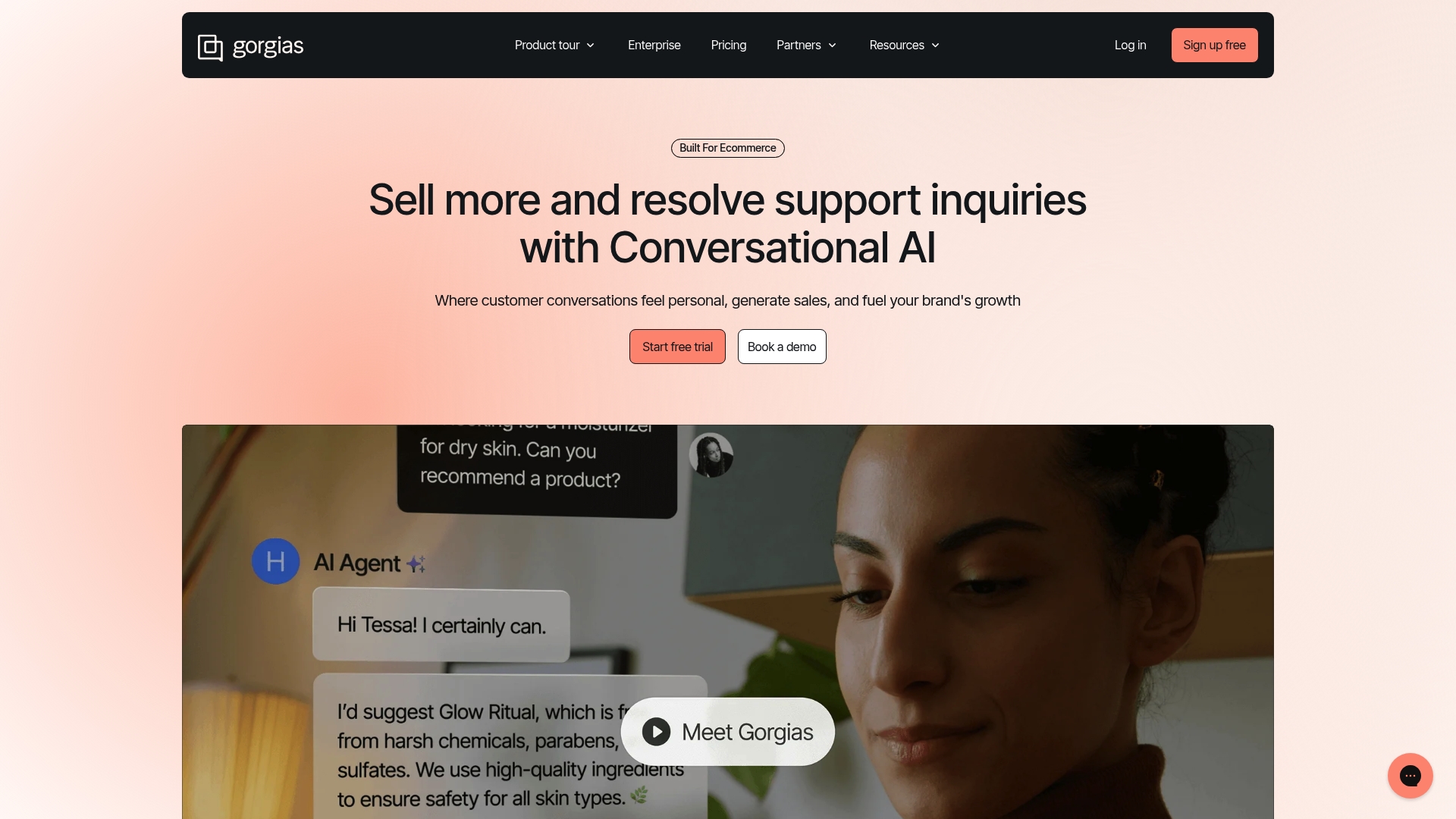
Gorgias is a well-known name in the e-commerce helpdesk space. Its primary strength is consolidating all your customer conversations from email, chat, social media, and phone into one platform, giving your agents a complete view of each customer.
Gorgias has a Voice add-on that integrates phone support into the helpdesk. It includes features like call menus and routing, plus AI-powered call summaries to help human agents work faster.
Their AI Agent can also automate text-based chats and resolves up to 60% of those inquiries.
The voice features in Gorgias are designed to improve the efficiency of human agents rather than provide a fully autonomous voice agent. It excels at unifying all support channels into a single system.
Pricing:
- Helpdesk plans are based on tickets, starting at $50/month for 300 tickets.
- Voice, SMS, and the AI Agent are all paid add-ons, so the final price can increase based on usage. For example, the AI Agent costs $0.90 per resolved chat on an annual plan.
Best for: Stores that need a powerful omnichannel helpdesk and want to make their human team more efficient across all channels, including phone.
3. eesel AI
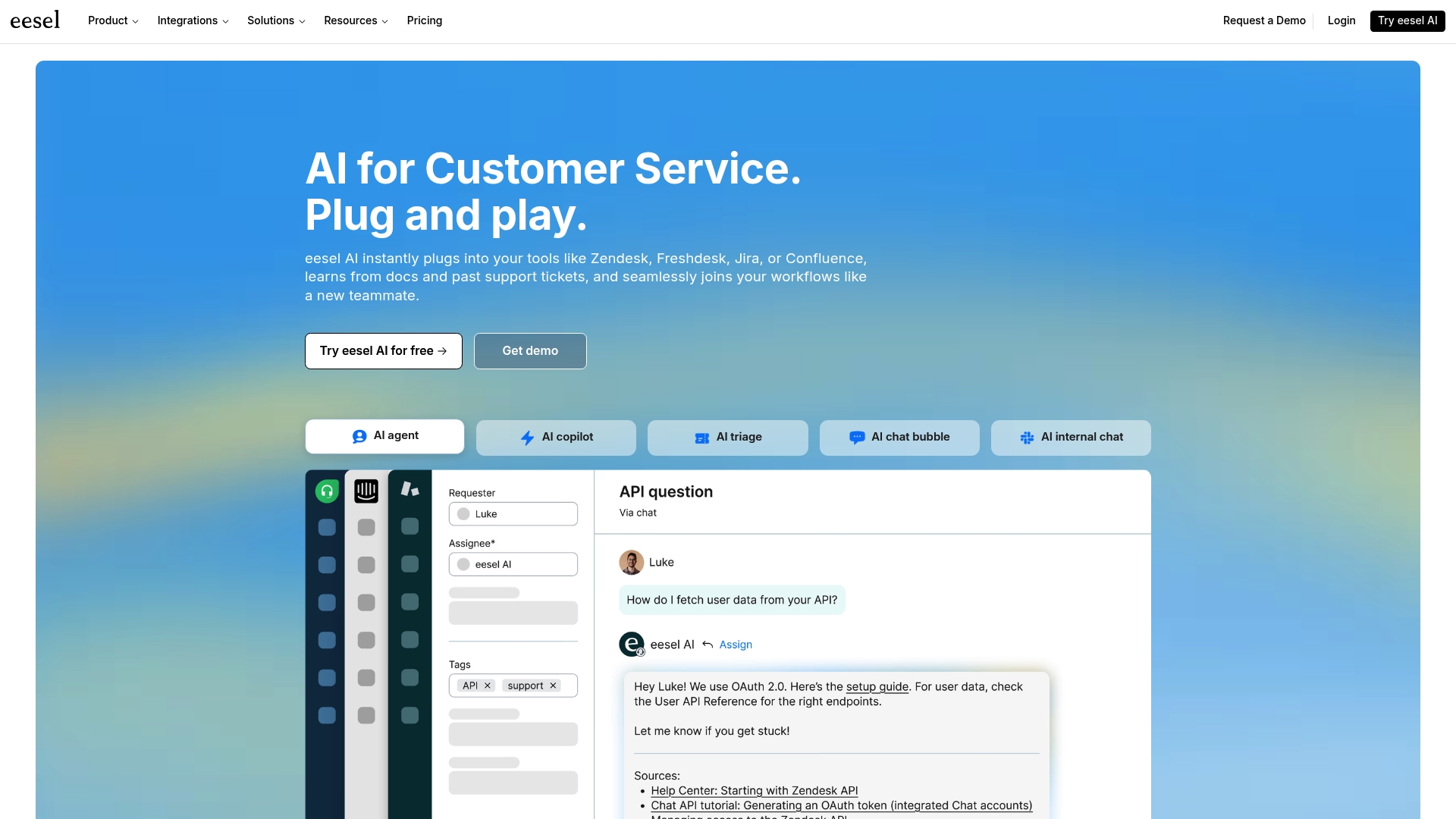
eesel AI functions as an AI layer on top of your existing helpdesk, such as Gorgias or Zendesk. It analyzes your past support tickets to learn how to answer customer questions in your brand's voice.
It includes an "AI Agent" for automatic replies, an "AI Copilot" that assists human agents in writing responses, and "AI Triage" for sorting tickets. A notable feature is its "simulation mode," which allows you to see how the AI would have handled past tickets before activation. They report an average autonomous resolution rate of 81%.
eesel AI specializes in automating text-based support channels like chat and email. It does not include native voice or phone support features, making it a suitable option for businesses looking to automate their existing helpdesk for written inquiries.
Pricing:
- Team Plan: Starts at $299/month for up to 1,000 interactions.
- Business Plan: $799/month for up to 3,000 interactions, which includes the ability to train on your past tickets.
Best for: Businesses with a high volume of chat and email tickets that want to automate replies within their existing helpdesk.
4. Zipchat
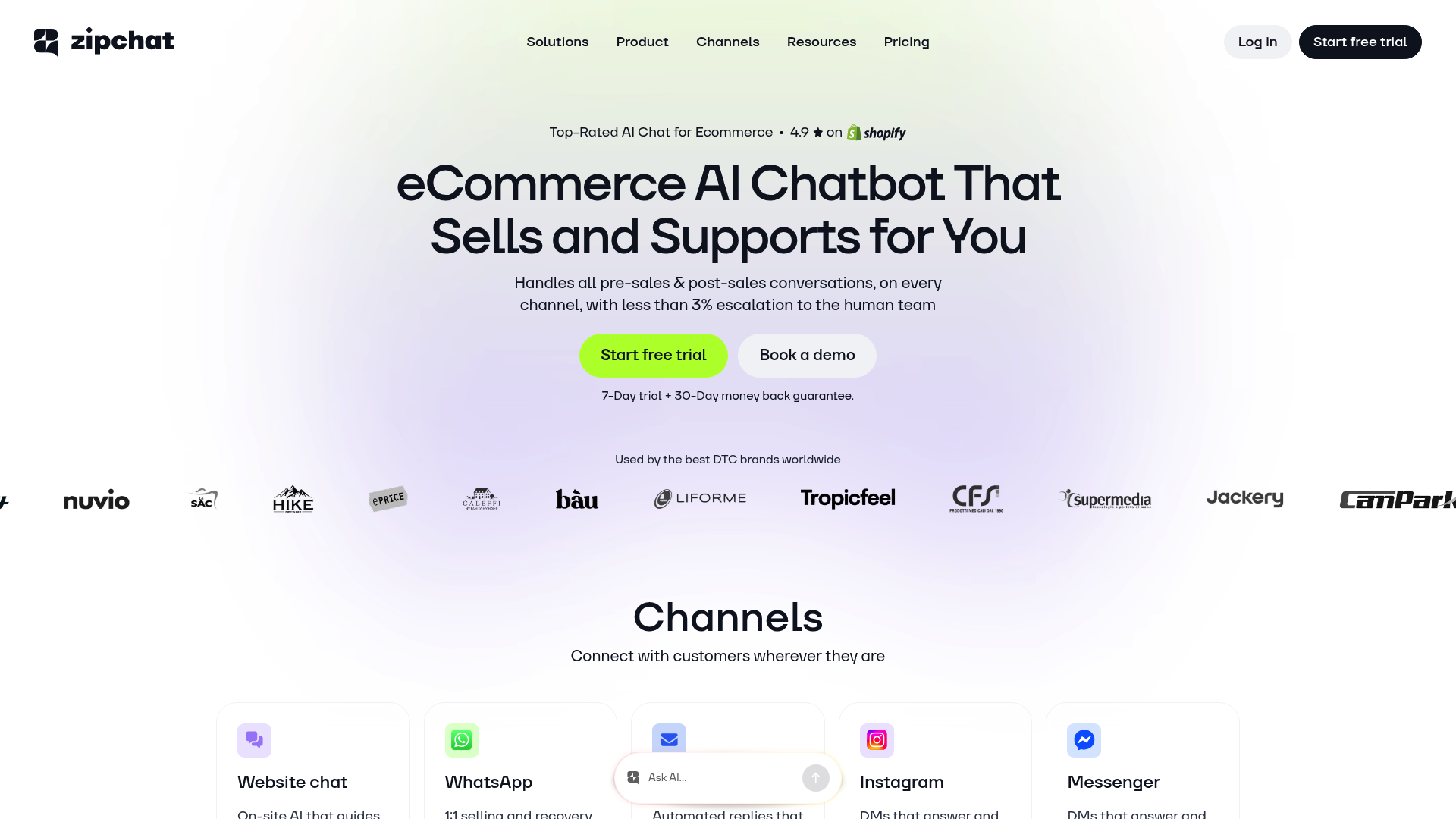
Zipchat is an AI chatbot for e-commerce that is more focused on driving sales than on handling post-purchase support.
Its primary function is to assist customers while they are shopping. It uses a website chat widget to proactively engage visitors, recommend products, and even offer Shopify discount codes to prevent cart abandonment.
It works on your website, WhatsApp, and email, and they claim that fewer than 3% of chats require a human.
Zipchat is a text-based tool designed to increase sales conversions on a website. Its features are centered around proactive engagement with shoppers, making it distinct from tools designed for automating phone support.
Pricing:
- Plans are based on the number of replies, starting at $49/month for 500 replies.
- The popular Growth plan is $129/month for 1,500 replies.
Best for: E-commerce stores that want to boost conversion rates with proactive, AI-powered sales assistance on their website.
5. The DIY stack (n8n + ElevenLabs + Twilio)

If you have technical expertise, you could build your own AI phone agent. This involves integrating several different services to create a custom solution from scratch.
Here's what you would need:
- Phone & Call Infrastructure: Twilio provides the phone number and handles the calls. It is pay-as-you-go, around $0.0085/min to receive a local call in the US.
- AI Voice: ElevenLabs provides natural-sounding AI voices. Paid plans start at just $5/month.
- The "Brain" (LLM): You would use a Large Language Model like OpenAI's GPT series to power the conversation.
- Workflow Automation: A tool like n8n connects all these services to your Shopify store.
The main advantage here is complete control. This approach also has significant considerations: it requires advanced technical skill, a substantial time investment for setup and maintenance, and has unpredictable costs.
For these reasons, many stores may find an all-in-one solution to be a more practical alternative.
Pricing: Varies significantly based on usage. You might spend $200-$400/month, but that could easily increase with high call volume.
Best for: Founders with a technical background or businesses with developers who need a completely custom solution.
For those curious about what a DIY automation workflow looks like in practice, the video below offers a detailed walkthrough of building an e-commerce AI chatbot using tools like n8n.
It provides a great visual guide to how different services can be connected to create a functional support agent.
This video from n8n provides a detailed walkthrough on building an e-commerce AI chatbot for instant customer support.
Best practices for implementation
Implementing AI automation can seem complex, but it does not have to be. Here are a few simple tips to help you select the right tool and get it running smoothly.
- Start with your biggest headache. Do not try to automate everything at once. Are you getting too many "Where Is My Order?" calls? Is cart abandonment impacting your sales? Identify your single biggest problem and find a tool that solves it.
- Ensure the human handoff is clean. No AI is perfect. A good system knows when it is out of its depth and can pass a customer to a human smoothly. Your team should get the full conversation history so the customer does not have to repeat everything.
- Look for deep platform integration. A generic chatbot is not as helpful as one that connects directly to your e-commerce platform. A tool like Ringly.io that integrates with Shopify can give real-time, accurate answers about orders, which helps build customer trust.
- Be honest with your customers. You do not need to pretend your AI is a person. Most customers are fine talking to a bot as long as it is helpful and they know they can get to a human if they need to. A simple, "Hi, you're speaking with our automated assistant" works perfectly.
Getting started with AI phone support automation
Automating customer support is one of the most strategic moves an e-commerce business can make. It lets you offer the instant, 24/7 help that customers expect without the high cost of a traditional call center.
By handling repetitive tasks, AI allows your team to focus on building relationships and solving the kinds of problems that create loyal customers.
While chat automation gets a lot of attention, do not overlook the phone.
For many customers, especially when something is urgent, picking up the phone is still the quickest way to get help.
If you are ready to get your phone support under control, a specialized tool is an effective approach.
Ringly.io offers a simple and direct path to automating your phone lines. You can set up its AI phone rep, Seth, in under 1 hour and start seeing fewer calls come through to your team. Ready to see how much time you can save? Book a call to learn more and get started.