
This post in 30 seconds.
- A big share of a coffee brand's phone volume is older customers calling to order, because they won't use the website, mostly nights and weekends when nobody's at the desk.
- AI voice support picks up that line 24/7 for roast-date, freshness, gift-timing, WISMO, and subscription calls, and hands the genuinely human ones to your team.
- Built for $10M-$100M Shopify roasters with a visible phone number and a paid helpdesk.
It's 7:10pm. A customer who's been buying the same dark roast from you for four years calls to reorder, the way she always does, because typing a card number into a website still feels wrong to her. Your line rings out. She gets the voicemail greeting, hangs up, and doesn't leave a message. You never know she called.
That call is worth more than you think, and it's the call your phone setup is built to drop. We run AI phone support for coffee brands on Shopify, and when we pulled a week of real call logs across them, the pattern was the same one almost nobody builds for: the after-hours caller, usually older, ordering something she's ordered for years, reaching a line that went quiet at 5pm.
If you run a $10M-$100M coffee brand on Shopify and your weekends are a voicemail backlog you skim on Monday, this is for you. Book a 30-min call and we'll pull your missed calls and show you who's hitting the voicemail.
Who's actually on the other end of a coffee brand's phone
Search "AI voice for coffee" right now and you'll get two things: SoundHound helping Peet's baristas in-store, and drive-thru ordering at Wendy's. Neither one is your problem. You don't run a café. You ship bags, and a real slice of the people buying those bags reach you by phone because they will not use the site.
A lot of those callers are 55 or older. They know your products by name, not by SKU. They call to reorder, to ask when it shipped, to make sure the gift gets there in time. And they call when they have a quiet moment, which is the evening or the weekend, which is exactly when your team has gone home.
The math on a missed coffee call is brutal: 85% of callers who can't reach a person never call back, and 62% of them switch to a competitor (PCN, 2026). For a younger, web-native buyer that's a lost sale. For a 60-year-old who calls because she trusts a human voice, a dead line reads as the brand not caring anymore. That relationship is the whole asset, and a voicemail box is a strange way to protect it.
The relationship is measurable, too. Specialty coffee buyers will pay more and recommend more when the service feels human: 42% of consumers say they'll pay more for friendlier service, and nearly three-quarters are more likely to recommend a brand after a good interaction (Zippia, via Perfect Daily Grind). Oliver Wyman found service consistency alone can move up to a third of the sales difference between locations. The phone is where coffee brands are least consistent, because it's staffed nine-to-five and silent the rest of the time.
There's a second group you're underserving, and it's quieter: the gift buyer in December who isn't your usual customer at all. They got your name from a roast someone served them, they want to send a bag to their dad, and they have a delivery date they care about more than the price. They call because a gift feels like the kind of thing you confirm with a person. If that call hits voicemail in the first week of December, you didn't just lose one order, you lost the relationship with whoever they were buying for too.
So the question isn't really "should we add AI." It's "who picks up when the customer who only ever calls, calls, and we're closed."
What coffee customers actually call about, and which calls need a human
Pull a week of any coffee brand's call logs and the conversations collapse into a handful of buckets. The point here isn't the list, it's that most of these are the same questions over and over, and only a couple genuinely need a person.
- Roast date and freshness. "When was this roasted?" "Will it still be good?" Coffee is the rare DTC product where the customer is anxious about how recently it was made. The answer lives in your data.
- Where's my order, and will the gift arrive in time. WISMO is 30-40% of support tickets in a normal week and over half at peak (Salesforce). At a coffee brand it spikes in November and December, and the FTC's holiday delivery rules mean a late gift can turn into a forced refund.
- Pause, skip, or change my subscription. High volume, and making people call to do it is a known way to lose them. Coffee52 gets flagged on Trustpilot for phone-only cancels and long holds. An always-on line that just does it is the opposite reputation.
- What grind do I need. Sometimes simple, sometimes a real conversation about a specific machine. When it's ambiguous, it should go to a human. Trade Coffee has public reviews about repeatedly sending the wrong grind, which is what happens when nobody disambiguates.
- The emotional or wrong-order call. A spoiled shipment, a missed birthday, an order that arrived as the wrong thing. Black Rifle Coffee has reviews about an automated line that told callers it was busy and hung up. That's the exact call that must reach a person, fast.
Four of those five are routine enough to answer automatically, and one or two should always reach your team. A good setup knows the difference and routes on it, instead of treating every call the same.
If you want the deep breakdown of each call type, we wrote a companion guide to the calls voice AI can actually take for coffee brands. This post is about standing it up. There's also a specialty-food phone-support guide if you sell more than coffee.
What "AI voice support" actually means for a roaster
Here's the deal. AI voice support is not a chatbot, it's not the in-store assistant Peet's gave its baristas, and it's not a system that takes the order and charges the card for you. For a DTC roaster it means one specific thing: an AI phone agent that answers your existing number around the clock, reads your Shopify order data and your knowledge base, resolves the routine calls on its own, and transfers the rest to your team with the context attached.
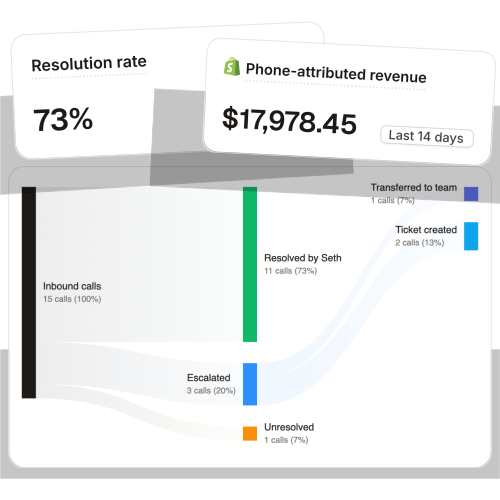
Ringly.io is AI phone support for Shopify brands. Across 50+ brands the AI resolves 73% of inbound calls on its own, at roughly $0.42 per resolved call, and the calls that need a human escalate cleanly to Gorgias or whatever helpdesk you already run. This is the same kind of WISMO call load that buries email queues, only it's arriving by phone. You keep your number, your stack, and control over what escalates.
The distinction matters because most of the bad coffee-AI stories you've heard come from tools that blurred it. They tried to handle everything, fumbled the emotional call, and the customer told the internet. A line that's honest about what it does and clean about when it hands off doesn't generate those stories. The simplest way to think about it is three columns.
| It handles on its own | It transfers to your team | It's not built for |
|---|---|---|
| Roast date, freshness, WISMO, ship-by dates, subscription pause/skip, simple grind questions | Emotional calls, wrong-order complaints, ambiguous grind consults, anyone who asks for a person | Taking and charging a phone order end to end, real-time inventory promises |
The objection we hear most in coffee is "our older customers will hate talking to a machine." It's the right thing to worry about, and it's why voice quality is the whole game here. The most repeated thing customers say after a call is that it didn't sound like AI.
"My customers also feel like it's a normal person. They feel like they can communicate if they have questions."
Claudia Droge, TechCraft Studio
That's the bar. If the voice is good enough that a loyal 60-year-old caller doesn't bristle, you've kept the relationship and answered the call. If it isn't, you've made the problem worse. So before you commit, book a 30-min call and hear it for yourself.
What it costs versus the team you'd otherwise hire
Coffee brands run a small team year-round and a much bigger one for the gifting months. Take a typical $20M brand:
| Line item | Cost |
|---|---|
| 4 reps × $4K loaded, year-round | $16,000/mo ($192K/yr) |
| 4 seasonal reps × $4K × 3 months | $48,000/yr at peak |
| True annual CS spend | ~$240,000/yr |
AI voice support at roughly $3K-$5K/mo handles the roast-date, freshness, gift, and subscription calls year-round and absorbs the November-December spike without the seasonal hiring scramble. That's the part that quietly costs the most: hiring four seasonal reps in October, training them through November on your products and your tone, and watching them leave in January. You pay the loaded cost and the training cost and you never get the tenure that makes a rep good. The AI doesn't churn, doesn't need re-training next year, and already knows your catalog.
Net savings land somewhere around $140K-$180K a year depending on volume. Per call, you're comparing about $0.42 resolved against $2.70 for an in-house rep or $1.50 to $3.50 through a BPO. The number that matters more than any of those, though, is the revenue on calls you currently drop. Those don't show up on a cost line anywhere, which is exactly why they're easy to ignore.
Exact Enterprise pricing is set on a call, not published, because it's sized to your actual call volume. These are the savings shapes we see across 50+ Shopify brands, not a quote.
The volume side surprises people. Gear Rider closed 1,595 sales and support calls in 90 days without a single phone rep on the line, and most of that came from buyers who'd rather talk than fill out a form. On the revenue side, WashCo, a Shopify brand we launched, recovered $22,664 in its first 7 days on the phone. Those are calls that used to roll to voicemail.
How to set it up without losing the relationship
This is the part the rest of the internet skips. Standing up voice support badly is worse than not having it, especially when your callers are loyal and easily spooked. Here's how we run it.
- Keep your number and route, don't replace. The customer dials the same line she always has. The AI answers, and anything it shouldn't handle transfers to your team with the call context already attached.
- Feed it the coffee specifics. Roast dates, shipping windows, your subscription rules, your gift-cutoff calendar. The AI checks order status against Shopify and answers freshness and ship-by questions from your knowledge base, so it's never guessing.
- Write the escalation rules first. Decide on day one which calls always reach a person: anything emotional, any wrong-order complaint, any ambiguous grind consult, and anyone who simply asks for a human. Hard-code it.
- Listen to the first calls and tune the voice. When we launch a coffee brand, I listen to the first ten real calls myself and adjust how the agent sounds and where it hands off. That's the difference between a line your oldest customers accept and one they don't.
- Let us own the build. The 14-day Launch Sprint is done-for-you. You're not the implementation team, and you're not learning a new tool. We build it, you approve it.
Do those five things and the after-hours line stops being a black hole. The customer who calls at 7pm gets a real answer instead of a beep, and your team spends Monday on the calls that actually need them instead of clearing a voicemail backlog. If you want the broader picture of running a coffee line without drowning, we cover that in our coffee brand customer service guide, and the subscription side here.
Frequently asked questions
Will my older customers be annoyed talking to AI? It's the right worry, and the answer comes down to voice quality. The most common thing callers say is that it doesn't sound like AI. Hear it on a demo call and judge for yourself before you decide.
Can it take an order over the phone? Not end to end. It won't charge a card for you. It can send an SMS payment link or transfer a ready-to-buy caller to a human, so you don't lose the sale, but full phone ordering isn't something we do natively today.
Does it know my roast dates and shipping times? Yes, once you feed it. It reads your Shopify order data and your knowledge base, so it answers "when was this roasted" and "when does it ship" from real data, not a script.
What happens to calls it can't handle? They transfer to your team with the context attached, based on rules you set. Emotional calls, wrong-order complaints, and anyone asking for a person are routed to a human by design.
Does it work with Gorgias and my current helpdesk? Yes. It sits in front of your stack and escalates into Gorgias, Richpanel, Reamaze, or whatever you run. You keep your tools and your workflows.
How fast can we go live, and is there a guarantee? The done-for-you build runs on a 14-day Launch Sprint. And if the AI resolves under 65% of your calls in 90 days, we refund the last 3 months of subscription fees.
Talk to us

If you run a coffee brand on Shopify and your line goes quiet exactly when your oldest, most loyal customers call, a 30-min call is the fastest way to see what you're leaving on the table after hours. We'll pull your missed calls and walk the numbers with you.
The 3-layer guarantee.
- Live in 14 days or it's free until launched.
- 65% resolution in 90 days or we refund the last 3 months of subscription fees.
- We keep working free until we hit 65%.
Ruben (Ringly co-founder) takes these calls personally.