
This post in 30 seconds.
- An AI receptionist for a coffee brand isn't the café front desk taking pickup orders. It's the always-on phone line on your Shopify store that answers WISMO, roast-date, gift-deadline, and subscription calls, then hands the hard ones to your team.
- The real leak isn't daytime volume. It's the 6 p.m.-to-9 a.m. window where the gift caller and the 50-plus subscriber hit voicemail and don't call back.
- Built for founders and CX leads at $10M-$100M Shopify coffee brands running a paid helpdesk with a visible phone number.
Your phone line goes quiet at 6 p.m. The gift orders, the roast-date questions, the subscriber who wants to skip next month, they all hit voicemail. For most products a missed call is a slow ticket you clear tomorrow. For coffee it's a bag that ships late, arrives stale, or misses a birthday, and that's a refund plus a churned subscriber.
I called the after-hours phone lines of several DTC coffee brands on a Sunday night to see what happens. Most rang four or five times and dropped to a generic voicemail. One disconnected mid-message. Not one of them had anyone, or anything, that could tell me whether my order had shipped. That gap is what an AI receptionist closes.
If you run a Shopify coffee brand doing $10M-$100M and your support team is small enough that the phone is somebody's second job, the voicemails you never return are quietly costing you reorders. We build AI phone agents for 50+ Shopify brands with exactly this shape of problem. Book a 30-min call and we'll show you what your line is dropping after hours.
In this post:
What an AI receptionist actually is for a coffee brand (not a coffee shop)
Search "AI receptionist for coffee" and you get café advice: take a pickup order, book a table, text a link. That's a brick-and-mortar problem. A DTC coffee brand has a different one. Your "front desk" is the phone number sitting in your Shopify footer, and the people calling it aren't asking about a flat white. They're asking where their beans are.
An AI receptionist for a coffee brand answers that line 24/7. It picks up on the first ring, finds the order in Shopify, reads back the tracking, explains the roast date, and handles a subscription change, all in a normal voice. The calls it can't close, it routes to your team with the context attached. It sits on top of the store you already run, not a café POS.
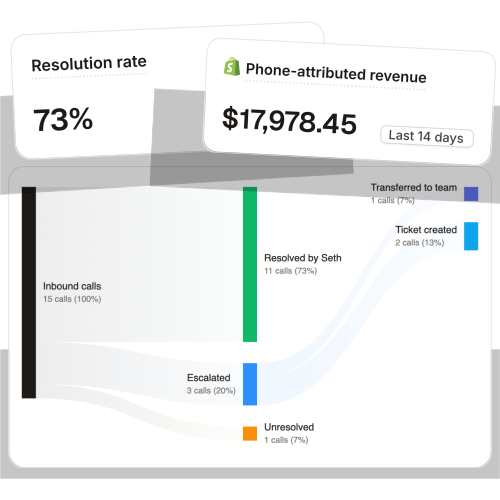
The job isn't answering phones, it's making sure the routine call never has to wait for a human who's offline. Across our brands the AI resolves about 73% of inbound calls on its own, which means roughly seven of every ten callers get a real answer without a rep touching it. WISMO alone runs 30-40% of support tickets in a normal week and climbs past 50% at peak, according to Salesforce. A receptionist that handles that bucket end to end is the difference between a calm queue and a backlog.
This is the same idea behind a virtual receptionist for ecommerce, tuned for the calls a roaster actually gets. If you want the general version first, the virtual receptionist guide covers the basics.
The five calls your coffee receptionist answers all day
Coffee support has a shape almost nobody writes about. The same five questions, over and over, from a crowd that calls instead of typing. Here's what lands on the line.
- Where's my order. The WISMO call. "Has it shipped, when does it arrive, here's my order number." The receptionist looks it up in Shopify and reads back the live status. This is the single biggest bucket and the easiest to close.
- Roast date and freshness. "When was this roasted? Will it still be fresh when it gets here?" Coffee buyers care about roast date the way wine buyers care about vintage. The agent answers from your knowledge base, not a guess.
- Gift orders with a deadline. "I need this to arrive by the 24th." Gift windows have hard delivery dates, and a wrong answer here is a refund. The receptionist checks shipping windows and sets the expectation honestly.
- Subscription skip, pause, or grind change. "I want to skip next month" or "switch me to coarse grind." This is the save call. Handled well, the subscriber stays. Missed, they cancel.
- Damaged, stale, or wrong-grind replacement. "The bag came crushed" or "you sent whole bean, I wanted ground." A quick replacement keeps a loyal customer loyal.
Roughly 70% of the calls a coffee brand gets are these same five questions, which is exactly the work that doesn't need a human. That last 30%, the odd or emotional call, still goes to your team. For a deeper breakdown of each call type, we wrote a companion piece on the five coffee calls, and the WISMO calls guide goes deep on the order-status bucket. The subscription side has its own coffee subscription support playbook, and order tracking ties it together.
The real problem is the empty desk after 6 p.m.
Here's the part the café posts miss. Your daytime queue is annoying but survivable. The expensive gap is the one where nobody's home.
Coffee buyers skew older, and the loyal 50-plus crowd picks up the phone. They call in the evening, on weekends, and during the gifting rush, which is precisely when your small team has logged off. When they hit voicemail, most of them don't leave a message and don't call back. Eden's data puts it at 80% of voicemail-routed callers hanging up without a word. PCN found that 78% abandon a brand after one unanswered call and 62% switch to a competitor. And most businesses only answer 37.8% of their inbound calls in the first place, per AmbsCallCenter.
The 50-plus subscriber who calls at 8 p.m. and hangs up on your voicemail is the most loyal customer you have, and the one you're most likely to lose silently. One coffee founder told us a majority of his calls were people trying to place an order because they didn't feel comfortable buying on the website. That's a big chunk of revenue waiting on the other end of a line nobody's picking up.
A receptionist that's awake at 8 p.m. catches all of it. Gear Rider, a specialty brand on Ringly, handled 1,595 calls in 90 days without a phone rep, which is the kind of volume a coffee brand hits across a holiday window. The agent doesn't get tired at the 400th "has it shipped."
The objection here is always the same: my customers are older, they'll hate a robot. It's the right thing to worry about, and it's also the thing customers tell us about most:
"My customers also feel like it's a normal person. They feel like they can communicate if they have questions."
Claudia Droge, TechCraft Studio
The most repeated compliment we hear is "you don't sound like AI." That matters more in coffee than anywhere, because the demographic is the most skeptical. You can hear it yourself before you decide anything.
The gifting spike is where the receptionist earns its keep
Coffee has a seasonal shape most DTC categories don't. A huge slice of the year's revenue runs through the November and December gift window, and that window comes with a hard deadline attached to every order. "Will it arrive before Christmas" isn't a casual question. It decides whether a customer keeps you or asks for a refund.
That's also when call volume triples and your team is already stretched. You either hire four seasonal reps who take six weeks to learn your catalog and leave in January, or the overflow rolls to voicemail at the worst possible moment. Neither is good. The seasonal hire is expensive and slow, and the voicemail is a lost gift order plus an angry review.
A receptionist absorbs the gifting spike without a single seasonal hire, because it doesn't care whether it's handling 50 calls a day or 500. It answers the "will it arrive by the 24th" call at 9 p.m. on a Sunday in December the same way it answers a Tuesday-morning WISMO call in April. The US specialty coffee market is around $23.8B and online is its fastest-growing channel, so the gift-season crunch only gets heavier each year. For brands running subscriptions through the holidays, the coffee subscription playbook pairs with this.
What the receptionist hands back to your team
A good receptionist knows what it can't do. This is where being honest beats overpromising.
It does not take orders over the phone natively. If an older customer wants to place an order by voice, the agent transfers to a human or sends a secure payment link by text. We'd rather tell you that up front than pretend a card-over-the-phone flow works cleanly when it doesn't. Same with anything emotional or unusual: a complaint that needs a real apology, a VIP wholesale buyer, a one-off that isn't in the knowledge base. Those escalate to your team with the call context attached, so your rep isn't starting cold.
You decide what escalates and what doesn't, down to the rule. The agent handles the routine 70% so your reps spend their day on the calls that actually need a person, not the 50th order-status check. Escalation runs through smart call transfer, and the brand-specific work like subscription changes runs on custom actions you approve. If you're weighing this against outsourcing, the BPO-for-Shopify breakdown is worth a read.
What an AI receptionist costs vs a coffee CS team
Coffee brands run a small team year-round and a much bigger one for the November and December gift rush. Here's what that actually costs.
| Line item | Today | With Ringly |
|---|---|---|
| 4 reps year-round, $4K loaded each | $16,000/mo | included |
| 4 seasonal reps, 3 months for the gift rush | ~$48,000/yr peak | absorbed |
| True annual CS spend | ~$240,000/yr | n/a |
| AI receptionist | n/a | a fraction of one rep's loaded cost |
| Net savings | n/a | ~$140,000-$180,000/yr |
The per-call math is just as stark. An in-house rep call runs about $2.70 loaded. On Ringly a resolved call costs roughly $0.42, versus the $7 to $16 a human BPO charges per call. And replacing a single CS rep who burns out costs $14,113, according to Gartner data via Insignia. The receptionist doesn't quit in month seven.
This isn't about cutting your team. It's about not hiring rep number five every time the gift season spikes, and about keeping the subscriber who calls to cancel on the line long enough to offer a skip instead. A saved subscription is twelve months of margin you would have lost to voicemail.
Want the real number for your store? Book a 30-min call and we'll do the math live against your call volume. You can see the self-serve pricing too.
How it sits in front of your helpdesk (your stack stays)
You're already paying for a helpdesk. The receptionist doesn't replace it. It sits in front of it.
Keep your phone number, keep your knowledge base, keep your workflows. The AI takes the inbound call, resolves what it can, and when a call needs a human it escalates cleanly into Gorgias, Zendesk, or whatever you run. You don't rip anything out. You add a layer that handles the phone, which is the channel most helpdesks are weakest at.
I built this playbook from the 50+ Shopify brands we run phone support for, not from competitor blog posts. I pulled our own dashboard data on which call types resolve without a human and which need to escalate, and I spent a Sunday night calling real DTC coffee after-hours lines to confirm the gap is as wide as our customers say it is. Where I describe what the agent handles, it's because we watched it handle that exact call across coffee and specialty-food brands, not because it sounded good. The 73% resolution figure is our number across live accounts, and the calls that don't resolve are the ones we deliberately route to a person. Setup is fast: most brands are live in under an hour by pointing the agent at their site, docs, and knowledge base. The companion guides on voice AI for coffee brands and coffee brand phone support walk through the setup in more detail.
Frequently asked questions
What's the difference between an AI receptionist for a coffee shop and a coffee brand? A coffee shop receptionist takes pickup orders and books seats for a physical café. A coffee brand receptionist answers the phone line on your Shopify store: order status, roast date, gift deadlines, and subscription changes. The first is about foot traffic, the second is about reorders and retention.
Will older coffee customers accept an AI on the phone? This is the right thing to worry about, and it's the thing customers comment on most. The most repeated feedback we hear is "you don't sound like AI," and the 50-plus crowd tends to be fine once they get a real, quick answer. You can call our demo line and judge the voice yourself.
Can it take an order over the phone? Not natively. If a caller wants to place an order by voice, the agent transfers to a human or texts a secure payment link. We're upfront about that because a card-over-the-phone flow doesn't run cleanly enough to promise.
Does it work with Gorgias or our helpdesk? Yes. It sits in front of your helpdesk and escalates calls that need a human into Gorgias, Zendesk, Re:amaze, or whatever you run. You keep your phone number, your knowledge base, and your existing workflows.
How does it handle gift orders with a delivery deadline? It checks the shipping window against the requested date and answers honestly, so the customer hears the real ETA instead of a voicemail. For perishable, gift-timed orders that honesty is what prevents the refund.
What does it cost? Self-serve plans start at $349/mo, and larger brands are priced on a call based on volume. Across our brands a resolved call runs about $0.42 versus $7 to $16 for a human BPO. The savings against a seasonal coffee CS team usually land between $140K and $180K a year.
How fast can we go live? Most brands are live in under an hour by pointing the agent at their website, docs, and knowledge base. There's a 65% resolution guarantee, so the risk sits with us, not you.
Talk to us

If you run a $10M-$100M Shopify coffee brand and your phone goes dark after the team logs off, a 30-min call is the fastest way to see what those missed calls are actually costing you. We'll pull the math against your real volume and let you hear the voice before you commit to anything. One brand we launched, WashCo, recovered $22,664 in attributed revenue in its first 7 days on the phone.
The 3-layer guarantee.
- Live in 14 days or it's free until launched.
- 65% resolution in 90 days or we refund the last 3 months of subscription fees.
- We keep working free until we hit it.
Ruben (Ringly co-founder) takes these calls personally.