


Personizely has built a reputation as a website personalization and popup platform.
But at $39 per month to start, it is not the right fit for every store. Maybe you need something more affordable.
Maybe you want deeper Shopify integration, or perhaps you are looking for features Personizely does not offer.
The good news? The popup and personalization tool market has grown rapidly with options.
From free plans for startups to enterprise-grade AI targeting, there is likely a better match for your specific needs.
Editor’s note: Want to hear some sample AI support calls made for your Shopify store?
- Just paste your store URL
- Get sample calls in under 20 seconds (no email required)
- Listen to demo calls for my store
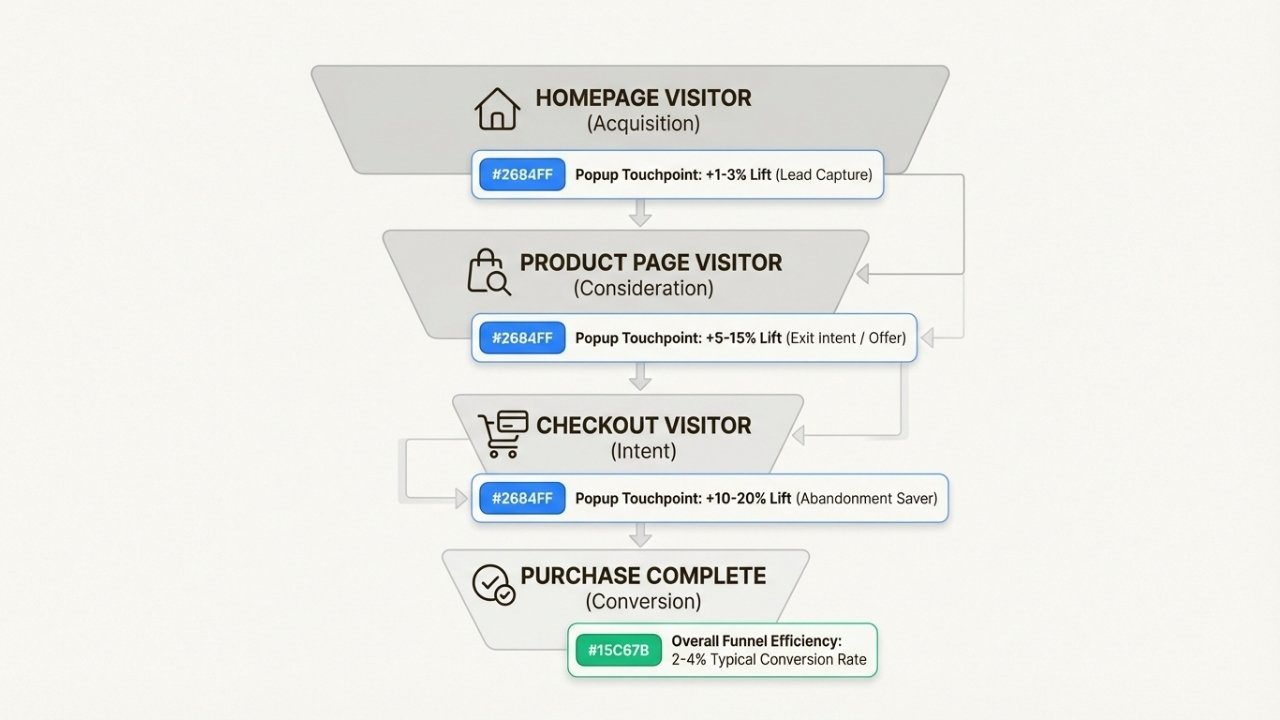
We researched and tested the top alternatives to give you actionable answers.
This guide covers 7 Personizely alternatives with verified pricing from official sources, feature breakdowns, and honest assessments of who each tool is actually for.
What is Personizely?
Personizely is a website personalization and lead capture platform designed primarily for e-commerce businesses.
It combines popup creation, A/B testing, and personalization features in one dashboard.
The platform lets you create various popup types including exit-intent overlays, spin-to-win wheels, and embedded forms.
You can personalize website content based on visitor behavior, location, and referral source.
For e-commerce specifically, it offers cart abandonment triggers, upsell popups, and product recommendations.
Pricing starts at $39 per month for the basic plan, which includes unlimited popups and A/B testing.
Higher tiers add features like advanced targeting and priority support.
Personizely carries strong ratings (4.9/5 on Capterra, 5.0/5 on G2) and appeals to users who want an all-in-one solution without complex setup.
How we evaluated these Personizely alternatives
To make this comparison useful, we evaluated each tool using consistent criteria based on what actually matters to e-commerce store owners:
- Pricing transparency: We looked for clear, published pricing without "contact sales" gates for basic plans.
- E-commerce features: Cart abandonment triggers, product recommendations, and Shopify integration were prioritized.
- Ease of setup: Tools should work for non-technical users without requiring developer help.
- Targeting capabilities: Advanced trigger rules (exit-intent, scroll-based, time-delayed) separate good tools from basic ones.
- Integration ecosystem: Native Shopify, WooCommerce, and email platform connections.
- Free trial or plan: The ability to test before committing.
We scraped official pricing pages and feature documentation for each tool to ensure accuracy. All pricing and feature claims below come directly from the vendors' websites as of February 2026.
Personizely alternatives comparison
| Tool | Starting Price | Free Plan | Best For | Key Feature |
|---|---|---|---|---|
| OptiMonk | $39/month | Yes (10K pageviews) | Advanced personalization | AI-powered recommendations |
| Justuno | $39/month | Yes (2K visitors) | AI-powered targeting | Audience sync with marketing platforms |
| Wisepops | $49/month | No (14-day trial) | Design-focused brands | Beautiful templates + analytics |
| Poptin | $25/month | Yes (1K visitors) | Budget-conscious users | Most affordable paid plan |
| ConvertFlow | $299/month | Yes (5 campaigns) | Quiz funnels | Multi-step quiz builder |
| Sleeknote | €49/month | No (14-day trial) | Email list building | Gamification features |
| Omnisend | $16/month | Yes (250 contacts) | Email + popups combined | Omnichannel marketing (email + SMS) |
The 7 best Personizely alternatives
1. OptiMonk
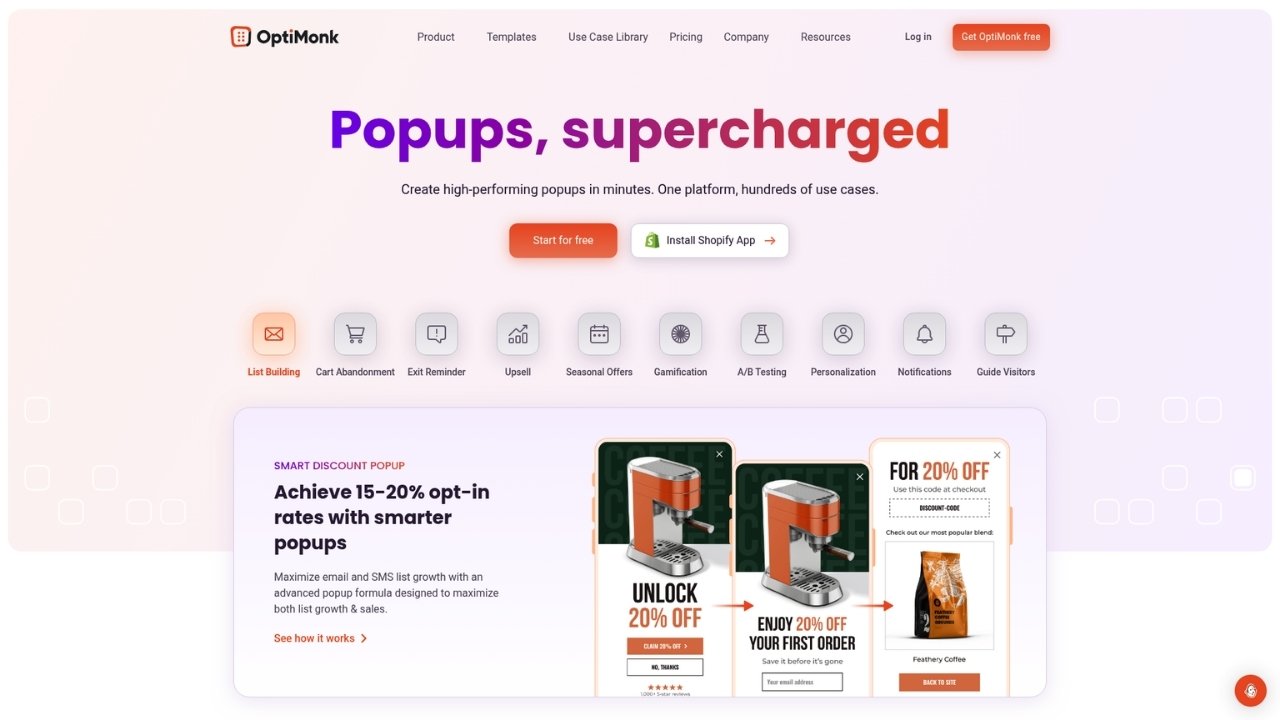
OptiMonk positions itself as an all-in-one conversion optimization platform, and the positioning holds up.
With 30,000+ brands using the tool including Acer, L'Occitane, and Qatar Airways, it has the scale to match its ambitions.
The platform covers popups, website personalization, A/B testing, and product recommendations in one subscription.
Unlike tools that specialize in just one area, OptiMonk tries to replace multiple point solutions.
Key features:
- Popup types: Lightbox, fullscreen, sticky bars, side messages, embedded content, surveys
- E-commerce focus: Product recommendations, cart-based targeting, add-to-cart from popup, stock monitoring
- Targeting: Exit-intent, scroll-based, time-based, onclick triggering, geo-targeting, Klaviyo list targeting
- Personalization: Dynamic text, AI-powered personalization, smart product recommendations
- A/B testing: Variant testing, multi-campaign testing, revenue uplift tracking
- Integrations: 100+ integrations including Shopify, Klaviyo, Mailchimp, Zapier
Pricing:
| Plan | Monthly Price | Annual Price | Key Features |
|---|---|---|---|
| Free | $0 | $0 | 10,000 pageviews/month, all features, unlimited campaigns |
| Essential | $39/month | $32.50/month | Higher pageview limits, priority support |
| Growth | $99/month | $82.50/month | Advanced targeting, A/B testing |
| Premium | $199/month | $165.83/month | Full feature set, dedicated support |
Best for: E-commerce stores wanting advanced personalization without managing multiple tools.
The free plan is genuinely usable, which makes it attractive for stores just starting to optimize conversions.
Pros: Strong Shopify integration, visual editor that actually works, smart targeting rules, generous free tier.
Cons: The advanced features have a learning curve. You will need time to master the personalization engine.
2. Justuno
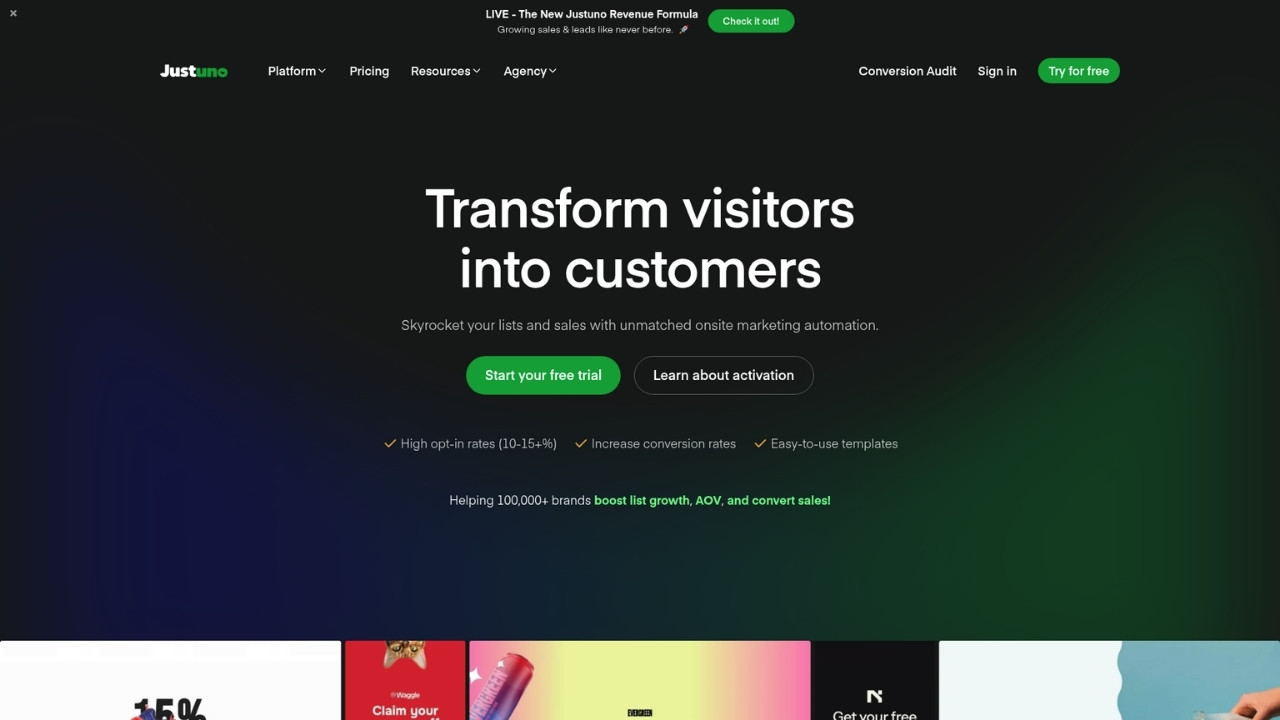
Justuno takes a different approach, leaning heavily into AI-powered targeting and segmentation.
While other tools let you set rules manually, Justuno uses machine learning to identify and target high-value visitors automatically.
The platform serves mid-size to enterprise e-commerce stores, with notable customers including Pura Vida, Tenth Street Hats, and Cornbread Hemp.
If you have significant traffic and want to optimize based on behavioral patterns rather than guesswork, Justuno warrants consideration.
Key features:
- AI product recommendations: Custom and default AI-powered recommendations
- Design Studio: Visual editor with template library
- Advanced targeting: Custom segments, custom properties, geo-targeting
- A/B testing: Multivariate testing available on paid plans
- Audience sync: Sync segments with marketing platforms
- Integrations: Deep integrations with Shopify, Klaviyo, and major e-commerce platforms
Pricing:
| Plan | Monthly Price (Annual) | Monthly Price (Monthly) | Features |
|---|---|---|---|
| Always Free | $0 | $0 | 1 Team Seat, 1 Live Workflow, 2,000 monthly visitors |
| Lite | $35.10/month | $39/month | 3 Team Seats, 3 Custom Workflows, Live Chat Support |
| Flex | $89.10/month | $99/month | Account Strategist, Custom Segments, Unlimited Workflows |
| Enterprise | Custom | Custom | Enterprise Hub, Custom Team Roles, Cross-Domain Reporting |
Best for: Mid-size to enterprise e-commerce stores with enough traffic to benefit from AI targeting.
The free plan is limited to 2,000 visitors, so you will need paid plans for any real scale.
Pros: Advanced AI targeting that actually improves over time, extensive integrations, powerful segmentation capabilities.
Cons: Higher price point than some competitors, complex interface that can overwhelm beginners.
3. Wisepops

Wisepops focuses on one thing and does it well: beautiful, high-converting popups.
With a 4.9/5 rating on both Shopify and Capterra, and customers like Harvard Business Review, Unilever, and L'Oreal, the design-first approach clearly resonates.
Unlike all-in-one platforms, Wisepops stays focused on onsite engagement.
It offers popups, web push notifications, and embeds without trying to be your email marketing platform or CRM.
Key features:
- Popup types: Popups, bars, embeds
- AI features: AI product recommendations, AI cart recovery
- Web push notifications: Re-engage visitors without email
- Gamification: Spin to win, scratch cards, seasonal calendars
- Surveys: Collect visitor feedback
- A/B testing: Built-in experimentation platform
- Advanced analytics: Revenue attribution, customer journey tracking
Pricing:
| Plan | Price | Features |
|---|---|---|
| Essential | $49/month (annual: 2 months free) | All features, up to 2 websites, basic support, 50K-1M+ pageviews |
| Enterprise & Agency | Custom | Dedicated CSM, SOC2, SSO, custom terms |
Best for: Brands prioritizing design and user experience. If you want popups that do not look like popups, Wisepops delivers.
Pros: Beautiful templates out of the box, easy to use without training, strong analytics with revenue attribution.
Cons: No free plan (only a 14-day trial), personalization features less advanced than OptiMonk or Justuno.
4. Poptin

Poptin targets small businesses and startups with an affordable, user-friendly popup builder.
At $25 per month for the paid plan (and a genuinely useful free tier), it undercuts most competitors while still delivering core functionality.
The platform offers a drag-and-drop editor with 300+ templates, gamification elements like spin wheels, and autoresponder capabilities.
For stores just starting with conversion optimization, Poptin removes the financial barrier.
Key features:
- Drag-and-drop editor with 300+ templates
- Exit-intent technology
- A/B testing
- 60+ integrations (Mailchimp, Klaviyo, Zapier)
- Gamification (spin wheels, scratch cards)
- Advanced targeting (geolocation, browser, device)
- Shopify-specific features (cart triggers, product recommendations)
- Built-in chat widget
Pricing:
| Plan | Monthly Price | Annual Price | Features |
|---|---|---|---|
| Free | $0 | $0 | 1,000 visitors/month, 1 domain, unlimited popups, branded |
| Basic | $25/month | $20/month | 10,000 visitors, 1 domain, unbranded, 1,000 autoresponders |
| Pro | $59/month | $47/month | 50,000 visitors, 4 domains, 5,000 autoresponders |
| Agency | $119/month | $95/month | 150,000 visitors, unlimited domains, 15,000 autoresponders |
Best for: Small stores and startups on a budget. The free plan handles 1,000 visitors monthly, enough for many new stores to test popup effectiveness before paying.
Pros: Most affordable option on this list, easy setup, good free plan, gamification included at all levels.
Cons: Fewer advanced features than enterprise tools, templates are more basic than Wisepops or OptiMonk.
5. ConvertFlow
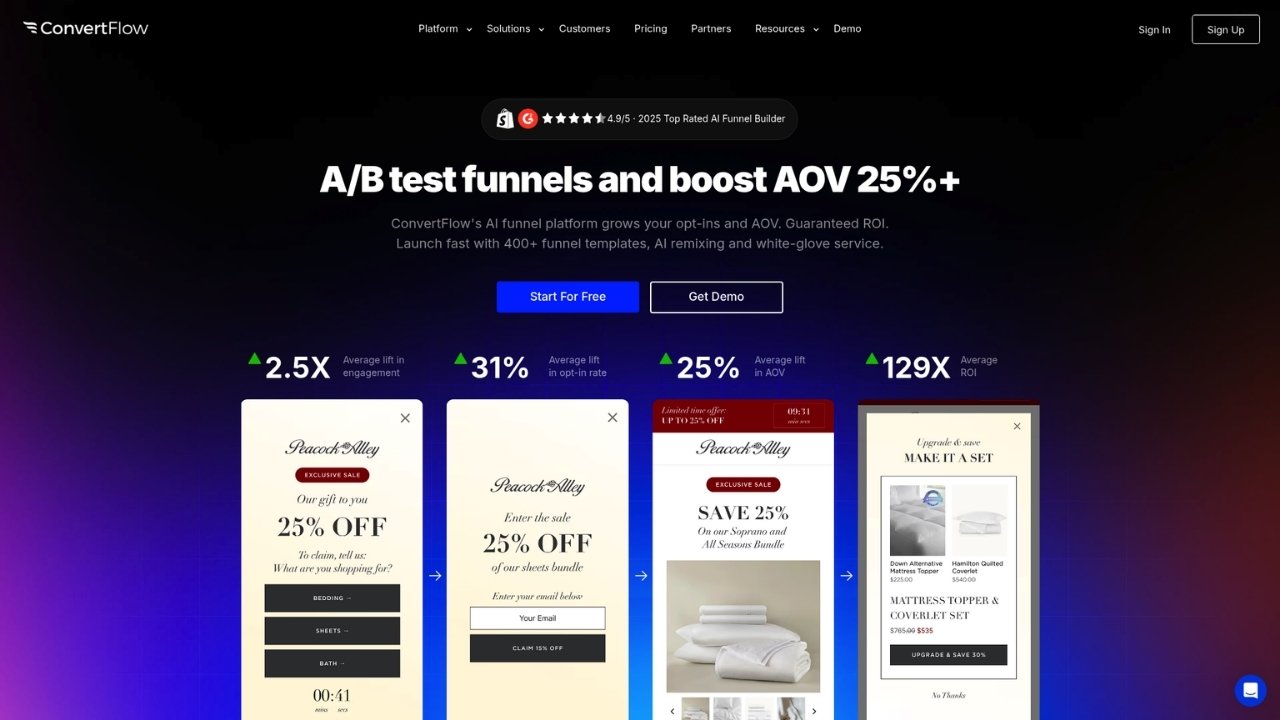
ConvertFlow takes a different approach, positioning itself as a platform that replaces 8+ tools with one subscription.
It combines landing pages, popups, quizzes, surveys, and personalization in a single dashboard.
With customers like Porsche, Talkspace, and Glowforge, ConvertFlow clearly serves the mid-market to enterprise segment.
The quiz builder is particularly strong, making this the go-to choice for stores wanting interactive content.
Key features:
- Landing pages: Full landing page builder
- Quiz funnels: Multi-step quizzes with conditional logic
- Popups & sticky bars: All popup formats
- Product recommendations: Conditional recommendations
- A/B testing: Funnel and website experiments
- Personalization: Dynamic content replacement
- Integrations: Klaviyo, Zapier, Segment, custom webhooks
Pricing:
| Plan | Monthly Price | Annual Price | Features |
|---|---|---|---|
| Free | $0 | $0 | 5 funnel campaigns, unlimited previews, 1 free site |
| Pro | $299/month | $250/month | 30K funnel views, unlimited campaigns, A/B testing |
| Plus | $833/month | Custom | 100K+ funnel views, priority support, custom integrations |
| Custom | Custom | Custom | SOC 2, SSO, dedicated funnel operator |
Best for: Stores wanting quizzes and interactive content, or businesses looking to replace multiple CRO tools with one platform.
Pros: Powerful quiz builder, replaces multiple tools, strong automation capabilities.
Cons: Expensive starting price ($299/month), can feel overwhelming with all the features, overkill for simple popup needs.
6. Sleeknote
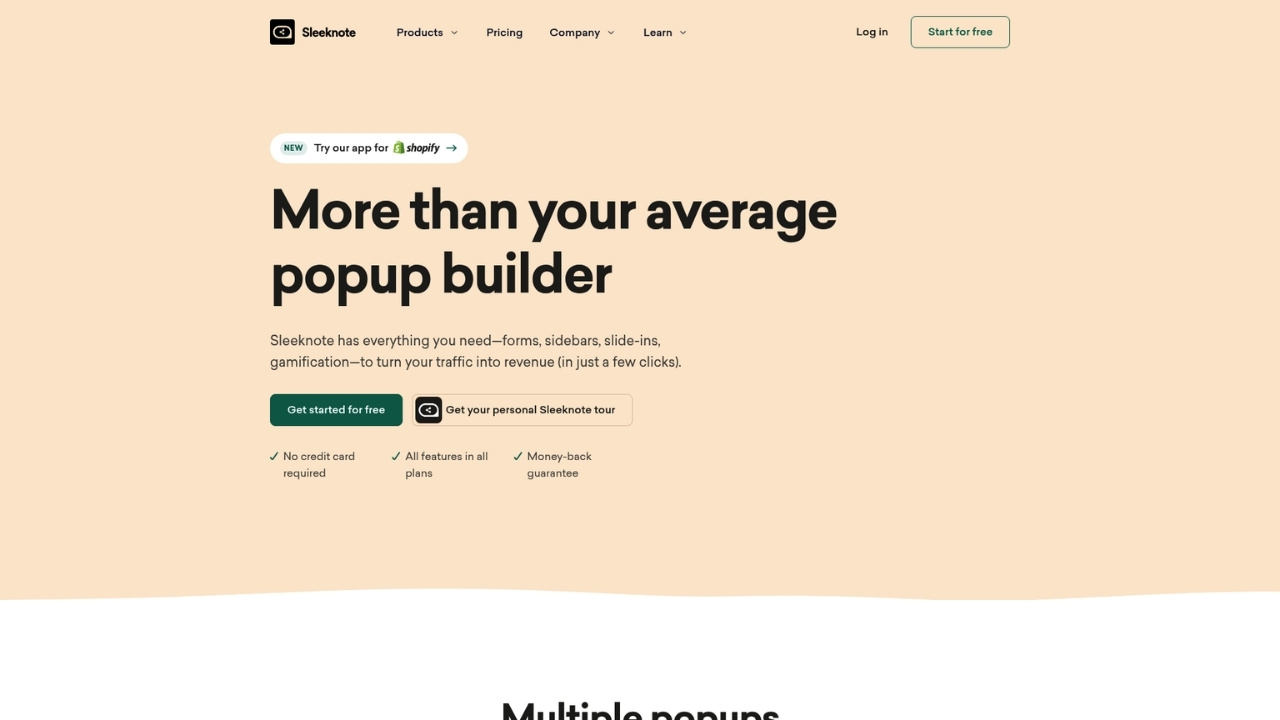
Sleeknote is a lead capture tool built specifically for e-commerce.
Unlike general-purpose popup builders, every feature is designed with online retail in mind.
The platform emphasizes gamification for email capture, with features like Spin to Win, Scratch to Win, and seasonal calendars.
Based in the EU (Denmark), it also appeals to European businesses concerned with GDPR compliance.
Key features:
- Popup types: SleekBoxes (popups), teasers, embedded forms
- Gamification: Spin to Win, Scratch to Win, Seasonal Calendar, Daily Offers, Quiz
- Targeting: Page-level targeting, geo-targeting, behavior automation
- A/B testing: Built-in split testing
- Product recommendations: Recently viewed, most popular
- Integrations: All major email service providers
- Support: Unlimited phone, chat, and email support on all plans
Pricing:
Pricing is based on monthly visitors with two tiers per level:
| Visitor Tier | Core Plan | Core + Gamification |
|---|---|---|
| 0-25,000 | €49/month | €68/month |
| 25,000-50,000 | €59/month | €80/month |
| 50,000-125,000 | €114/month | €148/month |
| 125,000-200,000 | €168/month | €216/month |
| 200,000-300,000 | €225/month | €288/month |
| 300,000-500,000 | €369/month | €468/month |
Annual plans save 20%. Sleeknote also offers a 30-day money-back guarantee on monthly plans and 100 days on annual plans.
Best for: E-commerce stores focused on email list building, especially those wanting gamification features to boost engagement.
Pros: E-commerce focused from the ground up, excellent gamification options, unlimited support on all plans, generous refund policy.
Cons: No free plan, limited to popup functionality (no email marketing or broader CRO features), pricing gets expensive at higher traffic tiers.
7. Omnisend
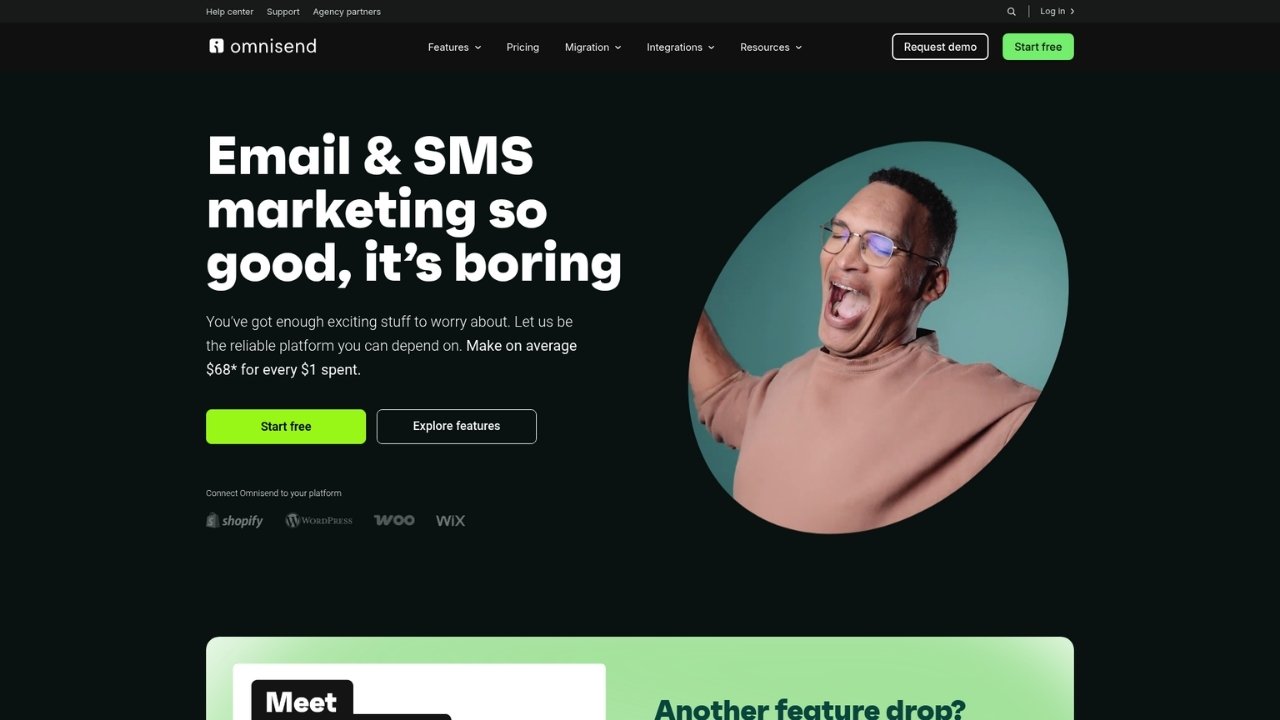
Omnisend takes a different approach from dedicated popup tools. It is primarily an email marketing platform with built-in popup and signup form capabilities.
For stores wanting to consolidate their marketing stack, this integration is valuable.
With 4.7/5 on Shopify, 4.6/5 on G2, and 4.8/5 on WooCommerce, Omnisend has strong user satisfaction.
The platform supports 160+ integrations and offers omnichannel marketing (email + SMS + web push) from one dashboard.
Key features:
- Email marketing: Campaigns, automation, 250+ templates
- SMS marketing: Global SMS delivery
- Web push notifications: Unlimited on paid plans
- Signup forms: Popups, teasers, landing pages, Wheel of Fortune
- Automation: Pre-built workflows, custom workflows, A/B testing
- Segmentation: Unlimited segments, customer lifecycle stages
- Integrations: 160+ integrations, Shopify, WooCommerce, BigCommerce
- AI features: AI subject line generator, Forms AI
Pricing:
| Plan | Price | Contacts | Key Features |
|---|---|---|---|
| Free | $0 | Up to 250 | 500 emails/month, 60 SMS, 500 web push, all features |
| Standard | From $16/month | 500+ | 6,000 emails/month, unlimited web push, 24/7 support |
| Pro | From $59/month | 2,500+ | Unlimited emails, bonus SMS credits equal to plan price |
| Custom | Custom | Custom | Dedicated account expert, custom migration |
All plans include all features. Pricing scales with contact count.
Best for: Stores wanting email marketing and popups in one platform. If you are already paying for email software, Omnisend could replace two subscriptions.
Pros: Most affordable starting price ($16/month), strong email features, generous free plan, excellent for beginners.
Cons: Popup features are less advanced than dedicated tools, not the best choice if you only need popups and already have email covered.
Choosing the right Personizely alternative for your store
With 7 solid options, how do you pick? Here is a decision framework based on what actually matters:
Budget is your primary concern: Start with Poptin (free plan available, paid starts at $25/month) or Omnisend ($16/month). Both give you real functionality without breaking the bank.
You want the most powerful personalization: OptiMonk and Justuno lead here. OptiMonk offers more value with its free tier, while Justuno has stronger AI targeting for high-traffic stores.
Design matters above all: Wisepops wins on aesthetics. Their templates look professionally designed out of the box.
You need quizzes and interactive content: ConvertFlow is the clear choice, assuming you can justify the $299/month starting price.
Email list building is your main goal: Sleeknote specializes here, especially with gamification features that boost engagement.
You want one tool for email + popups: Omnisend eliminates the need for separate email marketing software.
You run a Shopify store: All seven integrate with Shopify, but OptiMonk, Justuno, and Sleeknote have the deepest e-commerce feature sets.
The best approach? Take advantage of free trials. Every tool on this list offers at least a 14-day trial, and several have free plans. Test the workflow, check the template quality, and verify the integrations work with your stack before committing.
Start optimizing your store conversions today
Finding the right Personizely alternative comes down to matching the tool to your specific needs.
The comparison table above gives you the quick reference, but the detailed breakdowns should help you understand which platform fits your workflow.
Whether you prioritize budget (Poptin, Omnisend), advanced AI (Justuno), design quality (Wisepops), or all-in-one functionality (OptiMonk), there is a tool on this list that will serve you better than Personizely for your specific situation.
One more thing to consider: popups and personalization capture leads, but what happens when those leads call your store?
Most e-commerce businesses ignore phone support because it is expensive to staff. That is where we come in.
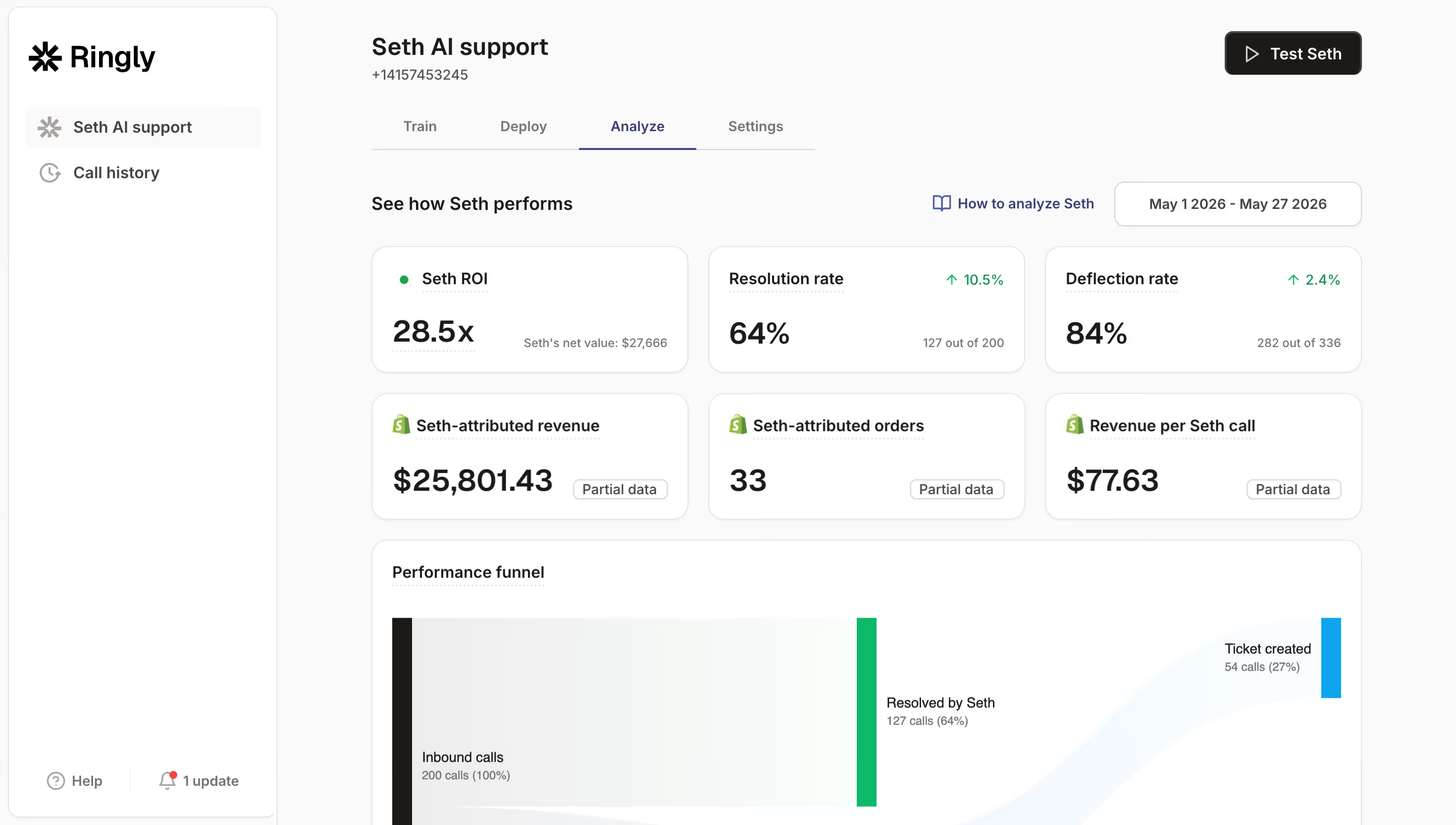
At Ringly.io, we built the AI, an AI phone support agent that handles your inbound calls 24/7. the AI answers questions, looks up orders, processes returns and exchanges, and only escalates to your team when necessary.
It resolves about 73% of calls without human intervention and integrates directly with your Shopify store.
If you are optimizing your conversion funnel with popups, consider optimizing your post-purchase experience too.
Try Ringly.io free for 14 days and see how AI phone support can reduce your support costs while keeping customers happy.
Frequently Asked Questions
Which Personizely alternative offers the best free plan?
OptiMonk offers the most generous free plan with 10,000 pageviews per month and access to all features. Poptin is also strong with 1,000 visitors monthly on their free tier.
Are there any Personizely alternatives that include email marketing?
Yes, Omnisend is primarily an email marketing platform with built-in popup capabilities. This makes it ideal if you want to consolidate your marketing tools rather than paying for separate popup and email software.
Which Personizely alternative is best for Shopify stores specifically?
OptiMonk, Justuno, and Sleeknote all have deep Shopify integrations with features like cart-based targeting, product recommendations, and order lookup.
Do any Personizely alternatives offer AI-powered features?
Justuno leads in AI-powered targeting with machine learning that identifies high-value visitors automatically. OptiMonk and Wisepops also offer AI product recommendations and personalization features.
What is the most affordable Personizely alternative for a new store?
Omnisend starts at $16/month and includes both email marketing and popups. Poptin starts at $25/month for a dedicated popup tool with a solid free plan option.