
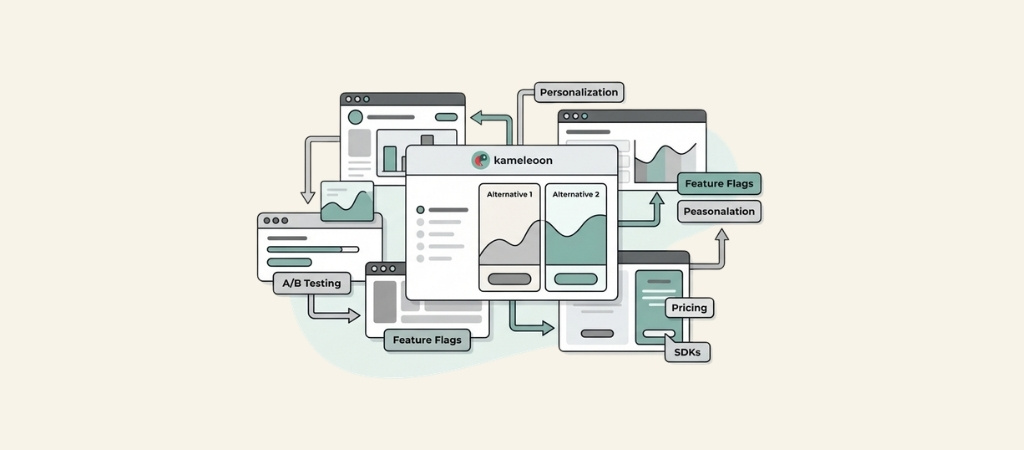
Kameleoon has earned recognition as an A/B testing and personalization platform.
But their complex pricing, marketing-heavy approach, and modular structure have plenty of teams looking elsewhere.
The good news? There's no shortage of alternatives, each with different strengths depending on what you're actually trying to accomplish.
Here are seven options worth considering, from developer-friendly feature flag platforms to e-commerce focused tools that won't break the bank.
Editor’s note: Want to hear some sample AI support calls made for your Shopify store?
- Just paste your store URL
- Get sample calls in under 20 seconds (no email required)
- Listen to demo calls for my store
What is Kameleoon and why look for alternatives?
Kameleoon is an A/B testing and personalization platform designed primarily for marketing teams.
It offers web experimentation, personalization campaigns, and some feature management capabilities.
The platform's particularly popular among mid-market and enterprise e-commerce companies.
So why do teams start looking elsewhere? Three reasons come up consistently:
Complex, opaque pricing. Like many enterprise tools, Kameleoon doesn't publish pricing.
You have to go through sales, and quotes often surprise teams who weren't expecting user-based pricing that scales unpredictably.
Marketing-first, developer-second. Kameleoon's visual editor and WYSIWYG interface work well for marketers, but engineering teams often find the developer experience lacking.
SDKs, APIs, and documentation don't get the same attention as the point-and-click interface.
Modular purchases required. Want feature flags AND A/B testing? That's often two separate products with separate contracts.
Teams looking for a unified platform get frustrated by the nickel-and-diming.
If any of these sound familiar, one of the alternatives below could be a better fit.
How we evaluated these Kameleoon alternatives
We looked at each tool through a few key lenses:
- Pricing transparency. Is pricing published, or hidden behind "contact sales"?
- Primary user. Is this built for marketers, developers, or both?
- Core use case. A/B testing, feature flags, personalization, or all three?
- Ease of setup. Can you get value quickly, or does implementation require months?
- Integration ecosystem. Does it play nicely with your existing stack?
The tools below represent the best options across different scenarios. Not every tool is right for every team, so we've organized them by use case to help you find your match.
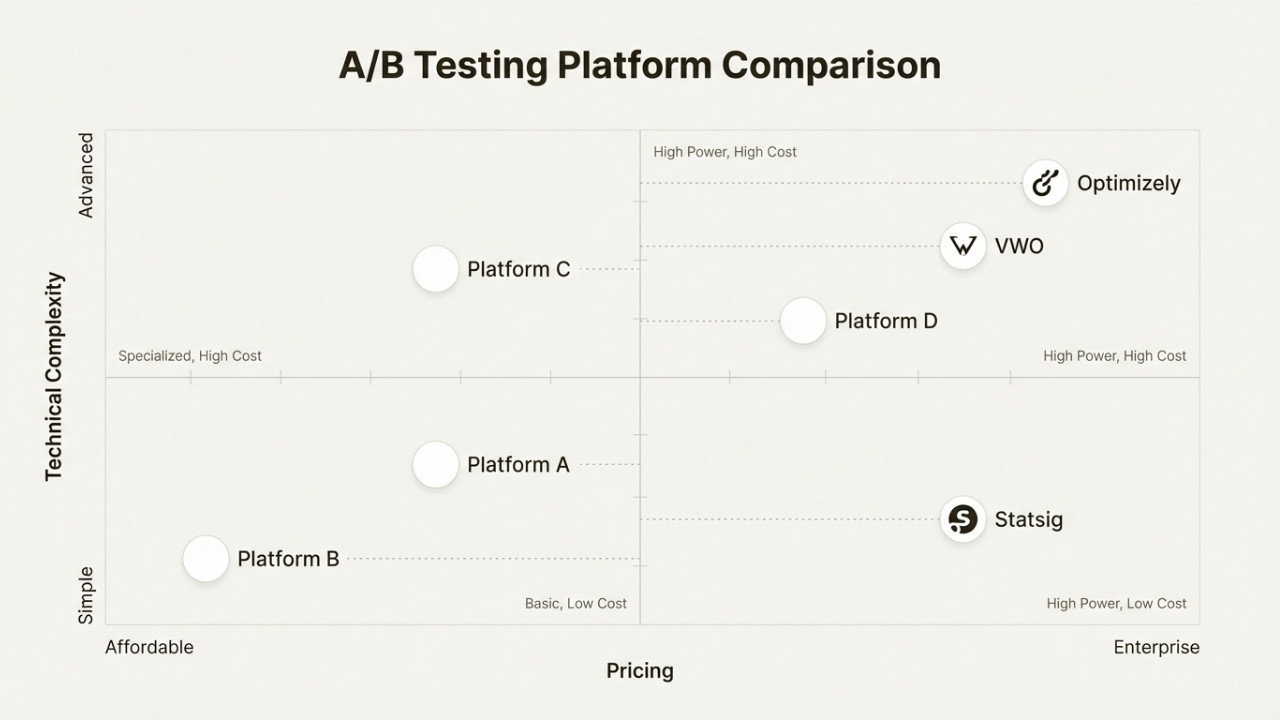
The 7 best Kameleoon alternatives compared
1. VWO Testing
Best for: Teams wanting an easier-to-use alternative with strong personalization
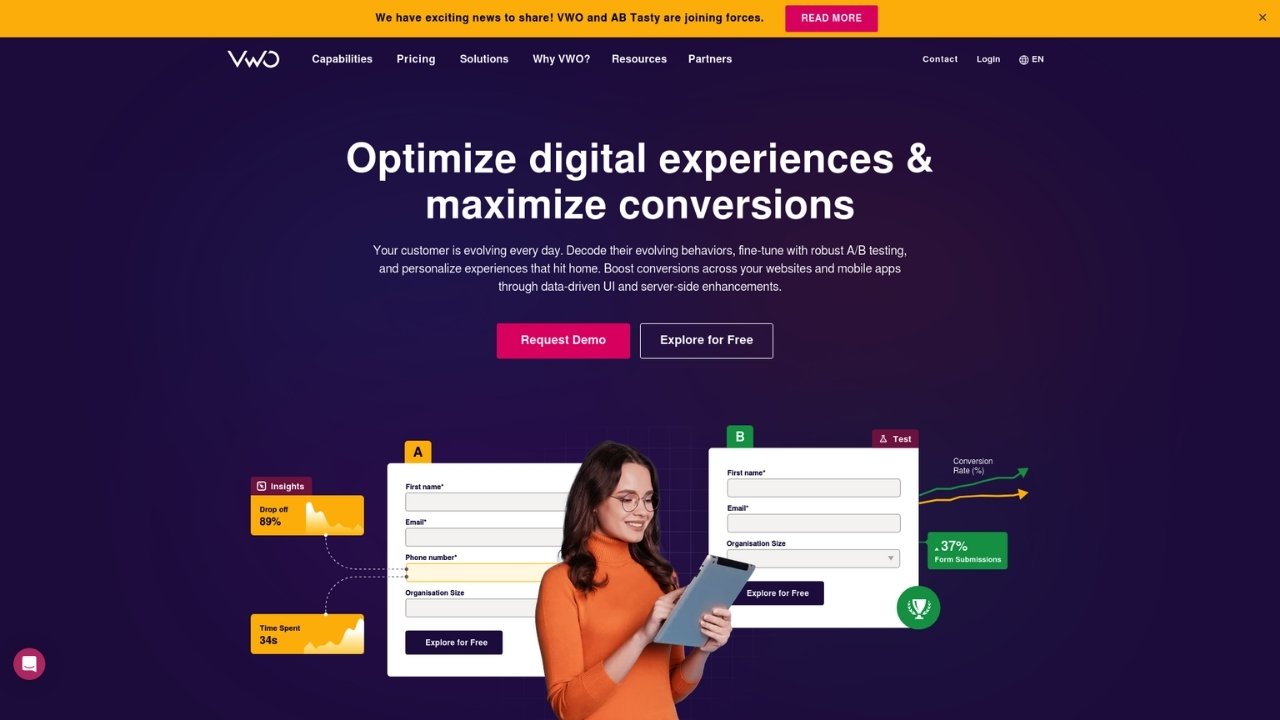
VWO, or Visual Website Optimizer, consistently ranks as the top Kameleoon alternative on review sites like G2.
It's an all-in-one conversion optimization platform used by 2,500+ brands worldwide.
Key features:
- A/B and multivariate testing
- Heatmaps and session recordings
- Personalization campaigns
- Visual WYSIWYG editor
- Split URL testing
- Form analytics and on-page surveys
Pricing: VWO does not publish pricing publicly. You'll need to contact sales for a custom quote based on your traffic volume and feature requirements.
Why consider it:G2 reviewers consistently rate VWO as "more usable" and "easier to set up" than Kameleoon.
The interface feels more intuitive, and the learning curve's gentler for marketing teams getting started with experimentation.
The platform also includes heatmaps and session recordings natively. With Kameleoon, you'd typically need separate tools for this, which adds cost and complexity.
The trade-off:Some G2 reviewers note VWO can be "slower to reach ROI" compared to Kameleoon. The platform's powerful, but getting meaningful results takes time. Pricing can also escalate quickly at scale.
2. AB Tasty
Best for: Mid-market teams wanting personalization plus experimentation

AB Tasty is a global experimentation platform serving 1,000+ brands including Sephora, L'Oreal, and Clarins.
Founded in 2013, they've built a reputation for strong personalization capabilities and AI-powered features.
Key features:
- Web experimentation (A/B/n, multivariate)
- Feature experimentation across channels
- Personalization with AI-powered targeting
- E-Merchandising (search, recommendations)
- Rollouts with progressive deployment
- AI assistant "Evi" for evidence-based marketing
Pricing: Like most enterprise platforms, AB Tasty requires contacting sales for custom pricing.
Plans are tailored based on experimentation volume, personalization needs, and feature requirements.
Why consider it:AB Tasty's personalization engine stands out.
Their market-first EmotionsAI segments users based on emotional needs and engagement patterns, not just demographics.
This often drives better results than rule-based personalization.
G2 data shows AB Tasty is rated as "more usable" and "easier to admin" than Kameleoon.
The platform strikes a good balance between power and usability for mid-market teams.
The trade-off:Enterprise pricing can be steep, and the ROI timeline may be longer than simpler tools.
For smaller teams or those just starting with experimentation, it's probably overkill.
3. Optimizely
Best for: Enterprise teams needing comprehensive experimentation
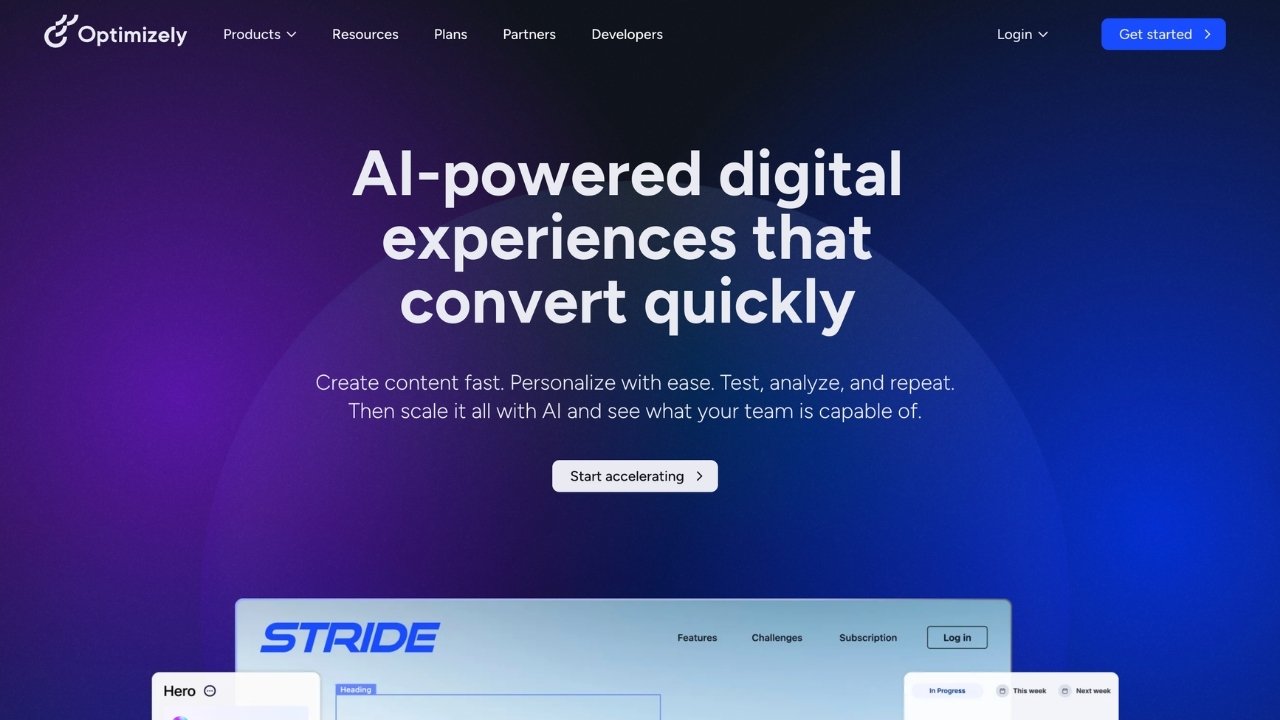
Optimizely is the world's leading experimentation platform and the gold standard for enterprise teams.
They offer a full digital experience platform, not just testing tools.
Key features:
- Web experimentation with stats engine
- Feature experimentation
- Content management system
- Configured commerce
- Personalization
- Data platform
- Digital asset management
Pricing: Optimizely uses a modular pricing model. Each product (Web Experimentation, Feature Experimentation, CMS, etc.) is priced separately.
All pricing requires contacting sales.
Why consider it:If you need the most robust, proven platform and have the budget to match, Optimizely's hard to beat.
They invented much of the modern experimentation methodology used across the industry.
The platform handles massive scale. Companies like IBM, Microsoft, and Salesforce run thousands of concurrent experiments on Optimizely.
If you're planning to scale experimentation across a large organization, this is a safe choice.
The trade-off:Expensive and complex. Implementation typically requires dedicated engineering resources and months of setup.
For smaller teams or simpler use cases, you're paying for capabilities you'll never use.
4. Statsig
Best for: Developer teams prioritizing feature flags with experimentation
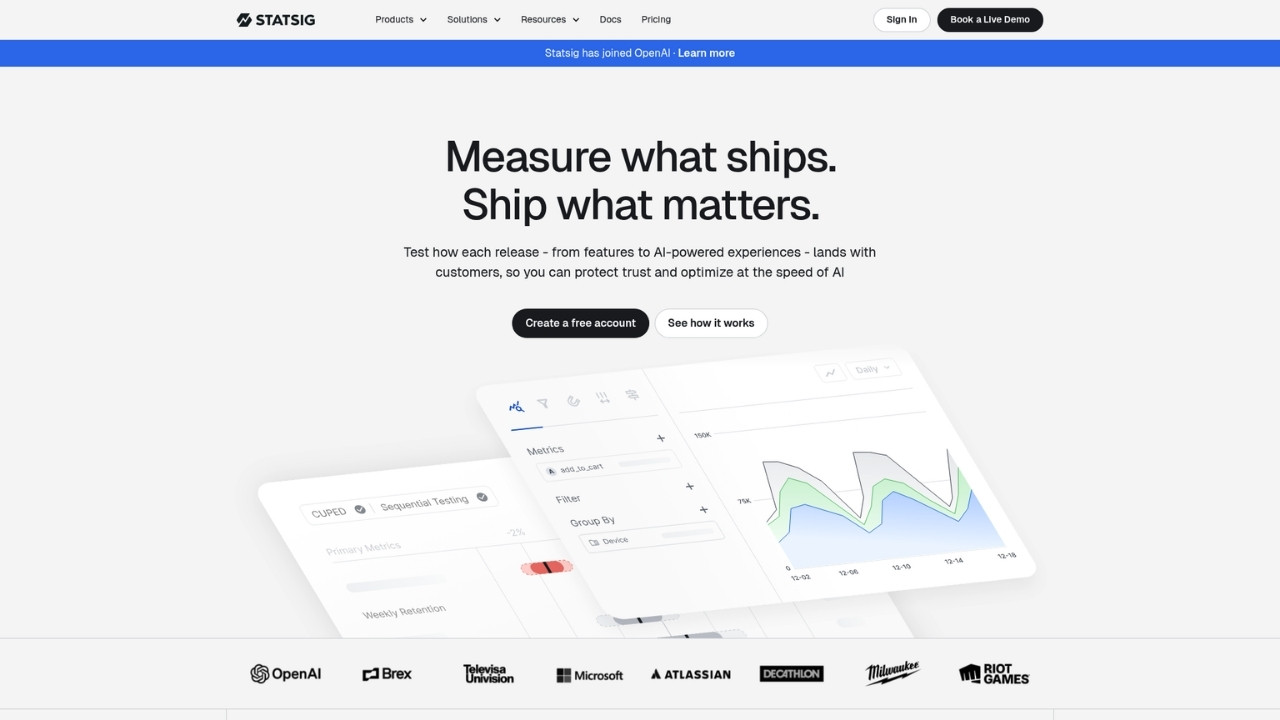
Statsig is a modern product development platform combining feature flags, experimentation, and analytics.
Founded in 2020, they've quickly gained traction with companies like OpenAI, Notion, and Brex.
Key features:
- Unlimited free feature flags
- 30+ open-source SDKs
- A/B testing and experimentation
- Product analytics
- Session replays
- Warehouse-native deployment
- Advanced statistical methods (CUPED, sequential testing)
Pricing:
| Plan | Monthly Price | Key Limits |
|---|---|---|
| Developer (Free) | $0 | 2M events/month, unlimited flag checks, 50K session replays |
| Pro | $150/mo | 5M events included, then $0.05 per 1K events, 100K session replays |
| Enterprise | Custom | Volume discounts, warehouse native, SSO, priority support |
Source: Statsig Pricing
Why consider it:Statsig offers unlimited free feature flags on all tiers.
This is a stark contrast to Kameleoon's user-based pricing that discourages widespread adoption. For engineering teams frustrated with Kameleoon's marketing-heavy approach, Statsig feels like a breath of fresh air.
The platform's developer-first but accessible to product teams. SDKs are open source and well-documented.
The stats engine supports advanced methods like CUPED and sequential testing that many enterprise platforms lack.
The trade-off:Less marketing-focused tooling than Kameleoon.
If your primary users are marketers who need a visual editor, Statsig may feel too technical. But for product and engineering teams, it's often a better fit.
5. LaunchDarkly
Best for: Engineering teams needing robust feature management
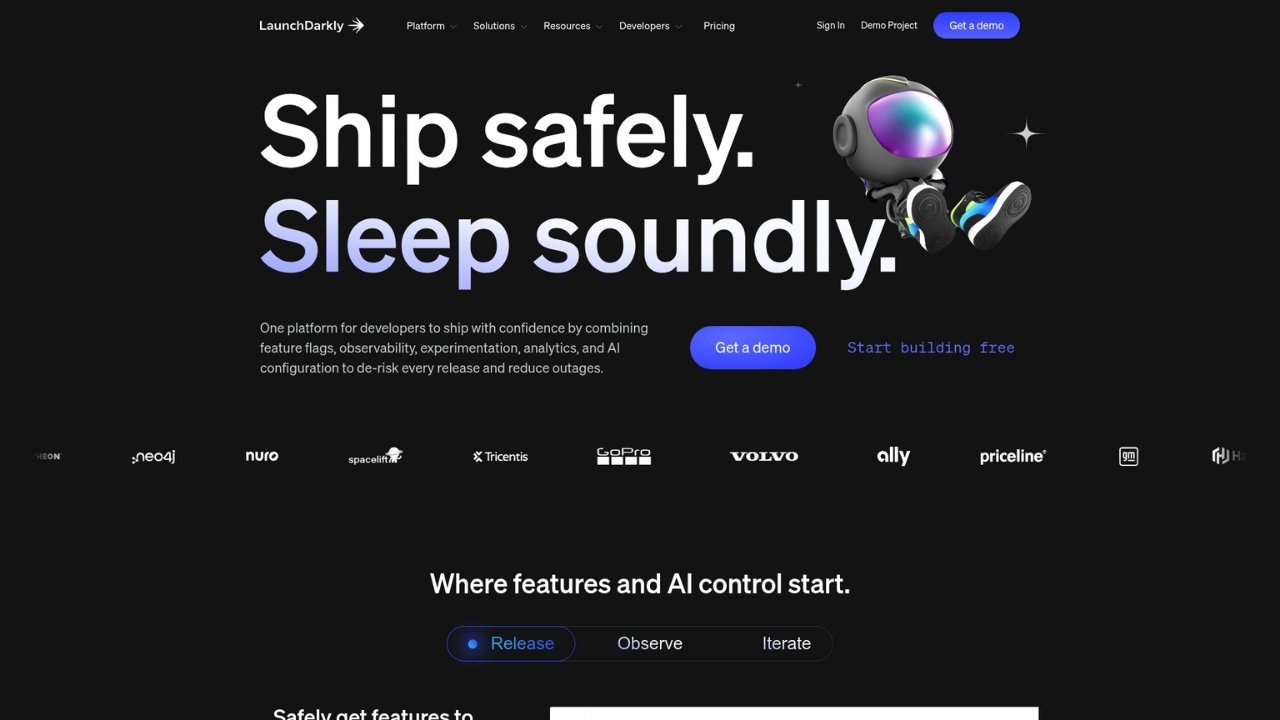
LaunchDarkly is the most recognized name in feature flag management.
They handle billions of feature flag evaluations daily for companies like GoPro, Volvo, and Hulu.
Key features:
- Feature flags and toggles
- Progressive rollouts
- Targeting and segmentation
- Experimentation
- AI configuration management
- Guarded releases with automated rollback
- 35+ native SDKs
- 80+ integrations
Pricing: LaunchDarkly does not publish pricing publicly. You'll need to contact sales for a custom quote based on your usage volume.
Why consider it:If feature flags are your primary need, LaunchDarkly is the most mature solution on the market.
They process 40 trillion flag evaluations daily with sub-200ms update times. The platform's built for scale and reliability.
The SDK ecosystem's unmatched. With 35+ SDKs covering virtually every programming language and framework, integration is straightforward regardless of your tech stack.
The trade-off:Primarily developer-focused with limited experimentation features compared to full CRO platforms.
Pricing can get expensive at scale. If you need deep personalization or visual editing capabilities, you'll want to look elsewhere.
6. Convert Experiences
Best for: Budget-conscious teams wanting enterprise power
Convert Experiences positions itself as "affordable A/B testing with enterprise power."
They emphasize transparent pricing and real human support, which is refreshing in an industry full of "contact sales" pricing pages.
Key features:
- A/B testing and personalization
- 90+ integrations
- Real human support
- GDPR-compliant by design
- Used by 5,000+ brands
Pricing: Convert starts at $399/month with transparent pricing tiers. A free trial is available.
Source: Crozdesk
Why consider it:Most experimentation platforms hide pricing behind sales calls. Convert publishes their pricing upfront, which makes budgeting easier.
For teams tired of opaque enterprise sales processes, this transparency matters.
The platform packs serious features at a mid-market price point. You get personalization, advanced targeting, and solid reporting without the enterprise price tag.
The trade-off:Smaller brand recognition than Optimizely or VWO. The ecosystem's smaller, so you may find fewer pre-built integrations for niche tools. But for core A/B testing needs, it delivers solid value.
7. Personizely
Best for: Shopify and e-commerce stores
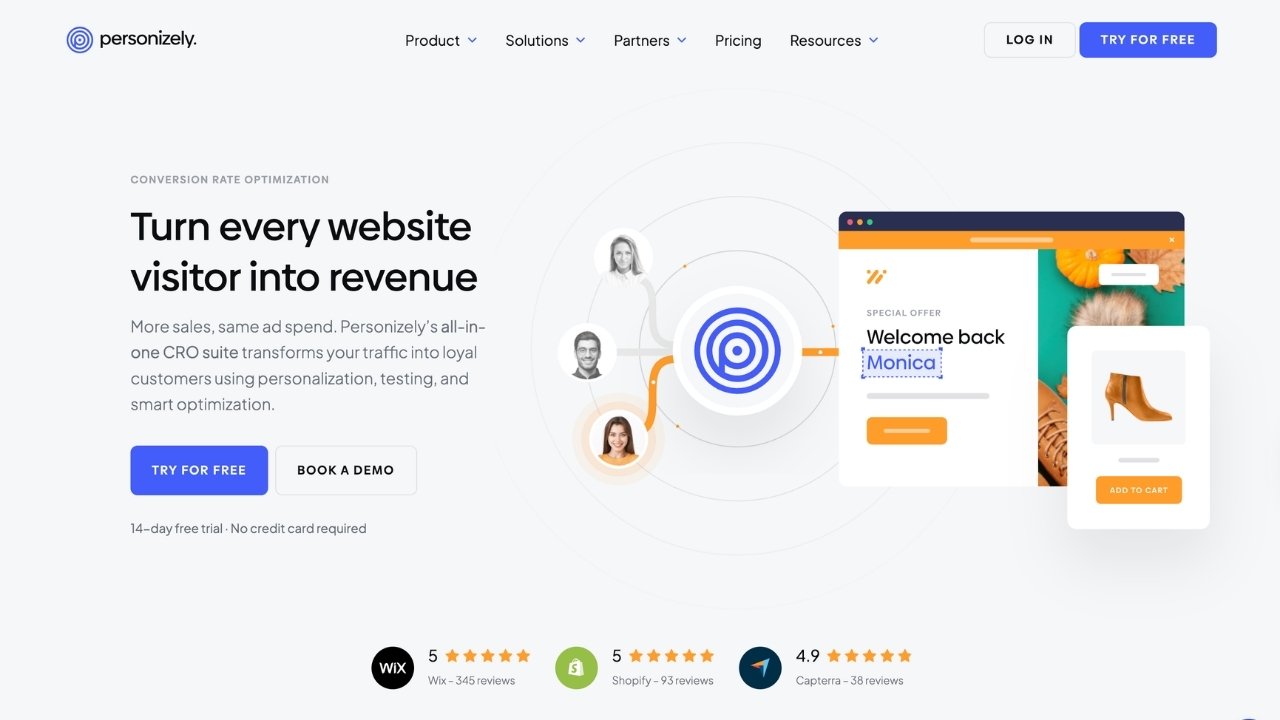
Personizely is an e-commerce focused testing and personalization platform built specifically for online stores.
If you run Shopify, this one's worth a close look.
Key features:
- Content A/B testing
- Price A/B testing (unique feature)
- Theme A/B testing
- Widget builder (popups, bars, etc.)
- Website personalization
- Visual editor
- Anti-flicker protection
- 30+ integrations
Pricing:
| Plan | Monthly Price | Key Features |
|---|---|---|
| Essential | $39/mo | 10,000 visitors, URL split testing, theme A/B testing, unlimited widgets, 2 websites |
| Premium | $59/mo | 10,000 visitors, content/price/template A/B testing, personalization, 10 websites, priority support |
Both plans include a 14-day free trial (no credit card required).
Source: Personizely Pricing
Why consider it:Personizely offers price testing, a feature most platforms don't support.
You can test different price points to find the right balance of conversion rate and revenue. For e-commerce stores, this alone can justify the cost.
Theme testing is another unique feature. You can test entire Shopify themes against each other, not just individual elements.
That's powerful for major redesigns or rebranding decisions.
At $39-59/month, it's the most affordable option on this list by a wide margin.
Setup's simple with 1-click integrations for Shopify, Wix, and WordPress.
The trade-off:Limited server-side testing and fewer enterprise features.
The visitor limits (10,000/month on both plans) mean larger stores will need to upgrade or look elsewhere. But for small to mid-size e-commerce businesses, it's great value.
Kameleoon alternatives comparison table
| Tool | Starting Price | Free Tier | Best For | Primary User |
|---|---|---|---|---|
| VWO | Contact sales | No | All-rounder with easier UX | Marketers |
| AB Tasty | Contact sales | No | Personalization, mid-market | Marketing teams |
| Optimizely | Contact sales | No | Enterprise, comprehensive needs | Large orgs |
| Statsig | $0 (free) | Yes | Developer teams, feature flags | Engineers |
| LaunchDarkly | Contact sales | No | Feature management at scale | Engineering teams |
| Convert | $399/mo | Trial | Budget-conscious, transparent pricing | Growth teams |
| Personizely | $39/mo | 14-day trial | E-commerce, Shopify stores | Store owners |
Choosing the right Kameleoon alternative for your needs
Here's a simple decision framework:
Choose VWO if you want the most usable all-rounder with strong personalization and don't mind the "contact sales" pricing dance.
Choose AB Tasty if personalization's your priority and you want AI-powered features like emotion-based segmentation.
Choose Optimizely if you're enterprise with complex needs and want the most comprehensive platform available.
Choose Statsig if you're developer-focused, want free feature flags, and prefer transparent usage-based pricing.
Choose LaunchDarkly if feature flags are your primary need and you want the most mature, scalable solution.
Choose Convert if budget matters but you need solid A/B testing without opaque enterprise pricing.
Choose Personizely if you run a Shopify or e-commerce store and want affordable, easy-to-use testing with unique features like price testing.
Get more from your customer interactions with AI phone support
While A/B testing helps optimize your website, your phone support might be a blind spot.
Many e-commerce stores focus heavily on digital optimization but leave phone calls to voicemail or overworked staff.
Ringly.io offers an AI phone agent called an AI agent that handles inbound calls 24/7. the AI answers questions, looks up orders, processes returns, and resolves about 73% of calls without human intervention.
It's built specifically for Shopify stores and integrates directly with your store data.
For stores already investing in conversion optimization, adding AI phone support is a natural next step.
You can start a free trial to see how it works for your business.
Frequently Asked Questions
Which Kameleoon alternative offers the best value for small businesses?
For small businesses, Personizely at $39/month offers the best value if you're on Shopify or running e-commerce. For non-e-commerce businesses, Statsig offers a generous free tier that covers most small business needs.
Are there any free Kameleoon alternatives worth considering?
Statsig offers unlimited free feature flags and 2 million events per month on their free tier, making it genuinely usable without paying. Google Optimize was a popular free option but was discontinued in 2023.
Which Kameleoon alternative is best for developers?
Statsig and LaunchDarkly are both built with developers in mind. Statsig wins on pricing transparency and free tier generosity, while LaunchDarkly has the most mature feature flag infrastructure.
Do any Kameleoon alternatives offer price testing for e-commerce?
Personizely is one of the few platforms that explicitly supports price A/B testing, allowing you to test different price points to optimize revenue. Most other platforms focus on content and UX testing only.
How do I migrate from Kameleoon to another platform?
Migration typically involves: 1) Exporting your experiment data and insights from Kameleoon, 2) Setting up the new platform's tracking code, 3) Recreating active experiments in the new tool, and 4) Running both platforms in parallel briefly to validate data consistency. Most platforms offer migration support for enterprise customers.
Which Kameleoon alternative has the easiest learning curve?
According to G2 reviews, VWO and AB Tasty both score higher than Kameleoon for ease of use and ease of setup. For absolute beginners, Personizely is the simplest due to its e-commerce focus and streamlined feature set.