
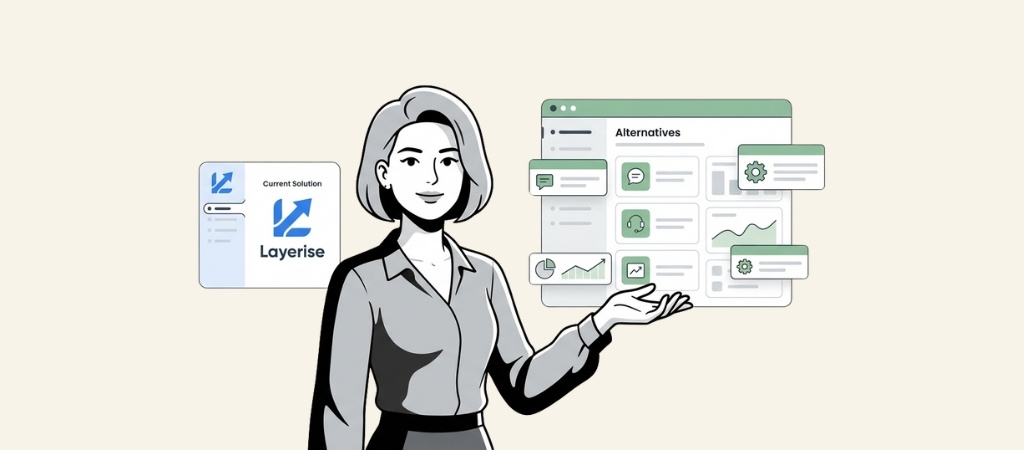
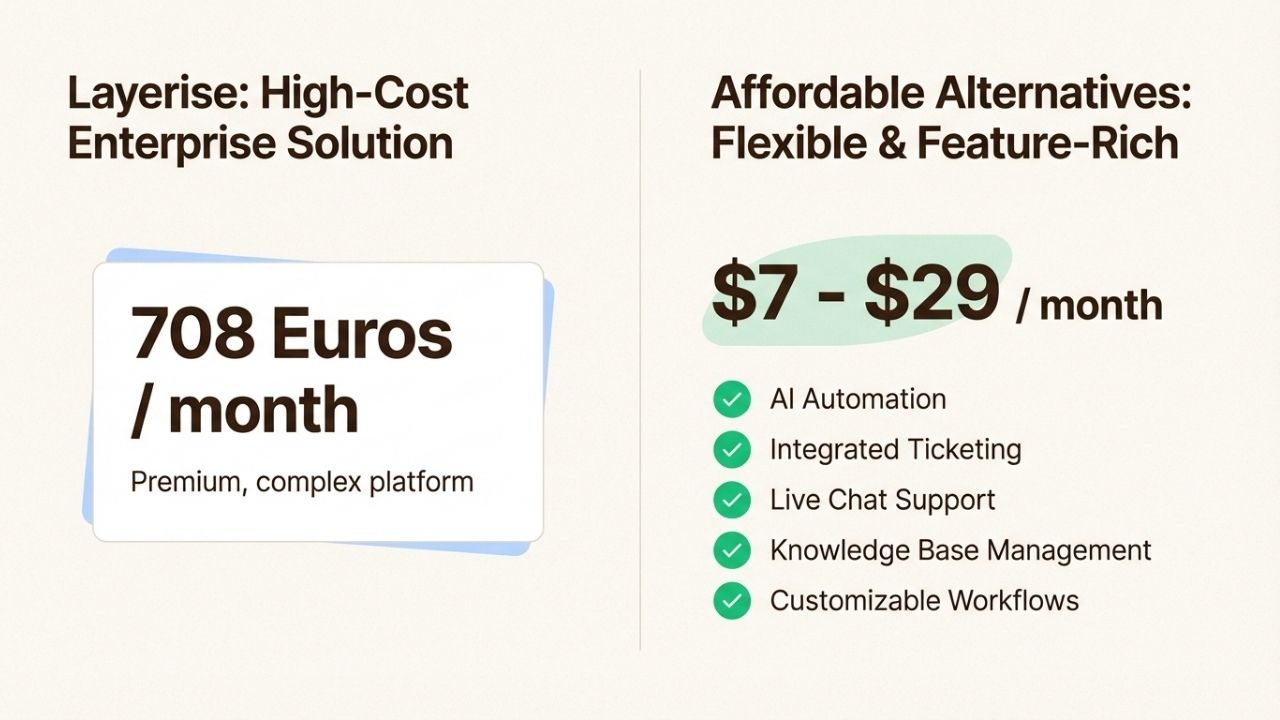
Layerise starts at €708 per month. For most businesses, that price tag is hard to justify.
Especially when you can get robust customer support tools for a fraction of the cost.
The good news? You've got options.
Whether you need simple email ticketing, AI-powered automation, or deep e-commerce integration, there's a Layerise alternative that fits your budget and workflow.
Let's break down 7 platforms that deliver similar (or better) functionality without the enterprise price tag.
Editor’s note: Want to hear some sample AI support calls made for your Shopify store?
- Just paste your store URL
- Get sample calls in under 20 seconds (no email required)
- Listen to demo calls for my store
What is Layerise?
Layerise is a B2C post-sales enablement platform founded in 2019.
Unlike traditional help desks that focus on reactive ticket management, Layerise emphasizes proactive customer education.
The platform helps companies create interactive product guides, onboarding experiences, and virtual assistants.
The goal is to reduce support volume by teaching customers how to use products before issues arise.
At €708 per month for the Starter plan, Layerise positions itself as an enterprise solution.
That pricing drives many businesses to look for alternatives.
Top Layerise alternatives at a glance
| Platform | Starting Price | Best For | Key Differentiator |
|---|---|---|---|
| Zendesk | $19/agent/month | Enterprise scale | Market leader with 1000+ integrations |
| Freshdesk | $15/agent/month | Growing teams | Free tier available, 74,000+ customers |
| Zoho Desk | $7/user/month | Budget-conscious | AI-powered, 34% savings on annual plans |
| Help Scout | $25/user/month | Email-first support | Simple setup, no complexity |
| HubSpot Service | $9/seat/month | CRM integration | Unified with marketing and sales data |
| Intercom | $29/seat/month | SaaS companies | AI-first messaging platform |
| Gorgias | $10/month | E-commerce | Shopify integration, ticket-based pricing |
The best Layerise alternatives for 2026
1. Zendesk

Zendesk is the market leader in customer support software.
If you're looking for a platform that can scale from startup to enterprise without switching tools, this is it.
The platform offers AI agents for automated resolutions, omnichannel support across email, chat, phone, and social, plus a help center builder.
With over 1,000 integrations, it connects to virtually every business tool you use.
Pricing:
| Plan | Annual Price | Monthly Price | Key Features |
|---|---|---|---|
| Suite Team | $19/agent | $25/agent | Email, social, 1000+ integrations |
| Suite Professional | $115/agent | $149/agent | 5 help centers, CSAT, SLA, HIPAA |
| Suite Enterprise | $169/agent | $219/agent | 300 help centers, sandbox, audit logs |
Source: https://www.zendesk.com/pricing
Pros:
- Most comprehensive feature set in the industry
- Extensive integration ecosystem
- Scales to any team size
Cons:
- Can be complex to configure
- Higher price point than competitors
- Learning curve for advanced features
Best for: Mid-market to enterprise companies needing comprehensive support infrastructure that grows with them.
2. Freshdesk

Freshdesk comes from Freshworks, a company trusted by 74,000+ businesses including Pearson, Bridgestone, and Decathlon.
It strikes a balance between features and affordability.
The platform includes AI-boosted ticketing through Freddy AI, omnichannel support, and a free tier for up to 2 agents.
You get ticket management, a knowledge base, automation rules, and reporting without breaking the bank.
Pricing:
| Plan | Annual Price | Monthly Price | Key Features |
|---|---|---|---|
| Free | $0 | $0 | 1-2 agents, basic ticketing |
| Growth | $15/agent | $19/agent | Ticketing, portal, reports |
| Pro | $49/agent | $55/agent | Custom reporting, 5,000 collaborators |
| Enterprise | $79/agent | $89/agent | Audit logs, approval workflows |
Source: https://www.freshdesk.com/pricing
Pros:
- Free tier available for small teams
- Strong automation capabilities with Freddy AI
- Trusted by major brands
Cons:
- AI features cost extra beyond included sessions
- Some advanced features require higher tiers
Best for: Growing teams wanting affordable omnichannel support with room to scale.
3. Zoho Desk

Zoho Desk is part of the broader Zoho ecosystem, used by 100,000+ companies globally.
If you're already using Zoho CRM or other Zoho products, the integration is seamless.
The platform features Zia, an AI assistant with sentiment analysis and ticket auto-tagging.
You get omnichannel support including WhatsApp, Instagram, Facebook Messenger, and Telegram. The Express plan starts at just $7 per user per month.
Pricing:
| Plan | Monthly Price (Annual) | Key Features |
|---|---|---|
| Free | $0 | 3 users, email ticketing |
| Express | $7/user | Email, social, web forms |
| Standard | $14/user | Live chat, community forum, knowledge base |
| Professional | $23/user | Telephony, blueprints, 40+ languages |
| Enterprise | $40/user | AI agents, Zia assistant, sandbox |
Source: https://www.zoho.com/desk/pricing.html
Pros:
- Lowest starting price on this list
- Strong AI features at affordable tiers
- 34% savings when paying annually
Cons:
- Best value when using other Zoho products
- Interface can feel dated compared to newer tools
Best for: Budget-conscious teams, especially those already in the Zoho ecosystem.
4. Help Scout
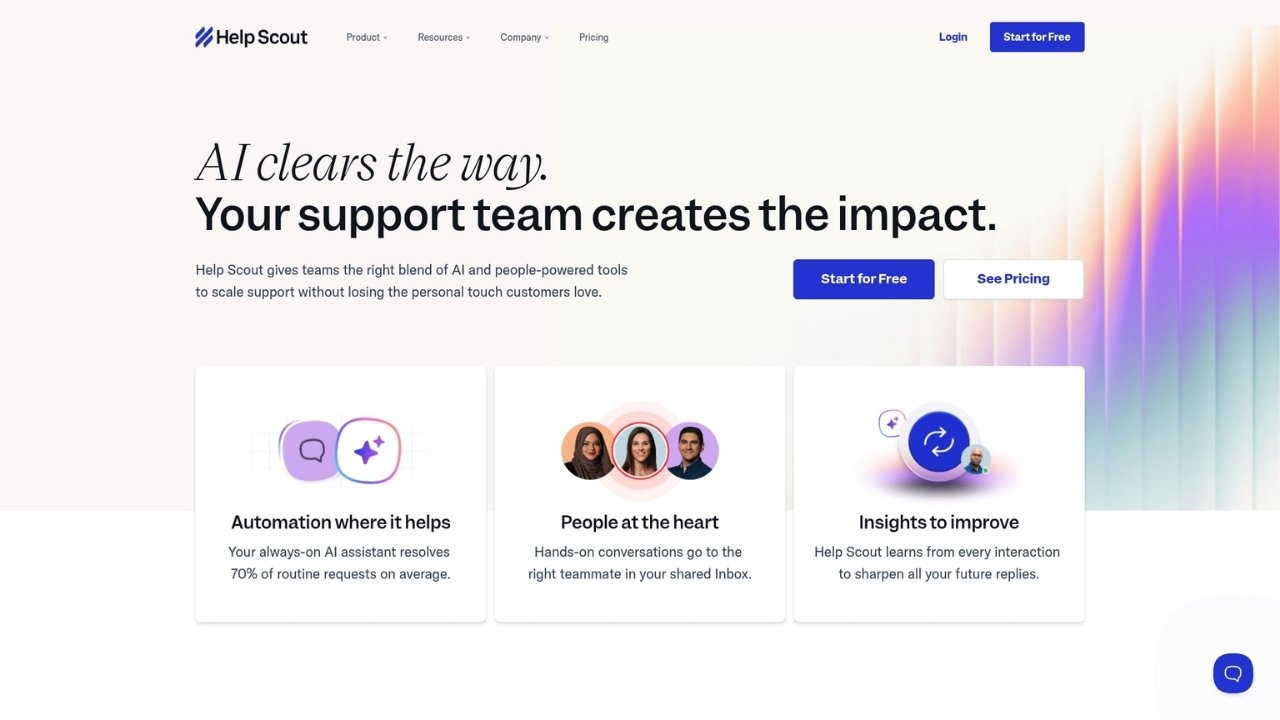
Help Scout takes a different approach. Instead of trying to be everything, it focuses on doing email-based support exceptionally well.
The platform is designed for teams that want straightforward support without complex configuration.
You get shared inboxes, knowledge bases, and live chat in a clean, simple interface. Most stores go live within an hour, not days.
Pricing:
| Plan | Monthly Price | Key Features |
|---|---|---|
| Free | $0 | 5 users, 1 inbox, 1 docs site |
| Standard | $25/user | Multiple inboxes, basic workflows |
| Plus | $45/user | Advanced workflows, Salesforce/HubSpot integration |
| Pro | $75/user | SSO/SAML, HIPAA, dedicated CSM |
Source: https://www.helpscout.com/pricing
Pros:
- Fastest setup time
- Clean, intuitive interface
- AI Answers add-on for $0.75 per resolution
Cons:
- Less suited for complex workflows
- Fewer native integrations than competitors
Best for: Small to mid-size teams prioritizing email support and ease of use over advanced features.
5. HubSpot Service Hub
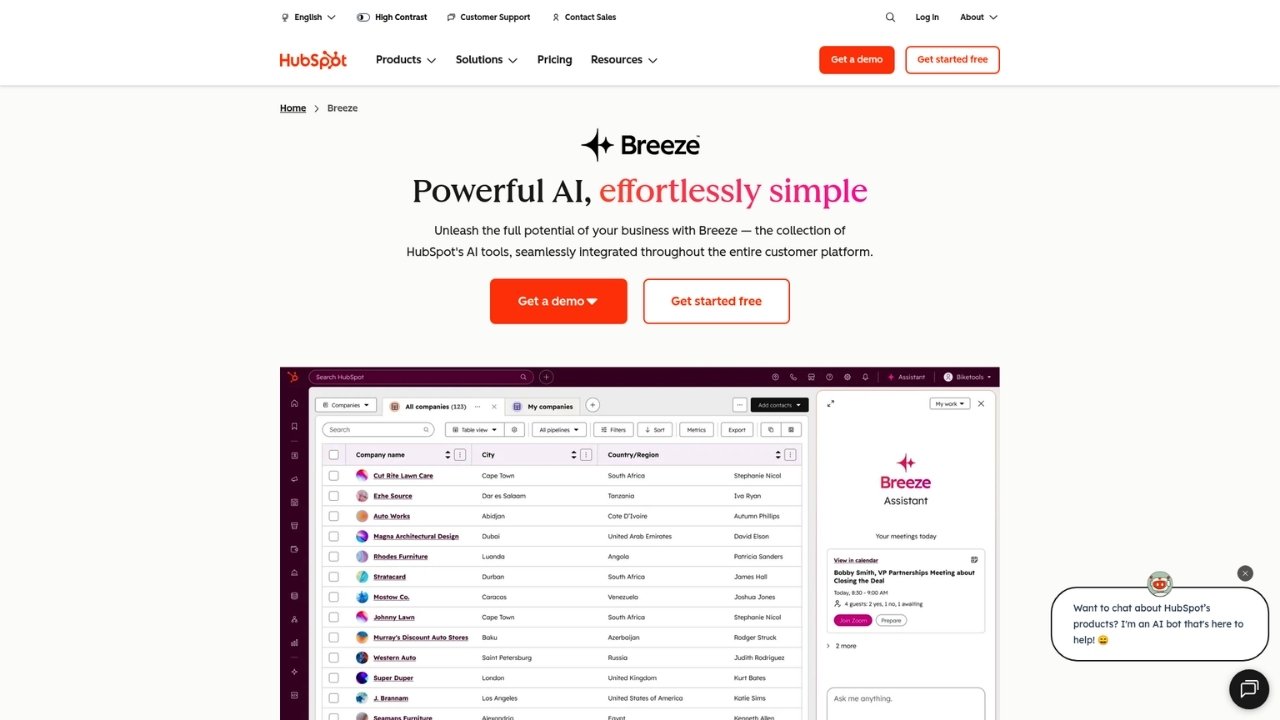
HubSpot Service Hub works best when you want your support data connected to your marketing and sales data.
As part of the broader HubSpot ecosystem, it creates a unified view of your customer journey.
The platform includes ticketing, live chat, chatbots, and a customer portal. Higher tiers add knowledge bases, feedback surveys, and customer success workspaces.
The free tier supports up to 2 users.
Pricing:
| Plan | Annual Price | Key Features |
|---|---|---|
| Free | $0 | Up to 2 users, basic ticketing |
| Starter | $9/seat | Ticket pipelines, routing, snippets |
| Professional | $90/seat | Knowledge base, portal, feedback surveys |
| Enterprise | $150/seat | Skill-based routing, conditional SLAs, IVR |
Note: Professional and Enterprise require one-time onboarding fees ($1,500 and $3,500).
Source: https://www.hubspot.com/pricing/service
Pros:
- Deep CRM integration
- 1,500+ integrations
- Unified customer data across teams
Cons:
- Onboarding fees for higher tiers
- Best value when using full HubSpot suite
Best for: Businesses wanting unified CRM and support data, especially existing HubSpot users.
6. Intercom
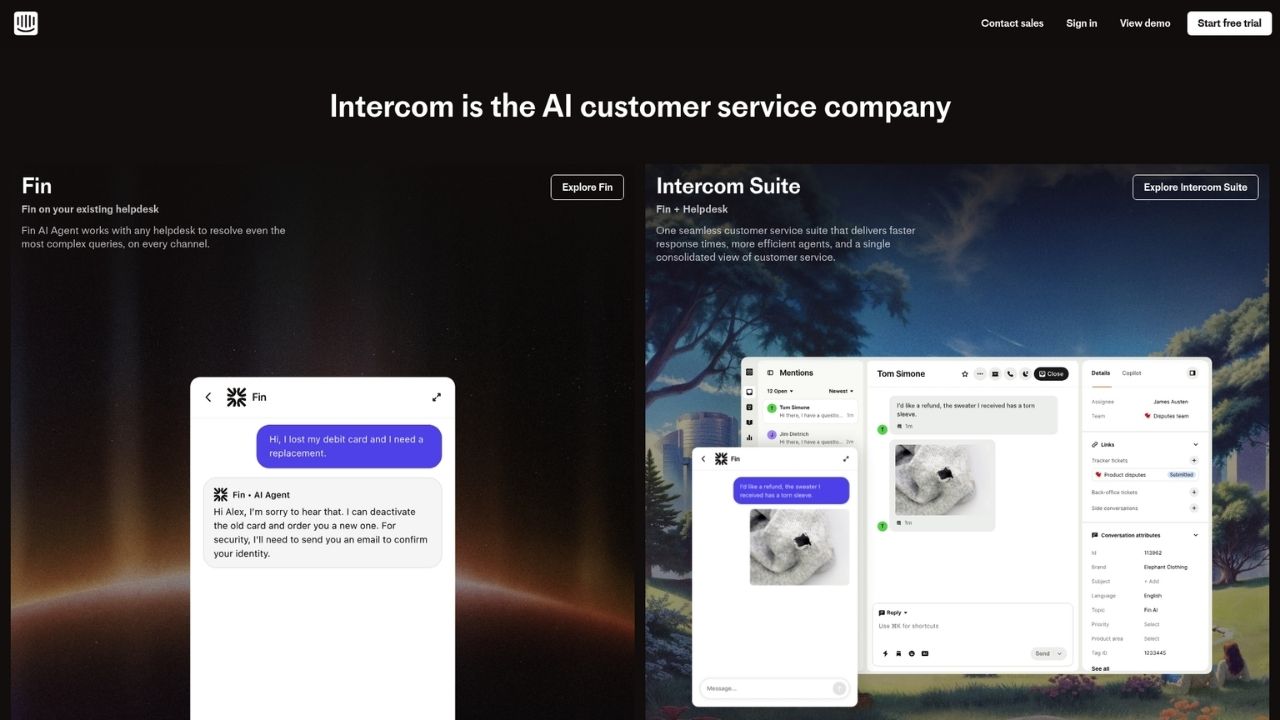
Intercom pioneered the modern messaging approach to customer support.
It's built around Fin AI Agent, which resolves customer conversations for $0.99 per resolution.
The platform includes a modern messenger interface, shared inbox, proactive messaging, and product tours.
It's designed for companies that want to engage customers proactively rather than just reactively answering tickets.
Pricing:
| Plan | Annual Price | Key Features |
|---|---|---|
| Essential | $29/seat | Fin AI Agent ($0.99/resolution), messenger, inbox |
| Advanced | $85/seat | Multiple inboxes, workflows, 20 lite seats |
| Expert | $132/seat | SSO, HIPAA, multibrand, 50 lite seats |
Source: https://www.intercom.com/pricing
Pros:
- Industry-leading AI agent
- Modern, conversational interface
- Strong proactive engagement tools
Cons:
- Seat pricing plus resolution costs
- Can get expensive at scale
Best for: SaaS companies wanting modern messaging-based support with AI-first automation.
7. Gorgias

Gorgias is built specifically for e-commerce. If you run a Shopify, BigCommerce, Magento, or WooCommerce store, this platform understands your unique support needs.
The platform integrates directly with your store to show order information alongside tickets.
You can process returns, track orders, and answer product questions without switching between tools. Used by 15,000+ brands.
Pricing:
| Plan | Monthly Price | Tickets Included | AI Agent Price |
|---|---|---|---|
| Starter | $10 | 50/month | $1.00/resolution |
| Basic | $60 | 300/month | $0.90/resolution |
| Pro | $360 | 2,000/month | $0.90/resolution |
| Advanced | $900 | 5,000/month | $0.90/resolution |
Source: https://www.gorgias.com/pricing
Pros:
- Deep e-commerce integration
- Order-aware AI agent
- Unlimited users on most plans
Cons:
- Ticket-based pricing can be unpredictable
- Overkill for non-e-commerce businesses
Best for: E-commerce stores on Shopify or similar platforms needing shop-aware support automation.
Feature comparison
| Feature | Zendesk | Freshdesk | Zoho Desk | Help Scout | HubSpot | Intercom | Gorgias |
|---|---|---|---|---|---|---|---|
| Starting Price | $19/agent | $15/agent | $7/user | $25/user | $9/seat | $29/seat | $10/mo |
| Free Tier | No | Yes (2 agents) | Yes (3 users) | Yes (5 users) | Yes (2 users) | No | No |
| AI Features | Advanced | Freddy AI | Zia AI | AI Assist/AI Answers | Breeze AI | Fin AI Agent | AI Agent |
| Live Chat | Yes | Yes | Yes | Yes | Yes | Yes | Yes |
| Knowledge Base | Yes | Yes | Yes | Yes | Yes | Yes | Yes |
| Phone Support | Yes | Yes | Yes | Via integration | Yes | Via integration | Via add-on |
| E-commerce Focus | General | General | General | General | General | General | Deep |
| Best For | Enterprise | Growing | Budget | Simplicity | CRM | SaaS | E-commerce |
How to choose the right alternative
The best Layerise alternative depends on what you're trying to achieve. Here's how to think about it:
For enterprise scale: Zendesk or HubSpot Service Hub. Both handle complex workflows, large teams, and extensive integrations. Zendesk leads on raw features; HubSpot wins if you want unified CRM data.
For budget-conscious teams: Zoho Desk or Freshdesk. Zoho Desk starts at $7 per user. Freshdesk offers a free tier for small teams. Both deliver solid features without the premium price.
For simplicity: Help Scout. If you want straightforward email support without the complexity of enterprise tools, this is your pick. Most stores go live within an hour.
For SaaS and messaging: Intercom. The Fin AI Agent is among the best in the industry. The modern messenger interface fits software companies perfectly.
For e-commerce: Gorgias. The deep Shopify integration and order-aware AI make it the clear choice for online stores.
Making the switch from Layerise
Switching help desk platforms doesn't have to be painful. Most alternatives offer free trials ranging from 7 to 30 days. Take advantage of these to test your actual workflows.
Start by listing your must-have features. Then prioritize your nice-to-haves. Use this list to evaluate each platform during your trial.
Consider your team's technical comfort level. Some platforms (like Zendesk) offer deep customization but require more setup. Others (like Help Scout) prioritize simplicity over flexibility.
Think about your growth trajectory. A platform that works for 5 support agents might not scale to 50. Check pricing at your target team size, not just your current one.
Frequently Asked Questions
What is the most affordable Layerise alternative for a small team?
Zoho Desk offers the lowest starting price at $7 per user per month, and Freshdesk provides a free tier for up to 2 agents. Both are solid choices for teams watching their budget.
Which Layerise alternative works best for Shopify stores?
Gorgias is built specifically for e-commerce and offers deep Shopify integration. It can access order information, process returns, and track shipments directly within support tickets.
Do any Layerise alternatives offer AI-powered automation?
Yes, all the alternatives on this list offer AI features. Intercom's Fin AI Agent and Zendesk's AI agents are particularly advanced, while Freshdesk's Freddy AI and Zoho Desk's Zia provide solid automation at lower price points.
Can I try these Layerise alternatives for free before committing?
Most platforms offer free trials ranging from 7 to 30 days. Freshdesk, Zoho Desk, Help Scout, and HubSpot also offer free tiers with limited features for ongoing use.
Which Layerise alternative is easiest to set up?
Help Scout is known for its simplicity and fast setup. Most teams can be up and running within an hour without technical expertise.
Is there a Layerise alternative that integrates well with existing CRM systems?
HubSpot Service Hub offers the deepest CRM integration, especially if you're already using HubSpot. Zendesk and Salesforce also integrate with most major CRM platforms.
What Layerise alternative is best for enterprise companies?
Zendesk is the market leader for enterprise support, offering the most comprehensive feature set and scalability. HubSpot Service Hub Enterprise is also a strong contender for companies wanting unified CRM and support data.