
Order tracking is the post-purchase screen shoppers open when they want proof that an order is moving. Online stores that treat that screen as a core service reduce anxiety and keep status questions out of the support queue.
Hear what AI support calls sound like for your store. Just paste your Shopify URL and get sample calls in under 20 seconds, no email required. Listen to demo calls for my store.
Key highlights
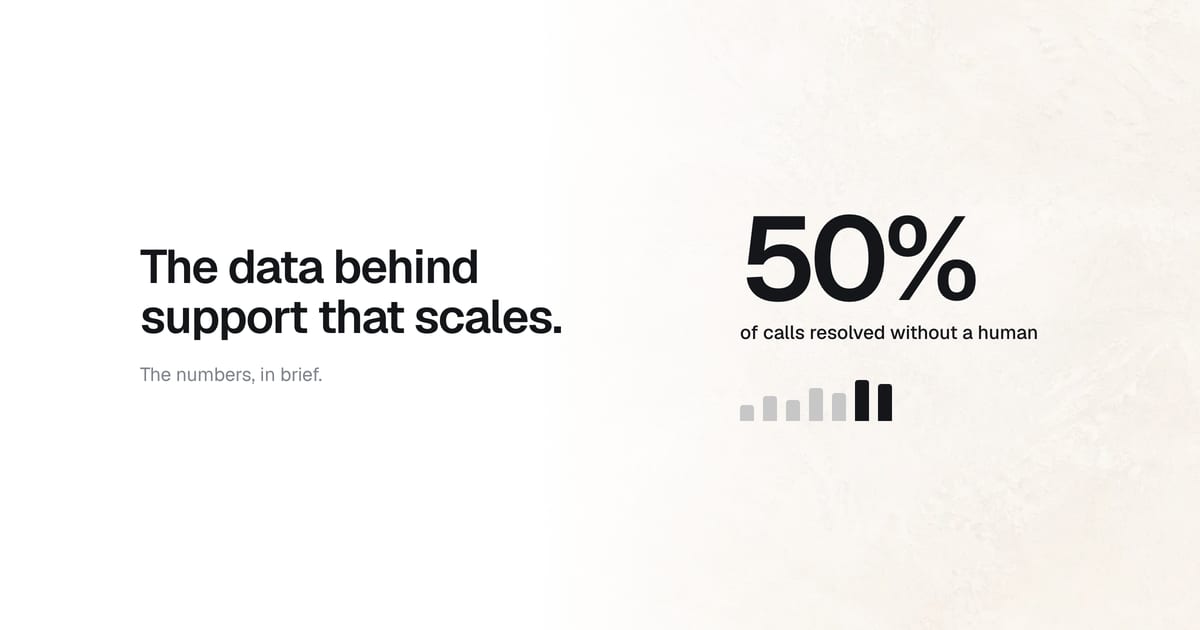
- 50%: order tracking ranked as the most important self-service feature in Baymard’s quantitative study (Baymard).
- 2.8: average times consumers reported checking order tracking per order in 2023 (Pitneybowes).
- 59.3%: of survey respondents said real-time customer order tracking has a positive impact on brand loyalty and whether they will shop with that brand again (Optimoroute).
- 23%: higher customer retention rates for ecommerce businesses that offer real-time order tracking, compared with competitors without tracking capabilities (Marketintelo).
- 24.6%: of online shoppers not affiliated with OptimoRoute said they were extremely likely to return to a brand that provides real-time order tracking (Optimoroute).
- 65.4%: of the order tracking market in 2025 is held by software solutions (Marketintelo).
How often shoppers check order tracking
Frequency data show that tracking is a repeat habit after checkout, not a single confirmation click.
2.8 times per order is the average number of times consumers reported checking order tracking in 2023, according to nine months of BOXpoll survey data (Pitneybowes). An online store should expect several return visits to the same status page, so carrier scans, delivery windows, and exception copy have to stay current after the first view.
4.1 times per order is how often GenZ shoppers reported checking, which is more often than the overall average (Pitneybowes). Catalogs that sell to this group should assume more status checks, in line with Gen Z shopping patterns that favor constant updates.
3.2 times per order is the figure reported for Millennials (Pitneybowes). Millennial customers still check more often than the overall average, so long gaps between scans will be noticed and will drive ticket volume.
Why tracking ranks with loyalty and retention
The figures below show how tracking sits among self-service customer support tools and how it lines up with customer loyalty and customer retention.
| Metric | Figure | Source |
|---|---|---|
| Most important self-service feature | 50% | Baymard |
| Real-time tracking has a positive impact on brand loyalty | 59.3% | Optimoroute |
| Extremely likely to return to a brand that provides real-time order tracking | 24.6% | Optimoroute |
| Higher customer retention rates with real-time order tracking | 23% | Marketintelo |
| Higher repeat purchase rates with real-time order tracking | 18% | Marketintelo |
Loyalty, repeat purchase, and self-service rank all point at the same operational job: publish tracking that people can find without a ticket, and keep it accurate enough that they trust it on the next order.
Enjoyment, accuracy, and retailer challenges
Survey answers on enjoyment and accuracy, plus retailer polling, show where tracking still fails even when a status page exists.
12.6% of survey respondents did not feel real-time order tracking had made their buying experience more enjoyable (Optimoroute). A tracking page that exists but adds little clarity will not improve how the purchase feels, and those shoppers have no extra reason to come back through that channel.
11% of respondents said the real-time tracking they did receive was not very accurate (Optimoroute). Wrong timestamps and stale scans train customers to ignore the page and contact support instead of serving themselves.
400 retailers, described as almost that many in a BOXpoll survey, identified difficulty differentiating their customer tracking experience as the number one tracking challenge online brands face (Pitneybowes). If every store shows the same carrier page, tracking will not set the brand apart, even when the shipment data is technically present.
What UX research documents on tracking pages
Benchmark work on live stores shows how large the documented sample of tracking interfaces now is, and how much of it is annotated for design review.
850 new examples are included in Baymard’s UX Benchmark of order tracking and returns, drawn from a manual assessment of large desktop and mobile ecommerce sites against research-based Order Tracking and Returns UX guidelines (Baymard). A store comparing its status page to public patterns should treat that corpus as a checklist of common gaps, not as a reason to copy a competitor’s layout.
165 Order Tracking Page full-page screenshots are annotated with research-based UX insights (Baymard). Teams that redesign tracking can review annotated screens before changing labels, scan timelines, or returns entry points.
343 ecommerce sites make up the UX benchmark from which those tracking-page screenshots were sourced (Baymard). A single brand’s tracking page is easier to judge when it is checked against a wide sample of other live implementations.
How software splits the order tracking market
Organization and product-mix figures show software platforms, not only legacy services, now make up most of the category, including among smaller firms that also manage ecommerce shipping.
| Metric | Figure | Source |
|---|---|---|
| Software solutions’ share of the order tracking market, 2025 | 65.4% | Marketintelo |
| Small and medium enterprises’ share of the addressable market, 2025 | 58.3% | Marketintelo |
| SME CAGR through 2034 | 14.2% | Marketintelo |
Software already leads the category, and smaller companies are a large part of demand. Stores that still send customers only to a carrier website sit outside the mix most buyers of tracking tools now choose.
Market size and projected growth
Published market-value and growth figures show a software category that is forecast to expand from the 2025 base through the next decade.
| Metric | Figure | Source |
|---|---|---|
| Global order tracking software market CAGR from 2026 to 2034 | 12.3% | Marketintelo |
| Global order tracking software market, 2025 | $4.2 billion | Marketintelo |
| Projected market size by 2034 | $9.7 billion | Marketintelo |
Category value is forecast to rise from the 2025 base through 2034. Budget for tracking as a recurring operating cost tied to shipment volume, not as a one-time setup fee.
What this means for Shopify brands
Order tracking belongs in the support design, not only in the fulfillment stack. Put shipment status where customers already look for help, and keep scans, delivery windows, and exception messages aligned with what carriers know. If the page is late or wrong, people will email or call instead of serving themselves, and the store pays for a ticket that a current status line could have closed.
A distinct tracking experience is still a stated gap for retailers. Default carrier pages look the same across stores. Add order-specific context, such as which items are in the carton, what to do if a scan stalls, and how to change the delivery, so tracking feels like the store rather than a generic parcel site. Review the page on a phone, because many status checks happen away from a desktop.
Frequently asked questions
How often do customers check order tracking after they buy?
Consumers reported checking order tracking an average of 2.8 times per order in 2023 (Pitneybowes). GenZ shoppers reported 4.1 times per order, and Millennials reported 3.2 times (Pitneybowes). Stores should design the tracking page for repeat visits, not a single glance.
Does real-time order tracking change whether people buy again?
59.3% of survey respondents said real-time customer order tracking has a positive impact on brand loyalty and whether they will shop with that brand again (Optimoroute). 24.6% of online shoppers not affiliated with OptimoRoute said they were extremely likely to return to a brand that provides real-time order tracking (Optimoroute). Ecommerce businesses offering real-time order tracking also show 23% higher customer retention rates and 18% higher repeat purchase rates than competitors without tracking capabilities (Marketintelo).
Do shoppers think tracking is accurate and enjoyable?
12.6% of survey respondents did not feel real-time order tracking had made their buying experience more enjoyable (Optimoroute). 11% of respondents said the real-time tracking they did receive was not very accurate (Optimoroute). Accuracy problems are a direct reason customers abandon the status page and open a support ticket.
What share of the order tracking market is software?
Software solutions account for 65.4% of the order tracking market in 2025 (Marketintelo). Small and medium enterprises represent 58.3% of the addressable market in 2025 and are growing at a 14.2% CAGR through 2034 (Marketintelo). The global order tracking software market is projected to grow at a 12.3% CAGR from 2026 to 2034 (Marketintelo).
How large is the order tracking software market?
The global order tracking software market is described as expanding from $4.2 billion in 2025 to $9.7 billion by 2034 (Marketintelo). That path matches the 12.3% CAGR projected from 2026 to 2034 (Marketintelo). Those figures are category totals, not a quote for any one store.