
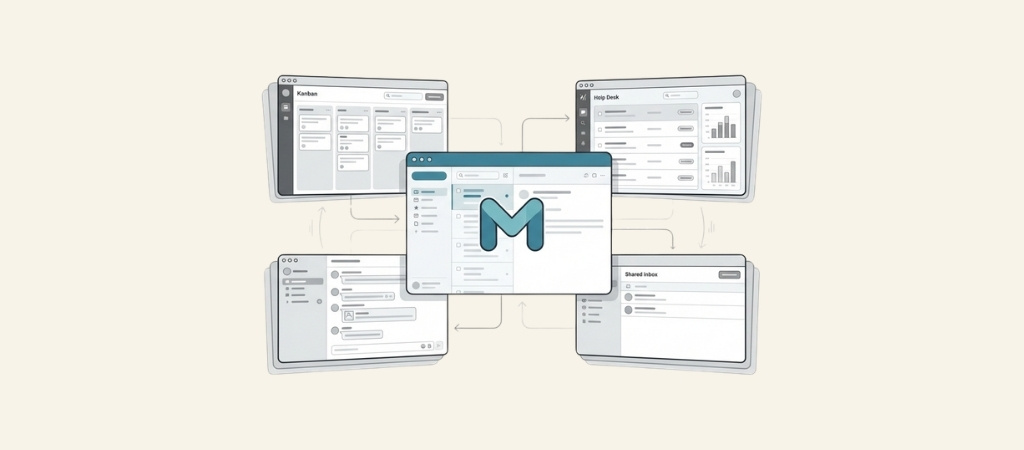
Missive works well until it doesn't.
Most teams start looking elsewhere when they hit the same wall: mobile UX that feels clunky, setup that takes too long, or pricing that jumps unexpectedly as you add seats.
The problem isn't that Missive is bad. It's that teams outgrow it. Maybe you need real SLAs now.
Maybe your support volume doubled and the mobile app can't keep up.
Or maybe you're just tired of explaining to new hires why the sync feels weird.
This guide covers seven alternatives worth considering in 2026. Each one solves a different version of the "we've outgrown Missive" problem.
Editor’s note: Want to hear some sample AI support calls made for your Shopify store?
- Just paste your store URL
- Hear sample calls for your store (no email required)
- Listen to demo calls for my store
What to look for in a Missive alternative
Before jumping to a new tool, figure out what actually needs to change. Here's what separates the good alternatives from the mediocre ones:
Sync fidelity. This is the big one. Does the tool become your new source of truth, or does it play nicely with Gmail/Outlook? Front, for example, becomes the workspace. Drag and Hiver stay inside Gmail. Pick the wrong model and your team will hate the migration.
Mobile experience. Missive's mobile app gets complaints for a reason. If your team triages tickets on their phones, test the mobile app first. Front's iOS app lacks desktop features. Missive's is full-featured but can feel sluggish.
Pricing at scale. Most tools look affordable at 5 seats. Check the 25-seat and 50-seat numbers. Front's add-ons (Copilot $20/seat, Smart QA $20/seat) stack fast. Help Scout's AI Answers charges per resolution, which can surprise you.
Use case fit. Support teams need SLAs and reporting. Sales teams need fast assignment and collision detection. General operations teams often just want "email, but shared." Match the tool to the job.
Quick comparison: Missive alternatives at a glance
| Tool | Category | Starting Price | Best For |
|---|---|---|---|
| Front | Collaborative inbox | $25/user/mo | Teams wanting a workspace-style platform |
| Help Scout | Help desk | $25/user/mo | Support teams needing SLAs and reporting |
| Hiver | Gmail-native | $25/user/mo | Teams staying in Google Workspace |
| Drag | Gmail Kanban | $12/user/mo | Lightweight shared inbox needs |
| Zoho TeamInbox | Budget shared inbox | ~$5-10/user/mo | Cost-conscious teams |
| Ringly.io | Voice + AI support | $99/mo for the first 50 conversations, then $1.99 per conversation | E-commerce teams drowning in phone calls |
| Zendesk | Enterprise help desk | $19/user/mo | Large support operations |
1. Front

Front is the closest thing to a direct Missive replacement. It's a collaborative inbox workspace where teams can comment on emails, assign conversations, and manage high-volume support.
The platform handles email, SMS, WhatsApp, and live chat in one place. AI features include Copilot for drafting responses, Autopilot for automation, and Smart QA for quality tracking.
Pricing: Starter at $25/seat/mo (max 10 seats), Growth at $65/seat/mo, Scale at $99/seat/mo, and Premier at $229/seat/mo. Watch out for add-ons: Copilot costs an extra $20/seat, Smart QA another $20, and Smart CSAT $10.
Where it wins: Powerful routing, extensive integrations, and an established platform used by 9,000+ companies including Uber Freight and MongoDB.
Where it falls short: Expensive at scale. Mobile app lacks desktop features like analytics and sequences. Gmail sync has limitations (doesn't fully sync labels, archive status, or snooze).
Best for: Teams ready to treat their inbox tool as the primary workspace, not a Gmail add-on.
2. Help Scout

Help Scout is what you graduate to when "shared inbox" becomes "support operation." It's built specifically for customer support teams that need SLAs, CSAT tracking, and reporting that holds up in leadership meetings.
The interface feels cleaner than most help desks. You get shared mailboxes, a knowledge base, live chat through Beacon, and workflows that actually save time. AI features include drafting assistance and AI Answers, a chatbot that resolves routine requests.
Pricing: Standard at $25/user/mo, Plus at $45/user/mo, Pro at $75/user/mo. There's also a free tier for up to 5 users with limited features. Additional inboxes cost $10/mo, extra Docs sites $20/mo. AI Answers runs $0.75 per resolution.
Where it wins: Purpose-built for support, excellent reporting, and easy to use. 80% of customers stick around after 4 years.
Where it falls short: AI Answers pricing can spike if you get sudden volume. Not ideal for non-support use cases like sales or general email management.
Best for: Email-first support teams that have outgrown basic shared inboxes but don't want Zendesk-level complexity.
3. Hiver

Hiver takes a different approach: it turns Gmail into a help desk instead of replacing it. Everything happens inside the Gmail interface your team already knows.
You get email assignment, SLA tracking, CSAT surveys, and even WhatsApp integration. The tradeoff is that it only works with Google Workspace.
Pricing: Growth at $25/user/mo annually, Pro at $65/user/mo annually. The features most teams actually want (SLA, CSAT, WhatsApp, API access) require the Pro tier.
Where it wins: Zero context switching. Your team never leaves Gmail, so adoption is fast. Gmail search still works. No retraining needed.
Where it falls short: Limited to Google Workspace. Fewer integrations than standalone tools (22 vs Zendesk's 949). Advanced features get pricey.
Best for: Teams married to Gmail who need support ops features without migrating to a new platform.
4. Drag

Drag is the lightweight option. It adds Kanban boards and shared inbox features directly to Gmail. Think of it as Trello for your email.
You can assign emails, add comments, set up automation rules, and view everything as cards on a board. It's simpler than the alternatives, which is exactly the point.
Pricing: Starter at $12/user/mo annually, Plus at $18/user/mo, Pro at $24/user/mo. Monthly billing costs about 30% more.
Where it wins: Fastest adoption. No learning curve. Clear, predictable pricing. Good for small teams that just need basic shared inbox functionality.
Where it falls short: Reporting windows are capped by tier (3/6/12 months). Limited feature set compared to full help desks. Won't scale to complex workflows.
Best for: Small teams wanting Gmail-native collaboration without the complexity or cost of bigger tools.
5. Zoho TeamInbox

Zoho TeamInbox is the budget pick that doesn't feel like a budget pick. It covers all the shared inbox basics: assignments, internal comments, analytics, and team rules.
The standout feature is unlimited history on every plan. Unlike Missive's 15-day limit on free plans, Zoho keeps everything until you delete it.
Pricing: Free for up to 5 users. Professional plan runs roughly $5-10/user/mo depending on your region and any Zoho bundle discounts.
Where it wins: Affordable. No storage caps. Integrates with the broader Zoho ecosystem if you're already using their CRM or other tools.
Where it falls short: Less polished UI than competitors. Channel and rule limits by tier. Works best if you're already in the Zoho ecosystem.
Best for: Cost-conscious teams that need shared inbox functionality without enterprise pricing.
6. Ringly.io

Ringly.io solves a different problem than the others on this list. While everyone else focuses on email, Ringly handles phone calls.
the AI, our AI phone agent, answers calls 24/7. It looks up orders, processes returns, answers FAQs, and only escalates complex issues to your team. It integrates natively with Shopify and works alongside your existing email tools.
Pricing: Ringly charges per phone conversation (see Ringly's pricing).
Where it wins: Resolves up to 90% of calls without human intervention. Supports 30 languages. Setup takes under 1 hour. You only start paying after The AI resolves 65% of your first 100+ calls.
Where it falls short: Phone-focused, not an email replacement. Shopify-centric (though it works with other platforms). Won't replace your shared inbox for written communication.
Best for: E-commerce teams getting overwhelmed by phone calls while still managing email through other tools.
7. Zendesk

Zendesk is the enterprise standard. It offers comprehensive ticketing, knowledge base, live chat, and omnichannel support with 1,000+ integrations.
The platform scales to any size but requires dedicated admin resources to configure and maintain.
Pricing: Suite Team at $19/agent/mo, Suite Growth at $55/agent/mo, Suite Professional at $115/agent/mo. Enterprise pricing is custom.
Where it wins: Scales to any size. Huge ecosystem. Proven at enterprise level. Advanced routing, SLAs, and custom roles.
Where it falls short: Heavy setup and ongoing administration. Expensive at scale. Overkill for smaller teams. You'll pay in time before you pay in dollars.
Best for: Large support organizations with complex workflows, multiple brands, and dedicated operations staff.
How to choose the right Missive alternative
Here's a simple decision framework:
If you need a collaborative inbox workspace: Go with Front. It's the most similar to Missive but with more enterprise features.
If you run a support team: Help Scout is the sweet spot. Easier than Zendesk, more capable than shared inbox tools.
If you must stay in Gmail: Hiver for support teams, Drag for simpler needs.
If budget is tight: Zoho TeamInbox covers the basics at the lowest cost.
If phone calls are the problem: Ringly.io handles voice while your email tool handles written communication.
If you need enterprise scale: Zendesk is the safe choice, assuming you have the admin resources.
One practical tip: run parallel inboxes for 2-4 weeks before cutting over completely. Test the sync behavior, mobile experience, and workflow edge cases under real load.
Which Missive alternative fits your team?
The right tool depends on where your team works and what workflows matter most. There's no universal "best" alternative, only the one that fits your specific situation.
If phone support is part of your challenge, we can help with that. At Ringly.io, The AI handles routine calls so your team can focus on the conversations that actually need a human. You can try Ringly for free and see how it works alongside your email setup.
Frequently Asked Questions
What is the closest direct replacement for Missive?
Front is the closest peer if you want a dedicated collaborative inbox workspace with similar comment and assignment features.
Which Missive alternative works best for Gmail users?
Hiver or Drag both work inside Gmail. Hiver has more support features at $65/user/mo for the Pro tier. Drag is simpler and cheaper at $12-24/user/mo.
Are there affordable Missive alternatives for small teams?
Zoho TeamInbox starts around $5-10/user/mo and offers unlimited history. Drag starts at $12/user/mo. Both are significantly cheaper than Front or Help Scout at scale.
Also read: