

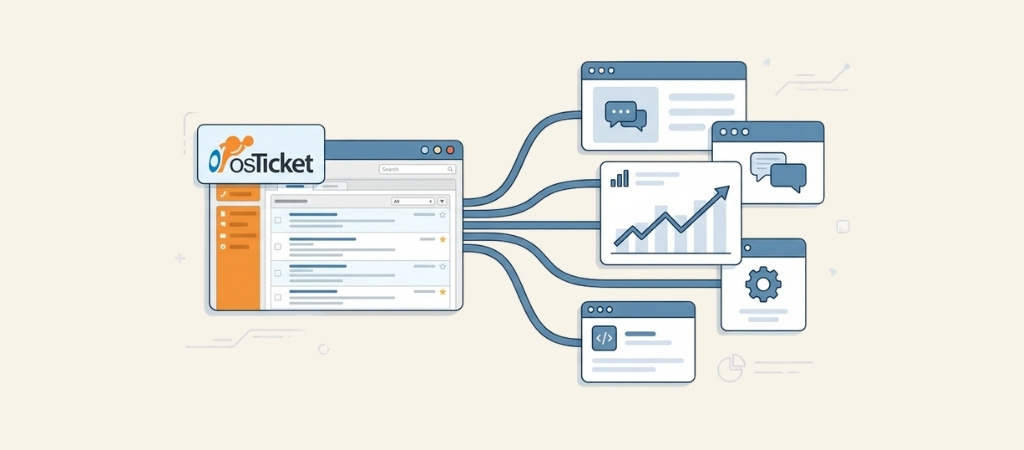
osTicket has been a go-to open-source help desk for years.
But as support teams grow and customer expectations rise, many find themselves hitting its limits. Limited integrations, a dated interface, and basic reporting push teams to look elsewhere.
The good news? There's no shortage of alternatives.
From modern open-source options to AI-powered platforms, you have choices that fit different needs and budgets. This guide covers the seven best osTicket alternatives for 2026.
Editor’s note: Want to hear some sample AI support calls made for your Shopify store?
- Just paste your store URL
- Hear sample calls for your store (no email required)
- Listen to demo calls for my store
What is osTicket?
osTicket is an open-source ticketing system that helps teams manage customer inquiries through email, web forms, and phone. It's popular among small IT departments and budget-conscious organizations because it's free and relatively easy to set up.
The platform handles ticket creation, assignment, and basic reporting. But that's where things get tricky. The interface feels dated compared to modern tools. Integration options are limited. And as your team scales, you'll likely outgrow what it can do.
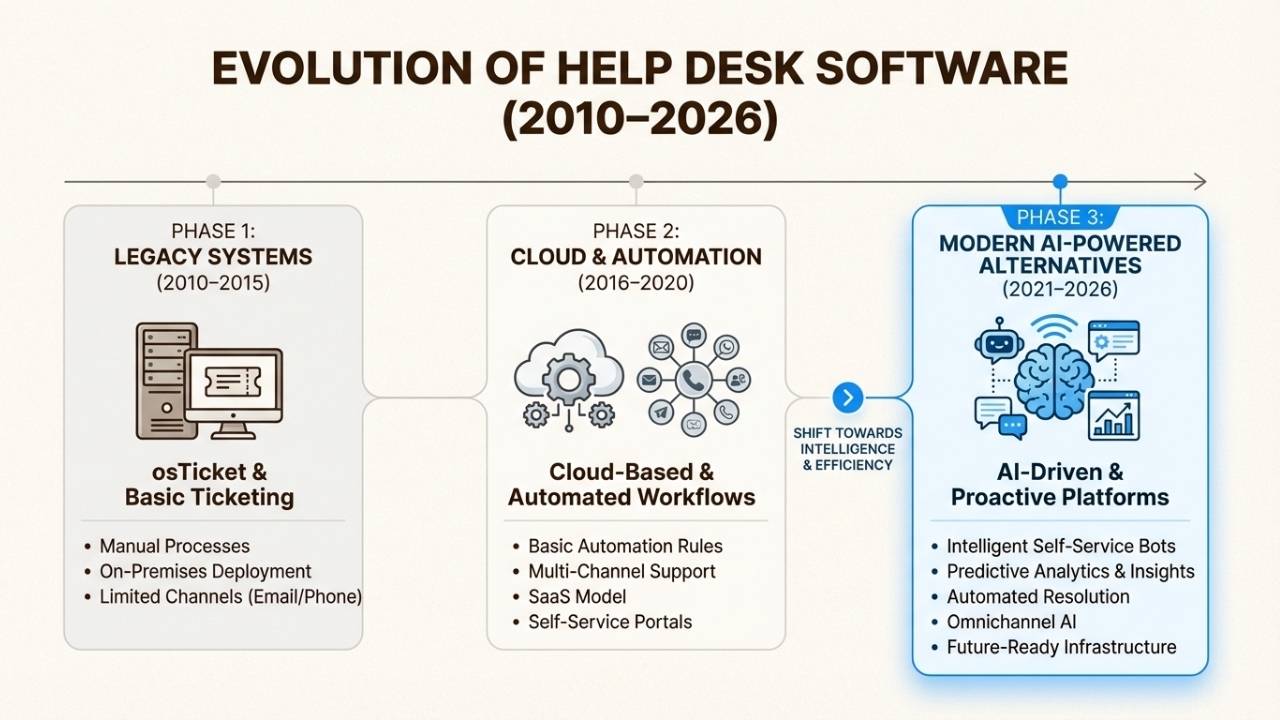
Quick comparison of osTicket alternatives
Before diving into details, here's how these alternatives stack up:
| Tool | Starting Price | Deployment | Best For | Rating |
|---|---|---|---|---|
| Zammad | Free (Self-hosted) / $5.80 (Cloud) | Cloud or Self-hosted | Teams wanting modern open source | 4.5/5 |
| Zendesk | $19/agent/mo (Support) | Cloud | Enterprise-grade support | 4.4/5 |
| FreeScout | Free (Community) | Self-hosted | Simple, lightweight solution | 4.3/5 |
| Freshdesk | $0 (Up to 2 agents) | Cloud | Generous free tier for startups | 4.5/5 |
| UVdesk | Free (Open Source) / $11 (Pro) | Self-hosted or Cloud | Developer-friendly customization | 4.2/5 |
| Zoho Desk | $0 (Up to 3 users) | Cloud | Budget-conscious teams | 4.5/5 |
| Ringly.io | $99/mo for the first 50 conversations, then $1.99 per conversation | Cloud | E-commerce phone support | 4.8/5 |
1. Zammad
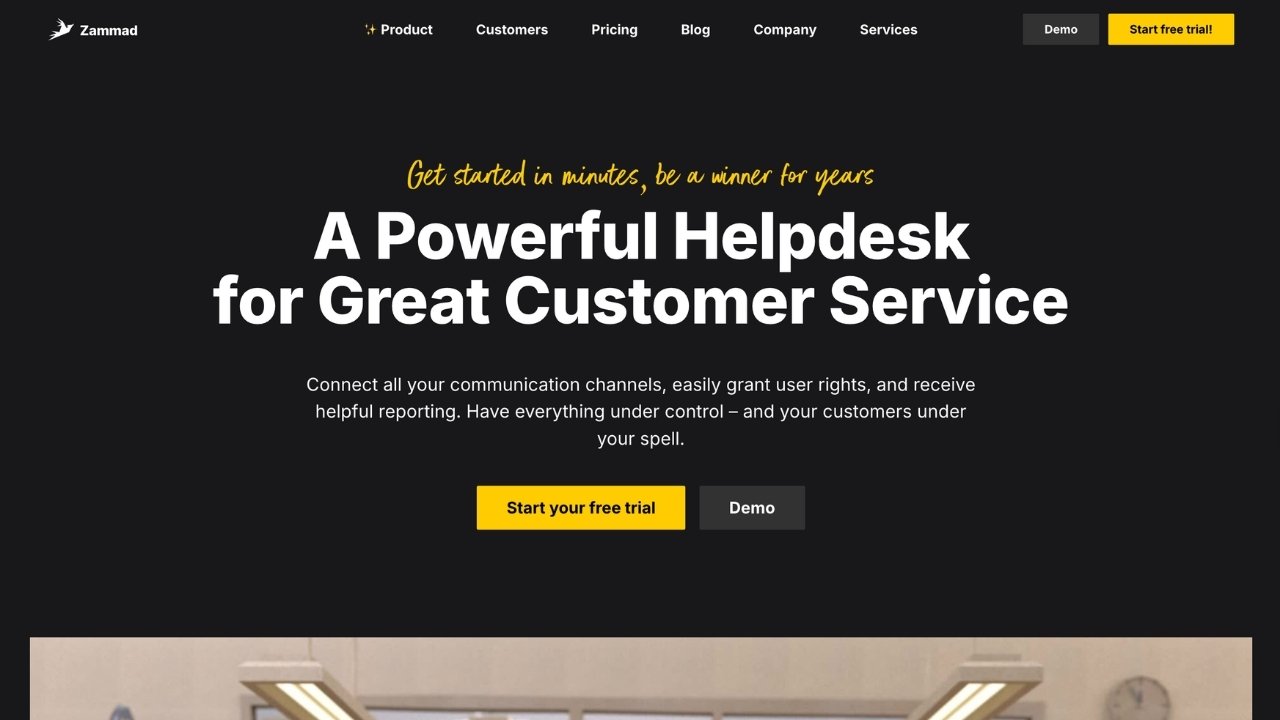
Zammad positions itself as the modern alternative to legacy systems like osTicket and OTRS. Launched in 2016, it brings a clean interface to open-source help desk software without sacrificing the flexibility self-hosting provides.
The platform supports email, web forms, chat, SMS, Telegram, Facebook, and WhatsApp. You get SLA management, automation rules, and a built-in knowledge base. For authentication, it integrates with LDAP, Active Directory, SAML, and OpenID Connect.
Pricing: The self-hosted version is completely free. Cloud hosting starts at €5 per agent monthly when billed annually, with the Plus tier at €24 per agent for unlimited agents and advanced features. Support plans for self-hosted installations range from €2,999 to €9,999 annually.
Pros:
- Modern, intuitive interface
- Active development community
- GDPR-compliant with German data centers
- Strong mobile-responsive design
Cons:
- Smaller ecosystem than commercial alternatives
- Self-hosting requires technical expertise
Best for: Teams wanting open-source software with a contemporary user experience and full data control.
2. Zendesk

Zendesk is the dominant player in customer service software, serving over 100,000 businesses. It's the platform others are measured against, offering comprehensive features that scale from startups to enterprises.
The Suite plans include AI agents, omnichannel support (email, messaging, chat, phone, social), customizable help centers, and over 1,000 prebuilt integrations. The AI capabilities range from essential automated responses to advanced copilot features that assist agents in real-time.
Pricing: Suite Team starts at $55 per agent monthly (annual billing), with Professional at $115 and Enterprise at $169. The basic Support Team plan without AI features is $19 per agent. Add-ons like Advanced AI, Copilot, and Quality Assurance run $35-50 per agent monthly.
Pros:
- Industry-leading feature set
- Massive integration ecosystem
- Proven scalability
- Advanced AI and automation
Cons:
- Expensive, especially at scale
- Steep learning curve
- Complex setup for advanced features
Best for: Growing teams needing enterprise-grade capabilities and extensive customization options.
3. FreeScout
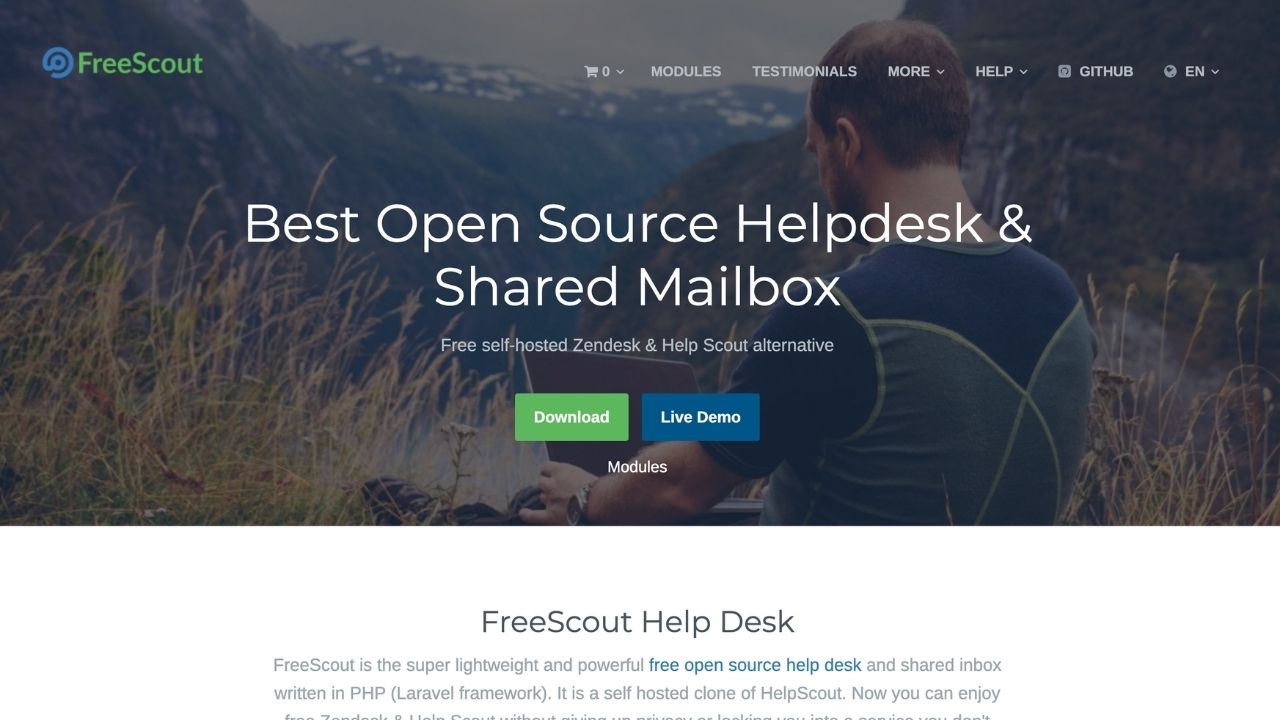
FreeScout takes a different approach. It's a lightweight, self-hosted help desk written in PHP using the Laravel framework. Think of it as a free alternative to Help Scout or a simpler Zendesk you host yourself.
The core software handles shared inboxes, ticket management, and knowledge bases. A module system lets you extend functionality as needed. It's designed for teams that want help desk capabilities without vendor lock-in or ongoing subscription costs.
Pricing: Completely free and open source. You pay only for your own server hosting and any optional paid modules you choose to add.
Pros:
- No per-agent fees
- Simple and fast
- Full data privacy
- Easy to customize
Cons:
- Requires technical setup
- Smaller community than alternatives
- Fewer built-in features
Best for: Small teams wanting a straightforward, self-hosted solution without ongoing licensing costs.
4. Freshdesk

Freshdesk from Freshworks offers one of the most generous free tiers in the industry. It's built for teams that want to get started quickly without sacrificing features they'll need as they grow.
The platform includes AI-powered ticketing through Freddy AI, omnichannel support, workflow automation, self-service portals, and gamification features to motivate agents. Over 74,000 businesses use it, from small teams to large enterprises.
Pricing: Free for up to 2 agents for 6 months. Paid plans start at $19 per agent monthly (Growth), with Pro at $55 and Enterprise at $89. AI agent sessions beyond the included 500 cost $49 per 100 sessions.
Pros:
- Generous free tier
- Intuitive interface
- Strong AI features at lower cost
- Good automation capabilities
Cons:
- Limited customization compared to enterprise tools
- Costs add up with AI session overages
- Some advanced features require higher tiers
Best for: Small to mid-sized teams wanting quick setup and AI capabilities without enterprise pricing.
5. UVdesk
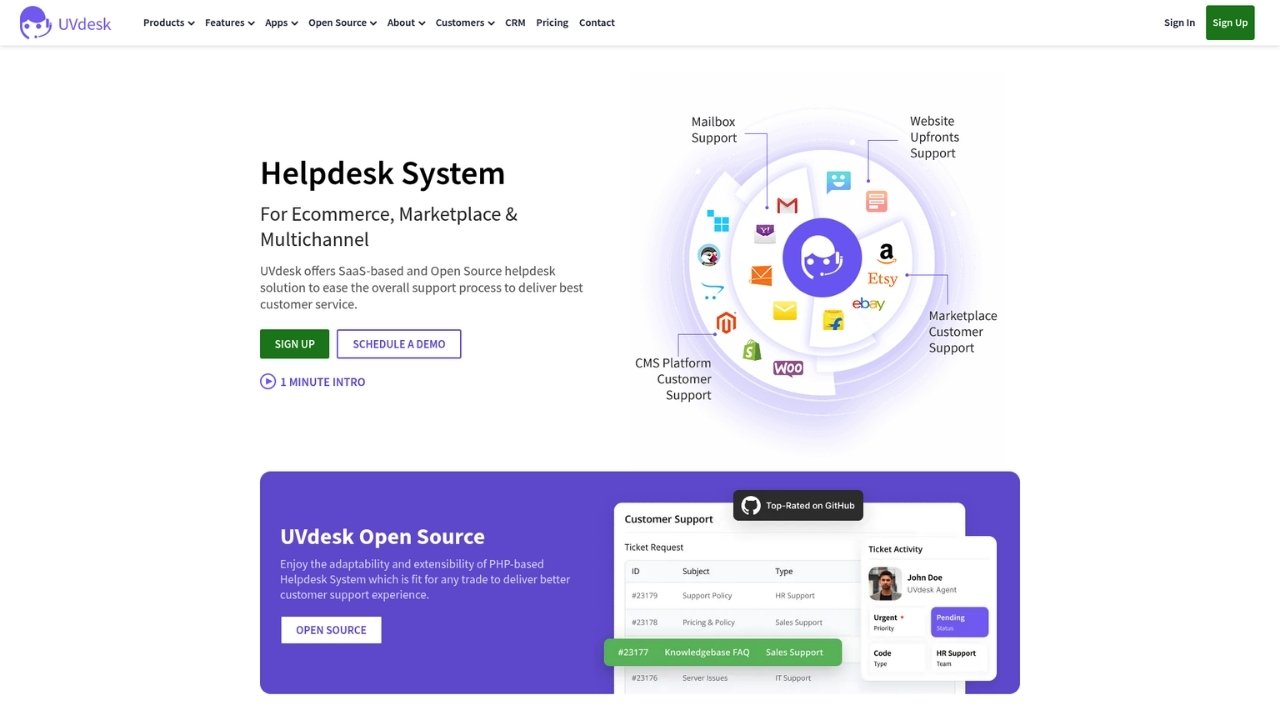
UVdesk is an open-source help desk built on the Symfony PHP framework. It targets developers and technical teams who need a customizable foundation they can extend to fit specific workflows.
The platform handles ticket management, knowledge bases, and workflow automation. Being built on Symfony means it's modular and follows modern coding standards. You can self-host for free or opt for commercial support.
Pricing: Open source version is free. Commercial hosting and support pricing available upon request.
Pros:
- Modern, well-architected codebase
- Highly customizable for developers
- Self-hosted option for data control
- Active development
Cons:
- Requires technical expertise
- Smaller community than Zammad
- Documentation can be limited
Best for: Development teams wanting a customizable open-source platform they can extend and maintain.
6. Zoho Desk

Zoho Desk delivers enterprise features at budget-friendly prices. As part of the broader Zoho ecosystem, it integrates seamlessly with Zoho CRM, Zoho Analytics, and other business tools.
The platform includes Zia, an AI assistant that handles sentiment analysis, auto-tagging, and field predictions. Enterprise plans add AI agents that can perform support tasks autonomously. Blueprints provide visual workflow automation, and multi-department support lets larger organizations manage complex structures.
Pricing: Free for 3 users. Paid plans start at $7 per user monthly (Express), with Standard at $14, Professional at $23, and Enterprise at $40. Light users cost $6 per month on Professional and Enterprise plans.
Pros:
- Very affordable pricing
- Strong AI features for the cost
- Excellent Zoho ecosystem integration
- Intuitive configuration
Cons:
- Interface can feel cluttered
- Limited customization outside Zoho ecosystem
- Best value requires existing Zoho usage
Best for: Budget-conscious teams, especially those already using Zoho products.
7. Ringly

Ringly takes a different approach from traditional help desks. Instead of focusing on tickets and email, it automates phone support for e-commerce stores using AI.
the AI, the AI phone support agent, handles calls 24/7. It looks up orders, processes returns and exchanges, answers product questions, and transfers to humans when needed. The platform integrates natively with Shopify and supports 30 languages.
Seth resolves up to 90% of support calls without human intervention. Setup takes under 1 hour: connect your store, choose a phone number, and the AI trains itself on your products and policies.
Pricing: Ringly charges per phone conversation (see Ringly's pricing). Custom pricing is available for high volume, from 1,000+ calls a month, with custom setup and integrations. If Seth resolves under 65% of calls in a month, that month comes back as credit (after 90 days on Pay per call).
Pros:
- Resolves up to 90% of calls without humans
- quick setup
- 40-language support
- 24/7 availability
Cons:
- Phone-focused, not a full ticketing system
- E-commerce centric
- Higher base price than email-only tools
Best for: E-commerce stores wanting to automate phone support and reduce staffing costs.
How to choose the right osTicket alternative
Picking the right tool depends on your specific situation. Here are the key factors to consider:
Deployment preference: Do you need self-hosted for data control, or is cloud-based fine? Zammad, FreeScout, and UVdesk offer self-hosted options. Zendesk, Freshdesk, Zoho Desk, and Ringly are cloud-only.
Team size and growth: Small teams might start with FreeScout or Freshdesk's free tier. Growing teams should consider Zendesk or Zoho Desk for scalability. Enterprise teams need Zendesk's advanced features.
Integration requirements: Check what tools you already use. Zoho Desk works best with other Zoho products. Zendesk has the largest app marketplace. Ringly focuses on Shopify integration.
Total cost of ownership: Look beyond sticker price. Factor in setup time, training, add-ons, and overage fees. A "cheap" tool that requires extensive customization may cost more than a pricier all-in-one solution.
Support channels: Most alternatives focus on email and chat. If phone support matters, Ringly is purpose-built for that. For omnichannel, Zendesk and Freshdesk lead.
Finding your best osTicket alternative
Each tool on this list solves different problems. Here's the short version:
- Choose Zammad if you want modern open-source with full data control
- Choose Zendesk if you need enterprise features and don't mind the price
- Choose FreeScout if you want simple, free, self-hosted help desk
- Choose Freshdesk if you want generous free tier and AI features
- Choose UVdesk if you're a developer wanting customization
- Choose Zoho Desk if you're budget-conscious or use Zoho products
- Choose Ringly if you run an e-commerce store and want AI phone support
The best way to decide is to test a few options. Most offer free trials, so you can see how they fit your workflow before committing.
Frequently Asked Questions
Which osTicket alternative offers the best free plan?
Freshdesk offers the most generous free plan with up to 2 agents for 6 months, including ticketing, knowledge base, and basic automation. Zoho Desk provides a free plan for 3 users indefinitely, though with limited features.
Are there any good open-source alternatives to osTicket?
Yes. Zammad is the most popular modern open-source alternative with active development and commercial support options. FreeScout offers a simpler, lighter-weight option. UVdesk provides a developer-friendly Symfony-based platform.
How difficult is it to migrate from osTicket to another platform?
Migration difficulty varies by platform. Cloud solutions like Zendesk and Freshdesk offer import tools and migration assistance. Self-hosted alternatives require more manual work. Most vendors provide documentation or services to help with data migration.
What should I look for in an osTicket alternative if I need phone support?
Most alternatives treat phone as an add-on. Ringly is built specifically for phone support automation. Zendesk and Zoho Desk include phone capabilities in higher-tier plans. If phone is critical, prioritize platforms with native telephony integration rather than third-party add-ons.
Do any osTicket alternatives offer AI-powered features?
All major commercial alternatives now include AI. Zendesk has the most advanced AI suite with agents, copilot, and quality assurance. Freshdesk's Freddy AI offers solid automation at lower cost. Zoho Desk includes Zia AI assistant. Ringly uses AI specifically for phone call handling.
Which osTicket alternative is best for e-commerce businesses?
Ringly is purpose-built for e-commerce with native Shopify integration and AI phone support. Zendesk and Freshdesk offer strong e-commerce integrations through their app marketplaces. Zoho Desk connects well if you're already using Zoho Commerce.
Also read: