

Odondo has built a solid reputation as a UK-based customer service outsourcing provider.
Their distributed agent model and pay-as-you-go pricing have attracted many businesses looking for flexible support solutions.
But they're not the only option, and depending on your needs, there might be a better fit.
Maybe you need AI-powered automation instead of human agents. Perhaps you want transparent pricing rather than custom quotes.
Or you might be looking for a provider with stronger e-commerce specialization.
Whatever your reason for exploring options, this guide covers seven alternatives worth considering.
Editor’s note: Want to hear some sample AI support calls made for your Shopify store?
- Just paste your store URL
- Get sample calls in under 20 seconds (no email required)
- Listen to demo calls for my store
What is customer service outsourcing?
Customer service outsourcing means hiring an external company to handle your customer support instead of building an in-house team.
There are three main approaches:
- Traditional BPO (Business Process Outsourcing): Human agents working in call centers or remotely, handling calls, emails, and chats. Think Foundever or Ascensos.
- AI-powered automation: Software agents that handle routine inquiries automatically. This is where Ringly.io fits in.
- Hybrid models: A mix of AI handling simple queries with human agents stepping in for complex issues. Many providers are moving toward this approach.
The global BPO market is expected to reach $525 billion by 2030, so you're definitely not short on options.
The key is finding the right type of provider for your specific situation.
How we evaluated these Odondo alternatives
We looked at several factors when selecting these alternatives:
- Pricing transparency: Do they publish prices or hide behind "contact us" forms?
- Channel support: Phone, email, chat, social, or omnichannel?
- Scalability: Can they handle seasonal spikes or rapid growth?
- AI capabilities: Do they offer automation or is it all human-powered?
- Industry focus: Generalist or specialized (like e-commerce)?
Here's how they stack up at a glance:
| Provider | Type | Pricing | Best For | Key Channels | AI Features |
|---|---|---|---|---|---|
| Ringly.io | AI-powered | $349-$799/month | E-commerce | Phone | Full AI automation |
| Foundever | BPO | Custom | Enterprise | Omnichannel | AI assistance |
| Helplama | BPO | From $399/mo | E-commerce/SaaS | Omnichannel | Limited |
| Ascensos | Boutique BPO | Custom | Retail | Omnichannel | Some automation |
| TELUS International | BPO | Custom | Enterprise | Omnichannel | AI platform |
| LiveOps | Virtual BPO | Custom | Seasonal businesses | Omnichannel | AI insights |
| UpCall | Sales-focused | Custom | Lead generation | Phone/email/SMS | Minimal |
1. Ringly.io

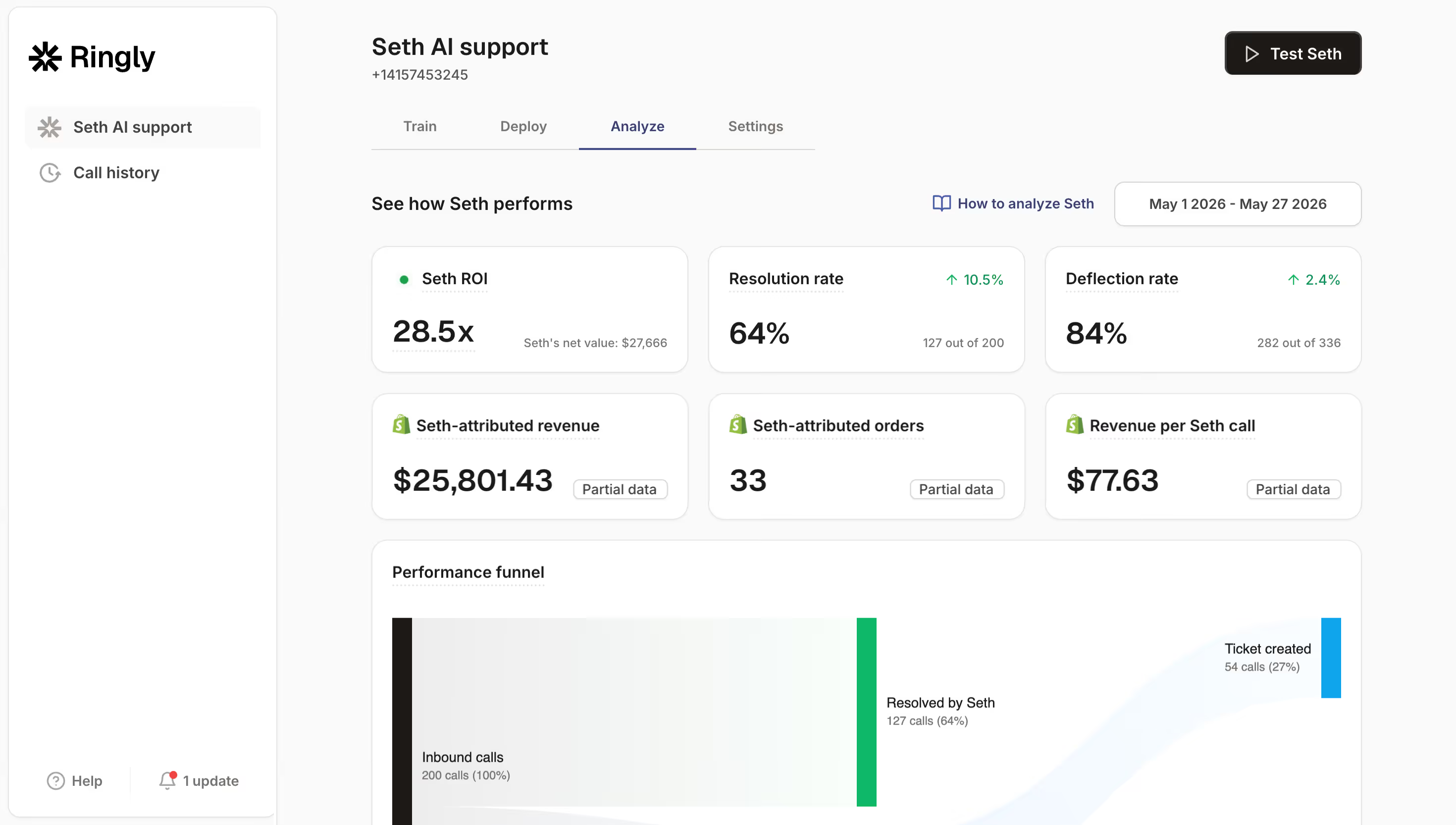
Ringly.io takes a different approach from traditional BPO providers.
Instead of human agents, they offer the AI, an AI phone support representative that handles calls 24/7.
Here's what makes it interesting: The AI resolves about 70-73% of calls without any human involvement.
For e-commerce stores, that means most "where's my order" queries, return requests, and product questions get handled automatically.
The AI pulls order info directly from Shopify, so callers get accurate, real-time answers.
The pricing is refreshingly transparent. The Grow plan costs $349 per month for 1,000 minutes, while the Grow plan at $349 includes 1,000 minutes.
Overage is $0.19 per minute. For larger operations, the Scale plan starts at $1,099 with custom setup and integrations.
Pros:
- No per-agent costs (you're not paying hourly wages)
- Scales instantly (no hiring or training delays)
- 30 languages supported
- Setup takes about 3 minutes
Cons:
- Phone-only (no chat or email)
- E-commerce focused (Shopify integration is the primary use case)
- AI can't handle every situation (complex issues still need humans)
Ringly.io works best for Shopify stores that want to automate routine phone support without building a large team.
The 14-day free trial lets you test it before committing.
2. Foundever
Foundever is what you get when you merge two major BPO players (Sitel and Sykes) and add a rebrand.
The result is one of the largest customer experience providers on the planet.
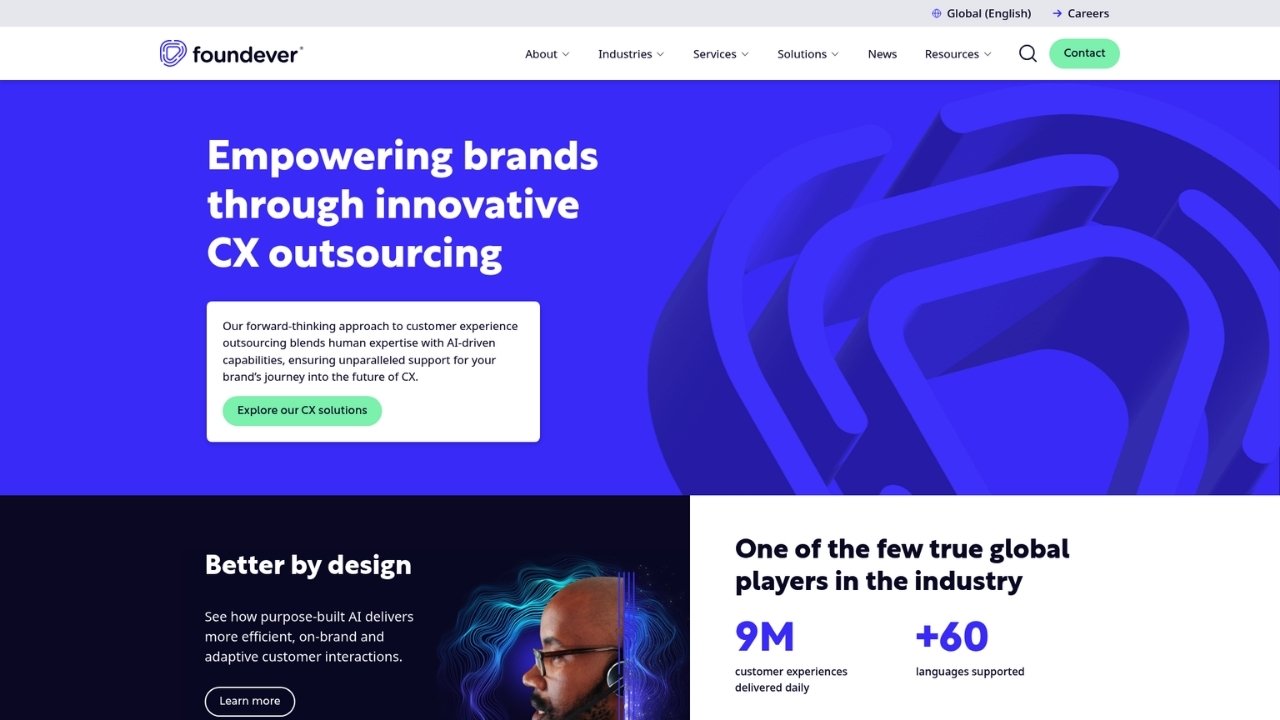
With 150,000 associates across 45 countries and support for 60+ languages, Foundever can handle pretty much any scale you throw at them.
They process 9 million customer experiences daily. That's not a typo.
Their service offering spans the full range: phone, email, chat, social, and even metaverse-ready support.
They've also invested heavily in AI, offering purpose-built solutions for more efficient, on-brand customer interactions.
Pros:
- Massive global scale
- 60+ languages (one of the widest ranges available)
- AI + human hybrid approach
- Industry awards and recognition
Cons:
- Enterprise-focused (may be overkill for smaller businesses)
- Custom pricing only (no transparency)
- Complex setup for smaller operations
Foundever makes sense if you're a multinational corporation needing consistent support across dozens of countries and languages.
For smaller businesses, you might get lost in the machine.
3. Helplama

Helplama positions itself as a flexible alternative to larger BPOs.
They're US-based, focus heavily on e-commerce and SaaS companies, and offer something they call a "Zero Risk Business Model."
That model lets you try agents in your actual systems before making any commitment.
It's a smart approach that removes some of the friction from outsourcing decisions. Plans start at $399 per month, though exact pricing depends on your specific requirements.
Their case studies show solid results: one client reduced email response time from 24 hours to 6 hours, another saw a 20% conversion rate from chat to sale, and a third boosted conversion rates by 5 percentage points.
Pros:
- US-based agents only
- Try-before-you-commit model
- E-commerce and SaaS expertise
- Omnichannel support (chat, email, phone, social)
Cons:
- Limited international coverage
- Newer player (less track record than established BPOs)
- Custom pricing (not fully transparent)
Helplama fits if you want US-based human agents, need flexibility, and prefer working with a smaller, more agile provider than the massive BPO giants.
4. Ascensos
Ascensos takes a boutique approach to customer service outsourcing.
They specialize exclusively in retail and e-commerce, calling themselves "the world's leading retail and e-commerce customer management provider."
Their network spans the UK, Romania, Turkey, Trinidad, and South Africa, with a mix of office-based and home-based agents.
They emphasize bespoke solutions tailored to each client rather than one-size-fits-all packages.
The "recruit to fit" approach is interesting: they recruit agents specifically to match your brand requirements, creating what they call "brand ambassadors" rather than generic customer service reps.
Pros:
- Retail and e-commerce specialization
- Boutique, personalized service
- Strong pan-European presence
- Hybrid office/remote model
Cons:
- Smaller scale than major BPOs
- No published pricing
- Mixed home/office model might not suit all needs
Ascensos works well for retail brands that want a partner who truly understands consumer retail rather than a generalist BPO.
5. TELUS International
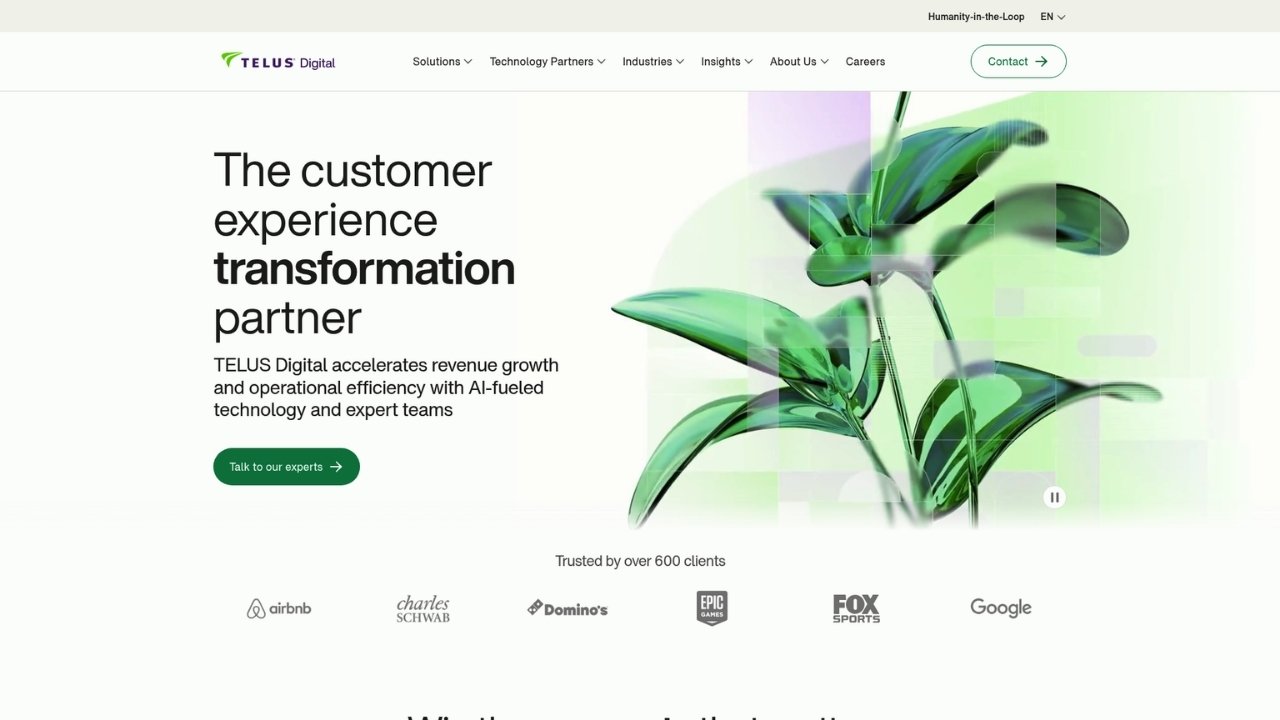
TELUS International (now branded as TELUS Digital) offers a comprehensive suite of services that goes well beyond traditional customer support.
With 600+ clients including names like Airbnb, Google, and Microsoft, they're clearly doing something right.
Their acquisition of VoxPro in 2020 strengthened their European capabilities.
They now offer everything from contact center outsourcing to AI transformation services to digital marketing.
Their Fuel iX platform is worth noting. It's an enterprise AI platform designed to help companies scale generative AI responsibly.
One application, Agent Trainer, has reduced new agent training time by over 50%.
Pros:
- Comprehensive digital solutions (not just support)
- Strong AI and automation capabilities
- Global delivery footprint
- Proprietary technology platforms
Cons:
- Enterprise focus
- Complex pricing (custom only)
- May offer more than you need if you just want basic support
TELUS International suits large organizations undergoing digital transformation who want a single partner for CX, AI, and digital solutions.
6. LiveOps

LiveOps has been pioneering the virtual contact center model for 25 years.
Their approach emphasizes flexibility and what they call "precision scheduling" (30-minute intervals) to match support coverage exactly to your demand patterns.
The company uses a distributed network of remote agents, allowing them to scale up or down rapidly without the constraints of physical call centers.
They claim clients see 25-55% cost savings compared to traditional models.
Their performance metrics are impressive: one client achieved 90%+ customer satisfaction and first call resolution in their first year of partnership.
Another saw a 15% average increase in CSAT scores.
Pros:
- 25 years of virtual model experience
- Precision scheduling (30-minute flexibility)
- Rapid scaling capability
- Strong industry specializations (healthcare, insurance, retail)
Cons:
- No published pricing
- US-focused (limited international agent options)
- Pay-per-minute model can be unpredictable
LiveOps fits businesses with seasonal fluctuations or unpredictable volume who need to scale support up and down quickly without long-term commitments.
7. UpCall
UpCall is different from the others on this list. They're not really a customer support provider.
They're a sales outreach platform powered by real people (not AI).
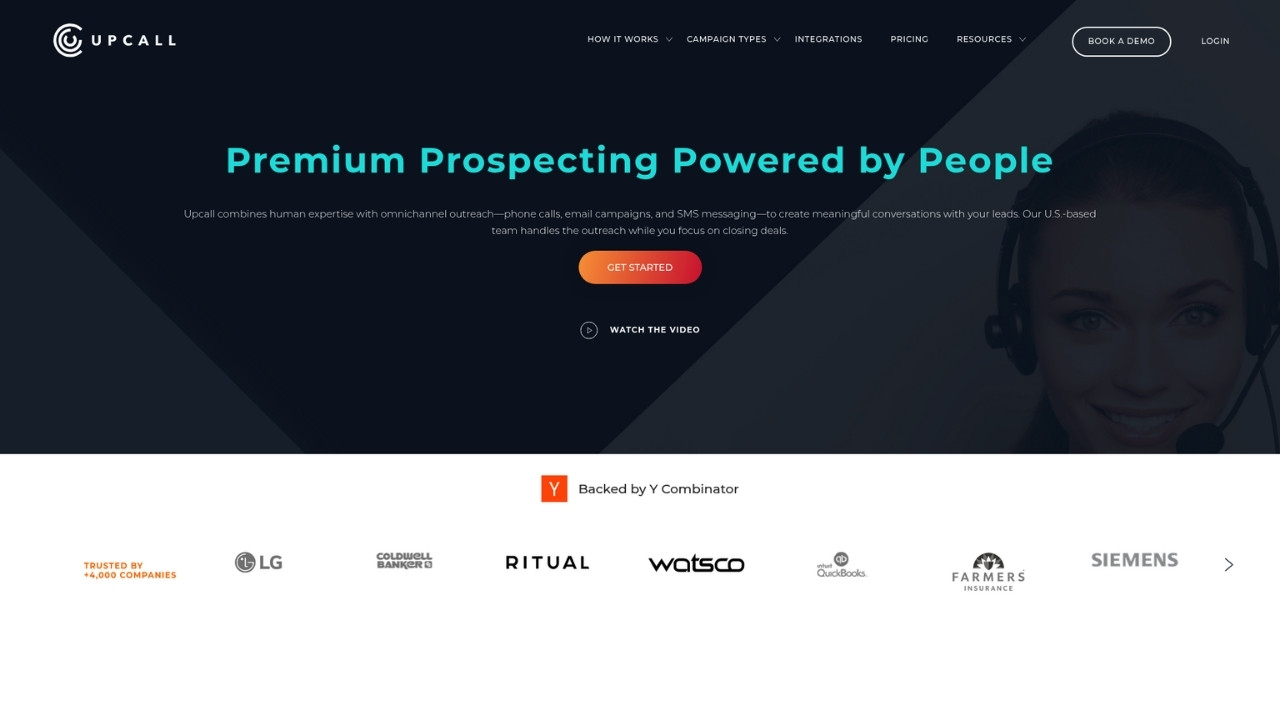
Backed by Y Combinator and serving 4,000+ companies including Airbnb and LG, UpCall focuses on lead generation, qualification, and conversion.
Their US-based team handles phone calls, emails, and SMS campaigns.
The platform claims 5x higher conversion rates with human-powered outreach compared to automated alternatives, and says 90% of qualified leads convert to sales meetings.
Pros:
- 100% human outreach (no robots)
- Y Combinator credibility
- Real-time campaign dashboard
- Fast lead response (24/7)
Cons:
- Sales-focused, not support-focused
- Not suitable for customer service needs
- Custom pricing only
UpCall belongs on this list because if you're considering Odondo for sales-related calls rather than support, UpCall is purpose-built for that use case.
Which Odondo alternative should you choose?
The right choice depends on your specific situation:
Choose Ringly.io if: You run a Shopify store, want to automate phone support, and prefer predictable software costs over per-agent pricing. The AI handles routine queries while escalating complex issues to your team.
Choose Foundever if: You're an enterprise needing massive scale, 60+ languages, and a true global presence. You have the budget for custom solutions.
Choose Helplama if: You want US-based human agents, flexible terms, and the ability to test before committing. Good for e-commerce and SaaS companies.
Choose Ascensos if: You're a retail or e-commerce brand wanting boutique service from a specialized provider with European strength.
Choose TELUS International if: You need comprehensive digital transformation services beyond just customer support, and have enterprise-scale requirements.
Choose LiveOps if: You have seasonal volume, need extreme scheduling flexibility, and want a virtual model with 25 years of track record.
Choose UpCall if: Your focus is sales outreach and lead generation, not customer support.
Start automating your customer support today
Traditional BPO providers like Odondo work well for companies that want human agents handling their calls.
But if you're running an e-commerce store and most of your inquiries are routine (order tracking, returns, product questions), AI-powered solutions offer a compelling alternative.
Ringly.io's the AI handles about 70% of calls without human intervention, works 24/7, and costs a fraction of hiring agents. Most stores go live within an hour, not months.
And with the 14-day free trial, you can see exactly how it performs with your actual customers before paying anything.
Ready to see what AI phone support can do for your store? Start your free trial and have the AI answering calls within the hour.
Frequently Asked Questions
What are the best Odondo alternatives for small businesses?
For small businesses, Ringly.io offers the most transparent pricing starting at $349/month, while Helplama provides flexible human agent options from $399/month. Both are more accessible than enterprise-focused providers that require custom quotes.
Which Odondo alternatives offer AI-powered support?
Ringly.io is fully AI-powered for phone support. Foundever and TELUS International offer AI-human hybrid models. Most traditional BPOs are adding AI capabilities but still rely primarily on human agents.
Are there any Odondo alternatives with transparent pricing?
Yes. Ringly.io publishes all pricing on their website ($349-$799/monthnth). Helplama mentions starting prices around $399/month. Most large BPOs like Foundever and TELUS International only provide custom quotes.
Which Odondo alternatives are best for e-commerce?
Ringly.io specializes in Shopify stores with native order tracking. Ascensos focuses exclusively on retail and e-commerce. Helplama also has strong e-commerce expertise.
Can Odondo alternatives handle multilingual support?
Foundever supports 60+ languages. Ringly.io handles 30 languages. TELUS International and Ascensos also offer strong multilingual capabilities.
Which Odondo alternative is best for seasonal businesses?
LiveOps specializes in flexible scaling with 30-minute scheduling intervals, making them ideal for seasonal fluctuations. Ringly.io also handles volume spikes automatically since AI doesn't have capacity limits.