

Narvar has been the default choice for post-purchase experience management for years.
But more e-commerce brands are looking elsewhere. Why? Contracts reportedly start at $28,000-$45,000 annually.
Implementation can stretch from 30 days to 6 months. And the "Powered by Narvar" branding on every customer touchpoint?
That is not ideal if you are trying to build your own brand identity.
The good news: there are solid alternatives. Some focus on Shopify stores.
Others excel at global returns. A few offer transparent pricing you can actually find on their website.
Here is the short version: we researched and tested the leading Narvar alternatives to find which ones actually deliver.
This guide covers 7 platforms that handle returns, tracking, and post-purchase experiences, with specific recommendations based on your business size and needs.
Editor’s note: Want to hear some sample AI support calls made for your Shopify store?
- Just paste your store URL
- Get sample calls in under 20 seconds (no email required)
- Listen to demo calls for my store
Why brands are switching from Narvar
Before diving into alternatives, let's look at what is driving the exodus.
Based on user reviews and competitor analysis, here are the main pain points:
Pricing opacity and sticker shock. Narvar does not publish pricing. Reports suggest annual contracts start around $28,000-$45,000.
For mid-market brands, that is a significant chunk of the operations budget.
Lengthy implementation. Setup takes 30-90 days on average, with some users reporting up to 6 months. That is a long time to wait for a returns system.
Limited customization. Users consistently mention difficulty customizing portals and workflows to match their brand.
The "Powered by Narvar" branding on emails and tracking pages is a particular sore point.
Geographic limitations. UK and Europe-based companies report reduced account management and support compared to US customers.
Poor analytics. Several reviews note that reporting capabilities feel dated compared to newer competitors.
The bottom line? Narvar works for large enterprises with dedicated implementation teams and big budgets.
But if you need something more flexible, affordable, or faster to deploy, the alternatives below are worth considering.
How we evaluated these Narvar alternatives
To make this comparison useful, we looked at five criteria:
- Pricing transparency - Can you actually see what it costs without talking to sales?
- Implementation speed - How long until you are live?
- Platform compatibility - Does it work with your e-commerce stack?
- White-label capabilities - Can you remove third-party branding?
- Feature depth - Does it cover returns, tracking, and post-purchase communications?
We also factored in real user feedback, notable customers, and specific use cases where each platform excels.
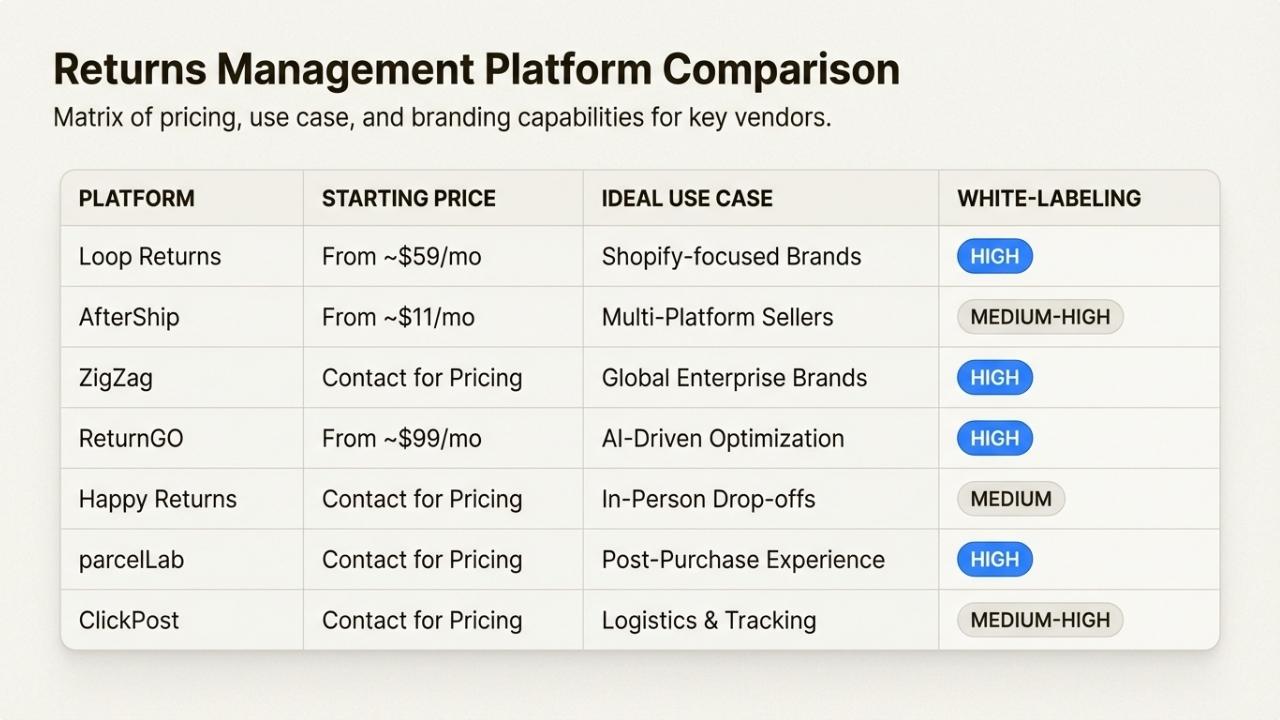
The 7 best Narvar alternatives compared
| Platform | Starting Price | Best For | White-Label |
|---|---|---|---|
| Loop Returns | $155/mo | Shopify DTC brands | Partial (Branded portal) |
| AfterShip | $11/mo | Global, high-volume brands | Partial (Branded page) |
| ZigZag | $20/mo | International returns | Yes (Gold plan+) |
| ReturnGO | $147/mo | Sustainability focus | Partial (Pro plan+) |
| Happy Returns | $500/mo | Physical drop-off network | Yes |
| parcelLab | ~$3,500/mo | Enterprise brands | Full (Headless API) |
| ClickPost | $300/mo | High-volume operations | Partial (Custom tracking) |
1. Loop Returns
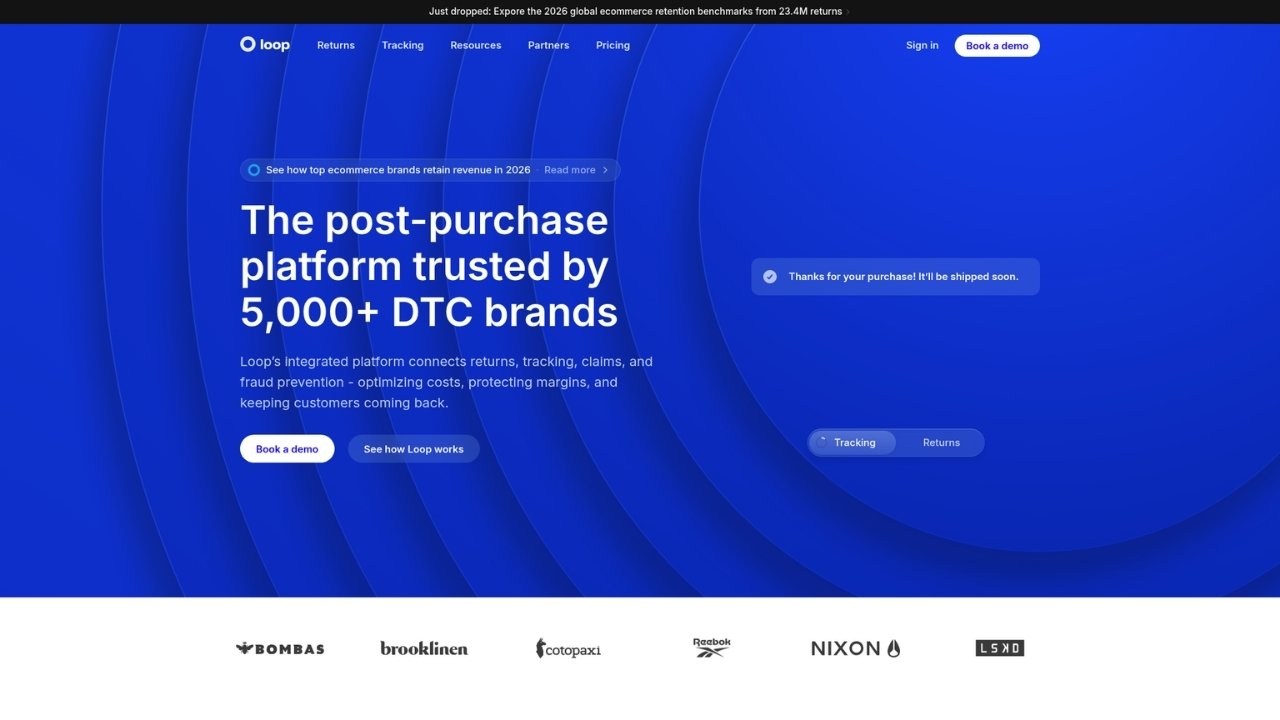
Loop Returns is built specifically for Shopify brands. If you are running a direct-to-consumer store on Shopify and want a returns solution that just works, this is where you start.
The platform focuses heavily on exchange-first returns. Instead of defaulting to refunds, Loop guides customers toward exchanges, store credit, or upsells.
This is a big deal for retention. Brands using Loop report significantly higher customer lifetime value compared to refund-heavy return processes.
Key features:
- Automated returns with unlimited destinations
- Variant exchanges and "Shop Now" upsells
- AI-powered fraud detection (Loop Intelligence)
- No-code workflow editor
- In-store returns via POS integration
- Order tracking and delivery promises
Pricing:
| Plan | Monthly Price | Key Features |
|---|---|---|
| Essential | From $155/mo | Unlimited destinations, automated policies, carrier rate shopping |
| Advanced | From $340/mo | Shop Now, Instant Exchange, Bonus Credit, fraud prevention |
| Enterprise | Custom | Premium features, Instant Returns, custom shipping APIs |
Notable customers: Bombas, Brooklinen, Cotopaxi, Reebok, FIGS, Alo, Ruggable
The catch: Loop is Shopify-only. If you are on Magento, WooCommerce, or a custom platform, look elsewhere. Also, most plans require annual contracts. Month-to-month is only available if you add the "Offset Free" feature or use standalone order tracking.
Best for: Shopify-based DTC brands in fashion and apparel who want to turn returns into retention opportunities.
2. AfterShip
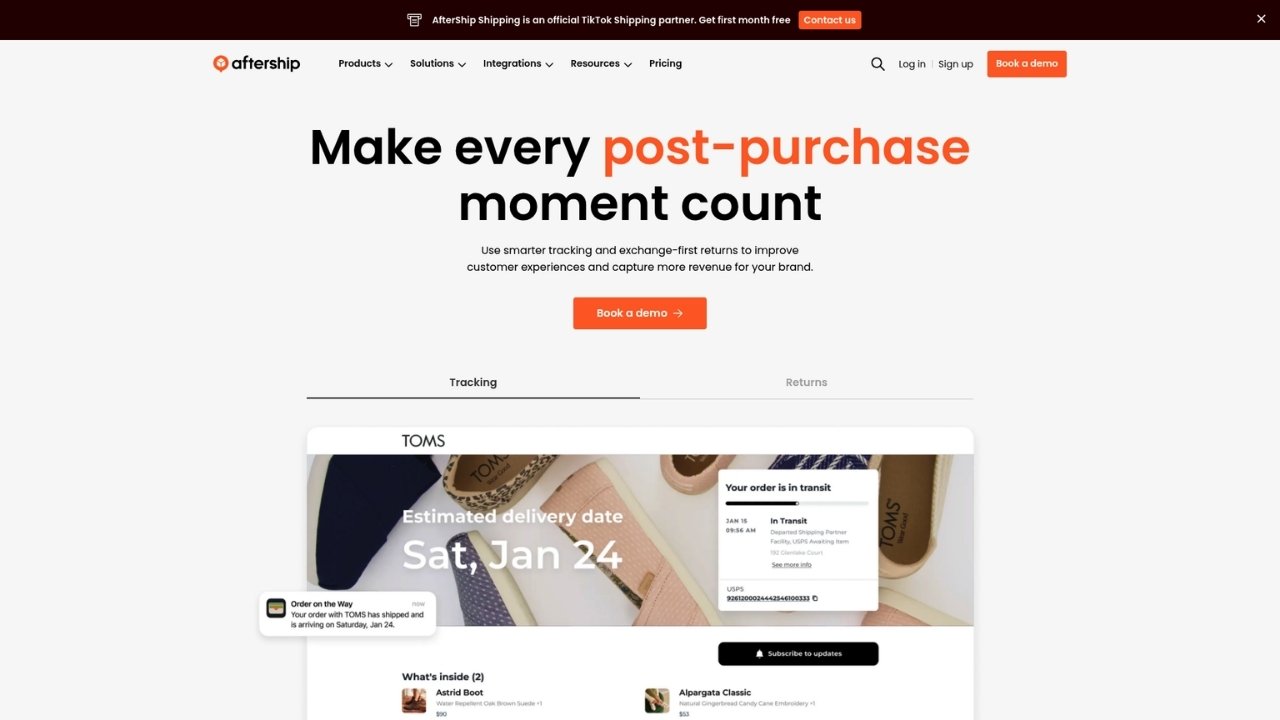
AfterShip is the most affordable entry point on this list. At $11 per month for the essentials plan, it is accessible to businesses of any size.
But do not let the low starting price fool you. AfterShip serves 20,000+ brands including Gymshark, YETI, and eBay.
The platform covers the full post-purchase experience: tracking, returns, and shipping.
This all-in-one approach means fewer integrations to manage and a unified customer experience.
Key features:
- Branded tracking pages with 1,200+ carrier support
- Exchange-first return flows with 300,000+ drop-off sites
- AI-powered delivery date predictions (95% accuracy)
- Proactive email and SMS notifications
- Centralized analytics and revenue attribution
Pricing (Tracking):
| Plan | Monthly Price | Shipments | Key Features |
|---|---|---|---|
| Essentials | $11 ($1 first month) | 100/mo | Customizable tracking, email/SMS notifications, 1,282+ carriers |
| Pro | $119 ($1 first month) | 2,000/mo | Tracking API, Klaviyo/Attentive integrations, multilingual pages |
| Premium | $239 ($1 first month) | 2,000/mo | AI predictive EDD, removal of AfterShip branding, custom domain |
| Enterprise | Custom | Custom | SSO, custom integrations, BOPIS support, dedicated CSM |
Add-ons include team members ($10-12/mo each) and premium support (20-30% of subscription cost).
Best for: Global brands needing both tracking and returns in one platform, with transparent pricing that scales with volume.
3. ZigZag
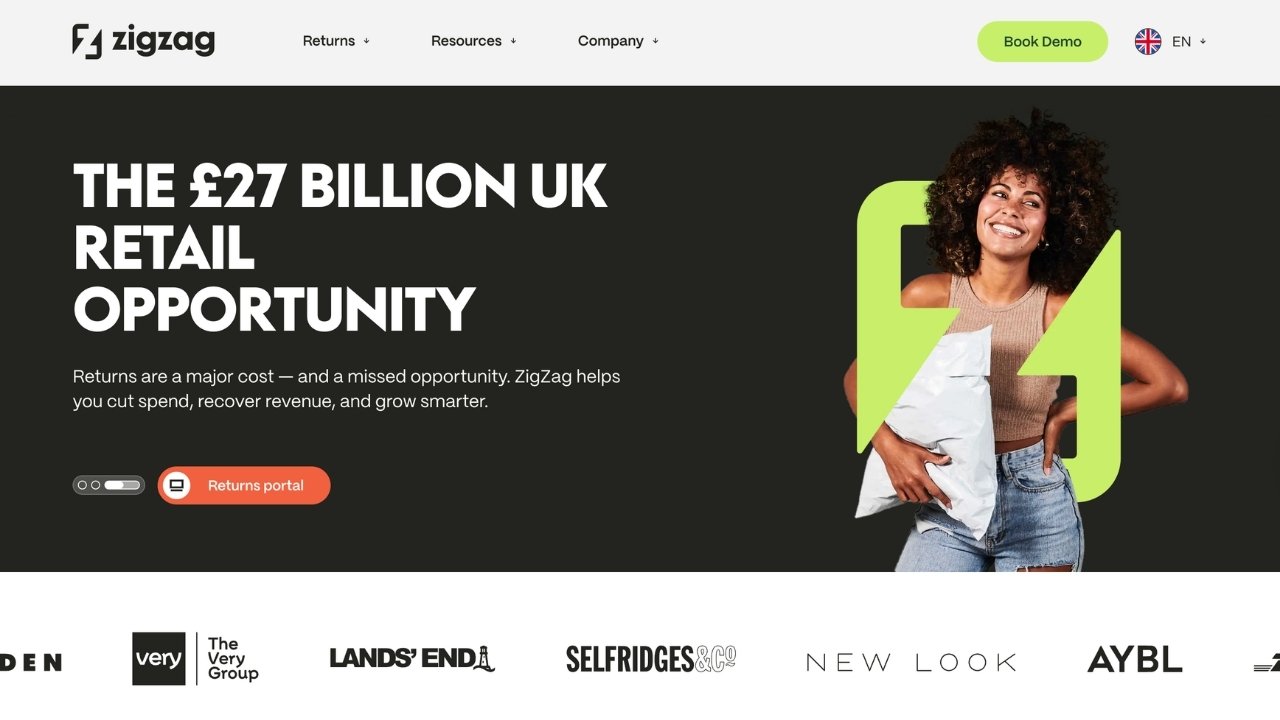
ZigZag is a UK-based returns platform with serious international capabilities.
If you sell across borders and need a returns solution that works everywhere your customers are, ZigZag is worth a close look.
The platform covers 170+ countries with 1,500+ carrier services and 500,000+ drop-off locations.
Last year alone, they processed over £2 billion in returns value.
Key features:
- Global carrier network (1,500+ services)
- Flexible return options: paid returns, live exchanges, return to store, store credit
- Sustainability focus: paperless solutions saved 35 million pieces of paper last year
- White-label branded returns portal
- Returns Hub for validation, grading, and consolidation
Case study results:New Look (UK fashion retailer) saw a 20% decrease in return status queries, doubled in-store returns, and their Trustpilot score rose from 4.3/5 to 4.7/5 after switching to ZigZag.
The catch: Pricing is not publicly disclosed. You will need to contact sales for a quote. The UK/Europe focus also means US-based support may not be as robust as competitors.
Best for: International and cross-border returns, UK/Europe-based retailers, and brands wanting sustainable returns solutions.
4. ReturnGO
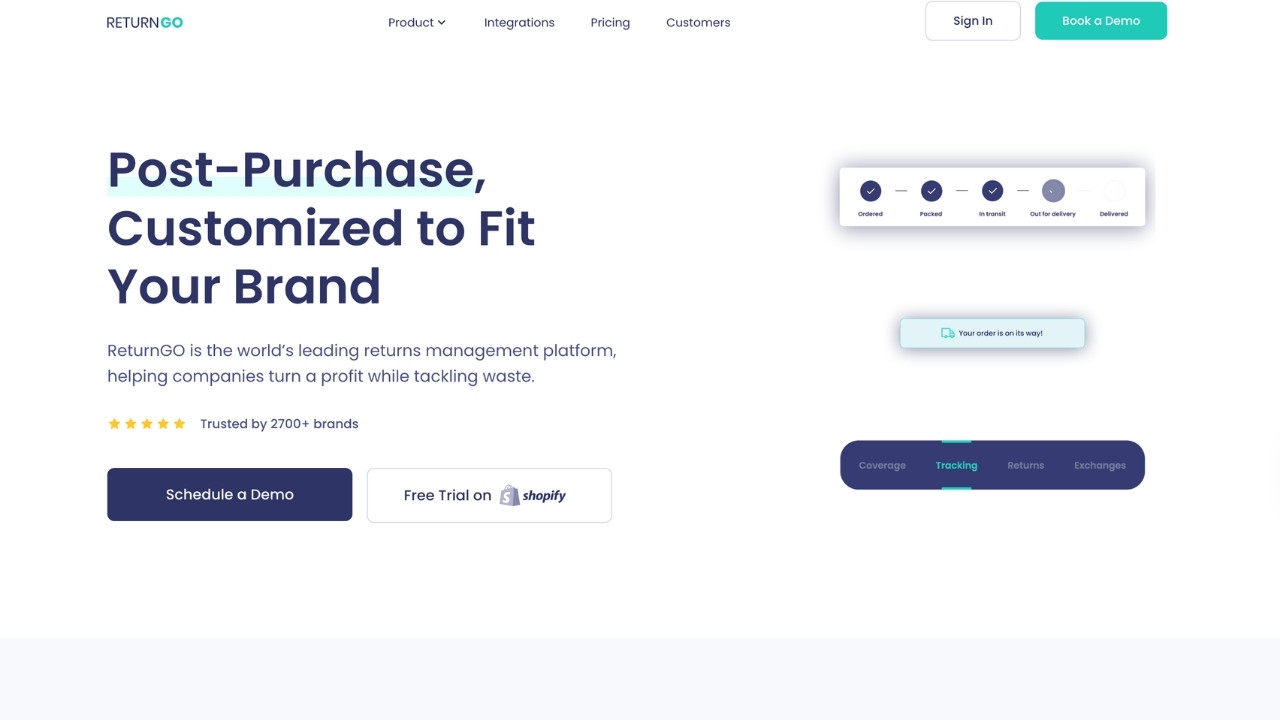
ReturnGO positions itself as the sustainability-focused returns platform.
The emphasis is on reducing waste and environmental impact while automating the returns process.
The platform offers automated eligibility rules, refund/exchange/credit flows, and shipping label generation.
All languages and currencies are supported, making it accessible for global brands.
Key features:
- Branded returns portal
- Automated eligibility rules
- Refund, exchange, and store credit flows
- Shipping label generation
- Shopify and carrier integrations
Pricing: Starts at $147/month based on available research.
Limitations: Platform customization is more limited than competitors. There is no mobile app for managing returns on the go.
Some users report it is more expensive than alternatives with similar feature sets.
Note: ReturnGO's primary domain was unavailable during our research (showing a domain-for-sale page), so details are based on secondary sources and competitor comparisons.
Best for: Brands prioritizing sustainability in their returns process and wanting hands-on control of return logic without heavy technical setup.
5. Happy Returns
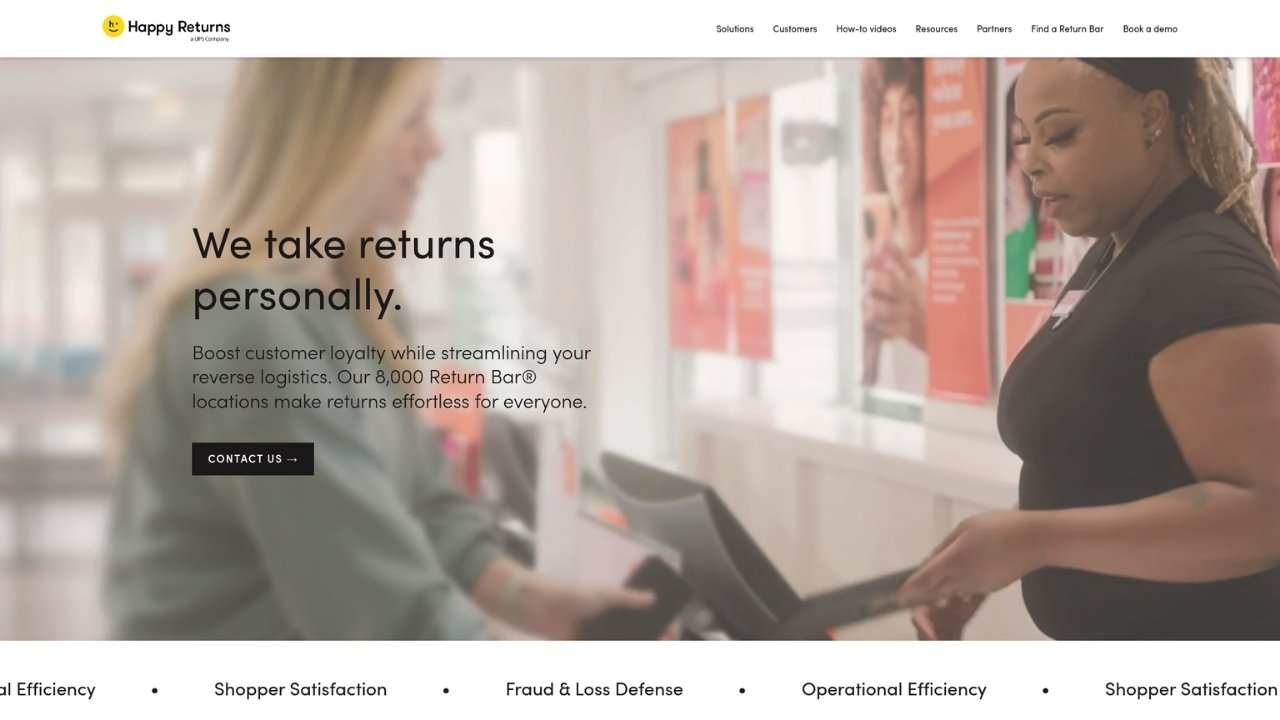
Happy Returns, now a UPS company, combines returns software with a physical drop-off network.
This is the solution if you want to offer customers the convenience of in-person returns without the hassle of packaging or printing labels.
The Return Bar network includes 8,000+ box-free, label-free drop-off locations.
Customers simply bring their items, get verified in person, and receive instant refunds.
Key features:
- 8,000+ Return Bar locations for box-free, label-free returns
- AI-powered fraud prevention with Return Vision audits
- Reverse logistics with 5-day return processing
- Instant refunds triggered by in-person verification
- Item tag scanning for fraud detection
Notable statistics:
- 87% of shoppers choose Return Bar when available
- 93 Net Promoter Score with 87% shopper adoption
- 20% higher lifetime value for Return Bar users
- 80% fewer returns-related service contacts
Notable customers: SHEIN, Cariuma, Peak Design, Gymshark, Allbirds, Revolve, Everlane
The catch: Pricing is custom based on volume. The US market focus means international brands may find limited coverage. Integration requires working with UPS logistics.
Best for: US-focused brands wanting physical drop-off convenience and strong fraud prevention.
6. parcelLab
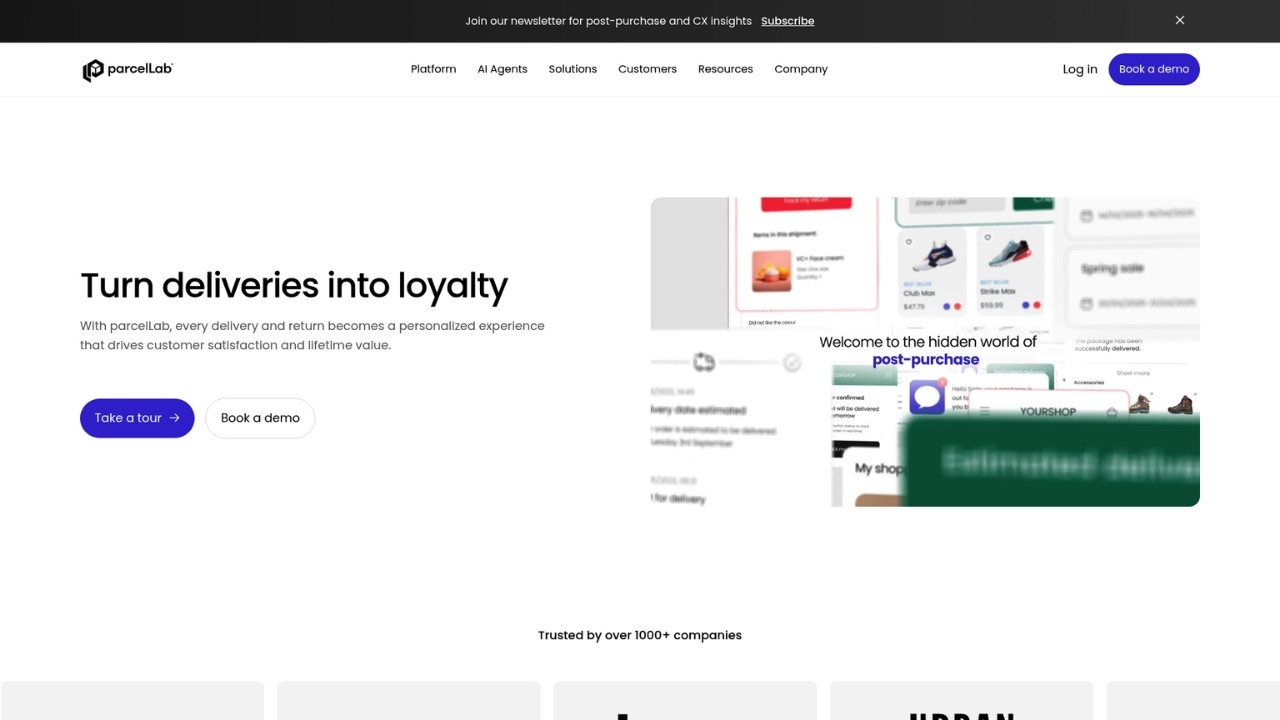
parcelLab is the enterprise choice on this list.
Trusted by 1,000+ companies including IKEA, Hugo Boss, Dyson, and Puma, it offers the most comprehensive post-purchase platform with full white-label control.
The platform goes beyond returns to cover the entire post-purchase journey: tracking, delivery promises, returns, and customer communications.
Key features:
- Retain: Returns management with self-service portal (11% higher retention through exchanges)
- Engage: Branded tracking and personalized delivery notifications
- Convert: Delivery date promises (5% higher checkout conversion)
- Insights: Real-time analytics with benchmarking
- AI Agents: Autonomous support and optimization
Notable results:
- 20% fewer WISMO (Where Is My Order) calls
- 11% higher retention through exchanges and store credit
- 5% higher checkout conversion with delivery promises
- 29% higher revenue per email with branded messaging
The catch: Custom pricing only. This is not a solution for small businesses. The feature depth also means a learning curve for teams.
Best for: Enterprise brands needing full white-label control, global operations (175+ countries, 350+ carriers), and comprehensive post-purchase platform capabilities.
7. ClickPost
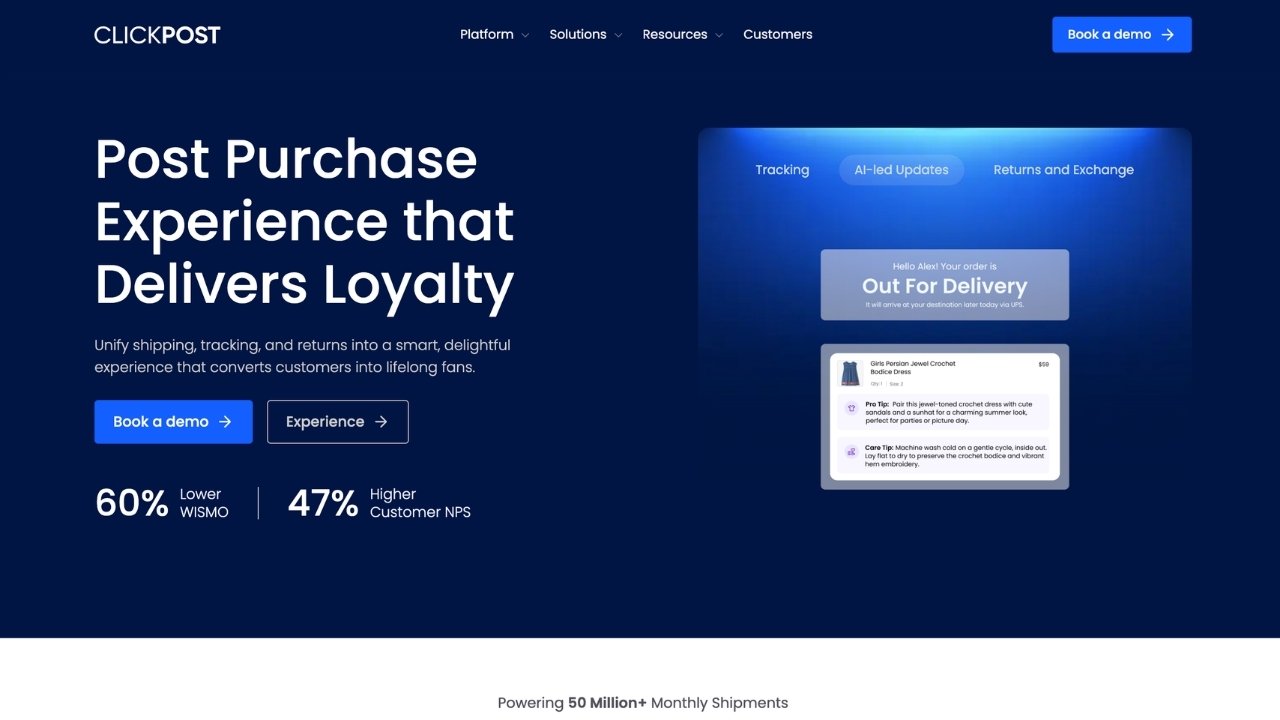
ClickPost is the operations-heavy platform for high-volume brands.
Powering 50 million+ monthly shipments, it focuses on unifying shipping, tracking, and returns with AI-powered intelligence.
The platform is particularly strong in logistics control, with deep carrier integrations and SLA monitoring.
Key features:
- Single API for 500+ carrier partners
- Branded tracking with 60% reduction in WISMO
- Returns and exchange management (54% returns-to-exchanges conversion)
- AI Voice Agents for 40% reduction in RTOs (return to origin)
- 75+ communication gateway integrations
Notable results:
- 60% lower WISMO
- 47% higher Customer NPS
- 22% savings on logistics costs
- 54% returns to exchanges conversions
Notable customers: Walmart, Puma, Nykaa, Decathlon, Adidas, The Body Shop, Birkenstock, Tata 1mg
The catch: Custom pricing requires talking to sales. Implementation requires technical resources.
The platform is more operations-focused than customer experience-focused.
Best for: High-volume brands with complex logistics, operations-focused teams, and companies needing deep carrier control and SLA monitoring.
Which Narvar alternative should you choose?
The right choice depends on your specific situation:
Choose Loop Returns if: You are on Shopify, sell fashion/apparel, and want to maximize exchanges over refunds.
Choose AfterShip if: You need affordable, transparent pricing and want tracking + returns in one platform.
Choose ZigZag if: You operate internationally, especially in UK/Europe, and need global carrier coverage.
Choose Happy Returns if: You are US-focused and want the convenience of physical drop-off locations.
Choose parcelLab if: You are an enterprise brand needing full white-label control and comprehensive post-purchase capabilities.
Choose ClickPost if: You are a high-volume operation needing deep logistics control and carrier management.
Choose ReturnGO if: Sustainability is a core brand value and you want automated returns with minimal setup.
Migrating from Narvar: what to expect
Switching returns platforms is not trivial, but it is manageable with the right approach.
Timeline: Most platforms can get you live in 1-4 weeks, compared to Narvar's 1-6 month implementation.
Loop Returns and AfterShip are fastest (1-2 weeks). Enterprise solutions like parcelLab and ClickPost take longer (2-4 weeks) due to customization requirements.
Data migration: Historical returns data typically does not transfer automatically.
Plan for a data export from Narvar and import into your new platform, or accept that you will start fresh with new return data.
Integration work: If you have custom integrations with Narvar, you will need to rebuild them.
Most alternatives offer robust APIs, but the work is real.
Customer communication: Notify customers about any changes to the returns process, especially if you are adding new options like in-store returns or box-free drop-offs.
Final thoughts
Narvar set the standard for post-purchase experience, but the market has evolved.
Today's alternatives offer more flexibility, better pricing transparency, and faster implementation.
The key is matching the platform to your specific needs. Shopify brands should start with Loop Returns.
Global operations should evaluate AfterShip or ZigZag. Enterprise brands needing full control should look at parcelLab.
Whatever you choose, the goal is the same: turn returns from a cost center into a retention opportunity.
The right platform makes that possible.
Frequently Asked Questions
What are the most affordable Narvar alternatives for small businesses?
AfterShip offers the lowest entry point at $11/month for their Essentials plan. Loop Returns starts at $155/month, and ReturnGO starts around $147/month. For businesses under $1M in annual revenue, AfterShip is typically the most accessible option.
Which Narvar alternative works best with Shopify?
Loop Returns is built specifically for Shopify and offers the deepest integration. AfterShip, ReturnGO, and ZigZag also have Shopify apps, but Loop's exchange-first approach and Shopify-native workflows make it the standout choice for Shopify merchants.
Do any Narvar alternatives offer completely white-labeled experiences?
parcelLab offers full white-label capabilities, allowing you to remove all third-party branding. ZigZag and Happy Returns also offer white-label options. Most other platforms (Loop, AfterShip, ClickPost) offer partial white-labeling with some branding limitations.
How long does it typically take to implement a Narvar alternative?
Implementation times vary: AfterShip and Loop Returns can be live in 1-2 weeks. ZigZag, ReturnGO, and ClickPost typically take 2-4 weeks. Enterprise solutions like parcelLab and Happy Returns may take 30 days or more depending on customization requirements.
Which Narvar alternative is best for international returns?
ZigZag leads here with 1,500+ carriers across 170+ countries. parcelLab also has strong international coverage (175+ countries, 350+ carriers). AfterShip supports 1,200+ carriers globally. For pure international reach, ZigZag is the strongest choice.
Are there any Narvar alternatives with physical drop-off locations?
Happy Returns (a UPS company) operates an 8,000+ location Return Bar network for box-free, label-free returns. AfterShip also offers access to 300,000+ drop-off sites through their carrier network. If physical returns are a priority, Happy Returns is the specialized solution.
What should I look for when evaluating Narvar alternatives?
Focus on five criteria: pricing transparency (can you see costs upfront?), implementation speed (how long to go live?), platform compatibility (does it work with your e-commerce stack?), white-label capabilities (can you remove third-party branding?), and feature depth (does it cover returns, tracking, and communications?). Match these against your specific business needs and volume.