

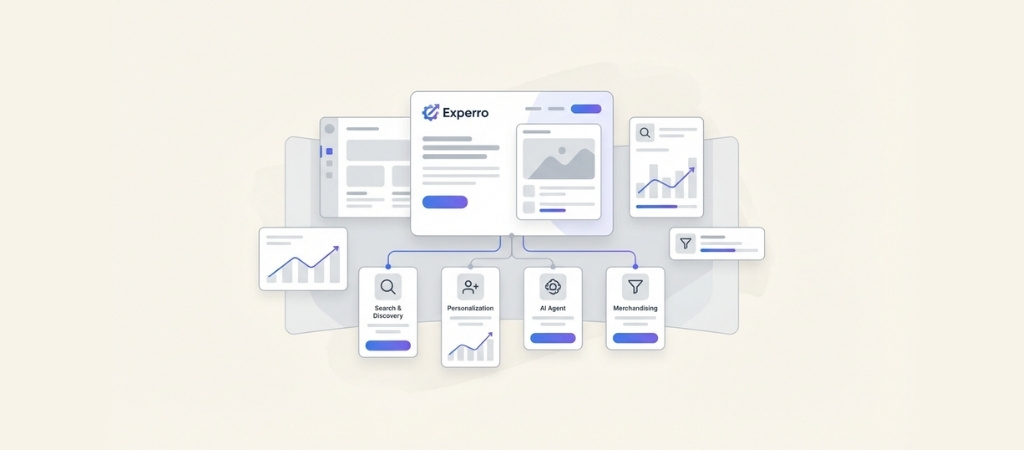
Experro has made waves as a Gen AI-native platform for e-commerce search and discovery.
But it's not the only option on the market.
Whether you're looking for better pricing, different features, or a platform that better fits your business size, there are solid alternatives worth considering.
This guide compares 7 top Experro alternatives, each with unique strengths for different use cases.
We'll look at enterprise powerhouses, developer-friendly options, and solutions built specifically for growing brands.
Editor’s note: Want to hear some sample AI support calls made for your Shopify store?
- Just paste your store URL
- Get sample calls in under 20 seconds (no email required)
- Listen to demo calls for my store
How We Evaluated These Alternatives
We assessed each platform based on:
- AI capabilities: Depth and transparency of AI/ML features
- Pricing transparency: Clear pricing vs. enterprise-only quotes
- Ease of use: Implementation complexity and ongoing management
- Integrations: E-commerce platform support and API flexibility
- Time-to-value: Speed of implementation and ROI realization
We've segmented these by business size to help you find the right fit.
1. Bloomreach - Best for Enterprise
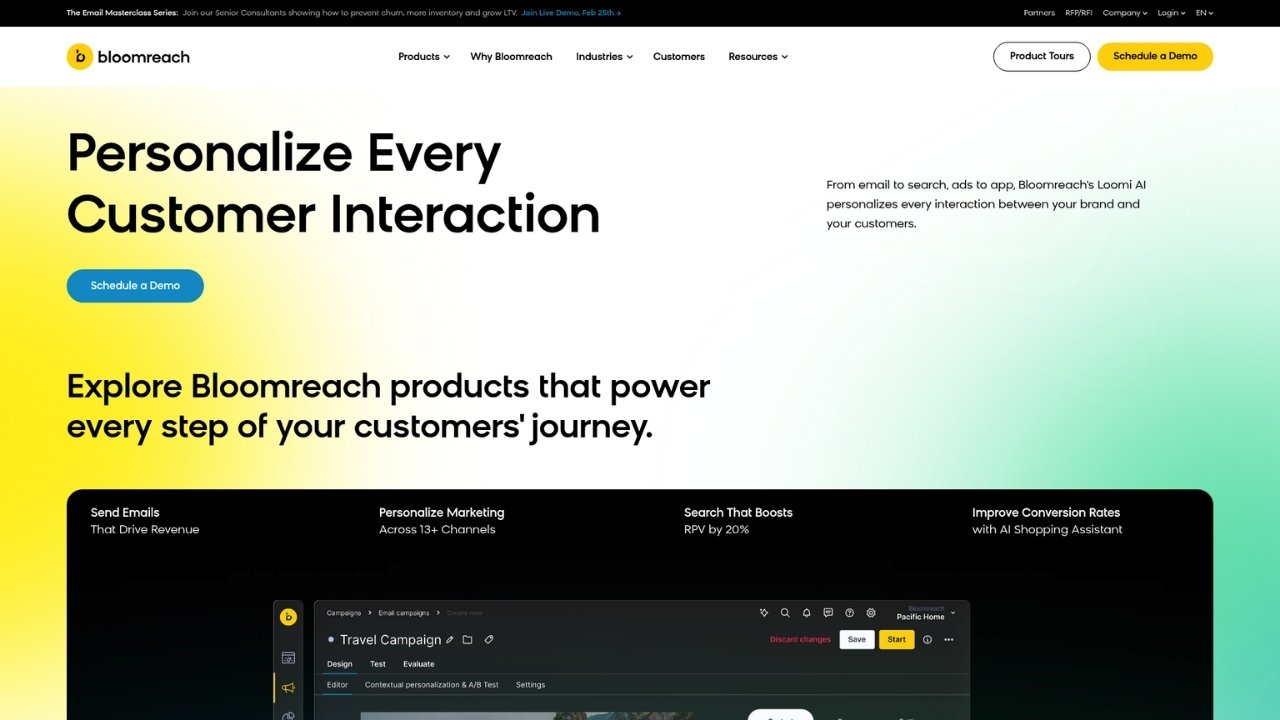
Bloomreach is an enterprise-grade digital experience platform powered by Loomi AI.
It serves over 1,400 global brands including Red Bull, Benefit Cosmetics, and Pandora.
Key Features
Bloomreach offers a comprehensive suite: email marketing, marketing automation across 13+ channels, autonomous search, and conversational shopping.
The platform processes data and adapts experiences in 5ms to 2 seconds.
Loomi AI connects first-party customer data with business metrics to understand every customer in context. It personalizes across email, SMS, mobile apps, search, and AI shopping agents simultaneously.
Pricing
Bloomreach uses enterprise-focused pricing. You'll need to contact their sales team for a custom quote based on your business size and requirements.
Pros
- Strong AI capabilities with real-time personalization
- Comprehensive feature set covering the full customer journey
- Proven at scale with major enterprise brands
- 40% revenue increase reported by Benefit Cosmetics
Cons
- High cost puts it out of reach for smaller businesses
- Steep learning curve for new users
- Requires developer support for full implementation
Bloomreach is ideal for large enterprises with complex needs and the budget to match.
2. Algolia - Best for Developer-Friendly Search
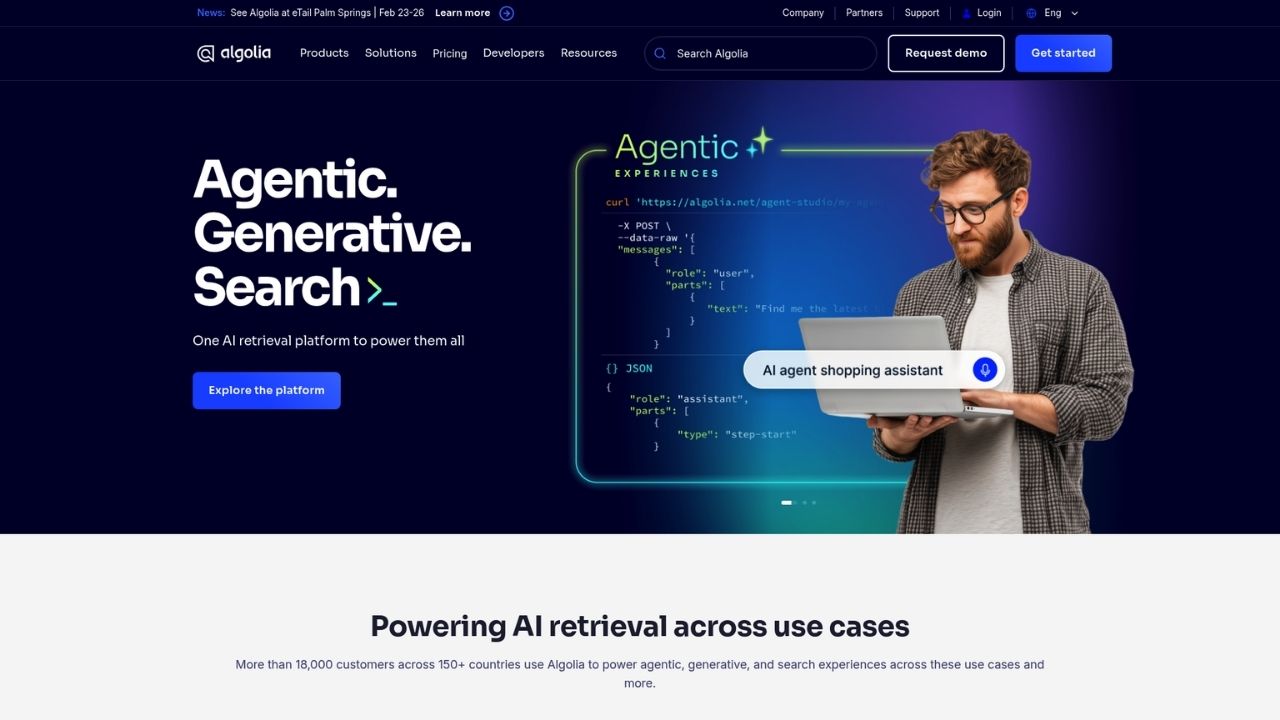
Algolia is the go-to API-first search platform for developer-heavy teams.
It's widely adopted for its speed, flexibility, and extensive documentation.
Key Features
Algolia provides instant search with typo tolerance, AI-powered relevance through NeuralSearch, and visual merchandising tools. It combines keyword and vector search for better results.
The platform offers personalization based on user behavior, A/B testing capabilities, and supports 20+ framework integrations including React, Vue, and mobile SDKs.
Pricing
Algolia stands out for transparent, usage-based pricing:
- Build (Free): 10K search requests/month, 1M records
- Grow: $0.50 per 1K search requests after free tier
- Grow Plus: $1.75 per 1K search requests with AI features
- Elevate: Enterprise pricing for large-scale needs
Pros
- Fast implementation with extensive documentation
- Flexible API for custom solutions
- Generous free tier for startups and SMBs
- Scales with your business growth
Cons
- Costs can escalate quickly at high search volumes
- Limited native e-commerce features compared to full DXPs
- Requires technical expertise for advanced customization
Algolia works best for teams with developers who need custom search solutions.
3. Constructor - Best for Product Discovery
Constructor is an AI-native product discovery platform that "doesn't just personalize it reasons."
It focuses on connecting shoppers to products they actually want to buy.
Key Features
Constructor offers search, AI shopping agents, browse personalization, recommendations, collections, and quizzes. Its "glassbox AI" approach means the system explains its decisions rather than operating as a black box.
The platform ingests behavioral, contextual, and catalog data to fuel smarter decisions across every touchpoint. It powers over 400 billion requests per year.
Pricing
Constructor uses enterprise-focused pricing. Contact their team for a custom quote.
Pros
- Strong ML recommendations with transparent AI
- Excellent customer support (4.9 rating on Gartner)
- API-first and headless for easy integration
- 98.5% client retention rate over three years
- Petco reported 13% lift in conversions
Cons
- Enterprise pricing with no SMB option
- Limited public documentation
- Requires technical integration
Constructor suits retailers focused on discovery-driven conversion who want explainable AI.
4. Fast Simon - Best for Shopify Stores
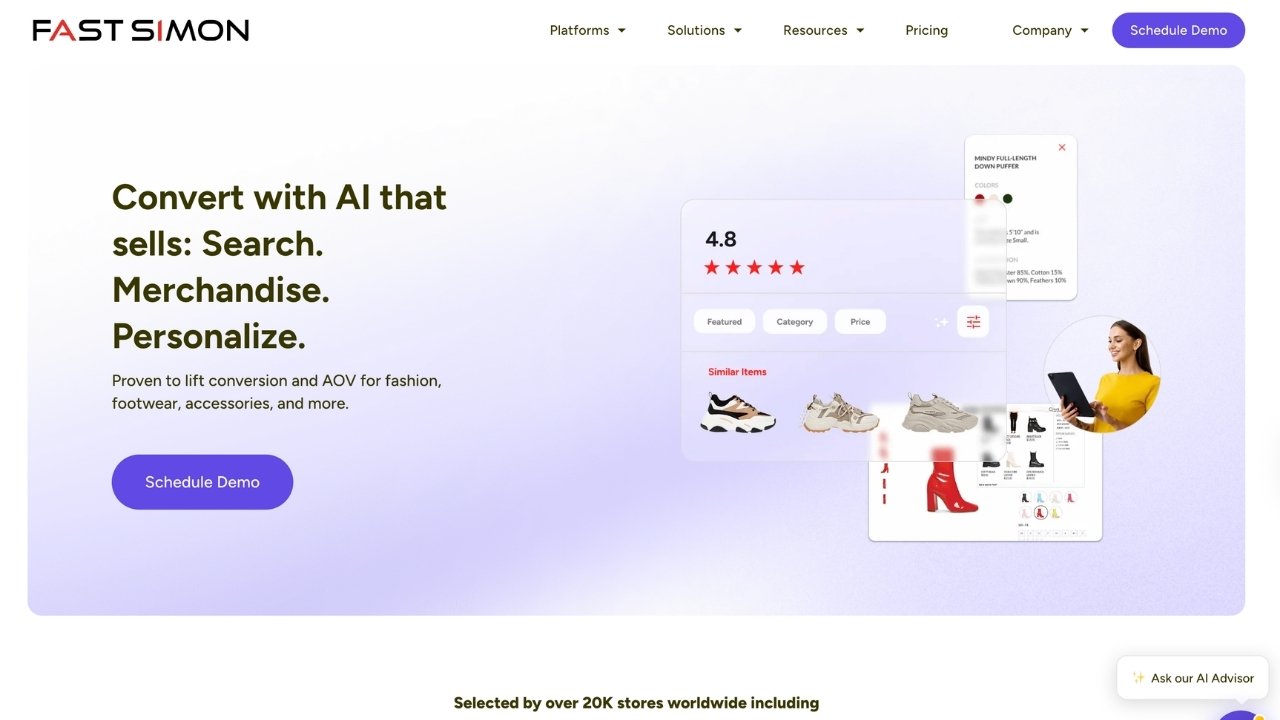
Fast Simon provides AI shopping optimization specifically for fast-growing online brands.
It serves over 20,000 stores worldwide.
Key Features
Fast Simon includes AI shopping agents for conversational commerce, AI merchandising, personalization, site search with smart filters, and visual discovery.
The visual AI lets shoppers search using images from Instagram or catalogs.
The platform offers "Shop Similar," "Shop Alternative," "Shop The Look," and visual search capabilities. It also integrates with email and SMS marketing tools.
Pricing
Fast Simon uses platform-specific plans. Contact them for pricing based on your e-commerce platform and store size.
Pros
- Native Shopify and Shopify Plus integration
- Visual AI capabilities for fashion and apparel
- Easy setup with no coding required
- Strong focus on fashion, footwear, and accessories
Cons
- Platform limitations for custom builds
- Less flexible for non-standard implementations
- Pricing not publicly transparent
Fast Simon is the clear choice for Shopify merchants wanting enhanced search and merchandising.
5. Klevu - Best for Mid-Market
Klevu has been a solid choice for mid-market e-commerce brands, though it's now part of Athos Commerce following a 2025 acquisition.
Key Features
Athos Commerce (including Klevu technology) offers AI site search, scalable merchandising, ML-powered personalization, predictive product bundling, and actionable analytics. It also provides data feed management across 1,400+ channels.
The platform claims up to 52% increase in search-led conversions and up to 6% revenue growth with ML personalization.
Pricing
Klevu/Athos uses tiered plans based on catalog size and traffic. Contact their team for specific pricing.
Pros
- Good balance of features and price
- Easy to implement for mid-market brands
- Now backed by Athos Commerce resources
- Strong merchandising controls
Cons
- Limited Gen AI capabilities compared to newer platforms
- Company transition may affect long-term support
- No transparent pricing
Klevu (Athos Commerce) fits growing e-commerce brands needing solid search without enterprise complexity.
6. Coveo - Best for B2B
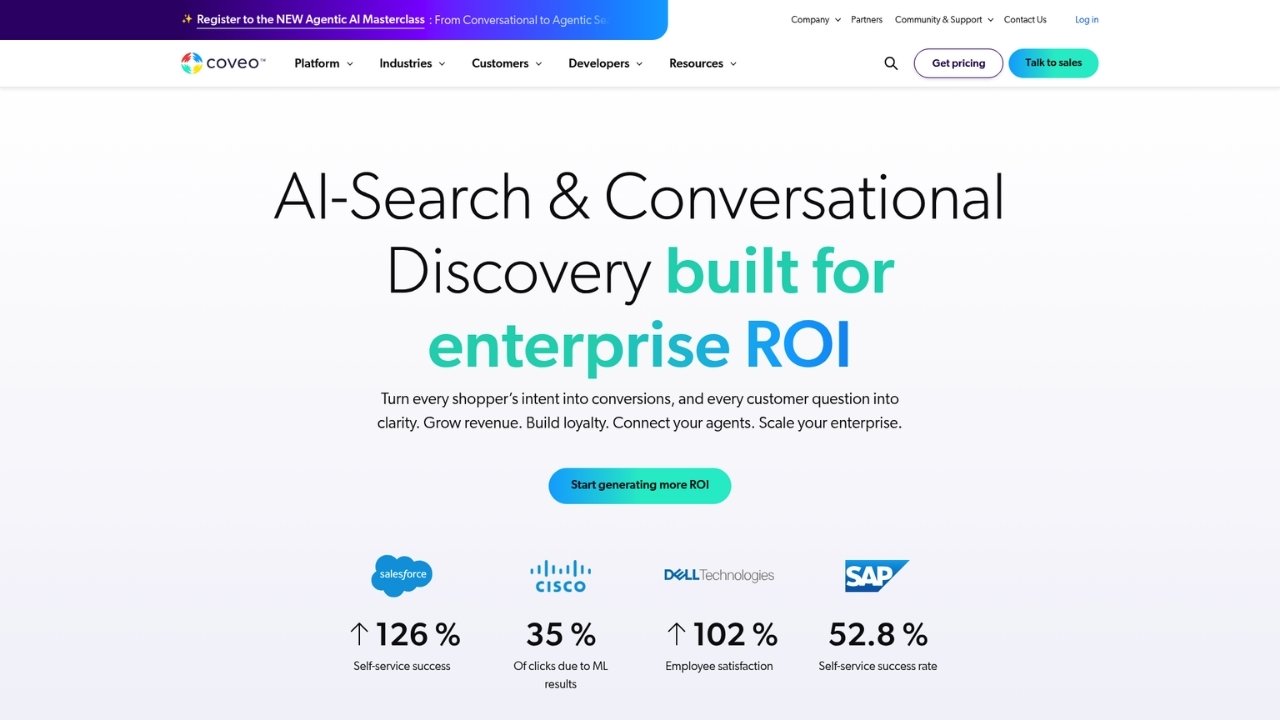
Coveo is an enterprise AI-search platform serving billion-dollar companies. Its "AI Relevance Platform" powers commerce, service, website, and workplace experiences.
Key Features
Coveo offers AI Commerce for B2B and B2C product discovery, AI Service for self-service support, AI Website personalization, and AI Workplace unified search. The platform unifies data from all enterprise systems.
It provides generative AI search, machine learning recommendations, and personalization by role, location, and intent.
Pricing
Enterprise pricing only. Contact Coveo for custom quotes.
Pros
- Powerful for complex B2B catalogs
- Strong enterprise features and security
- Proven scale with Salesforce, SAP, and Adobe
- Leader in 2025 Gartner Magic Quadrant
- Adobe saved 231,000 hours of productivity
Cons
- Expensive (enterprise-only)
- Long implementation cycles
- Requires significant technical expertise
Coveo is built for B2B organizations with complex product hierarchies and enterprise requirements.
7. Sitecore - Best Full DXP
Sitecore is the most comprehensive option, offering a full digital experience platform with 25+ years in the market.
SitecoreAI brings agentic AI capabilities to the entire marketing stack.
Key Features
Sitecore includes content management, digital asset management, content operations, audience intelligence, conversion optimization, and commerce. Its Agentic Studio provides AI agents that act as "digital teammates."
The platform offers autonomous agents for research, data updates, and content creation. It coordinates these through AI flows that manage complete marketing processes.
Pricing
Enterprise licensing model. Contact Sitecore for pricing.
Pros
- End-to-end solution covering all digital experience needs
- Strong content management heritage
- Agentic AI capabilities with human oversight
- 25+ years of enterprise experience
- Bayer reported €600k yearly savings
Cons
- High cost and complex implementation
- Requires dedicated team to manage
- May be overkill for smaller businesses
Sitecore suits large enterprises wanting an all-in-one DXP with cutting-edge AI.
Comparison Table
| Platform | Best For | Pricing | AI Focus | Setup Complexity |
|---|---|---|---|---|
| Bloomreach | Enterprise DXP | Contact vendor | Loomi AI (Agentic personalization) | Moderate |
| Algolia | Developer search | Usage-based ($0.50+/1k searches) | NeuralSearch (Vector + Keyword) | Technical |
| Constructor | Product discovery | Contact vendor | ASA (AI Shopping Assistant) | Moderate |
| Fast Simon | Shopify stores | $39.99 – $299.99/mo | Visual AI & Merchandising | Easy |
| Athos (Klevu) | Mid-market | $699 – $1,099+/mo | Asklo (Conversational AI) | Easy |
| Coveo | B2B enterprise | Contact vendor | AI Relevance & GenAnswer | Complex |
| Sitecore | Full DXP | Enterprise | Sitecore Stream (Agentic AI) | Complex |
Choosing the Right Experro Alternative
For SMBs (Under $5M revenue)
Consider Fast Simon if you're on Shopify, or Algolia if you have technical resources and want transparent pricing. Both offer solid capabilities without enterprise complexity.
For Mid-Market ($5M-$50M revenue)
Klevu/Athos Commerce provides good balance of features and price. Constructor is worth evaluating if product discovery is your primary focus and you have the budget.
For Enterprise ($50M+ revenue)
Bloomreach and Coveo lead for e-commerce search and discovery. Sitecore is the choice if you need a full DXP. Algolia Elevate works if you want to build custom experiences on a flexible API.
Key Questions to Ask Vendors
- What's your time-to-value for implementation?
- How transparent is your AI (can you understand why it makes decisions)?
- What's the total cost of ownership including implementation?
- How do you handle product data synchronization?
- What support do you provide during and after implementation?
Final Thoughts
The right Experro alternative depends on your specific needs, budget, and technical resources.
Enterprise platforms like Bloomreach, Coveo, and Sitecore offer comprehensive features but require significant investment.
Mid-market options like Klevu and Fast Simon provide solid capabilities at more accessible price points. Algolia stands out for teams wanting developer flexibility with transparent pricing.
Whatever you choose, prioritize platforms that offer trial periods or proof-of-concept implementations.
The best way to evaluate search and discovery tools is to see how they perform with your actual product catalog and customer behavior.
Ready to improve your e-commerce customer experience? While you're optimizing your product discovery, consider how you handle customer inquiries.
Ringly.io's AI phone support can handle customer calls 24/7, answering questions about orders, processing returns, and escalating only when needed. It's the perfect complement to a strong search and discovery platform.