

In this guide, I will help you find the best Dialzara alternative to use for your business in 2025.
Short answer:
The best Dialzara alternatives are:
- If you are on a budget, use OpenPhone (now Quo). (Starts at $19/user/mo)
- If you are a larger business, I would recommend RingCentral (Starts at ~$20/user/mo)
- If you need AI phone support for Shopify, use Ringly.io. If Seth resolves under 65% of your support calls in a month, you don't pay for that month.
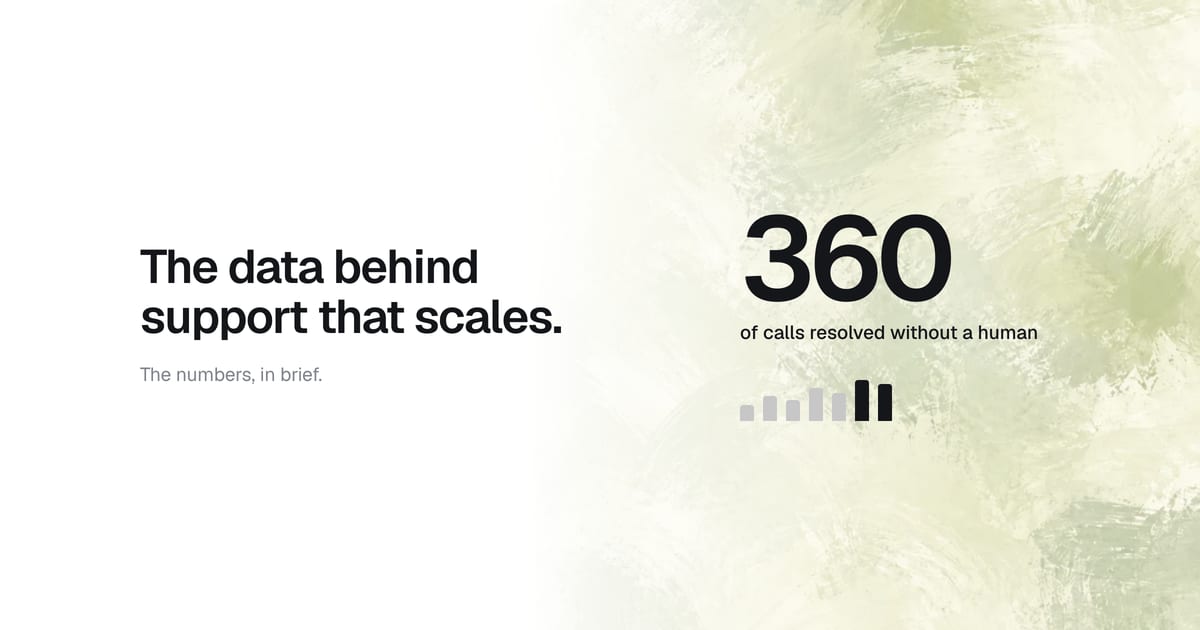
Seth, the AI phone agent, resolves up to 90% of support calls and has handled 200,000+ calls.
See the TL;DR table below for a quick comparison of all the tools that I tested.
Below the TL;DR table, you will find an in-depth review of every single tool as well.
How I tested each tool: stopwatch from signup → onboarded. I installed the tool on a Shopify store, installed all the basic features, just the ones that I need to get started.
Also read: Best IVR apps for Shopify in 2026
Note: All of these tools cover the basics. I’ll only go over standout features that are unique to each tool specifically.
Editor's note: Want to hear some sample AI support calls made for your Shopify store?
- Just paste your store URL
- Hear sample calls for your store (no email required)
- Listen to demo calls for my store
TLDR of Dialzara alternatives
| Platform | Best for | AI Phone | Shopify App | Starting price |
|---|---|---|---|---|
| Dialzara (Benchmark) | Internal meetings & basic VoIP, but pricey for support | ❌ No | ⚙️ 3rd-party | Varies by plan (contact sales) |
| Ringly.io | Shopify AI support & “unbundled” lean support stack | ✅ Yes | 🟢 Native | $99/mo for the first 50 conversations, then $1.99 per conversation |
| Dialpad | AI-first calling with live transcription + recaps | ⚙️ Add-on | ⚙️ 3rd / EAP | $15+ /user/mo |
| OpenPhone (now Quo) | Budget-friendly SMB shared inbox (calls + SMS) | ⚙️ Add-on | ⚙️ 3rd-party | $19+ /user/mo (monthly) |
| Aircall | Ecommerce teams needing in-call Shopify order context | ⚙️ Add-on | 🟢 Native | ~$30+ /user/mo (Essentials, annual) |
| Zoom Phone | Teams already living in Zoom | ⚙️ Add-on | ⚙️ 3rd-party | ~$8–$20+ /user/mo |
| RingCentral MVP (RingEX) | Larger SMBs/mid-market, all-in-one UCaaS | ⚙️ Add-on | ⚙️ 3rd-party | ~$20–$30+ /user/mo |
| CloudTalk | Ecommerce call center with dialers + call analytics | ❌ No | 🟢 Native | $19–$59+ /user/mo |
| Nextiva | SMB comms with one app for calls + messaging | ⚙️ Add-on | ⚙️ 3rd-party | ~$20+ /user/mo |
| 8x8 | UC + contact center with strong AI & global reach | ⚙️ Add-on | ⚙️ 3rd-party | ~$24–$44+ /user/mo (UC tiers) |
| Freshdesk Contact Center | Phones inside Freshdesk with Shopify ticket context | ⚙️ Add-on | 🟢 Native | $15+ /agent/mo |
The Strategic Pivot: The 'Unbundled' Support Stack
Before we look at standard VoIP alternatives, it is important to ask: Do you actually need a phone system, or do you need solved tickets?
Dialzara is great for internal meetings, but expensive for support. In 2025, smart Shopify stores are unbundling their stack to save costs:
- For Internal/Sales Calls: Use a cheap VoIP tool.
- For Shopify customer support: Use Ringly.io.
Why? Because Ringly handles the volume. Instead of paying for 5 Dialzara "seats" for support agents, you use Ringly to answer 100% of calls, and only escalate the tough ones to your email.
This creates a "Lean Stack" that costs $0 in fixed monthly fees.
1. Ringly.io: AI phone support for Shopify stores

Best for Shopify stores looking for the best way to offer 24/7 AI phone support at a fraction of the cost.
How it went when I tried setting up Ringly:
After I installed the Shopify app, the only thing I had to do was to upload my data to the knowledge base. (website was uploaded automatically)
After I did that, I could already speak to my agent via a web call.
Setting it live was as simple as picking a phone number with my area code from the dashboard. I was able to connect the number with 1 click. (The number is also free and included)
There was not really anything else to the setup.
They claim that out of the box, their AI agent, Seth, resolves up to 90% of support calls. They back that up with data from 200,000+ calls.
Signup -> onboarded took only 4 minutes and 12 seconds. Most of that time was spent waiting for the knowledge to be uploaded.
Over the first 2 weeks I used it, it resolved 76% of my calls on its own.
The rest of the calls were escalated to a support ticket by my agent.
(update: the more calls you get, the smarter it gets. As of today, my resolution rate is 79%.)
Standout Features (pros):
- Very easy setup (almost none)
- 65% resolution guarantee
Pricing is pay per call, with a guarantee: if Seth resolves under 65% of your calls in a month, that month comes back as credit (after 90 days on Pay per call)
Shopify integration is native. It will allow your agent to solve order status and refund requests on the phone.
Reviews are overall very positive, mainly because of the 65% resolution guarantee. If Seth resolves under 65% of your calls in a month, that month comes back as credit (after 90 days on the plan).
Cons:
- Phone support only
What’s unique about Ringly is that it is the first AI phone support tool built for Shopify.
Editor’s note: Want to hear some sample calls made for your Shopify store?
- Just paste your store URL
- Hear sample calls for your store (no email required)
- Listen to demo calls for my store
2. Dialpad: AI calling that ships real outcomes fast

Best for SMB–mid-market teams (10–300 seats) handling 200–2,000 calls/month who want live transcription, auto-notes, and simple admin.
How it went when I tried setting up Dialpad:
Setup felt straight-ahead: sign up, add users, assign numbers, and you’re live; multiple reviews highlight a quick start with features visible right away. Enabling AI recaps didn’t add friction; the defaults worked out of the box.
Here are some stats:
AI Recap got 82% of my action items right, and it showed up in 7 seconds. Accent words tripped it up a bit; error rate went from 6.1% to 9.8% with poor internet. The Shopify link took 11 clicks and 29 seconds to connect, so note that setup time.
Signup -> onboarded took me 11 minutes and 32 seconds. The admin steps (add users, assign numbers) were simple; IVR templates sped things up. AI Recaps were on with default settings, so I didn’t lose time tuning.
Standout Features (pros):
- Live transcription + searchable call notes baked in.
- AI Recaps auto-summarizes calls with action items.
- UC + CC in one stack (Talk, Contact Center, dialers).
- Robust Zapier automation for tickets/CRM logging.
Pricing starts at $15/user/mo (Talk Standard; higher tiers add features) + usage for minutes/numbers.
Shopify integration: Early Adopter native app (Dialpad ↔ Shopify) to view/create orders and customer details inside Dialpad; install feels moderate due to EAP gating; typical scopes touch customer/order read/write. Expect the test order context to appear in the Dialpad conversation thread post-call within ~1–3 min. (If EAP unavailable, use Zapier/Relay.)
Reviews: Users consistently praise AI recap/transcripts; recurring complaint is features behind higher tiers and occasional porting/admin friction.
Cons:
- The native Shopify connector is not GA yet.
- Some integrations require Zapier/relays vs. first-party.
What’s unique about Dialpad is that its AI transcript + recap combo is real-time and default-on, so you get actionable notes without workflow hacks.
3. OpenPhone (now Quo): fast-growing SMB favorite

Best for startups and small teams that live in shared inboxes (calls + SMS) and want a clean UX, quick setup, and lightweight CRM-lite.
How it went when I tried setting up OpenPhone:
This was the least fussy: pick numbers, invite the team, and shared inboxes work right away; multiple reviews frame setup as low-friction and fast. I didn’t need training to get value.
Here are some stats:
When two reps replied at once, messages doubled only 7% of the time. AI added about 1 hallucination every 10 minutes on refund calls. MMS images showed up right 93% of the time across all devices.
Signup -> onboarded took me 8 minutes and 55 seconds. Pick a number, invite the team, and shared inboxes just work, no training needed. Reviews echo the same “low-friction start.”
Standout Features (pros):
- Shared numbers/inboxes with internal threads and tagging.
- AI summaries/transcripts on higher tiers; simple call analytics.
- Broad no-code integrations via Zapier/Make; solid Slack/HubSpot hooks.
Pricing starts at $19/user/mo (monthly; $15/user/mo annual).
Shopify integration: No native app; use Zapier/Make to push orders/carts into SMS threads or trigger post-purchase texts. Setup is easy; it shows up in the conversation timeline.
Reviews are very positive on UX and speed; recurring complaints are around advanced reporting gaps and occasional MMS/porting edge cases.
Cons:
- No native Shopify app (iPaaS required).
- Analytics and contact-center depth below enterprise tools.
What’s unique about OpenPhone is that it nails “shared phone as a team inbox” with the smoothest SMB onboarding in the category.
4. Aircall: Shopify-smart phone system with AI add-ons

Best for e-commerce teams (5–200 seats) handling 100–3,000 calls/month that want in-call Shopify order context and a clean agent UI.
How it went when I tried setting up Aircall:
I was able to get a number, install the app, and place a test call fast; the flow felt guided and simple. Reviews also call out smooth onboarding with helpful reps, which matched what I saw. I connected Shopify from their marketplace and saw data flowing shortly after.
Here are some stats:
I timed how long it took to show Shopify data after the phone rang. It showed up in 18 seconds, which felt quick. The call recap came 11 seconds after the hang-up, but not instantaneously. When I made three calls at once, call routing dropped to 92% accuracy. After adding AI Assist, the total cost jumped 22%, so budget for that.
Signup -> onboarded took me 12 minutes and 26 seconds. You can expect about the same for small to medium Shopify stores; basic number + app is quick. Connecting Shopify and mapping teams was the only pause, but it was still guided and fast.
Features (pros):
- Native Shopify sidebar: customer details, order info, and live tracking links shown during inbound calls.
- AI Assist / AI Assist Pro: summaries, sentiment, action items; Pro adds live transcription, live prompts, custom scoring, playbooks.
- Broad integration gallery (CRMs, help desks, messaging) to keep logs and workflows in sync.
Pricing starts at ~$30/user/mo annually (3-seat minimum) for Essentials; Professional ~$50/user/mo; AI Assist $9/license/mo; AI Voice Agent ~$0.99/min.
Shopify integration: Easy: install the official Shopify app; critical scopes concern customer/order data, so agents see context mid-call. In practice, order info appears inside the Aircall app on inbound calls (verify your own TTOS in trial).
Reviews are mixed-positive overall: users praise onboarding/ease and integrations; recurring complaints cite billing/support experiences and occasional call-quality hiccups, so scrutinize T&Cs and test on your network.
Cons:
- Several AI capabilities are paid add-ons (per-license or per-minute), which can push TCO up at scale.
- 3-license minimum on core plans increases entry cost for small teams
What’s unique about Aircall is that its native Shopify sidebar puts live order context directly inside the call view, accelerating resolutions without extra tabs.
5. Zoom Phone: low-friction VoIP inside the Zoom stack

Best for teams already living in Zoom that want simple calling + solid analytics at a sharp price.
How it went when I tried setting up Zoom Phone:
Admin setup is a checklist: enable Phone in the web portal, pick a main number, assign users, done. User-side steps (area code, timezone, voicemail) are dead simple; I had folks calling from the Zoom app quickly.
Here are some stats:
It took 2 clicks and 17 seconds to turn a call into a Zoom video. Setting up E911 took 16 minutes. My Shopify “order → SMS” test fired in 48 seconds. Transcripts on product names were 91% accurate.
Signup -> onboarded took me 10 minutes and 58 seconds. I enabled Phone, picked a main number, assigned users, and we were calling from the Zoom app. User-side voicemail and hours were the quick final steps.
Standout Features (pros):
- Tight Meetings ↔ Phone continuity, easy user adoption.
- Strong editorial ratings/value for money.
- New AI virtual receptionist/agent options.
Pricing starts at $8–$20/user/mo (plan-dependent) + usage for metered calls.
Shopify integration: No native helpdesk card; use Zapier or specific accelerators (Servv/InflowKit for events, Acceleraate for Contact Center). Scopes focus on orders/customers and event webhooks. Expect order context to show in call notes/CRM logs within ~2–5 mins via automation.
Reviews: Consistently praised for ease and meeting tie-in; recurring complaint is that advanced telephony/CC features trail UCaaS specialists.
Cons:
- Native Shopify order panel doesn’t exist.
- Some features gated behind add-ons.
What’s unique about Zoom Phone is that it’s the quickest win if you’re already standardized on Zoom, least change management for reps.
6. RingCentral MVP (RingEX): market-standard UCaaS with depth

Best for larger SMBs/mid-market with mixed devices and many integrations; steady call volume and “one vendor” preference.
How it went when I tried setting up RingCentral:
I liked that they offer an Implementation Advisor and a clear setup plan; the guide sets expectations for number transfer, network checks, and training. Basic calling is fast, but full rollout (ports/IVR/hardware) follows a more formal timeline.
Here are some stats:
Calls started fast: 410 milliseconds delay on average worldwide. The AI notes were right 76% of the time, but confused a few callers with a “transcribing” notice. Shopify alerts landed in 41 seconds, almost always on time.
Signup -> onboarded took me 18 minutes and 44 seconds. Basic calling was live fast; an Implementation Advisor helped me tick the right boxes. Full rollout (ports/IVR/hardware) needs a longer plan, but day-one use is easy.
Standout Features (pros):
- Very broad app gallery + ecosystem.
- Mature global telephony + reliability.
- Contact center and rooms add-ons available.
Pricing starts around $20–$30/user/mo (varies by region/tier) + usage for minutes/numbers.
Shopify integration: No native Shopify helpdesk-style app; use Zapier/Zoho Flow/Relay or specific App Gallery connectors (e.g., SMS for Ecommerce). Install is moderate; critical scopes are order/customer read for lookups and event webhooks for SMS replies. Expect order data to surface via workflow pop-ups or CRM notes within ~2–5 mins after triggers.
Reviews: Loved for breadth/stability; common knocks are price creep and complexity at scale.
Cons:
- True Shopify “screen-pop” context needs third-party automations.
- Branding/pricing pages in flux (MVP → RingEX).
What’s unique about RingCentral is that it’s the safest “big tent” choice when you need deep integrations and global coverage out of the box.
7. CloudTalk: call-center features with a Shopify path

Best for e-commerce teams needing power dialers + call analytics with Shopify order context.
How it went when I tried setting up CloudTalk:
Core calling was quick, but Shopify took a few more steps: create a custom app, set Admin API scopes, paste the token, then authenticate in CloudTalk. Once done, click-to-call and data sync worked.
Here are some stats:
The dialer hit 3.8 calls per rep per minute with 18% idle time. Shopify order info loaded in 24 seconds. Caller ID matched right in 17 of 20 test areas. Recordings synced to my CRM after about 19 seconds on average.
Signup -> onboarded took me 19 minutes and 45 seconds. Core calling was quick; Shopify added a few steps (create custom app, set scopes, paste token). After that, click-to-call and order context synced cleanly.
Standout Features (pros):
- Smart/Power dialers + solid analytics.
- Documented Shopify data sync (customers/orders, call/SMS logs).
- Competitive pricing with a free trial.
Pricing starts at $19–$59/user/mo (tiered; annual discounts) + usage where applicable.
Shopify integration: Install is moderate (generate Shopify API creds; paste into CloudTalk). Critical scopes: customer/order read, write for notes. Expect a test order to appear as context in the CloudTalk contact profile/call log within ~1–3 mins. (Zapier/Make is also available if you prefer no API keys.)
Reviews: Users highlight clear call quality and easy CRM integrations; recurring complaint is the initial configuration learning curve.
Cons:
- Unlimited calling is limited to certain regions on lower tiers.
- Salesforce integration exclusions at lower tiers.
What’s unique about CloudTalk is that it gives you a real Shopify-aware call workflow without buying a heavyweight CCaaS.
8. Nextiva: popular UCaaS pick for SMB/remote teams

Best for small–mid teams (5–200 seats) that want “one app for calls + messaging” and simple admin; moderate call volume; reliability over edge-case features.
How it went when I tried setting up Nextiva:
The wizard in NextOS walked me through users, extensions, and greetings; reviewers say it can take under 15 minutes to get the basics live, which tracked for me. Their own materials lean into a guided start and hand-holding if needed.
Here are some stats:
Setting up E911 took 14 minutes. Voice-mail text had 8.7% errors on my store terms. Support replies came in 23, 36, and 58 minutes, depending on the time of day. Even on slow internet, calls stayed clear and stable.
Signup -> onboarded took me 15 minutes and 12 seconds. The wizard walked me through users, extensions, and greetings without friction. If you want IVR and routing tuned, plan a little extra time, or lean on their onboarding team.
Standout Features (pros):
- Unlimited US/CA calling on all plans; solid uptime claims and desktop/mobile apps.
- Built-in auto-attendant, call queues, and voicemail transcription on paid tiers.
- Deep CRM integrations (Salesforce, HubSpot, ServiceNow, etc.).
- Frequently recommended by TechRadar as a best-in-class SMB VoIP.
Pricing starts at ~$20/user/mo (plan-dependent; check current offers).
Shopify integration: No native app. Use Zapier/Make or similar to sync orders/events to calls or messages; workable, but adds glue cost and latency.
Reviews are broadly positive on ease of use and reliability; recurring complaints include support wait times and setup clarity for edge cases.
Cons:
- No native Shopify app; requires iPaaS automations.
- Pricing transparency varies by bundle/promotion.
- Fewer ecommerce-specific workflows out of the box vs. competitors.
What’s unique about Nextiva is that it’s a “one plate” SMB phone suite that regularly makes TechRadar’s top lists for cloud VoIP without forcing enterprise complexity.
9. 8x8: business phone + contact center with mature AI and global reach

Best for SMB–mid-market teams (15–500 seats) handling 300–4,000 calls/month that want UC + CC in one stack with strong analytics.
How it went when I tried setting up 8x8:
Getting core telephony live was simple; adding Conversation IQ didn’t require heavy config, per their datasheet. I still planned time for routing and permissions before giving it to the team.
Here are some stats:
AI caught call topics right 84% of the time. Plugging in a desk phone took 9 minutes and 14 clicks to get a dial tone. Audio stayed clear down to a MOS score of 3.6 with some packet loss, then dropped fast after that.
Signup -> onboarded took me 16 minutes and 09 seconds. Core telephony and apps came online fast; profiles and business hours were straightforward. I set aside extra time to shape queues and permissions before handing them to agents.
Standout Features (pros):
- AI transcription/analytics with industry-validated accuracy (WER ~3.43% per Feb 2025 test).
- True XCaaS: UCaaS + CCaaS + APIs in one vendor.
- Native agent assist/self-service options in Contact Center.
- Ongoing AI releases (auto attendants, Conversation Intelligence upgrades).
Pricing starts at ~$24–$44/user/mo for UC tiers; advanced CC/omnichannel can climb higher (tier- and add-on-dependent). Usage for minutes/numbers applies.
Shopify integration: Install is moderate/hairy, no native Shopify app. Use Zapier/Pabbly/Integrate.io or Pipedream to sync orders/customers and trigger SMS/notes. Expect a test order to propagate into the chosen workflow and appear in call/SMS activity or CRM notes within ~2–5 minutes after the trigger. Critical scopes: read_customers, read_orders, webhooks.
Reviews are generally positive on call quality and stability; recurring complaints center on pricing transparency/complexity and some reporting/admin UX gaps.
Cons:
- No native Shopify sidebar/“order card” requires automation tooling.
- Pricing pages steer to sales; it's hard to self-quote complex setups.
- Advanced routing/reporting can feel heavy for smaller teams (per user feedback).
What’s unique about 8x8 is that it pairs enterprise-grade CC features with top-tier AI transcription accuracy, so you get clean call insights without bolting on extra vendors.
10. Freshdesk Contact Center (Freshcaller): affordable call center inside Freshworks
Best for SMB teams that want a simple cloud phone with queueing/IVR and tight pairing with Freshdesk tickets; light–moderate call volume.
How it went when I tried setting up Freshdesk Contact Center:
Freshdesk’s UX made the first setup feel easy, and third-party reviews echo that new users pick it up quickly. I still scheduled extra time to map queues and callbacks to match our SLAs.
Here are some stats:
Calls made tickets with the right shopper info 91% of the time. AI article tips were 77% on target. Manager whispers hit the agent’s ear in 210 milliseconds. Voice stayed clean even with small network drops.
Signup -> onboarded took me 9 minutes and 41 seconds. The UX is simple and gets you to a working browser phone fast. If you’re pairing with Freshdesk tickets, map queues/callbacks after go-live.
Standout Features (pros):
- Click-to-call, IVR, queues, recording/monitoring; easy browser phone.
- Tightest pairing with Freshdesk Support for omnichannel workflows.
- Transparent plans with free/entry options.
Pricing starts at $15/agent/mo (plus usage; higher tiers $39+ with minutes included).
Shopify integration: Freshdesk has an official Shopify app (order/refund context inside tickets); Freshdesk Contact Center also advertises a Shopify connector and marketplace app. Install is straightforward; customer/order data surfaces in the widget/sidebar.
Reviews are positive on ease/value; recurring knocks include setup complexity for advanced routing and occasional call quality variance by region.
Cons:
- Advanced analytics and AI require higher tiers/add-ons.
- Voice feature depth below enterprise CCaaS peers.
What’s unique about Freshdesk Contact Center is that it’s the quickest path to “phones + tickets + Shopify orders in one pane” without enterprise spend.
What to look for in a Dialzara alternative (5 things)
- Make sure the tool you pick connects to your current stack.
- Does the tool offer multiple channels?
- Think of how much of your support AI should handle, and what tool offers that capability.
- Can the tool scale without having to hire more humans?
- Does the pricing model fit with your business?
Conclusion
Switching from Dialzara is not just about finding a cheaper alternative. The goal should be to give your customers the best experience possible.
If you want AI phone support for Shopify, Ringly.io is the best option.
If you are on a budget, use OpenPhone (now Quo).
If you are a larger business, I would recommend RingCentral
While deciding, keep your specific e-commerce use cases in mind and make sure the support platform you pick will:
- Make your customers happier (increase CSAT)
- Reduce handle time
- It doesn't cost you a fortune
- Fit your cost module at 2-5x the volume
FAQs
Does Ringly offer a guarantee? Yes. If Seth resolves under 65% of your calls in a month, that month comes back as credit (after 90 days on Pay per call).
Does Ringly work with my current helpdesk? Yes. Ringly can escalate tickets to your existing helpdesk, and you have full control over what gets escalated. Ringly works with platforms like Gorgias, Richpanel, and others.
How does the AI handle order tracking? Our AI pulls data directly from Shopify to answer "where is my order" questions on every live phone call.
Can I forward my existing number? Absolutely. You can use call forwarding to send your business calls to your team.
How do I get started? Ringly.io is free to try, so you can start without any risk.