


Every missed call or slow chat reply is a silent killer for your brand's growth.
You built a team to help your customers, but the more you grow, the more they drown in the same repetitive questions.
It feels like you have to choose between wasting money on a massive support staff or letting your shoppers wait in line.
But there is a fix.
This will go over how to use conversational AI for eCommerce
First, we will look at how AI talks to your shoppers.
Then, we will find the best tools to help your store scale.
Editor’s note: Want to hear some sample support calls made for your Shopify store?
- Just paste your store URL
- Get sample calls in under 20 seconds (no email required)
- Listen to demo calls for my store
What is conversational AI for ecommerce?
Modern conversational AI is a significant evolution from older, rule-based chatbots that often followed rigid scripts and couldn't deviate from them.
Today's conversational AI uses technology like Natural Language Processing (NLP) and machine learning.
This means it can understand and respond to human language in a natural way. It picks up on what people are asking, even if they use slang or make a typo.
The main benefit is its ability to handle complex questions, remember previous interactions, and personalize the conversation using your store’s live data.
These tools can be deployed wherever your customers are, whether that’s on your website chat, social media, SMS, email, or phone.
Key applications of conversational AI in the customer journey
This technology can enhance every step of the shopping experience, helping you increase sales and build customer loyalty, as illustrated in the graphic below.

Pre-purchase: Guiding shoppers with conversational AI
Before a customer adds an item to their cart, AI can act as an effective personal shopper.
Product discovery and recommendations
An AI assistant can greet visitors, understand what they're looking for, and provide tailored suggestions.
Platforms like Gorgias have an AI Shopping Assistant that does this. It can analyze a visitor's behavior and suggest products they might like, which can help improve conversion rates.
Instant FAQ answers
Shoppers often have quick questions about sizing, materials, or other product details.
Instead of making them search an FAQ page, an AI can provide answers on the spot, clearing up doubts so they feel confident in their purchase.
Purchase: Reducing cart abandonment
The moment a customer is about to buy is a critical point. AI can provide timely assistance to complete the sale.
Checkout assistance
If a shopper pauses at checkout, an AI can pop up to answer last-minute questions about shipping costs, delivery times, or your return policy. This interaction can be the difference between a sale and an abandoned cart.
Proactive incentives
Some advanced platforms can identify high-intent shoppers who are hesitating and offer them a small discount code. It’s a targeted way to encourage them to complete their purchase.
Post-purchase: Building loyalty with conversational AI
After the sale is when many support teams receive a high volume of repetitive questions. This is where AI can be particularly effective.
Order tracking and management
The most common question for any online store is, "Where is my order?" An AI connected to your store's backend can instantly pull up tracking information, freeing up your human agents for more complex problems.
Automated returns and exchanges
Returns can be a complex process. Conversational AI can walk customers through the entire process, from checking item eligibility to generating a shipping label.
Handling phone support
While chat and email are common, many customers still prefer to call, especially for urgent issues.
This creates a need for specialized voice AI solutions. For instance, the AI phone agent from Ringly.io is built to handle these calls by connecting directly with Shopify to look up orders and process returns.
How to choose the right conversational AI platform
Not all conversational AI platforms are the same. The right one for you depends on your goals, whether that’s organizing support tickets, driving sales, or automating a specific channel like phone support.
Centralized helpdesks
If your main goal is to manage all customer conversations in one place, a helpdesk platform may be a good fit.
Gorgias
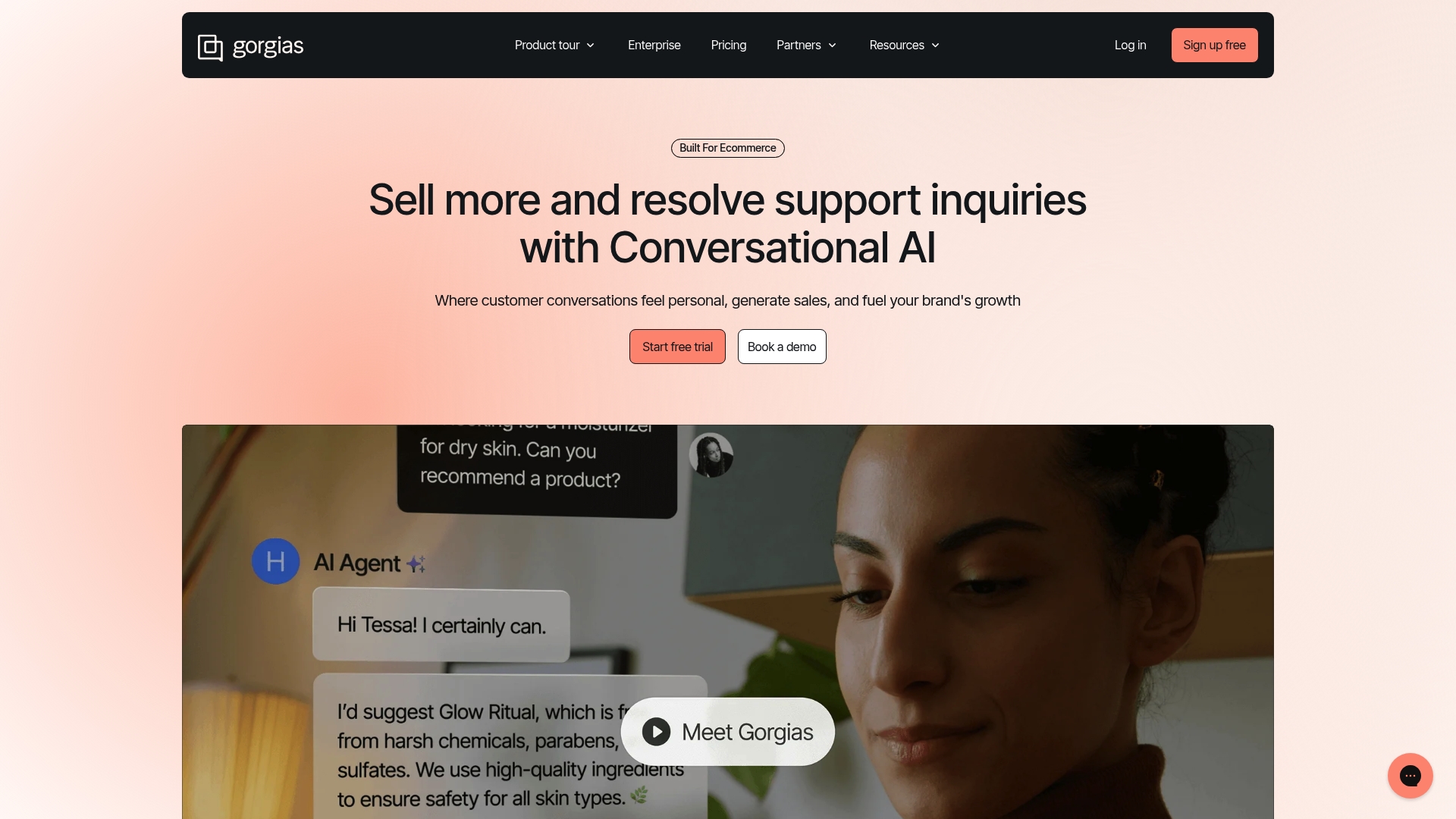
Gorgias is a helpdesk designed for ecommerce, used by over 15,000 brands. Its primary function is to bring text-based channels like email, live chat, SMS, and social media into a single dashboard for your team.
Its AI can automate responses to common support questions, and it offers a nativeGorgias Voiceadd-on if you want to handle phone calls within the same platform.
Gorgias uses a ticket-based pricing model, making it a choice for teams focused on managing their overall support workload.
Proactive sales chatbots
If your priority is converting more website visitors into customers, a sales-focused chatbot could be the answer.
Rep AI
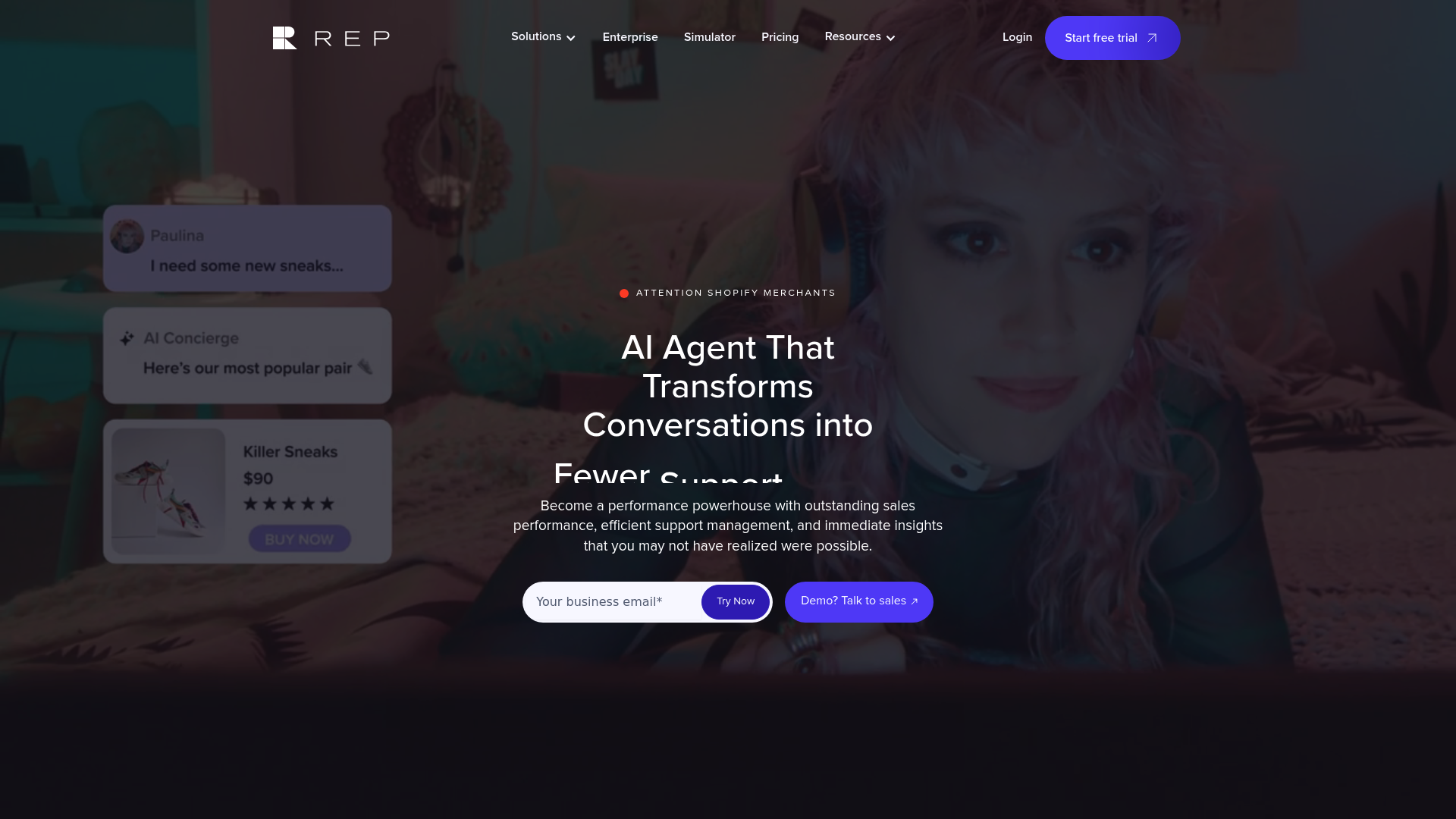
Rep AI is an AI sales tool focused on converting website traffic into revenue.
Its AI is trained to proactively engage shoppers, offer smart product recommendations, and suggest upsells during the conversation.
It provides analytics on shopper behavior and conversions, and you can test it with a 30-day free trial.
Rep AI focuses on website interactions and does not include native phone support, making it suitable for businesses prioritizing on-site conversion.
Specialized voice AI
Phone support is immediate and live, and it’s often where customers go when they have a serious problem that needs a quick fix.
Ringly.io

Ringly.io is a specialized tool built to solve this problem for Shopify stores. Its AI phone agent, the AI, is designed to answer calls 24/7, so customers always get an immediate response.
Because it integrates with Shopify, the AI can look up order details, process returns, and answer product questions using your store’s live data.
The setup takes less than 3 minutes, it supports 30 languages for global brands, and it comes with a guarantee: you get your last 3 months refunded if Seth resolves under 65% of calls in 90 days.
| Feature | Gorgias | Rep AI | Ringly.io |
|---|---|---|---|
| Primary Goal | Streamline support tickets (Helpdesk) | Convert website visitors (Sales) | Automate phone support (Ops) |
| Main Channel | Email, Chat, Social, SMS | On-site Chatbot | Phone Calls |
| Handles Phone Calls? | Yes, via Voice add-on | No | Yes, natively |
| AI Specialization | Ticket triaging & AI drafting | Proactive selling & recommendations | Autonomous phone resolution (Seth) |
| Shopify Integration | Deep (Helpdesk sidebar) | Deep (Catalog & Cart sync) | Deep (Order, Return & Refund write-access) |
| Pricing Model | Per Ticket + Add-ons | Per Visitor / Monthly Tiers | Per Minute (with 65% resolution guarantee) |
Best practices for implementing conversational AI for ecommerce
Selecting a tool is just the first step. To get the most out of conversational AI, you need a smart implementation strategy.
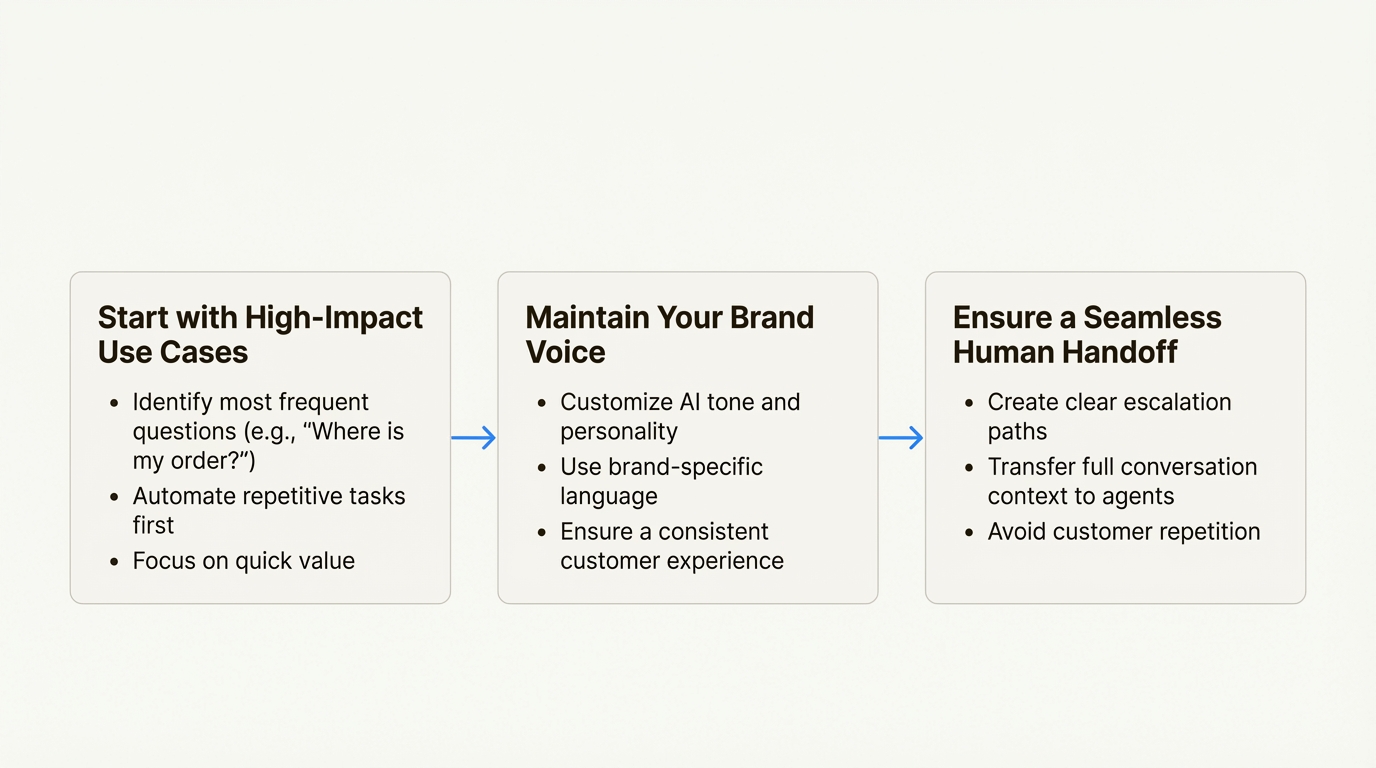
Start with high-impact use cases
Don't try to automate everything on day one. Start with your most frequent and repetitive questions, like order status checks ("Where is my order?"), return requests, and basic product questions.
Automating these first will provide the quickest value and free up your human agents.
Maintain your brand voice
Your AI should sound like a part of your brand. It’s important to customize its tone, personality, and language to match how you communicate with customers.
A generic-sounding AI can detract from your brand's image.
Platforms like Ringly.io let you customize the AI’s voice and behavior, ensuring it represents your brand consistently on every call.
Ensure a seamless human handoff
It is important to recognize that no AI can solve every customer issue. That's why a smooth handoff to a human agent is one of the most important features to look for.
The handoff needs to be seamless, with the AI providing your human agent with the full context of the conversation so the customer doesn't have to repeat themselves.
For example, Ringly's the AI is trained to recognize when it doesn't know an answer and can instantly transfer the call to someone on your team with all the details.
The future is conversational AI for ecommerce
Conversational AI has become an essential tool for any modern ecommerce brand that wants to grow.
It’s a powerful way to improve the entire customer journey, from helping shoppers find products to offering instant support after they buy.
The result is higher conversions, more satisfied customers, and a support team that can focus on important tasks instead of answering repetitive questions.
The key is picking the right tool for your most important channels. While helpdesks and chatbots are great for text, specialized tools are available to ensure every customer gets the help they need, right away.
To see how these platforms work in a real-world context, watch this overview of how a leading conversational AI platform helps ecommerce stores automate support and sales.
This overview from Gorgias shows how a conversational AI platform can help ecommerce stores automate their customer support and sales conversations.
Ready to automate your phone support?
If your team spends significant time on repetitive phone queries like "where is my order," an AI phone agent can help.
Ringly.io's AI representative, the AI, is built to resolve over 70% of your support calls automatically, so you can get back to growing your business.
Start your free trial today and let the AI handle the calls.
Frequently Asked Questions
What's the main benefit of using conversational AI for ecommerce?
The main benefit is giving every customer instant, personalized support 24/7. This helps boost sales by answering questions before a purchase and builds loyalty by quickly solving problems after, all without needing a large support team.
How difficult is it to set up conversational AI for ecommerce on a Shopify store?
It varies by platform, but many modern tools are built for a quick setup. For example, a specialized voice AI like Ringly.io can be up and running on a Shopify store within an hour for most stores to handle phone support.
Can conversational AI for ecommerce handle channels other than live chat?
Yes. Effective platforms work across all the channels your customers use, including on-site chat, social media DMs, SMS, email, and phone calls.
How does conversational AI for ecommerce help reduce cart abandonment?
It can answer last-minute questions about shipping or returns right on the checkout page. Some advanced systems can also proactively offer a small discount to shoppers who seem hesitant, encouraging them to complete their purchase.
Will using conversational AI for ecommerce make my brand sound robotic?
Not if you choose the right platform. The best tools let you customize the AI's tone, personality, and language to match your brand's voice, ensuring a consistent and human-like experience.
What's the difference between a basic chatbot and conversational AI for ecommerce?
A basic chatbot typically follows a predefined script. Conversational AI for ecommerce uses advanced technology like Natural Language Processing (NLP) to understand what people are saying, handle complex questions, and remember the context of the conversation.