


The top CallRail alternatives are Nimbata, CallTrackingMetrics, WhatConverts, Invoca, and Ringba, which match or beat CallRail on pricing and international coverage. If your goal is answering and qualifying inbound calls rather than only tracking them, an AI phone agent like Ringly.io covers that side instead.
CallRail dominates the call tracking market, but it isn't the right fit for everyone.
Whether you're frustrated by unpredictable pricing, need coverage outside the US and Canada, or want features CallRail doesn't offer, there are solid alternatives worth considering.
This guide compares 7 top CallRail alternatives based on real pricing data, feature sets, and use cases.
Each tool on this list serves a specific purpose, so you can find the one that actually fits your business rather than settling for the biggest name.
Editor’s note: Want to hear some sample AI support calls made for your Shopify store?
- Just paste your store URL
- Hear sample calls for your store (no email required)
- Listen to demo calls for my store
What are the best CallRail alternatives?
Call tracking software shows you which marketing channels drive phone calls to your business. It assigns unique phone numbers to different campaigns (Google Ads, Facebook, billboards, etc.) and tracks which number a caller dialed.
Core features include:
- Dynamic number insertion: Swaps phone numbers on your website based on how the visitor arrived
- Call recording and transcription: Captures conversations for quality and training
- Attribution reporting: Ties calls back to specific ads, keywords, or campaigns
- Integration with CRM/marketing tools: Sends call data to your existing stack
Marketers, agencies, sales teams, and healthcare practices use call tracking to prove ROI and optimize campaigns. Research shows 85% of unanswered callers won't call back every missed call is a lost opportunity.
How we evaluated these CallRail alternatives
We looked at each tool across these criteria:
- Pricing transparency: Clear costs without hidden fees that balloon as you scale
- Core features: Dynamic number insertion, recording, transcription, and routing
- AI capabilities: Conversation intelligence, sentiment analysis, and automated insights
- Integration ecosystem: Connections to CRMs, ad platforms, and marketing tools
- Geographic coverage: International availability and GDPR compliance
- Ease of use: Setup time and day-to-day management complexity
- Support quality: Availability and responsiveness of customer service
The 7 tools below represent the most frequently recommended alternatives across review sites, competitor comparisons, and user discussions.
Comparison table: All 7 CallRail alternatives at a glance
| Tool | Best For | Starting Price | Free Trial | Key Differentiator |
|---|---|---|---|---|
| Nimbata | SMBs, agencies | $39/mo | 14 days | Pay-per-answered-call pricing |
| CallTrackingMetrics | Enterprises | $79/mo | Available | Best feature ratings vs CallRail |
| WhatConverts | Lead tracking | $30/mo | 14 days | Multi-channel lead attribution |
| Invoca | Large enterprises | Custom | Demo | Real-time AI analysis |
| Ringba | Pay-per-call | $147/mo | Available | Ring Tree Marketplace |
| WildJar | APAC businesses | AU $89/mo | Available | Strong Asia-Pacific presence |
| Aircall | Phone system | Custom | Available | 3-minute setup, full PBX |
1. Nimbata
Best for: SMBs, agencies, and marketers wanting affordable, transparent pricing
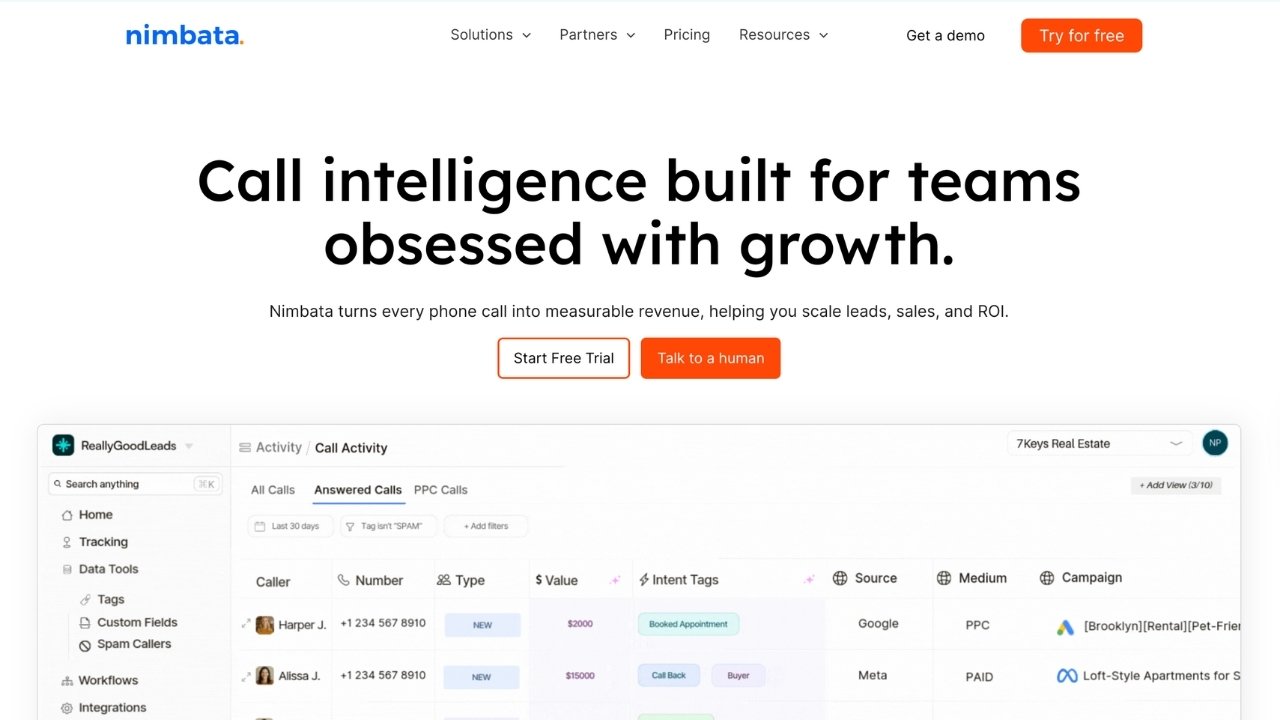
Nimbata built its reputation on a simple but powerful difference: you pay per answered call, not per minute. For marketers tired of unpredictable bills that spike when calls run long, this change is welcome.
The platform covers 70+ countries with full GDPR compliance, making it a natural choice for businesses targeting European markets something CallRail can't offer.
Key features
- AI call tagging and sentiment analysis
- 35+ prebuilt report widgets
- Dynamic number insertion for web tracking
- Call recordings, transcriptions, and greetings
- Geo-routing to direct calls by location
- Unlimited users on Agency plan
Pricing
| Plan | Monthly Price | Annual Price | Key Features |
|---|---|---|---|
| Entry | Free | Free | 1 user, basic tracking, spam filter |
| Pro | $39/mo | $35/mo | 4 users, call flows, Google Analytics |
| Marketing | $89/mo | $80/mo | 25 users, form tracking, CRM integration |
| Agency | $149/mo | $120/mo | Unlimited users, API, dedicated support |
Usage costs: Call transcriptions at $0.02/min, white label add-on $55/mo
Pros and cons
Pros
- Most transparent pricing in the category
- Best customer support rating on G2
- Full EU coverage and GDPR compliance
- No per-minute charges
Cons
- AI features less advanced than enterprise tools
- Smaller integration ecosystem than CallRail
Why choose over CallRail
If you need EU coverage, want predictable costs, or prioritize support quality, Nimbata beats CallRail. The pay-per-answered-call model alone can save money for businesses with longer average call times.
2. CallTrackingMetrics
Best for: Enterprises and teams needing deep CRM integration
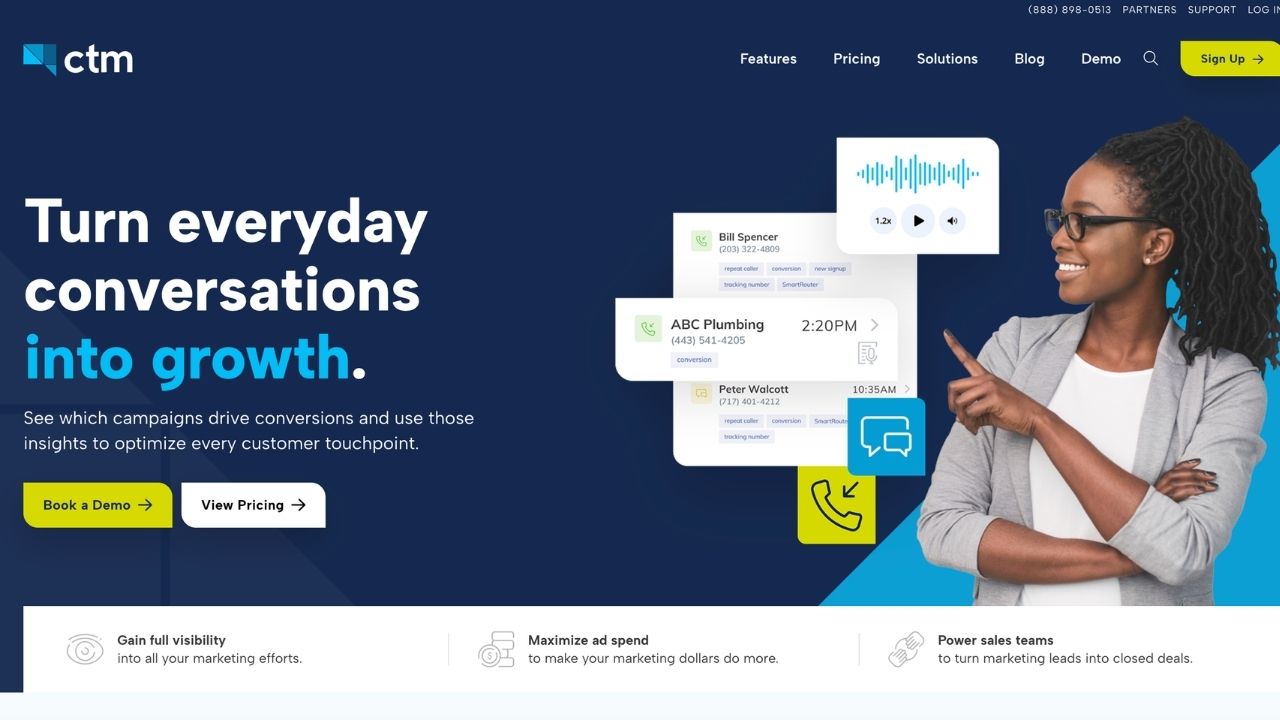
CTM serves over 100,000 users including major brands like Morgan & Morgan, The Washington Post, and Verizon Connect. The platform positions itself as the more powerful, customizable CallRail alternative.
The numbers back this up. G2 comparisons show CTM wins 70% of feature ratings against CallRail (58 out of 82 features tested).
Key features
- AskAI for custom conversation analysis
- Form Reactor for automated form handling
- Keyword spotting and sentiment analysis
- Smart Router for advanced call routing
- Softphone for in-app calling
- HIPAA and GDPR compliance
Pricing
| Plan | Monthly Price | Annual Price | Key Features |
|---|---|---|---|
| Marketing Lite | $79/mo | $65/mo | Unlimited users, standard recording, basic integrations |
| Marketing Pro | $179/mo | $149/mo | 25 sub-accounts, 5,000 forms, 3,000 transcription minutes |
| Sales Engage | $329/mo | $274/mo | Unlimited sub-accounts, smart dialer, voiceAI |
| Enterprise | $1,999/mo | $1,999/mo | Dedicated account manager, 20 hours professional services |
Usage costs: Local numbers $2/mo, local minutes $0.04/min, transcriptions $0.02/min
Pros and cons
Pros
- Superior feature depth per G2 reviews
- Lower usage costs than CallRail
- Available in 80+ countries
- Strong AI and automation tools
Cons
- Higher starting price
- Steeper learning curve
- More complex setup process
Why choose over CallRail
For teams that've outgrown CallRail's feature set or need deeper customization, CTM offers more power at a lower total cost of ownership. The per-minute and per-number pricing undercuts CallRail significantly at scale.
3. WhatConverts
Best for: Agencies needing multi-channel lead tracking
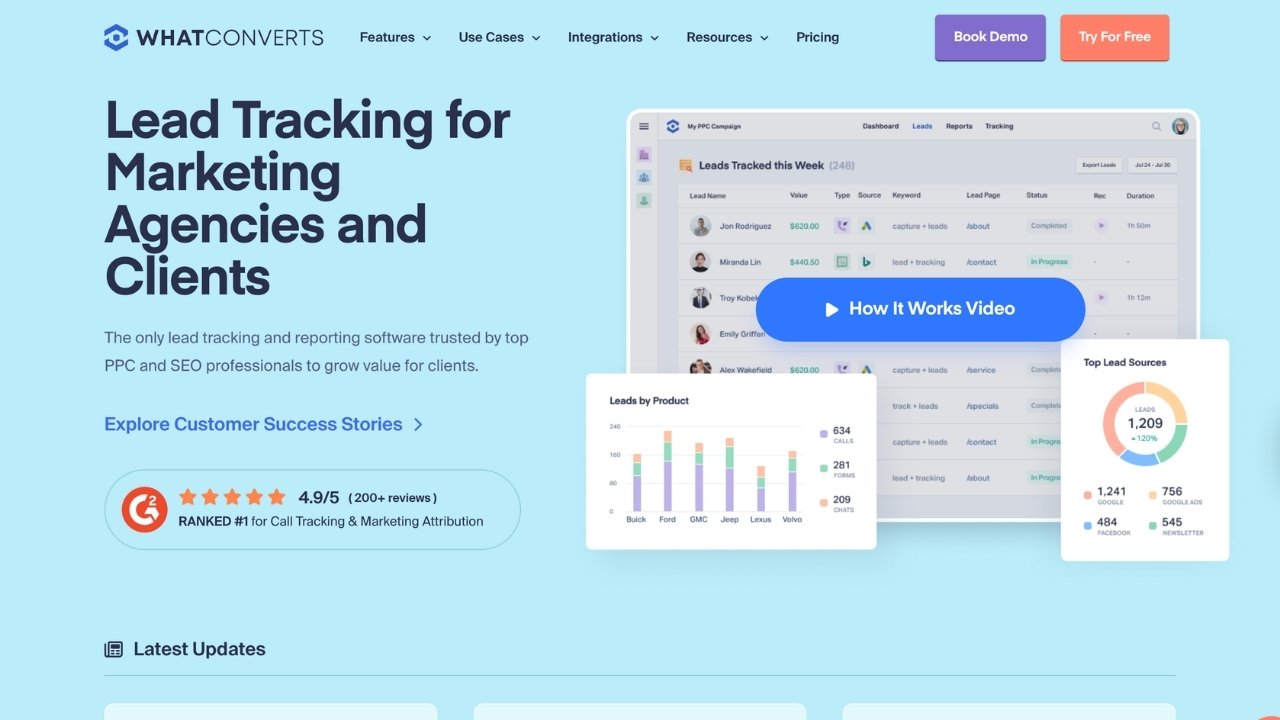
WhatConverts takes a different approach than pure call tracking tools. Instead of focusing only on calls, it tracks every type of lead calls, forms, chats, transactions in one dashboard. This gives marketers a complete picture of which campaigns drive actual business results.
The platform holds a 4.9/5 rating on G2, higher than CallRail's 4.6/5, with users particularly praising the support quality and ease of use.
Key features
- Call, form, chat, and transaction tracking
- 70+ lead data metrics
- Real-time reporting dashboards
- Campaign and keyword attribution
- Custom report builder
- Lead qualification and scoring
Pricing
Single Account Plans
| Plan | Monthly Price | Key Features |
|---|---|---|
| Call Tracking | $30/mo | $30 usage credit, DNI, API access |
| Plus | $60/mo | Adds forms and chat, campaign reporting |
| Pro | $100/mo | Adds call flows, report builder, HIPAA |
| Elite | $160/mo | Adds customer journey, multi-click attribution |
Agency Plans (Unlimited Accounts)
| Plan | Monthly Price | Usage Credit |
|---|---|---|
| Plus | $500/mo | $250 |
| Pro | $800/mo | $300 |
| Elite | $1,250/mo | $400 |
Usage costs: Local numbers $2.50, local minutes 4.5¢, transcriptions 2¢/min
Pros and cons
Pros
- Highest user satisfaction ratings
- Complete lead tracking (not just calls)
- Strong Google Ads integration
- Unlimited users on all plans
Cons
- Conversation intelligence less advanced than CI-first platforms
- Agency plans get expensive quickly
Why choose over CallRail
If you need to track leads beyond just phone calls forms, live chat, e-commerce transactions WhatConverts provides unified attribution that CallRail can't match. It's the better choice for agencies managing multi-channel campaigns.
4. Invoca
Best for: Large enterprises and media buyers needing AI-powered insights
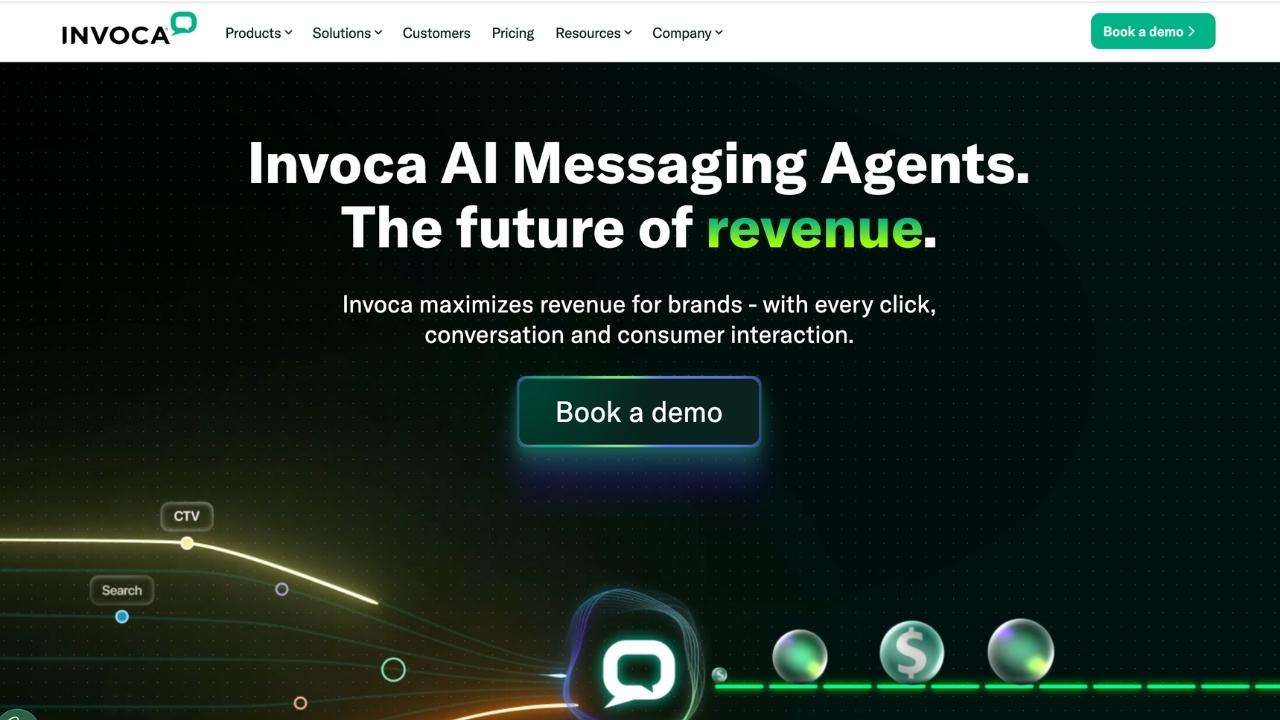
Invoca sits at the enterprise end of the call tracking market. The platform uses real-time conversation intelligence to analyze calls as they happen, not after the fact. This lets you take immediate action based on what the caller actually says.
Unlike the other tools on this list, Invoca doesn't publish pricing. You'll need to contact sales for a custom quote this typically indicates an enterprise price point.
Key features
- Active Conversation Intelligence platform
- Real-time call analysis and automated optimization
- AI-powered call routing based on conversation content
- Deep integrations with Salesforce, Gong, and major ad platforms
- Multi-touch attribution across channels
- Enterprise security and compliance
Pricing
Custom pricing (contact sales). Based on market positioning, expect annual contracts starting in the mid-to-high four figures per month for substantial call volumes.
Pros and cons
Pros
- Most advanced real-time AI in the category
- Purpose-built for enterprise scale
- Strong for pay-per-call and media buying
- Robust security and compliance
Cons
- Expensive (custom pricing only)
- Complex implementation (4-8 weeks typical)
- Overkill for SMBs
Why choose over CallRail
If you're a large enterprise with complex routing needs, high call volumes, and the budget for premium features, Invoca offers capabilities that mid-market tools can't match. For smaller teams, it's probably more than you need.
5. Ringba
Best for: Pay-per-call marketers and lead generation agencies
Ringba built its platform specifically for the pay-per-call industry. The standout feature is the Ring Tree Marketplace, a real-time network connecting call buyers with sellers. This makes it uniquely valuable for performance marketers who buy and sell calls as a business model.
The platform also offers sophisticated call routing, instant caller profiles, and white-label options for agencies that resell the service.
Key features
- Ring Tree Marketplace for real-time call trading
- Instant Caller Profiles with pre-call data
- Predictive routing (eRPC)
- White-label capabilities
- Revenue recovery tools
- Ping/post call trading (Enterprise)
Pricing
| Plan | Monthly Price | Annual Price | Key Features |
|---|---|---|---|
| Business | $147/mo | $127/mo | Call tracking, pixels/webhooks, call flows |
| Professional | $297/mo | $197/mo | Adds white label, Ring Trees, predictive routing |
| Enterprise | Custom | Custom | Adds real-time bidding, ping/post, dedicated CSM |
Usage costs (Business): Local tracking $0.055/min, local numbers $3/mo, recording $0.01/min
Pros and cons
Pros
- Purpose-built for pay-per-call business models
- Real-time marketplace for call buyers/sellers
- No contracts or setup fees
- Advanced routing capabilities
Cons
- Niche focus (not ideal for general call tracking)
- Higher starting price
- Steep learning curve for non-pay-per-call users
Why choose over CallRail
If you're in the pay-per-call business or run performance marketing campaigns where call monetization matters, Ringba offers specialized tools that general-purpose call trackers can't match. For standard business call tracking, it's probably overkill.
6. WildJar
Best for: Australian/APAC businesses and multi-location companies
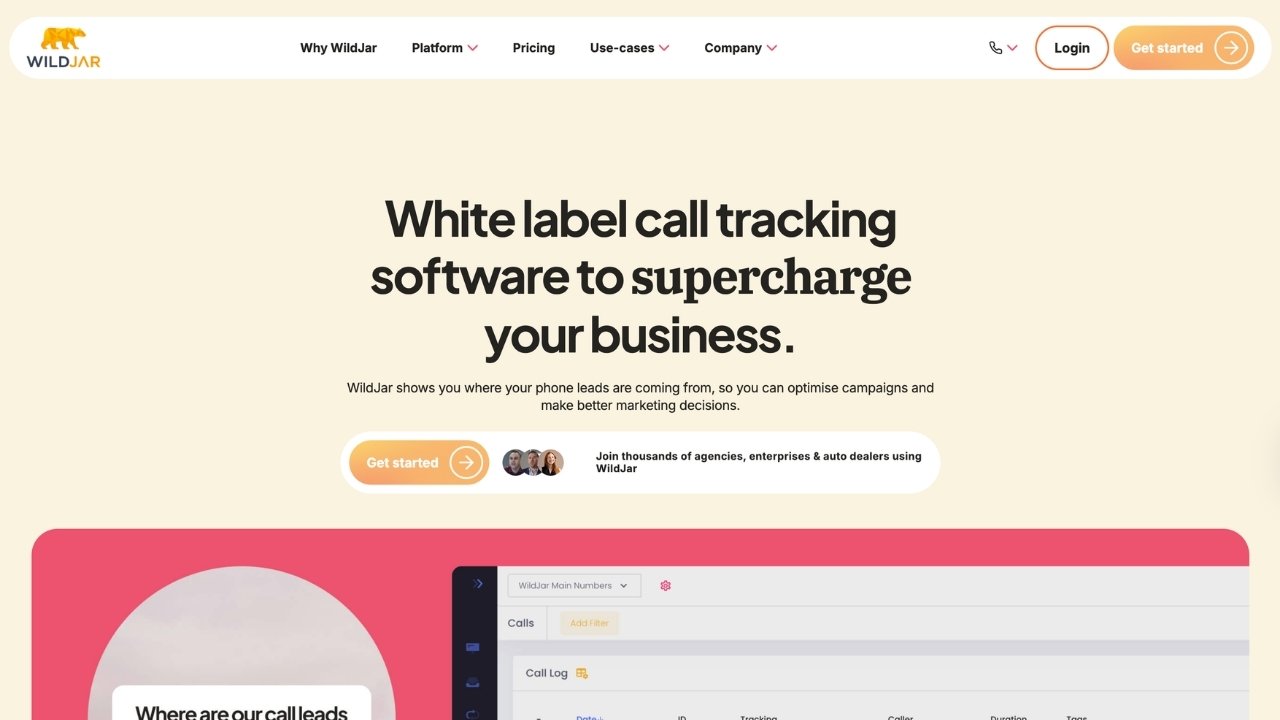
WildJar earned recognition as one of the fastest-growing technology companies in Asia-Pacific by Deloitte Technology Fast 500. The platform offers strong international coverage with local presence in 60 countries, making it valuable for businesses operating across the Asia-Pacific region.
The all-inclusive Starter plan (AU $150/mo with usage included) offers predictable pricing that appeals to businesses tired of variable monthly bills.
Key features
- Dynamic number insertion and campaign tracking
- White-label dashboard for agencies
- Advanced call flows and geo-routing
- Webhooks and API access
- Scheduled reports and email notifications
- Strong Google Ads and Microsoft Ads integration
Pricing
| Plan | Monthly Price | Key Features |
|---|---|---|
| Starter | AU $150/mo | All-inclusive (numbers and usage), multiple clients, DNI |
| Agency | AU $89/mo + usage | Unlimited clients, white label, advanced integrations |
| Mammoth | AU $179/mo + usage | All Agency features with discounted rates |
Usage costs (Agency): Local numbers AU $8.50, usage AU $0.10/min
Pros and cons
Pros
- Strong APAC presence and support
- All-inclusive Starter plan for predictable costs
- White-label built for agencies
- Fast-growing platform with regular updates
Cons
- Less brand recognition in US/European markets
- Pricing in AUD (conversion considerations for US buyers)
Why choose over CallRail
For businesses based in or targeting Asia-Pacific markets, WildJar offers local expertise and support that US-centric tools can't match. The all-inclusive pricing eliminates billing surprises.
7. Aircall
Best for: Teams wanting unified phone system plus basic call tracking

Aircall is fundamentally different from the other tools on this list. It's primarily a cloud phone system (PBX) with call tracking capabilities built in not a dedicated call tracking platform.
This makes it ideal for teams that need a full business phone system with features like IVR, call queuing, and team collaboration but don't require deep marketing attribution features.
Key features
- Cloud-based phone system with 50+ integrations
- Power dialer for outbound calling
- Call coaching and analytics dashboard
- Mobile and desktop apps
- Business text messaging
- quick setup process
Pricing
| Plan | Minimum Users | Key Features |
|---|---|---|
| Essentials | 3 users | 1 number included, unlimited calls, basic analytics |
| Professional | 3 users | Unlimited teams, advanced analytics, unlimited recordings |
| Custom | 25 users | Custom features, international bundles, Analytics+ |
Additional costs: Extra numbers $6/mo each
Note: Aircall requires contacting sales for specific pricing quotes.
Pros and cons
Pros
- Fastest setup in the category (3 minutes)
- Full cloud phone system, not just tracking
- Modern, intuitive interface
- Strong mobile app experience
Cons
- Call tracking is secondary to phone system features
- Slower to reach ROI for pure marketing attribution
- Limited marketing analytics compared to dedicated tools
Why choose over CallRail
If you need a complete business phone system with call tracking as a bonus feature, Aircall delivers. If marketing attribution is your primary need, dedicated call tracking tools offer more depth.
Which CallRail alternative should you choose?
The right tool depends on your specific situation:
Choose Nimbata if: You're a budget-conscious SMB or agency that values transparent pricing and needs EU coverage. The pay-per-answered-call model can save you money.
Choose CallTrackingMetrics if: You're an enterprise or growing team that needs deep customization, better AI features, and lower usage costs than CallRail offers.
Choose WhatConverts if: You need to track leads across multiple channels (calls, forms, chat, transactions) in one unified dashboard.
Choose Invoca if: You're a large enterprise with complex requirements, high call volumes, and the budget for premium real-time AI capabilities.
Choose Ringba if: You're in the pay-per-call business or need a marketplace to buy and sell calls.
Choose WildJar if: You're based in or targeting Asia-Pacific markets and want strong local support.
Choose Aircall if: You need a full cloud phone system first, with call tracking as a secondary feature.
Making the switch from CallRail
Migrating from CallRail to an alternative typically takes 1-2 weeks. Here's how to make the switch smooth:
- Audit your current setup: Document all tracking numbers, integrations, and workflows
- Export your data: Download call records, recordings, and reports before canceling
- Port your numbers: Most alternatives support number porting (usually free)
- Rebuild integrations: Reconnect your CRM, ad platforms, and marketing tools
- Train your team: Schedule onboarding sessions (most tools offer free training)
Most platforms offer migration assistance. Some, like CTM, include professional services hours with higher-tier plans.
Start tracking calls more effectively today
CallRail isn't your only option. Whether you're frustrated by unpredictable pricing, need international coverage, or want features CallRail doesn't offer, a better-fit tool exists on this list.
The best approach? Start with free trials of the 2-3 tools that match your use case. Test them with real campaigns and see which one delivers the insights and workflow you need.
And if you're looking for a different way to handle customer calls entirely, try Ringly.io. Our AI phone agent The AI handles inbound calls 24/7, answers questions, looks up orders, and processes returns automatically. It's not call tracking it's call handling. Perfect for e-commerce stores that want to resolve customer issues without adding headcount.
Also read