
The short version.
- Price: having your phone answered automatically runs $25 to $300 a month for software, while a live human answering service runs $150 to $2,500. The spread has almost nothing to do with quality.
- The real cost driver: what gets answered. A cheap service answers the ring and takes a message. The expensive part is your team calling everyone back.
- Who this is for: founders, COOs, and Heads of CX at $10M-$100M Shopify brands with a visible phone number and an order-status queue that never stops.
You can pay $25 a month to have your phone answered, or you can pay $2,500. Both vendors will tell you they "answer your calls." Only one of them tells you which calls actually get resolved, and that is the number that decides whether the spend is worth it.
I priced this out the boring way. I took a $30M Shopify brand doing roughly 800 inbound calls a month, mostly order status, and quoted it against a traditional human answering service and an order-aware automated agent. The human service billed per call to take a message. The automated agent billed flat and answered the question on the spot. Same 800 calls, wildly different bills, and the cheaper one did more of the work.
If you run support at a Shopify brand between $10M and $100M, you already know the after-hours problem: the phone rings, nobody picks up, the caller buys somewhere else. This is what answering it actually costs across every option on the market. We run AI phone agents for 50+ Shopify brands trying to close that gap, so if you'd rather just see your own numbers, book a 30-min call and we'll price your call volume live.
Here's how the options stack up before we get into the details.
| Answering model | Typical price | How it's billed | What it answers | Best for |
|---|---|---|---|---|
| Automated IVR menu | $25-$300/mo | Flat monthly | Nothing. Routes the call. | Pure call routing |
| AI voice answering agent | $50-$999/mo | Flat or $0.05-$0.30/min | Order status, returns, FAQs | High, steady order-status volume |
| Live human answering service | $150-$2,500/mo | $0.75-$1.50/min or $5-$12/call | Takes a message, relays it | Low, variable volume |
| Managed virtual receptionist | $800-$2,400/mo | Flat monthly retainer | Greets, screens, books, relays | Brands that want a named human |
| Hybrid (AI + human) | $250-$1,000/mo | Tiered base + overage | AI first, human backup | Mixed routine + complex calls |
What you're paying for when you pay to have the phone answered
"Answer the phone" sounds like one job. It's six, and most vendors only price the first one or two.
Picking up is the easy part. Then there's greeting the caller, figuring out what they want (triage), sending the genuinely complex ones to a human (routing), taking a message when nobody can help, and covering nights and weekends. The price tag on any answering option depends entirely on how many of those six jobs it actually does, not on how fast it picks up. A $25 IVR menu picks up instantly and does zero of the other five.
The split that matters is answering the ring versus answering the question. A caller who reaches a recording or an offshore operator who says "let me take a message and have someone call you back" got their ring answered. They did not get their question answered. For a Shopify brand, the question is almost always the same: where's my order. That call is answerable in 20 seconds if the system can see the order, and a multi-day game of phone tag if it can't.
This matters because of what happens when nobody answers at all. 85% of callers who can't reach a person never call back, and 62% switch to a competitor, according to a 2026 PCN study. 80% of voicemail-routed callers hang up without leaving a message. So the cheapest option, the one that sends after-hours calls to voicemail, isn't actually free. It just moves the cost onto the orders you never find out you lost. For most Shopify brands that bulk is WISMO, the where-is-my-order call, and it's the most answerable call there is.
That's the frame for the rest of this. Every price below should be read as cost per question answered, not cost per ring picked up.
What each way of answering the phone actually costs
Five ways to get your phone answered, five very different bills. Here's what each one runs and what you get for it.
Automated IVR menu
Best for: brands that only need calls routed, not answered. This is the "press 1 for orders, press 2 for returns" tree you've called a hundred times.
A basic automated IVR runs $25-$100 a month, and advanced versions with more menu logic hit $100-$300. It's the cheapest line item on this page for a reason: it doesn't answer anything. It points the caller somewhere and hopes a human is there. If you want the menu replaced entirely by something that picks up and talks, that's the AI answering service tier below.
Pricing: $25-$300/mo flat.
What works
- Cheap and predictable. Flat monthly, no per-minute meter.
- Good at routing. If you have departments and you just need calls sorted, it does that.
What doesn't
- It doesn't resolve calls. The caller still needs a person, or they hang up. IVR abandonment runs 30-40%.
- People hate menus. Roughly 67% of customers report frustration with old-style automated phone trees.
AI voice answering agent
Best for: brands with high, steady order-status volume that want calls actually answered, not relayed. This is modern conversational voice, not a menu.
An AI voice answering agent talks to the caller in plain language, understands "hey, where's my order," and, if it's connected to your store to check order status, looks it up and answers. Pricing sits at $50-$300 a month flat for general use, or $0.05-$0.30 per minute, or $1-$5 per call. Entry-level virtual receptionist plans start as low as $29-$50. Ecommerce-grade agents with real Shopify integration and included call volume run $199-$999 a month, around 50-80% cheaper than traditional services.
Pricing: $50-$999/mo depending on volume and integration depth.
What works
- It answers, not relays. Order-aware agents resolve the call instead of taking a message.
- Flat cost at volume. No per-minute meter ticking during a launch spike.
- 24/7 with no after-hours premium. Nights and weekends cost the same as Tuesday at noon.
What doesn't
- Setup matters. A generic agent with no store connection just becomes a fancier voicemail.
- Complex calls still need a human. Good agents escalate; the cheap ones pretend they can do everything.
Live human answering service
Best for: low, variable call volume where most calls are message-taking and a human voice is the point.
A live phone answering service puts a real operator on your line. They charge $0.75-$1.50 per minute, $5-$12 per call, or $150-$2,500 a month. Real examples from Nextiva's 2026 breakdown: AnswerConnect at about $350/mo for 200 minutes plus a $49.99 setup fee and $2.50 per extra minute, Smith.ai at $292.50/mo for 30 calls ($9.75 a call), Ruby at $245/mo for 50 minutes, and Moneypenny from $99/mo for 30 minutes.
Pricing: $150-$2,500/mo, metered.
What works
- Real human voice. Empathy on the hard calls, which matters for some brands.
- Light setup. You give them a script, they answer.
What doesn't
- They mostly take messages. Without access to your order system, the operator can't answer "where's my order," so they log it and your team calls back.
- The meter punishes volume. A DTC brand with steady call volume blows through minute blocks fast, and overage is brutal (more on that next).
Managed virtual receptionist
Best for: brands that want a consistent, named human handling the front desk.
A managed virtual receptionist is a dedicated person (or small pod) who greets, screens, books, and relays. It's the premium human tier at $800-$2,400 a month. For a mid-sized ecommerce brand, a traditional human call center setup runs $1,500-$3,000+ monthly.
Pricing: $800-$2,400/mo (more for a full call center).
What works
- Consistency. Same voices, trained on your brand.
- Handles nuance better than a script-reading operator.
What doesn't
- It's the most expensive option and still relays order questions unless wired into your store.
- Doesn't scale on a spike. One person answers one call at a time.
Hybrid (AI + human)
Best for: a mix of routine and complex calls where you want AI to handle the easy 70% and a human to catch the rest.
Hybrid services route to AI first and fall back to a human. They run $250-$1,000 a month, usually a tiered base plus overage.
Pricing: $250-$1,000/mo, tiered.
What works
- Covers the full range. AI deflects routine, humans handle edge cases.
What doesn't
- Two meters to watch. You're billed for the AI layer and the human minutes.
- Often the worst of both if the AI is weak and dumps too much on the humans.
Per-minute, per-call, or flat, and the rounding trap that inflates the bill
The advertised price is rarely the real price. How you're billed changes the bill more than the headline number does.
Per-minute charges for talk time. It's cheap when calls are short and brutal when they're long or frequent. Run the numbers: 100 calls a month at 3 minutes each, at $1 a minute, is $300, and that's before overage. Per-call charges a flat fee per answered call regardless of length, which is predictable but punishing on quick calls (you pay $5 for something a per-minute plan would bill at a dollar). Tiered bundles minutes or calls with features, like 100 minutes for $199 or 500 for $699. Flat-rate is one fixed monthly fee for defined usage, which is the only model that doesn't make you sweat a busy week.
Here's the catch nobody flags on the proposal: a DTC brand doesn't have low, predictable volume. A $250-AOV store sees 12-18% of orders generate a phone call, versus about 3% at a $40 AOV. That's steady, high call traffic, exactly the profile that makes per-minute and per-call meters expensive and a flat plan boring in the good way.
Then there's rounding, which is where the quiet money goes. A provider that rounds to 60-second increments bills a 1-minute-5-second call as 2 full minutes, nearly double, and that alone can add about $340 a year on 50 calls a month, per NextPhone's analysis. Go over your minute block and overage runs $1.50-$3.50 a minute. Add it all up and hidden fees inflate the advertised price by 30-50%.
Here's what to actually budget for beyond the sticker price.
| Hidden fee | Typical range |
|---|---|
| Setup / onboarding | $50-$500 |
| Overage (over plan) | $0.50-$3.50/min |
| Per-minute rounding | up to ~$340/yr |
| After-hours / weekend premium | +10-25%, some 1.5-2x |
| Holiday surcharge | 1.5-2x rates |
| Call recording | $10-$30/mo |
| CRM / store integration | $50-$200 setup |
| Early termination | $100-$500 |
This is the trap with metered human services: the number on the proposal is the floor, not the ceiling. Flat AI plans don't have most of these line items because there's no meter to inflate.
The after-hours premium, where the leak and the markup both live
After-hours is the worst place to get billed extra, because it's where you're losing the most money already.
Most live answering services add 10-25% for nights and weekends, and some charge 1.5-2x for overnight and holiday calls. So the calls that cost you the most to answer are the ones the human services mark up the hardest. The cruel part is that after-hours volume is mostly order-status, the single easiest type of call to answer automatically. A caller at 9pm wanting to know if their package shipped doesn't need empathy. They need an answer, and that answer is sitting in your Shopify admin.
This is the strongest argument for automated answering on cost alone. An AI agent covers 24/7 at a flat rate with no overnight premium, and order-status is exactly what it's best at. You stop paying a surcharge to take a message about a question the system could have just answered.
If you want to go deeper on the overnight math specifically, we broke it down in our after-hours answering service guide and the full answering service pricing breakdown.
If your phone goes to voicemail after 6pm and you want to know what that's costing in lost orders, book a 30-min call and we'll run your after-hours volume with you.
The message-taking trap: cost per answered ring vs cost per resolved answer
Here's the distinction that should drive the whole decision, and almost no pricing page mentions it.
A traditional answering service answers the ring. The operator picks up, is friendly, and takes down the question. Then they email or text it to your team, and one of your reps calls the customer back. You paid the per-call retainer to have the phone answered, and you're about to pay a rep's time to actually answer the question. You're paying twice for one call, and the customer waited a day in between.
An order-aware automated agent answers the question. It pulls the order from Shopify, tells the caller their tracking number, handles the return, and only escalates the calls that genuinely need a person. The cost-per-answered-ring and the cost-per-resolved-answer are the same number, because the ring and the answer happen in one call.
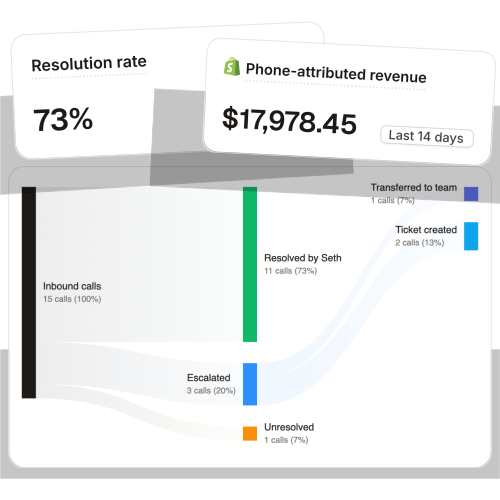
That's why the real-world numbers separate so hard. When I priced both against that 800-call month, the human service quoted per-call just to relay. The automated agent resolved. WashCo, a Shopify brand we launched, answered its calls at $0.91 each versus the $5-$12 per call a live service charges to take a message. Across 50+ brands we see about $0.42 per resolved call and 73% of calls resolved without a human touching them.
"My customers also feel like it's a normal person. They feel like they can communicate if they have questions."
Claudia Droge, TechCraft Studio
So when you compare quotes, don't compare price per minute or price per call. Compare price per question your customer actually got answered. That's the number that shows up on your P&L as either recovered revenue or a callback queue. If you want the full resolution math rather than just the answering math, we cover it in what automated phone support costs, and the per-minute-versus-per-resolution billing models in AI voice support cost.
What this costs you today vs with Ringly
Most of the answering spend on a Shopify brand isn't the answering service at all. It's the payroll behind it. The answering service relays, your team resolves, and the team is the expensive part.
Take a typical $50M Shopify brand running a 6-rep CS team:
| Line item | Today | With Ringly |
|---|---|---|
| 6 reps × $4K loaded per rep | $24,000/mo | n/a |
| Answering service retainer (relays calls) | $400/mo | n/a |
| Ringly (~$5K/mo, answers calls) | n/a | $5,000/mo |
| Net monthly spend | $24,400/mo | $5,000/mo |
| Monthly savings | n/a | ~$19,400/mo |
| Annual savings | n/a | ~$233,000/yr |
That's roughly 70% of repeatable calls (order status, returns, the same five questions over and over) answered automatically. The other 30%, the genuinely complex ones, still go to your team, who now have time to actually solve them instead of reading messages off a relay queue. Ringly's published plans start at $349/mo (Grow) and $799/mo (Pro); higher volume is quoted on a call.
How to pick a way to answer your phone (and what it should cost you)
The right option depends on your call volume and how much of it is answerable versus genuinely complex.
- Choose an IVR menu if you only need routing and you have humans standing by to actually answer. Budget $25-$300/mo. Know that it resolves nothing on its own.
- Choose a live human answering service if your volume is low and variable and most calls are simple message-taking. Budget $150-$2,500/mo, and watch the per-minute meter and after-hours premium.
- Choose an AI voice answering agent if you have high, steady order-status volume, you want calls resolved instead of relayed, and you're on Shopify. Budget $50-$999/mo flat, no after-hours premium. This is the AI receptionist lane, and it leans on a solid knowledge base to answer well.
- Choose a hybrid if your call mix is genuinely split between routine and emotional or complex, and you want AI to take the easy 70% so humans can focus on the rest. Budget $250-$1,000/mo.
For a $10M-$100M DTC brand with a real order-status queue, the math almost always lands on automated answering that's wired into your store, because the volume is high enough that metered human services get expensive and the calls are repeatable enough that a human relaying them is pure waste.
Frequently asked questions
What's the cheapest way to have my phone answered automatically? A basic IVR menu at $25-$100/mo is the cheapest line item, and an entry-level AI voice agent starts around $29-$50/mo. But "cheapest to install" and "cheapest per resolved call" are different numbers. An IVR resolves nothing, so the real cost lands on your team or your lost orders.
Is per-minute or per-call billing cheaper? Per-minute is cheaper if your calls are short and low-volume (under ~2 minutes, under ~30 calls a month). Per-call is more predictable when call lengths vary a lot. For steady DTC order-status volume, flat-rate usually beats both because there's no meter to spike on a busy week.
Does AI answering really cost less than a human service? Usually yes, often 50-80% less for comparable volume, because there's no per-minute meter and no after-hours premium. The bigger saving is that an order-aware agent resolves the call instead of relaying it, so you avoid paying your team to call everyone back.
What are the hidden costs of an answering service? Setup fees ($50-$500), overage ($0.50-$3.50/min), per-minute rounding (up to ~$340/yr), after-hours and holiday premiums (10-25%, sometimes 2x), recording ($10-$30/mo), integration ($50-$200), and early-termination fees. Together these inflate the advertised price by 30-50%.
Do automated answering services charge extra for after-hours? Live human services usually do, adding 10-25% or charging 1.5-2x for nights, weekends, and holidays. AI voice agents typically cover 24/7 at a flat rate with no premium, which matters because most after-hours calls are order-status.
Does it actually answer the question or just take a message? Depends on the option. IVR routes, a basic human service or generic AI takes a message, and an order-aware AI agent connected to Shopify actually looks up the order and answers. The cost difference between "relays" and "resolves" is the whole game.
Is there a setup fee for automated phone answering? IVR and many AI plans have little or no setup. Live human services often charge $50-$500 to onboard and script your account. Ringly's build runs as a 14-day launch sprint that's free until you go live.
Can it look up Shopify orders on the call? An order-aware AI agent can, which is the point. It pulls the order, gives the tracking, and can handle returns directly in Shopify. A standard answering service can't see your store, so it takes a message instead.
Will customers be annoyed talking to an automated system? They were annoyed by old menu trees, and 67% still report that frustration. Modern conversational voice is a different experience. The most common thing customers say after a Ringly call is that it didn't sound like AI.
What does Ringly cost? Published plans are $349/mo (Grow, ~500 calls) and $799/mo (Pro, ~1,250 calls), flat, 24/7, no after-hours premium. Higher volumes are quoted on a call. Across 50+ brands we see about $0.42 per resolved call.
Talk to us

If you run a $10M-$100M Shopify brand and your phone rings more than your team can answer, a 30-min call is the fastest way to see what each option really costs you. We'll price your actual call volume against what you're paying now, no deck, no homework.
The 3-layer guarantee.
- Live in 14 days or it's free until launched.
- 65% resolution in 90 days or we refund the last 3 months of subscription fees.
- We keep working free until we hit 65%.
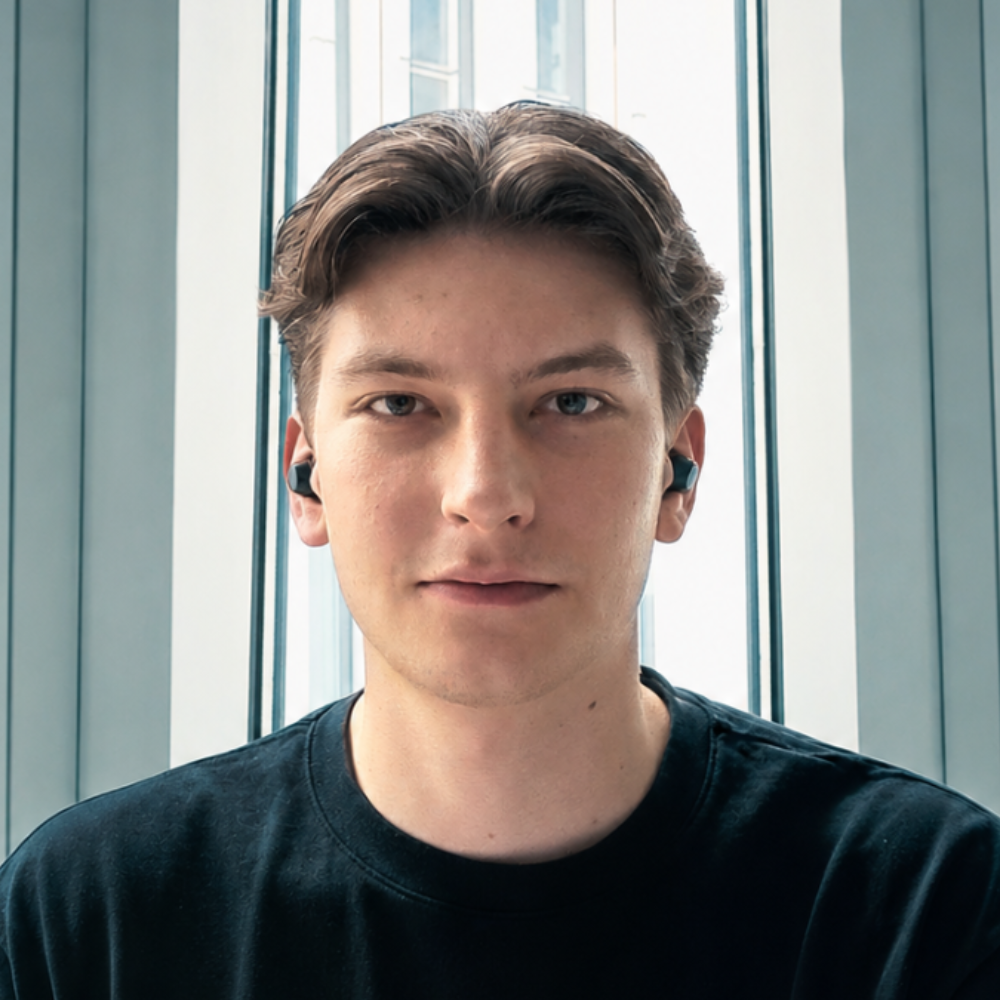
Ruben (Ringly co-founder) takes these calls personally.