


73% of customers will ditch a brand after just one bad experience, and for a growing store, most of those "bad experiences" happen because your team is buried under a mountain of repetitive phone calls and tickets.
You have built a great team, but you are likely watching them burn out while your payroll costs climb every single month.
It is a heavy weight to carry when you know that every missed call or slow reply is literally money leaking out of your business.
This article will go over the best Yuma AI alternatives for eCommerce.
First, we will look at why voice support is the missing piece of your stack.
Then, we will compare the top tools based on how fast they set up and how they fix your budget.
Editor’s note: Want to hear some sample support calls made for your Shopify store?
- Just paste your store URL
- Get sample calls in under 20 seconds (no email required)
- Listen to demo calls for my store
Understanding AI agents: A key step for any Yuma AI alternative
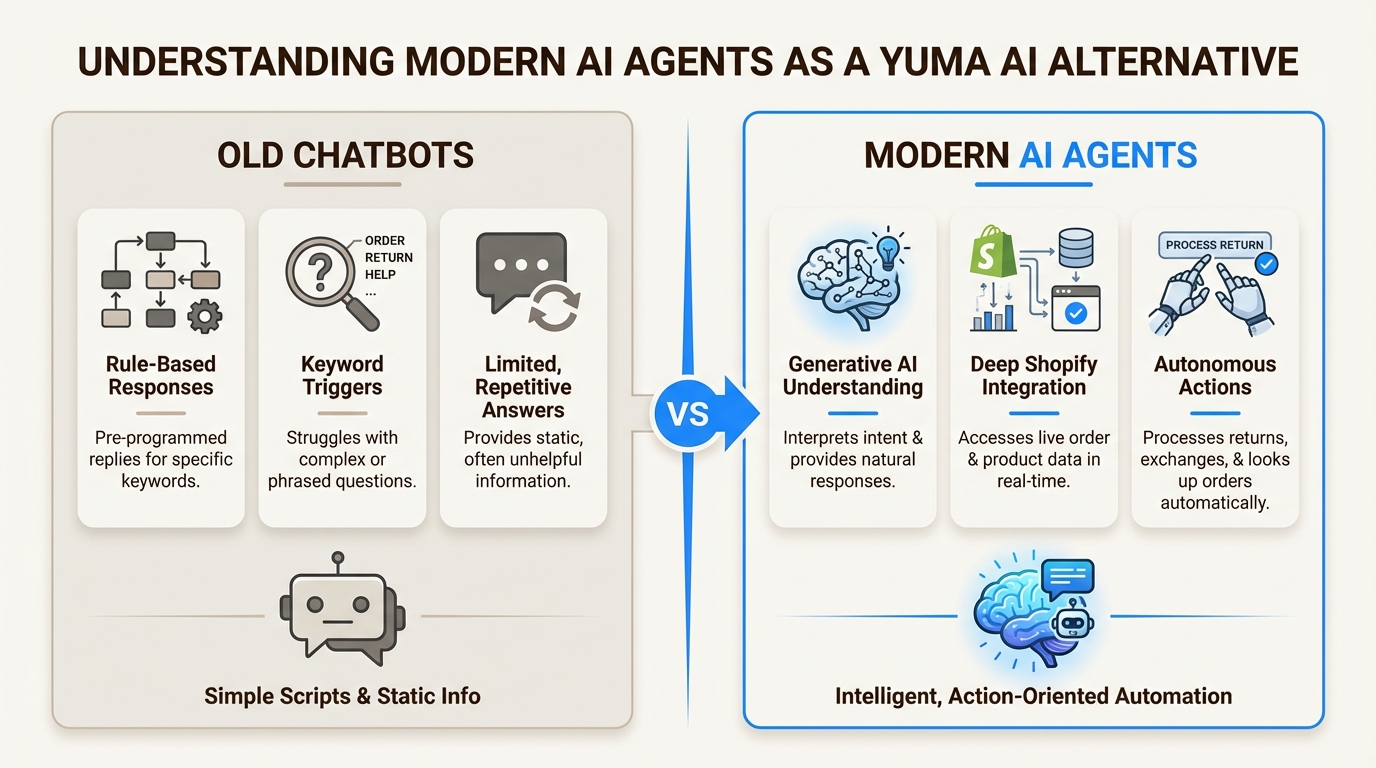
Modern AI agents are more advanced than earlier generations of chatbots.
They use generative AI to understand customer inquiries, pull information from a knowledge base or Shopify store, and take action.
Think of them as autonomous members of your team.
A true AI agent does more than answer "Where is my order?" It can look up the live order status in Shopify, start a return, process an exchange, or escalate a complex issue to a human with the full conversation history.
This infographic shows the key differences.
The goal is not to replace your human support team.
It's to free them from repetitive questions so they can focus on solving complex problems and building customer relationships.
How we evaluated the best Yuma AI alternatives
To make this a consistent comparison, I looked at each tool through the same lens, focusing on a few key areas:
- E-commerce specialization: Is the tool built for the specific demands of an online store? Does it have a deep integration with platforms like Shopify to understand orders, products, and returns?
- Channel coverage (especially voice): Does it handle emails and chats, or can it also answer the phone? This is a key differentiator that many AI tools do not offer.
- Automation depth: Can the AI only answer questions, or can it perform tasks in your systems, like processing a refund or starting an exchange?
- Setup speed & self-serve: How quickly can you get started? Can you launch it yourself in a few minutes, or does it require a long project with a sales team?
- Pricing model predictability: Is the pricing a simple monthly subscription, or is it based on the number of resolutions it performs? A consumption model can be difficult to budget for.
A quick comparison of the top Yuma AI alternatives
| Tool | Primary Focus | Key Differentiator | Pricing Model |
|---|---|---|---|
| Ringly.io | AI Phone Support for Shopify | "get your last 3 months refunded if the AI resolves under 65% of calls in 90 days" guarantee; 3-minute setup | Subscription + overages |
| Zendesk AI | All-in-one helpdesk suite | Native Zendesk integration & agent copilot | Subscription + add-ons + per-resolution for AI |
| Gorgias | E-commerce helpdesk (Shopify) | Deepest Shopify integration for in-ticket actions | Tiered subscription + per-resolution for AI |
| Intercom (Fin AI) | Conversational AI platform | Advanced conversational AI (Fin AI Engine™) | Per resolution + subscription |
| Decagon | Enterprise omnichannel AI | Natural language workflows (AOPs) & voice support | Custom (Contact sales) |
The 5 best Yuma AI alternatives in 2026
Here is a detailed look at each of these platforms to determine where they perform well and where they might fall short for a busy e-commerce brand.
1. Ringly.io: A voice-first Yuma AI alternative

Ringly.io is a notable option because it automates phone support.
This is the channel that most text-focused AI tools like Yuma AI do not cover.
Ringly.io provides a dedicated AI phone agent named the AI who answers calls 24/7, looks up orders in Shopify, handles returns and exchanges, and can speak 40 different languages.
A key feature is its setup speed. You can get a new phone number and have the AI answering your calls within an hour for most stores, all without speaking to a sales representative.
It connects directly to Shopify, so the AI has the context to give customers accurate, real-time answers.
On average, Ringly.io states that the AI autonomously resolves about 73% of calls, which can significantly improve efficiency.
Ringly.io is a specialist tool built exclusively for phone support. This means it’s designed to be a powerful addition to your existing helpdesk (like Gorgias or Zendesk), not a complete replacement. It specializes in phone support.
Pricing:
- Grow Plan Guarantee: You pay nothing until The AI resolves at least 65% of calls. After that, the Grow plan is $349/month for 1,000 call minutes, with overages at $0.19/minute.
- Other Plans: There's also a Grow plan for smaller stores at $349/month, and custom Enterprise pricing for high-volume brands.
Best for: Shopify stores that receive a high volume of support calls and want a solution they can set up in minutes to automate them effectively.
2. Zendesk AI: An all-in-one Yuma AI alternative
Zendesk is a leading platform in customer service, and its AI offering is a natural extension of its comprehensive helpdesk platform.
The system has two parts. First, AI agents can automate conversations across different channels with a goal of 80% automation.
Second, a Copilot assists human agents by suggesting replies and summarizing tickets.
For teams already using Zendesk, the AI features integrate into the existing workflow.
The AI agents can handle interactions across email, chat, and voice, and the Copilot is a useful tool for making human agents more efficient.
Zendesk is a generalist tool, which means it may require more configuration for specific e-commerce needs.
The pricing can be complex, with different features spread across base plans, add-ons, and consumption fees.
Pricing:
- AI features are a mix of what's included and what's an add-on. Their Suite plans start at $55 per agent/month.
- The Copilot feature is an extra $50 per agent/month.
- AI agents are priced per automated resolution, though some are included in each plan before extra charges apply.
Best for: Any business that is already deeply invested in the Zendesk platform and wants to add AI capabilities natively.
3. Gorgias: A Shopify-centric Yuma AI alternative
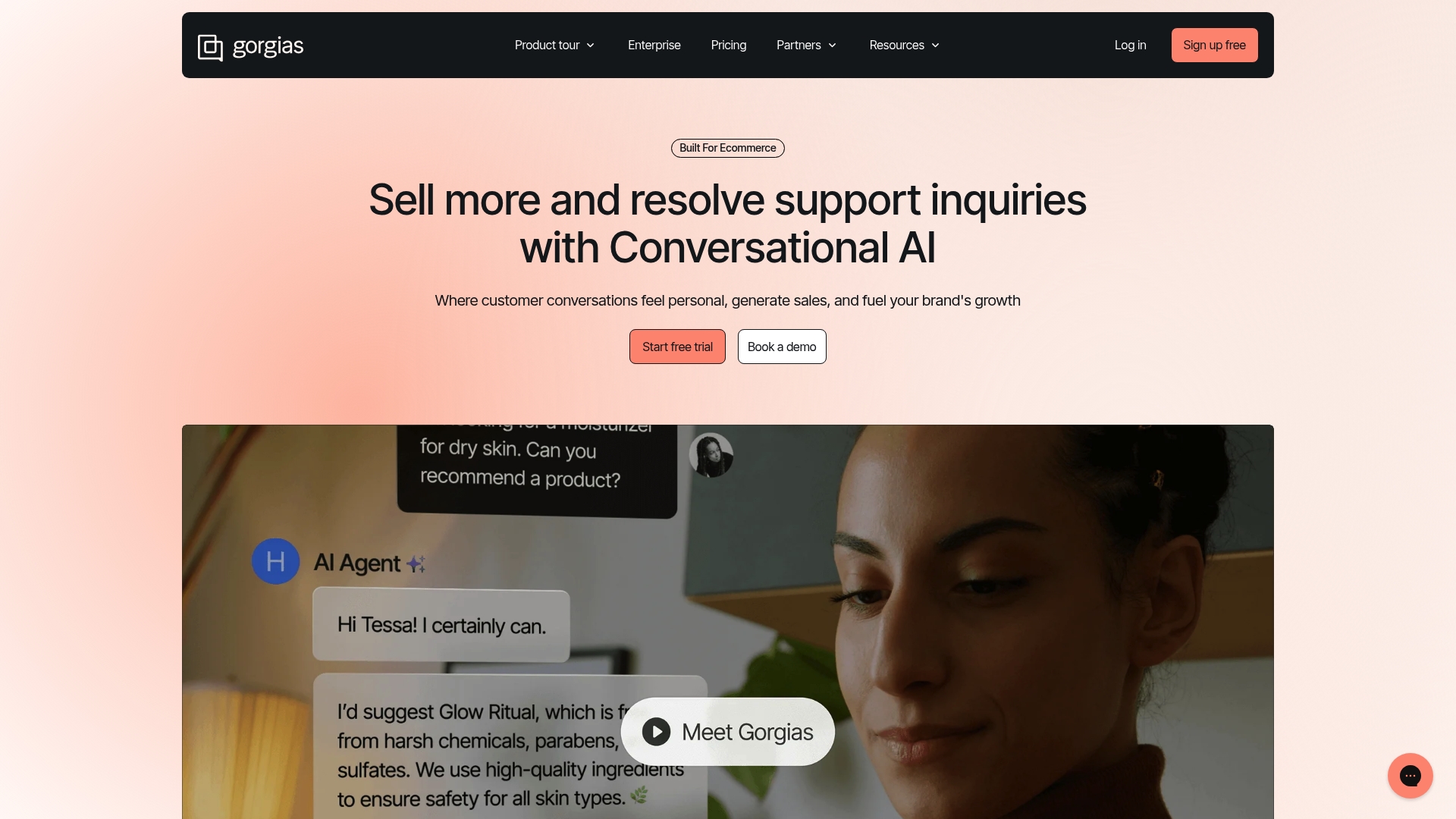
Gorgias is a helpdesk built for e-commerce, and it has a very deep Shopify integration.
Its AI Agent is designed to automate up to 60% of common e-commerce questions, especially those related to order status.
The Shopify integration is highly effective. Your agents can perform actions like editing an order or issuing a refund without leaving the Gorgias ticket view.
Gorgias also offers voice and SMS support, but they are available as add-ons to the core helpdesk.
Gorgias is highly focused on Shopify, so it may not be the best option for stores on other platforms.
The AI features are part of the all-in-one helpdesk platform, so you must commit to the entire system.
Pricing:
- Gorgias uses a hybrid model. The helpdesk plans are based on ticket volume, with the Basic plan starting at $50/month for 300 tickets.
- On top of the subscription, AI Agent resolutions are billed separately, at approximately $0.90 for each fully automated interaction.
Best for: Shopify brands that want an all-in-one helpdesk where AI tools and human agent workflows are synced with their store data.
4. Intercom (Fin AI): The conversational Yuma AI alternative
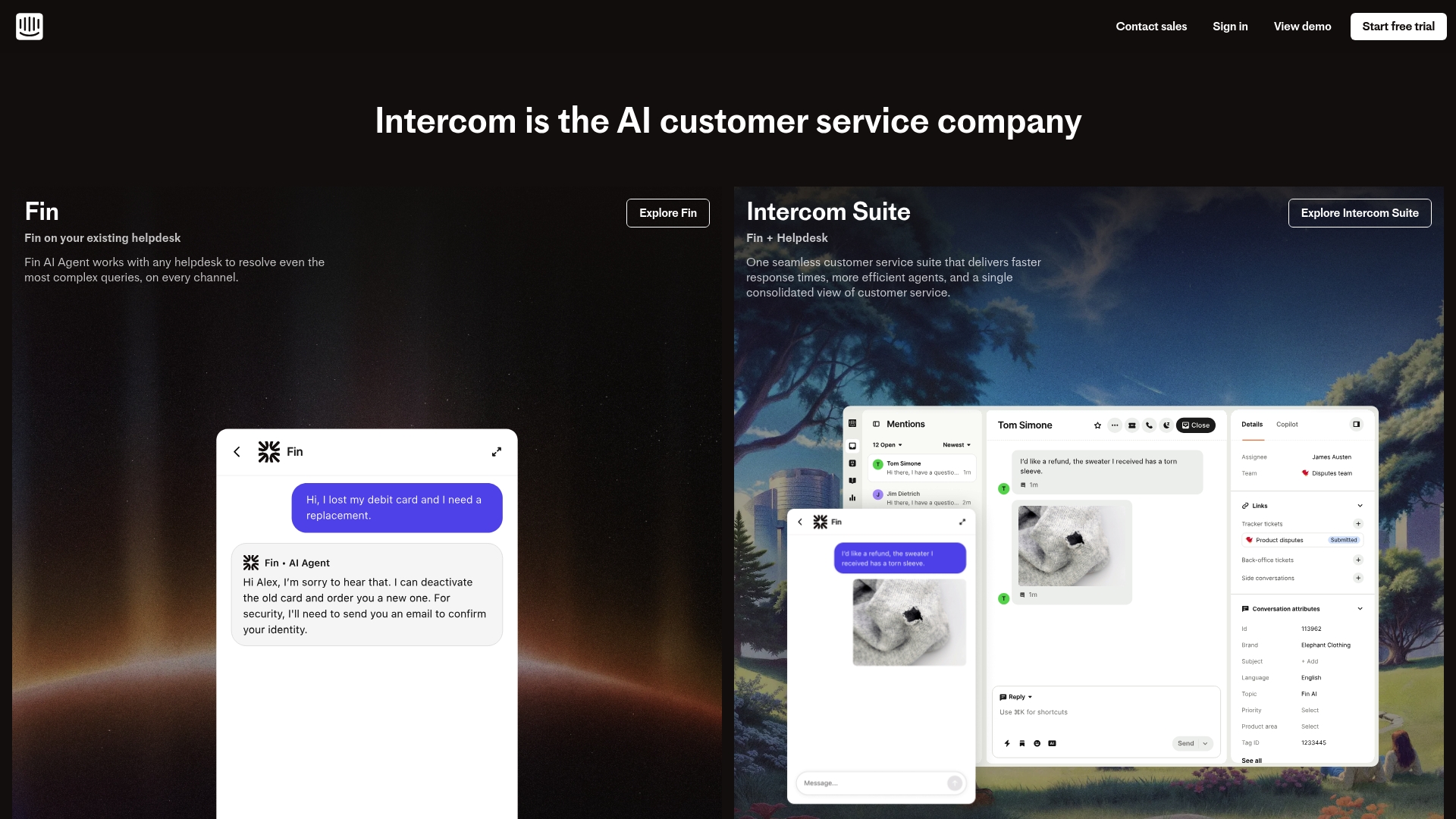
Intercom has been a leader in live chat for years, and its AI agent, Fin, is a conversationally advanced tool.
It's powered by Intercom's own Fin AI Engine™ and is designed to have natural, human-like conversations to solve customer problems within the chat widget.
Fin's conversational skill is its primary strength. The experience is designed to be seamless. Fin can also be used with other helpdesks like Zendesk or Salesforce and supports voice, though you have to contact their sales team for setup.
The pricing model can be a consideration.
At $0.99 per resolution, on top of a base Intercom subscription that starts at $29/seat/month, costs can become unpredictable and increase with high support volume.
Pricing:
- The Fin AI Agent is priced at a flat $0.99 per automated resolution.
- This is an additional cost on top of a required Intercom subscription plan.
Best for: Businesses that want to provide a premium, human-like chat experience and are willing to pay for that performance on a per-resolution basis.
5. Decagon: An enterprise-level Yuma AI alternative

Decagon is an enterprise-grade AI platform.
Frequently Asked Questions
What's the main reason to look for a Yuma AI alternative if I use Shopify?
The biggest reason is voice support. Yuma AI is great for text (email, chat)), but if your customers call you, you'll need a different tool to automate those conversations. Many e-commerce stores find a surprising number of customers still prefer the phone.
Can a Yuma AI alternative handle phone calls?
This is a key differentiator, as not all alternatives handle phone calls. Many alternatives, like Yuma AI itself, focus only on text channels. Tools like Ringly.io, Zendesk AI, and Decagon are built to handle voice, with Ringly.io specializing specifically in phone support for e-commerce.
How quickly can I set up a Yuma AI alternative like Ringly.io?
It depends on the tool. Enterprise solutions like Decagon can take weeks. However, a self-serve platform like Ringly.io is designed for speed. You can connect it to your Shopify store and have its AI agent, the AI, answering calls within an hour for most stores.
Is every Yuma AI alternative priced on a per-resolution basis?
No, pricing models vary. While tools like Intercom Fin and Gorgias use a pay-per-resolution model, others like Ringly.io offer a more predictable monthly subscription with a set number of minutes, which can be easier to budget for, especially during peak sales seasons.
What makes Ringly.io a strong Yuma AI alternative for voice support?
Ringly.io is purpose-built for one thing: automating phone support for Shopify stores. It's not a general helpdesk with voice added on. This focus means it has deep Shopify integration for order lookups and returns, can be set up in minutes, and is trained to handle natural, spoken conversations effectively.
Do I need to replace my entire helpdesk to use a Yuma AI alternative?
Not necessarily. Specialist tools like Ringly.io are designed to be a powerful addition to your existing helpdesk, not a replacement. It can handle all your phone calls while you continue using Gorgias, Zendesk, or another platform for email and chat.