
This guide in 30 seconds.
- Seven fulfillment companies, each with one thing it does better than ShipMonk, picked by people who don't sell fulfillment and have no warehouse to steer you toward.
- The pricing shapes are honest. Where a 3PL keeps the real number behind a sales call, the table says so.
- The cost nobody on this list of roundups prices: a 3PL switch makes your own phone ring. Built for $10M-$100M Shopify brands running a real support line.
ShipMonk earned its reputation on software. The dashboard is clean, the kitting and subscription-box workflows are genuinely good, and for a lot of brands that was enough. Then the reviews turned. ShipMonk sits around 3.7/5 across roughly 191 reviews on Capterra and G2, and the one-star pile keeps repeating the same three words: billing, offboarding, and "where did my inventory go."
If you run a $10M-$100M Shopify brand and you're already reading a ShipMonk-alternatives post, you know which one of those hit you. This is the version written by people who aren't trying to win your fulfillment contract.
One thing the other guides skip, and it's the one that lands on your desk: switching a 3PL doesn't just move your inventory, it moves your phone volume. Delivery promises reset, tracking goes quiet for a few days, and customers who were used to two-day shipping start calling to ask where their order is. We've watched that play out across Shopify brands, so the back third of this post is about the calls a switch creates, not just the warehouse. If you want to talk through your own migration window, you can book a 30-min call and we'll map where the calls will land.
Why brands actually leave ShipMonk
Most brands don't leave ShipMonk after one disaster. They leave because a model that fit them at one stage stops fitting at the next. The per-pick fees add up, the offboarding stories scare them, and a surprise line item on the invoice becomes the last straw.
The complaint that shows up most isn't slow shipping, it's the bill you didn't see coming. Capterra and GetApp reviewers repeatedly flag hidden fees, billing errors, and post-invoice charges for special projects, repackaging, and custom boxes. When you can't predict the number, you can't plan around it.
Here are the four reasons that actually come up when brands switch off ShipMonk:
- Per-pick fees punish bundles. ShipMonk's model charges per item picked, which is fine for a single-SKU order and rough for kitting, bundles, and subscription boxes once volume climbs. The thing it's best at, complex multi-item orders, is also where the math gets expensive.
- Offboarding is the horror story. Multiple Capterra and Trustpilot reviewers describe six-month-plus exit windows with minimum fees and storage charges running the whole time. One reported being billed an extra month of picking minimums after they'd already cancelled.
- Surprise line items. Repackaging fees, custom-box fees, and "special project" charges that land after the invoice, not before. Predictable cost is the whole reason you hire a 3PL.
- Cross-shipped orders. Reviewers report other clients' products turning up in their boxes, which reads less like a one-off and more like a warehouse-management symptom at scale.
I'll be fair. ShipMonk is not a bad company, and plenty of operators credit it with a clean platform and solid kitting. The pattern is that it suits a specific shape of brand, and when you grow past that shape, the friction shows up on the invoice and in the exit. That's the moment to shop. For Shopify Plus brands it matters more, because the order volume that strains the warehouse is the same volume that floods your support line.
When I built this list, I called the support number of every fulfillment company on it. Some picked up in under a minute. Some sent me to a form and a 48-hour SLA. I'll tell you which did which in each section, because how a 3PL treats a stranger on the phone is a fair preview of how it treats you during a peak-week fire.
ShipMonk alternatives at a glance
Here's the quick read before the deep dives. Pricing shapes are honest. Where a provider hides the real number behind a quote, the table says so.
| Provider | Pricing shape | Best for | Order minimum | Verdict |
|---|---|---|---|---|
| ShipBob | $275/mo + setup + ~$0.20-0.25/pick | Global DTC, published rates | $275/mo | Biggest network, watch shipping markups |
| ShipHero / LVK | WMS from ~$1,995/mo OR 3PL quote | Brands wanting software control | ~500 (LVK 3PL) | Strong WMS, the 2024 split confuses buyers |
| Red Stag | ~$0.46/cu ft storage + per-order | Heavy, bulky, fragile, high-value | None | Best accuracy guarantee, US-only |
| Easyship | Discounted carrier rates + partner network | International rate shopping | None | Great for rates, fulfillment is partner-run |
| The Fulfillment Lab | Custom quote, transparent billing | Custom branding + unboxing | Mid-market | Best for branded experience, only 2 US sites |
| eFulfillment Service | Pay-as-you-go, ~$2.65 first pick | Small-batch, no contract | None | Most flexible terms, smaller footprint |
| Amazon MCF | Per-unit by weight and size | Brands already deep in FBA | None | Cheap and fast, unbranded boxes |
How I evaluated these ShipMonk alternatives
I'm Ruben, co-founder of Ringly. I'll say the obvious part first: we don't sell fulfillment. Ringly is AI phone support for Shopify brands, so I have no warehouse to push you into and I take no affiliate money on anything below. That's the only reason this ranking can be honest. Every 3PL's own "ShipMonk alternatives" post puts itself at the top. This one can't, because we're not running in that race.
Here's what I scored each provider against:
- Pricing transparency. I pulled every public rate card and noted plainly where a provider keeps the real number behind a sales call.
- Billing predictability. ShipMonk's worst reviews are about surprise fees, so I looked specifically at how each one handles overages, custom work, and the exit.
- Specialization fit. Heavy and bulky, subscription boxes, branded unboxing, international, B2B. The generalists and the specialists are not interchangeable.
- Support you can reach. I called each company's support line and timed how long it took to reach a human, or to hit a dead end.
- The support cost it creates for you. This is the one nobody measures. I pulled WISMO call-volume data from the Shopify brands on Ringly to see what a fulfillment change does to a brand's own phone line. More on that below, because it's the most underpriced part of the whole decision.
The five weigh equally. Where a provider is great on one and weak on another, I name the trade-off in its section.
The 7 best ShipMonk alternatives
Ringly comes first because it solves the part of a 3PL switch the other seven can't touch: the calls. The rest are the actual fulfillment alternatives, ordered by how cleanly they fix what ShipMonk is worst at for a given brand shape.
1. Ringly.io: the support layer for the calls a 3PL switch creates
Best for: Shopify brands that want the migration-week phone spike handled without hiring, no matter which 3PL they land on.
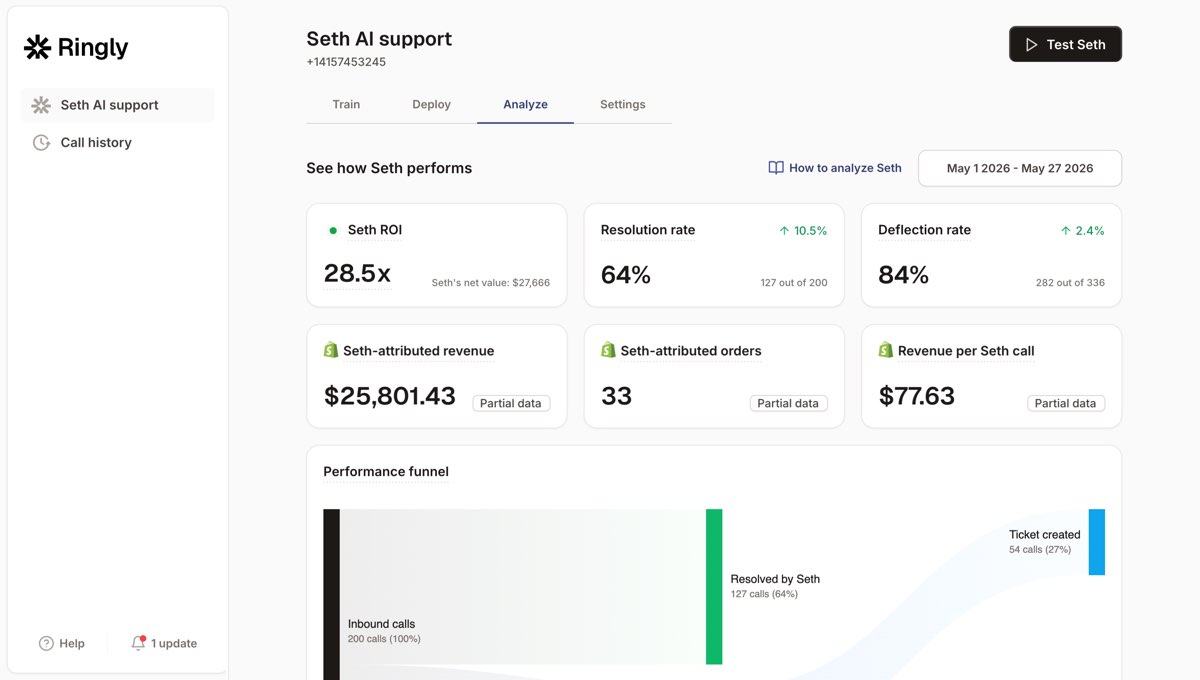
Ringly is AI phone support for Shopify brands. The phone shouldn't be a tax on your support team, and it especially shouldn't be one during the two weeks after you change a fulfillment partner. Instead of throwing a temp rep at the migration spike, the AI takes the routine inbound calls so your team can stay on the genuinely hard ones.
The AI answers inbound calls 24/7. It finds orders in your Shopify store, gives real order tracking status, processes returns and exchanges, and answers product questions from your knowledge base. Seth resolves up to 90% of calls autonomously. Calls that need a human escalate cleanly to Gorgias, Richpanel, Reamaze, or whatever helpdesk you already run.
Pricing
Pay per call: $99 a month for the first 50 conversations, then $1.99 each. Free to try. Live in under an hour.
What works
- It catches the migration spike. When tracking goes quiet and delivery dates reset, the where's my order calls hit your line, not your 3PL's. The AI absorbs them.
- Real Shopify order lookups. It reads order status straight from Shopify, so a caller gets a real answer instead of a hold and a callback.
- It keeps your stack. You don't rip out your helpdesk. The AI sits in front of it and hands off the calls that need a person.
- 65% resolution guarantee. If Seth resolves under 65% of your calls in a month, that month comes back as credit (after 90 days on Pay per call).
What doesn't
- It's phone, not fulfillment. Ringly does not ship your orders. It handles the calls those orders generate.
- It's not for sub-$2.4M brands. If you're not yet running a real phone line with real volume, this is early for you.
Why it ranks first
Because the other seven move your boxes, and none of them answer the phone when the boxes are late. If you're switching a 3PL, the support coverage is the gap you didn't budget for.
2. ShipBob
Best for: brands that want the biggest fulfillment network and published, predictable rates.
ShipBob is the most common head-to-head with ShipMonk, and the trade is real. ShipBob runs 60+ fulfillment centers across the US, Canada, UK, Europe, and Australia, which is a bigger global footprint than ShipMonk. It also publishes its rates, which directly answers the "unpublished pricing" complaint that drives a lot of ShipMonk exits.
Pricing
Roughly $275/mo base plus a setup fee (often cited around $975), per-pick fees of about $0.20 to $0.25 per item, and bin storage around $5/bin. Real numbers, on the page, which is rarer than it should be in this category.
What works
- Published rates. You can model your cost before a sales call, which ShipMonk makes hard.
- Biggest network. 60+ centers means distributed inventory and faster zones without bolting on a second provider.
- Strong Shopify integration with solid inventory and order-routing tooling.
What doesn't
- Shipping markups. Reviewers report carrier rates marked up 15-30%, so the per-pick saving can get eaten on the label.
- Support can thin out at scale. The same "can't reach a human fast" complaint that follows most large 3PLs.
- Its own one-star pile clusters on lost inventory, same as the category.
Why it ranks second
If your ShipMonk pain is unpredictable pricing and you want a bigger network, ShipBob is the obvious move. Just price the shipping markup into your model, not just the pick fee.
3. ShipHero / LVK
Best for: brands that want to run their own warehouse software, with the option to outsource the labor too.
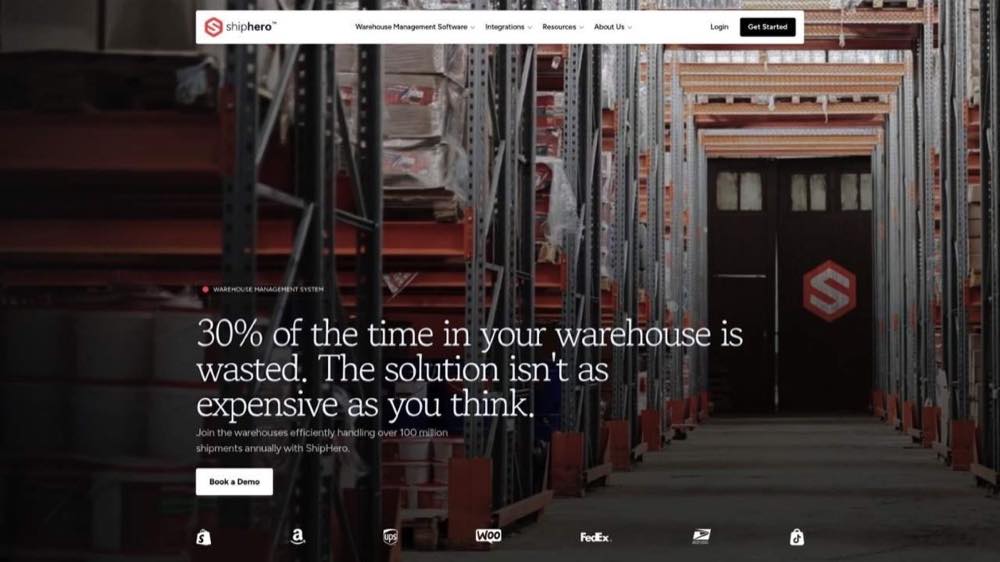
ShipHero split its brand in 2024. ShipHero now sells the warehouse management software you run inside your own four walls, and LVK is the outsourced 3PL arm. That's flexibility if you want control and confusion if you don't know which one you're buying. The WMS itself is well-regarded, sitting around 4.4/5 on G2.
Pricing
The WMS starts around $1,995/mo. The LVK 3PL service is custom-quoted and carries a reported 500-order monthly minimum. So this is a higher floor than ShipMonk for a smaller brand, and more control for a larger one.
What works
- Best in the category WMS if you want to run picking and packing your own way.
- You pick the model. Run your own warehouse on their software, or hand the whole operation to LVK.
- Good for brands with a real ops person who wants control over the workflow, not just a dashboard.
What doesn't
- The 2024 split confuses buyers. Be clear on whether you're buying software or a 3PL before you sign.
- A 500-order LVK minimum rules out earlier-stage brands.
- The software floor is high if you only need fulfillment, not a WMS.
Why it ranks third
For brands that left ShipMonk because they wanted more control over the warehouse, not less, ShipHero is the strongest answer. For everyone else, the software price floor is a lot.
4. Red Stag Fulfillment
Best for: heavy, bulky, fragile, or high-value products where an error is expensive.
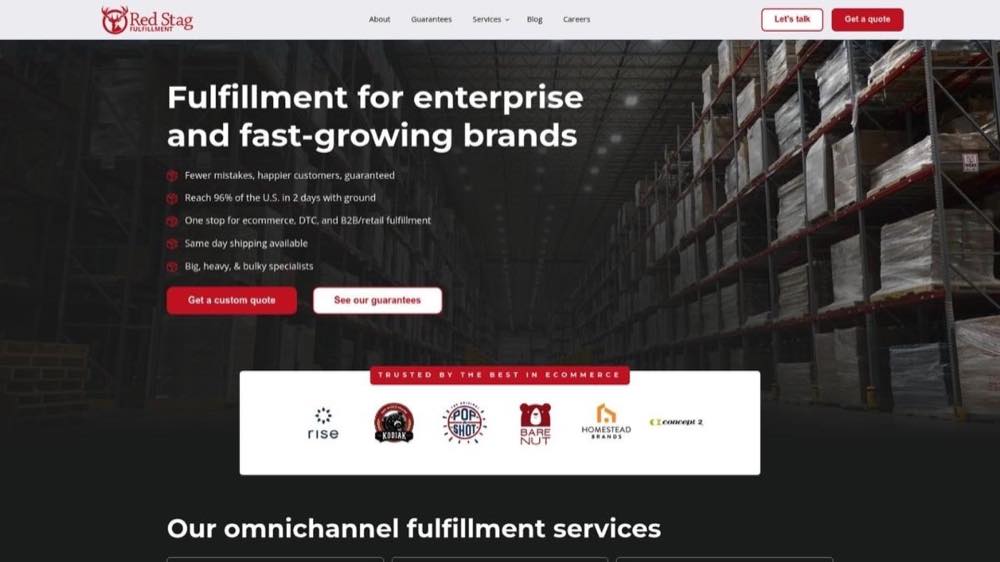
Red Stag is the specialist on this list. It's built for the SKUs that break generalist 3PLs: heavy, oversized, fragile, or high-value goods. It backs that with a zero-shrinkage and money-back accuracy guarantee, which is a different posture from ShipMonk's "credit you later" approach to mistakes. When I called Red Stag's line, a human picked up fast, which fits its reputation.
Pricing
Storage around $0.46 per cubic foot, per-order fees roughly $0.20 to $2.00 depending on complexity, and no order minimum. Transparent enough that you can ballpark it, which is the point.
What works
- Accuracy guarantee. Money back on fulfillment errors is rare and meaningful for high-value goods.
- Heavy and bulky done right. The pick math doesn't punish you for oversized SKUs the way per-item models do.
- No order minimum and a genuinely reachable support team.
What doesn't
- US-only. Two warehouses, no international footprint, so cross-border brands need a second partner.
- Transit can run 4-5 days to far zones given the limited locations.
- Not built for tiny, light SKUs where its premium accuracy isn't worth the cost.
Why it ranks fourth
If ShipMonk has been losing or damaging your higher-value inventory, Red Stag is the clearest upgrade in the category. The catch is geography, not quality.
5. Easyship
Best for: brands that ship internationally and want to shop carrier rates aggressively.
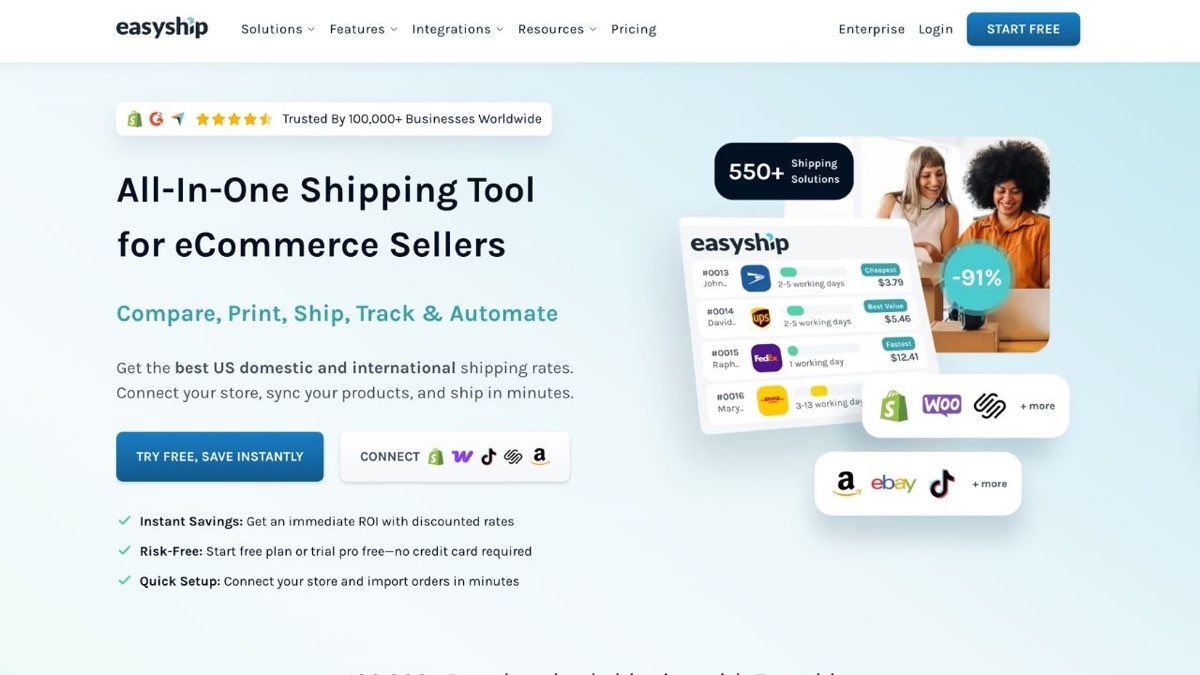
Easyship is a different animal from a pure 3PL. At its core it's a multi-carrier shipping platform that surfaces discounted rates across couriers, then connects you to a network of fulfillment partners for the warehousing side. If your ShipMonk pain is international shipping cost, this is where you go to claw rate back.
Pricing
Easyship makes its money on the rate layer, surfacing discounted carrier pricing rather than charging a flat 3PL fee, with no order minimum. The actual fulfillment cost depends on the partner warehouse you pair with, so model both halves.
What works
- Rate shopping across carriers. Strong for international, where a few percent on the label adds up fast.
- No order minimum and a low barrier to start.
- Flexible warehouse network rather than a single fixed footprint.
What doesn't
- Fulfillment is partner-run, so quality depends on which warehouse you land in, not on Easyship itself.
- Less of a single-throat-to-choke model than a dedicated 3PL.
- The two-layer cost (rates plus partner fulfillment) takes more work to forecast.
Why it ranks fifth
For an international-heavy brand bleeding money on cross-border labels, Easyship is the rate fix. Just know you're buying a shipping platform plus a warehouse partner, not one integrated 3PL.
6. The Fulfillment Lab
Best for: brands where the unboxing and custom packaging are part of the product.
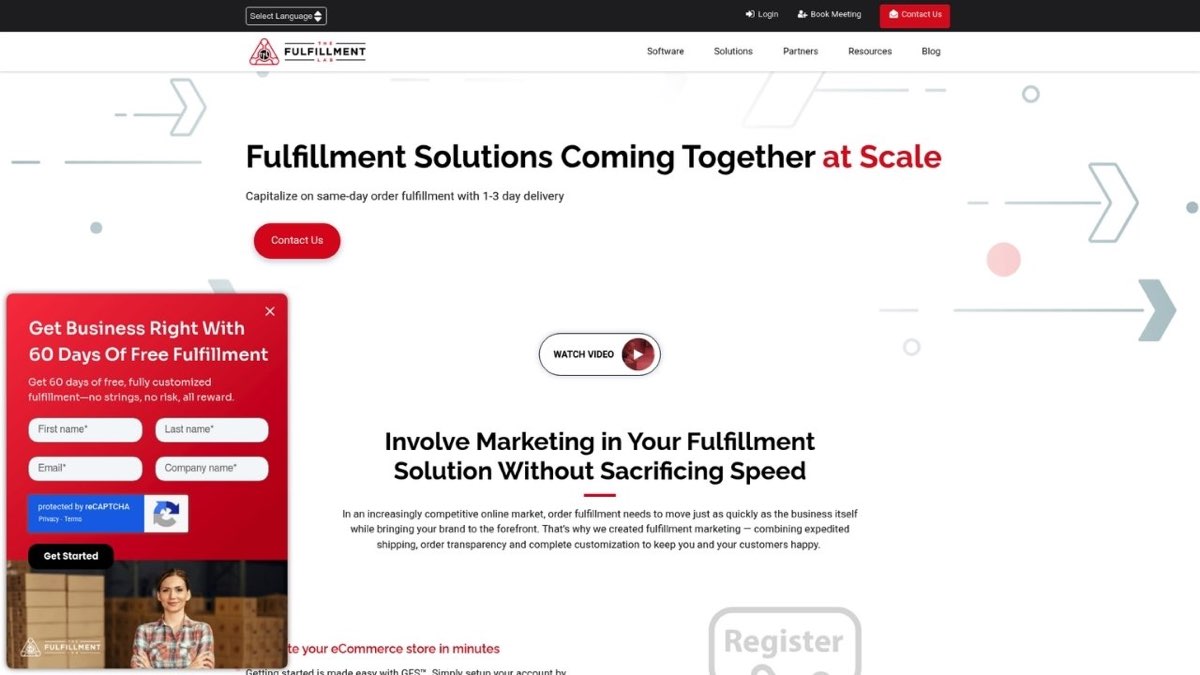
The Fulfillment Lab leans into the thing most 3PLs treat as an afterthought: branded packaging and "fulfillment marketing." It positions itself for mid-market brands, roughly the ones doing 20-30+ orders a day on up, that have outgrown a tiny fulfillment center but don't want to feel like a ticket number at a giant 3PL. It commits to a same-day-by-noon ship guarantee and 99.9% accuracy.
Pricing
Custom-quoted, with "transparent billing" as the explicit pitch, which is a direct shot at ShipMonk's surprise-fee reputation. No public rate card, so you'll need a quote to know your number.
What works
- Custom branding and inserts built into the workflow, not bolted on.
- Same-day ship guarantee for orders in by noon local time.
- Transparent-billing posture aimed squarely at the ShipMonk pain.
What doesn't
- Only 2 US and 2 global facilities, so distribution is thinner than ShipBob's network.
- No public pricing, so it's a conversation, not a checkout.
- Mid-market focus means very small brands may not be the fit.
Why it ranks sixth
If your brand lives and dies on the unboxing, The Fulfillment Lab takes that seriously in a way ShipMonk doesn't. The trade is a smaller distribution footprint.
7. eFulfillment Service
Best for: smaller brands that want no minimums, no contract, and no surprises.
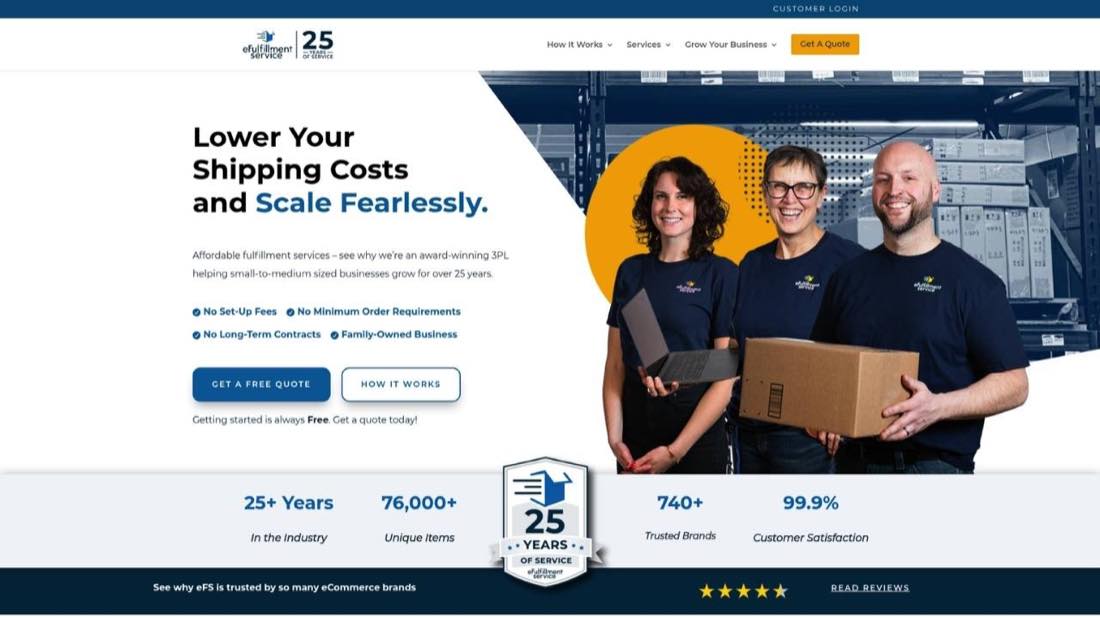
eFulfillment Service is the anti-ShipMonk on terms. It's been around 20+ years and built its pitch on accessibility: no setup cost, no order minimum, no long-term contract, month-to-month, and a 30-day test drive with fees refunded if you're not happy. For a brand burned by ShipMonk's six-month exit, the month-to-month posture is the whole point.
Pricing
Pay-as-you-go: roughly $2.65 for the first unit picked and $0.65 for each additional unit, with storage around $0.45 per bin. Clear and predictable, which is exactly what the ShipMonk refugees are looking for.
What works
- No minimums, no contract, month-to-month. The opposite of a six-month offboarding trap.
- 30-day test drive with refunded fees lowers the risk of switching.
- Predictable per-unit pricing you can actually forecast.
What doesn't
- Smaller footprint than the big networks, so zone coverage is more limited.
- Less tech depth than ShipMonk's dashboard or ShipHero's WMS.
- Built for small-to-mid volume, not for a brand scaling into thousands of orders a day.
Why it ranks seventh
For a smaller brand that mostly wants out of ShipMonk's contract terms and surprise fees, eFulfillment Service is the soft landing. Just don't expect a giant network underneath it.
The support cost of switching a 3PL
Here's the part no fulfillment roundup will tell you, because none of them are on the receiving end of it. When you change a 3PL, your own phone line lights up.
The mechanics are simple. Inventory physically transfers, integrations get remapped, old tracking links go dead, and delivery times wobble for a couple of weeks. Customers who were used to two-day shipping notice immediately, and they call. WISMO, the "where's my order" question, already runs 30-40% of support volume in normal periods and 50%+ at peak, according to Salesforce. A migration pushes that number up right when your team is least ready for it.
A 3PL switch reliably spikes inbound "where's my order" calls for two to six weeks, and almost nobody staffs for it. We pulled the call data across the Shopify brands on Ringly to confirm the pattern, and it holds every time someone changes fulfillment partners. The boxes eventually catch up. The phone backlog is what burns your team in the meantime.
And the ones you miss cost you twice. Per PCN's 2026 study, 85% of callers who can't reach a person never call back, and 62% switch to a competitor. So the migration you ran to save on fulfillment can quietly hand revenue to a rival through a dropped phone call.
This is the math most brands run when they price the switch against the call volume it creates:
| Line item | Today | With Ringly |
|---|---|---|
| 6 reps × $4K loaded per rep | $24,000/mo | n/a |
| Ringly Enterprise (~$5K/mo) | n/a | $5,000/mo |
| Net monthly CS spend | $24,000/mo | $5,000/mo |
| Monthly savings | n/a | $19,000/mo |
| Annual savings | n/a | $228,000/yr |
That's roughly 70% of repeatable calls (order status, returns, the same five questions over and over) routed to the AI. The other 30%, the genuinely complex calls, still go to your team, who now have time to actually solve them. It's how brands scale support without hiring through a volume spike. Gear Rider, a Shopify brand on Ringly, handled 1,595 calls in 90 days without a phone rep, and BioLongevity Labs resolves 79% of its calls end to end. On cost, WashCo, a brand we launched, runs about $0.91 per call against the $2.70 a human-handled call costs.
"My customers also feel like it's a normal person. They feel like they can communicate if they have questions."
Claudia Droge, TechCraft Studio
If you're switching a 3PL this quarter, book a 30-min call and we'll map where the migration calls will land before they hit your team.
How to choose the right ShipMonk alternative
There's no single best ShipMonk alternative, and any guide that names one is selling you that one. Match the provider to your actual problem:
- Choose ShipBob if your ShipMonk pain is unpredictable pricing and you want a bigger network with published rates.
- Choose ShipHero / LVK if you want to run your own warehouse software, or you want the option to.
- Choose Red Stag if your products are heavy, bulky, fragile, or high-value and accuracy is the whole game.
- Choose Easyship if you ship internationally and your real leak is carrier rates, not warehousing.
- Choose The Fulfillment Lab if the unboxing and custom packaging are part of your brand.
- Choose eFulfillment Service if you're smaller and you mostly want out of contract terms and surprise fees.
- Choose Amazon MCF if you already run FBA and you're fine with unbranded boxes for the cost and speed. Just note that, like the rest, it leaves the returns and reorder calls on your side.
- Add Ringly if you're switching at all, because every one of these moves your boxes and none of them answers the phone when the boxes are late.
Whatever you pick, plan your phone coverage for the migration window before you flip the switch, not after the calls start. The brands that get burned are the ones that treated the switch as a warehouse project and forgot it was also a customer service project.
Frequently asked questions
Why do brands leave ShipMonk?
Mostly per-pick fees that punish bundles at scale, surprise billing, and a long offboarding window. Capterra and Trustpilot reviewers repeatedly cite six-month-plus exits with continued minimum charges. The software is well-liked, but the cost and the exit are what push brands to shop.
Which ShipMonk alternative is cheapest?
It depends entirely on your product weight and order volume, so there's no single answer. Amazon MCF is often the lowest per-unit cost if you're already on FBA, and eFulfillment Service has clear pay-as-you-go pricing with no minimums. Most of the rest quote custom, so get a real number before you commit.
How long does a 3PL migration take, and what breaks?
Plan for two to six weeks of wobble. Inventory has to physically transfer, integrations need remapping, and old tracking links go dead during the handoff. The most common casualty is delivery speed, which is exactly what drives the spike in "where's my order" calls.
Does switching 3PLs increase customer support calls?
Yes, almost always, for two to six weeks. Tracking goes quiet, delivery times slip, and customers used to fast shipping start calling to check on orders. WISMO is already 30-40% of support volume in normal periods per Salesforce, and a migration pushes it higher, so plan your phone coverage before you flip the switch.
Is ShipBob better than ShipMonk?
Not universally, but ShipBob has a bigger network (60+ centers) and publishes its rates, which fixes two common ShipMonk complaints. ShipMonk often edges it on raw fulfillment cost for mid-size brands and on kitting. If your pain is pricing transparency, ShipBob is the cleaner switch.
Does Ringly replace my 3PL?
No. Ringly is AI phone support, not fulfillment, so it never touches your warehouse. It answers your inbound calls, finds orders in Shopify, and handles the "where's my order" volume that spikes during and after a fulfillment switch, escalating the complex calls to your team and helpdesk.
What's the best ShipMonk alternative for a Shopify brand?
There isn't one universal answer, and any roundup that gives you one is selling something. Match the provider to your product profile: ShipBob for network and published rates, Red Stag for heavy goods, The Fulfillment Lab for branded unboxing, eFulfillment Service for flexible terms. Then plan your support coverage for the migration window.
Talk to us

If you run a $10M-$100M Shopify brand and you're switching a 3PL this quarter, a 30-min call is the fastest way to see where the migration calls will land and what they're costing you.
Our 3 promises.
- Live in under 1 hour. Setup and test calls are free.
- 30-day money back on the $99 plan fee.
- 65% resolution guarantee: if Seth resolves under 65% of your support calls in a month, that month comes back as credit (after 90 days on Pay per call).
Ruben (Ringly co-founder) takes these calls personally.