
You don't shop for a Seal Subscriptions alternative because Seal is bad. You shop because you hit a wall.
- The 7 apps worth comparing once you've outgrown Seal, plus the one honest reason to actually switch (a named gap, not a vibe).
- Seal's 0% transaction fees and flat price are real. So are the subscriber caps and the missing dunning and portal depth. Compare on fee, cap, and self-serve portal, not the sticker price.
- Written for founders, COOs, and Heads of CX at $10M-$100M Shopify subscription brands who own recurring revenue and the support queue.
Seal Subscriptions is one of the easiest, cheapest ways to run subscriptions on Shopify. Free up to 50 subscriptions, 0% transaction fees on every tier (Seal pricing), live in an afternoon. For a lot of brands, that's the whole job.
Then you grow. The free plan's subscriber cap fills up. Failed payments start churning customers quietly because there's no real dunning. And the portal is basic enough that subscribers email and call you to skip a month or change a ship date instead of doing it themselves. That last one is the part most "best subscription app" roundups never measure, and it's where retention quietly leaks.
I'm Ruben, co-founder of Ringly. We run AI phone support for Shopify brands, which means I look at subscription apps through a second lens nobody else does: how many cancel, skip, swap, and "where's my order" calls each app's self-serve portal actually keeps off your phone. Below is the fair version of the comparison, with real pricing, honest trade-offs, and a straight answer on whether you should switch at all.
Most brands run a subscription app and a Gorgias instance and a phone line that goes quiet after 6 p.m. If that's you, book a 30-min call and we'll show you which of your renewal-week calls you can hand off and which still need a human.
The 7 Seal Subscriptions alternatives at a glance
Here's the short version before the deep dives. Seal sits at the top as the baseline you're comparing against, not as a contender against itself.
| App | Entry price | Transaction fee | Cap on entry/low tier | Best for |
|---|---|---|---|---|
| Seal (baseline) | Free, then $5.95+/mo | 0% | 50 subs free, 500 at $24.95 | Cheapest, simplest start |
| Loop | $99/mo | 0.75-1.0% | none | Retention + LTV |
| Recharge | $99/mo + $0.19/order | 1.25% | none | Enterprise + complex models |
| Appstle | Free, then $10-$100/mo | 0% | 50 orders/mo free | Mature features, no % fee |
| Skio | ~$499/mo | varies | none | Conversion + churn analytics |
| Smartrr | ~$99/mo | ~1.0% | none | Subscriptions + loyalty in one |
| Subify | Free, then $9-$49/mo | 0% | 150 orders/mo free | Budget step up from Seal |
| Bold | ~$49.99/mo | ~1% | none | Established, deep customization |
The two numbers that actually decide this are your blended cost at your real subscription GMV and how much support load each portal removes. Sticker price is the least useful column. A $0/mo app that generates 40 extra cancel calls a week is not free.
How I evaluated these subscription apps
I'm Ruben, co-founder of Ringly. Over the last few weeks I set up or re-tested each of these apps against the workflow of a $10M-$100M Shopify brand running recurring orders, and I scored them on five things.
- Blended cost at real GMV. I priced each app at $3M/year in subscription revenue, adding the monthly fee plus the transaction percentage plus any per-order charge. Sticker price and blended cost are different numbers, and the gap gets wide fast.
- Subscriber or order cap versus price. Seal caps subscribers (50 free, 500 at $24.95). Appstle and Subify cap monthly orders instead. I checked where each cap forces a plan jump.
- Self-serve portal depth. I clicked through each customer portal and counted the actions a subscriber can take alone: skip, swap, pause, reschedule, change quantity, update address. Every action they can do is one they won't email or call you about.
- Dunning and failed-payment recovery. Failed cards are where subscription revenue leaks silently. I checked how each app retries, notifies, and recovers, because passive churn is the gap that pushes most brands off Seal in the first place.
- Support-load deflection. This is the criterion nobody else runs. Using what we see across 50+ Ringly brands, I judged how many cancel, skip, and "where's my order" contacts each portal removes versus how many it dumps on your phone and helpdesk.
I don't take affiliate commissions on any app below. I sell Ringly, which is not a subscription app and appears later in this post for one specific reason, not as a competitor in the table.
7 best Seal Subscriptions alternatives
1. Loop Subscriptions
Best for: retention-focused DTC brands that want the portal to do the churn-fighting for them.
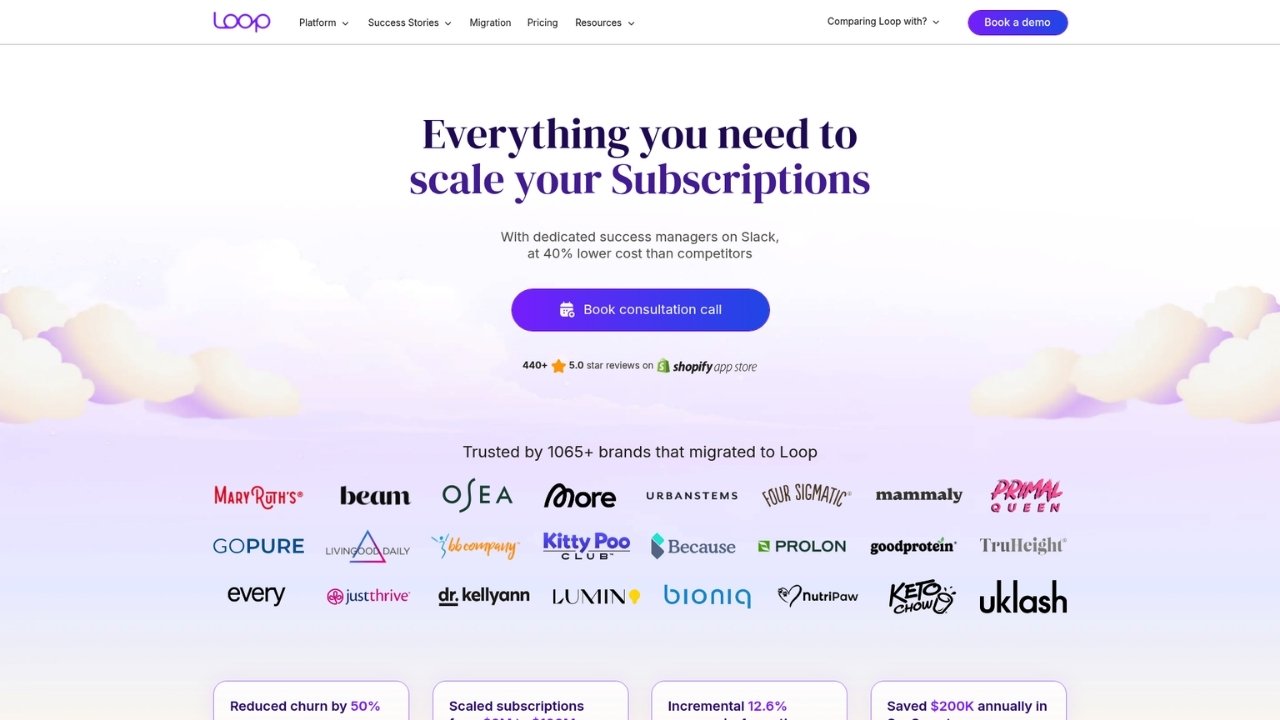
Loop is Shopify-native and built around keeping subscribers, not just billing them. Smart cancellation flows, dynamic discounts, bundles, and a gamified portal are the core of it. It's the app brands reach for when retention is the metric the founder asks about every Monday.
Pricing
Starter is $99/mo plus 1.0% per transaction. Pro is $399/mo plus 0.75%. There's no per-order flat fee, and the percentage drops as you move up.
What works
- A portal that deflects support. Self-serve skip, swap, pause, and reschedule are all there, so subscribers fix their own orders instead of opening a ticket.
- Real retention tooling. Cancellation flows with save offers and dynamic discounts are built in, not bolted on.
- Native Shopify checkout. No separate checkout to confuse customers or break analytics.
What doesn't
- A percentage on top of $99. At higher GMV the 0.75-1.0% adds up, so do the blended math before you commit.
- Overkill for simple programs. If you sell one subscription SKU, most of Loop's depth sits unused.
Why it ranks first
Loop is the best all-around upgrade from Seal for a brand that cares about retention and wants the portal to carry support load. You pay for that with a percentage fee, but the deflection you get back is usually worth it.
2. Recharge
Best for: larger brands with complex subscription models and a budget to match.
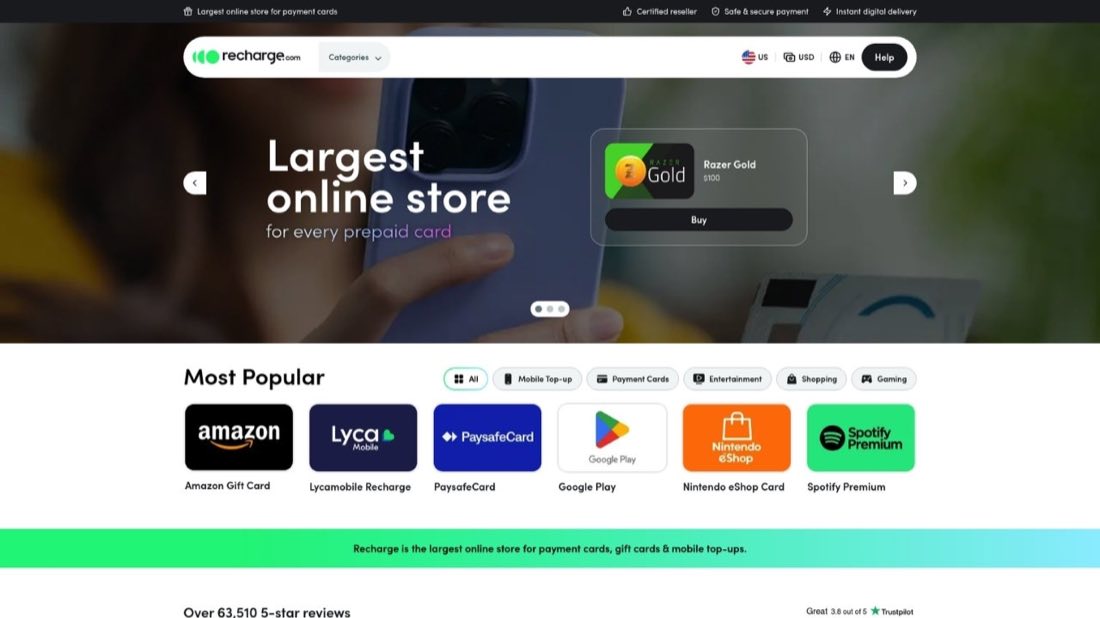
Recharge is the incumbent. It has the deepest integration ecosystem, hybrid checkout, advanced workflows, and analytics built for scale. If you're running a complicated program across multiple stores or selling memberships plus physical subscriptions, this is the mature option. Recharge also acquired Skio in 2026, so the two are now under one roof.
Pricing
Standard is $99/mo plus 1.25% plus $0.19 per order. Pro is $499/mo. The per-order charge on top of the percentage is what makes Recharge the most expensive blended option at scale.
What works
- The widest integration ecosystem. Almost every Shopify retention, loyalty, and analytics tool integrates with Recharge first.
- Scales to enterprise volume. Tens of thousands of active subscriptions without breaking a sweat.
- Deep workflows. Hybrid checkout, build-a-box, and complex schedules are all supported.
What doesn't
- The highest blended cost. 1.25% plus $0.19 per order plus the monthly fee adds up faster than any other app here.
- Setup is heavier. Most brands need real onboarding time, not an afternoon.
Why it ranks second
Recharge earns its spot on maturity and scale, not price. If you're a $50M+ brand with a complex program, the cost is justifiable. If you're leaving Seal mainly to save money, this is the wrong direction.
3. Appstle Subscriptions
Best for: brands that want mature features and 0% transaction fees, like Seal but with more depth.
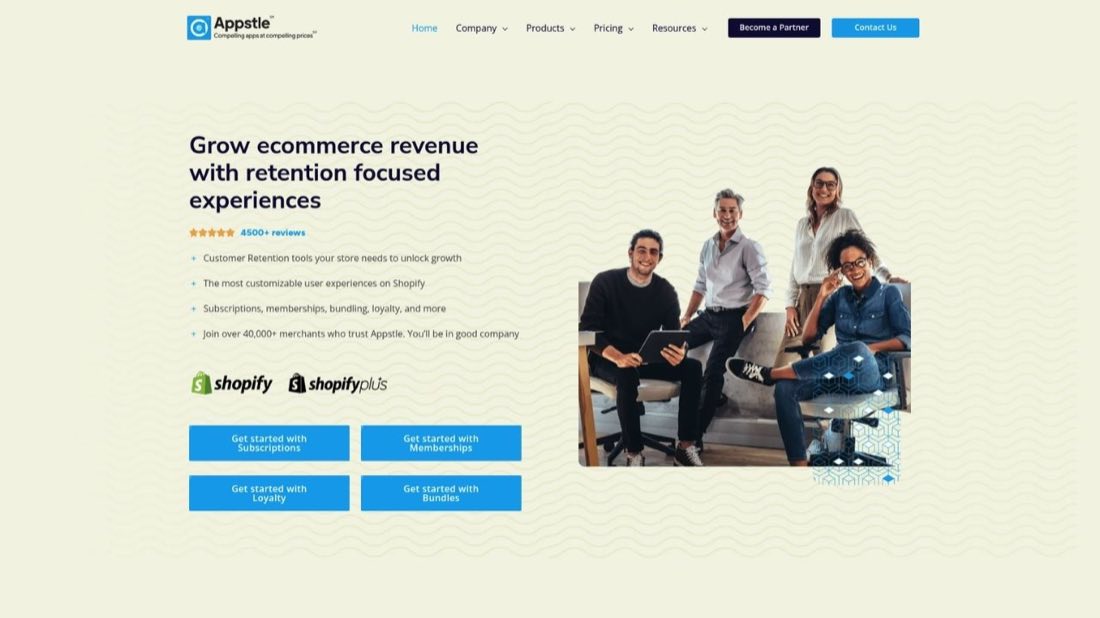
Appstle is the most-installed subscription app on Shopify, trusted by 40,000+ merchants. It's the natural next step for a Seal user who likes 0% fees but has outgrown Seal's feature set. The support is fast and human, with teams that reply in minutes.
Pricing
Free up to 50 orders per month, then $10 to $100 per month with 0% transaction fees. You pay for tier, not for a cut of revenue.
What works
- 0% transaction fees. Keeps the Seal economics you're used to, so your blended cost stays flat as GMV grows.
- Mature feature set. Build-a-box, bundles, tiered discounts, and a solid portal all included.
- Fast human support. Reviewers consistently praise minutes-not-days response times.
What doesn't
- Order-based caps. The free tier's 50-orders-a-month limit fills quickly for a real subscription brand.
- Dense UI. The depth that helps power users can feel like a lot for a simple program.
Why it ranks third
Appstle is the closest like-for-like upgrade from Seal: same 0%-fee model, more features, better support. For most cost-conscious brands leaving Seal, this is the first app to try.
4. Skio
Best for: fast-growing DTC brands optimizing conversion and churn.
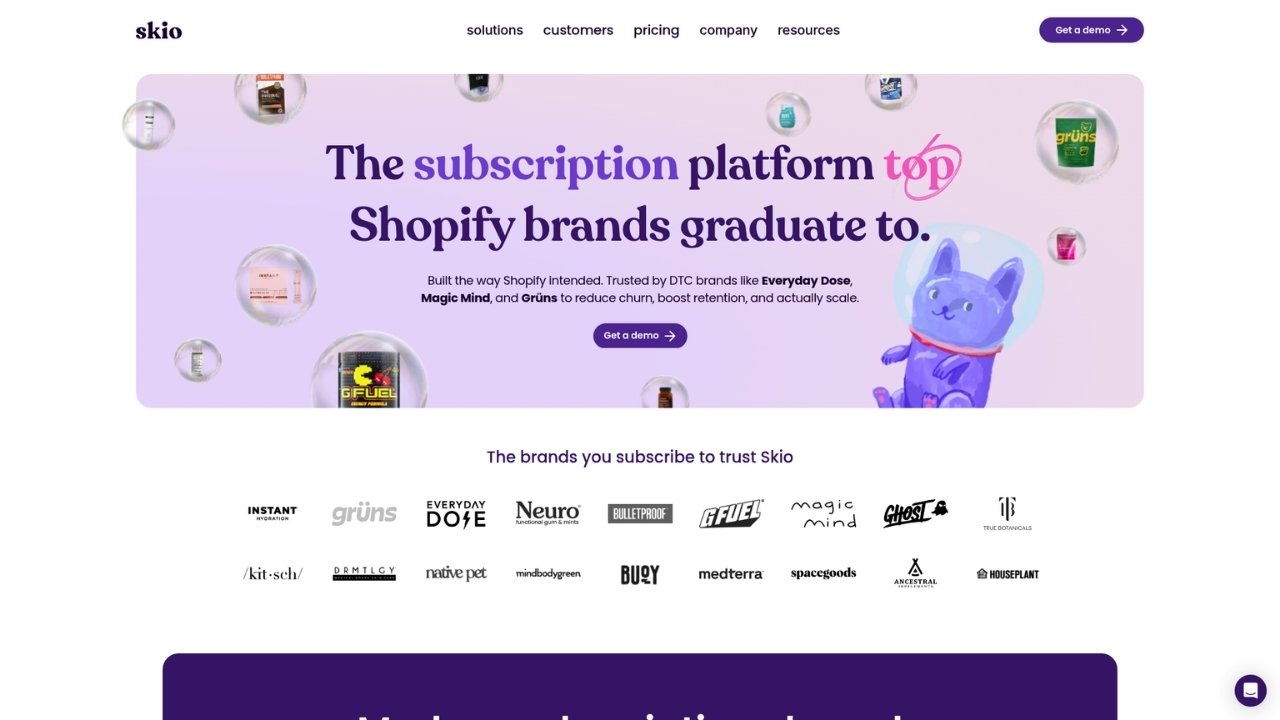
Skio is the UX-led option. Passwordless login, fast-loading widgets, and strong churn analytics make it a favorite among growth-stage brands that obsess over conversion. It's now a Recharge company after the 2026 acquisition, which is worth knowing if you're specifically shopping for an independent app.
Pricing
Premium tier, roughly $499 to $599 per month. Skio sits in the same price bracket as Recharge Pro and is aimed at brands where the subscription line is a serious revenue stream.
What works
- Passwordless portal. Subscribers manage orders without a login wall, which lifts self-serve and cuts support contacts.
- Conversion and churn analytics. Detailed data on where subscribers drop, so you can act on it.
- Clean, fast UX. Widgets load quickly and don't drag your product pages.
What doesn't
- Premium pricing. Not a fit for a brand leaving Seal to save money.
- Acquisition uncertainty. Now part of Recharge, so the "independent alternative" angle no longer holds.
Why it ranks fourth
Skio is excellent if conversion and a frictionless portal are your priority and the budget is there. The price and the ownership change push it below the cheaper, equally capable options for most Seal-leavers.
5. Smartrr
Best for: brands building loyalty or membership around their subscriptions.
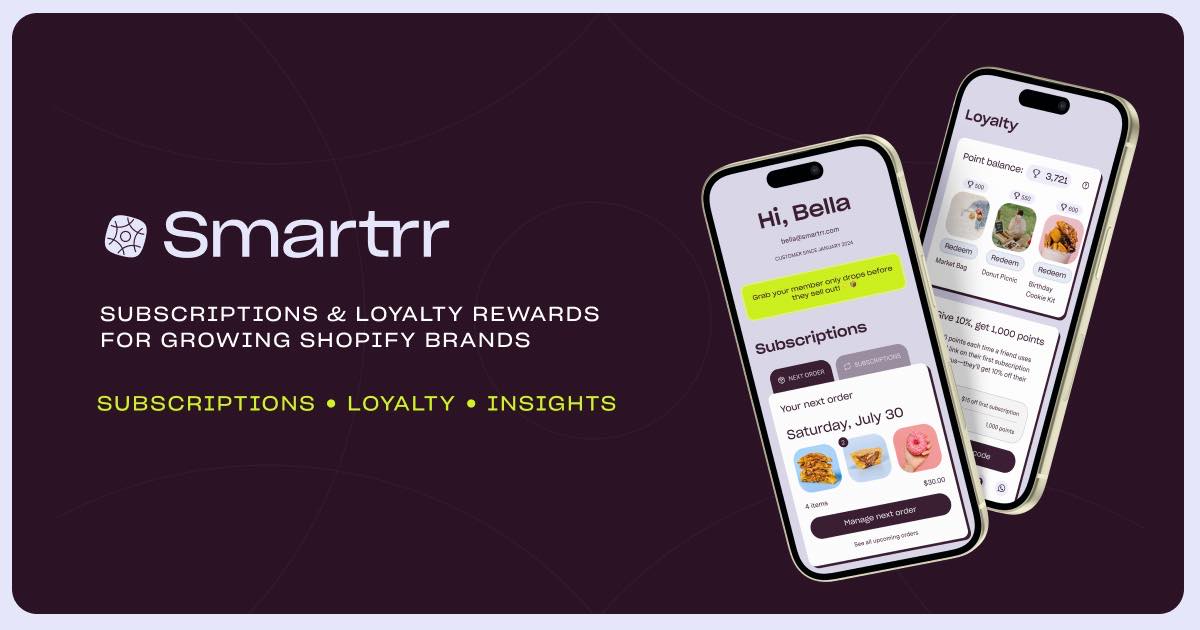
Smartrr blends subscriptions with loyalty and membership in one app. A polished, branded customer portal plus member perks make it a fit for brands that want subscriptions to feel like a club, not just a recurring charge.
Pricing
Around $99/mo entry plus roughly a 1.0% revenue share, with no per-order fee. A higher marketing-focused tier runs near $499/mo.
What works
- Loyalty plus subscriptions unified. One app for recurring revenue and member perks instead of two.
- A polished branded portal. The self-serve experience is one of the cleaner ones here, which helps deflection.
- No per-order fee. Just the monthly plus the percentage.
What doesn't
- You pay for loyalty you may not need. If you only need recurring billing, the membership depth is wasted spend.
- A percentage on top. The ~1% revenue share scales with you.
Why it ranks fifth
Smartrr is the right pick for a specific brand: one that wants community and membership baked into subscriptions. If that's not your model, you're paying for a feature set you won't use.
6. Subify
Best for: cost-conscious brands that want a real step up from Seal without paying percentage fees.
Subify is the budget upgrade. It's newer than the others here but has grown fast on the back of a generous free tier, 0% fees, and a clean, customizable widget. For a Seal user who wants more without changing the cost model, it's an easy first look.
Pricing
Free up to 150 orders per month, then $9 to $49 per month with 0% transaction fees. The free tier is one of the most generous on the App Store.
What works
- 0% transaction fees. Same Seal-style economics, so your blended cost stays predictable.
- A genuinely useful free tier. 150 orders a month covers a lot of early-stage brands.
- Fast, simple setup. Live quickly without a developer.
What doesn't
- Lighter on advanced retention. No deep cancellation experimentation like Loop or the enterprise apps.
- A newer ecosystem. Fewer third-party integrations than the incumbents.
Why it ranks sixth
Subify is the most natural lateral move from Seal: cheap, 0% fees, more features. It ranks here, not higher, because the portal and retention depth still trail the apps built for scale.
7. Bold Subscriptions
Best for: established brands that want deep customization at a flatter rate than Recharge.
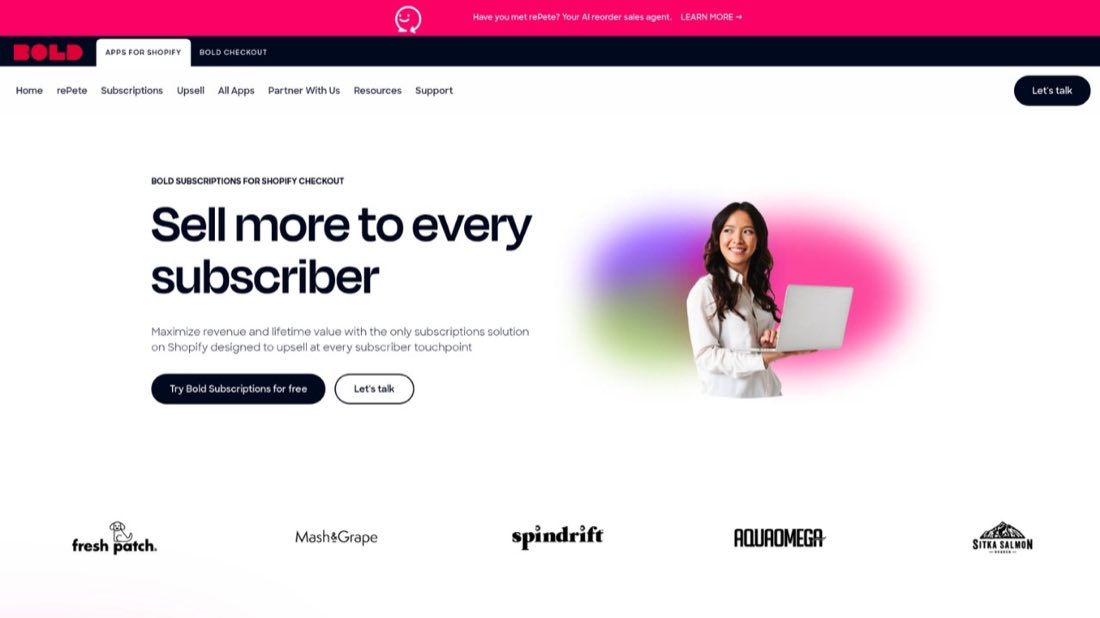
Bold has been doing Shopify subscriptions for a long time. It's mature, deeply customizable, and priced flatter than the percentage-heavy incumbents. The trade-off is an older interface that sometimes wants developer help to get exactly right.
Pricing
Roughly $49.99 to $149.99 per month flat, with about a 1% fee depending on plan. Cheaper at scale than Recharge for many brands.
What works
- Deep customization. If you have a specific subscription flow in mind, Bold can usually build it.
- Flatter pricing. Lower blended cost at higher GMV than Recharge.
- Long track record. Stable, established, well-documented.
What doesn't
- Dated UI. The admin feels older than Loop, Skio, or Subify.
- Setup can need a developer. The customization power comes with complexity.
Why it ranks seventh
Bold is a solid, established choice for a brand that values customization and a flatter rate. It ranks last here mostly because the newer apps deliver a cleaner portal and a smoother setup for the same job.
Should you even switch off Seal Subscriptions?
Here's the honest part most of these roundups skip. "Seal is too basic" is not a reason to switch. "Seal is costing me money in a way I can name" is.
There are really only three reasons to leave Seal: you've hit the subscriber cap and the next plan still doesn't fix the feature gap, failed payments are churning customers because there's no real dunning, or the basic portal is generating support tickets and calls you're paying a human to answer. Dunning is the big one. Failed-payment recovery is central to subscription retention and profitability (Churnbuster), and Seal's recovery is thin compared to Loop, Recharge, or Smartrr.
Switch for a number you can name, not because Seal feels small. The math also depends on your scale: the 0%-fee apps (Seal, Appstle, Subify) stay cheapest until you're past roughly $50K per month in subscription GMV, where the percentage apps' tooling starts to pay for itself (OneCart). And migration carries real risk. Moving live subscriptions means moving payment tokens, and a rushed migration can break dunning and silently kill active subscribers. Budget for it, and only do it when the gap costs more than the move.
The part no subscription app covers: the phone
Pick any app above and you've solved the billing. You have not solved the phone.
Recurring-order brands generate a specific kind of call, and a lot of it. "Skip this month." "Charge me before my next box ships." "Cancel before it renews." "Where's my order." These spike around renewal dates and pile up after-hours and on weekends, which is exactly when your team is offline. A good self-serve portal deflects some of them. The rest land on your phone and your helpdesk, where no subscription app helps you, because none of them answer a phone.
This is where Ringly fits, and it's why Ringly isn't in the table above. Ringly.io is the AI phone support agent for Shopify brands. The AI answers inbound calls 24/7, finds orders in your Shopify store, handles the routine recurring-order questions, and escalates the genuinely complex calls to whatever helpdesk you already run. It resolves up to 90% of calls autonomously. Whichever subscription app you land on, the cancel and skip calls and the WISMO calls need an owner.
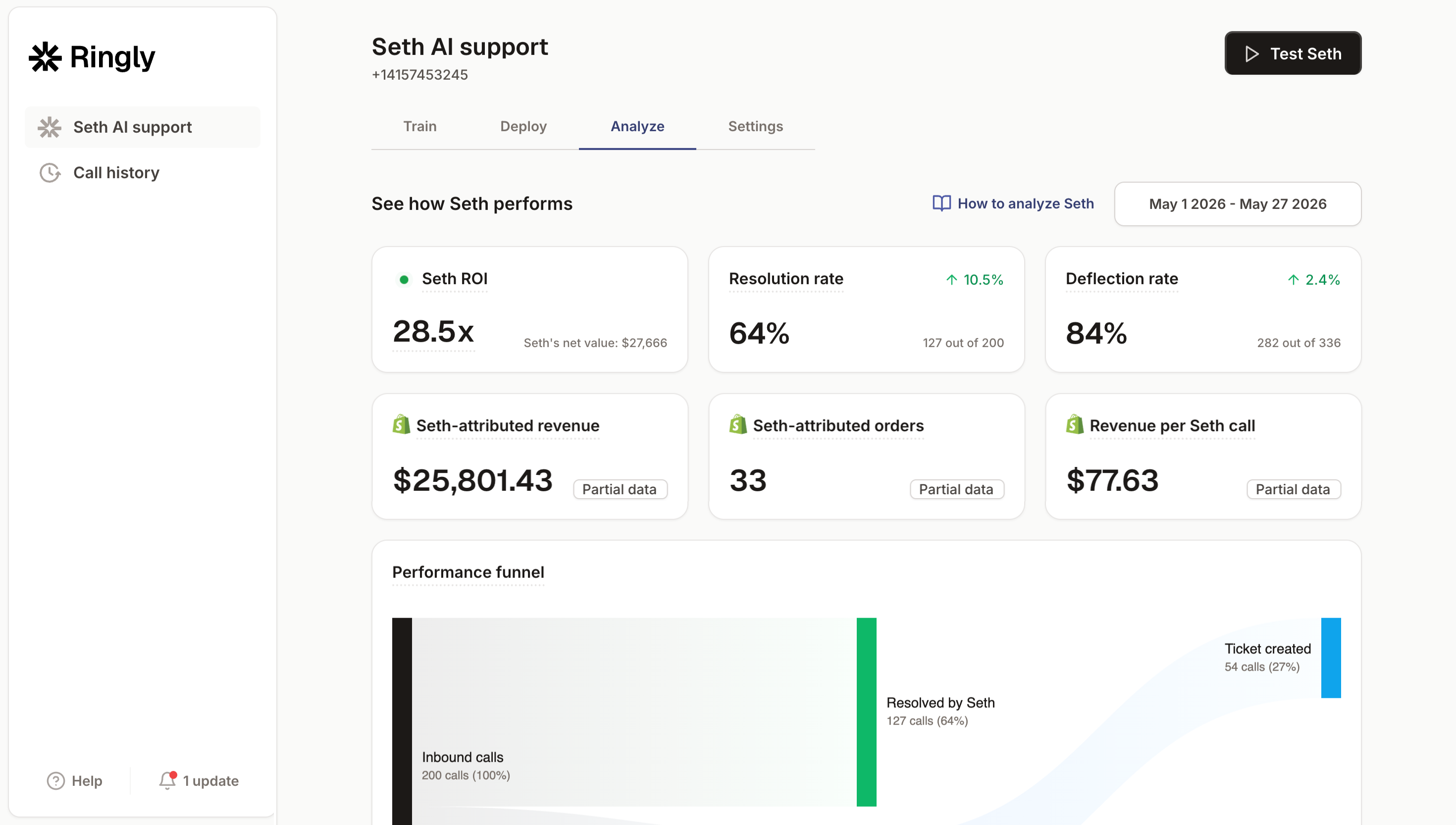
Here's the phone-support side of the math. Take a typical $50M Shopify brand running a 6-rep CS team:
| Line item | Today | With Ringly |
|---|---|---|
| 6 reps x $4K loaded per rep | $24,000/mo | n/a |
| Ringly (roughly $5K/mo) | n/a | $5,000/mo |
| Net monthly CS spend | $24,000/mo | $5,000/mo |
| Monthly savings | n/a | $19,000/mo |
| Annual savings | n/a | $228,000/yr |
That's the 70% of calls that are repeatable (skip, cancel, order status, the same questions over and over) routed to the AI. The 30% that genuinely need a person still go to your team, who now have time to actually handle the calls that matter. It's the same logic behind scaling support without hiring.
If your renewal-week calls keep going to voicemail, book a 30-min call and we'll do the math on your real call volume live.
How to choose the right Seal Subscriptions alternative
Match the app to the gap that pushed you off Seal.
- Choose Loop if retention is the metric you're judged on and you want the portal to fight churn for you.
- Choose Recharge if you're a $50M+ brand with a complex program and the integration ecosystem matters more than the blended cost.
- Choose Appstle if you love Seal's 0% fees but need more features and faster support. For most Seal-leavers this is the first app to try.
- Choose Skio if conversion and a passwordless portal are the priority and the premium price is fine.
- Choose Smartrr if you want loyalty and membership built into subscriptions, not just billing.
- Choose Subify if you want the cheapest real step up from Seal with the same 0%-fee model.
- Choose Bold if you want deep customization and a flatter rate than Recharge, and you have dev help available.
Whichever you pick, decide separately who answers the phone. A subscription app can deflect a portal-shaped question. It can't pick up when a subscriber calls to cancel at 9 p.m. That's a different job, and one some brands solve by outsourcing support, though the voice quality is what customers actually remember (and it's the phone-versus-chat split most brands get wrong).
"My customers also feel like it's a normal person. They feel like they can communicate if they have questions."
Claudia Droge, TechCraft Studio
Frequently asked questions
What's the best Seal Subscriptions alternative for Shopify?
For most brands leaving Seal, Appstle is the closest upgrade: same 0% transaction fees, more features, faster support. If retention is your priority, Loop is the stronger pick. The right answer depends on the gap that pushed you off Seal in the first place.
Why do brands outgrow Seal Subscriptions?
Three reasons come up most: hitting the subscriber cap (50 free, 500 at $24.95/mo), failed payments churning customers silently because dunning is thin, and a basic portal that generates support tickets and calls. Seal is excellent for a simple, low-volume program. The gaps show up at scale.
Which subscription app has the lowest fees?
Seal, Appstle, and Subify all charge 0% transaction fees, so they stay cheapest at lower GMV. Loop (0.75-1.0%), Smartrr (~1%), Bold (~1%), and Recharge (1.25% + $0.19/order) add a percentage on top of the monthly fee, which the OneCart comparison shows starts to bite above roughly $50K/mo in subscription revenue.
Does Seal Subscriptions have dunning for failed payments?
Seal's failed-payment recovery is limited compared to Loop, Recharge, or Smartrr. Since dunning is central to subscription retention and profitability, thin recovery is one of the most common reasons brands switch. If passive churn is hurting your MRR, this is the gap to test first.
Is it worth switching off Seal Subscriptions?
Only if you can name the cost. "Seal feels basic" isn't a reason; "failed payments are churning 3% of subscribers a month" is. Migration moves live payment tokens and carries real risk, so switch when the gap costs more than the move, not because a competitor looks shinier.
Do subscription apps handle cancellation phone calls?
No. Subscription apps handle self-serve actions inside a portal. When a subscriber calls to cancel, skip, or ask where their order is, that call goes to your team or to an AI phone agent. The portal deflects some contacts, but the phone is a separate job that needs its own owner, the same way Shopify Plus brands staff it deliberately.
How hard is it to migrate off Seal Subscriptions?
The main risk is moving live subscriptions and their payment tokens without breaking billing. Most modern apps offer guided migration, but a rushed move can disrupt dunning and silently lose active subscribers. Budget time for it and validate that recurring charges and failed-payment retries stay healthy after the switch.
Talk to us

If you run a $10M-$100M Shopify subscription brand and the renewal-week phone calls keep landing on your team, a 30-minute call is the fastest way to see what you can hand off. We'll pull the math on your real call volume and show you what the routine recurring-order calls are costing you.
Our 3 promises.
- Live in under 1 hour. Setup and test calls are free.
- 30-day money back on the $99 plan fee.
- 65% resolution guarantee: if Seth resolves under 65% of your support calls in a month, that month comes back as credit (after 90 days on Pay per call).
Ruben (Ringly co-founder) takes these calls personally.
Book a 30-min call and we'll plan the setup for your store.