

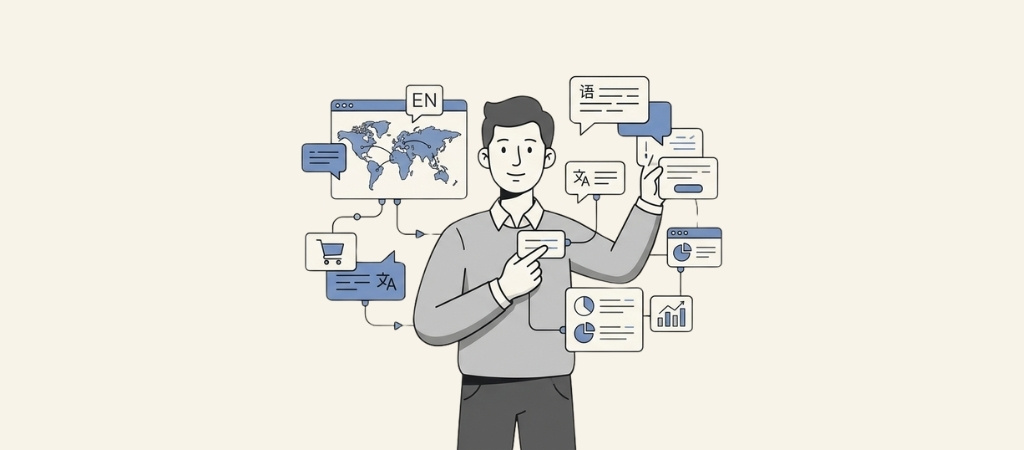
Seventy-five percent of internet users are non-English speakers.
That's three out of four potential customers who might struggle to buy from you or reach your support team in a language they understand.
The numbers get more interesting when you dig deeper.
According to research from Crystallize, 73% of consumers are more likely to purchase when product information is available in their native language.
Even more telling: 64% will pay a higher price for that experience.
Cross-border e-commerce is projected to hit $4.8 trillion by 2026.
Yet less than half of brands offer multilingual support.
That gap represents both an opportunity and a challenge.
This guide covers the practical side of implementing multilingual support: a decision framework to choose your approach, four implementation methods with real cost estimates, and a phased roadmap to get started without overwhelming your team or budget.
Editor’s note: Want to hear some sample support calls made for your Shopify store?
- Just paste your store URL
- Get sample calls in under 20 seconds (no email required)
- Listen to demo calls for my store

What you'll need before getting started
Before jumping into implementation, take stock of where you are now.
The best approach depends heavily on your current situation, and getting this wrong means wasted budget or poor customer experience.
Current support volume and channels
Start by tracking how many support requests you handle monthly. Break this down by channel: phone calls, live chat, email, and social media.
Note your peak times and current response expectations.
This baseline matters because different methods scale differently. An AI phone agent makes sense at 500+ monthly calls.
Translation plugins work well for chat-heavy operations. Native speakers become cost-effective only at certain volumes.
Target market identification
Pull up your analytics and identify where your international traffic actually comes from. Google Analytics or your Shopify reports will show which countries drive traffic and, more importantly, which convert.
Focus on your top 3-5 languages by revenue opportunity, not just traffic volume.
A market with lower traffic but higher conversion rates might deserve priority over a high-traffic, low-converting one.
Research also shows that channel preferences vary by region.
According to Lokalise, 41% of customers prefer live chat globally, while many businesses still assume phone is preferred.
Understanding regional expectations prevents misallocated resources.
Budget and resource assessment
Document what you currently spend on support: staff costs, software subscriptions, and time invested.
Set a realistic budget for multilingual expansion, factoring in both setup and ongoing costs.
Check if you already have multilingual staff.
Even basic language skills can help with quality control or escalation handling.
Technical capabilities matter too: does your platform support language switching?
Can your helpdesk handle translated tickets?

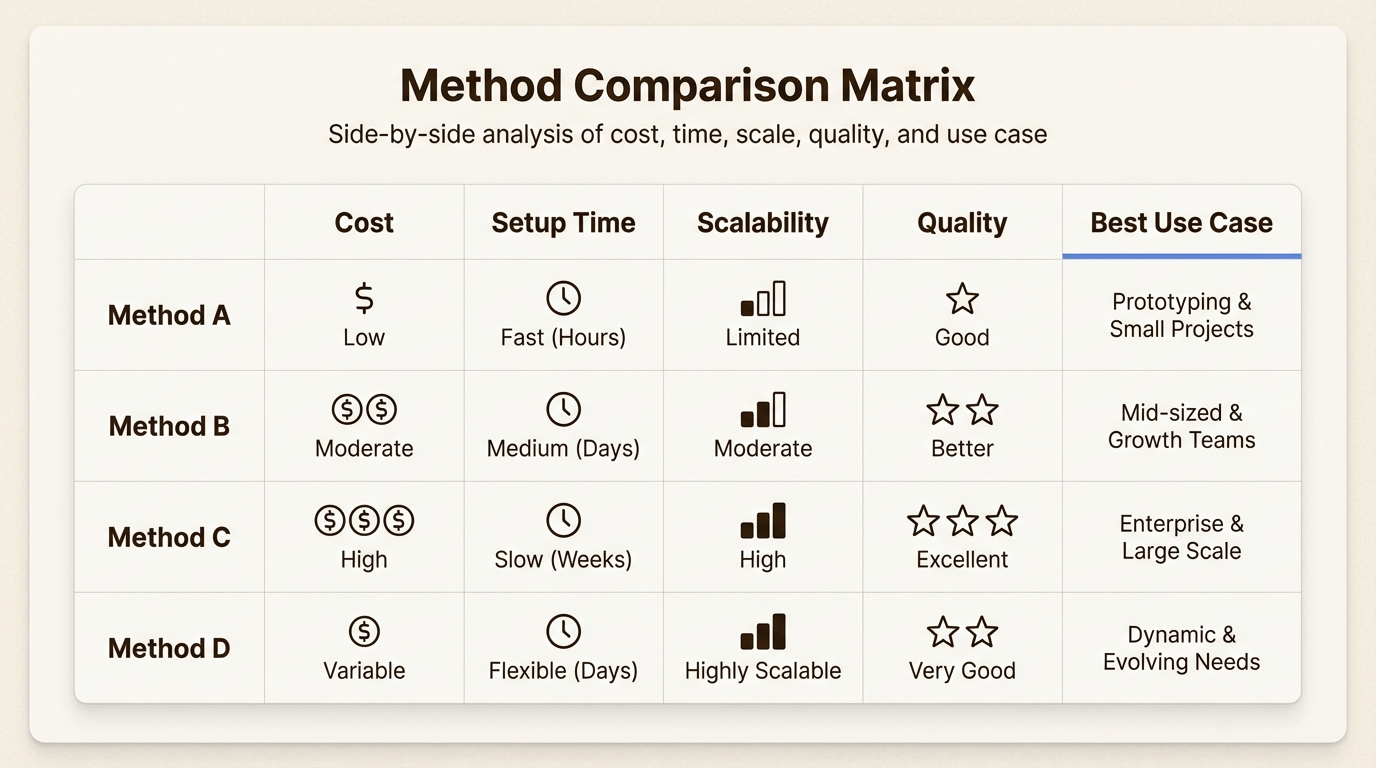
Four methods to implement multilingual e-commerce support
Each approach has trade-offs.
The right choice depends on your volume, budget, and quality requirements.
1. AI-powered phone agents and chatbots
This is the fastest-scaling option for handling high volumes.
AI agents use speech-to-text, natural language understanding, and text-to-speech to conduct real conversations in multiple languages.
How it works:
The AI integrates with your e-commerce platform to pull real order data.
When a customer calls asking about their order status, the AI identifies them, retrieves tracking information, and responds in their language.
The same applies to returns processing, FAQ handling, and common troubleshooting.
Modern AI phone agents can detect when they're out of their depth.
When a caller expresses frustration or asks something outside the AI's knowledge base, it escalates to a human agent with full conversation context.
Ringly.io provides a good example of this approach.
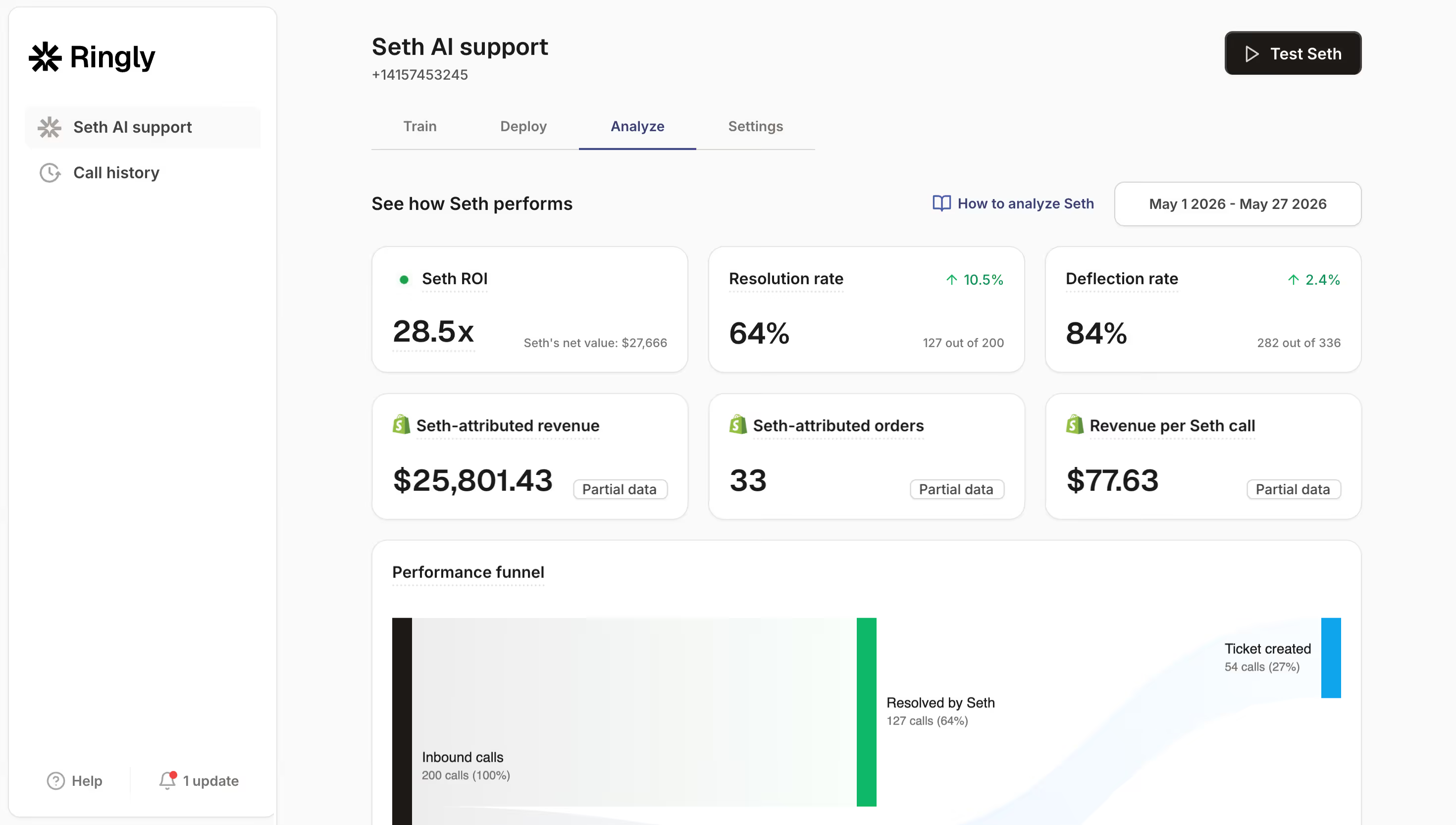
Their AI phone agent, the AI, supports 30 languages and resolves approximately 73% of calls without human intervention across their 2,100+ Shopify store deployments.
The platform handles concurrent calls (15+ simultaneously), which solves the scaling problem that makes human-only support expensive.
Best for: E-commerce stores with 500+ monthly support interactions, businesses wanting 24/7 coverage, teams prioritizing cost efficiency.
Typical costs: $349-$799/month for AI phone agents (Ringly.io's plans range from $349/month for 1,000 minutes to $349/month for 1,000 minutes). AI chatbots typically run $50-$200/month depending on conversation volume.
Limitations: Complex emotional situations still benefit from human touch. Initial setup requires building out your knowledge base with product info, policies, and FAQs.
The AI is only as good as the information you feed it.
2. Translation tools and plugins
Website and chat translation tools integrate with your existing site and support systems.
They translate content automatically or with human review, depending on your quality requirements.
How it works:
Platforms like Weglot scan your site and translate content instantly.
Their AI learns your brand voice over time, applying consistent terminology across pages.
For customer service specifically, some tools offer real-time chat translation where a customer writes in Spanish and your agent sees English.
Translation memory ensures consistency.
Once you approve a translation for "free shipping over $50," that same phrase gets translated identically everywhere it appears.
Best for: Stores with strong existing English content, businesses expanding into 2-3 new languages, teams with limited budget for human translators.
Typical costs:
| Platform | Starting Price | Key Limits |
|---|---|---|
| Weglot Starter | $17/month | 10,000 words, 1 translated language |
| Weglot Business | $32/month | 50,000 words, 3 translated languages |
| Weglot Pro | $87/month | 200,000 words, 5 translated languages |
| Lokalise Explorer | $144/month (annual) | 60,000 processed words/year, 5 projects |
| Lokalise Growth | $499/month (annual) | 300,000 processed words/year, unlimited languages |
Limitations: Machine translation captures words but can miss cultural nuance. Brand voice sometimes gets flattened.
Complex products with technical terminology often need human review to ensure accuracy.
3. Native-speaking support teams
Hiring multilingual staff or partnering with BPO agencies delivers the highest quality but comes with significant costs and management overhead.
How it works:
You either hire in-house agents who speak your target languages or partner with outsourcing providers who maintain multilingual teams.
Larger operations use a follow-the-sun model with distributed teams across time zones.
Zendesk's research highlights companies like LimeBike, which offers support in 7 languages using this distributed model.
The key is coverage: German customers expect responses during German business hours, regardless of where your headquarters sits.
Best for: Luxury and premium brands, high-ticket products, complex technical support, markets where trust is critical to conversion.
Typical costs:
| Approach | Cost Range | Notes |
|---|---|---|
| In-house multilingual agents | $20 - $55/hour | Highest cost; includes benefits, office space, and specialized management. |
| BPO providers (Offshore/Asia) | $8 - $15/hour | Scalable; centralized "Single-Hub" models in the Philippines are common in 2026. |
| BPO providers (Nearshore/LatAm) | $12 - $25/hour | Good balance of cost and timezone alignment for North American stores. |
| Freelance translators | $0.08 - $0.40/word | Best for static content (product descriptions); rates vary by language rarity. |
| AI-Hybrid Support | $0.50 - $2.00/interaction | AI handles 70%+ of queries; humans only step in for complex nuances. |
Limitations: Expensive to scale. Finding qualified multilingual agents who also know your product is challenging.
Time zone coverage requires multiple hires or shift work, adding complexity.
4. Localized self-service content
Building comprehensive help centers, FAQs, and knowledge bases in target languages reduces ticket volume by letting customers find answers themselves.
How it works:
Translate your most-visited help articles into priority languages. Create language-specific video tutorials.
Build searchable knowledge bases that customers can navigate without contacting support.
Data from ClearSource BPO shows that 69% of consumers want support responses within 24 hours.
Self-service content delivers instant answers, often exceeding that expectation.
Best for: Stores with high FAQ traffic, businesses with standardized products and processes, teams wanting to reduce repetitive ticket volume.
Typical costs: $500-$2,000 upfront for initial translation, plus ongoing maintenance costs when products or policies change.
Limitations: Requires regular updates. Doesn't help customers who prefer human contact.
Only works for issues you've anticipated and documented.
Step-by-step implementation roadmap
Implementation works best in phases.
Trying to do everything at once leads to half-finished projects and frustrated teams.
Month 1-2: Foundation
Week 1-2: Audit and prioritize
Analyze your support data to identify which languages appear most in customer requests. If you're not tracking this yet, start now.
Even basic tagging of tickets by detected language builds useful data.
Map your customer journey touchpoints that need translation: product pages, checkout, order confirmation emails, help center, and support channels.
Prioritize based on impact.
Set baseline metrics for current CSAT scores, average resolution time, and cost per ticket.
You'll need these to measure whether multilingual support actually improves outcomes.
Week 3-4: Quick wins
Set up geolocation detection to show language preferences automatically.
Tools like Weglot handle this with automatic visitor redirection based on browser language.
Add a visible language switcher to your site.
Make it easy to find, not buried in a footer menu.
Translate your top 10 help articles into your first priority language.
These typically cover order tracking, returns, and shipping questions.
Week 5-8: Core implementation
Deploy your chosen primary solution. For most e-commerce stores with significant call volume, this means an AI phone agent with multilingual capabilities.
Ringly.io offers a 14-day free trial with a performance guarantee, which reduces the risk of testing this approach.
Set up automated email templates in target languages for order confirmations, shipping updates, and common support responses.
Train your AI or prepare your team with your knowledge base content.
Include product information, policies, and common edge cases.
Month 3-6: Expansion
Add your second and third priority languages based on early results.
If Spanish performs well, German might be next based on your analytics.
Translate remaining high-traffic help content.
Monitor which articles get the most views and prioritize accordingly.
Build language-specific FAQ pages addressing questions unique to certain markets.
Shipping times, payment methods, and return policies often vary by region.
Review AI call recordings and chat transcripts. Look for patterns where the AI struggles or escalates frequently.
These gaps indicate where your knowledge base needs expansion.
Month 6-12: Optimization
Analyze performance by language. Compare CSAT scores, resolution rates, and escalation frequency across languages.
Gaps indicate quality issues that need attention.
Fill gaps with human support where AI falls short.
Some languages or product categories may need dedicated human coverage.
Consider native-speaking hires for your top-performing markets.
Once you've proven demand in a market, dedicated human support might deliver better ROI than scaling AI alone.
Expand phone number coverage with local numbers in target countries.
Customers in Germany prefer calling a German number over an international one.
Common challenges and how to solve them
Every implementation hits roadblocks.
Here's how to handle the most common ones.
Translation quality and brand voice
The problem: Machine translation captures meaning but misses personality. A casual, friendly brand sounds robotic in translation.
A premium brand sounds generic.
Solution: Create a translation style guide before you start. Define key terms that should never change (your product names, for example).
List phrases that capture your brand voice and how they should translate.
Use hybrid approaches where possible. AI handles volume, human reviewers check quality on customer-facing content.
Most translation platforms support this workflow.
Test translations with native speakers before launching.
A quick review catches embarrassing errors that automated quality checks miss.
Cost scaling with growth
The problem: Adding languages multiplies costs.
Hiring humans for every language isn't sustainable at scale.
Solution: Lead with AI for volume, reserve humans for complexity. An AI phone agent handling 70% of calls at $349/month costs far less than one full-time agent at $3,000+/month.
The math works in AI's favor at scale.
Ringly.io's approach illustrates this well: $0.38 cost per AI-handled call versus approximately $2.35 with human agents.
At 1,000 calls per month, that's a meaningful difference.
Reserve human agents for escalations, VIP customers, and complex issues where empathy matters most.
Maintaining consistency across channels
The problem: Your chatbot says one thing, email says another, phone agent says something else.
Customers notice inconsistencies, and trust erodes.
Solution: Use a single source of truth. One knowledge base should feed all channels.
When you update a policy, it propagates everywhere.
Platforms that integrate across channels help here.
Both Lokalise and Zendesk offer centralized content management that syncs across touchpoints.
Audit periodically.
Spot-check translations across channels monthly to catch drift.
Managing time zones
The problem: Your German customers expect responses during their business hours. Your team is in New York.
Nobody wants to work the overnight shift.
Solution: AI doesn't sleep.
Deploy AI agents for 24/7 coverage across all time zones without staffing challenges.
Use human teams strategically during your highest-volume windows.
If 80% of German tickets come between 9am-6pm CET, that's when human coverage matters most.
Consider BPO partners in target regions for overflow during high-demand periods.
This is often cheaper than maintaining full-time staff across multiple time zones.
Measuring success with multilingual support
Define what good looks like before you launch.
Otherwise, you won't know if the investment is paying off.
Key metrics to track
Customer satisfaction by language
Survey customers after interactions in each language. Compare CSAT scores across languages to identify quality gaps.
Target: within 5 points of your English baseline.
If German CSAT is 15 points below English, something's wrong with German support quality.
Investigate whether it's translation accuracy, response time, or coverage gaps.
Resolution rates
Track first-contact resolution by language. Monitor how often AI escalates to humans by language.
Target: 70%+ resolution without human intervention for AI channels.
Lower resolution rates in certain languages often indicate knowledge base gaps.
The AI can't answer questions it hasn't been trained on.
Cost efficiency
Calculate cost per resolved ticket by language. Compare against your English support baseline.
Target: equal or lower cost per resolution.
Higher costs in some languages might be acceptable during ramp-up.
But if costs don't converge over time, something needs adjustment.
Conversion impact
Track conversion rates by visitor language before and after implementation. Monitor cart abandonment by language.
Target: 10-20% improvement in conversion for localized markets.
GetBlend research suggests customers report significant traffic and conversion increases with multilingual sites.
Your specific results will vary, but this is the metric that justifies the investment.
Benchmarks from real implementations
AI phone agents typically resolve 60-73% of calls without human intervention.
Ringly.io reports 73% across their 2,100+ store deployments.
Stores adding native language support report up to 60% improvement in customer retention, according to ClearSource BPO data.
64% of consumers will pay more for native language communication, per Crystallize research.
This supports premium pricing in properly localized markets.
Start supporting customers in their language today
You don't need to implement everything at once.
Start with your highest-opportunity language and the method that fits your budget and volume.
Recommended starting point for most e-commerce stores:
- Deploy an AI phone agent with multilingual capabilities (handles volume, provides 24/7 coverage)
- Translate your top 10 help articles
- Add a language switcher to your site
This foundation covers the majority of customer needs while you learn what your specific market requires.
From there, expand based on data: add languages that drive revenue, fill gaps where customers still struggle.
Ringly.io's the AI supports 30 languages and resolves approximately 70% of phone calls automatically, making it a practical first step for e-commerce stores wanting to scale global support without hiring a multilingual team.
The performance guarantee (get your last 3 months refunded if Seth resolves under 65% of calls in 90 days) reduces the risk of testing this approach.
Start your 14-day free trial to see how AI phone support handles your multilingual needs.
Frequently Asked Questions
How do I determine which languages to prioritize for multilingual e-commerce support?
Start with your analytics. Look at traffic by country, but more importantly, look at conversion rates and average order value by region. A market with lower traffic but higher conversion often deserves priority. Your support ticket data helps too: if you're already getting Spanish-language inquiries, that's a signal of unmet demand.
What's the cost difference between AI and human multilingual e-commerce support?
AI phone agents typically cost $0.30-$0.50 per handled call versus $2-$3 for human agents. At 1,000 monthly calls, that's roughly $350-$500 for AI compared to $2,000-$3,000 for human coverage. The gap widens at scale since AI costs are largely fixed while human costs scale linearly.
Can AI phone agents handle complex multilingual e-commerce support issues?
AI handles routine inquiries well: order status, returns, shipping questions, and FAQ-type issues. Complex situations benefit from human touch. Good AI systems detect when they're out of their depth and escalate with full context, so customers don't have to repeat themselves.
How long does it take to implement multilingual e-commerce support?
Basic implementation takes 4-8 weeks for your first language. This includes auditing current support, setting up tools, translating core content, and training AI or staff. Expanding to additional languages goes faster once your foundation is solid, typically 2-4 weeks per language.
What translation quality should I expect from automated multilingual e-commerce support tools?
Modern AI translation handles straightforward content accurately. Technical terminology, brand-specific language, and cultural nuance require human review. Plan for 85-90% accuracy from AI, with human oversight on customer-facing content that shapes brand perception.
How do I measure ROI on multilingual e-commerce support investments?
Track conversion rate changes by language, customer satisfaction scores compared to English baseline, cost per resolved ticket, and customer lifetime value in localized markets. Most businesses see positive ROI within 3-6 months through increased conversions and reduced support costs.
Should I use the same multilingual e-commerce support approach for all channels?
Not necessarily. Phone support often benefits most from AI given the cost of human agents. Chat can use translation plugins effectively. Email allows for more thoughtful translation review. Match your approach to each channel's volume and quality requirements.