


When Kibo acquired Monetate in 2019, many teams started looking for alternatives.
Whether you're concerned about pricing, need better integrations, or simply want to explore what else is out there, the personalization platform market has evolved significantly.
Here's the short version: you have options ranging from enterprise powerhouses like Adobe Target and Optimizely to more accessible platforms like VWO.
The right choice depends on your team size, technical resources, and budget.
Let's break down the seven best Monetate alternatives worth considering this year.
Editor’s note: Want to hear some sample AI support calls made for your Shopify store?
- Just paste your store URL
- Get sample calls in under 20 seconds (no email required)
- Listen to demo calls for my store
What is Monetate and why look for alternatives?
Monetate is a personalization platform that uses a JavaScript library to collect customer data and deliver targeted experiences.
It emphasizes dynamic segmentation and adaptive content delivery to maximize engagement.
Teams look for alternatives for several reasons. Pricing can be opaque and expensive for smaller operations.
The Kibo acquisition created uncertainty about the product roadmap.
Some teams find the integration requirements complex, especially without dedicated developer resources.
When evaluating alternatives, focus on these criteria:
- A/B testing capabilities - Can you run the experiments you need?
- Personalization features - Does it support the segmentation and targeting you require?
- Integration ecosystem - Will it connect with your existing analytics and e-commerce platforms?
- Pricing transparency - Can you understand costs upfront or is everything "contact sales"?
- Ease of use - Can your marketers launch campaigns without constant engineering support?
Monetate alternatives comparison
Here's how the seven platforms stack up at a glance:
| Platform | Starting Price | Best For | Key Differentiator |
|---|---|---|---|
| Optimizely | ~$36,000/yr | Mid-market/Enterprise | Optimizely One: A unified operating system for marketing lifecycle. |
| Adobe Target | Custom (Enterprise) | Adobe ecosystem users | Sensei AI: Deepest integration with Adobe Analytics and AEM. |
| Dynamic Yield | Custom (Enterprise) | Omnichannel retailers | Mastercard Data: Leverages global spending insights for targeting. |
| AB Tasty | ~$15,000/yr | Agile Marketing teams | ROI-Focused UX: Extremely fast no-code setup for experiments. |
| Bloomreach | Custom (Enterprise) | High-volume E-commerce | Loomi AI: Combines search, content, and commerce data. |
| Kameleoon | $495/mo | Regulated industries | PBX Access: Prompt-Based Experimentation for complex logic. |
| VWO | $199/mo (or Free tier) | SMBs to Mid-market | All-in-One: Includes heatmaps and session replays by default. |
1. Optimizely Web Experimentation
Optimizely has established itself as the leading experimentation platform for enterprise teams.
Nike, Salesforce, Zoom, and Shell all use it to test and personalize their digital experiences.
The platform offers comprehensive A/B and multivariate testing through both visual and code editors.
Its Stats Engine uses Bayesian statistics to deliver reliable results you can trust.
For teams wanting AI assistance, Optimizely Opal provides predictive audiences and automated optimization suggestions.
What sets Optimizely apart is the breadth of its platform.
Beyond web experimentation, you get feature experimentation with SDKs in 10+ programming languages, content management with headless options, and commerce optimization tools.
Pricing: Enterprise only. All plans require contacting sales for custom quotes.
Best for: Mid-market to enterprise teams with dedicated experimentation resources
Pros:
- Comprehensive experimentation suite
- Strong AI capabilities through Opal
- Robust developer tools and SDKs
- Enterprise-grade security
Cons:
- Expensive for smaller teams
- Requires developer resources for advanced features
- No transparent pricing
2. Adobe Target
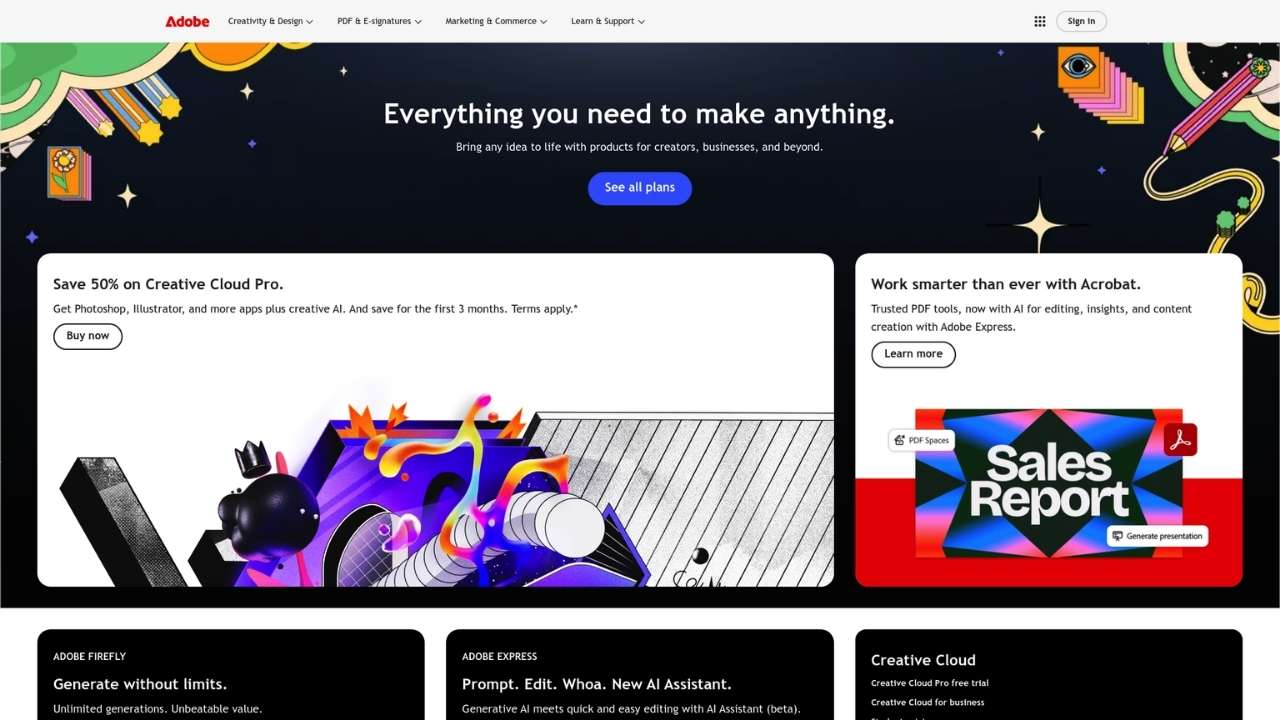
Adobe Target sits within the Adobe Experience Cloud, making it the obvious choice for organizations already invested in Adobe's ecosystem.
It brings AI-powered personalization and deep integration with Adobe Analytics.
The platform excels at automated personalization using machine learning to deliver individualized experiences at scale.
Experience targeting lets you serve specific content to defined audiences, while multivariate testing helps you optimize multiple elements simultaneously.
If you're already using Adobe Analytics, the data integration is seamless.
You can leverage your existing customer data without complex setup or data pipeline work.
Pricing: Enterprise only. Contact Adobe sales for custom quotes.
Best for: Large enterprises using Adobe Analytics and the broader Adobe ecosystem
Pros:
- Powerful AI and machine learning capabilities
- Seamless Adobe ecosystem integration
- Enterprise support and SLAs
- Advanced targeting options
Cons:
- Complex setup and steep learning curve
- Expensive (typically $50,000+ per year)
- Requires Adobe ecosystem for full value
3. Dynamic Yield
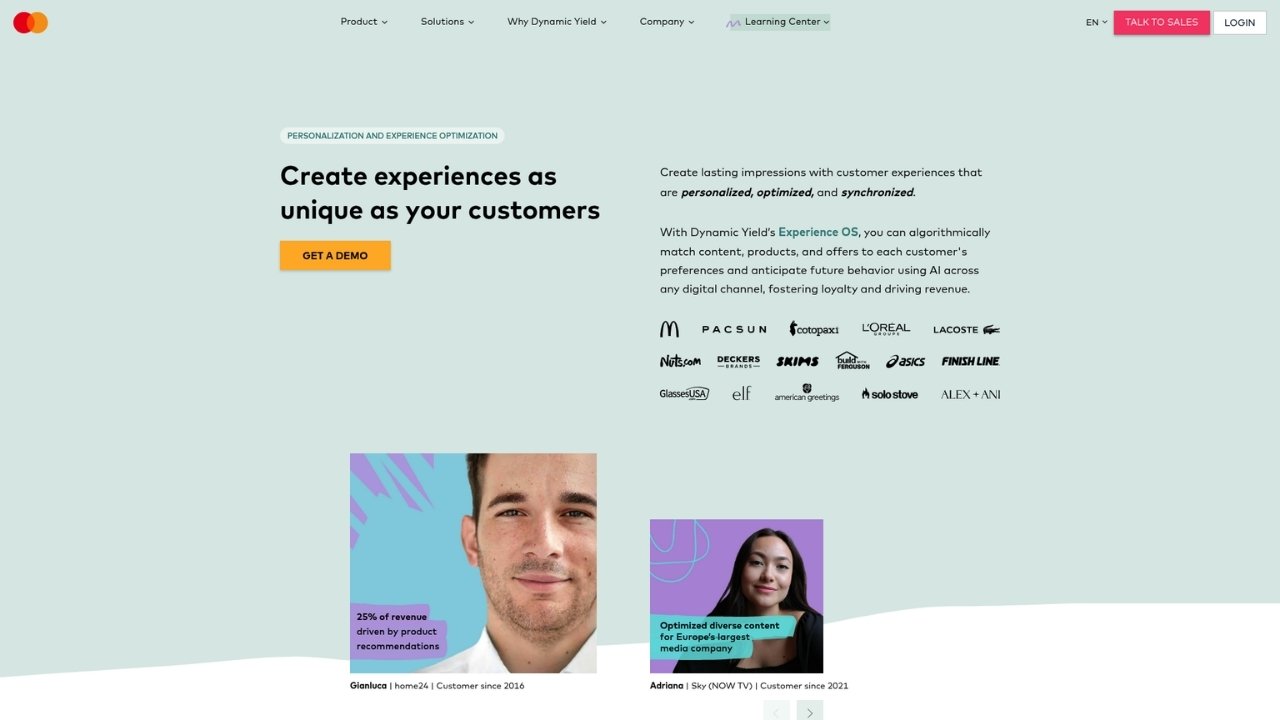
Dynamic Yield, now part of Mastercard, positions itself as an AI-powered Experience Optimization platform.
It delivers individualized experiences across web, apps, email, kiosks, IoT, and call centers.
The platform's strength lies in its unified customer view. It aggregates data from multiple touchpoints to build comprehensive profiles, then uses AI to deliver personalized recommendations and experiences.
The recommendation engine is particularly strong for e-commerce use cases.
Being part of Mastercard brings additional benefits for retailers. You get access to commerce insights and data that can inform your personalization strategies.
Pricing: Enterprise only. Contact sales for custom quotes.
Best for: Retailers needing omnichannel personalization and AI-driven recommendations
Pros:
- Powerful AI and machine learning
- Robust data management capabilities
- Strong recommendations engine
- Omnichannel capabilities
Cons:
- Resource-intensive implementation
- Requires developer team for setup
- Enterprise pricing
4. AB Tasty

AB Tasty focuses on making experimentation accessible to marketers without technical backgrounds.
Over 1,000 brands use it for web experimentation, feature management, and personalization.
The platform's visual editor lets marketers create and launch experiments without coding.
For those wanting AI assistance, Evi (your "evidence-based marketing agent") helps formulate hypotheses and analyze results. The EmotionsAI feature segments users based on emotional needs and engagement patterns.
Feature experimentation is available through SDKs for both client and server-side testing. You can progressively roll out features and automatically roll back if KPIs drop.
Pricing: Custom pricing based on needs. Contact sales for quotes.
Best for: Mid-market teams wanting marketer-friendly, no-code experimentation
Pros:
- No-code visual editor
- Fast deployment
- Good customer support
- AI-powered features (Evi, EmotionsAI)
Cons:
- Limited advanced testing compared to enterprise tools
- Pricing not transparent
- Smaller ecosystem than competitors
5. Bloomreach
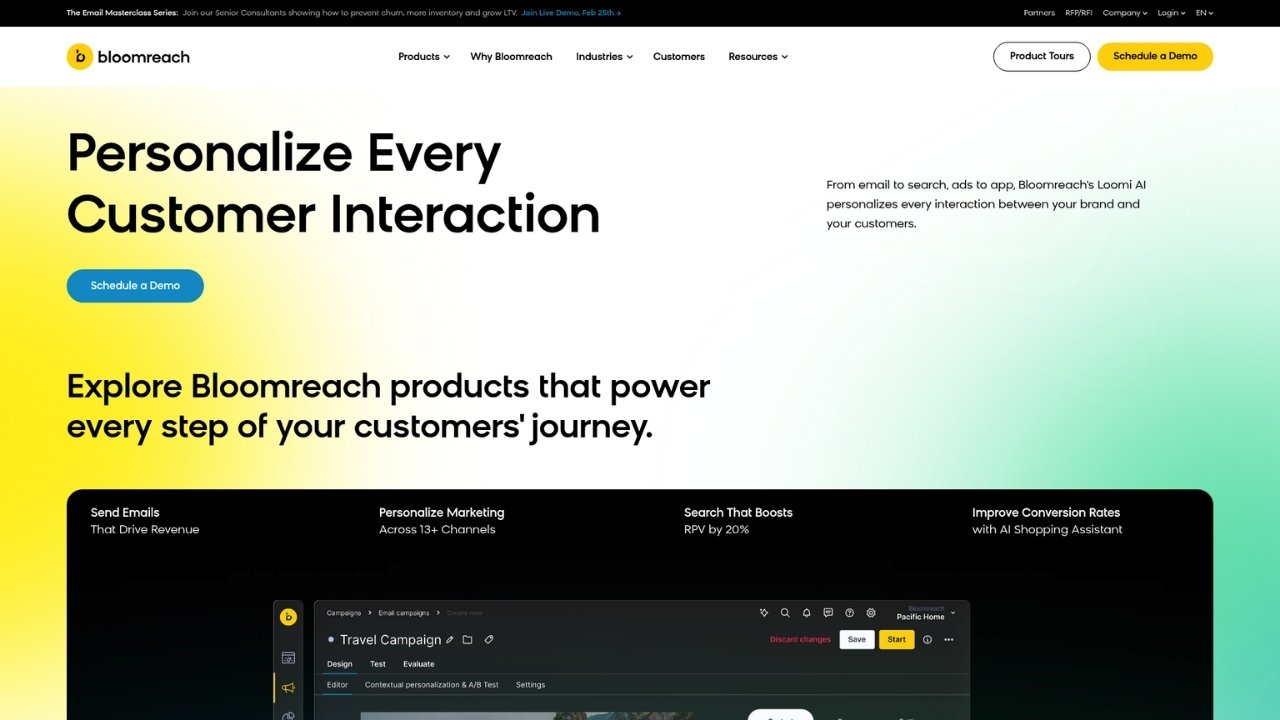
Bloomreach calls itself an "agentic platform for personalization" powered by Loomi AI.
It serves over 1,400 global brands including Bosch, Puma, Pandora, and Virgin Megastore.
The platform goes beyond traditional A/B testing to offer autonomous search that learns from user behavior, marketing automation across 13+ channels, and conversational shopping with AI shopping assistants.
Real-time decisioning happens in 5 milliseconds to 2 seconds, ensuring you never miss a personalization opportunity.
Case studies show impressive results. Benefit Cosmetics achieved a 40% revenue increase through personalized email campaigns.
TFG saw 39.8% higher revenue per visit from shoppers engaging with the conversational shopping agent.
Pricing: Enterprise only. Contact sales for custom quotes.
Best for: E-commerce stores needing AI-powered search and omnichannel engagement
Pros:
- Strong AI capabilities through Loomi
- Comprehensive e-commerce focus
- 1,400+ brand customers
- Real-time personalization
Cons:
- Complex implementation
- Primarily e-commerce focused
- Enterprise pricing
6. Kameleoon
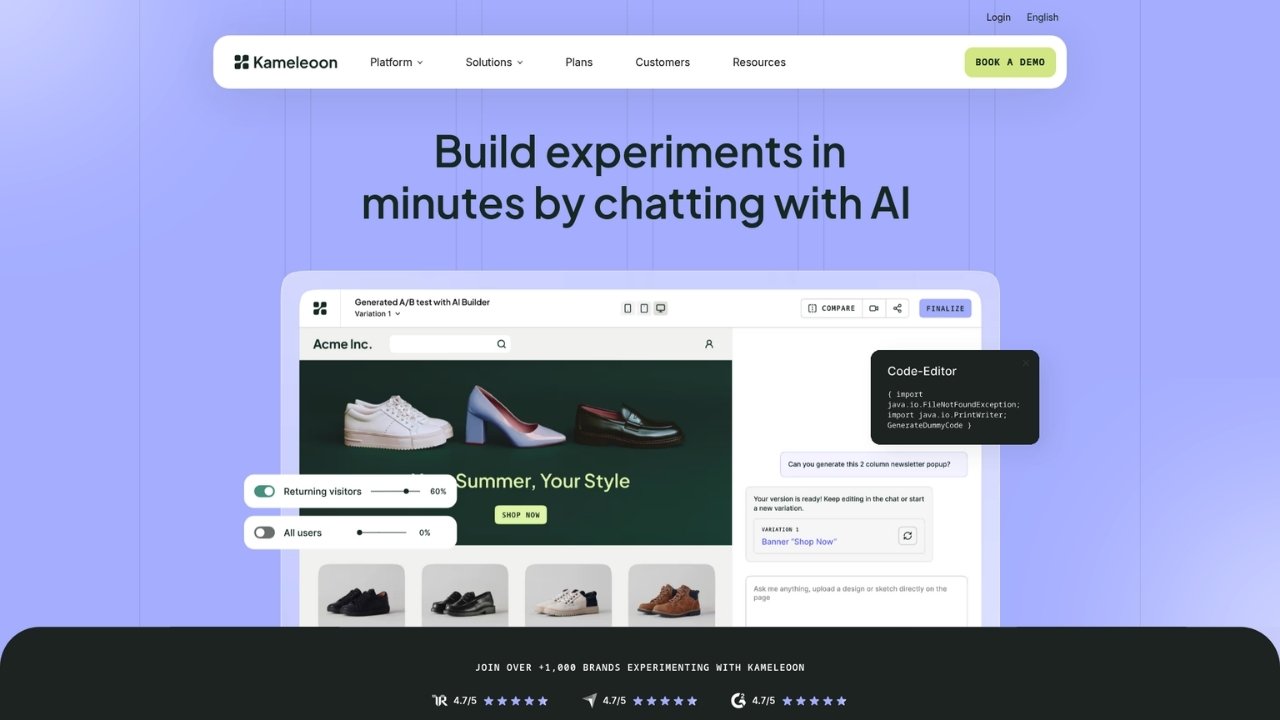
Kameleoon serves over 1,000 brands with a focus on AI-powered experimentation and strong compliance features.
It's particularly popular among organizations in regulated industries.
The platform offers full-stack experimentation including web testing, feature management with flags, and progressive rollouts.
Its AI agent can review your pages and suggest impactful experiments based on real user behavior.
The Contextual Bandit testing goes beyond traditional A/B tests with dynamic traffic allocation.
Where Kameleoon really stands out is compliance. It's ISO 27001 and SOC 2 certified, GDPR/CCPA compliant, and HIPAA compliant. For healthcare, finance, and other regulated industries, this matters.
Pricing: Custom pricing. Contact sales for quotes.
Best for: Privacy-conscious enterprises in regulated industries
Pros:
- Strong compliance certifications
- Full-stack experimentation
- AI-powered features
- Real-time reporting
Cons:
- Pricing not transparent
- Smaller ecosystem than Optimizely/Adobe
7. VWO
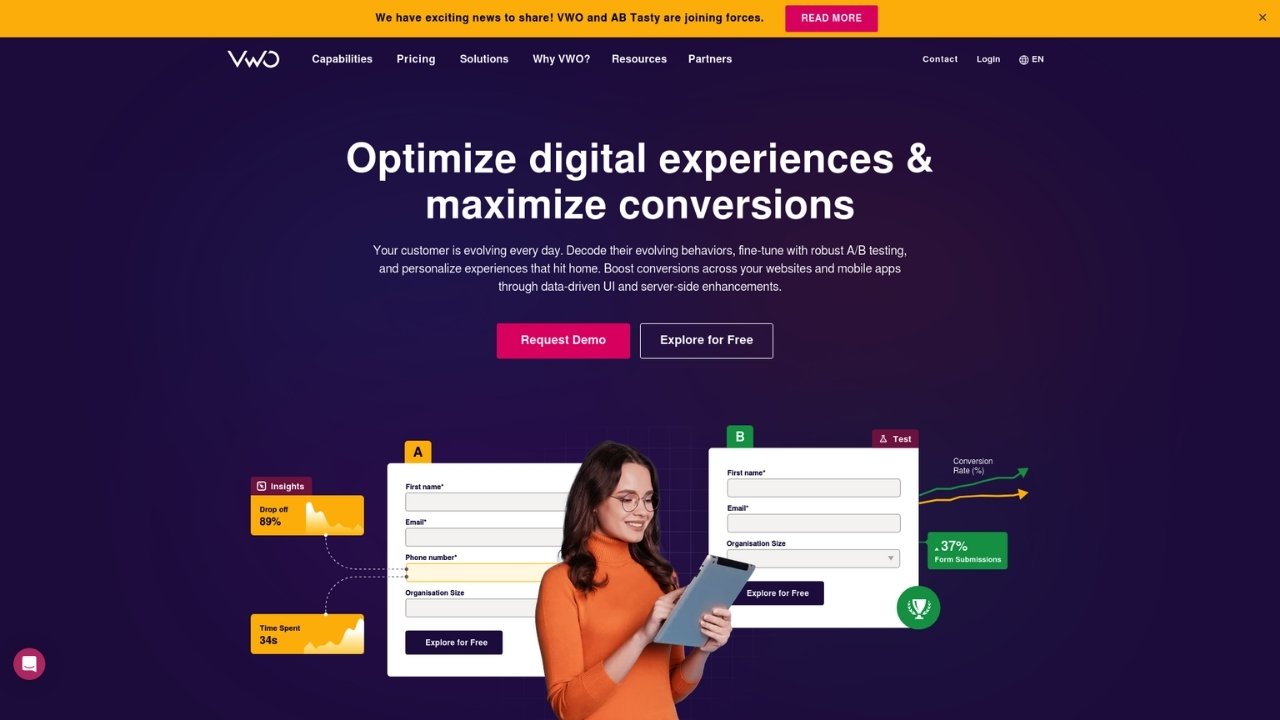
VWO (Visual Website Optimizer) is the most accessible option on this list, serving 40,000+ customers across 190+ countries.
It's the only platform with transparent pricing starting at $199 per month.
What makes VWO different is the comprehensive toolkit.
You get A/B testing, multivariate testing, heatmaps, session recordings, surveys, form analytics, and personalization all in one platform. This eliminates the need to stitch together multiple tools.
The visual editor makes it easy for marketers to create experiments without developer help.
For technical teams, SDKs support 8+ languages including Node.js, Python, Java, and mobile platforms. VWO Copilot provides AI assistance for generating optimization ideas and creating variations.
Pricing:
- Growth: $199/month (annual billing)
- Pro: $467/month (annual billing)
- Enterprise: Custom pricing
30-day free trial available with no credit card required.
Source: https://vwo.com/pricing/
Best for: SMBs and mid-market teams wanting an all-in-one optimization toolkit
Pros:
- Transparent pricing
- Includes heatmaps, session replay, and surveys
- Easy to use visual editor
- Strong free trial
- Comprehensive compliance certifications
Cons:
- Less advanced personalization than enterprise alternatives
- Can get expensive at scale
How to choose the right Monetate alternative
Selecting the right platform depends on your specific situation. Here's a framework to help you decide:
Consider your team size and technical resources. Enterprise platforms like Optimizely and Adobe Target require dedicated experimentation teams and developer resources. If you're a smaller team, VWO or AB Tasty will be more approachable.
Evaluate your budget realistically. Enterprise tools typically start at $50,000+ per year. If that doesn't fit your budget, VWO's transparent pricing starting at $199/month or AB Tasty's mid-market focus may be better options.
Assess your integration requirements. If you're already using Adobe Analytics, Adobe Target is the obvious choice. For Shopify or other e-commerce platforms, check which tools offer native integrations.
Factor in compliance needs. If you're in healthcare, finance, or another regulated industry, Kameleoon's HIPAA compliance and strong security certifications make it worth considering.
Think about your use cases. Need AI-powered search? Bloomreach specializes in this. Want omnichannel personalization across physical and digital touchpoints? Dynamic Yield excels here.
Why AI-powered support complements personalization
Here's something most teams overlook: on-site personalization is only half the customer experience equation.
You can deliver perfectly tailored product recommendations and personalized content, but what happens when customers need help after purchasing?
This is where AI-powered phone support comes in.
While your personalization platform optimizes the pre-purchase experience, an AI phone agent like the AI agent from Ringly.io handles post-purchase support automatically.
the AI answers calls 24/7, looks up orders, processes returns and exchanges, and only escalates to your team when necessary.
It resolves around 73% of calls without human intervention, supports 30 languages, and integrates directly with your Shopify store.
The combination works like this: your personalization platform drives conversions with tailored experiences, then the AI ensures those customers get instant support when they call.
No more voicemails, no more "please hold" messages, just immediate help that scales with your business.
If you're evaluating Monetate alternatives to improve your customer experience, consider how the entire journey fits together.
Personalization gets them to buy. AI support keeps them happy after they do.
Start your free trial at https://app.ringly.io/onboarding-2 and see how The AI handles your support calls.
Frequently Asked Questions
What are the best Monetate alternatives for small businesses?
VWO is the most accessible option with transparent pricing starting at $199/month. It includes A/B testing, heatmaps, and session recordings in one platform, making it ideal for smaller teams without enterprise budgets.
Which Monetate alternative offers the best AI-powered personalization?
Adobe Target and Bloomreach lead in AI capabilities. Adobe Target offers deep machine learning integration for enterprises already using Adobe Analytics. Bloomreach's Loomi AI powers autonomous search and conversational shopping specifically designed for e-commerce.
Are there any free Monetate alternatives available?
VWO offers a 30-day free trial with full features and no credit card required. Most enterprise platforms like Optimizely and Adobe Target do not offer free tiers but may provide demos or limited trials upon request.
How do Monetate alternatives compare for e-commerce stores?
Bloomreach specializes in e-commerce with AI-powered search and merchandising. Dynamic Yield offers strong omnichannel personalization for retailers. VWO provides the best value for smaller e-commerce operations with its all-in-one toolkit.
What should I consider when migrating from Monetate to an alternative?
Consider data migration requirements, integration with your existing tech stack, team training needs, and implementation timeline. Enterprise platforms typically require 3-6 months for full implementation, while tools like VWO can be set up in weeks.
Which Monetate alternative is best for teams without developers?
AB Tasty and VWO are the most marketer-friendly options. Both offer visual editors that let marketers create experiments without coding. AB Tasty's Evi AI assistant helps formulate hypotheses, while VWO's Copilot generates optimization ideas automatically.
Do any Monetate alternatives offer better compliance certifications?
Kameleoon stands out with ISO 27001, SOC 2, GDPR, CCPA, and HIPAA compliance. VWO also offers comprehensive certifications including ISO 27001, SOC 2, GDPR, CCPA, HIPAA, and PCI DSS, making both strong choices for regulated industries.