

FACT-Finder has been a solid choice for e-commerce search, but it's not the only option.
Whether you're looking for better pricing, easier setup, or more modern AI features, there are plenty of alternatives worth considering.
This guide compares the seven best FactFinder alternatives for 2026.
Each one has been evaluated based on pricing, features, ease of use, and real customer feedback.
Editor’s note: Want to hear some sample AI support calls made for your Shopify store?
- Just paste your store URL
- Get sample calls in under 20 seconds (no email required)
- Listen to demo calls for my store
What is e-commerce site search?
E-commerce site search is the technology that helps customers find products on your online store.
When a shopper types "black running shoes size 10" into your search bar, the site search engine matches that query to relevant products in your catalog.
Modern site search goes beyond simple keyword matching. It includes:
- Autocomplete that suggests products as users type
- Typo tolerance so "runnning" still finds "running" shoes
- AI-powered recommendations based on browsing behavior
- Visual search that lets users upload images to find similar items
- Personalization that shows different results to different users
Good site search directly impacts revenue. Studies show that shoppers who use site search convert at 2-3x the rate of those who don't.
When someone searches, they're telling you exactly what they want. If your search can't deliver, you lose the sale.
How we evaluated these FactFinder alternatives
To create this list, we looked at several key factors:
- Pricing transparency: We prefer tools that show clear pricing tiers rather than forcing you to "contact sales"
- Ease of integration: How quickly can you get up and running? Is coding required?
- AI capabilities: Does the tool use modern AI for relevance, personalization, and recommendations?
- Customer ratings: Real user feedback from G2, Gartner, and other review platforms
- Shopify compatibility: Since many readers run Shopify stores, this was a key consideration
We also focused on solutions suitable for small to mid-size e-commerce businesses, not just enterprise giants.
FactFinder alternatives comparison
| Tool | Starting Price | Free Trial | Best For | G2 Rating |
|---|---|---|---|---|
| Algolia | Free tier | Yes | Developers, API-first needs | 4.5/5 |
| Luigi's Box | Custom quote | 30 days | Mid-size stores, easy setup | 4.8/5 |
| Bloomreach | Custom | Demo | Large enterprises | 4.6/5 |
| Doofinder | €44/mo | Yes | Small stores on a budget | 4.5/5 |
| Searchspring | Custom | Demo | Visual merchandising | 4.4/5 |
| Clerk.io | Usage-based | Demo | Personalization focus | 4.8/5 |
| Elastic | Usage-based | Yes | Technical teams | 4.5/5 |
1. Algolia
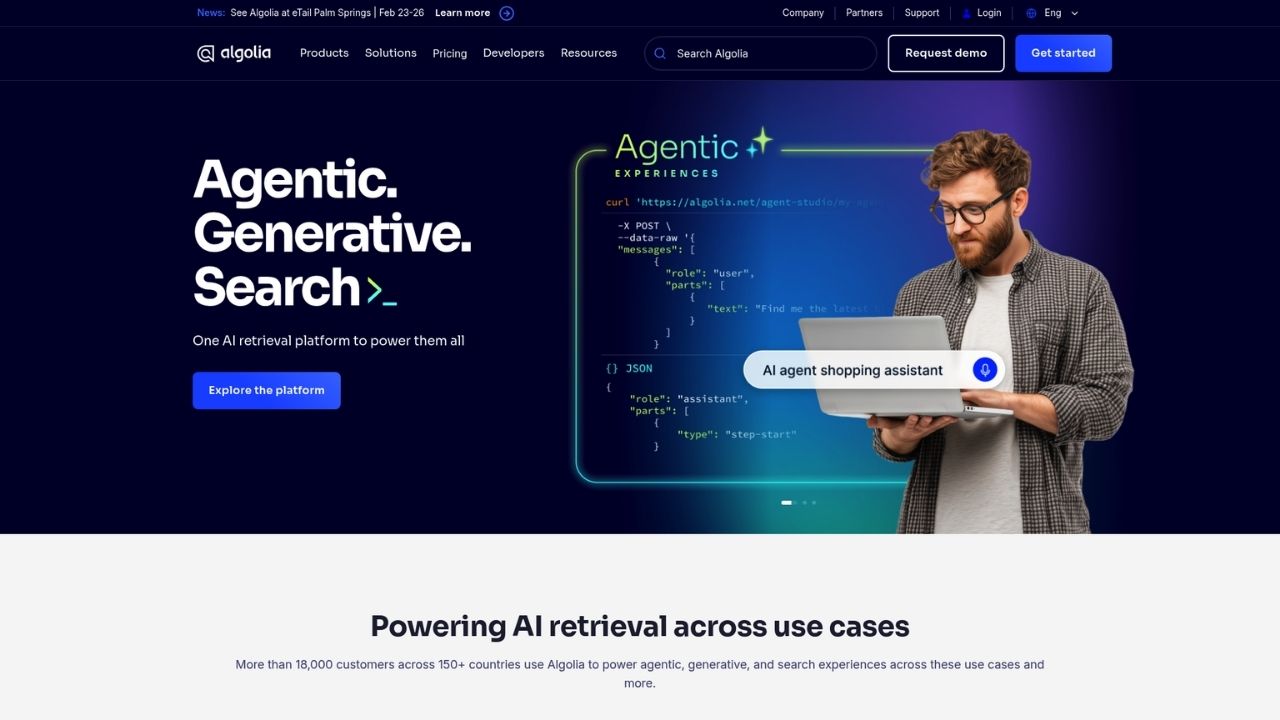
Algolia is the heavyweight in the search space. Founded in 2012, it powers search for over 18,000 organizations across 150+ countries.
If you need a developer-friendly, API-first solution, this is where you start.
The platform offers instant search with typo tolerance, customizable ranking, and now AI-powered relevance through their NeuralSearch feature.
It handles both keyword and semantic search, so it understands what users mean, not just what they type.
Key features:
- Hybrid AI search combining keyword and vector search
- Real-time personalization based on user behavior
- Merchandising Studio for business teams to optimize results
- Built-in A/B testing for relevance strategies
- 99.999% SLA on enterprise plans
Pricing:
| Plan | Price | Key Limits |
|---|---|---|
| Build (Free) | $0 | 10K search requests/month, 1M records |
| Grow | Pay-as-you-go | 10K requests included, then $0.50 per 1K |
| Elevate | Custom | Enterprise features, SSO, dedicated support |
Pros:
- Extremely fast search performance
- Excellent documentation and developer resources
- Scales from startup to enterprise
- Strong AI features in higher tiers
Cons:
- Requires technical setup and ongoing maintenance
- Can get expensive at scale
- Pricing complexity with multiple usage dimensions
Best for: Businesses with development resources who need a highly customizable search solution.
If you have engineers who can integrate and maintain the platform, Algolia delivers exceptional performance.
2. Luigi's Box

Luigi's Box is the highest-rated solution on G2 and Gartner with a 4.8/5 rating.
Founded in 2014 in Slovakia, it serves over 4,000 online businesses including major brands like O2, Under Armour, Skoda, and Nespresso.
What sets Luigi's Box apart is the combination of powerful AI features with genuinely easy implementation.
You can integrate via a simple script or use their API for more control. Their team also offers custom integration support if you prefer a hands-off approach.
Key features:
- AI-powered search with autocomplete and personalization
- Recommender for upsells and cross-sells
- Product Listing optimization for category pages
- Shopping Assistant (AI chatbot for product discovery)
- Comprehensive analytics including "no results" tracking
Pricing:
Luigi's Box uses custom pricing based on your catalog size and usage. They offer two integration approaches:
| Approach | Support Level | Best For |
|---|---|---|
| Self-Integration | Standard | Technical teams wanting control |
| Custom Integration | Premium + dedicated success manager | Teams wanting hands-off setup |
| All plans include a 30-day free trial. | ||
Pros:
- Highest customer satisfaction ratings in the category
- No-code integration option available
- Excellent customer support
- Strong European presence and GDPR compliance
Cons:
- Pricing not transparent on website (requires quote)
- Smaller ecosystem than Algolia
Best for: Mid-size e-commerce stores that want powerful search without a complex technical setup.
If you value customer support and want a solution that "just works," Luigi's Box is worth the conversation.
3. Bloomreach
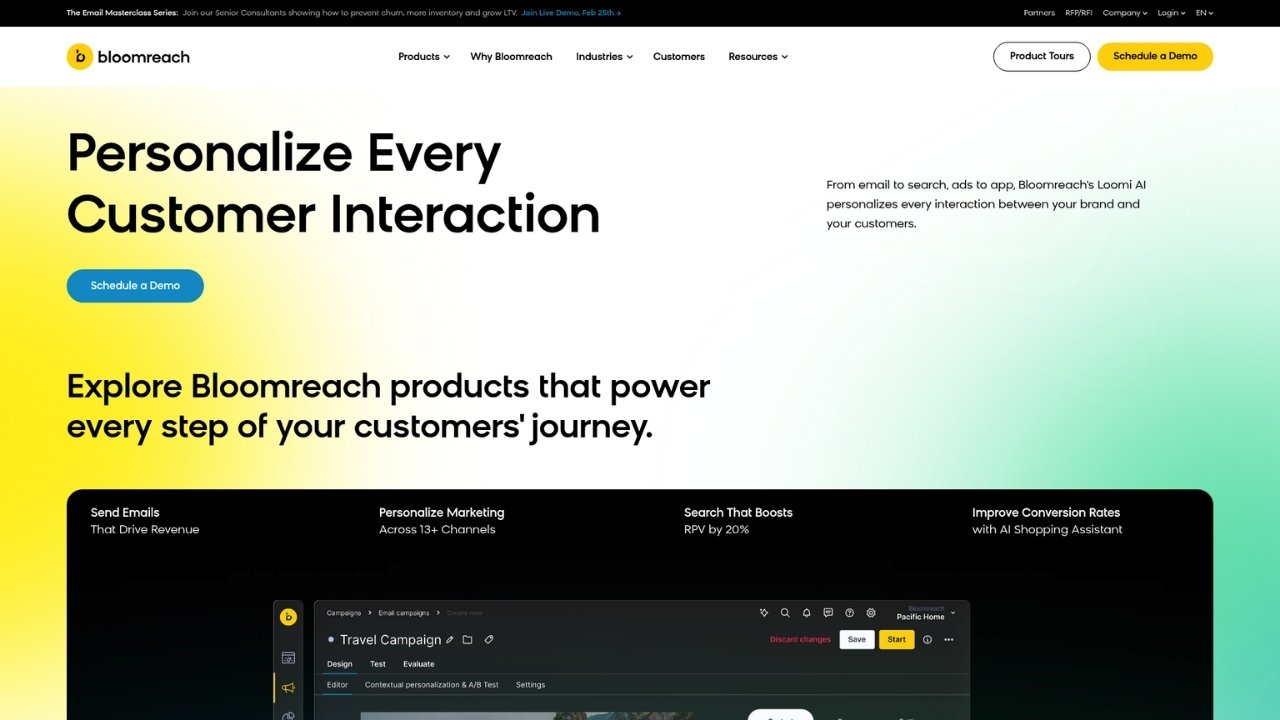
Bloomreach is the enterprise choice. It's not just a search tool, it's a full Commerce Experience Platform that combines AI-powered search, content management, and marketing automation.
Major brands like Williams-Sonoma, Bosch, and Puma use Bloomreach.
The platform is powered by Loomi AI, which handles everything from search relevance to personalized content delivery.
If you need a single platform that covers search, merchandising, and customer engagement, Bloomreach is built for that.
Key features:
- AI-powered discovery and search
- Headless content management
- Marketing automation and personalization
- Real-time customer journey optimization
- Multiple AI patents for e-commerce
Pricing:
Bloomreach uses custom enterprise pricing. You'll need to contact sales for a quote based on your specific needs and scale.
Pros:
- Comprehensive platform covering multiple use cases
- Advanced AI capabilities
- Proven at enterprise scale
- Strong personalization features
Cons:
- Expensive (enterprise pricing only)
- Complex implementation
- Overkill for smaller stores
Best for: Large enterprises with complex needs that want a unified platform for search, content, and marketing.
If you're doing $50M+ in annual revenue and need deep customization, Bloomreach deserves consideration.
4. Doofinder
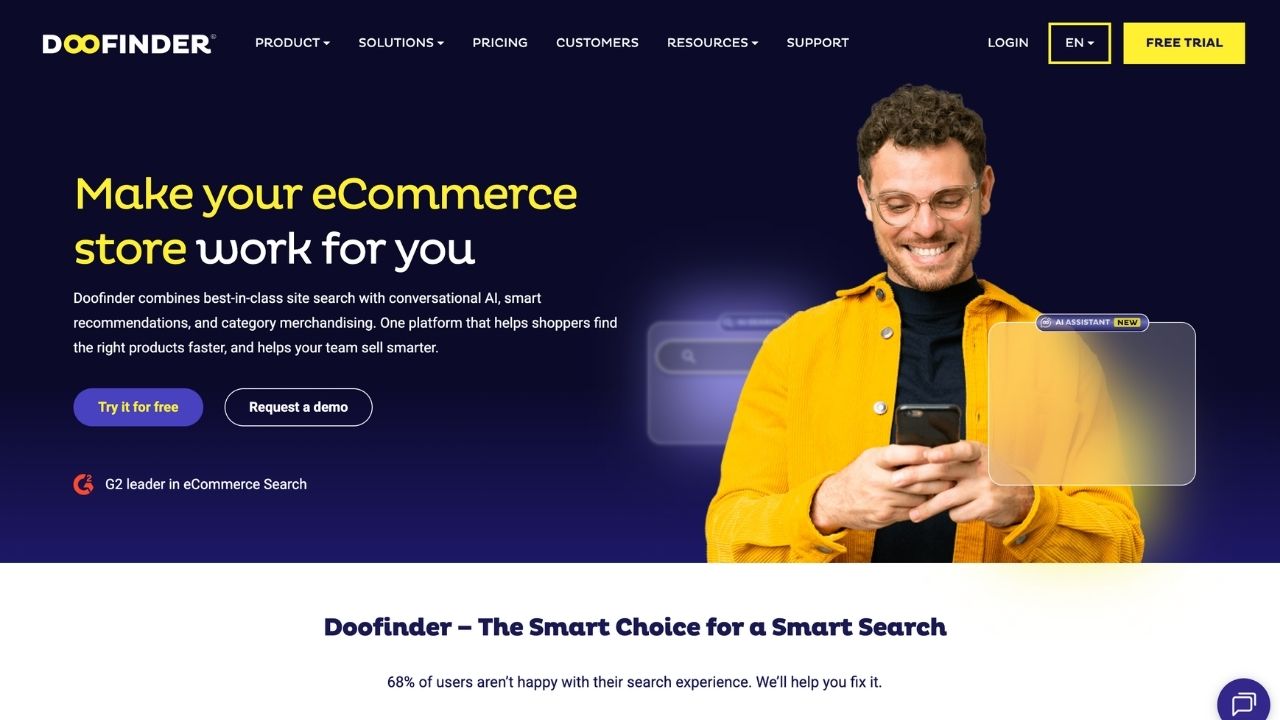
Doofinder offers the most accessible entry point for small to mid-size stores. Starting at €44 per month (with annual billing), it packs impressive AI features into an affordable package.
Founded in 2010 in Madrid, Doofinder serves 10,000+ customers including recognizable brands like Smeg, HP, and Crocs.
The platform recently added an AI Assistant for conversational product discovery, making it feel more like shopping with a knowledgeable salesperson.
Key features:
- AI-guided search with natural language understanding
- Voice and visual search capabilities
- Product recommendations and quiz maker
- Category merchandising with AI-driven ranking
- Real-time analytics and trend detection
Pricing:
| Plan | Monthly Price (Annual) | Key Limits |
|---|---|---|
| Basic | €44 | Up to 10K requests/month |
| Pro | €134 | Up to 150K requests/month |
| Advanced | €314 | Up to 400K requests, AI personalization |
| Enterprise | Custom | Tailored solution |
All plans include search, recommendations, and quiz maker. Annual billing saves 10%.
Pros:
- Most affordable starting price on this list
- Easy plug-and-play installation
- Strong AI features even on lower tiers
- Good platform coverage (Shopify, Magento, WooCommerce, etc.)
Cons:
- Fewer advanced features than enterprise options
- Request limits may require upgrades as you grow
Best for: Small to mid-size stores on a budget who want modern AI search without enterprise pricing.
If you're doing under $5M annually and want to improve search quickly, Doofinder is a solid choice.
5. Searchspring
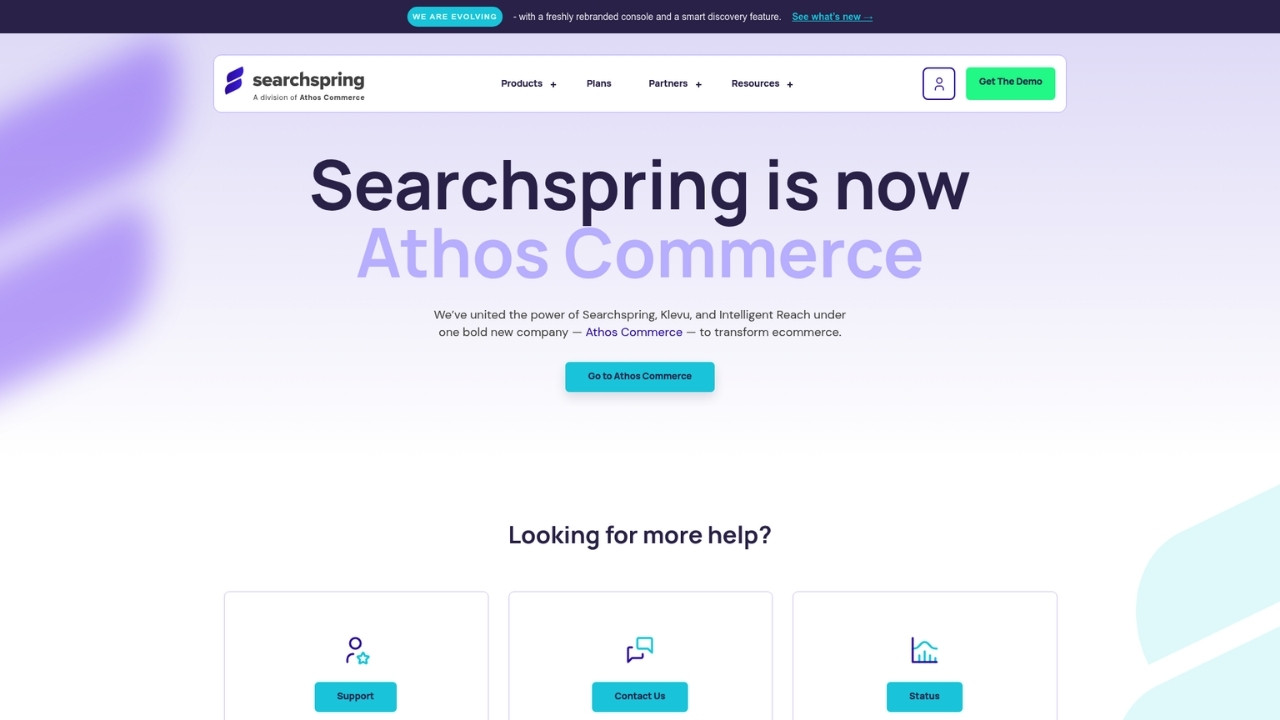
Important update: Searchspring has rebranded as Athos Commerce.
The company has united Searchspring, Klevu, and Intelligent Reach under one new entity.
Historically, Searchspring focused on e-commerce search, merchandising, and personalization with strong visual merchandising controls.
The platform was particularly popular with fashion and apparel retailers who needed granular control over how products appeared.
Current status:
If you're evaluating Searchspring today, you should look at Athos Commerce instead.
The new combined platform may offer different features and pricing than the legacy Searchspring product.
Best for: Existing Searchspring customers should contact Athos Commerce about migration.
New customers should evaluate Athos Commerce as a fresh option rather than comparing legacy Searchspring features.
6. Clerk.io
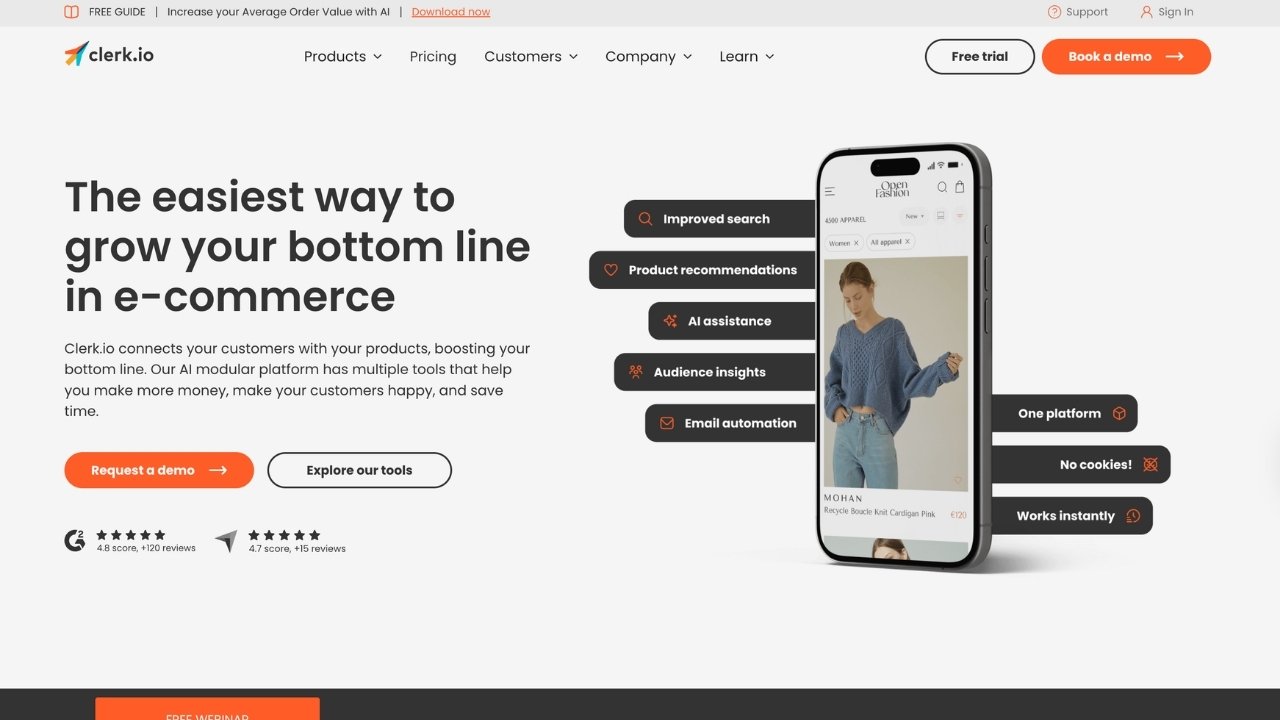
Clerk.io is a cookieless personalization platform from Denmark serving 2,500+ stores.
The standout feature is that it delivers personalization without using cookies, making it fully GDPR-compliant by design.
The platform covers search, recommendations, email personalization, audience segmentation, and even an AI chatbot.
It's designed to work out of the box without a learning period, using historical buyer data and AI algorithms.
Key features:
- Intelligent search with behavior-based results
- AI product recommendations across touchpoints
- Personalized email marketing
- Audience segmentation for targeting
- AI sales assistant chatbot
- Cookieless tracking (GDPR-compliant)
Pricing:
Clerk.io uses modular pricing based on usage tiers. You pay for each product separately:
| Product | Pricing Basis |
|---|---|
| Search | Monthly searches |
| Recommendations | Monthly recommendations |
| Chat | Monthly conversations |
| Monthly opened emails | |
| Audience | Monthly active subscribers |
Pricing gets cheaper per unit as volume increases. Contact them for a custom quote based on your usage.
Pros:
- Cookieless by design (privacy-friendly)
- Works immediately without learning period
- Strong focus on personalization
- Modular pricing lets you buy only what you need
Cons:
- Per-feature pricing can add up
- Less well-known in North America
Best for: Stores focused on personalization and recommendations, especially those concerned about GDPR compliance.
If privacy is a priority for your brand, Clerk.io's cookieless approach is compelling.
7. Elastic
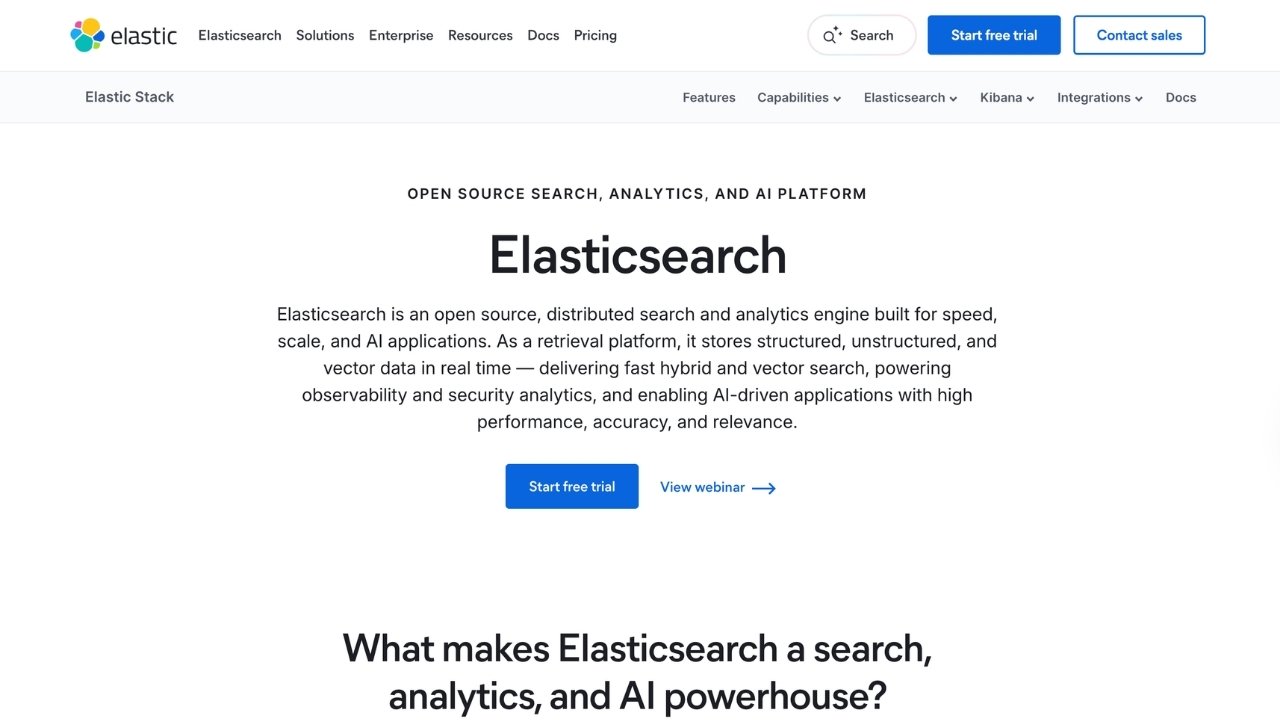
Elastic is the company behind Elasticsearch, the open-source search engine used by thousands of companies worldwide.
If you want complete control over your search infrastructure, Elastic is the answer.
The platform offers three deployment options: serverless (fully managed), hosted (you control configuration), or self-managed (run it yourself).
This flexibility makes it suitable for everything from startups to massive enterprises.
Key features:
- Open-source Elasticsearch engine
- Vector search for semantic understanding
- Full-text search with relevance tuning
- Machine learning for anomaly detection
- Flexible deployment options
- 99.95% uptime SLA on paid tiers
Pricing:
| Deployment | Pricing Model |
|---|---|
| Serverless | Usage-based, pay-as-you-go |
| Hosted | Resource-based pricing |
| Self-managed | License-based (Platinum/Enterprise) |
Pros:
- Unlimited customization potential
- No vendor lock-in
- Scales to massive size
- Large community and ecosystem
Cons:
- Requires significant technical expertise
- Operational complexity for self-managed deployments
- Not purpose-built for e-commerce (requires configuration)
Best for: Technical teams who want full control over their search infrastructure.
If you have engineers who can build and maintain a custom search solution, Elastic provides the most flexibility.
Tips for choosing the right FactFinder alternative
With seven solid options, how do you pick the right one? Here are some practical considerations:
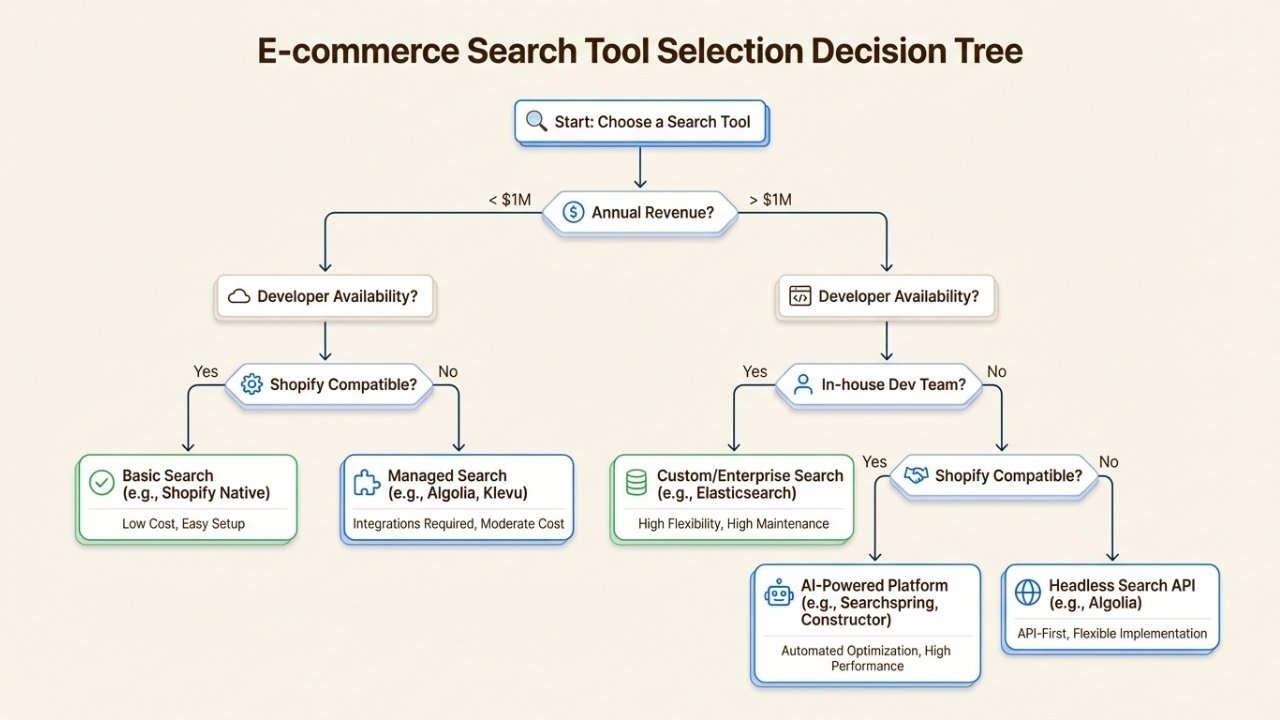
Start with your store size. If you're doing under $1M annually, Doofinder's affordable entry point makes sense. If you're over $10M, you should be looking at Algolia, Luigi's Box, or Bloomreach.
Consider your technical resources. Algolia and Elastic require engineering time. Luigi's Box and Doofinder can be set up by non-technical teams. Be honest about what your team can support.
Factor in total cost of ownership. The sticker price isn't the whole story. Factor in setup costs, ongoing maintenance, and potential overage fees as you grow.
Test before committing. Most platforms offer free trials or demos. Actually test them with your product catalog and real search queries before making a decision.
Check integration complexity. If you run Shopify, all of these tools work, but some have better native integrations than others. Check their app store listings and reviews.
Which FactFinder alternative should you choose?
Here's a quick decision framework:
Best for startups and small stores: Doofinder offers the best value at the entry level. At €44/month, you get AI search, recommendations, and a quiz maker.
It's hard to beat for stores just getting started with advanced search.
Best for mid-size stores wanting easy setup: Luigi's Box combines powerful features with genuinely easy implementation.
The 4.8/5 G2 rating reflects real customer satisfaction. If you want great search without hiring developers, start here.
Best for developers and technical teams: Algolia if you want a managed API-first solution, Elastic if you want to build and control everything yourself.
Both require technical investment but deliver exceptional performance.
Best for enterprise: Bloomreach if you want a comprehensive commerce platform, Algolia if you want best-in-class search specifically.
Both handle massive scale but require significant investment.
Best for personalization focus: Clerk.io's cookieless approach and modular tools make it ideal if personalization is your priority and privacy matters to your brand.
Best for visual merchandising: With Searchspring now part of Athos Commerce, evaluate the new combined platform if visual control over product display is critical.
Frequently Asked Questions
What is the most affordable FactFinder alternative for small e-commerce stores?
Doofinder offers the lowest entry point at €44/month (with annual billing). It includes AI search, recommendations, and a quiz maker. For stores just starting with advanced search, this is the most budget-friendly option on our list.
Which FactFinder alternative has the best customer ratings?
Luigi's Box leads with a 4.8/5 rating on G2 and Gartner. Clerk.io also scores 4.8/5 on G2. Both have consistently positive feedback about ease of use and customer support.
Do I need a developer to implement these FactFinder alternatives?
It depends on the tool. Doofinder, Luigi's Box, and Clerk.io offer no-code integrations suitable for non-technical teams. Algolia and Elastic require engineering resources for setup and maintenance.
Which FactFinder alternative works best with Shopify?
All seven alternatives offer Shopify integration, but Doofinder and Luigi's Box have particularly strong native apps. If you're on Shopify, these two offer the smoothest setup experience.
Are there any free FactFinder alternatives?
Algolia offers a free Build tier with 10,000 search requests per month and 1 million records. This is sufficient for small stores or testing. Other platforms offer free trials but no permanent free plans.
Which FactFinder alternative is best for GDPR compliance?
Clerk.io is designed to be cookieless and GDPR-compliant by default. Luigi's Box, being EU-based, also has strong GDPR practices. If privacy compliance is a priority, these are your safest bets.