
This post in 30 seconds.
- At enterprise scale, your ticket queue usually isn't the thing that breaks. The phone is, and almost every help desk treats it as a bolt-on.
- We compare 7 enterprise help desk platforms (Zendesk, Salesforce Service Cloud, Gladly, Kustomer, Freshdesk, Gorgias, and Ringly) on price, scale, and how they actually handle voice.
- Built for founders, COOs, and Heads of CX at $10M-$100M Shopify brands running a paid helpdesk and a visible phone number.
Pick almost any "best enterprise help desk software" list and you'll see the same seven or eight names ranked on the same four things: ticket volume, automation, integrations, and AI. All of it matters. None of it is where a $10M-$100M Shopify brand actually loses money. To write this, I called the published support line of each platform and pulled call-volume data from the Shopify brands we run phone support for. The channel that breaks at scale isn't email. It's the phone, the one queue every enterprise helpdesk still treats as an add-on.
If you run support at a $10M-$100M Shopify brand, you already know the shape of it: a Gorgias or Zendesk instance that mostly works, 3-12 reps, and a phone line that rolls to voicemail after 6 p.m. while WISMO calls pile up. We build the AI phone layer for brands in exactly that spot. Book a 30-min call and we'll show you what your phone queue is leaving on the table after-hours.
What changes when your help desk goes enterprise
Enterprise help desk software is built for one thing: handling thousands of tickets a day without falling over. The jump from mid-market to enterprise is less about features and more about whether the platform holds up under concurrency, complex routing, and a support org with multiple teams.
That's the part everyone agrees on. Here's the part the buying guides skip.
The price you pay at enterprise scale isn't the headline per-agent number. It's the stack underneath it. Most enterprise teams run $50-150 per agent per month, then an AI add-on tacks on another $30-50 per agent (Fin AI pricing data). Then there's the per-resolution surcharge nobody mentions until the invoice lands. Then implementation. Then the admin headcount to keep it tuned. The license is the cheapest line on the page.
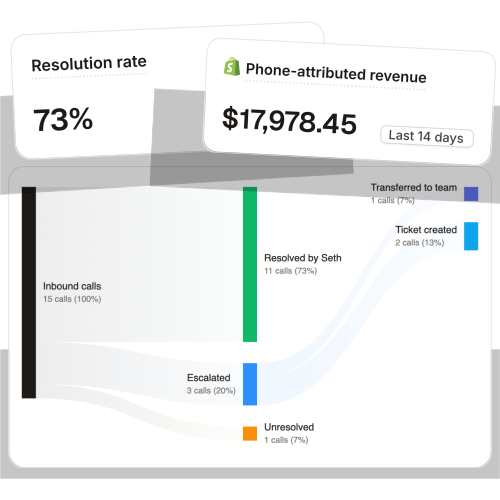
And after all of that, the phone is still the channel that gets the least love. Your team can clear a Zendesk queue all day, but the customer who calls at 8 p.m. about a $280 reorder hits voicemail and buys elsewhere. For DTC brands at this size, that's not a support problem, it's a revenue leak. More on that below.
What to look for in enterprise help desk software
When you're evaluating at this scale, the spec sheet matters less than how the platform behaves on a bad Monday. Here's what actually separates the real enterprise tools from the ones that just raised their price tier.
- Scale under load. Can it hold up at thousands of tickets a day, peak-season concurrency, and a multi-team routing setup without lag or dropped automations?
- Integration depth. Does it read and write back to Shopify, your OMS, and your ERP, or does an agent have to tab between four tools to answer one WISMO ticket?
- Predictable pricing. Is the cost a flat per-agent number, or does it balloon with per-resolution AI fees and overage you can't forecast?
- Phone, for real. Is voice a native channel the platform actually invests in, or a bolt-on dialer that routes to voicemail after hours?
- Time to live. Does it go live in days, or does it need a six-week implementation and a dedicated admin to run?
- Security and compliance. SOC 2, role-based access, audit logs. A baseline at enterprise scale, but worth confirming.
How I tested these platforms
I'm Ruben, co-founder of Ringly. We run AI phone support for Shopify brands, which means I evaluate help desk tools constantly, not as a critic, as a buyer who has to integrate with them.
For this guide I scored every platform against the same five criteria:
- Shopify and OMS integration. I checked whether each tool can see the customer, find the order, and write back to it without a custom build.
- Pricing at real volume. I priced each platform for a team handling thousands of tickets a month, including the AI surcharge, not the marketing headline.
- The phone channel. I called the published customer support line of each platform and noted what happened: how fast a human picked up, or whether it went to a queue or voicemail.
- Time to live. I noted how long onboarding actually takes for a DTC support team, not a Fortune 500 with a six-month rollout.
- Failure mode. I looked at what each tool does at peak, after hours, and when the AI hits something it can't answer.
The verdicts below come from running those checks, plus the call data from the brands we support. Ringly is on the list because it competes on the same five criteria as everyone else, against the same phone test.
Here's the quick version before the deep dives.
| Platform | Starting price | Best for | Phone channel | Verdict |
|---|---|---|---|---|
| Ringly.io | From $99 a month (50 conversations included) | Shopify brands losing calls after-hours | Native (it's the whole product) | Owns the phone |
| Zendesk | $55-$169/agent/mo + AI fee | High-volume omnichannel ticketing | Bolt-on (Talk) | The default ticketing pick |
| Salesforce Service Cloud | $175+/user/mo | Complex orgs already on Salesforce | Add-on | Power, at a TCO cost |
| Gladly | Sales-gated | Large B2C brands with heavy voice | Native (the exception) | Strong voice, premium price |
| Kustomer | $89-$139/user/mo | Omnichannel timeline-first teams | In-suite channel | Unified, mid-pack on phone |
| Freshdesk | $49-$79/agent/mo | Teams wanting easier, cheaper enterprise | Separate product (Freshcaller) | Friendly, less depth |
| Gorgias | Ticket-based, AI $0.90/interaction | Shopify-native ticketing | Weak / bolt-on | Best Shopify ticketing, weak phone |
The 7 best enterprise help desk platforms
1. Ringly.io: AI phone support for Shopify brands
Best for: Shopify brands that want to keep phone support live 24/7 without hiring and training a phone team.
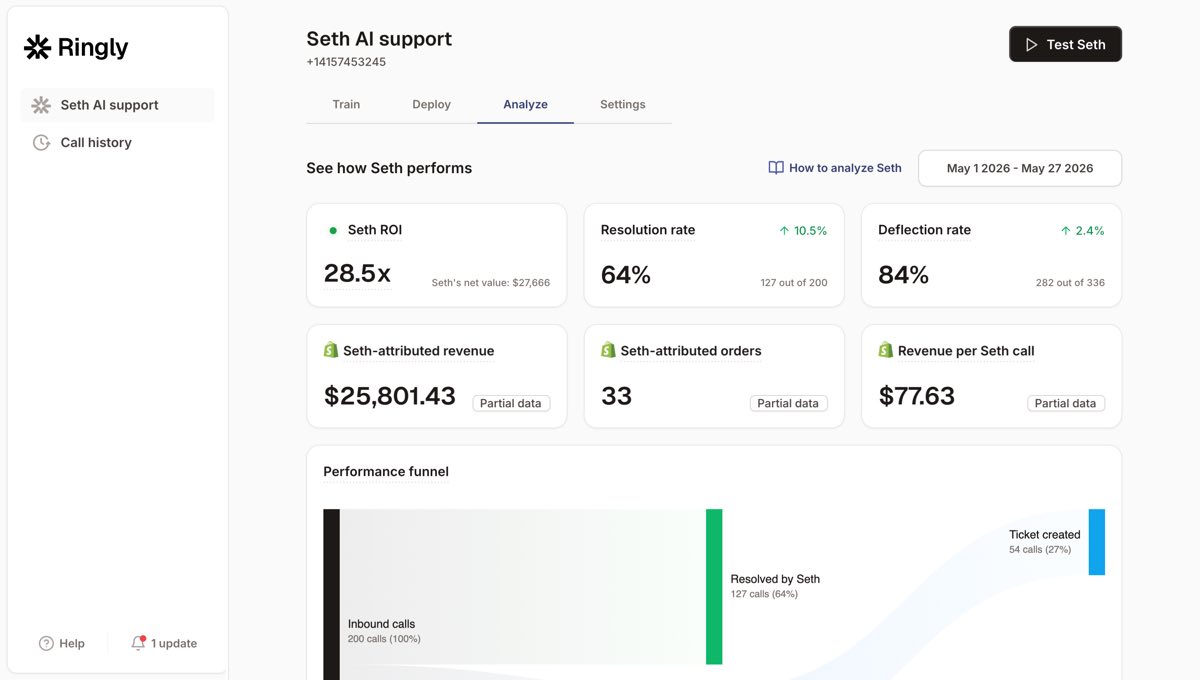
Ringly.io is AI phone support for Shopify brands. The phone shouldn't be a tax on your support team, so the AI takes the routine inbound calls and your reps get the hard ones back. It doesn't replace your help desk. It sits in front of it.
The AI answers inbound calls 24/7 in 40 languages. It finds orders in your Shopify store, processes returns and exchanges, answers product questions from your knowledge base, and cancels orders when a caller asks. Calls that need a human escalate cleanly to Gorgias, Richpanel, Reamaze, or whatever helpdesk you already run. Seth resolves up to 90% of calls autonomously. WashCo, a Shopify brand we launched, recovered $22,664 in its first 7 days on the phone.
Pricing
| Plan | Price | Included |
|---|---|---|
| Pay per call | $99 a month | 50 conversations, then $1.99 each |
Free to try. 65% resolution guarantee: if Seth resolves under 65% of your calls in a month, that month comes back as credit (after 90 days on Pay per call).
What works
- Owns the phone channel. This is the whole product, not a feature behind a ticketing suite. The after-hours queue is the point.
- Sits in front of your stack. Keep your current phone number, helpdesk, and workflows. The AI handles the routine calls and escalates the rest.
- Live in under an hour. Add your site, docs, or knowledge base and the AI is ready. No six-week implementation.
- Done-for-you build. We build and tune it, and an engineer reviews real calls weekly. You're not the implementation team.
What doesn't
- Phone only. Ringly handles voice, not email or chat ticketing. You keep your helpdesk for those.
- Some custom work for edge cases. Subscription cancels run as a custom action, phone order-taking isn't native, and inventory refreshes daily rather than real-time.
Why it ranks first
For a Shopify brand at this size, the phone is the channel that leaks revenue, and Ringly is the only tool here built to own it rather than bolt it on. If your ticketing is fine but your phone line isn't, start here. See your numbers on a call.
2. Zendesk
Best for: high-volume omnichannel ticketing across email, chat, and social.
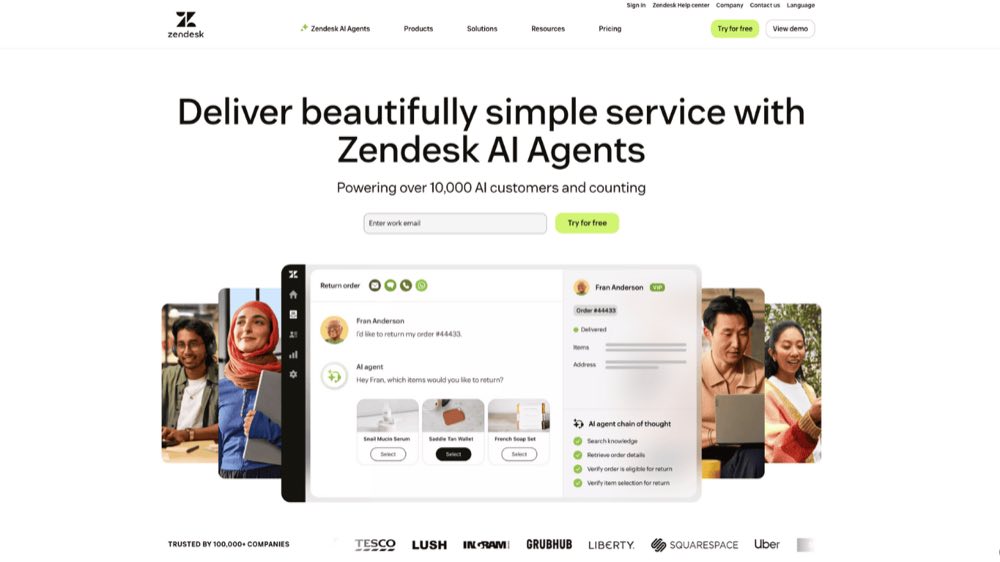
Zendesk is the industry-standard ticketing suite, and it earns the label. Structured tickets, mature automation, and a marketplace of 1,200+ apps make it the safe default for most B2C enterprises. If you need a system that scales to thousands of tickets a day across channels, Zendesk does it. For deeper analysis of where it falls short for ecommerce, see our Zendesk alternatives breakdown.
Pricing
Suite Team $55, Growth $89, Professional $115, Enterprise around $169/agent/month. The AI resolution add-on is billed separately at roughly $1.50 per automated resolution on a committed plan, $2.00 pay-as-you-go (Fin AI pricing comparison).
What works
- Scales cleanly. It holds up at real enterprise ticket volume without the wheels coming off.
- Huge ecosystem. 1,200+ integrations means it plugs into almost anything, including Shopify.
- Mature reporting. Strong analytics and SLA tracking that bigger orgs need.
What doesn't
- Costs stack. Per-agent pricing plus the per-resolution AI fee gets expensive fast at scale.
- Phone is a bolt-on. Zendesk Talk exists, but voice isn't where the platform invests. After-hours calls still need a plan it doesn't give you.
Why it ranks second
If you need a ticketing backbone and you're not phone-first, Zendesk is the reliable pick. Just budget for the AI surcharge and plan the phone channel separately.
3. Salesforce Service Cloud
Best for: complex organizations already standardized on Salesforce.
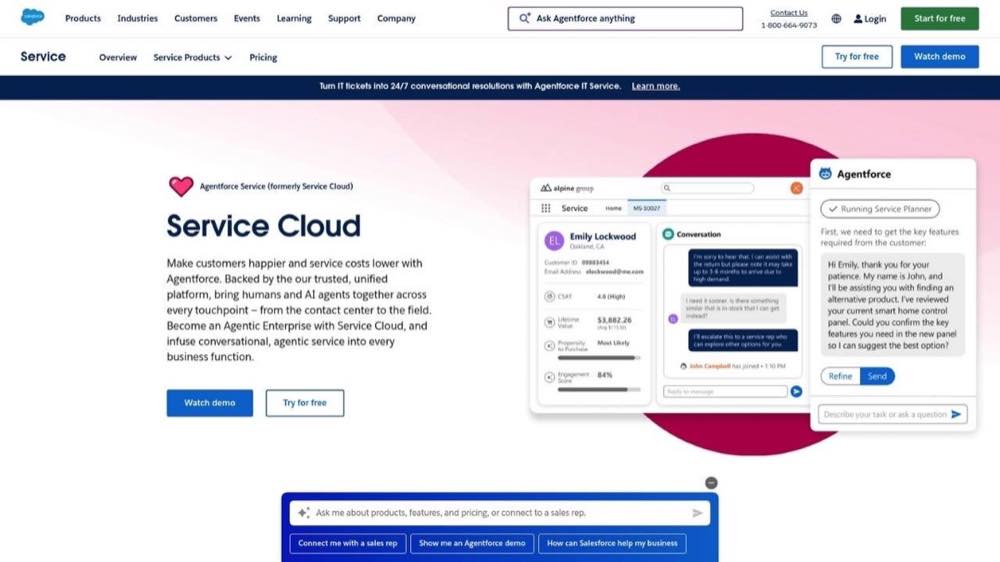
Salesforce Service Cloud (now branded Agentforce Service) is the most customizable platform on this list. Omnichannel routing, AI case handling, and tight CRM unification make it powerful for orgs with genuinely complex needs. It's also the one most likely to need a dedicated admin and a real implementation budget. If you're weighing it against lighter tools, our Salesforce Service Cloud alternatives post covers the trade-offs.
Pricing
Starter Suite $25, Pro Suite $100, Enterprise $175+/user/month. The headline number undersells it. The bigger cost is implementation and ongoing administration.
What works
- Deepest customization. If you can describe a workflow, you can build it.
- CRM unification. Service and sales data live in one place, which matters for some orgs.
- Enterprise muscle. Genuinely built for large, complex support operations.
What doesn't
- Highest total cost of ownership. The license is the start. Implementation and admin headcount are the real spend.
- Steep learning curve. Overkill for a 3-12 rep DTC support team, and phone runs through an add-on.
Why it ranks third
Right call if you already live in Salesforce and have the team to run it. Heavy and expensive if you don't.
4. Gladly
Best for: large B2C brands that lean heavily on voice and want a single customer timeline.
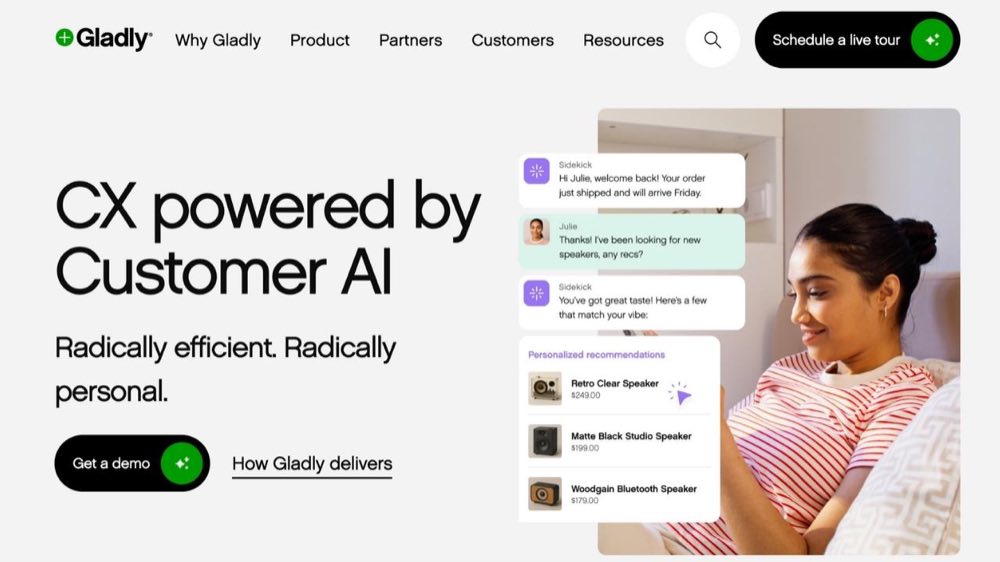
Gladly is the one platform here that treats the phone as native rather than a bolt-on, and for a conversation-centric model that's a real edge. Instead of ticket queues, it builds around ongoing customer conversations across voice, chat, email, and messaging. Large retail and ecommerce brands use it to give agents the full history on every contact. See our Gladly alternatives comparison for where it fits.
Pricing
Sales-gated, not published. Widely reported as one of the more expensive platforms in the category.
What works
- Native voice. The exception in the category. Calls, messages, and case history connect properly.
- Conversation model. No ticket queues. A single timeline per customer, which loyalty-driven brands like.
- Strong for LTV brands. Built for B2C teams that compete on relationship.
What doesn't
- Premium price, sales-gated. Hard to evaluate without a sales cycle, and it's not cheap.
- Still needs human agents on the line. Native voice tooling isn't the same as the AI answering the call. The headcount stays.
Why it ranks fourth
The best native-phone help desk here, but it's a big-enterprise B2C tool. For a 3-12 rep team it's heavy, and you're still staffing the phone.
5. Kustomer
Best for: omnichannel teams that want every interaction on one customer timeline.
Kustomer (now Meta-owned) centers on a unified customer timeline, so every email, chat, and call sits in one view. It's a solid fit for high-volume teams that want context over channels. Phone is a channel inside the suite rather than a standout strength. Our Kustomer alternatives post goes deeper.
Pricing
Roughly $89-$139/user/month for Enterprise and Ultimate tiers.
What works
- Single timeline. Genuinely useful when one customer touches you across five channels.
- High-volume omnichannel. Built to handle a lot of concurrent conversations.
- Solid automation. Routing and workflow tooling that scales.
What doesn't
- Per-user cost adds up. Like the others, the bill grows with your team.
- Phone is mid-pack. It's in the suite, but it's not why you'd buy Kustomer, and after-hours coverage isn't solved.
Why it ranks fifth
A good unified omnichannel platform. If voice is your pain, it won't fix it on its own.
6. Freshdesk
Best for: teams that want enterprise-grade ticketing that's easier and cheaper to run.
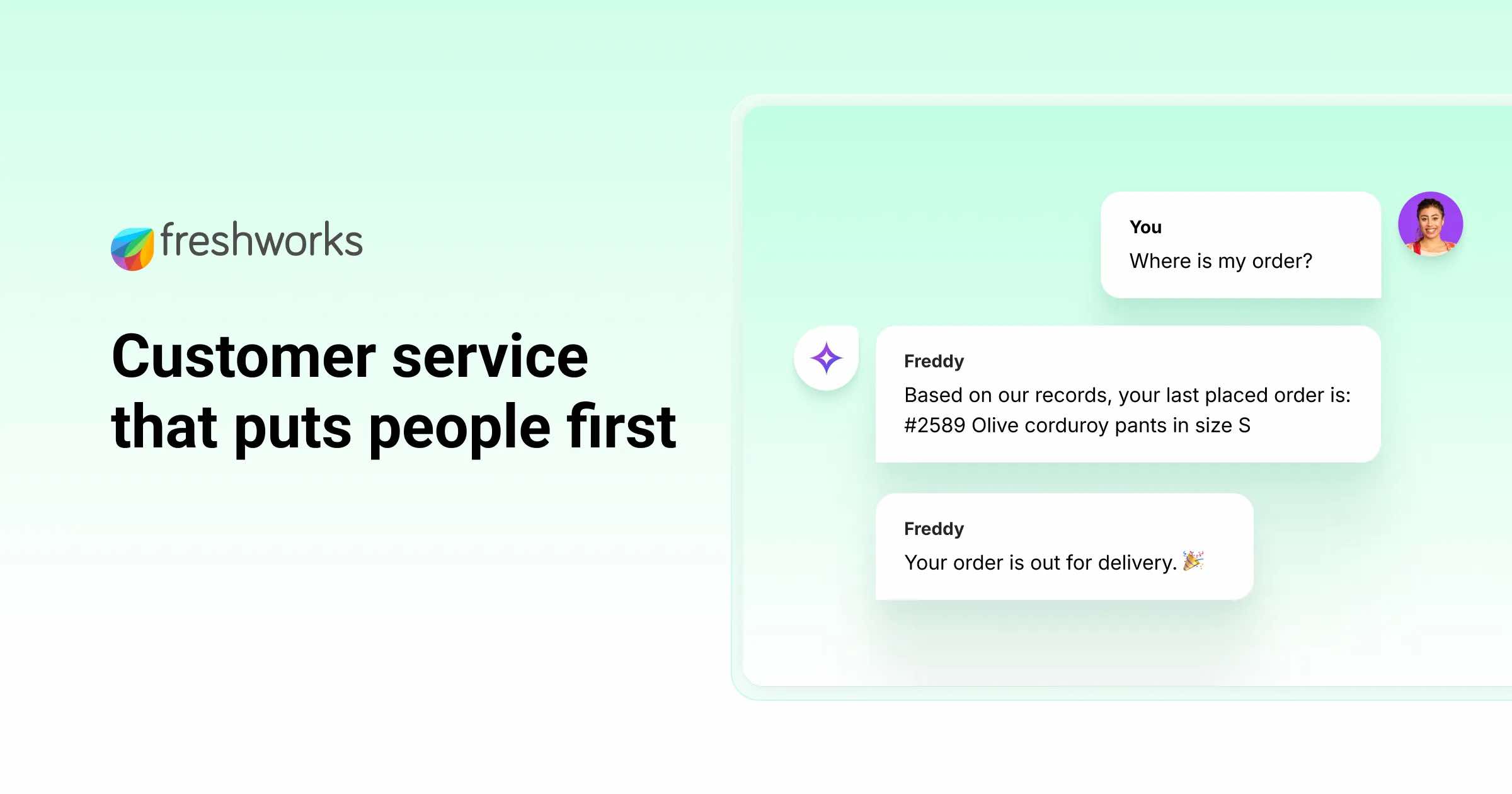
Freshdesk (from Freshworks) is the friendlier, lower-cost route into enterprise ticketing. Onboarding is easier than Zendesk or Salesforce, automation is solid, and the price is gentler. The trade-off is less depth at true enterprise scale. Our Freshdesk alternatives post lays out the gaps.
Pricing
Pro around $49, Enterprise around $79/agent/month. The Freddy AI add-on costs extra.
What works
- Easier to stand up. Faster onboarding, less admin overhead.
- Cheaper than the leaders. Real savings versus Zendesk and Salesforce at the same team size.
- Solid ticketing. Covers the core well.
What doesn't
- Less depth at the top end. It can feel stretched at true enterprise volume and complexity.
- Phone is a separate product. Freshcaller is its own thing, and the AI maturity trails the leaders.
Why it ranks sixth
A smart pick if you want enterprise ticketing without enterprise overhead. Just don't expect it to solve the phone for you.
7. Gorgias
Best for: Shopify-native ticketing across email, chat, and social.
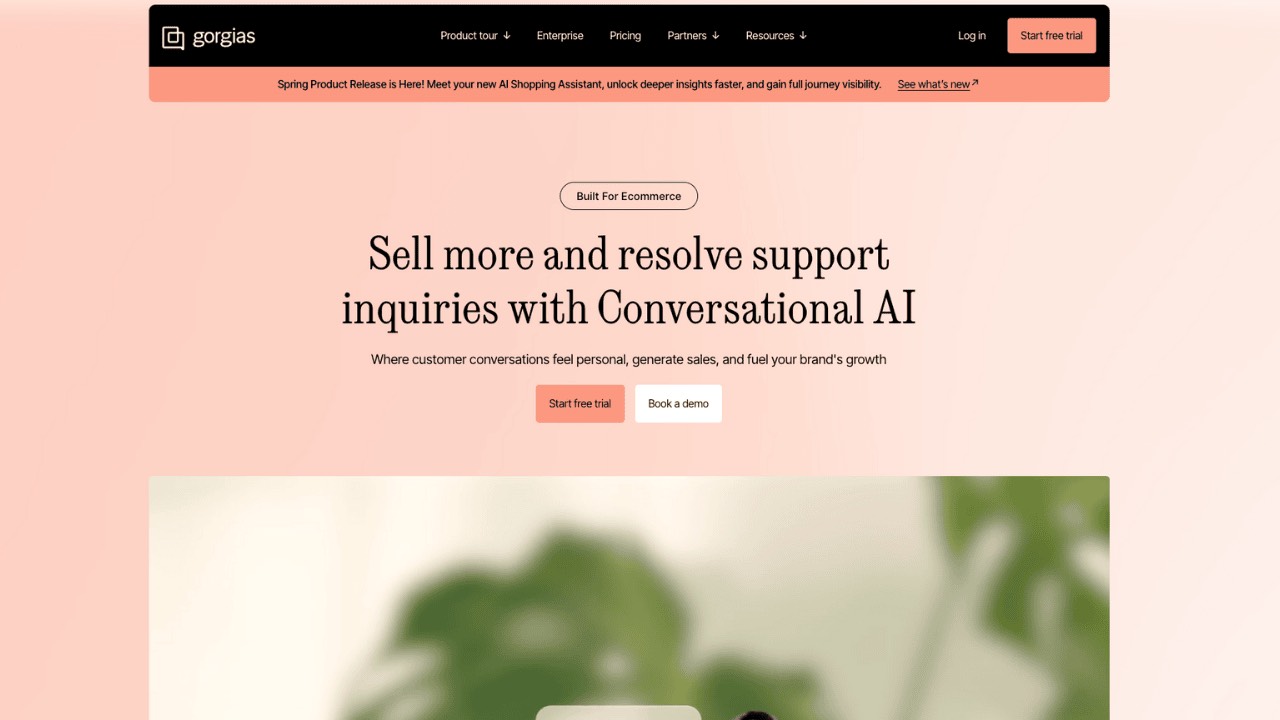
Gorgias is the most-installed help desk in DTC for a reason: the Shopify integration is the deepest in the category, and ticket-based pricing with unlimited agents fits ecommerce teams. It's the ticketing layer a huge share of brands at this size already run. Where it struggles is phone and per-interaction billing. See our Gorgias alternatives breakdown for the full picture.
Pricing
Ticket-based rather than per-agent, with unlimited agents on every plan. The AI Agent is billed at roughly $0.90 per interaction on an annual plan, which can push a base plan from a few hundred dollars to a thousand-plus at volume.
What works
- Deepest Shopify integration. Order data, returns, and customer context are right there.
- Unlimited agents. Ticket-based pricing suits ecommerce teams that scale headcount.
- Built for DTC. It speaks ecommerce out of the box.
What doesn't
- AI billing balloons. Per-interaction fees stack, and published automation rates (26-56%) come in under the 60% marketed.
- Weak phone. Voice is a bolt-on, and the after-hours call problem stays unsolved.
Why it ranks seventh
Still the best ticketing layer for Shopify, which is why we sit in front of it rather than against it. It just won't answer your phone.
The channel every enterprise help desk leaves open
Read enough of these comparison posts and a pattern shows up: most enterprise platforms still treat the phone channel as a bolt-on. Voice is the one channel where every help desk on this list either charges extra, ships an immature add-on, or sends you to a separate product, and it's the exact channel a DTC brand at this size bleeds revenue on.
The numbers are blunt. Businesses answer only 37.8% of inbound calls, and the rest mostly roll to voicemail (AmbsCallCenter). Of the people who can't reach a human, 85% never call back and 62% switch to a competitor (PCN 2026). WISMO alone is 30-40% of tickets and 50%+ at peak (Salesforce). So a chunk of your most repeatable, after-hours, revenue-adjacent volume is hitting a voicemail box your help desk barely services.
"My customers also feel like it's a normal person. They feel like they can communicate if they have questions."
Claudia Droge, TechCraft Studio
That's why the phone is the channel worth fixing first. Your ticketing is probably fine. The 8 p.m. reorder call is the one quietly costing you. BioLongevity Labs, a supplement brand on Ringly, hits 79% resolution on those calls autonomously, no night shift required.
What this costs you today vs with Ringly
Take a typical $50M Shopify brand running a 6-rep CS team:
| Line item | Today | With Ringly |
|---|---|---|
| 6 reps × $4K loaded per rep | $24,000/mo | n/a |
| Ringly Enterprise (~$5K/mo) | n/a | $5,000/mo |
| Net monthly CS spend | $24,000/mo | $5,000/mo |
| Monthly savings | n/a | $19,000/mo |
| Annual savings | n/a | $228,000/yr |
That's roughly 70% of repeatable calls (order status, returns, product questions, the same five things over and over) routed to the AI. The other 30%, the genuinely complex calls, still go to your team, who now have time to actually solve them. Note this is the phone channel only. You keep your help desk for email and chat, and you stop paying reps to answer voicemail.
If you're comparing platforms and want this run against your real call volume, book a 30-min call and we'll do the math live.
How to choose the right enterprise help desk
Most brands at this size don't need to rip out their ticketing. They need to figure out what each tool is actually good at and stop expecting one platform to do everything.
- Choose Zendesk if you want the safe, scalable ticketing default and you'll handle phone separately.
- Choose Salesforce Service Cloud if you already live in Salesforce and have the team to run a real implementation.
- Choose Gladly if you're a large B2C brand, voice is central, and budget isn't the constraint.
- Choose Kustomer if a single omnichannel timeline is your priority and you have the volume to justify it.
- Choose Freshdesk if you want enterprise ticketing with less cost and overhead.
- Choose Gorgias if you're Shopify-native and want the deepest ecommerce ticketing integration.
- Choose Ringly if your ticketing is fine but your phone line isn't, and you want the after-hours calls answered without hiring.
The honest answer for most $10M-$100M Shopify brands is a pairing: keep the helpdesk you already run for tickets, add a phone layer that owns voice. For more on the broader stack, see our guide to customer service software and Shopify helpdesk apps.
Frequently asked questions
What counts as enterprise help desk software? It's support software built to handle thousands of tickets a day across multiple teams and channels without performance dropping off. The line isn't a feature list, it's whether the platform holds up under concurrency, complex routing, and real enterprise volume.
How much does enterprise help desk software cost? Most enterprise teams pay $50-150 per agent per month, plus an AI add-on of $30-50 per agent and often a per-resolution surcharge. The license is usually the smallest line. Implementation and admin headcount cost more over time.
What's the best enterprise help desk for Shopify or ecommerce? Gorgias is the deepest Shopify-native ticketing layer, and most DTC brands at this size already run it. For the phone channel specifically, Ringly sits in front of your helpdesk and handles inbound calls so you don't have to staff voicemail. For more, see our Shopify Plus customer service guide.
Does enterprise help desk software handle phone support well? Mostly no. Gladly is the exception with native voice, but across the category phone is a bolt-on, an add-on dialer, or a separate product. That's the gap that costs DTC brands revenue after-hours, and it's why a dedicated phone layer is worth pairing with your helpdesk.
Zendesk vs Salesforce Service Cloud for enterprise? Zendesk is faster to stand up and cheaper at the same team size, which suits most DTC brands. Salesforce Service Cloud is more customizable and powerful for complex orgs, but the total cost of ownership and admin burden are higher. If you're not already on Salesforce, Zendesk is usually the lighter call.
Do I have to replace my helpdesk to add AI phone support? No. Ringly sits in front of your existing helpdesk and handles inbound calls, then escalates cleanly to Gorgias, Richpanel, Reamaze, or whatever you already run. You keep your current phone number, helpdesk, and workflows.
How long does enterprise help desk implementation take? Ticketing platforms like Salesforce or Zendesk can take weeks of setup plus ongoing admin. Ringly's phone layer goes live in under an hour: add your site, docs, or knowledge base and the AI is ready to take calls.
Talk to us

If you run a $10M-$100M Shopify brand and you're losing calls after-hours, the fastest way to see what you're leaving on the table is a 30-min call where we run your real numbers. You don't have to touch your ticketing to fix the phone.
Our 3 promises.
- Live in under 1 hour. Setup and test calls are free.
- 30-day money back on the $99 plan fee.
- 65% resolution guarantee: if Seth resolves under 65% of your support calls in a month, that month comes back as credit (after 90 days on Pay per call).
Ruben (Ringly co-founder) takes these calls personally.