


Here's a sobering statistic: 69% of online shoppers will abandon their purchase if the item they want is out of stock.
That is nearly seven in ten potential customers walking away because you couldn't keep shelves stocked. For ecommerce businesses, inventory management is not just an operational detail.
It is the difference between growth and stagnation.
This guide covers everything you need to know about ecommerce inventory management in practical terms.
We will walk through the methods that actually work, the software worth considering, and how to implement a system that scales with your business.
Whether you are still using spreadsheets or looking to upgrade your current setup, you will find actionable steps here.
Editor’s note: Want to hear some sample AI support calls made for your Shopify store?
- Just paste your store URL
- Get sample calls in under 20 seconds (no email required)
- Listen to demo calls for my store
What is ecommerce inventory management?
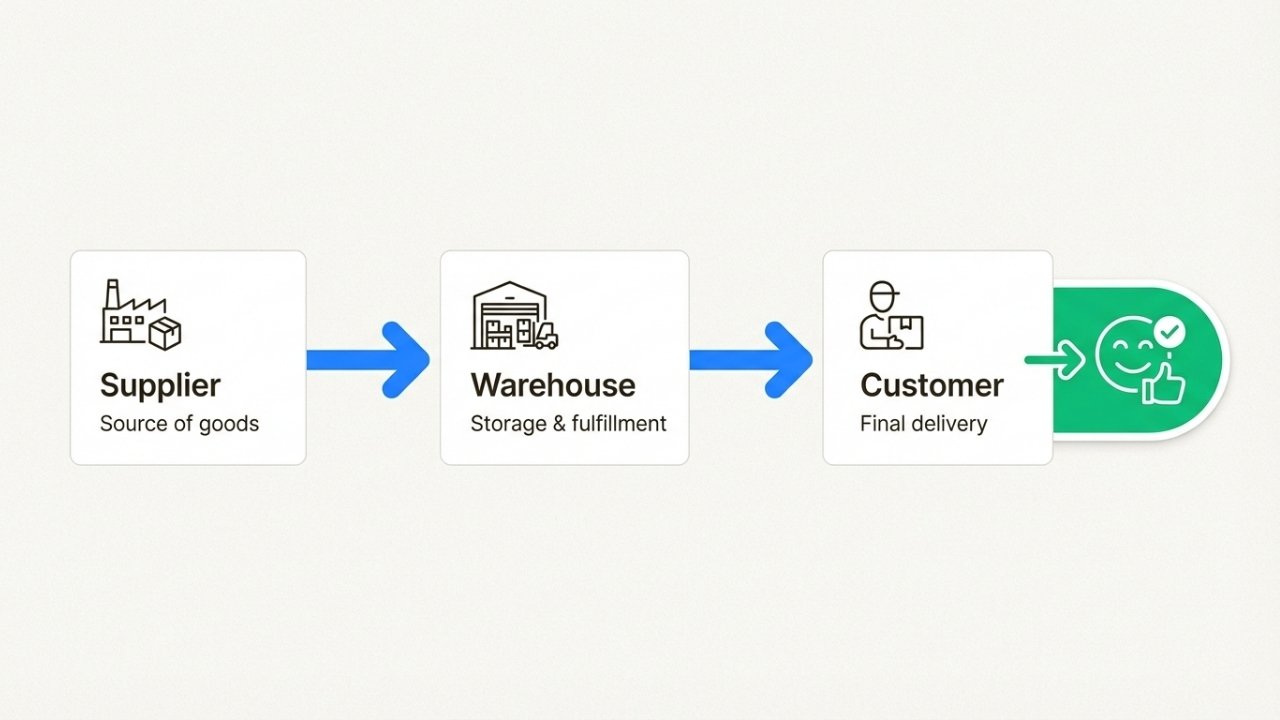
At its core, ecommerce inventory management is the process of tracking, storing, and managing stock across your online sales channels.
It sounds simple enough, but the reality gets complicated fast when you are selling on Shopify, Amazon, eBay, and maybe even a physical store simultaneously.
The goal is straightforward: have the right products available when customers want them, without tying up too much cash in unsold stock.
Get it wrong in one direction and you are losing sales to stockouts. Get it wrong in the other and you are paying for warehouse space full of products that are not moving.
Modern inventory management goes beyond counting boxes. It involves demand forecasting, multi-channel synchronization, and integration with your accounting systems.
When done well, it creates a competitive advantage through faster fulfillment and fewer errors.
When done poorly, it creates a constant fire drill of rush orders, disappointed customers, and cash flow headaches.
Common ecommerce inventory management challenges
Every ecommerce business hits inventory challenges as they scale. Here are the ones that cause the most damage:
Overselling happens when your Shopify store shows an item as available, but it is actually sitting in a box that just sold on Amazon.
The result is a canceled order and an annoyed customer who might not come back. Without real-time sync across channels, this is nearly impossible to prevent manually.
Multi-channel complexity compounds quickly. Each platform has its own inventory rules, reporting, and timing.
Your WooCommerce store might update instantly while your Etsy integration lags by an hour. Managing this without a centralized system is like trying to conduct an orchestra where every musician is reading from a different sheet of music.
Demand forecasting trips up even experienced merchants. Seasonal spikes, viral TikTok moments, or supply chain disruptions can turn your carefully planned stock levels into a disaster.
Order too little and you miss sales. Order too much and you are discounting just to clear space.
Cash flow strain is the hidden cost of poor inventory management. Money tied up in slow-moving stock cannot be used for marketing, product development, or hiring.
For many ecommerce businesses, inventory is their largest asset, which means mismanagement hits the bottom line directly.
Storage costs add up faster than expected. That extra warehouse space, the third-party logistics fees, the handling charges for products that sit too long.
Every unit of inventory has a carrying cost, and it is easy to ignore until you are paying for pallets of last season's products that nobody wants.
Ecommerce inventory management methods explained
Not every business needs the same approach. Here are the main methods, when they work best, and who should consider each.
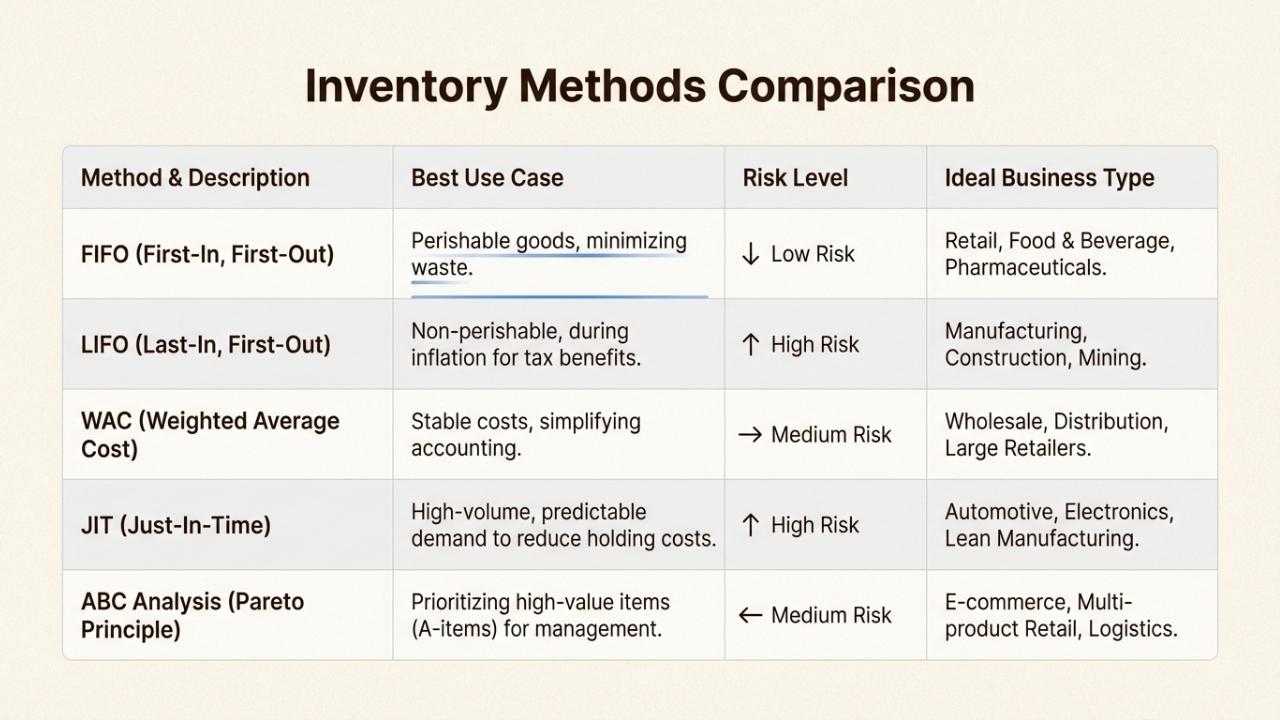
FIFO (First In, First Out)
FIFO means you sell your oldest stock first.
This is essential for perishables like food or supplements, but it is also smart for fashion, electronics, and anything that goes out of style or gets replaced by newer models.
The logic is simple: the jeans you bought six months ago should sell before the identical pair you received yesterday.
This prevents getting stuck with outdated inventory that you eventually have to discount heavily or write off entirely.
Par levels and safety stock
Par levels are your minimum stock thresholds. When inventory drops below this point, you reorder.
The formula most businesses use is: average weekly sales plus a 20-30% safety buffer, divided by your delivery frequency.
Safety stock is that buffer, the extra units you keep on hand to cover unexpected demand spikes or supplier delays.
Too little and you risk stockouts. Too much and you are wasting money on storage. Finding the right balance requires tracking your sales patterns and lead times over time.
Just-in-Time (JIT)
JIT means ordering inventory only when you need it, keeping holding costs minimal.
This works well if you have reliable suppliers and predictable demand. It fails spectacularly if your supplier misses a deadline or demand suddenly spikes.
Fashion brands often use JIT for trend-driven items. They wait to see what is selling, then order more of the winners.
The risk is higher, but so is the flexibility.
ABC Analysis
This method prioritizes your inventory by value and turnover rate:
- A items: High value, low quantity (maybe 20% of SKUs, 80% of revenue)
- B items: Moderate value and quantity
- C items: Low value, high quantity (lots of SKUs, little individual impact)
You manage A items closely, checking stock daily. B items get weekly attention. C items might get monthly reviews.
This focuses your energy where it matters most.
Perpetual vs. periodic tracking
Perpetual tracking updates inventory in real-time as sales happen. This requires software but gives you accurate counts at any moment.
Periodic tracking means counting everything on a schedule (weekly, monthly, quarterly) and updating your records then.
For ecommerce, perpetual is almost mandatory. The speed of online sales makes periodic tracking too slow to be useful.
Choosing ecommerce inventory management software
Here is a surprising fact: 43% of small businesses still use manual methods to track inventory. Spreadsheets, pen and paper, or just memory.
That might work at fifty orders a month. It falls apart at five hundred.
The right software pays for itself through reduced errors, faster fulfillment, and better decision-making. Here is what to look for:
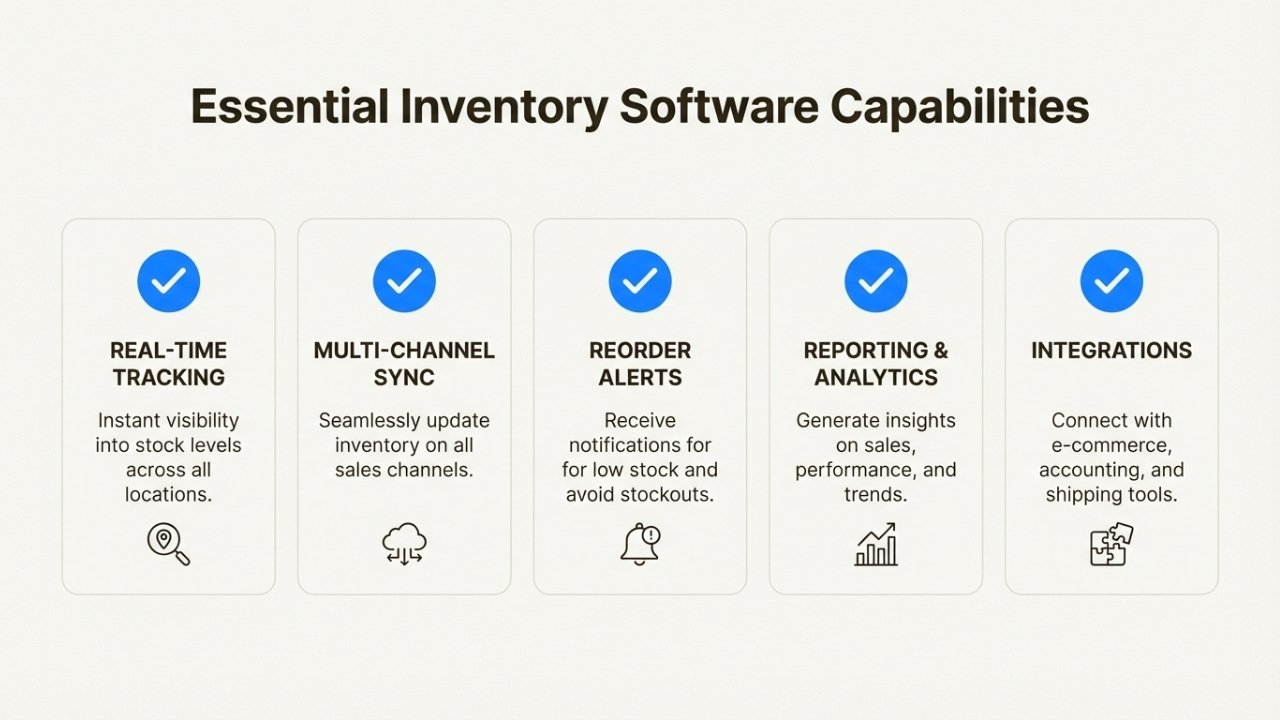
Real-time inventory tracking is non-negotiable. You need to know exactly what is in stock, across all locations, at any moment. Anything less leads to overselling and customer service nightmares.
Multi-channel sync keeps your Shopify, Amazon, eBay, and wholesale channels showing accurate stock levels. When a sale happens on any channel, every other channel updates automatically.
Reorder point alerts notify you when stock hits your par level. The best systems calculate this dynamically based on sales velocity and lead times.
Reporting and analytics show you what is selling, what is not, and where your money is tied up. Look for systems that highlight slow-moving inventory and forecast demand based on historical data.
Platform integration matters. If you are on Shopify, your inventory software should connect natively. Same for WooCommerce, BigCommerce, or whatever platform you use.
Popular options by business size
| Software | Best For | Starting Price | Key Strength |
|---|---|---|---|
| Zoho Inventory | Small businesses, startups | Free tier available | Strong integrations, affordable |
| inFlow | Product-based small businesses | $89/month | Easy setup, good for beginners |
| Extensiv | Growing multi-channel sellers | Custom pricing | Powerful 3PL and warehouse features |
| Cin7 | Mid-size businesses | $325/month | Comprehensive ERP features |
| NetSuite | Enterprise | Custom pricing | Full business management suite |
Most businesses start with something like Zoho or inFlow, then upgrade to Cin7 or Extensiv as they scale.
Enterprise operations typically end up on NetSuite or SAP, though that level of complexity is overkill for most ecommerce stores.
Implementation best practices
Buying software is the easy part. Making it work for your business takes planning.
Start with a physical audit before you automate anything. Know exactly what you have, where it is, and what condition it is in.
Your new system is only as accurate as the data you put into it.
Set up SKUs properly from day one. A consistent naming convention saves hours of confusion later.
Include product type, size, color, and any other relevant attributes in a standardized format.
Configure reorder points based on actual data, not guesses. Look at your sales history and supplier lead times.
If it takes two weeks to restock and you sell ten units per week, your reorder point should be around thirty units (two weeks of sales plus a safety buffer).
Integrate with accounting early. Inventory affects your cost of goods sold, balance sheet, and cash flow statements.
Keeping inventory and accounting in sync prevents painful reconciliation work at tax time.
Train your team thoroughly. The best software fails if people do not use it correctly.
Document your processes and make sure everyone understands why accuracy matters.
Plan for growth when choosing systems. A platform that works at one hundred orders per month might choke at one thousand.
Look for software that can scale with your ambitions.
How Ringly.io complements your inventory system
Inventory management software tracks your stock. It tells you what you have, what is selling, and when to reorder.
But there is a gap that most systems do not address: what happens when customers call asking about that inventory?
This is where Ringly.io fits in. the AI, their AI phone support agent, handles the customer communication side of inventory questions.
Here is how it works in practice:
A customer calls asking if you have a specific size in stock. Instead of ringing through to your team, the AI answers, checks your inventory system in real-time, and gives an immediate answer.
If the item is out of stock, the AI can offer alternatives or take a backorder.
The same applies to order status calls. "Where is my order?" is one of the most common reasons customers call ecommerce businesses.
the AI looks up the tracking information and provides an update instantly, without human intervention.
For returns and exchanges, the AI walks customers through the process, checks eligibility against your policies, and initiates the return.
This is particularly valuable during high-volume periods like post-holiday seasons.
The integration works because the AI connects to your existing systems. If you are on Shopify, the AI pulls order and inventory data directly.
The AI has resolved around 73% of phone calls without human intervention across the Shopify stores using the platform.
The key insight here is that inventory management and customer communication are two sides of the same coin.
Your inventory system knows the data. the AI communicates that data to customers instantly, 24/7.
The result is fewer abandoned carts, happier customers, and a support team that can focus on complex issues instead of repeating stock levels over the phone.
If you are investing in inventory management software to streamline operations, the logical next step is automating the customer conversations that inventory triggers.
Start your free trial and see how The AI handles your common inventory-related calls.
Frequently Asked Questions
What is ecommerce inventory management and why does it matter?
Ecommerce inventory management is the process of tracking, storing, and managing stock across your online sales channels. It matters because stockouts cost you sales (69% of shoppers abandon when items are unavailable) while overstock ties up cash and increases storage costs. Good inventory management balances availability with efficiency.
Which ecommerce inventory management method is best for small businesses?
For most small ecommerce businesses, FIFO (First In, First Out) combined with par levels works best. FIFO prevents getting stuck with outdated inventory, while par levels ensure you reorder before running out. Start simple and add complexity only as your business grows.
How much does ecommerce inventory management software cost?
Pricing varies widely. Free options like Zoho Inventory's basic tier work for very small operations. Mid-range solutions like inFlow start around $89/month. More comprehensive platforms like Cin7 run $325/month and up. Enterprise systems like NetSuite require custom quotes. Most growing businesses find the right fit between $50-300 monthly.
Can I manage ecommerce inventory without software?
Technically yes, but it becomes impractical quickly. Spreadsheets work until you are processing dozens of orders across multiple channels. At that point, manual tracking leads to errors, overselling, and stockouts. Software pays for itself through reduced mistakes and time savings.
How do I choose the right ecommerce inventory management system?
Start by listing your must-have features: real-time tracking, multi-channel sync, and integration with your ecommerce platform are non-negotiable for most businesses. Then consider your growth plans. Choose a system that can handle 10x your current volume so you are not switching platforms in six months.
What is the difference between perpetual and periodic inventory tracking?
Perpetual tracking updates inventory in real-time as sales happen, giving you accurate counts instantly. Periodic tracking involves physical counts on a schedule (weekly, monthly) and updating records then. For ecommerce, perpetual tracking is almost essential due to the speed of online sales.
How does AI phone support help with ecommerce inventory management?
AI phone support like Ringly.io's The AI handles the customer communication side of inventory. When customers call asking about stock levels, order status, or returns, the AI provides instant answers by connecting to your inventory system. This resolves common questions without human intervention while your team focuses on complex issues.